2027 What Can You Do With a Paralegal Studies Degree?

Co-Founder and Chief Data Scientist
A paralegal studies degree can be a practical route into legal work without committing to law school. The U. S. Bureau of Labor Statistics reported a May 2024 median pay of $61,010 for paralegals and legal assistants, making the field worth evaluating for students who want a career tied to research, writing, compliance, and client support.
This guide explains what the degree leads to, how programs differ, what they cost, and how to choose a credible option so you can decide whether paralegal studies fits your goals.
Key Things You Should Know
- A paralegal studies degree can prepare you for roles in law firms, corporate legal departments, government agencies, insurance companies, banks, healthcare organizations, and compliance teams.
- The BLS listed $61,010 as the May 2024 median annual wage for paralegals and legal assistants, but pay varies by location, employer type, experience, and legal specialty.
- Most paralegals do not need a state license, but employers often prefer candidates with an ABA-approved or regionally accredited program, strong legal writing skills, and optional professional certification.
What can you do with a paralegal studies degree?
A paralegal studies degree prepares students to support attorneys and legal teams with research, document preparation, case organization, client communication, and procedural tasks. Paralegals are not lawyers, cannot give legal advice, and cannot represent clients in court unless a state-specific limited legal role allows it. In most settings, they work under attorney supervision and help legal matters move efficiently from intake to resolution.
The degree is most useful if you want a legal career that is more specialized than general office administration but shorter and less expensive than law school. It can also be a stepping stone for students who want exposure to the legal system before deciding whether to pursue a bachelor's degree, law school, compliance work, or public-sector employment.
Paralegal studies programs are offered at several levels, and the best choice depends on your prior education and target role. The table below compares the most common options so you can match the credential to your timeline and career plan.
| Program type | Best fit | Typical outcome | Key trade-off |
| Undergraduate certificate | Students who already have college credits or a degree | Faster entry into legal support roles | May be less comprehensive than a degree |
| Associate degree | First-time college students seeking entry-level legal work | Legal assistant, paralegal assistant, intake assistant, records clerk | May limit advancement in employers that prefer a bachelor's degree |
| Bachelor's degree with paralegal concentration | Students who want broader advancement options | Paralegal, compliance assistant, contract specialist, legal operations support | Longer timeline and higher total cost |
| Post-baccalaureate certificate | Degree holders changing careers into legal services | Paralegal roles in law firms, corporate legal departments, or government | Requires a prior bachelor's degree |
Choose paralegal studies if you enjoy detail-heavy work, writing, deadlines, rules, and research. Consider a different path if you mainly want courtroom advocacy, independent legal decision-making, or attorney-level authority, because those goals generally require law school and bar admission.
Students interested in law-adjacent careers should also compare related majors. For example, a bachelor's degree in criminal justice may fit better if your goal is law enforcement administration, corrections, victim services, or public safety policy rather than legal document preparation and litigation support.
What jobs can paralegals get in law offices and companies?
Paralegal graduates can work in many legal and business environments. Law offices remain a common destination, but corporate legal departments and regulated industries also hire paralegal-trained employees because contracts, compliance, records, discovery, and investigations require strong legal process skills.
The table below summarizes common jobs and where they usually fit. Use it to compare day-to-day work rather than relying only on job titles, because employers often use "paralegal," "legal assistant," and "legal specialist" differently.
| Role | Common employers | Typical responsibilities | Good fit for students who like |
| Litigation paralegal | Law firms, government legal offices, corporate litigation teams | Draft pleadings, manage discovery, organize exhibits, prepare trial binders | Deadlines, case strategy, document-heavy work |
| Corporate paralegal | Companies, banks, startups, in-house legal departments | Maintain entity records, support contracts, file business documents, track approvals | Business operations and legal compliance |
| Real estate paralegal | Real estate firms, title companies, banks, municipal offices | Review closing documents, order title materials, coordinate filings | Transactions, property records, scheduling |
| Immigration paralegal | Immigration law firms, nonprofits, corporate mobility teams | Prepare forms, gather supporting documents, track case deadlines | Client communication and procedural detail |
| Family law paralegal | Family law firms, legal aid organizations | Prepare financial affidavits, manage calendars, organize client records | Client-facing work and sensitive cases |
| Compliance assistant | Healthcare, finance, insurance, education, corporate employers | Track regulations, support audits, organize policies, document investigations | Rules, risk management, internal processes |
| Legal operations assistant | Corporate legal departments, legal technology teams | Maintain matter management systems, process invoices, support workflow reporting | Technology, data, and process improvement |
Day-to-day responsibilities often include legal research, drafting, document review, citation checking, court filing, record management, calendar control, and communication with clients, courts, vendors, and opposing counsel. Strong paralegals are not just "assistants"; they help legal teams reduce errors, meet deadlines, and control the cost of legal work.
Technology is changing the role. E-discovery platforms, contract management systems, AI-assisted research tools, and automated document assembly can speed up repetitive tasks, but they also make accuracy and judgment more important. A practical way to prepare is to build skill in both legal reasoning and legal technology. Focus on the following areas before graduation:
- Legal research using professional databases, statutes, regulations, court rules, and administrative materials
- Clear legal writing, including memos, summaries, correspondence, and document templates
- Document management, e-filing, deadline tracking, and version control
- Ethics, confidentiality, unauthorized practice of law rules, and client-data protection
- Spreadsheet, database, PDF, case management, and e-discovery tools used by legal teams
A common mistake is assuming every legal support job leads to the same career path. Before applying, read job descriptions carefully and note whether the employer wants litigation, transactional, compliance, immigration, real estate, or legal technology experience. Targeted internships and electives can make your first job search more focused.
What is the salary and job outlook for paralegal graduates?
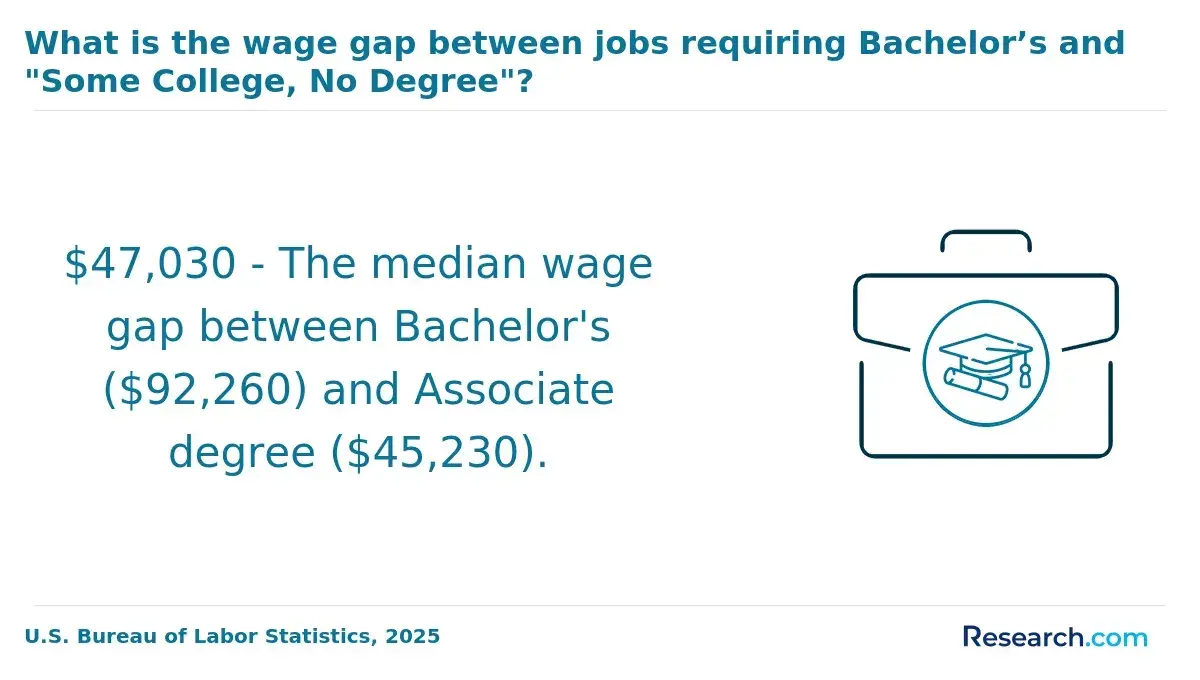
Salary and job outlook are important, but they should be read as labor-market indicators, not promises. The BLS reported a May 2024 median annual wage of $61,010 for paralegals and legal assistants. That figure means half of workers in the occupation earned more and half earned less; it does not predict what a new graduate will earn in a specific city or legal specialty.
The table below gives a practical way to interpret salary potential by work setting. It is not a guarantee, but it shows why employer type and specialization matter when evaluating the return on a paralegal studies degree.
| Factor | How it can affect pay | What to consider before choosing a program |
| Location | Large metro areas and legal markets may offer higher wages but also higher living costs | Compare local job postings, not only national averages |
| Employer type | Corporate legal departments and specialized firms may pay differently from small local firms | Look at internship partners and employer relationships |
| Specialty | Litigation, intellectual property, corporate, healthcare, and compliance work may require more technical knowledge | Choose electives aligned with your target specialty |
| Experience | Entry-level roles may start below the median, while experienced paralegals can move into senior or specialist work | Prioritize programs with internships, clinics, or portfolio assignments |
| Technology skills | Familiarity with e-discovery, case management, and contract systems can strengthen employability | Ask whether legal technology is taught directly |
For outlook, the BLS has projected slower-than-average growth for paralegal and legal assistant employment over the 2023 to 2033 period, while still expecting recurring openings as workers transfer or leave the labor force. For students, this means the field is not a "show up and get hired" market everywhere; career results depend heavily on local demand, networking, internships, and practical skills.
To evaluate whether the degree is worth it, compare expected entry-level wages in your area with total program cost, commute or technology expenses, time away from work, and transferability of credits. If your interests are closer to policing, courts, corrections, or public safety administration, you may want to compare paralegal studies with criminal justice before enrolling.
What coursework is included in a paralegal studies program?
Paralegal studies coursework is designed to teach the legal system, attorney-supervised practice, research methods, document preparation, and professional ethics. A strong curriculum should combine legal theory with hands-on assignments such as drafting pleadings, summarizing cases, preparing discovery responses, and using legal research tools.
The table below shows common courses and why they matter. Course names vary by school, but credible programs should cover the same core competencies.
| Course area | What students learn | Why it matters at work |
| Introduction to law and legal systems | Court structures, sources of law, legal terminology, civil and criminal process | Builds the foundation for every legal support role |
| Legal research and writing | Case law, statutes, regulations, citation, objective writing, legal memos | Supports attorney decision-making and case preparation |
| Civil litigation | Pleadings, discovery, motions, trial preparation, deadlines | Prepares students for law firm and litigation support roles |
| Contracts and business law | Contract formation, review, records, business entities | Useful for corporate, real estate, and transactional work |
| Ethics and professional responsibility | Confidentiality, conflicts, supervision, unauthorized practice of law | Helps prevent serious workplace and client-service errors |
| Legal technology | Case management, e-filing, document automation, e-discovery basics | Reflects how modern legal teams manage high volumes of information |
| Specialty electives | Family law, immigration, probate, real estate, intellectual property, criminal law | Lets students target specific employers and career paths |
Assignments matter as much as course titles. Before enrolling, ask whether students create a portfolio of writing samples, complete simulated legal tasks, or participate in an internship. These experiences can help you show employers that you can apply classroom knowledge to deadlines and real documents.
Students should also watch for weak programs that focus only on general office skills while barely covering legal research, ethics, and procedure. Office software is useful, but a paralegal program should teach law-specific judgment, not just administrative support.
Is paralegal studies available online or on campus?
Paralegal studies is available in online, on-campus, and hybrid formats. The best format depends on your schedule, learning style, local internship opportunities, and whether you need flexibility or more direct access to faculty and legal employers.
The table below compares common delivery formats. Use it to think through trade-offs before choosing based only on convenience.
| Format | Best fit | Advantages | Possible drawbacks |
| Fully online | Working adults, caregivers, students far from campus | Flexible scheduling, fewer commuting costs, wider school options | Requires self-discipline and careful internship planning |
| On campus | Students who want in-person structure and local networking | Direct faculty contact, campus resources, easier peer interaction | Less flexible and may require commuting or relocation |
| Hybrid | Students who want flexibility plus some in-person learning | Balance of structure and convenience | Campus visits may still conflict with work schedules |
| Accelerated online | Students with prior credits or strong time availability | Shorter completion time | Heavy workload and less time for internships or networking |
Online programs can be legitimate, but they require extra due diligence. Confirm the school's accreditation, ask how students complete internships, and check whether legal research platforms and writing feedback are included. If you are comparing online education more broadly, reviewing how an online marketing degree structures flexibility, tuition, and outcomes can help you ask better questions about any online program.
Choose online study if flexibility is essential and you are comfortable managing deadlines independently. Choose campus or hybrid study if you want structured networking, face-to-face writing support, or easier access to local legal internships. The format is less important than whether the program produces job-ready legal writing, research, ethics, and technology skills.
What are the admission requirements for paralegal studies programs?
Admission requirements vary by credential level. Certificate and associate programs may be open to students with a high school diploma or GED, while post-baccalaureate certificate programs generally require a completed bachelor's degree. Bachelor's programs may require standard undergraduate admissions materials, transfer transcripts, placement results, or prerequisite courses.
Most programs ask for some combination of the following materials. Check each school's catalog because paralegal programs may have additional rules tied to internship placement, background checks, or minimum grades in legal specialty courses.
- High school diploma, GED, or prior college transcript
- Application form and application fee
- Placement results or proof of college-level English readiness
- Minimum GPA for transfer or post-baccalaureate admission
- Personal statement or career-goal statement for selective programs
- Background check or professional conduct requirements for internships
If you are not ready to commit to legal studies, a broad transfer-friendly pathway may be safer at first. For example, students searching for an online general studies degree affordable enough to explore multiple fields can compare whether general education credits later transfer into paralegal studies, criminal justice, business, or public administration.
A major admission-related mistake is assuming that all credits will transfer smoothly. Before enrolling, ask whether credits apply to a future bachelor's degree, whether legal specialty courses must be taken at the school granting the credential, and whether there is a time limit on older credits.
How long does it take to earn a paralegal studies degree?
The time to earn a paralegal studies credential depends on program level, enrollment intensity, transfer credits, and whether courses are offered year-round. Faster is not always better; an accelerated program can save time, but it may leave less room for internships, writing practice, and networking.
The table below gives typical completion ranges. Use these as planning estimates rather than fixed rules, because schools structure calendars and course sequences differently.
| Credential | Typical full-time timeline | Typical part-time timeline | Best use case |
| Undergraduate certificate | 6 to 12 months | 12 to 24 months | Quick legal skills training or career exploration |
| Associate degree | About 2 years | 3 or more years | First college credential for entry-level legal work |
| Bachelor's degree | About 4 years | 5 or more years | Broader advancement and transfer-friendly education |
| Post-baccalaureate certificate | 6 to 18 months | 12 to 24 months | Career change for students who already hold a bachelor's degree |
Students who already have college credits should request a transcript evaluation before applying. A program that looks longer on paper may be faster and cheaper if it accepts more transfer credits, while a shorter program may cost more if few credits apply or required courses are offered only once a year.
To plan your timeline realistically, take these steps before enrollment:
- Ask for a written degree plan showing every required course and expected term of completion.
- Confirm whether legal specialty courses are offered every semester or only on a rotation.
- Ask whether the internship is required, optional, or available only after completing prerequisites.
- Check whether accelerated terms affect financial aid eligibility or workload.
- Estimate weekly study time for legal writing and research courses, which often require more revision than lecture-based classes.
How much does a paralegal studies degree cost?
The cost of a paralegal studies degree depends on institution type, residency status, credential level, online fees, books, technology, commuting, and transfer credits. Tuition alone can be misleading because legal textbooks, research platform access, internship costs, and graduation fees can change the real total.
National college pricing data can help set expectations. The College Board's 2024 Trends in College Pricing reported published tuition and fees of about $4,050 for public two-year in-district students, $11,610 for public four-year in-state students, and $43,350 for private nonprofit four-year students for the 2024-25 academic year. These are broad benchmarks, not paralegal-specific prices, but they show why school type and transfer planning matter.
Common cost items include:
- Tuition per credit or per term
- Mandatory student, technology, online learning, or graduation fees
- Books, legal style manuals, database access, and software
- Transportation, parking, or campus visit expenses
- Internship-related costs such as professional clothing or background checks
- Certification exam fees if you pursue optional professional credentials after graduation
The table below shows how to evaluate affordability. The lowest tuition is not always the lowest total cost if credits do not transfer, courses are unavailable, or the program lacks career support.
| Cost factor | Why it matters | Question to ask |
| Transfer credits | Accepted credits can reduce both time and tuition | How many credits will apply to this exact credential? |
| Program length | Longer programs may increase tuition and living expenses | Can I see a term-by-term completion plan? |
| Online fees | Online programs may charge technology or distance learning fees | What is the total cost per term including fees? |
| Internship access | Strong placement support can improve job readiness | Does the school help students find legal internships? |
| Career services | Resume help, employer events, and alumni networks can support the job search | What employers have recently hired program completers? |
To reduce cost, start with community colleges or public universities when appropriate, compare transfer agreements, apply for federal aid if eligible, and ask employers about tuition assistance. If you are also comparing law-related alternatives, reviewing how much does a criminal justice degree cost can help you evaluate whether paralegal studies, criminal justice, or another public-service path offers the better fit for your budget and goals.
What accreditation should a paralegal studies program have?
Accreditation is one of the most important quality checks before enrolling. At the institutional level, look for a school accredited by an agency recognized by the U.S. Department of Education or the Council for Higher Education Accreditation. Institutional accreditation affects credit transfer, federal financial aid eligibility, and how other schools or employers view the credential.
For paralegal studies specifically, some programs are approved by the American Bar Association. ABA approval is not legally required for all paralegal jobs, and many employers hire graduates from non-ABA programs, especially if the institution is properly accredited and the curriculum is strong. However, ABA approval can be a useful signal because it indicates the program has been reviewed against paralegal education standards.
Use this checklist before you apply. It can help you avoid programs that sound convenient but may create problems with transfer, aid, or employer recognition.
- Verify institutional accreditation through official accreditation databases, not only the school's marketing page.
- Check whether the paralegal program is ABA-approved if that matters to employers in your local market.
- Ask whether the program includes legal specialty credits taught by qualified instructors.
- Confirm whether credits transfer to bachelor's programs or graduate pathways you may want later.
- Review internship availability, job placement support, and employer relationships.
- Ask local legal employers whether they recognize or prefer the program.
Red flags include vague accreditation claims, pressure to enroll immediately, no published curriculum, no legal ethics course, unclear faculty qualifications, and refusal to provide total cost or transfer information in writing.
Do paralegals need certification or licensing to work?
In most states, paralegals do not need a license to work, but they must work within legal and ethical boundaries. The most important rule is that paralegals generally cannot practice law independently. They cannot give legal advice, set legal fees, accept clients on behalf of a lawyer without authorization, or represent themselves as attorneys.
Certification is different from licensing. Licensing is a legal requirement set by a state or regulatory body. Certification is usually a voluntary professional credential that can show knowledge, experience, or commitment to the field. Some employers prefer or reward certification, but many entry-level jobs focus more on education, writing ability, experience, and reliability.
Common voluntary paralegal credentials include exams or designations offered by professional organizations such as NALA, NFPA, and NALS. Requirements vary, and some credentials require education, experience, continuing education, or exam renewal. Before paying for a credential, compare it with the job postings in your target city or specialty.
A practical path for many students looks like this:
- Complete an accredited paralegal studies program or a degree with strong legal coursework.
- Build a portfolio with legal writing, research, document drafting, and technology samples when allowed.
- Gain experience through an internship, clinic, legal aid volunteer role, or entry-level legal office job.
- Apply for legal assistant or junior paralegal roles that match your coursework and interests.
- Consider certification after you understand which credential employers in your market value.
Some states have created limited legal paraprofessional or legal document preparer roles, but these rules vary significantly and may not apply to general paralegal employment. If your goal is to provide services directly to the public, check your state's court system or regulatory authority before choosing a program.
Other Things You Should Know About Paralegal Studies
In 2027, pursuing a paralegal studies degree remains valuable. It equips students with legal knowledge and skills relevant to various roles within law firms, corporate legal departments, and governmental agencies. The evolving legal landscape enhances career opportunities, making it a worthy investment for those interested in law.
Yes. Paralegal experience can help you understand legal work before law school, but it does not replace a law degree or bar admission. If you may pursue law school later, choose transferable undergraduate credits and keep your GPA strong.
Strong paralegals are detail-oriented, organized, ethical, and comfortable with deadlines. They also need clear writing, careful research habits, technology confidence, confidentiality, and the ability to communicate professionally with attorneys, clients, courts, and vendors.
Some entry-level legal assistant, records, intake, or junior paralegal jobs accept candidates with little experience, especially if they have relevant coursework. Internships, volunteer legal aid experience, and writing samples can make a first application stronger.
References
- Steps to Become a California Paralegal (Education & Salary) https://www.allcriminaljusticeschools.com/legal-and-paralegal/california/
- Should You Get a Paralegal Certificate? https://www.wordrake.com/resources/should-you-get-a-paralegal-certificate
- Paralegal Studies Certificate https://catalog.bryanuniversity.edu/paralegal-studies-certificate
- Paralegal Certificate vs Certification | Let's clear up the confusion. https://paralegal.edu/blog/paralegal-certificate-vs-paralegal-certification-lets-clear-up-the-confusion/
- Paralegal https://www.fanshawec.ca/programs/plg1-paralegal/next
- Paralegal Studies Certificate Program | UCLA Extension https://www.uclaextension.edu/legal-programs/paralegal-studies/certificate/paralegal-studies
- Requirements https://www.macewan.ca/academics/programs/paralegal-studies/admissions/requirements/
- Is a Paralegal Certificate Worth It? | Bryan University Online© https://bryanuniversity.edu/faq/is-a-paralegal-certificate-worth-it/
- What Can You Do With a Paralegal Degree? https://campus.edu/blog/paralegal/paralegal-degree-job-options
- Paralegal Roles https://www.ropesgrayrecruiting.com/en/us/business-support-paralegals/paralegal-roles