2027 Best Online Paralegal Studies Degrees for Corporate Paralegal Careers

Co-Founder and Chief Data Scientist
Choosing an online paralegal studies degree is a practical career decision: corporate legal teams need support with contracts, compliance, filings, records, and litigation readiness. The U. S. Bureau of Labor Statistics projects about 37,300 paralegal and legal assistant openings each year from 2023 to 2033, mostly from replacement needs. This guide is for students, career changers, and working legal assistants comparing online options. You will learn which degree types fit corporate paralegal careers, how to judge quality, what costs to expect, and how to choose a program with stronger career value.
Key Things You Should Know
- Corporate paralegal careers usually favor practical legal training in contracts, business organizations, compliance, legal research, e-discovery, and document management, not just a general interest in law.
- The BLS reported a $61,010 median annual wage for paralegals and legal assistants in May 2024, but pay varies by employer, region, experience, technology skills, and specialization.
- The strongest online programs are institutionally accredited, transparent about tuition and transfer credits, connected to internships or legal work experience, and aligned with corporate legal support tasks.
What is an online paralegal studies degree and how does it prepare corporate paralegals?
An online paralegal studies degree is an academic program that teaches students how to support attorneys and legal departments through research, drafting, case organization, records management, regulatory tracking, and client or internal communication. In a corporate setting, the work often centers on business law rather than courtroom procedure, although litigation support may still be part of the job.
Corporate paralegals may help review contracts, maintain corporate records, prepare board materials, organize due diligence files, track compliance deadlines, support mergers and acquisitions, manage legal databases, and coordinate with outside counsel. They do not provide legal advice or represent clients in court, but their work can directly affect how efficiently a company's legal team operates.
Online delivery matters because many paralegal students are working adults. A well-designed online program can let students complete lectures, research assignments, writing projects, and discussion activities asynchronously while still requiring deadlines, proctored assessments, and instructor feedback. The best fit is usually a program that combines legal theory with applied assignments, such as drafting a contract clause summary, building a corporate minute book, or preparing a litigation hold checklist.
Students who are still exploring broader academic routes may also compare paralegal studies with adjacent flexible degrees. For example, some learners researching transfer-friendly programs also look at online interdisciplinary studies degree financial aid when they want a broader bachelor's pathway rather than a narrowly legal curriculum.
What types of online paralegal degrees best support corporate paralegal career paths?
The best online paralegal degree depends on your starting point, prior credits, budget, and target role. Corporate legal departments may consider candidates with certificates, associate degrees, or bachelor's degrees, but more complex roles often favor applicants who can show stronger writing, business law, technology, and compliance skills.
The table below compares common online paralegal education options. Use it to match the credential to your current education level and the kind of corporate paralegal work you want to pursue.
| Credential type | Best fit | Typical corporate value | Trade-off |
| Undergraduate certificate in paralegal studies | Students who already have college credits or a degree and want legal job skills quickly | Can build targeted skills in legal research, writing, contracts, and procedure | May not carry as much weight as a degree for competitive corporate roles |
| Associate degree in paralegal studies | First-time college students seeking entry-level legal support roles | Provides foundational legal training plus general education | May be less competitive for advancement than a bachelor's degree in some markets |
| Bachelor's degree in paralegal studies or legal studies | Students aiming for corporate legal departments, compliance teams, or advancement | Offers broader writing, research, business, ethics, and analytical preparation | Takes longer and can cost more, especially with limited transfer credit |
| Post-baccalaureate paralegal certificate | Career changers who already hold a bachelor's degree | Can add focused legal training without completing a second degree | Not a substitute for experience if employers require prior legal work |
For corporate paralegal careers, a bachelor's degree or post-baccalaureate certificate often makes the most sense when the applicant wants to work with contracts, governance, compliance, securities support, intellectual property, or large-scale litigation management. An associate degree can still be a smart route when cost and speed are priorities, especially if the program has transfer agreements into a bachelor's program.
Students comparing legal-adjacent majors should also consider career fit. A bachelor's in criminal justice may be better for law enforcement, corrections, investigations, or public safety administration, while paralegal studies is more directly aligned with legal research, drafting, case support, and corporate legal operations.
How do online paralegal programs compare with campus-based options for corporate roles?
Online and campus-based paralegal programs can both prepare students for corporate legal work if the curriculum is rigorous and the institution is reputable. The biggest differences are usually scheduling, networking style, internship access, technology use, and how much structure students need.
The comparison below shows how format affects common decision points. It is especially useful for working adults deciding whether flexibility is worth the trade-offs.
| Decision factor | Online paralegal degree | Campus-based paralegal degree |
| Schedule | Often better for working adults, parents, and students outside commuting range | Often better for students who want fixed class times and in-person accountability |
| Corporate legal technology practice | Can mirror remote legal work through learning platforms, databases, and digital collaboration | May offer computer labs or in-person software demonstrations |
| Networking | Depends on virtual events, faculty access, alumni groups, and internship coordination | Can be easier through local legal associations, campus events, and nearby employers |
| Internships | May require students to locate approved placements near their home area | May have established relationships with local law firms, courts, agencies, and companies |
| Learning style | Best for self-directed students who can manage deadlines independently | Best for students who learn better through face-to-face discussion and immediate structure |
For corporate roles, online study can be an advantage when it builds comfort with document systems, legal databases, videoconferencing, project management tools, and asynchronous communication. Those are common in modern legal departments, especially where teams work across offices or use outside counsel in multiple jurisdictions.
The main risk is choosing an online program with weak career support. Before enrolling, ask how the school helps students find internships, whether faculty have legal practice experience, and whether assignments reflect corporate legal tasks rather than only textbook summaries.
What accreditation should online paralegal studies programs have for corporate legal work?
Accreditation is one of the most important quality checks for an online paralegal studies degree. At minimum, the college or university should hold institutional accreditation recognized by the U.S. Department of Education or the Council for Higher Education Accreditation. This affects transfer credit, graduate school eligibility, employer confidence, and access to federal financial aid.
Paralegal programs may also seek programmatic approval or recognition, including approval from the American Bar Association. ABA approval can be a strong signal, but it is not the only legitimate marker of quality, and not every online format qualifies in the same way. Students should verify the current status directly with the school and the approving organization because approval status can change.
Use the following checks before treating any program as career-ready for corporate legal work:
- Confirm the institution's accreditation status through an official federal or accreditor database rather than relying only on marketing pages.
- Ask whether the paralegal program itself has ABA approval, state recognition, or advisory board input from practicing attorneys and paralegals.
- Review whether online students receive the same transcript credential as campus students.
- Check whether credits transfer to bachelor's or graduate programs if you may continue your education later.
- Ask employers in your target market whether they prefer ABA-approved programs, bachelor's degrees, or specific legal technology experience.
A common mistake is assuming that "accredited" always means the paralegal curriculum has been separately reviewed. Institutional accreditation and paralegal program approval are different. Both can matter, but they answer different questions: whether the school is recognized and whether the legal curriculum has gone through specialized review.
What courses and skills do corporate-focused online paralegal programs typically teach?
Corporate-focused online paralegal programs should teach more than legal vocabulary. They should help students produce accurate, organized, attorney-ready work under deadlines. Because corporate legal teams deal with contracts, entities, compliance, records, and risk, business law content is especially valuable.
The courses below commonly support corporate paralegal preparation. Program titles vary, but students should look for these topics in the curriculum or electives.
| Course or skill area | Why it matters for corporate paralegals |
| Legal research and writing | Builds the ability to find authority, summarize rules, and draft clear legal documents |
| Contracts | Supports work with contract review, obligation tracking, amendments, and document comparison |
| Business organizations | Prepares students to understand corporations, LLCs, governance records, filings, and entity maintenance |
| Civil litigation and e-discovery | Helps with document holds, discovery organization, databases, and outside counsel coordination |
| Compliance and ethics | Supports work involving policies, regulatory calendars, internal investigations, and confidentiality |
| Legal technology | Develops comfort with databases, document management, spreadsheets, and collaboration tools |
| Intellectual property basics | Useful for companies that manage trademarks, patents, copyrights, licensing, or brand protection |
AI and automation are changing what employers expect from paralegals. Routine document review, template generation, and search tasks may be supported by legal technology, but employers still need people who can verify accuracy, protect confidentiality, recognize risk, and communicate clearly with attorneys. Students should look for programs that discuss responsible technology use, data privacy, citation checking, and the limits of AI-generated legal content.
Some students interested in evidence, investigations, or lab-based legal support may find that paralegal studies is not the closest fit. Those students may want to compare the legal support path with forensic science careers, which involve a different mix of science, criminal investigation, and technical evidence work.
What are typical admission requirements for online paralegal studies degrees?
Admission requirements vary by credential level and school selectivity. Certificate programs may be open to students with a high school diploma or prior college credits, while bachelor's programs usually require a broader undergraduate application. Post-baccalaureate certificates typically require an earned bachelor's degree.
Most online paralegal programs ask for a practical set of documents rather than law school-style admissions materials. Applicants should still read requirements carefully because missing transcripts or transfer forms can delay enrollment.
- High school diploma, GED, or equivalent for undergraduate entry.
- Official transcripts from high school and any colleges previously attended.
- Minimum GPA requirement, which varies by school and credential level.
- Placement testing or college readiness documentation for some associate programs.
- Resume, personal statement, or writing sample for some bachelor's or post-baccalaureate options.
- Proof of English proficiency for applicants whose prior education was not in English.
- Technology requirements, such as reliable internet access, webcam capability, and legal research database access.
Transfer credit can significantly affect both time and cost. Students with prior general education credits should request an official transfer evaluation before committing, not after enrolling. A program that looks inexpensive per credit may cost more overall if it accepts fewer transfer credits.
Students should also be realistic about reading and writing demands. Paralegal programs require careful attention to detail, deadlines, citation rules, document formatting, and professional communication. Applicants who dislike dense reading or precise writing may want to explore other business, public administration, or justice-related majors before choosing this path.
How long do online paralegal degrees take, and what do they cost?
Program length depends on credential type, enrollment pace, transfer credits, and whether the student attends full time or part time. Many online students choose part-time study because they are balancing work, family, or military obligations.
The table below gives a practical planning range. Exact timelines vary by school, course availability, and how many credits a student transfers in.
| Program type | Common length | Best cost-control strategy |
| Undergraduate certificate | Several months to about 1 year | Choose a program whose credits can later apply to a degree |
| Associate degree | About 2 years full time; longer part time | Use community college tuition and transfer pathways when available |
| Bachelor's degree | About 4 years full time; shorter with transfer credits | Maximize accepted credits and compare total program cost, not only per-credit price |
| Post-baccalaureate certificate | About 6 months to 18 months | Avoid repeating general education courses if you already hold a degree |
Cost varies widely by institution type, residency status, credit load, fees, and textbooks or legal database access. College Board's 2024 Trends in College Pricing reported average published tuition and fees of $4,050 for public two-year in-district students in 2024-25. That figure is useful as a benchmark because many affordable paralegal pathways begin at community colleges, but online program fees, out-of-state tuition rules, and transfer limits can change the final bill.
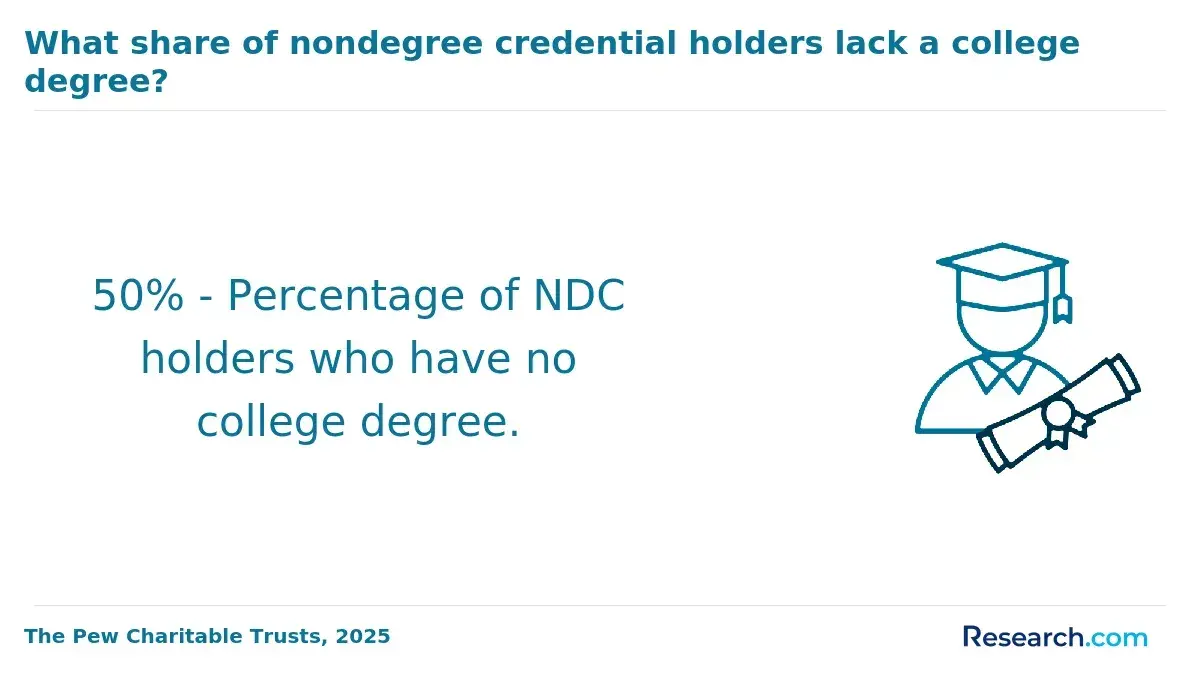
When comparing costs, students should look beyond tuition. Important cost items often include technology fees, books, legal research access, graduation fees, transcript fees, proctoring fees, and internship-related transportation or background checks. Financial aid may be available for eligible degree programs, but shorter nondegree certificates may have different aid rules.
A practical cost comparison should include these steps:
- Ask each school for the total estimated program cost based on your transfer evaluation.
- Confirm whether online students pay in-state, out-of-state, or special online tuition.
- Check whether required legal databases, textbooks, and software are included in tuition or billed separately.
- Compare completion time because a lower per-credit price may not save money if the program requires more credits.
- Review refund deadlines, satisfactory academic progress rules, and financial aid eligibility before enrolling.
What corporate paralegal job titles, responsibilities, and work settings can graduates expect?
Corporate paralegal graduates can work in several legal and business environments. The right job title depends on experience, degree level, industry, and how the employer structures its legal department.
The table below summarizes common corporate paralegal career options. It can help students connect coursework with real workplace responsibilities.
| Job title | Typical responsibilities | Common work settings |
| Corporate paralegal | Maintain entity records, prepare filings, organize board materials, support corporate transactions | In-house legal departments, corporate law firms, registered agent companies |
| Contracts paralegal | Track contract status, review templates, manage signature workflows, maintain obligation databases | Technology companies, healthcare organizations, vendors, procurement teams |
| Compliance paralegal | Monitor deadlines, support audits, maintain policy records, assist with regulatory responses | Financial services, healthcare, insurance, manufacturing, higher education |
| Litigation support paralegal | Organize discovery, manage document review platforms, support subpoenas and case files | Corporate legal departments, litigation firms, e-discovery vendors |
| Intellectual property paralegal | Track trademark or patent deadlines, prepare filing materials, maintain IP portfolios | Law firms, technology companies, consumer brands, universities |
| Legal operations assistant | Support matter management, billing review, vendor coordination, reporting, and workflow systems | Large corporate legal departments and legal operations teams |
Entry-level graduates may begin as legal assistants, records assistants, contract administrators, or junior paralegals before moving into more specialized work. Advancement usually depends on accuracy, judgment, communication, software fluency, and the ability to manage complex legal information without constant supervision.
Corporate paralegal work is a better fit for students who like structured documents, deadlines, business processes, and risk management. It may be less satisfying for students who want courtroom advocacy, direct client counseling, or investigative fieldwork. Students drawn to medical-legal investigation roles may also explore autopsy technician jobs, which require a very different education and workplace environment.
What is the salary potential and job outlook for corporate paralegals?
The salary potential for corporate paralegals depends on location, employer size, industry, education, experience, and specialization. The BLS reported a $61,010 median annual wage for paralegals and legal assistants in May 2024. This is a national median across many settings, so it should be used as a planning benchmark rather than a personal salary prediction.
Corporate legal departments in industries such as finance, technology, healthcare, insurance, and pharmaceuticals may pay more for paralegals who understand contracts, compliance, intellectual property, privacy, or litigation systems. However, entry-level roles may start lower, especially when the applicant has limited legal work experience or lives in a lower-wage region.
Job outlook is stable but competitive. The BLS projects 1% employment growth for paralegals and legal assistants from 2023 to 2033, which is slower than the average for all occupations. That does not mean the field is closed; it means students should build a stronger profile through internships, writing samples, technology skills, and specialization rather than assuming the degree alone will separate them from other applicants.
Students who want stronger salary mobility should focus on skills that are difficult to automate fully: legal analysis, document quality control, confidentiality judgment, project coordination, stakeholder communication, and familiarity with legal technology. Corporate employers increasingly value paralegals who can combine legal knowledge with operational efficiency.
How can students evaluate and choose a reputable online corporate paralegal program?
A reputable online corporate paralegal program should be transparent, accredited, career-relevant, and realistic about outcomes. The best choice is not always the cheapest or fastest program; it is the program that fits your goal, accepts appropriate transfer credits, teaches employer-valued skills, and gives you credible evidence of student support.
Before applying, use a structured review process. These steps help reduce the risk of choosing a program that looks convenient but does not support your intended career path.
- Verify institutional accreditation through an official source.
- Confirm whether the paralegal program has ABA approval or another recognized quality review, if that matters in your target market.
- Compare the curriculum against corporate paralegal tasks such as contracts, business organizations, compliance, e-discovery, and legal technology.
- Ask for a written transfer credit evaluation before you estimate completion time or total cost.
- Review faculty biographies for legal practice, corporate law, compliance, litigation, or legal operations experience.
- Ask how online students access internships, career advising, alumni networks, and legal job postings.
- Request information on graduation, retention, and job placement data if the school publishes it.
- Check whether the program requires a capstone, portfolio, internship, or practical legal drafting assignments.
Several red flags should make students pause. Be careful with schools that use pressure-heavy admissions tactics, avoid giving total cost estimates, make salary promises, lack clear accreditation information, or cannot explain how the online paralegal curriculum prepares students for actual legal work.
It also helps to choose based on career fit rather than rankings alone. An affordable associate pathway may be best for an entry-level student who wants to start working quickly. A bachelor's degree may be better for a student targeting in-house legal departments or advancement. A post-baccalaureate certificate may be the most efficient choice for a career changer who already has a degree and wants focused legal training.
Other Things You Should Know About Paralegal Studies
Yes. Paralegals are not attorneys and do not need to complete law school. Most prepare through a paralegal certificate, associate degree, bachelor's degree, or a combination of education and legal work experience.
Certification is usually voluntary, but it can strengthen a resume. Employers may value credentials from recognized paralegal associations, especially when paired with experience, strong writing skills, and legal technology knowledge.
In 2027, the best online paralegal studies degrees should be accredited by recognized bodies like the American Bar Association. Look for flexible scheduling, experienced faculty, comprehensive corporate law courses, and robust career support services to prepare for a corporate paralegal career.
The terms sometimes overlap, but paralegals often perform more substantive legal support tasks, such as research, drafting, discovery organization, and case or matter management. Legal assistants may focus more on administrative support, scheduling, filing, and communication, depending on the employer.
References
- Step-by-Step: Securing Your First Corporate Paralegal Job https://www.paralegalinst.com/entry-level-corporate-paralegal-jobs
- Paralegal Studies Online Training Program - Campus Sacramento https://sacramento.campus.edu/programs/legal/paralegal-studies-online
- Best Online Paralegal Associate Degrees https://www.onlineu.com/degrees/associate-paralegal
- Earn an Online Paralegal Degree | OEDb.org https://www.oedb.org/rankings/online-paralegal-programs/
- Affordable Online Paralegal Certification - Get Certified Today https://www.expertrating.com/certifications/personal-development-and-enrichment/paralegal-certification.asp
- Paralegal Program Comparison https://paralegal.edu/compare/
- 7 Paralegal Jobs Not in Law Firms https://www.becomeaparalegal.org/blog/7-paralegal-jobs-not-in-law-firms-where-to-look-what-to-expect/
- What does a Corporate Paralegal do? Career Overview, Roles, Jobs | LACBA https://jobs.lacba.org/career/corporate-paralegal
- How to Choose the Best Paralegal Program for You | Eastern College https://wwwlive.easterncollege.ca/blog/how-to-choose-the-best-paralegal-program-for-you/
- The Best Alternative Career for Paralegals (+Other Roles to Consider) | Brightflag https://brightflag.com/resources/paralegal-career-change/