2027 Online Paralegal Studies Degrees That Prepare Students for Litigation and Case Support Roles

Co-Founder and Chief Data Scientist
Choosing an online paralegal studies degree is really a decision about career fit, cost, and readiness for legal work. The U. S. Bureau of Labor Statistics reports a 2024 median pay of $61,010 for paralegals and legal assistants, making the field a practical option for students who want law-related work without attending law school.
This guide explains program types, accreditation, litigation training, online versus campus trade-offs, costs, certification, and job outcomes so readers can compare programs with clearer expectations.
Key Things You Should Know
- Online paralegal degrees can prepare students for litigation support through coursework in legal research, civil procedure, legal writing, e-discovery, document management, and trial preparation, but graduates still work under attorney supervision and cannot practice law.
- For cost planning, College Board's 2024 pricing data shows average published tuition and fees of $4,050 at public two-year colleges, $11,610 for in-state public four-year institutions, and $43,350 at private nonprofit four-year institutions before aid.
- The BLS reports a 2024 median paralegal and legal assistant wage of $61,010, while employment is projected to show little or no change from 2024 to 2034, so program quality, internships, software skills, and local employer connections matter.
What is an online paralegal studies degree and how does it prepare students for litigation?
An online paralegal studies degree is a college credential that teaches students how to support attorneys, legal departments, government agencies, and compliance teams. In litigation-focused programs, the curriculum centers on the life cycle of a civil or criminal case: intake, investigation, pleadings, discovery, motion practice, settlement preparation, trial support, and post-trial file management.
The key distinction is that paralegals perform substantive legal support work but do not give legal advice, set legal fees, represent clients in court, or accept cases independently unless a specific state-authorized legal paraprofessional role allows it. Most graduates work under attorney supervision, which is why programs emphasize accuracy, ethics, confidentiality, and procedure.
Online paralegal degrees usually come in several levels. The right one depends on prior education, career goals, and how quickly a student wants to enter the workforce.
| Credential type | Typical student profile | Common use | Litigation preparation level |
| Associate degree | Students starting college or changing careers without a bachelor's degree | Entry-level paralegal, legal assistant, intake, records, or case support roles | Strong foundation in research, writing, procedure, and law office technology |
| Bachelor's degree | Students who want broader education, advancement potential, or law-adjacent roles | Paralegal, litigation support specialist, compliance assistant, legal operations support | Broader preparation, often with electives in specialized practice areas |
| Post-baccalaureate certificate | Students who already hold a bachelor's degree | Fast transition into paralegal or legal support work | Concentrated legal specialty coursework, often valued by employers |
| Undergraduate certificate | Students seeking a shorter credential or exploring the field | Legal secretary, assistant, records clerk, or transfer pathway | Useful basics, but may be less competitive than a degree in some markets |
For litigation roles, the strongest programs go beyond legal terminology. They teach students how to organize evidence, draft case documents, track deadlines, use citation tools, manage discovery, summarize depositions, and communicate clearly with attorneys and clients. That applied training is what separates a general legal studies program from a paralegal program built for case support.
How do online paralegal programs compare to campus-based options for case support roles?
Online and campus-based paralegal programs can both prepare students for case support roles, but they differ in delivery, networking, scheduling, and hands-on access. The better option is usually the one that fits the student's work schedule while still offering rigorous writing assignments, legal research training, attorney-led instruction, and career support.
The comparison below summarizes the practical trade-offs students should weigh before choosing a format.
| Factor | Online paralegal program | Campus-based paralegal program | Best fit |
| Schedule | Often asynchronous or evening-friendly | Usually fixed class times | Online is often better for working adults and caregivers |
| Local networking | Depends on virtual events, internship placement, and alumni reach | May offer easier access to local courts, firms, and faculty connections | Campus may help students targeting a specific local legal market |
| Legal technology practice | Can be strong if the school uses research databases, e-discovery tools, and document platforms | Can be strong if labs and software access are current | Either format works if software training is built into assignments |
| Internships | May require students to secure local placements with school approval | May have established local placement pipelines | Students needing help finding placements should ask detailed questions |
| Classroom interaction | May rely on discussion boards, video meetings, and instructor feedback | More face-to-face interaction | Campus may suit students who learn best through in-person discussion |
Online study can be especially useful for adults already working in law offices, government, insurance, real estate, healthcare, or corporate compliance. These students may be able to apply lessons directly to current work and build a portfolio of writing samples while staying employed.
The main risk is choosing an online program that is convenient but thin on legal specialty courses, feedback, and career support. A litigation-ready online program should include substantial writing, realistic case files, research database training, and assignments that mirror attorney-supervised work.
What accreditation should online paralegal studies programs have in the United States?
Accreditation is one of the most important checks students can make before enrolling. In the United States, students should first verify that the institution is accredited by an agency recognized by the U.S. Department of Education or the Council for Higher Education Accreditation. This affects transfer credit, federal financial aid eligibility, employer trust, and graduate school options.
Paralegal programs may also seek approval from the American Bar Association. ABA approval is not the same as institutional accreditation, and it is not legally required for every paralegal job. However, some employers value ABA-approved paralegal education because it signals that the program has met specific standards for curriculum, faculty, administration, library resources, and student services.
Students should understand the main accreditation and approval categories before comparing programs.
| Quality marker | What it means | Why it matters |
| Institutional accreditation | The college or university has been reviewed by a recognized accrediting agency | Important for federal aid, credit transfer, employer recognition, and academic legitimacy |
| ABA-approved paralegal program | The specific paralegal program has met ABA approval standards | May strengthen employer confidence, especially in traditional law firm markets |
| State authorization for online learning | The school is authorized to offer distance education to students in the student's state | Important for enrollment eligibility and consumer protections |
| Programmatic transparency | The school clearly publishes curriculum, faculty credentials, costs, outcomes, and policies | Helps students avoid low-value or misleading programs |
A common mistake is assuming that "accredited" always means "ABA-approved." It does not. Another mistake is assuming ABA approval is always mandatory. In many markets, a reputable institutionally accredited program with strong legal specialty coursework, internships, and employer connections can still be a sound choice. The best decision depends on the student's location, target employers, budget, and whether they plan to pursue certification later.
What prerequisites and admission requirements do online paralegal degree programs typically have?
Admission requirements vary by school and credential level, but online paralegal programs are generally accessible compared with law school or graduate legal programs. Applicants should still expect to show academic readiness, writing ability, and basic technology skills because paralegal work depends heavily on precision and communication.
Most programs ask for a mix of academic records and administrative materials. Students can use this list to prepare before contacting admissions offices.
- Associate degree applicants typically need a high school diploma or GED, official transcripts, a completed application, and placement testing or prior college credits for English and math readiness.
- Bachelor's degree applicants may need high school or transfer transcripts, minimum GPA requirements, general education prerequisites, and proof of prior college coursework if applying as transfer students.
- Post-baccalaureate certificate applicants usually need an accredited bachelor's degree, official transcripts, and sometimes a personal statement or resume showing interest in legal work.
- Some programs require introductory English composition before legal specialty courses because legal research and drafting depend on strong writing fundamentals.
- Online students may need reliable internet access, a webcam, document software, PDF tools, and the ability to use learning management systems and legal research databases.
Applicants with prior college credit should ask for a transfer evaluation before enrolling. Transfer credits can reduce time and cost, but schools may limit how many legal specialty courses can transfer or require that certain paralegal courses be completed in residence.
Students with criminal records should also ask early whether background checks could affect internships, court placements, government work, or employment in regulated environments. A prior conviction does not automatically eliminate every legal support career path, but it can create barriers depending on the employer and role.
What core courses and legal skills are taught in litigation-focused paralegal programs?
Litigation-focused paralegal programs teach both legal knowledge and task-based skills. The best courses require students to analyze facts, locate authority, draft documents, manage deadlines, and communicate professionally rather than simply memorize definitions.
The table below shows common coursework and the case support skills students should expect to practice.
| Course or skill area | What students learn | How it supports litigation work |
| Legal research | How to use primary and secondary legal sources, citators, and research databases | Helps attorneys evaluate claims, defenses, motions, and case strategy |
| Legal writing | How to draft memos, correspondence, summaries, and basic pleadings | Builds writing samples and workplace-ready communication habits |
| Civil litigation | Rules and steps in civil lawsuits, including pleadings, discovery, motions, and trial preparation | Directly prepares students for law firm and corporate litigation support |
| Criminal law and procedure | Basic criminal process, constitutional issues, filings, and court procedures | Useful for public defender, prosecutor, and criminal defense support roles |
| Evidence | Relevance, admissibility, privilege, hearsay, authentication, and document handling | Supports exhibit preparation, trial binders, and evidence organization |
| E-discovery | Electronic records, document review, preservation, metadata, and production workflows | Increasingly important as litigation relies on digital communications and files |
| Ethics | Confidentiality, unauthorized practice of law, conflicts, billing, and professional responsibility | Helps students avoid serious workplace errors |
| Law office technology | Case management software, document tools, calendaring, and collaboration platforms | Improves readiness for modern legal operations |
Technology is reshaping litigation support. AI-assisted document review, contract analysis tools, and automated calendaring can speed up routine work, but they do not remove the need for human judgment. Paralegals still need to verify citations, protect confidential information, understand privilege, and spot inconsistencies in records.
Students who enjoy evidence handling but prefer scientific analysis over legal drafting may want to compare law-focused study with a forensic degree online. The two paths can intersect in criminal justice and evidence-heavy work, but they lead to different day-to-day responsibilities.
How long do online paralegal degrees take, and what do they cost to complete?
Online paralegal degree timelines depend on credential level, transfer credit, course load, and whether the student attends year-round. A full-time associate degree often takes about two academic years, while a bachelor's degree usually takes about four years from the start of college. Certificates can be shorter, especially for students who already have general education credits or a bachelor's degree.
Cost varies widely by institution type, residency status, transfer policy, technology fees, and textbook or database access. College Board's 2024 data shows how much published tuition and fees can differ before grants, scholarships, and employer benefits are applied.
- Public two-year college average published tuition and fees: $4,050 for in-district students.
- Public four-year college average published tuition and fees: $11,610 for in-state students.
- Private nonprofit four-year college average published tuition and fees: $43,350.
Those figures are broad benchmarks, not paralegal-specific guarantees. A student attending a local community college online may pay much less than a student choosing a private university, but the lowest tuition is not always the best value if the program lacks legal specialty depth, internship support, or employer recognition.
The table below summarizes common time and cost considerations by credential level.
| Program path | Typical completion pattern | Cost factors to compare | Best for |
| Associate degree | Often four semesters full time, longer part time | In-district tuition, transferability, textbooks, legal database fees | Students seeking an affordable entry path into legal support |
| Bachelor's degree | Usually four years from first enrollment, shorter with transfer credit | Upper-division tuition, residency rules, electives, internship requirements | Students seeking broader career flexibility or advancement potential |
| Post-baccalaureate certificate | Often one year or less, depending on course load | Per-credit tuition, required legal specialty credits, ABA approval status | Bachelor's degree holders changing careers |
| Undergraduate certificate | Often less than a degree, but varies by school | Whether credits apply to a future associate or bachelor's degree | Students testing the field or seeking a shorter credential |
To evaluate affordability, students should calculate total program cost rather than tuition alone. That means adding fees, books, technology, transcript costs, exam fees, commuting for any required campus sessions, and lost work time. Readers comparing return on investment across different online degrees can also review how other fields present tuition and outcomes, such as this guide to MS in digital marketing degree cost tuition fees.
What litigation and case support jobs can graduates of online paralegal programs pursue?
Graduates of online paralegal programs can pursue several litigation and case support roles, especially when their coursework includes legal research, civil procedure, e-discovery, and legal writing. Job titles vary by employer, and some entry-level roles may use "legal assistant" even when the work includes paralegal tasks.
The table below describes common roles and how closely they connect to litigation support.
| Role | Typical responsibilities | Common employers |
| Litigation paralegal | Drafts documents, organizes discovery, manages case files, tracks deadlines, prepares trial materials | Law firms, corporate legal departments, government legal offices |
| Legal assistant | Handles correspondence, filings, scheduling, client intake, and document preparation | Small firms, courts, public agencies, legal aid organizations |
| E-discovery support specialist | Assists with electronic document collection, review, production, and database organization | Large law firms, litigation vendors, corporations |
| Case manager | Coordinates case timelines, client communications, records, and internal workflows | Personal injury firms, immigration practices, insurance defense teams |
| Trial preparation assistant | Prepares exhibits, witness files, binders, deposition summaries, and courtroom logistics | Litigation practices and public sector legal teams |
| Compliance or legal operations assistant | Maintains records, supports audits, tracks policies, and assists legal operations teams | Healthcare, finance, insurance, real estate, and corporate employers |
Students should also think about work setting. Litigation firms can be deadline-heavy and fast-paced, while government or corporate roles may involve more standardized workflows. Personal injury, family law, criminal defense, insurance defense, employment law, and real estate litigation all use paralegal skills, but the daily documents and client interactions differ.
Not every law-adjacent career is paralegal work. Students drawn more to crime scene evidence, laboratory analysis, or scientific testimony may want to compare legal support with forensic science careers, including the forensic scientist salary outlook. That comparison can help clarify whether the student prefers legal procedure, scientific testing, or a hybrid justice-related environment.
What is the salary outlook for paralegals working in litigation and case support?
The salary outlook for litigation and case support roles is solid but not uniform. According to the BLS, the 2024 median annual wage for paralegals and legal assistants was $61,010. This median is a midpoint, not a starting salary or a guaranteed outcome, and compensation can vary by state, city, employer size, practice area, experience, and technology skills.
Salary expectations should be tied to the role and market. Large metropolitan law firms, corporate legal departments, and specialized litigation vendors may pay more for paralegals who can manage e-discovery platforms, complex document productions, or high-volume case files. Smaller firms may offer broader responsibilities but lower starting pay, especially in lower-cost regions.
The following factors tend to influence paralegal compensation most directly.
- Experience with litigation deadlines, discovery workflows, deposition summaries, and trial preparation.
- Legal technology skills, including case management systems, legal research databases, PDF tools, spreadsheets, and e-discovery platforms.
- Specialization in high-demand practice areas such as complex litigation, healthcare, intellectual property, employment, immigration, or corporate compliance.
- Credential mix, including an associate degree, bachelor's degree, post-baccalaureate certificate, ABA-approved coursework, or professional certification.
- Local labor market conditions, because paralegal salaries are strongly affected by region and employer type.
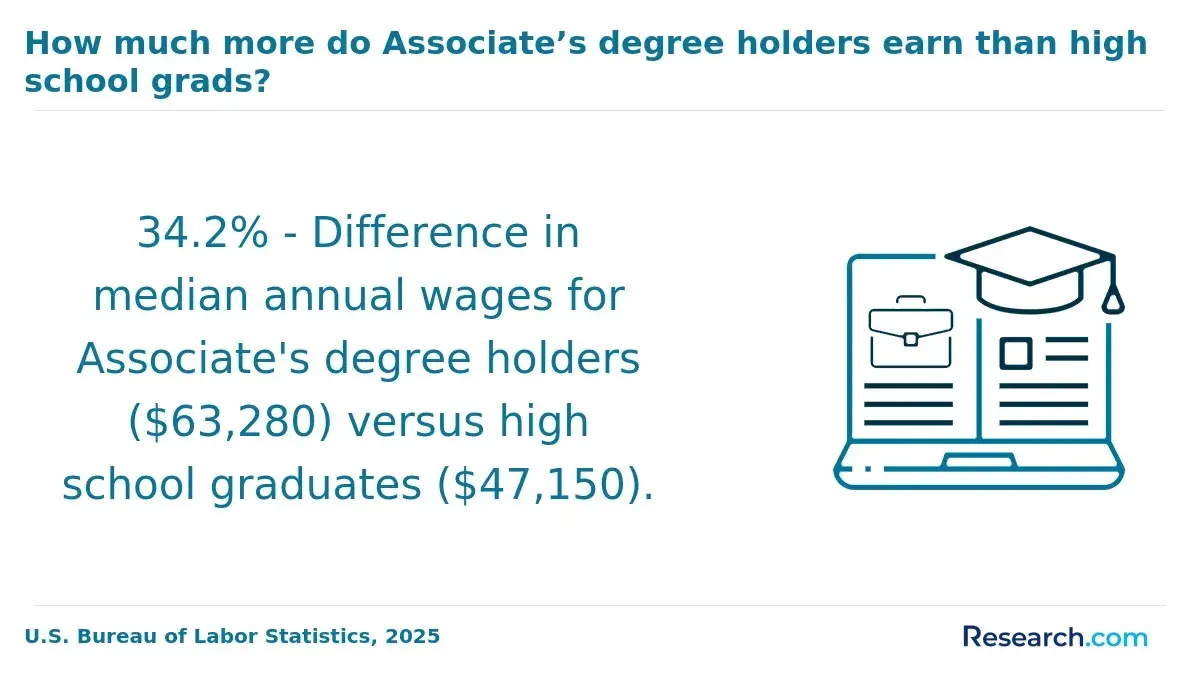
Students considering the associate degree route can compare broader credential and earnings context in this guide to paralegal salary associate's degree pathways. The practical takeaway is to evaluate salary data alongside program cost, internship access, and the kinds of employers that recruit from the school.
Do paralegals need certification or licensing, and how do online degrees help?
Most U.S. paralegals do not need a state license to work in traditional attorney-supervised roles. However, legal rules vary by state, and a small number of jurisdictions have created or considered limited legal paraprofessional roles that allow trained nonlawyers to provide certain services under defined conditions. Students should check their state's rules if they want anything beyond attorney-supervised paralegal work.
Certification is different from licensing. Certification is usually voluntary and offered by professional organizations. It can help demonstrate knowledge, professionalism, and commitment, especially for students entering competitive markets or changing careers from another field.
Common certification options include exams or credentials from national paralegal organizations. Requirements can vary, but they often consider education, experience, or both.
| Credential pathway | What it signals | How an online degree can help |
| Professional paralegal certification | Knowledge of legal concepts, ethics, research, and practical paralegal work | Degree coursework may satisfy or support eligibility requirements |
| Specialty certificates or continuing education | Focused skill in areas such as e-discovery, litigation, contracts, or compliance | Students can build on degree coursework after gaining experience |
| Employer-based training | Familiarity with a firm's practice area, software, and workflows | A degree provides the legal foundation that makes workplace training easier |
Online degrees can help by providing structured legal specialty coursework, writing samples, research practice, and academic transcripts that may be needed for certification eligibility. Still, students should never assume a program automatically qualifies them for every exam or state-specific role. They should compare the school's curriculum against the certification body's current requirements before enrolling.
How can students evaluate and choose a reputable online paralegal studies program?
Choosing a reputable online paralegal studies program requires more than comparing tuition or reading rankings. The best program is one that fits the student's career goal, budget, schedule, state, and target employers while providing enough practical legal training to be credible in the job market.
Students should follow a deliberate evaluation process before applying. These steps can reduce the risk of enrolling in a program that is convenient but weak on outcomes.
- Verify institutional accreditation through a recognized accrediting agency and confirm the school is authorized to enroll online students in your state.
- Check whether the paralegal program is ABA-approved, and if it is not, ask how employers in the region view the credential.
- Review the curriculum for legal research, legal writing, civil litigation, ethics, law office technology, e-discovery, and a capstone, internship, or portfolio requirement.
- Ask who teaches the legal specialty courses and whether instructors have active or recent legal practice experience.
- Request a full cost estimate that includes tuition, fees, books, technology, databases, graduation fees, and any required in-person components.
- Ask how transfer credits are evaluated and whether paralegal credits can apply to a higher degree later.
- Review career support, internship placement help, employer relationships, alumni outcomes, and access to legal software.
- Compare class formats, including asynchronous work, live sessions, assignment deadlines, exam proctoring, and expected weekly study time.
Several red flags deserve special attention. Be cautious if a school avoids clear accreditation answers, advertises unrealistic salary outcomes, pressures students to enroll immediately, hides total costs, lacks legal specialty faculty information, or cannot explain how online students complete internships or practical assignments.
Students should also consider whether a paralegal degree is the right investment at all. It may be a strong choice for someone who enjoys reading, organizing facts, meeting deadlines, and supporting legal strategy. It may not fit someone who wants to argue in court, provide legal advice, or make independent legal decisions; those goals usually require law school or a state-authorized legal paraprofessional pathway where available.
Other Things You Should Know About Paralegal Studies
In 2027 Online Paralegal Studies Degrees, students should be familiar with legal research databases, case management software, e-discovery tools, and document automation systems. Proficiency in these technologies is essential for effective litigation and case support roles, as they streamline workflow and enhance productivity.
Yes, but arrangements vary. Some schools help place students locally, while others require students to find an approved legal office, court, agency, or corporate legal department.
They may strengthen legal familiarity and writing skills, but law school admission depends mainly on bachelor's-level academics, admissions tests where required, applications, and each school's criteria.
References
- Paralegal Education - Advanced Specialty Courses by API https://www.paralegals.org/page/api-advanced-specialty-courses
- Career Outlook and Projected Growth - NALS... the association for legal professionals https://www.nals.org/page/USDEPlabor
- Paralegal Programs https://paralegal.edu/paralegal-programs/
- Affordable Online Paralegal Certification - Get Certified Today https://www.expertrating.com/certifications/personal-development-and-enrichment/paralegal-certification.asp
- Earn an Online Paralegal Degree | OEDb.org https://www.oedb.org/rankings/online-paralegal-programs/
- How to Choose an Online Paralegal Studies Program | Campus https://campus.edu/blog/paralegal/how-to-choose-online-paralegal-program
- Online Paralegal Certificate Program | Self-Paced Course https://www.uscareerinstitute.edu/online-paralegal-school
- Paralegal https://www.fanshawec.ca/programs/plg1-paralegal/next
- Your Guide to Online Paralegal Programs: Degrees, Classes, and Training https://www.paralegalinst.com/online-paralegal-program
- Your Guide to Online Paralegal Programs: Certificate, Associate Degrees, and Career Paths https://masteroflegalstudies.com/programs/online-paralegal/