2027 Paralegal Career Paths With the Best Advancement Potential

Co-Founder and Chief Data Scientist
Choosing a paralegal path now means balancing education cost, employer expectations, technology change, and long-term mobility. The field remains accessible, but advancement increasingly favors paralegals who combine legal knowledge with specialization, software skills, and strong writing.
The U.S. Bureau of Labor Statistics reports a May 2024 median annual wage of $61,010 for paralegals and legal assistants, with higher pay often tied to experience, location, and practice area. This guide helps students, career changers, and working legal assistants compare pathways and choose the smartest next step.
Key Things You Should Know
- Paralegal advancement is strongest in specialized areas such as corporate law, litigation support, compliance, intellectual property, e-discovery, and legal operations, where employers value technical, research, and project-management skills.
- According to BLS May 2024 wage data, the median annual wage for paralegals and legal assistants was $61,010, while the highest-paid workers were typically concentrated in larger employers, major metro areas, and complex practice settings.
- A certificate can work for degree holders, an associate degree can support entry-level hiring, and a bachelor's degree may help with advancement into senior paralegal, compliance, or legal operations roles.
What are the main paralegal career paths with strong advancement potential?
The strongest paralegal career paths are those where legal work is complex, deadline-driven, and closely tied to business risk. A paralegal is not a licensed attorney and generally cannot give legal advice, set legal fees, or represent clients in court, but experienced paralegals often manage major parts of legal workflows under attorney supervision.
Advancement potential is usually highest when a paralegal can move beyond routine document preparation into case strategy support, regulatory tracking, data management, client communication, or legal project coordination. The table below compares common paths by the type of work involved and the reasons each can support career growth.
| Career path | Common work setting | Why advancement potential is strong | Best fit for |
| Litigation paralegal | Law firms, government agencies, insurance defense teams | Large cases require discovery management, trial preparation, filings, and case coordination | Detail-oriented people who handle deadlines well |
| Corporate paralegal | In-house legal departments, corporate law firms | Business transactions, entity management, contracts, and governance create steady demand for experienced support | People interested in business, contracts, and organized records |
| Compliance paralegal | Healthcare, finance, insurance, education, technology companies | Regulated industries need professionals who can track rules, audits, policies, and documentation | Analytical people who enjoy policy and risk management |
| Intellectual property paralegal | IP law firms, technology companies, universities | Trademark, patent, and copyright portfolios require precise docketing and long-term tracking | People comfortable with technical details and filing systems |
| E-discovery or litigation technology specialist | Large law firms, vendors, corporate legal teams | Digital evidence, databases, AI-assisted review, and data privacy needs have expanded the role | Tech-comfortable paralegals who like systems and data |
| Legal operations coordinator | Corporate legal departments | Departments increasingly manage budgets, vendors, contracts, analytics, and workflow improvement | Paralegals interested in management and business operations |
AI and automation are changing these paths rather than eliminating them. Document review, summarization, and contract analysis tools can speed up routine work, but employers still need paralegals who can verify outputs, protect confidentiality, manage deadlines, and understand legal context.
For advancement, the practical question is not only "Which field pays more?" but "Which field builds portable expertise?" A litigation paralegal can grow into trial support or e-discovery; a corporate paralegal can move into contracts or governance; and a compliance paralegal can move toward risk, audit, or regulatory operations.
What education and training are required to become a paralegal in the United States?
There is no single national license required to work as a paralegal in the United States. Requirements vary by employer, state, and practice area, but most employers look for a paralegal certificate, an associate degree in paralegal studies, a bachelor's degree, or a bachelor's degree in another field plus paralegal training.
New students should understand the difference between legal assistant, paralegal, and attorney-track roles. Many employers use "paralegal" and "legal assistant" differently: legal assistants may focus more on administrative support, while paralegals are more likely to perform substantive legal work under attorney supervision.
A practical education plan usually includes both classroom learning and hands-on skill building. Before choosing a program, compare whether it helps you develop the following core competencies:
- Legal research using primary and secondary legal sources, including statutes, regulations, case law, and court rules.
- Legal writing, including memoranda, pleadings, discovery responses, correspondence, and case summaries.
- Civil litigation basics, including court structure, filing procedures, discovery, trial preparation, and deadlines.
- Ethics and professional responsibility, especially confidentiality, conflicts of interest, unauthorized practice of law, and attorney supervision.
- Technology skills, including legal research platforms, document management, e-filing systems, spreadsheets, and case management software.
- Professional experience through internships, clinics, capstone projects, or employer-connected assignments.
For someone already working in a law office, a shorter certificate may be enough to formalize skills. For someone entering the field with no legal background, a degree program with an internship can make the first job search easier. For someone aiming at corporate, compliance, or legal operations roles, broader business, data, or technology coursework can add value.
How do paralegal certificates, associate, and bachelor's degrees compare for career growth?
The best credential depends on what education you already have, how quickly you need to enter the workforce, and whether your long-term goal is legal support, specialization, management, or a future graduate degree. A certificate is often the fastest route, while a degree can provide broader general education and more transferability.
The comparison below shows how the main education options differ for career growth. Use it to identify the path that matches your timeline, budget, and advancement goals.
| Credential | Typical student | Career-growth strength | Possible limitation |
| Postsecondary certificate | Career changers or degree holders who need legal training | Fast, focused, and often useful for entering a law office quickly | May not satisfy employers that prefer a degree |
| Associate degree | Students starting college or seeking an entry-level pathway | Combines paralegal courses with general education and may support transfer later | Some senior roles may favor a bachelor's degree |
| Bachelor's degree in paralegal studies or legal studies | Students seeking broader advancement options | Can support roles in compliance, legal operations, contracts, and management-adjacent work | Takes longer and usually costs more than shorter credentials |
| Bachelor's degree plus paralegal certificate | Graduates from another major entering legal work | Pairs broad academic training with job-specific legal skills | Quality varies; employer recognition depends on the program |
A paralegal associate degree can be a balanced choice for students who want an entry-level credential without committing immediately to a four-year program. It may also be useful if credits can transfer into a bachelor's degree later.
Common mistake: choosing the shortest program without checking whether it fits your target employers. A short certificate may be efficient, but if local law firms or corporate legal departments list a degree as preferred, the cheaper option may limit your first round of opportunities.
How does choosing an ABA-approved or accredited paralegal program impact advancement?
Program quality matters because paralegal education is not governed by one national licensing exam. Two terms are especially important: institutional accreditation and ABA approval. Institutional accreditation evaluates the college or university as a whole, while American Bar Association approval specifically reviews eligible paralegal education programs against ABA guidelines.
ABA approval is not legally required for every paralegal job, and not every strong program has it. However, it can help signal curriculum quality, attorney involvement, legal specialty coursework, and student support. Accreditation is also important for credit transfer, financial aid eligibility, and employer confidence.
Before enrolling, use a short verification process rather than relying only on marketing language. These steps help reduce the risk of paying for a credential that does not support your goals:
- Confirm the school's institutional accreditation through an official accreditation database or the school's accreditation page.
- Check whether the paralegal program itself is ABA-approved if that matters to your target employers or local legal market.
- Ask whether legal specialty courses are taught by attorneys or experienced legal professionals.
- Review internship availability, employer partnerships, job placement support, and alumni outcomes.
- Confirm whether credits transfer to a bachelor's program if you may continue your education later.
Red flags include vague accreditation claims, pressure to enroll immediately, unclear total cost, no information about faculty qualifications, and promises of specific salaries or guaranteed jobs. A reputable program should be transparent about outcomes and limitations.
What is the typical curriculum in paralegal studies that supports long-term career development?
A strong paralegal curriculum should do more than define legal terms. It should teach students how legal work is actually completed: researching rules, organizing facts, drafting documents, meeting deadlines, and communicating clearly with attorneys, clients, courts, and agencies.
The table below summarizes common courses and how each supports career development. This matters because advancement usually depends on applied skills, not just course titles.
| Course area | What students learn | How it supports advancement |
| Introduction to law and legal systems | Court structure, sources of law, legal terminology, and legal professions | Builds a foundation for working across practice areas |
| Legal research and writing | Case law, statutes, regulations, citations, memoranda, and persuasive writing | Supports higher-level assignments and attorney trust |
| Civil litigation | Pleadings, discovery, motions, evidence basics, and trial preparation | Prepares students for common law firm and government roles |
| Contracts and business organizations | Agreements, entities, governance, and business records | Useful for corporate, compliance, and transactional paths |
| Ethics | Confidentiality, conflicts, supervision, client contact, and unauthorized practice of law | Reduces professional risk and supports responsible independent work |
| Legal technology | Case management, e-filing, research tools, spreadsheets, and document systems | Helps paralegals stay relevant as legal work becomes more digital |
Students aiming for long-term growth should look for assignments that resemble workplace tasks. Examples include drafting a litigation calendar, preparing a research memo, organizing discovery materials, building a corporate records file, or completing a mock client intake under supervision.
Because AI tools are becoming more common in legal research and document review, a future-focused curriculum should also address verification, bias, confidentiality, and responsible technology use. The best programs teach students how to check AI-assisted work rather than simply rely on it.
How do online paralegal programs compare to campus-based options for career advancement?
Online and campus-based paralegal programs can both support career advancement if they are reputable, skills-focused, and connected to real legal work. The better choice depends on schedule, location, learning style, internship access, and how local employers view the credential.
The comparison below focuses on decision factors that affect career outcomes. Online convenience is valuable, but it should not come at the expense of networking, legal writing feedback, or practical training.
| Factor | Online paralegal program | Campus-based paralegal program |
| Flexibility | Often better for working adults, caregivers, and students far from campus | Usually requires set class times or commuting |
| Networking | Can be strong if the program offers live sessions, alumni events, and internship help | May provide easier local networking through faculty and nearby employers |
| Skill practice | Works well when courses include writing feedback, simulations, and legal technology tools | May offer more in-person workshops, clinics, or courthouse exposure |
| Internships | Quality depends on whether the school helps students arrange local placements | May have established relationships with nearby firms, courts, and agencies |
| Best fit | Self-directed students who need flexibility | Students who prefer face-to-face instruction and local legal connections |
For advancement, the most important question is whether the format helps you produce employer-ready work. Ask for sample syllabi, writing assignment expectations, legal technology tools used in courses, and internship placement details.
A common mistake is assuming online means easier. Strong online programs can be rigorous, especially when they require legal research, document drafting, discussion participation, and scheduled projects. Students who need frequent structure may perform better in hybrid or campus-based formats.
What are the admission requirements, program length, and costs for paralegal degrees?
Admission requirements vary by credential level. Certificate and associate programs commonly require a high school diploma or equivalent, while post-baccalaureate certificates require a bachelor's degree. Bachelor's programs may request transcripts, placement testing, essays, or transfer-credit evaluations.
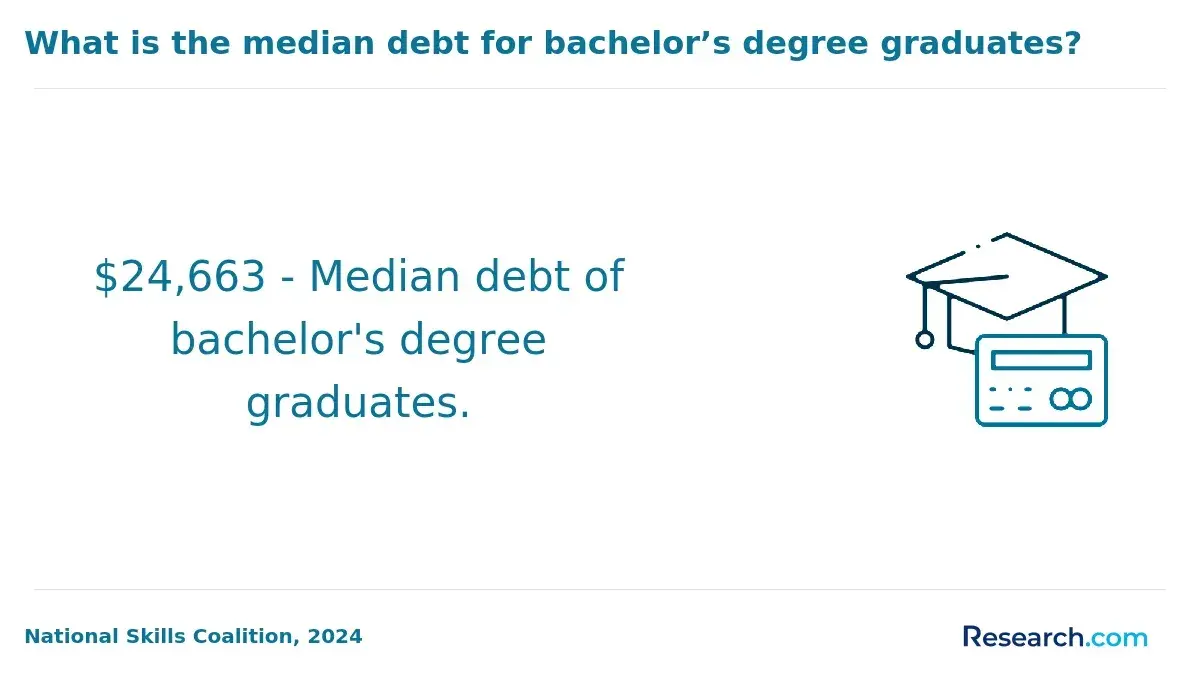
Cost is one of the biggest decision points. College Board's 2024 Trends in College Pricing reported average published tuition and fees of $4,050 for public two-year colleges and $11,610 for in-state students at public four-year colleges for 2024-25.
Private nonprofit four-year colleges were substantially higher. These are broad averages, so students should compare total program cost rather than relying on tuition alone.
The table below outlines typical timelines and cost considerations. Exact numbers vary by state residency, transfer credits, school type, delivery format, books, fees, and whether the student attends full time or part time.
| Program type | Typical admission requirement | Common length | Cost factors to compare |
| Paralegal certificate | High school diploma or prior college credit, depending on program | Several months to about 1 year | Tuition, legal database fees, books, technology, and exam-prep costs |
| Post-baccalaureate certificate | Bachelor's degree | Several months to about 1 year | Per-credit tuition, ABA approval status, internship access, and employer recognition |
| Associate degree | High school diploma or equivalent | About 2 years full time | Tuition, fees, transferability, commuting or online technology costs |
| Bachelor's degree | High school diploma or transfer credits | About 4 years full time, less with transfer credits | Upper-division tuition, general education, electives, internship costs, and lost work time |
Students comparing law-adjacent degrees should also look at total cost patterns in related fields, such as how much does it cost to get a criminal justice degree, because tuition, fees, and online-program charges can affect the return on investment across similar career paths.
To control costs, ask schools about transfer credits, credit for prior learning, employer tuition assistance, payment plans, scholarships, and whether required legal research tools are included in tuition. Avoid borrowing based on expected salary alone; use conservative assumptions and compare monthly loan payments against realistic entry-level earnings in your region.
What entry-level and mid-career job roles can paralegals advance into over time?
Paralegal careers often grow in stages. Many people begin with administrative or document-heavy work, then move into more specialized case management, client communication, research, compliance, contracts, or operations responsibilities.
The table below shows a realistic progression, though actual timelines vary by employer, performance, location, and practice area. It is best used as a planning tool rather than a guaranteed ladder.
| Career stage | Possible roles | Typical responsibilities | Skills that help advancement |
| Entry level | Legal assistant, junior paralegal, records clerk, intake assistant | File organization, scheduling, basic drafting, document collection, client intake support | Accuracy, professionalism, confidentiality, office software |
| Early career | Paralegal, litigation support assistant, corporate legal assistant | Research, filings, discovery tracking, contract support, matter updates | Legal writing, calendaring, database use, deadline management |
| Mid-career | Senior paralegal, case manager, contracts administrator, compliance coordinator | Complex drafting, workflow coordination, supervising junior staff, vendor or client communication | Specialization, project management, legal technology, independent judgment |
| Advanced non-attorney track | Legal operations specialist, e-discovery specialist, compliance analyst, paralegal manager | Process improvement, analytics, budgets, systems, regulatory documentation, team coordination | Leadership, data literacy, process design, cross-functional communication |
Some paralegals also move into adjacent business roles such as legal recruiting, vendor management, client intake management, or law firm marketing operations. A paralegal who wants to pivot toward business development or digital client acquisition may compare options like the cheapest online marketing degree, but that route makes the most sense when the target role clearly requires marketing or analytics skills.
To move from entry-level work into stronger roles, focus on documented accomplishments. Examples include reducing filing errors, building a case calendar template, improving discovery organization, learning an e-discovery tool, or taking ownership of recurring compliance reports.
What salary ranges and earning potential do paralegals have at different career stages?
Paralegal pay varies widely by region, employer size, practice area, education, experience, and overtime eligibility. BLS May 2024 data reported a median annual wage of $61,010 for paralegals and legal assistants, which means half of workers earned more and half earned less. Readers should treat this as a national benchmark, not a local salary promise.
The table below explains how earning potential often changes by stage and specialization. It avoids guaranteed outcomes because salary offers depend heavily on local labor markets and employer budgets.
| Career stage | Common pay influences | How to improve earning potential |
| Entry level | Location, internship experience, typing and software skills, legal office exposure | Build a strong writing sample, learn court filing rules, and document software proficiency |
| Experienced paralegal | Practice-area knowledge, attorney trust, client contact, case volume, independent drafting ability | Specialize in litigation, corporate law, IP, real estate, immigration, or compliance |
| Senior paralegal | Complex matter management, supervision, billing value, trial or transaction experience | Lead workflows, mentor junior staff, and master advanced legal technology |
| Legal operations or compliance role | Business knowledge, systems, analytics, regulatory exposure, cross-functional communication | Add project management, data, contract lifecycle, or audit-related skills |
Industry also matters. Large corporate legal departments, specialized law firms, and federal or state agencies may evaluate candidates differently. Some roles offer higher base pay, while others provide better benefits, predictable schedules, union protections, or tuition support.
When comparing offers, look beyond salary. Billable-hour expectations, overtime rules, remote-work options, commute costs, health benefits, training budgets, and promotion paths all affect the real value of a position.
How can paralegals use certifications and specialization to move into higher-level roles?
Professional certification is different from completing a school certificate. A school certificate is an academic credential, while professional certifications are typically earned through exams, experience, or continuing education from professional associations. They are usually voluntary, but they can signal commitment and competency.
Certifications can be useful when they match a specific career goal. For example, a litigation paralegal may benefit from credentials tied to trial support or e-discovery, while a corporate paralegal may gain more from contract management, compliance, or governance training.
Use specialization strategically rather than collecting credentials randomly. The following sequence can help you choose credentials that support advancement:
- Identify the role you want next, such as senior litigation paralegal, IP paralegal, compliance analyst, contracts administrator, or legal operations specialist.
- Review job postings in your target region and list the software, certifications, and practice-area skills employers repeatedly request.
- Choose one specialization that builds on your current experience instead of starting from zero.
- Ask your employer whether the credential can support promotion, higher pay, new assignments, or tuition reimbursement.
- Build proof of skill through work samples, projects, continuing legal education, or supervised experience.
Legal-adjacent graduate study can also make sense for some paralegals, especially those moving toward policy, victim services, behavioral evidence, investigations, or court-connected work.
For example, a professional interested in psychology-informed legal settings may explore masters in forensic psychology online options, but this is a different career direction and should be evaluated against specific job requirements.
The main mistake to avoid is paying for a credential before confirming its market value. A certification is most useful when employers recognize it, the subject matches your practice area, and you can apply the skill immediately at work.
Other Things You Should Know About Paralegal Studies
Yes. Working as a paralegal can help someone understand legal practice before applying to law school, but it does not shorten the standard path to becoming an attorney. Lawyers generally need a law degree, must meet state bar requirements, and must be admitted to practice in their jurisdiction.
A bachelor's degree in paralegal studies or a related field is increasingly preferred for paralegals seeking advancement in 2027. Although not mandatory, such educational qualifications enhance career prospects by providing specialized knowledge and skills that may lead to better positions and responsibilities.
Specialization is increasingly important for paralegals seeking advancement in 2027. Specializing in areas like intellectual property, corporate law, or e-discovery not only enhances expertise but also improves job prospects and salary potential by aligning skills with in-demand legal sectors.
The Certified Paralegal (CP) from NALA and the Advanced Certified Paralegal (ACP) can strengthen promotion prospects. For specialty work, credentials in e-discovery, litigation support, or real estate are useful. Employers often look for CP plus 2,000 hours of experience, and some states recognize paralegal certification in hiring standards.
References
- 8 Things to Consider When Choosing a Paralegal Program - Paralegal College | Center for Advanced Legal Studies https://paralegal.edu/blog/8-things-to-consider-when-choosing-a-paralegal-program/
- Steps to Become a Paralegal in Texas | All Criminal Justice Schools https://www.allcriminaljusticeschools.com/legal-and-paralegal/texas/
- ABA-Approved Paralegal Programs: Are There Advantages? | Campus https://campus.edu/blog/paralegal/american-bar-association-approval
- The Paralegal Path: How Education Shapes Your Legal Career https://www.paralegalinst.com/career-paralegal-education
- Paralegal Pathways: Job Market Entry Without Experience https://www.wrresourcing.com/paralegal-pathways-job-market-entry-without-experience/
- Paralegal Certificate, Certification and Certified: What’s the difference? https://www.becomeaparalegal.org/blog/paralegal-certificate-certification-and-certified-whats-the-difference/
- How to Choose the Best Online Paralegal Programs for Your Career https://lakewood.edu/best-online-paralegal-programs/