2027 Parent Student Loan Repayment Strategies

Student Finance & Loan Expert
Many parents face mounting stress when juggling their own student loan payments alongside supporting their child's education costs. Increasing interest rates and evolving repayment options can deepen financial strain unexpectedly. This challenge grows more urgent as lenders update terms and borrowers struggle to identify the most cost-effective strategies. Navigating complex loan forgiveness programs, income-driven repayment plans, and refinancing choices requires clear, accurate information. This article outlines key repayment strategies tailored to parental borrowers, helping them optimize payment plans, reduce long-term debt, and avoid common pitfalls associated with managing student loans.
- How do parent student loans work and what makes them different from student loans? Parent loans
- What repayment options are available for federal Parent PLUS loans? PLUS repayment
- How can parents lower monthly payments on existing parent student loans? Lower payments
- Should parents refinance Parent PLUS loans, and when does refinancing make sense? Refinance PLUS
- Can Parent PLUS loans be consolidated, and how does consolidation change repayment? Consolidate loans
- Are parents ever eligible for loan forgiveness on Parent PLUS loans? Parent forgiveness
- How do income-contingent and other income-driven plans work for Parent PLUS loans? IDR for parents
- What strategies help parents decide how much to borrow versus what students borrow? Borrowing split
- How do parent student loans affect retirement planning, homeownership, and other goals? Life impact
- What steps should parents take if they're struggling or in danger of defaulting? Avoid default
How do parent student loans work and what makes them different from student loans?
Parent PLUS loans differ significantly from traditional federal student loans taken out directly by students. These loans are borrowed by parents on behalf of dependent undergraduates, meaning the repayment responsibility rests solely with the parent or legal guardian who signs the promissory note. Unlike student loans such as Direct Subsidized and Unsubsidized loans, which do not require credit checks, Parent PLUS loans mandate a credit check; poor credit may disqualify applicants or require a cosigner or endorser.
Key differences include:
- Loan Limits: Parent PLUS loans allow borrowing up to the total cost of attendance minus any other financial aid, with no fixed annual caps.
- Interest Rates and Fees: These loans generally have higher interest rates and origination fees compared to undergraduate student loans.
- Repayment Terms: Repayment begins immediately after disbursement, offering less flexibility than typical student loans, which usually include a grace period.
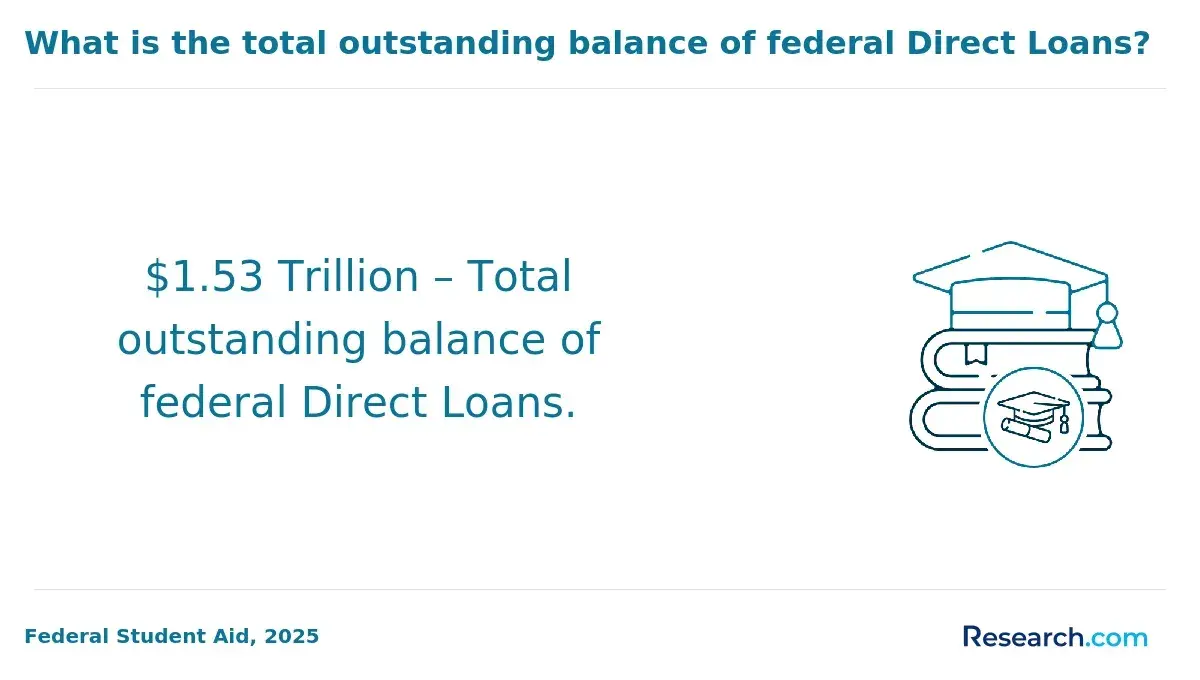
Parents can explore parent student loan repayment options such as income-driven repayment plans, though eligibility criteria differ from those for student borrowers. With about 3.8 million Americans owing $112.2 billion in Parent PLUS loans, these loans account for 7% of the $1.6 trillion total student loan debt, underscoring their impact on higher education funding.
Parents should carefully evaluate their capacity for immediate repayment and consider how these loans affect their credit and debt-to-income ratio. Other options like scholarships or alternative funding sources may be advisable to explore first, especially since some wonder if can financial aid pay for rent.
What repayment options are available for federal Parent PLUS loans?
Federal Parent PLUS loan repayment plans offer several options tailored to different financial situations. Standard repayment requires fixed monthly payments for 10 years, while Graduated and Extended plans stretch repayment up to 20 years. Graduated Plans start with lower payments that increase every two years, easing early financial pressure. The Extended Plan provides smaller fixed or graduated payments over 20 years but requires a minimum loan balance of $30,000.
For those seeking income-driven options, Income-Contingent Repayment (ICR) is available only after consolidating Parent PLUS loans into a Direct Consolidation Loan. Under ICR, payments are capped at 20% of discretionary income or the amount on a fixed 12-year plan, whichever is less. This can reduce monthly payments but may lengthen repayment and increase interest costs.
Borrowers also have options for forbearance or deferment during financial hardship, which pause or reduce payments while allowing interest to accrue. Parent PLUS loans carry a fixed interest rate of 9.08%, the highest federal parent loan rate in over a decade, making it essential to choose a manageable repayment strategy to control costs while repaying parent plus loans in the United States.
Those considering alternatives should evaluate their income stability and repayment goals carefully. Private refinancing may lower rates but depends on creditworthiness and lacks federal protections. For information on student loans without a cosigner, borrowers can explore options beyond federal programs.
How can parents lower monthly payments on existing parent student loans?
Parents seeking to reduce monthly parent loan payments on existing Parent PLUS loans have several practical options. Income-driven repayment (IDR) plans adjust payments based on discretionary income, often lowering monthly costs by extending terms up to 25 years compared to the standard 10-year repayment. Loan consolidation via a Direct Consolidation Loan can simplify multiple federal loans into one payment, possibly lowering monthly amounts and enabling eligibility for certain IDR plans that are otherwise unavailable for Parent PLUS loans.
Refinancing through private lenders may secure lower interest rates, but it converts federal Parent PLUS loans into private loans, resulting in loss of federal benefits like loan forgiveness and flexible repayment options. Parents working in qualifying public service jobs who use IDR plans might also pursue Public Service Loan Forgiveness (PSLF), which can forgive remaining balances after 10 years of qualifying payments, significantly easing repayment burdens.
Research shows that parents who took Parent PLUS loans in 2019-2020 borrowed a median of $13,732 annually, with about 22% accumulating over $65,000 in debt by their child's graduation. This highlights the importance of exploring parent student loan repayment options carefully to manage debt responsibly.
For detailed information about these strategies and the best available options, parents should explore resources on parent PLUS loans for guidance on lowering payment amounts and improving loan terms.
Should parents refinance Parent PLUS loans, and when does refinancing make sense?
Refinancing Parent PLUS loans can benefit some parents, especially when they have strong credit scores and can secure much lower interest rates than the federal fixed rate, which averages around 7%. This approach can reduce monthly payments and total interest paid. However, refinancing eliminates federal protections like income-driven repayment plans, deferment options, and potential loan forgiveness, which are crucial if financial hardship occurs. This trade-off means parents should carefully evaluate when refinancing parent student loans makes sense.
Parents with stable finances and the ability to repay loans without federal income-driven options might find refinancing advantageous. For example, reducing a 7% federal rate to 4% could save thousands over the loan's life. Still, refinancing is risky if unexpected job loss or emergencies arise, as private lenders typically lack flexible repayment plans.
Starting July 1, 2026, new Parent PLUS loans will face a $20,000 yearly borrowing limit and a $65,000 lifetime cap per child, replacing prior policies without limits. Parents planning to borrow beyond these caps should be cautious with refinancing to preserve federal benefits.
Those deciding whether parents refinance Parent PLUS loans should:
- Compare current federal and private loan rates carefully
- Evaluate eligibility for income-driven repayment or Public Service Loan Forgiveness
- Calculate total costs factoring in forgiveness scenarios
For guidance, explore banks with student loan refinance options that may suit your financial situation.
Can Parent PLUS loans be consolidated, and how does consolidation change repayment?
Parent PLUS loans can be consolidated into a Federal Direct Consolidation Loan, which combines multiple federal loans into one monthly payment. This simplifies repayment by merging bills and can extend the repayment term up to 30 years, depending on the total loan amount. While consolidation may lower monthly payments, it often increases the total interest paid over the life of the loan.
Consolidation unlocks access to the Income-Contingent Repayment (ICR) plan, the only income-driven option for Parent PLUS loans after consolidation. Payments under ICR adjust based on income and family size, helping borrowers facing financial hardship. However, the interest rate on the consolidated loan reflects a weighted average of the loans, rounded up to the nearest one-eighth percent, which can slightly raise costs.
For example, on a $50,000 Parent PLUS Loan at 9.08%, a standard 10-year repayment results in roughly $636 monthly payments and about $26,376 in interest. Extending to a 25-year fixed plan lowers payments to $426 but increases total repayment to approximately $127,732, showing how longer terms reduce monthly costs but raise overall expenses.
Before consolidating, borrowers should evaluate their financial situation carefully. Consolidation resets loan forgiveness timelines and can cause interest capitalization, increasing the principal and overall interest. Weigh the lower payment benefits against higher total costs and potential loss of borrower protections on original loans.
Are parents ever eligible for loan forgiveness on Parent PLUS loans?
Parents with Parent PLUS loans can access loan forgiveness, but only under specific conditions. These loans do not qualify directly for most income-driven repayment (IDR) plans, which are typically the route to loan forgiveness. To become eligible, borrowers must consolidate Parent PLUS loans into a Direct Consolidation Loan, enabling enrollment in the Income-Contingent Repayment (ICR) plan-the only IDR option available for these loans.
The ICR plan bases payments on adjusted gross income, often resulting in higher monthly payments compared to other IDR plans. A common strategy among Parent PLUS borrowers is "double-consolidation": first consolidating into a Direct Consolidation Loan, then reconsolidating to extend the repayment term and maintain forgiveness eligibility after 25 years of qualifying payments.
Public Service Loan Forgiveness (PSLF) is also available for Parent PLUS borrowers who consolidate. Eligibility requires working full-time in qualifying public service roles and making 120 qualifying payments under ICR.
As of late 2023, approximately 3.8 million Parent PLUS borrowers owed $112.2 billion-a significant amount emphasizing the need for strategic repayment planning. Borrowers should carefully time consolidation to access IDR plans and forgiveness options and consult with a loan servicer or official guidance tailored to their situation.
How do income-contingent and other income-driven plans work for Parent PLUS loans?
Parent PLUS loans differ from federal student loans taken out by students when it comes to income-driven repayment options. These loans are not eligible for most income-driven plans unless consolidated into a Direct Consolidation Loan. After consolidation, borrowers can access the Income-Contingent Repayment (ICR) plan, which bases monthly payments on income, family size, and loan balance. Typically, payments are set at 20% of discretionary income or the amount on a fixed 12-year schedule, whichever is less.
Other income-driven plans like Income-Based Repayment (IBR), Pay As You Earn (PAYE), and Revised Pay As You Earn (REPAYE) are not available for Parent PLUS loans. This makes ICR the sole federal income-driven option for these borrowers.
Refinancing offers an alternative for parents facing high monthly payments. For instance, refinancing a $50,000 Parent PLUS loan from 9.08% to a 6.50% fixed rate could lower payments from about $636 to $568 monthly and save over $8,000 in interest across 10 years, according to CollegeFinance.
However, refinancing converts federal loans to private ones, eliminating federal benefits like forgiveness and income-driven repayment plans. Parents needing federal protections should pursue Direct Consolidation to qualify for ICR and possible forgiveness after 25 years of payments.
What strategies help parents decide how much to borrow versus what students borrow?
Parents weighing education loan options must carefully balance borrowing amounts against their long-term financial security, especially retirement savings. Federal Reserve data reveal that many adults carrying their own or their children's student debt reduce their retirement contributions to manage loan payments. To avoid this, parents should borrow only what they can realistically repay without cutting into those savings.
Income stability and age are important considerations; those closer to retirement should aim for smaller loans to protect financial health. This often shifts more borrowing responsibility to students, who benefit from federal loans offering lower interest rates and flexible repayment plans tailored for early-career graduates.
- Calculate total education costs, subtracting savings or gift contributions.
- Estimate future earnings for both parents and students to set manageable debt limits.
- Reserve parent borrowing for essential expenses beyond student loans and scholarships.
- Encourage students to exhaust federal Direct Subsidized and Unsubsidized Loan options before private loans.
Income-driven repayment plans are also valuable for managing student loans, adjusting payments based on income and family size. Open communication between parents and students about financial boundaries ensures borrowing aligns with long-term capability, helping prevent deferred retirement savings or overwhelming debt burdens.
How do parent student loans affect retirement planning, homeownership, and other goals?
Parent PLUS loans significantly increase financial challenges for families by adding long-term debt that affects retirement planning and homeownership. Since 2014, Parent PLUS loan balances have surged over 72%, while borrower numbers rose about 19%, revealing that average debt per parent is climbing much faster than participation (BestColleges, analyzing U.S. Department of Education portfolio data). This growing debt means parents must often dedicate more of their monthly income to repayments, leaving less available for retirement savings or home down payments.
Extended repayment terms may stretch payments into retirement, potentially delaying retirement or lowering monthly income for retirees. Unlike federal student loans for students, Parent PLUS loans do not qualify for income-driven repayment plans based on discretionary income, reducing repayment flexibility and increasing financial strain.
Parents frequently have to make tough financial compromises, such as:
- Delaying home purchases due to insufficient savings for down payments combined with loan repayments
- Cutting back on retirement contributions, risking insufficient funds for future living and healthcare expenses
- Exploring refinancing or consolidation options to lower interest rates or extend repayment terms
Effective planning involves detailed payoff strategies and budgeting. Consulting a financial advisor can help align repayment choices with other financial goals. Without proactive management, Parent PLUS loan debt can significantly limit financial flexibility and increase vulnerability to economic setbacks or unexpected costs.
What steps should parents take if they're struggling or in danger of defaulting?
Parents facing difficulty repaying Parent PLUS loans should promptly contact their loan servicer to explore options. Ignoring payments risks default, damaging credit scores, and increasing debt due to collection fees.
For immediate relief, deferment or forbearance can pause payments during financial hardship, though these options increase total interest paid. Income-Driven Repayment (IDR) plans help many parents with modest or fluctuating incomes. While Parent PLUS loans aren't directly eligible for IDR, consolidating them into a Direct Consolidation Loan makes IDR plans accessible, lowering monthly payments based on income and family size.
Refinancing may reduce interest rates or extend repayment terms but converting federal loans to private loans eliminates federal protections such as income-driven options and loan forgiveness.
Parents who qualify should consider public service loan forgiveness programs, which can forgive loans after ten years of qualifying payments if employment criteria are met. Setting up automatic payments and budgeting strictly for loan repayment can prevent missed payments and defaults.
In 2024-2025, about $12.3 billion of the $102.6 billion education loans borrowed were Parent PLUS loans, highlighting the need for strategic repayment plans (LendingTree, using U.S. Department of Education and College Board data).
Other Things You Should Know About
Yes, parent student loans do not directly affect a child's eligibility for federal financial aid since they are borrowed separately by the parent. However, the debt from parent loans can indirectly impact the family's overall financial situation, which may influence need-based aid assessments in future aid applications. The key factor remains the family's income and assets reported on the Free Application for Federal Student Aid (FAFSA).
To effectively manage parent student loans in 2027, consider refinancing for better interest rates, setting up autopay for possible interest rate reductions, and exploring income-driven repayment plans. Consolidating federal loans can simplify payments, while staying informed about policy changes ensures the best strategy adjustments.
Federal Parent PLUS loans do not offer a traditional grace period after the student graduates. Repayment begins immediately once the loan is fully disbursed, although parents can request a deferment while the student is enrolled at least half-time. This means parents should plan to start payments soon after loan funds are received or after the student leaves school.
Parent PLUS loans generally have higher fixed interest rates than undergraduate federal student loans but typically lower rates than most private parent loans. Interest rates on federal Parent PLUS loans are set annually by the government and tend to be stable, offering predictability compared to variable-rate private loans. Comparing rates is important when considering borrowing or refinancing options.