2027 Fastest Online SLP Programs That Still Meet ASHA Standards

Co-Founder and Chief Data Scientist

Reviewed by Rhea Paul, PhD
SLP Education & Research Expert
What are the benefits of getting an online SLP program?
- Diverse career opportunities: Graduates of online SLP programs can work as speech-language pathologists in schools, hospitals, rehabilitation centers, private practices, and teletherapy settings.
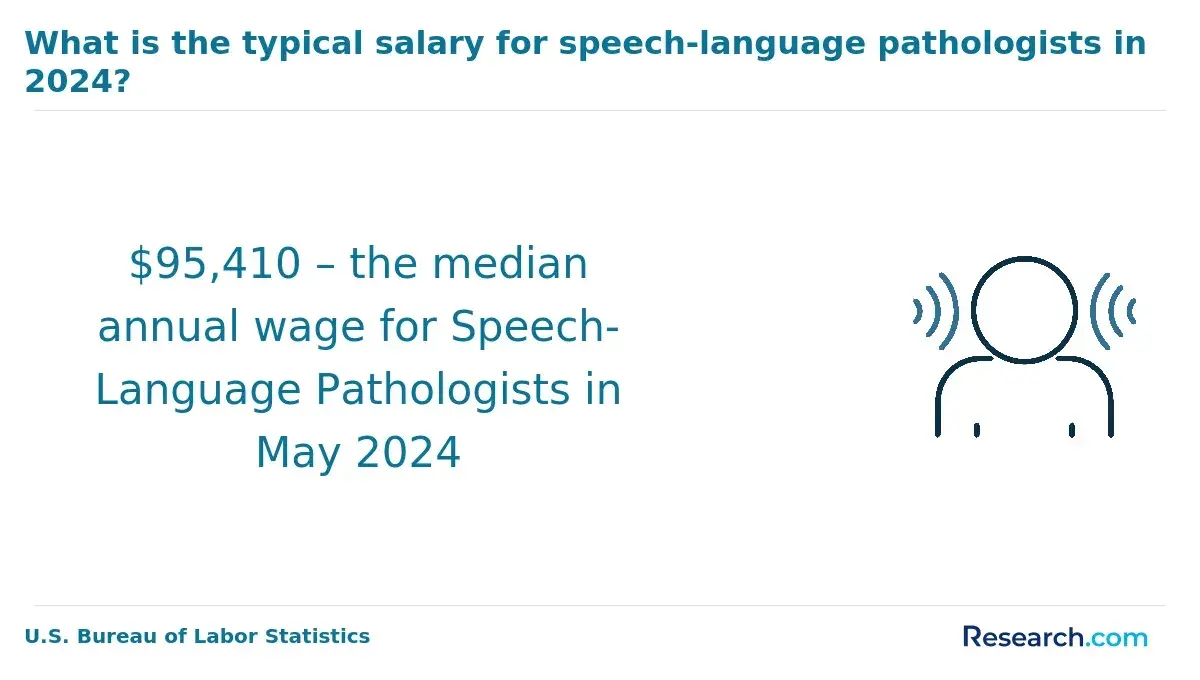
- Strong earning potential: According to the U.S. Bureau of Labor Statistics, the median annual salary for speech-language pathologists is around $97,870 (as of 2026), with higher pay in healthcare and clinical environments.
- Flexibility and accessibility: Online SLP programs let you complete coursework from anywhere, making it easier to balance studies with work or family responsibilities.
- Same accreditation, same outcomes: Accredited online programs meet ASHA’s standards, meaning you’ll qualify for certification and state licensure just as you would with an on-campus degree.
What are the fastest online SLP programs accredited by ASHA in 2025?
The fastest ASHA-accredited online speech-language pathology master’s programs are designed for students who can manage a full-time graduate workload while completing required clinical training on schedule. “Fast” does not mean lighter or less rigorous. These programs still must meet accreditation expectations, clinical practicum requirements, and preparation standards for professional certification and licensure pathways.
Research.com ranked these programs using a transparent methodology built on data from the Integrated Postsecondary Education Data System (IPEDS), Peterson's databases including the Distance Learning Licensed Data Set, and the College Scorecard database from the National Center for Education Statistics. These sources help compare programs on factors such as cost, delivery format, completion options, and institutional data.
The programs below offer accelerated or full-time online pathways that can help qualified students finish sooner while still completing required coursework, supervised clinical experiences, and professional preparation.
| School | Fastest listed completion time | Credits | Cost per credit | Best fit |
| Emerson College | 20 months | 54 | About $1,345 | Students who want a structured cohort model and strong placement support |
| Baylor University | 20–24 months | 45 | Approximately $1,100 | Students seeking a faith-based program with live online classes |
| New York University | 20–36 months | 48 | Around $1,400 | Students who want flexible pacing and a large research university setting |
| University of St. Augustine for Health Sciences | 20 months | 54 | $923 | Students interested in clinical practice and interprofessional training |
| Western Kentucky University | 24 months | 60 | $707 (in-state and online rate) | Students looking for a lower listed online tuition rate and local clinical experience |
Emerson College – Master's in Speech Pathology
The Emerson College Master's in Speech Pathology is an online master’s program that can be completed in as few as 20 months through a five-term full-time track. Coursework is delivered online, while clinical placements are completed in person at approved sites arranged near the student’s location.
This option is a strong match for students who want a cohort-based structure, a defined pace, and university support with clinical placement logistics. Because the timeline is compressed, applicants should be ready for an intensive schedule that may leave limited room for full-time work.
- Program Length: 20 months (full-time)
- Tracks/Concentrations: General speech-language pathology
- Cost per Credit: About $1,345
- Required Credits to Graduate: 54
- Accreditation: Council on Academic Accreditation (CAA) of ASHA
Baylor University – Online CSD Program (Robbins College)
Baylor University offers an online master’s in communication sciences and disorders through Robbins College that allows students to graduate in as little as 20 months on the standard track. The program includes live online classes and supervised clinical practica totaling about 400 hours.
Baylor may appeal to students who prefer synchronous interaction, personalized clinical placement assistance, and a faith-based academic environment. Before enrolling, students should confirm the weekly live class schedule and whether the pace fits their work and family commitments.
- Program Length: 20–24 months
- Tracks/Concentrations: Clinical speech-language pathology
- Cost per Credit: Approximately $1,100
- Required Credits to Graduate: 45
- Accreditation: CAA of ASHA
New York University (NYU Steinhardt) – Speech@NYU
NYU Steinhardt’s Online Master’s in Communicative Sciences and Disorders offers full-time and part-time pacing, with full-time students typically finishing in six to seven terms depending on prior coursework. Students who have not completed prerequisite courses may need foundation coursework before moving into advanced graduate study.
This program is well suited for students who want a research-driven university environment, multiple start dates, and flexibility in pacing. Applicants should pay close attention to prerequisite requirements because they can affect both total cost and time to completion.
- Program Length: 20–36 months
- Tracks/Concentrations: Speech-language pathology (general)
- Cost per Credit: Around $1,400
- Required Credits to Graduate: 48
- Accreditation: CAA of ASHA
University of St. Augustine for Health Sciences – Master of Science in Speech-Language Pathology (MS-SLP)
The University of St. Augustine’s online MS-SLP emphasizes clinical excellence and interprofessional practice. Students can finish in as little as 20 months by combining online coursework with required in-person clinical and residency experiences.
This program is a practical option for students who want a health sciences-focused learning environment and are comfortable planning for hands-on requirements in addition to online classes. As with any accelerated clinical program, students should ask early about residency timing, placement expectations, and local site availability.
- Program Length: 20 months
- Tracks/Concentrations: Communication sciences and disorders
- Cost per Credit: $923
- Required Credits to Graduate: 54
- Accreditation: CAA of ASHA
Western Kentucky University – Online Master of Science in Speech-Language Pathology
Western Kentucky University’s online SLP program offers a 24-month pathway for students with appropriate preparation in communication sciences. The program combines online coursework with clinical experiences arranged in students’ local communities.
Western Kentucky University stands out for its listed $707 in-state and online rate, which may make it attractive to cost-conscious students. Applicants should verify prerequisite expectations, state authorization, and whether clinical placements are available in their region before committing.
- Program Length: 24 months
- Tracks/Concentrations: Speech-language pathology (general)
- Cost per Credit: $707 (in-state and online rate)
- Required Credits to Graduate: 60
- Accreditation: CAA of ASHA
What does it mean when an online SLP program is ASHA-accredited?
When an online SLP program is ASHA-accredited, it means the program has been reviewed by the Council on Academic Accreditation in Audiology and Speech-Language Pathology (CAA), the accrediting body associated with the American Speech-Language-Hearing Association. For students comparing SLP online programs, this is one of the most important quality checks.
CAA accreditation indicates that the program meets national standards for curriculum, faculty qualifications, student assessment, clinical education, and program outcomes. It also means the online format must support the same professional preparation expected of accredited campus-based programs.
Accreditation matters because speech-language pathology is a licensed profession. Graduating from a CAA-accredited program is a key requirement for pursuing the Certificate of Clinical Competence in Speech-Language Pathology (CCC-SLP) and is commonly tied to state licensure eligibility. Without the right accreditation, a degree may not satisfy certification, licensure, employer, or clinical fellowship requirements.
Why accreditation should be checked before applying
- Licensure preparation: Accredited programs are designed to align with professional education requirements for entry into the field.
- Clinical training oversight: Programs must provide supervised experiences that support competency development.
- Employer recognition: Schools, hospitals, clinics, and rehabilitation settings typically expect graduates to come from properly accredited programs.
- Financial risk reduction: Verifying accreditation helps avoid spending tuition on a program that may not lead to certification or licensure pathways.
What are the ASHA Standards in SLP programs?
ASHA standards define what graduate speech-language pathology programs must teach and how they must prepare students for supervised clinical practice. Programs accredited by ASHA’s Council on Academic Accreditation (CAA) are evaluated on whether they provide the academic knowledge, clinical experience, faculty support, and outcome assessment needed for professional readiness.
For students, these standards are important because they connect the degree to the next steps in the profession: clinical training, certification, and state licensure. A program that does not meet these expectations can create serious barriers after graduation.
Core areas covered by ASHA-aligned programs
- Foundational knowledge: Speech, language, hearing, swallowing, communication development, and related biological and behavioral sciences.
- Assessment and intervention: Evaluation, diagnosis, treatment planning, documentation, and evidence-based therapy practices.
- Clinical education: Supervised hands-on practice with clients across different ages, disorders, and service settings.
- Professional practice: Ethics, cultural responsiveness, collaboration, counseling, and legal responsibilities.
- Faculty and supervision quality: Instruction and clinical supervision from qualified professionals who can evaluate student competency.
Before applying, verify the school’s current accreditation status through ASHA’s CAA Program Directory. Do not rely only on marketing language such as “aligned with ASHA standards” or “designed for certification.” The safest choice is a program that clearly holds CAA accreditation for speech-language pathology.
What are the admission requirements for online SLP master’s programs?
Admission requirements for online SLP master’s programs vary by institution, but most schools evaluate academic preparation, communication skills, readiness for clinical training, and fit with the profession. Competitive applicants show they can handle graduate-level science coursework and interact professionally with clients, families, educators, and healthcare teams.
- Bachelor’s degree: Most programs, including accelerated SLP programs, require a bachelor’s degree in communication sciences and disorders (CSD) or a related field. If your degree is in another discipline, you may need leveling or prerequisite courses before beginning graduate coursework.
- Minimum GPA: A cumulative GPA of 3.0 or higher is typically required. Some programs may also review major GPA or prerequisite GPA closely.
- Transcripts and recommendation letters: Schools usually request official transcripts and two to three recommendation letters from professors, supervisors, or professionals who can speak to your academic ability and interpersonal skills.
- Statement of purpose or personal essay: This essay should explain why you want to become an SLP, what populations or settings interest you, and how your background prepares you for graduate study.
- GRE scores: Some programs have made the GRE optional or waived for 2025 admissions. Always confirm the current policy for each program rather than assuming it applies across schools.
- Interview: Select programs conduct virtual interviews to assess communication ability, professionalism, motivation, and program fit.
Common prerequisite areas
Applicants without a CSD background should pay particular attention to prerequisites. Programs may expect prior coursework in areas such as phonetics, anatomy and physiology of speech and hearing, language development, speech and hearing science, audiology, statistics, biological sciences, physical sciences, and social or behavioral sciences.
Application mistakes to avoid
- Applying before confirming whether leveling courses are required.
- Ignoring state authorization and clinical placement limitations in your location.
- Choosing only the fastest program without checking workload, practicum scheduling, and residency requirements.
- Submitting a generic personal statement that does not connect your experience to speech-language pathology.
What courses are included in an accelerated online SLP program?
An accelerated online SLP program includes the same core graduate content expected in a speech-language pathology master’s program, but the courses are often delivered in shorter terms or a more tightly sequenced schedule. Students should expect intensive reading, clinical skill development, case analysis, documentation practice, and supervised practicum preparation.
Course names differ by university, but most accelerated programs include the following areas:
- Speech and Language Development: Examines typical communication development across the lifespan and establishes the baseline needed to identify delays and disorders.
- Phonetics and Articulation Disorders: Covers speech sound transcription, articulation patterns, phonological processes, assessment, and intervention methods.
- Language Disorders in Children and Adults: Focuses on evaluation and treatment of receptive, expressive, social, and cognitive-communication impairments.
- Neurogenic Communication Disorders: Explores communication problems associated with brain injury, stroke, degenerative disease, and other neurological conditions.
- Voice and Fluency Disorders: Introduces assessment and treatment for voice disorders, stuttering, and other fluency-related concerns.
- Augmentative and Alternative Communication (AAC): Covers tools, systems, and strategies for individuals with complex communication needs.
- Clinical Methods and Practicum: Provides supervised hands-on training and supports progress toward ASHA’s clinical hour requirements.
How accelerated coursework feels in practice
The main difference is pace. Students may move quickly from theory to clinical application, often balancing online lectures, live sessions, assignments, simulations, and practicum requirements at the same time. This format can work well for focused full-time students, but it may be difficult for learners who need a lighter schedule because of work, caregiving, or other obligations.
Questions to ask before enrolling
- Are courses synchronous, asynchronous, or a mix of both?
- How many hours per week should full-time students expect to study?
- When do clinical practica begin?
- Are there required campus visits, residencies, or immersion experiences?
- Can students slow down if the accelerated pace becomes unmanageable?
How do online SLP programs arrange clinical placements near students?
Online speech pathology programs arrange clinical placements by identifying approved practicum sites where students can complete supervised, in-person training. Even though coursework is online, clinical education is hands-on and must be completed with qualified supervision. These placements support ASHA’s 400-hour clinical training standard.
Most online SLP programs use a coordinated process rather than asking students to manage everything alone. However, the level of placement support varies, so applicants should ask direct questions before enrolling.
- Dedicated placement teams: Many universities employ placement coordinators who contact schools, hospitals, clinics, rehabilitation centers, or private practices near the student’s location.
- Partnership networks: Some programs maintain relationships with clinical sites across multiple states, which can shorten the placement search.
- Student input: Students may be allowed to suggest potential local sites. The school then evaluates whether the site and supervisor meet program, ASHA, and state expectations.
- Supervised experience: Each placement is supervised by a qualified speech-language pathologist, often one who holds the CCC-SLP, and the supervisor provides feedback and verifies clinical hours.
What students should confirm early
- Whether the program guarantees placement assistance or only provides guidance.
- Whether placements are available in your state and within a reasonable commuting distance.
- Whether you may need daytime availability for school-based or medical placements.
- Whether background checks, immunizations, drug screenings, or liability insurance are required.
- What happens if a placement site cancels or cannot accept students during a term.
Clinical placement is one of the biggest practical differences among online SLP programs. A lower tuition rate may be less valuable if the school has limited placement support in your area.
What is the average tuition for an online SLP master’s program in 2027
In 2025, the average tuition for an online master’s program in Speech-Language Pathology typically ranges from $25,000 to $75,000 in total, depending on the university, residency status, program length, and number of required credits. Public universities often charge lower tuition rates for in-state students, averaging around $500 to $1,000 per credit hour, while private institutions may charge between $900 and $1,500 per credit hour.
Some universities charge a flat online tuition rate regardless of residency, which can make the total cost easier to compare. Others use different rates for in-state, out-of-state, and private students. When reviewing tuition, do not compare only the per-credit price; multiply the rate by the required credits and add fees, travel, clinical compliance costs, books, technology expenses, and any residency or immersion costs.
| Cost factor | Why it matters |
| Total tuition | The listed program cost may range from $25,000 to $75,000 in total. |
| Per-credit rate | Public universities may average around $500 to $1,000 per credit hour, while private institutions may charge between $900 and $1,500 per credit hour. |
| Residency status | In-state pricing can reduce costs at some public universities, but not all online programs use residency-based pricing. |
| Program length | Longer programs may allow students to work while enrolled, while faster programs may reduce time in school but increase short-term workload. |
| Clinical and travel expenses | Online students may still need to budget for local travel, placement requirements, and in-person experiences. |
Online SLP programs can reduce commuting, housing, and relocation costs, but they are not automatically inexpensive. The best financial comparison is the full cost to graduation, not the advertised per-credit rate.
What financial aid options are available for online SLP students?
Online SLP students may be eligible for many of the same financial aid options as campus-based graduate students, as long as the school and program meet eligibility rules. The key is to confirm aid availability before enrolling, especially if you need prerequisite or leveling coursework.
Federal & Institutional Aid
- Students can complete the Free Application for Federal Student Aid (FAFSA) to determine eligibility for federal graduate student loans, even when the program is delivered online.
- Schools may offer merit-based scholarships, need-based awards, or institutional aid to admitted students regardless of whether they study online or on campus.
- Some programs note that online students qualify for the same federal aid as on-campus students when enrolled at least half-time.
Scholarships & Grants Specific to SLP
- SLP graduate students may find specialty scholarships through professional associations, state agencies, universities, and community organizations.
- Scholarships and grants usually do not need to be repaid, making them especially valuable for reducing graduate debt.
- Applicants should check deadlines early because scholarship timelines may not align with program admission deadlines.
Employer, State & Military Benefits
- Some students use employer tuition reimbursement, especially if they already work in education, healthcare, rehabilitation, or related support roles.
- State workforce development grants may be available for students who commit to working in shortage areas or underserved communities.
- Military-affiliated students, including veterans and active duty service members, may be able to use VA education benefits for eligible online programs.
Things to Check
- Confirm what “half-time” or “full-time” enrollment means in the online program so you can maintain aid eligibility.
- Ask whether the FAFSA must be submitted every year you are enrolled.
- Verify whether prerequisite or leveling courses are eligible for financial aid, since some non-degree or certificate courses may not qualify.
- Ask whether scholarships apply only to graduate courses or can also cover foundational coursework.
- Review loan limits, interest, and repayment expectations before borrowing for the full program cost.
What careers can I pursue after earning an online SLP program?
Graduating from an accredited online SLP master’s program can prepare students for speech-language pathology careers in education, healthcare, rehabilitation, telepractice, and private practice settings. The online format does not limit career options when the program is properly accredited and includes required clinical training.
- Speech-Language Pathologist (SLP): Assess and treat speech, language, communication, cognitive-communication, and swallowing disorders in schools, hospitals, rehabilitation centers, clinics, and private practices.
- Medical SLP: Specialize in communication or swallowing challenges related to strokes, brain injuries, neurological conditions, illness, or recovery in hospitals and skilled nursing facilities.
- School-Based SLP: Support children with speech sound disorders, language delays, fluency issues, autism-related communication needs, and learning-related communication challenges in public or private school systems.
- Telepractice SLP: Provide remote speech therapy services through virtual platforms, often serving clients who need flexible scheduling or improved access to care.
- Clinical Supervisor or Researcher: Supervise clinical trainees, support program development, or conduct research on communication disorders in academic, healthcare, or clinical settings.
How to choose a career direction
Your practicum experiences often shape your first job after graduation. Students interested in medical SLP work should seek placements in hospitals, rehabilitation centers, or skilled nursing facilities when available. Students who want school-based roles should gain experience with children, individualized education programs, and collaboration with teachers and families. Those considering telepractice should build strong skills in documentation, caregiver coaching, and virtual service delivery.
What is the job outlook for speech-language pathologists in 2027?
The job outlook for speech-language pathologists remains strong. According to the U.S. Bureau of Labor Statistics (BLS), employment for SLPs is projected to grow 17% from 2025 to 2035, much faster than the average for all occupations. Demand is supported by several factors, including greater awareness of communication disorders, the needs of an aging population, and continued demand in schools and healthcare settings.
Healthcare settings such as hospitals, skilled nursing facilities, and rehabilitation centers need SLPs to support patients with speech, language, cognitive-communication, and swallowing issues related to strokes, brain injuries, and neurological conditions. Schools also continue to hire SLPs to help children with speech, language, fluency, and social communication challenges. Telepractice has also expanded access to services and created more flexible options for service delivery.
With over 15,000 new jobs expected each decade, SLPs can pursue a career path with broad setting options and steady demand. Actual earnings and opportunities vary by state, employer, experience, work setting, and specialization. You can learn more about speech language pathologist salary ranges and top-paying career paths in this field.
References
- U.S. Bureau of Labor Statistics - Speech-Language Pathologists https://www.bls.gov/ooh/healthcare/speech-language-pathologists.htm
- ASHA EdFind - Accredited Speech-Language Pathology Programs https://find.asha.org/ed/
- O*NET OnLine - Speech-Language Pathologists https://www.onetonline.org/link/summary/29-1127.00
- University of Wisconsin-Eau Claire - Master of Science in Speech-Language Pathology (Online) https://www.uwec.edu/speech-language-and-hearing-sciences-department/graduate-program/speech-language-pathology-online
- Emerson College - Master of Science (M.S.) in Communication Disorders (Speech@Emerson, online) https://speech.emerson.edu/
- Auburn University, Montgomery - Master of Science in Speech-Language Pathology https://www.aum.edu/degree/ms-speech-language-pathology/
- California State University-East Bay - Online Master of Science in Speech-Language Pathology https://ce.csueastbay.edu/programs/speech-language-pathology/
- University of North Carolina at Greensboro - Speech-Language Pathology, M.A. (Online) https://csd.uncg.edu/graduate/masters-of-arts-online/