# 1 position

Audited and Verified:
Our Editorial and Data Verification Process
Research.com uses government datasets, official education statistics and primary institutional information to support its career and degree guides. Our review process checks factual accuracy, occupational definitions, source dates and the requirements associated with the credentials discussed.
How This Article Was Fact-Checked
Our editorial team verifies salary estimates, employment projections, education requirements and program information against original data providers and official organizations. Salary figures are checked against the relevant occupational definitions and reporting periods. Information about licensure, accreditation and required in-person training is reviewed separately.
Fact-checked and verified on:

Co-Founder and Chief Data Scientist

Reviewed by Karolina Broda
Fact-Checker and Data Verification
Choosing an affordable dental assistant program in Caguas means looking beyond tuition: you need supervised practice, a useful credential, and a realistic route into a dental office. The U.S. Bureau of Labor Statistics projects 7.4% national employment growth for dental assistants from 2025 to 2035, making training choices timely. This guide explains costs, formats, Puerto Rico requirements, and career prospects. It also features a Most Affordable Dental Assistant Trade Schools in Caguas for 2027 ranking, created by the Research.com team of data scientists to help students identify programs worth considering.
Expect instruction in infection control, dental instruments, patient preparation, chairside assistance, records, and dental-office workflow, followed by practice in a lab or clinical setting. The U.S. Bureau of Labor Statistics describes dental assistants as performing both patient-care and administrative tasks, but permitted duties depend on jurisdiction and employer. Before enrolling, ask which tasks you will perform under supervision and whether the program places students in a dental office.
A short certificate or diploma may suit someone seeking faster entry; a longer, more comprehensive program may provide additional practice or coursework, but its value depends on the actual curriculum and credential. An employer-trained route may cost less upfront if a local practice is willing to train a beginner. Neither a school credential nor employer training should be assumed to authorize every dental duty in Puerto Rico.
Dental offices are the principal workplace for dental assistants nationally, according to the U.S. Bureau of Labor Statistics. Around Caguas, applicants can compare opportunities in general dentistry with offices offering specialty services, where instrument sets, scheduling, and chairside routines may differ. A program's clinical-site relationships matter because they can provide supervised experience and introductions to potential employers, not a job guarantee.
Ask whether a placement is in Caguas or requires travel elsewhere, who arranges it, and whether students must find their own site. That answer can change both the usefulness and the total cost of a seemingly inexpensive program.
The national median annual wage for dental assistants was $48,070 in May 2025, according to the U.S. Bureau of Labor Statistics. Half of employed dental assistants nationally earned more and half earned less. It is a benchmark for understanding the occupation - not a Caguas pay estimate, a new graduate's offer, or a return-on-investment promise.
Compare current Caguas-area job postings by duties, experience requirements, schedule, and benefits before estimating what you might earn. For a training decision, compare the likely change from your own current earnings with tuition, time out of work, debt payments, and the possibility that entry-level pay differs from the national median.
There is no single completion time for every dental assistant training route. A certificate or diploma can differ substantially in calendar length from another program with the same credential name, especially when one includes more lab time or an externship. Part-time attendance, clinical-site availability, and prerequisite courses can also delay completion. Request the school's published clock or contact hours, hours of supervised practice, and the expected finish date for your schedule.
Readers considering best 6-month certificate programs that pay well online should not assume a six-month target fits dental assisting: compare the time needed to gain chairside competence and complete any required in-person training. Faster completion saves opportunity cost only if the resulting preparation meets the requirements of the work you want.
Online study can cover terminology, records, and other classroom content; instrument handling, infection-control procedures, and chairside skills require meaningful in-person practice. A hybrid program may reduce commuting for theory lessons, while a campus-based program may make supervised lab access simpler. Neither format establishes eligibility to perform a regulated task.
The distinction is particularly important if an advertised online program is based outside Puerto Rico. Before paying, confirm where practical sessions occur, who secures the clinical site, and whether the training aligns with current Puerto Rico rules for your intended duties. A search for the cheapest online college can identify low-cost remote study, but price and online availability alone cannot establish that dental-assisting practical training is adequate.
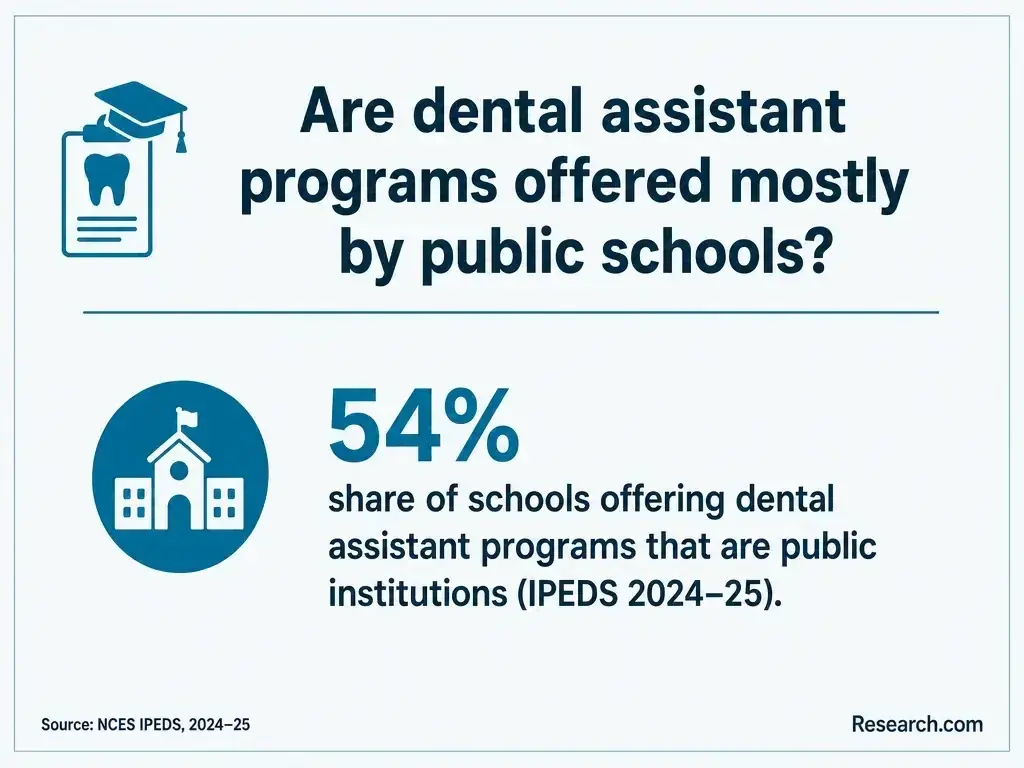
A reliable Caguas-wide average for dental assistant trade programs is not established here. Published tuition may also be a poor substitute for the amount you must pay to become job-ready. Ask each school for a current, itemized cost of attendance for your start date, then compare the same expenses across programs.
The costs most likely to change the comparison are tuition and mandatory fees; books and supplies; uniforms and protective equipment; any required health checks; clinical-site transportation; and applicable certification or application fees. Add lost earnings if attendance reduces your work hours. Subtract only grants, scholarships, or employer contributions for which you confirm eligibility; Federal Student Aid advises checking both the institution's and the program's aid eligibility rather than assuming all training qualifies.
An affordable online bachelor's degree serves a different educational goal and is not a price benchmark for becoming a dental assistant. For this decision, compare job-ready training costs and likely debt against the work the credential actually prepares you to perform.
Depending on the provider, training may lead to a certificate, diploma, or another stated occupational credential; employer-led training may instead document competencies without awarding a school credential. Ask for the exact credential printed on the completion document. Similar titles do not prove that programs provide equal clinical experience or qualify students for the same duties.
Institutional accreditation concerns a school, programmatic accreditation concerns a specific program, and government authorization concerns permission to operate. Professional certification and permission to perform particular dental duties are separate questions. CODA publishes information on accredited dental programs, while DANB administers dental-assisting certifications; check each organization's current records rather than relying on a school's general statement that it is "accredited" (CODA; DANB).
Requirements vary by provider. Request the current admissions checklist, including any minimum education requirement, language expectations, health documentation, and conditions for clinical placement. Check whether a placement has separate onboarding requirements and when those costs become nonrefundable. Do not assume admission to the classroom guarantees a clinical seat or completion.
Career changers exploring top degrees for 60 year olds should evaluate this trade route on its own terms: ask to observe the physical and interpersonal demands of chairside work, then check whether the program timetable fits existing responsibilities. Age alone does not determine whether dental assisting is a good fit.
A useful curriculum connects dental terminology and anatomy with infection prevention, instrument preparation, chairside workflow, patient communication, and accurate records. The U.S. Bureau of Labor Statistics identifies these clinical and administrative functions as part of dental-assistant work. Ask to see the syllabus and skills checklist rather than judging depth by a course title.
Technology skills also matter: students may encounter digital records and imaging workflows. Training on equipment is not the same as permission to perform every imaging-related duty. Verify the program's supervised practice, equipment access, and alignment with Puerto Rico's current scope-of-practice rules before treating a listed skill as a career-entry qualification.
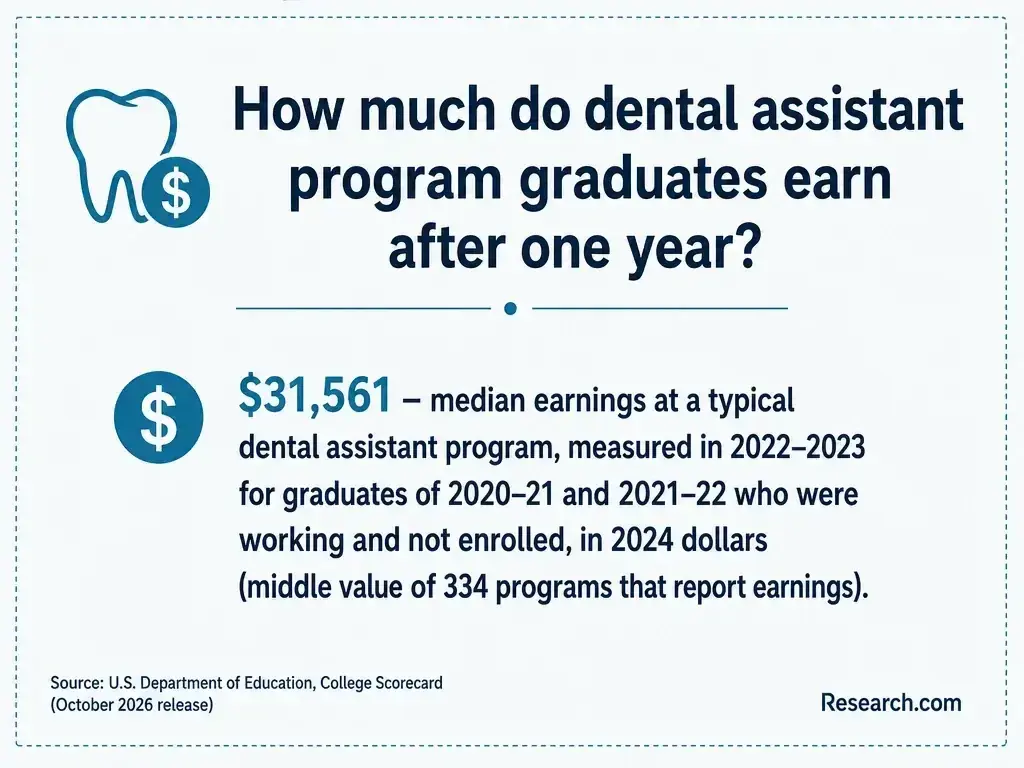
Do not treat "dental assistant" as a single, nationwide permission to perform all tasks. Puerto Rico's rules for dental personnel and particular duties must be checked with the Puerto Rico Department of Health and the relevant dental regulatory authority before choosing training. Ask specifically about the duties you want to perform, including radiography, whether they require approval or additional preparation, and what documentation an applicant must provide. Requirements in another U.S. jurisdiction are not proof of eligibility in Caguas.
DANB certification is a professional credential, not a substitute for any applicable Puerto Rico authorization (DANB). Likewise, completing an accredited school program does not automatically confer a license or permission to perform expanded duties. Obtain current answers from the regulator and the school in writing before paying a deposit.
Start with the work you want to do, then test whether each program provides the credential, supervised practice, and regulatory eligibility that work requires. The affordability ranking is a useful shortlist, but its score does not measure lab quality or clinical placement. If considering Huertas College or another provider, verify the current dental assistant offering directly rather than assuming every campus or program listed by a school is available in Caguas.
Use these questions in the same order for every provider so the answers are comparable:
A low quoted tuition with no clear clinical plan is a red flag. So are vague claims that accreditation guarantees certification, an online-only promise of hands-on competence, or a refusal to itemize fees. Compare the answers and, where possible, speak with a recent completer before committing.
Initial training can lead toward general-practice chairside assistance or a role combining clinical and front-desk work. With experience and appropriate additional preparation, an assistant may seek specialty-office responsibilities or a coordinating role. The U.S. Bureau of Labor Statistics describes varied clinical and administrative duties, but advancement and permitted tasks depend on employer needs and applicable rules; neither is automatic on graduation.
If your long-term question is what master degree makes the most money, dental-assistant trade training answers a different question: whether a relatively direct, practical route into dental-office work is worth its cost to you. Judge it against your near-term career goal, not the earnings associated with an unrelated credential.
The U.S. Bureau of Labor Statistics projects 7.4% growth in U.S. dental-assistant employment from 2025 to 2035. This national projection suggests continuing demand for the occupation, but it does not forecast openings in Caguas or guarantee employment after training.
For a local decision, review recent Caguas-area vacancies and note which duties, experience, schedules, and credentials recur. Then compare those requirements with the program's clinical experience. If local postings consistently call for skills a low-cost program does not teach, its lower price may not represent better value.
Investing in training is an important decision, so the Research.com team designed the ranking to make local cost comparisons more credible and useful. Programs are compared with others in the same occupation and location; only programs with completions reported to the Integrated Postsecondary Education Data System (IPEDS) are eligible. An omitted apprenticeship, employer training route, or school should not be assumed to be unavailable or low quality.
Most affordable rankings score tuition, cost of attendance, median student debt, and federal loan default rate. An entropy-based method assigns more weight to cost and debt measures that distinguish programs. Accreditation and other quality indicators do not enter this affordability score. Readers should therefore use the ranking as a cost screen, then independently verify practical training, recognition, and career-entry requirements. Research.com's separate best programs methodology also considers outcomes, earnings, student support, and recognition; it should not be confused with this affordability ranking.
The team used the following data sources and reference organizations to assemble and check the ranking. Some cover institutions or other trades rather than dental assisting specifically; their inclusion does not establish that a particular dental program holds a particular accreditation.
For more on how Research.com develops its rankings, see its methodology page. The ranking helps narrow a shortlist; it cannot replace a current, itemized quote or confirmation that a program meets your career goal.
# 1 position
# 2 position

Not necessarily. Compare total cost and debt with supervised practice, clinical placement, completion prospects, and preparation for the duties you want to perform.
Online coursework can teach theory, but chairside skills require in-person practice. Check practical-training arrangements and Puerto Rico requirements before enrolling.
Do not assume so. Confirm the requirements for your intended duties with Puerto Rico's dental regulatory authority; a DANB credential and permission to perform a duty are distinct questions.
Employer-led training may be an option if an office accepts beginners. Ask what supervised skills training, documentation, and preparation for any regulated duties it provides.
Possibly. Eligibility depends on the institution, the specific program, and your circumstances. Confirm all three before counting aid against your cost.