
2027 Most Valuable Psychology Degree Programs Ranking in Richmond

Co-Founder and Chief Data Scientist
Choosing the right psychology degree program in Richmond can shape your future career and personal growth. This article introduces the 2027 Most Valuable Psychology Degree Programs Ranking in Richmond, carefully crafted by the Research.com team of data scientists. Their goal is to help you make well-informed decisions about which programs truly stand out.
Reading this guide will give you clarity on top options tailored to your goals and budget. A psychology degree opens doors to meaningful work, and this ranking highlights the best paths forward to achieve your dreams.
Key benefits of getting psychology degree in Richmond
- Salary for psychology degree graduates: Graduates in Richmond can expect rewarding salaries in roles like Marketing Research Analyst, with a mean annual wage of $83,190, or as Human Resources Specialists, earning about $76,060 per year. These jobs offer strong financial stability and growth potential.
- Career paths: Psychology graduates from Richmond universities enjoy diverse opportunities, ranging from Clinical Research Associates to Survey Researchers, allowing them to apply their skills in healthcare, market research, or social services. This variety helps you find a career that truly fits your passion and talents.
- Benefits of online degrees: Earning a psychology degree online from a Richmond-based school offers flexibility to balance work and studies, making education more accessible and tailored to your lifestyle. Online graduates often report increased confidence and independence, boosting their success in competitive job markets.
- 2027 Most Valuable Psychology Degree Programs Ranking in Richmond
- What can I expect from psychology degree in Richmond?
- Where can I work with psychology degree in Richmond?
What can I expect from psychology degree in Richmond?
The average cost of a psychology degree in Richmond varies depending on the institution, but students often find a balance between quality education and affordability. For example, graduates from Virginia Commonwealth University (VCU) typically report paying between $9,000 and $15,000 per year for in-state tuition, making it an accessible option for many local students. At the University of Richmond, where the experience blends rigorous academics with close faculty mentorship, tuition can be higher, reflecting its private university status. Yet, many students express that the investment is worthwhile due to the hands-on internships and research opportunities that greatly enhance their learning and career prospects.
Richmond students often benefit from financial aid, scholarships, and part-time internships within the city's vibrant healthcare and social service sectors, which lighten financial burdens and provide practical experience. These diverse funding options empower students to pursue their passion for psychology while feeling supported both academically and financially throughout their studies.
Where can I work with psychology degree in Richmond?
Graduates with a psychology degree in Richmond find a vibrant spectrum of career paths waiting for them. Many thrive in mental health settings, working as licensed counselors or clinical psychologists in hospitals and private practices throughout the Richmond metropolitan area. Their graduate-level education and dedication open doors to meaningful, impactful work helping individuals and families.
At Virginia Commonwealth University, psychology graduates often share how their studies led to rewarding roles in clinical research or assisting in behavioral assessments at local health centers. Even with a bachelor's degree, students find exciting entry-level opportunities that fuel their passion for discovery and patient care.
Others step into Richmond Public Schools as school psychologists or behavioral specialists, empowering young minds and fostering positive growth. Beyond healthcare and education, psychology graduates bring invaluable insights to business sectors like human resources and marketing, where understanding human behavior drives innovation and success.
Government agencies and nonprofits also embrace these graduates, where they contribute to community programs and public health initiatives, turning their skills into positive change that resonates across Richmond's neighborhoods.
Graduates with a psychology degree in Richmond often step confidently into rewarding careers with versatile earning potential. Those entering roles such as Human Resources Specialists can expect a mean annual wage around $76,060, offering financial stability while applying their understanding of human behavior in dynamic work environments. Marketing Research Analysts, another popular path for psychology grads, command even higher earnings, averaging $83,190 annually-an inspiring figure for those passionate about data-driven insights and consumer psychology.
Many graduates from Richmond's respected institutions, including Virginia Commonwealth University, have successfully secured positions as Clinical Research Associates or Survey Researchers, earning about $62,370 yearly. These roles allow them to directly impact healthcare studies or social research projects, adding meaning to their work and contributing to community wellbeing. Real-life experiences from alumni emphasize the exciting opportunities within Richmond's growing healthcare and research sectors, where a psychology background opens doors to meaningful, well-compensated careers that fuel both personal growth and community impact.
- In-state tuition for undergraduate psychology programs in Richmond ranges from $10,000 to $15,000 per year at public universities.
- Private institutions in Richmond charge between $25,000 and $40,000 annually for psychology degrees, excluding additional costs like housing and books.
- Entry-level salaries for bachelor's degree holders average about $45,000 per year, while advanced degree holders may start between $60,000 and $70,000.
- Job growth for psychology-related fields in Richmond is projected at 8% over the next decade, higher than the national average.
- Internships and practicum placements are available through local hospitals and counseling centers, providing important career experience.
Completing a psychology degree in Richmond feels like embarking on a rewarding journey of growth and discovery. Most students at universities like Virginia Commonwealth University find that earning a bachelor's degree takes about four years of full-time study, balancing general education with captivating psychology courses that spark curiosity and passion.
For those eager to deepen their expertise, a master's degree usually requires two extra years. Many graduates describe this phase as a transformative experience, combining rigorous coursework with hands-on research or practical internships that bring their learning to life in Richmond's vibrant community.
Doctoral programs, such as PhD or PsyD, span roughly 5 to 7 years, immersing students in advanced studies, comprehensive exams, and supervised clinical hours. Graduates celebrate this intensive journey as a gateway to becoming licensed professionals, equipped to make meaningful impacts on mental health in the region.
Whether attending full-time or exploring flexible options, students embracing psychology in Richmond find each step rewarding, building knowledge and confidence that inspire their future careers.
Obtaining licensure ensures you can practice legally and competently in Richmond.
- Education: Complete an APA-accredited doctoral program (PhD or PsyD) or a CACREP-accredited master’s for counseling. Many students choose an online psyd for flexible scheduling.
- Supervised Hours: Psychology candidates need 3,500 postdoctoral hours; counseling candidates need 3,000 practicum/internship hours under approved supervisors.
- Exams: Pass the national EPPP and the Virginia Jurisprudence Exam.
- Application Process: Submit transcripts, supervisor attestations, and exam scores to the Virginia Board of Psychology or Counseling along with the required fee.
Begin documenting your practicum hours and reviewing board guidelines early to stay on track.
Choosing between an online and on-campus psychology degree in Richmond offers unique opportunities that empower you to shape your education around your life. On-campus programs at Virginia Commonwealth University or University of Richmond bring the vibrant energy of face-to-face learning. Graduates often cherish the hands-on experiences, from engaging in research projects to building strong connections with professors and peers during internships. This direct interaction cultivates a supportive community that fuels passion and professional growth.
Online programs, meanwhile, provide remarkable flexibility for balancing work, family, or other commitments without relocating. Richmond-based learners appreciate how online degrees mirror traditional curricula while allowing them to dive into coursework at their own pace. Many graduates celebrate advancing their careers through convenient virtual classes, supported by digital tools that foster collaboration and mentorship from anywhere.
Whether walking campus pathways or studying from home, students in Richmond find paths tailored to their learning style, making the journey toward becoming a skilled psychologist both inspiring and achievable.
In Virginia, pursuing a career in psychology often culminates in obtaining the appropriate licensure to practice independently. For those aiming to become Licensed Psychologists, the Commonwealth requires completion of a doctoral degree in psychology from an APA-accredited program, at least 3,000 hours of supervised post‐doctoral experience, and passing the Examination for Professional Practice in Psychology (EPPP). Candidates must then apply to the Virginia Board of Psychology and fulfill jurisprudence requirements, including a state ethics exam. Aspiring Licensed Professional Counselors (LPCs) need a master’s degree in counseling or a related field, 60 credit hours of graduate coursework, and 3,400 hours of supervised clinical practice. After passing the National Counselor Examination (NCE) and the Virginia licensing jurisprudence exam, applicants submit verification of supervised hours and educational transcripts to the Virginia Board of Counseling. School psychologists in Richmond pursue certification through the Virginia Department of Education. Requirements include an Ed.S. or doctoral degree in school psychology, completion of a supervised internship (minimum 1,200 hours), and passage of the Praxis School Psychologist exam. Candidates then apply for the Pupil Personnel Services credential, which authorizes practice in public schools. Continuing education is mandatory to maintain licensure. Psychologists must complete 40 hours of approved continuing education biennially, including ethics and diversity training, while LPCs require 20 hours every two years. Staying current with emerging areas-such as child development and intervention-can be enhanced by exploring resources on what is child psychology and integrating new best practices into clinical work. Understanding these steps early in your academic journey can streamline the transition from graduation to practice. Engaging in supervised practicum experiences, networking with licensed professionals, and tracking state board updates are crucial strategies for meeting Virginia’s licensing standards and advancing your psychology career.
The average cost of a psychology degree in Richmond offers a range that reflects the diversity of programs available. For many students pursuing a Richmond psychology degree tuition and fees total approximately $16,945 for in-state residents, making higher education attainable while opening doors to meaningful careers. Graduates from Virginia Commonwealth University often recall the strong support and enriching experiences that justified their investment, feeling pride in navigating their academic journey within this cost framework.
Out-of-state students, while encountering a higher financial commitment, view this as a valuable investment in their future, with total costs around $59,613. Their experiences underscore how quality education in Richmond's psychology programs can deliver long-term personal and professional rewards. Private universities such as the University of Richmond represent the upper tier of tuition but often balance expenses with generous financial aid, which many students gratefully utilize to ease their financial path.
Considering costs through the lens of real students highlights how the pursuit of a psychology degree here is both a wise and inspiring choice. Exploring options and planning carefully enable students to find programs that align with their ambitions and budget. Many appreciate how accelerated or flexible learning paths can reduce time and expense, energizing their commitment to success.
Prospective students looking for comprehensive information on valuable psychology programs in Virginia can explore resources like valuable psychology programs in Virginia as a guide on their path forward.
In today’s evolving educational landscape, many prospective students are seeking flexible learning environments that allow them to balance their studies with other commitments. Online psychology programs offer the convenience of remote learning while maintaining rigorous academic standards. These programs often feature interactive course content, virtual discussions, and remote access to academic support, enabling you to engage with complex psychological concepts from anywhere. For students interested in specialized training such as clinical psychology, exploring the best online clinical psychology programs can provide a valuable alternative that combines flexibility with expert instruction. Additionally, accredited online programs typically include dedicated career services, virtual networking events, and access to digital libraries, all of which enhance the overall learning experience. By choosing a well-structured online program, you not only gain the convenience of a flexible schedule but also position yourself for success in an increasingly digital and interconnected professional world.
Many psychology students in Richmond find that financial aid options make their educational dreams truly attainable. By completing the FAFSA, students gain access to federal grants and low-interest loans that ease the financial pressure while pursuing psychology degrees at institutions like Virginia Commonwealth University and the University of Richmond.
Graduates often share how institutional scholarships specifically for psychology majors helped them focus more on their studies instead of worrying about tuition. These awards, ranging from $1,000 to $5,000 per year, create a sense of relief and motivation to excel academically.
In addition, private scholarships from organizations such as the American Psychological Association bring encouragement to students passionate about research and community service.
Many also benefit from federal work-study programs, earning income while gaining valuable hands-on psychology experience on campus. For working professionals, employer tuition reimbursement programs unlock opportunities to pursue their degree part-time without sacrificing financial stability.
- Federal grants and loans via FAFSA
- Institutional scholarships at VCU and University of Richmond
- Private scholarships from organizations such as the APA
- Federal work-study programs
- Employer tuition reimbursement options
Understanding the return on investment (ROI) of your Psychology degree in Richmond, VA, is essential for making an informed decision that balances educational quality with financial sustainability. On average, bachelor’s graduates in psychology from Virginia institutions incur $28,000 in student loan debt, while the median starting salary hovers around $45,000. By comparing annual earnings against total loan repayments, you can estimate a breakeven point of roughly 7–8 years post-graduation. Key factors influencing ROI include:
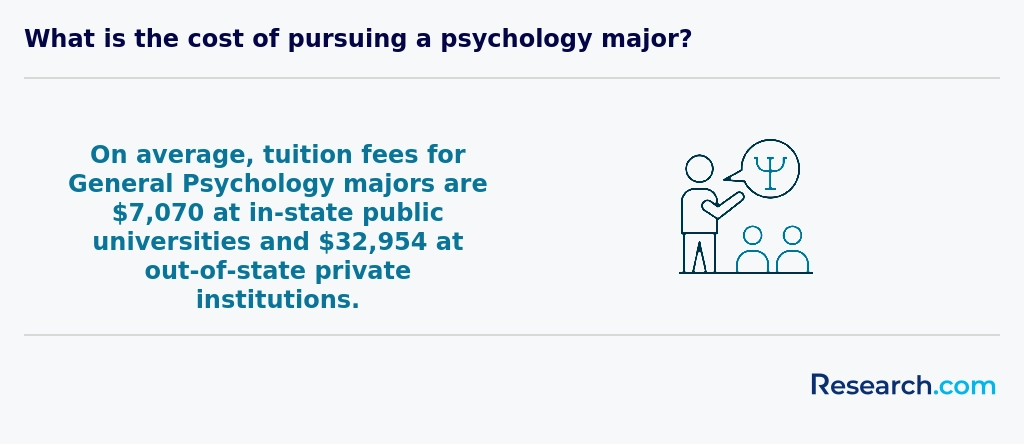
- Total Cost of Attendance: Combine tuition, fees, and living expenses to project your overall investment. In-state public tuition averages $7,070/year, whereas private colleges can exceed $30,000/year.
- Expected Earnings Growth: Entry-level roles such as Human Resources Specialist ($73,080/year) and Clinical Research Associate ($57,760/year) provide upward mobility; pursuing advanced credentials accelerates earning potential.
- Time to Recoup Costs: Use online calculators or institutional ROI tools to model repayment schedules and salary trajectories. Graduates reporting faster payback periods often leveraged scholarships, part-time research assistantships, or work-study programs. For students seeking alternative pathways with lower upfront costs, consider exploring our Most Affordable Psychology Degree Programs Ranking in Maryland, which highlights accredited programs offering competitive quality at reduced tuition rates. Factoring in both immediate affordability and long-term earnings will empower you to select a program that maximizes both educational value and financial well-being.
To join a psychology degree program in Richmond, you'll need a high school diploma or equivalent, setting a solid foundation for your academic journey. Imagine stepping onto the vibrant campus of Virginia Commonwealth University (VCU), where many ambitious students began by excelling in biology and social sciences, preparing for the deep dive into human behavior.
Standardized test scores like the SAT or ACT may be required, but colleges like VCU have embraced test-optional policies-an encouraging sign that your passion and commitment matter just as much as numbers. Graduates often recall how maintaining a competitive GPA, typically 3.0 or higher, opened doors and boosted their confidence throughout the program.
Personal statements and letters of recommendation give you the chance to share your unique story and enthusiasm for psychology-elements that truly resonated in Richmond's welcoming academic community. Planning financially is also vital; with annual costs ranging from $10,000 to $30,000, smart budgeting ensures your focus remains on learning and growth.

To make an informed decision about which psychology program to attend in Richmond, VA, it is essential to consider various factors, including the program's reputation, curriculum, faculty expertise, and potential career outcomes. Prospective students can benefit from researching and comparing different programs, such as those offered at Virginia Commonwealth University or Liberty University, to find the best fit for their academic and professional goals. For those looking for more information on psychology programs in Virginia, exploring valuable psychology programs in Virginia can provide valuable insights into the available options and help them make a more informed decision. By taking the time to carefully evaluate these factors and consider their own interests and career aspirations, students can choose a psychology program that sets them up for success and prepares them for a rewarding career in their chosen field.
Psychology degree programs in Richmond offer an engaging mix of courses that truly inspire students to understand the depths of human behavior. At renowned Richmond universities, graduates often recall how foundational courses like cognitive psychology, developmental psychology, and social psychology helped them see the world from new, insightful perspectives. Understanding how people think, grow, and connect with others adds a rewarding dimension to their studies.
Richmond's programs also emphasize research methods and statistics, empowering students to design experiments and analyze data confidently. Many graduates reflect on the thrill of conducting their own studies, knowing these skills are essential for clinical work or advanced research.
Exploring specialized subjects such as biopsychology, personality psychology, and industrial-organizational psychology allows students to find their passion. At popular Richmond colleges, this variety brings learning to life, encouraging students to pursue careers that positively impact communities and workplaces alike.
Psychology degree specializations in Richmond offer exciting pathways for students eager to make a meaningful impact. Graduates from popular universities in the area often praise clinical psychology, where they learn skills to become compassionate therapists helping individuals overcome mental health challenges. Developmental psychology is another inspiring choice, perfect for those passionate about supporting children and aging populations through every life stage. Many students find joy in industrial-organizational psychology, applying their knowledge to enhance workplace environments and boost employee well-being in local businesses.
Health psychology is rapidly growing in Richmond programs, where graduates feel empowered to work in hospitals and community health settings, addressing the powerful connection between mind and body. Additionally, students discover rewarding opportunities in forensic psychology and counseling psychology, equipping them to serve their communities with confidence. These specializations prepare Richmond students for diverse, fulfilling Richmond psychology career paths.
For those drawn to flexibility, exploring the best online clinical psychology programs offers even more accessible ways to advance their education while pursuing their dreams.
Choosing from the best psychology degree programs in Richmond means focusing on what truly excites and motivates you. Graduates from Virginia Commonwealth University often share how personal connections with passionate faculty and hands-on practicum experiences shaped their path toward meaningful careers. Many highlight how affordable psychology colleges Richmond VA helped them pursue their dreams without overwhelming financial stress, creating a supportive environment for success. Imagine learning alongside peers at a school that values experiential learning and offers flexible formats, whether traditional on-campus or hybrid options, perfect for balancing life's demands.
Consider programs with strong ties to local hospitals and mental health centers, where you gain invaluable real-world skills. Reflect on your goals-whether it's clinical work, research, or counseling-and explore how each program's curriculum matches those ambitions. If you're curious about specialized fields, like developmental psychology, think about how graduates describe their inspiring journeys. For understanding more nuanced areas like child psychology, explore resources such as what is child psychology to fuel your passion and guide your choice.
Graduates in Richmond with a psychology degree enjoy a vibrant range of career paths that spark passion and purpose. Many thrive as mental health counselors or therapists in the city's bustling healthcare sector, supporting individuals through real-life challenges. Others find joy working in educational settings, becoming school psychologists or counselors who help students blossom by addressing behavioral and learning needs within Richmond's public schools and universities. Graduates also embrace dynamic roles as research assistants or coordinators at institutions like Virginia Commonwealth University, where they contribute to meaningful studies on mental health trends and social issues.
Richmond's diverse job market opens doors for psychology degree holders to become human resources specialists, applying their knowledge to enhance workplace environments and boost employee well-being. Social work is another fulfilling path, offering chances to make a direct impact in community services. Students inspired by these career options can explore affordable pathways through programs highlighted in the Most Affordable Psychology Degree Programs Ranking in Maryland, ensuring the journey is as rewarding financially as it is professionally.
Exploring psychology jobs and salary Richmond VA reveals promising opportunities that align with both passion and growth ambitions, making Richmond an encouraging place to start your career.
The psychology degree job outlook Richmond is vibrant, with a variety of pathways opening for graduates. Those who complete their studies at well-regarded institutions in Richmond often find rewarding roles in local hospitals, schools, and community health centers, where mental health services are expanding rapidly. Graduates share stories of landing fulfilling positions as counselors or behavioral specialists, motivated by the strong demand fueled by increased awareness and state support for mental health care.
Richmond's public schools and universities frequently recruit psychology professionals to enhance student well-being, making education one of the most promising sectors for recent degree holders. The psychology career opportunities in Richmond VA often include hands-on experience and internships, which are crucial for building confidence and practical skills. Many alumni credit their success to these immersive opportunities combined with the solid foundation gained at area colleges.
Investing in a psychology degree here can lead to steady employment with salaries averaging between $60,000 and $90,000 annually. For ambitious students eager to accelerate their learning and career path, exploring fast track online degrees can enhance their prospects and help them quickly join this rewarding field.
2027 Most Valuable Psychology Degree Programs Ranking in Richmond
Investing in your education is a significant decision that can shape your future, and the Research.com team understands the importance of making informed choices. To assist prospective students in Richmond, we have meticulously crafted the "2027 Most Valuable Psychology Degree Programs Ranking in Richmond." Our commitment to quality, credibility, and accuracy is reflected in the extensive research and analysis conducted to compile this ranking.
We utilized the following reputable data sources to ensure a comprehensive evaluation of psychology programs:
By exploring this ranking, readers will gain valuable insights into the most valuable psychology degree programs available in Richmond, supporting them in making informed decisions about their educational paths. For more details on our methodology, please visit our Research.com methodology page.


Frequently Asked Questions About psychology
Psychology degree students in Richmond can maximize their learning experience by engaging deeply with both coursework and practical opportunities. Richmond hosts several accredited institutions known for strong psychology programs, such as Virginia Commonwealth University, which reported a 78% undergraduate job placement rate within six months of graduation (VCU Career Center, 2023).
Students should seek internships or research assistant positions available locally to gain hands-on experience. Participating in community mental health services or collaborating with faculty on ongoing studies enhances understanding of psychological theories in practice.
Joining psychology-related student organizations and attending regional conferences, like the Virginia Psychological Association annual meeting, helps build networks and stay current with advances in the field.
Utilizing campus counseling centers and workshops can improve both academic performance and personal wellbeing during demanding studies.
The psychology field is continuously evolving, and several emerging niches are gaining importance, especially for students in Richmond. One rapidly growing area is neuropsychology, which explores the relationship between brain function and behavior. This specialty is in demand as Richmond healthcare institutions expand neurological services. Another promising niche is forensic psychology, where experts assist in legal cases, a field supported by local law enforcement agencies.
Additionally, health psychology is expanding, focusing on how psychological factors affect physical health. According to the Bureau of Labor Statistics, the demand for health psychologists is expected to grow by 15% nationally through 2030. Richmond universities increasingly offer specialized programs aligning with these trends to prepare students for these careers.
Preparing for the job market after completing a psychology degree in Richmond involves several strategic steps. Graduates should seek internships or practicum experiences during their studies, as Richmond-area employers highly value practical skills combined with academic knowledge. According to the Virginia Employment Commission, the demand for psychologists and related mental health professionals in the region is expected to grow by 8% through 2030, suggesting a competitive but promising job market.
Networking is also crucial. Joining local chapters of national organizations like the American Psychological Association can connect graduates to job openings and mentorships. Additionally, Richmond's thriving healthcare sector, including institutions like VCU Health, often recruits local graduates.
Finally, many psychology careers require advanced certifications or graduate degrees. Considering licensure as a Licensed Professional Counselor or pursuing graduate studies can expand employment options. Keeping up with Richmond's regional job trends and employer requirements helps graduates adapt effectively.
Employers in Richmond highly value psychology graduates who possess strong analytical and critical thinking skills. These abilities enable professionals to assess complex behavioral data and contribute effectively to research or clinical settings.
Communication skills are also crucial. Graduates must clearly explain psychological concepts and findings to diverse audiences, including clients and interdisciplinary teams.
Richmond employers particularly seek proficiency in research methods and statistical analysis. According to the Bureau of Labor Statistics, demand for psychologists who can design and interpret studies is growing nationally, influencing local expectations.
Additionally, ethical judgment and cultural competence are essential due to Richmond's diverse population and varied psychological needs documented by the Virginia Department of Health.
Finding internships in Richmond relevant to a psychology degree involves several practical steps. Start by connecting with your university's career services, as many Richmond colleges have partnerships with local mental health clinics and research centers. For example, Virginia Commonwealth University offers resources linking students to psychology internships within Richmond's healthcare system.
Local hospitals, such as Bon Secours Richmond Health System, often provide internship opportunities in clinical psychology settings. Additionally, nonprofit organizations focused on mental health may offer roles that provide valuable hands-on experience.
Networking through professional groups like the Richmond Psychological Association can also be effective. Students should regularly check internship databases and attend career fairs specifically targeting psychology fields in Richmond.
A psychology degree can significantly enhance career mobility and advancement opportunities in Richmond. Many local employers, including healthcare facilities and educational institutions, value graduates with psychology backgrounds for roles in counseling, human resources, and social services. According to the U.S. Bureau of Labor Statistics, Richmond's metropolitan area expects a 10% growth in psychology-related jobs by 2030, outpacing the national average.
Graduates with advanced degrees, such as a master's or doctorate, often access higher-paying positions with leadership responsibilities. Licensing requirements in Virginia also mean that earning a psychology degree is a vital step toward clinical practice and counseling careers in Richmond.
Moreover, professionals with psychology degrees benefit from strong local networks and professional organizations like the Virginia Psychological Association, which support career growth and continuing education.
Studying for a psychology degree in Richmond equips students with skills that are valuable across various interdisciplinary fields. Many Richmond universities emphasize combining psychological theory with practical applications in health, education, and business, reflecting national trends highlighted by the American Psychological Association.
Richmond's psychology programs often include coursework in statistics, neuroscience, and social sciences, essential for roles in public health or human resources. For example, Virginia Commonwealth University offers internships that connect psychology students with fields like social work and healthcare administration.
This cross-disciplinary training prepares graduates to collaborate effectively in diverse professional settings, meeting the needs of Richmond's evolving job market.
Choosing between a thesis and a non-thesis psychology degree program in Richmond depends largely on your career goals and learning preferences. Thesis programs typically require original research and are ideal if you plan to pursue a PhD or a career in academia or research. Non-thesis options focus more on coursework and practical skills, appealing to students aiming for professional practice or roles in counseling and human services.
In Richmond, many universities offer both tracks with comparable tuition and completion times, usually two years for a master's degree. According to the National Center for Education Statistics, about 40% of psychology graduates in Virginia choose thesis paths, highlighting their popularity for research careers.
Consider your preference for research intensity, your future plans, and program flexibility before deciding.
Students based in Richmond seeking to study psychology abroad have several pathways through U.S. higher education programs with international components. Many universities in Virginia, including those near Richmond, offer study abroad options or dual degree programs with partner institutions in Europe, Canada, or Asia, allowing psychology majors to gain global perspectives.
Richmond's educational institutions frequently participate in exchange programs affiliated with organizations like ISEP or the Council on International Educational Exchange. These programs often provide placements in countries with strong psychology research traditions, such as the United Kingdom or Germany.
Additionally, some psychology programs accredited by the American Psychological Association (APA) encourage or require international internships or fieldwork, which can be arranged overseas. Information on Richmond-based psychology students studying abroad is limited but growing, in line with the nationwide increase of about 30% in U.S. students pursuing psychology-related study abroad experiences over the past five years (Institute of International Education, 2023).
Students pursuing psychology degrees in Richmond can benefit from various part-time jobs that complement their academic learning. Common roles include research assistant positions at local universities such as Virginia Commonwealth University, where students gain hands-on experience in psychological studies and data analysis. According to VCU's career services, these jobs enhance research skills prized in graduate school admissions.
Additionally, roles such as mental health technician or counselor aide at Richmond's community health centers provide practical exposure to clinical settings. Such jobs develop interpersonal skills critical for future psychologists.
Employment in local schools as teacher's aides helps students understand developmental psychology theories in real-world education environments.
These opportunities strengthen resumes and broaden understanding of psychology careers.
Psychology students in Richmond benefit from a variety of networking opportunities that help build professional connections. Local universities, such as Virginia Commonwealth University (VCU), often host psychology clubs and honor societies that facilitate peer interaction and engagement with faculty.
Richmond also features events like the Virginia Psychological Association's annual conferences, which attract professionals and students from across the state. These events provide valuable chances to meet licensed psychologists and researchers.
Internships and practicum placements in Richmond-area hospitals and mental health centers further connect students to working professionals, expanding their networks. According to the Bureau of Labor Statistics, Richmond has a growing demand for clinical psychologists, emphasizing the importance of strong local connections.
Alumni networks play a significant role in supporting psychology degree students in Richmond by offering valuable professional connections. Graduates from Richmond-based programs often find these networks essential for accessing internships and job opportunities within the regional mental health and social services sectors.
Research from the National Association of Colleges and Employers emphasizes that 85% of jobs are filled via networking, highlighting the importance of alumni ties. In Richmond, active alumni groups frequently host workshops, guest lectures, and mentoring programs specifically for psychology students.
Mentorship through alumni allows students to gain insight into local industry trends and to receive guidance on licensure and graduate school applications, which is critical in psychology careers. According to data from Richmond's psychology departments, students engaged with alumni networks report higher satisfaction and employment rates within six months of graduation.
Customizing a psychology degree program in Richmond allows students to align their education with specific career goals. Many local universities offer flexible course options, including specialties like clinical psychology, counseling, or industrial-organizational psychology. Students can select electives or concentrations based on their interests, which improves job readiness in targeted fields.
Richmond's academic institutions often provide internship opportunities through partnerships with healthcare facilities, schools, and businesses, giving practical experience tailored to individual career paths. According to the National Center for Education Statistics, nearly 60% of psychology undergraduates in Virginia engage in internships, enhancing employability.
Additionally, Richmond students benefit from access to research projects and faculty expertise, enabling personalized mentorship. This hands-on involvement assists in refining skills crucial for graduate studies or professional roles in psychology.
Psychology students in Richmond often face significant challenges related to balancing rigorous academic demands and practical experience requirements. Many programs require extensive research projects and internships, which can be time-consuming and stressful.
Financial strain is also common, as tuition and associated costs for in-state and out-of-state students can vary widely. According to the National Center for Education Statistics, the average annual tuition for public universities in Virginia was about $11,000 in 2023, which may impact students' ability to focus fully on studies.
Additionally, Richmond's competitive job market for internships means students must actively seek relevant opportunities to build practical skills, which is critical for post-graduate success. Managing mental health while meeting these demands is another frequently reported challenge among psychology students in the area.
With a psychology degree in Richmond, graduates can pursue several professional certifications to enhance their career prospects. Common certifications include Licensed Professional Counselor (LPC), Licensed Clinical Social Worker (LCSW), and Board Certified Behavior Analyst (BCBA). These credentials often require graduate-level education, supervised clinical hours, and passing a licensing exam.
Additionally, certifications in school psychology and substance abuse counseling are available, reflecting local demand in Richmond's health and educational sectors. According to the Virginia Board of Psychology, over 400 LPCs were licensed statewide by 2023, with a growing number in the Richmond area. Such certifications improve employability and allow professionals to provide specialized care.
Writing a winning application for a psychology program in Richmond requires clarity and careful preparation. Start by highlighting your academic achievements, especially relevant coursework in psychology or related sciences. Many Richmond universities expect a minimum GPA of around 3.0 for competitive applicants. Including research experience or volunteer work in mental health settings can significantly strengthen your profile.
Personal statements should clearly express your passion for psychology and specify why you chose Richmond, referencing local research centers or faculty interests if possible. Schools like Virginia Commonwealth University emphasize candidates' fit with their program's focus.
Letters of recommendation from professors or professionals familiar with your abilities are critical. Lastly, ensure all application materials meet deadlines and follow specified guidelines, as late or incomplete applications are often discarded.
The field of psychology offers diverse career paths both in the US and globally, reflecting growing interest in mental health. In Richmond, psychology graduates benefit from alignment with national trends showing a 14% projected growth in psychologist jobs from 2021 to 2031, according to the U.S. Bureau of Labor Statistics. This demand is influenced by increased recognition of mental health issues worldwide.
Globally, psychology careers often emphasize research, clinical practice, and counseling, with variations based on healthcare systems and cultural views. For Richmond students, understanding these global perspectives can guide specialization choices and international opportunities.
Richmond's universities integrate evidence-based approaches common in the US, preparing students to work effectively in varied settings, including international contexts where psychology practices are rapidly evolving.
Gaining practical experience while studying for a psychology degree in Richmond is essential for building skills and enhancing employability. Many local universities, such as Virginia Commonwealth University, offer internship opportunities within their psychology departments or partner with nearby mental health clinics and community organizations.
Students can also participate in research projects led by faculty members, allowing hands-on experience with data collection and analysis. According to the American Psychological Association, about 70% of psychology students nationally gain valuable research or clinical experience before graduation.
Additionally, Richmond's social service agencies and hospitals often provide volunteer placements for psychology students, offering exposure to real-world psychological practice. These experiences can be reported in your academic portfolio and may fulfill course requirements.
Choosing the right concentration within a psychology degree program in Richmond depends on your career goals and personal interests. Common concentrations include clinical, counseling, developmental, and industrial-organizational psychology. Each focuses on different skills and job outcomes. For example, clinical psychology prepares you for counseling roles, while industrial-organizational psychology applies psychology to workplace settings.
Research local job markets; Richmond has growing demand in mental health services and organizational consulting, according to the Virginia Employment Commission. Also, consider program offerings at area universities like Virginia Commonwealth University, which provide specialized tracks aligned with workforce needs.
Speak with academic advisors and attend information sessions to understand curriculum differences and licensure requirements linked to each concentration.
- 2027 Most Valuable Psychology Degree Programs Ranking in Durham
- 2027 Most Valuable Psychology Degree Programs Ranking in Raleigh
- 2027 Most Valuable Psychology Degree Programs Ranking in Greensboro
- 2027 Most Valuable Psychology Degree Programs Ranking in Philadelphia
- 2027 Most Valuable Psychology Degree Programs Ranking in Pittsburgh
- 2027 Most Valuable Psychology Degree Programs Ranking in Charlotte
- 2027 Most Valuable Psychology Degree Programs Ranking in New York
- 2027 Most Valuable Psychology Degree Programs Ranking in Queens
- 2027 Most Valuable Psychology Degree Programs Ranking in Bronx
- 2027 Most Valuable Psychology Degree Programs Ranking in Columbia
See What Experts Have To Say About Studying Psychology
Read our interview with Psychology experts

Joann Farrell Quinn, Ph.D., MBA
Psychology Expert
Director at the College of Medicine Department of Medical Education
Morsani College of Medicine

Robin M. Kowalski. Ph.D.
Psychology Expert
Professor of Psychology
Clemson University

Catherine Caldwell-Harris, Ph.D.
Psychology Expert
Associate Professor of Psychology
Boston University

- Sample letters in psychology https://www.mystudies.com/en-in/human-and-social-sciences/psychology/letter-model/
- Society for the Teaching of Psychology https://teachpsych.org/page-1784686/8675326
- Study Psychology Abroad | Go Overseas https://www.gooverseas.com/study-abroad/psychology
- Financial Aid For Psychology Students | Psychology.org https://www.psychology.org/resources/financial-aid/
- How to help students cope with mental health challenges https://www.eaie.org/resource/help-students-cope-mental-health-challenges.html
- Richmond Bachelor in Psychology (BA) Degree | South University https://www.southuniversity.edu/richmond/psychology-ba
- From the Classroom to Your Career: How a Psychology Degree Opens Doors https://www.torontomu.ca/arts/undergraduate/bachelor-of-arts-degree/from-the-classroom-to-your-career-how-a-psychology-degree-opens/
- Psychology Degree Requirements | University of Bridgeport https://www.bridgeport.edu/news/psychology-education-requirements/
- Call for papers https://www.hogrefe.com/us/journal/international-perspectives-in-psychology-research-practice-consultation
- Psychology - SWPS University https://english.swps.pl/academics/warsaw/ba-programs/psychology


