
2027 Best Psychology Degree Programs Ranking in Mississippi State

Co-Founder and Chief Data Scientist
Choosing the right psychology degree program can shape your future in meaningful ways. Our article presents the 2027 Best Psychology Degree Programs Ranking in Mississippi State, carefully developed by the Research.com team of data scientists. This ranking offers clear insights to help you confidently explore your options.
Whether you dream of helping others or advancing research, a psychology degree opens doors to rewarding careers. Reading this guide will give you a strong foundation to make an informed decision that fits your goals and passions.
Key benefits of getting psychology degree in Mississippi State
- Psychology degree graduates in Mississippi can pursue roles like Human Resources Specialist with a mean annual wage of $76,060 or Marketing Research Analyst earning about $83,190, offering strong earning potential.
- Graduates often follow diverse paths in counseling, research, or management, inspired by successful alumni from Mississippi State University who leverage their degree in various impactful careers.
- Completing a psychology degree online offers flexibility and convenience; for example, online graduates from University of Mississippi appreciate balancing work and study while gaining quality education that enhances their career prospects.
- 2027 Best Psychology Degree Programs Ranking in Mississippi State
- What can I expect from psychology degree in Mississippi State?
- Where can I work with psychology degree in Mississippi State?
What can I expect from psychology degree in Mississippi State?
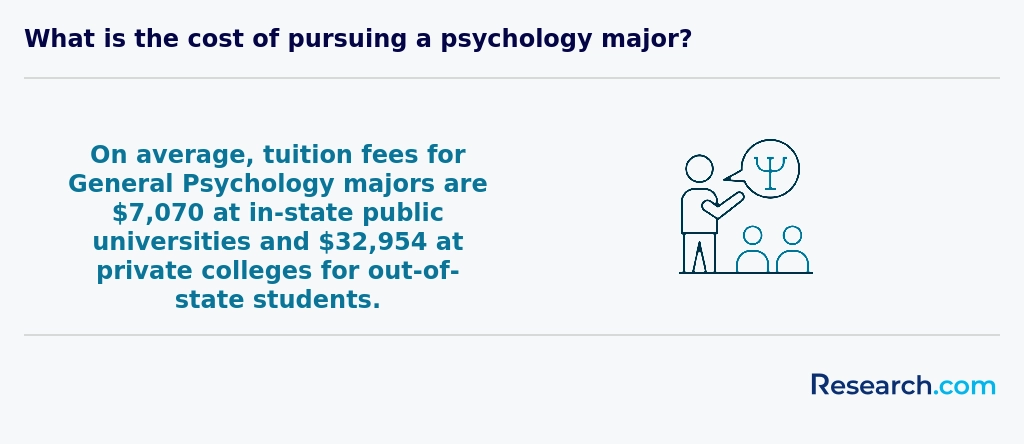
When it comes to the cost of a psychology degree in Mississippi State, students often find it's pretty reasonable compared to other states. For example, at Mississippi State University or the University of Mississippi, in-state tuition for a full psychology program usually ranges around $8,000 to $10,000 per year. Graduates often share how this affordability lets them focus more on their studies and research without stressing too much about huge debt.
Many students highlight how financial aid options like state scholarships or assistantships help ease the costs, making it feel less overwhelming. Imagine diving into interesting psychology experiments or counseling trainings, knowing your budget is pretty manageable-that peace of mind really adds to the overall positive college experience here.
Plus, since the programs integrate hands-on research and real-world practice, students feel they're getting solid value for the investment. So, for Mississippians aiming to study psychology, the cost is balanced with plenty of opportunities to grow and prepare for a meaningful career.
Where can I work with psychology degree in Mississippi State?
With a psychology degree in Mississippi, you've got plenty of options when it comes to jobs. Graduates from places like the University of Mississippi or Millsaps College often land roles in local hospitals or mental health clinics, where they help people navigate life's challenges every day. Many find themselves working as counselors or behavioral specialists right in the Jackson area, a hub for healthcare jobs.
Others take their skills into schools around the state, supporting students' mental health and learning. Imagine working as a school psychologist in a Mississippi public school, making a difference for kids who need extra help-that's a common path for grads from Mississippi State University's psych programs.
Some grads jump into social services, teaming up with nonprofits or state agencies like the Department of Mental Health to support communities. And if you're more business-minded, urban centers like Gulfport offer chances to work in HR or marketing research, using psychology to boost workplace vibes and productivity.
Many positions do ask for advanced degrees and licensure, but starting with a bachelor's can still open doors and set you on a great career path.
If you're wondering how much you can make with a psychology degree right here in Mississippi, the numbers vary depending on your exact career path and level of education. Graduates from schools like the University of Mississippi or Mississippi State University often start their careers in roles like childcare workers, earning about $32,070 a year, which can be a great entry point to gain experience.
Some grads move into research-related jobs such as clinical research associates or survey researchers, where annual salaries hover around $62,370. These roles let you apply your psychology knowledge directly and build a solid foundation in the field.
If you're aiming higher, positions like marketing research analyst or human resources specialist offer more competitive pay, with averages of $83,190 and $76,060 respectively. Many recent psychology grads from Mississippi State find these roles exciting since they combine people skills with data analysis.
While salaries in Mississippi might be a bit lower than the national average, the lower cost of living balances things out, letting you enjoy a comfortable life while doing what you love. Plus, the diverse opportunities around Jackson and other cities mean you're likely to find a fit that sparks your passion.
- Yearly tuition for in-state psychology students in Mississippi ranges from $8,000 to $10,000 at public institutions.
- Out-of-state students typically pay around $20,000 annually for psychology programs.
- Entry-level psychology jobs for bachelor's degree holders include case managers, research assistants, and human services specialists.
- Average starting salaries for psychology graduates in Mississippi are between $35,000 and $40,000 per year.
- Experienced psychologists with doctoral degrees can earn from $70,000 to $80,000 annually depending on specialization and work setting.
- Graduate programs often require supervised clinical hours and licensure exams, especially for counseling and clinical roles.
Getting your psychology degree in Mississippi usually takes about the same time as anywhere else, which is great if you want a clear plan. Most students at places like the University of Mississippi or Mississippi State University find themselves spending around four years finishing a bachelor's degree. It's the classic college experience-mixing general classes with psychology courses and electives, keeping things interesting.
After that, if you're aiming to dig deeper or boost your career options, a master's degree will add roughly two more years. Many grads from Mississippi College say the variety of clinical or counseling tracks helps keep motivation high while studying.
For those chasing a PhD or PsyD, which is necessary for clinical licenses or research roles, it's a longer journey-usually four to seven years past the bachelor's level. Students at the University of Mississippi Medical Center often describe it as challenging but rewarding, especially once they start their internships and research projects.
To practice as a licensed psychologist or counselor in Mississippi, graduates must meet these core requirements:
- Earn the appropriate graduate degree: a doctoral degree (PhD or PsyD) for psychologist licensure or a master’s in counseling/psychology for LPC licensure.
- Complete supervised experience: typically 2,000–3,000 hours under Board-approved supervision, depending on the license type.
- Pass the Examination for Professional Practice in Psychology (EPPP) and the Mississippi jurisprudence exam.
- Submit a licensure application to the Mississippi Board of Psychology with official transcripts, exam scores, and supervision verifications.
- Fulfill continuing education: maintain licensure with at least 24 CE credits every two years.
Students seeking to accelerate prerequisite coursework can explore an accelerated psychology degree online program for a faster start.
For full details on fees, timelines, and scope of practice, consult the Mississippi Board of Psychology’s official guidelines.
Choosing between online and on-campus psychology degrees in Mississippi State mostly comes down to how you like to learn and what fits your lifestyle. If you're juggling work or family, online programs-like those at Mississippi State University-offer flexibility with classes you can attend anytime. Graduates often say it's a game-changer being able to log in whenever it suits them, especially if commuting isn't an option.
On the flip side, on-campus programs give you the chance to connect face-to-face with professors and classmates. This can make a big difference when you want real-time conversations, group projects, or hands-on lab experience, which are key for psychology students aiming for clinical work. Plus, being on campus means easy access to libraries and counseling centers, which a lot of students really appreciate.
Costs can vary too. The average tuition for Mississippi public universities is around $8,400 a year, but online students often save on housing and travel. Many grads from local schools say the choice depends on their personal vibe-whether they want that campus buzz or the freedom to study their way.
To find the best value for their educational investment, many students in Mississippi State, MS, consider enrolling in most affordable psychology schools in Mississippi, which offer high-quality education at a lower cost. These institutions provide students with the opportunity to gain a comprehensive understanding of psychological principles and practices without accumulating significant debt. By attending an affordable psychology program, students can focus on their studies, engage in research projects, and participate in internships that prepare them for various career paths in psychology and related fields. Many of these schools also offer financial aid options, scholarships, and grants to further reduce the cost of education, making them an attractive choice for prospective psychology students in Mississippi State, MS.
If you're wondering about the average cost of a psychology degree in Mississippi State, you're looking at around $10,202 for in-state students. That's the median total cost, which makes studying psychology here pretty affordable compared to other states. Many psychology grads from popular colleges in Mississippi State shared how manageable tuition costs helped them focus more on their studies and less on finances, especially at well-known public universities.
It's important to remember that tuition is just part of the picture. Students often talk about spending extra on textbooks, supplies, and occasional lab fees, all of which add up throughout the semesters. But the good news is that financial aid opportunities often lighten the load, making it easier to get the full experience without drowning in costs.
If you decide to stick around for a graduate degree in psychology, be prepared for slightly higher tuition, but many find it worth it for the hands-on experience and research opportunities. And if you're looking for detailed guidance on costs tied to licensure after your degree, checking out things like the lpc licensure application fee pennsylvania can be a helpful example of extra expenses that come later in your path.
Choosing to study psychology in Mississippi combines quality education with reasonable expenses, and you'll find the journey rewarding by focusing on your passion instead of worrying too much about the money side of things.

Pursuing a psychology degree in Mississippi State, MS, is only the first step toward a rewarding clinical or counseling career. To practice independently, graduates typically need to complete a master’s or doctoral program accredited by the American Psychological Association (APA). This often involves 2–5 years of graduate coursework in areas like assessment, ethics, and evidence-based interventions, followed by a supervised internship of at least 1,500 hours. After earning a graduate degree, candidates must accrue additional post-degree supervised clinical hours-commonly 2,000 to 3,000-under a licensed psychologist or counselor. These hours build the practical expertise required to sit for the Examination for Professional Practice in Psychology (EPPP) or equivalent state exams. Each state board sets its own passing score, background check requirements, and application fees. For students interested in counseling rather than psychology, there are specialized routes such as Licensed Professional Counselor (LPC) programs. To map out these credentials step by step and explore alternative routes-such as certificate programs for coaching or behavioral health-you can review our guide on how to become a mental health therapist. Understanding these credentialing pathways ensures you align your academic choices with licensure requirements and career goals from day one.
If you're planning to study psychology in Mississippi, you'll be glad to hear there's a good range of financial aid options to ease the cost. For example, many students at Mississippi State University share how federal aid through FAFSA helped them cover tuition and even snag Pell Grants, which can give you up to around $7,400 a year without worrying about paying it back. That was a huge relief for those balancing school and part-time jobs.
Plus, the state offers targeted scholarships like the Mississippi Adequate Education Program, which a few psychology majors told me made a big difference in reducing their out-of-pocket expenses. On top of this, several universities offer their own scholarships specifically for psychology students, often rewarding solid grades or research interests.
Work-study programs are another great way to earn while you learn, with many psychology departments helping students find part-time gigs that actually relate to their studies. And if you're thinking long term, some grads pursuing advanced degrees find loan forgiveness programs really rewarding when they go into public service or clinical practice in Mississippi.
- Federal Pell Grants and student loans via FAFSA
- State scholarships like those administered by the Mississippi Adequate Education Program (MAEP)
- University-specific scholarships for psychology majors
- Work-study opportunities providing part-time employment
- Loan forgiveness programs for clinical psychology professionals
The field of sports psychology is emerging as a vital specialization for psychology graduates, offering a unique blend of mental health support and performance optimization for athletes. This section delves into how a background in psychology can pave the way for careers that empower sports teams and individual athletes to manage stress, boost confidence, and excel under pressure. Graduates with a strong foundation in psychology are well-equipped to work alongside athletic departments, professional teams, or private practices where they help athletes overcome performance anxiety and develop mental strategies for success. Many professionals emphasize that understanding behavioral patterns and cognitive processes is essential when addressing the emotional and psychological demands of competitive sports. Key aspects of sports psychology include: • Practical Application: Techniques such as visualization, goal-setting, and mindfulness are central to helping athletes cultivate focus and overcome setbacks. • Research-Driven Strategies: Rigorous data analysis and evidence-based interventions enable sports psychologists to tailor programs that meet individual needs, ensuring both short-term performance enhancements and long-term mental resilience. • Collaborative Environment: Working alongside coaches, trainers, and other specialists, sports psychologists bridge the gap between mental preparedness and physical performance, fostering a comprehensive approach to athlete development. For those interested in this dynamic discipline, exploring a sports psychology definition can provide deeper insights into career pathways, necessary qualifications, and the evolving trends in the field. By integrating psychological principles with athletic training, graduates can play a crucial role in advancing the well-being and competitive edge of athletes across various levels of sport.
If you're thinking about studying psychology in Mississippi State, there are a few key things you'll want to have lined up before applying. Most schools, like Mississippi State University, expect you to have finished high school with solid coursework in English, math, science, and social studies. Graduates often mention how having a GPA around 3.0 or higher really helps since it shows you're ready for the challenge of a psychology program.
Standardized tests like the SAT or ACT are usually part of the package, too. Even if some schools are test-optional now, good scores can give your application a nice boost. For example, lots of students recall needing SAT scores near 1140 to feel competitive at their favorite Mississippi universities.
On top of that, you'll want a good foundation in biology, math, and intro psychology classes. This mix prepares you for the deep dive into data and scientific thinking that most psychology degrees demand. Plus, many grads say having strong recommendations or a personal statement can add that extra spark when universities weigh your application.

Ensuring your psychology degree meets state board standards is crucial for professional practice in Mississippi. Key requirements include:
- Regional Accreditation: Programs must be approved by a U.S. Department of Education–recognized accrediting agency to qualify for licensure.
- APA Accreditation (Doctoral Level): Clinical and counseling psychology doctorates should hold American Psychological Association accreditation for a direct licensure pathway.
- Examination for Professional Practice in Psychology (EPPP): Passing this national exam is mandatory to become a licensed psychologist.
- Supervised Experience: The Mississippi Board of Psychology requires a minimum of 3,000 hours of supervised postdoctoral practice.
- State Application: Submit official transcripts, EPPP scores, and supervised experience verification to the Mississippi Board.
For those seeking flexible, accelerated options, consider our fastest online psychology degree.
If you're thinking about studying psychology in Mississippi State, you'll find a bunch of interesting courses that really get you digging into how people tick. At popular schools like the University of Mississippi or Mississippi State University, students often start with General Psychology to get a solid grasp of the basics, kind of like getting your feet wet before diving deep.
From there, graduates say courses like Research Methods and Statistics are a game-changer-they help you figure out how to design studies and make sense of data, which is huge when you want to understand human behavior scientifically. You'll also encounter Biological Psychology or Neuroscience, where you explore how the brain and nervous system impact everything we do, which many find fascinating and eye-opening.
Other cool classes focus on Cognitive Psychology, looking at memory and problem-solving, and Social Psychology, which helps you understand why people act the way they do in groups. Plus, courses like Abnormal Psychology give you a peek into mental health issues, so you're prepared if you want to work clinically someday.
On top of that, many students love the practical edge from Applied Psychology classes like Industrial-Organizational or Health Psychology-these show how you can use psychology in real workplaces or healthcare settings right here in Mississippi. Hands-on labs and research projects make everything click, turning theory into something you can actually experience and get excited about.

If you're diving into a psychology degree in Mississippi State, you'll find plenty of specializations to pick from that really match your vibe and career goals. Many students at popular universities here enjoy focusing on clinical psychology, which is all about helping folks with mental health struggles. Graduates often talk about how their hands-on internships gave them real confidence for licensure and working professionally.
Others lean into counselling psychology, getting ready to support people through life's tough emotional and social challenges. Schools in Mississippi usually mix in group therapy techniques, which students say makes classes feel practical and really useful. If you're into the workplace side of things, industrial-organizational psychology is an option - you'd be learning how to make companies run smoother and employees happier.
In Mississippi State psychology program concentration options also include tracks like neuropsychology and child and adolescent psychology. These attract students passionate about brain science or working with kids in schools and clinics. Many graduates appreciate how Mississippi schools partner with local districts for practicum experiences, making the learning super relevant. Plus, if your goal is to become a licensed counselor, checking out the wisconsin lpc exam requirements can give you ideas about the process.
Choosing the best psychology degree programs in Mississippi State means thinking about what fits your goals and lifestyle. Some grads from universities like the University of Mississippi say starting with a bachelor's degree gave them a solid mix of theory and practice, while others headed to Mississippi State University's master's programs for more focused training. If you're dreaming of becoming a licensed psychologist, picking a grad program with APA accreditation is key. It's not always easy to find, but it makes a big difference down the line.
Budget matters, too. Many students praise local schools for affordable psychology degrees Mississippi 2027 offers, often below the national average. Plus, scholarships and assistantships can really help. Don't forget to check out programs with strong research opportunities or internships connected to clinics around Mississippi.
Some classmates balanced work by choosing online or hybrid courses, which is a smart move if life's busy. If you imagine your future in a career in counseling, keep an eye out for programs that support that path with hands-on experience and flexible options.

If you're wondering about psychology careers in Mississippi State, there are plenty of exciting options once you've got that degree. Graduates from popular universities here often start by working as behavioral health technicians or psychiatric aides-great entry points that give real-world experience in mental health while you decide where to specialize next. Many also go on to become licensed psychologists or counselors, helping folks in hospitals, private practices, or community centers.
Others dive into educational psychology, supporting students in local school systems to boost learning and mental wellness. It's pretty rewarding to see the impact you can have in classrooms around Mississippi. Industrial-organizational psychology is another cool path, where you put psychological insights to work improving employee satisfaction and productivity at Mississippi companies. With job opportunities with psychology degree Mississippi graduates find their niche in so many areas, thanks to the flexible nature of this field.
Plus, the education here is affordable, making it easier to take the next step in grad school or special training at one of the great public universities. If you're curious about other options, check out a list of accredited psychology schools in Nevada for comparison and inspiration.
Mississippi's psychology degree job outlook is steady, with plenty of chances to work in schools, hospitals, or community centers. Graduates from popular schools like the University of Mississippi or Mississippi State University often share that finding roles in counseling or behavioral health feels rewarding and attainable. A growing focus on mental health means more job openings, especially for those with counseling or clinical psychology training.
Many grads take pride in helping local communities or working in school systems, where they can make a real impact through assessments and support. While the average salary in Mississippi sits around $70,500, which is lower than the national average, the cost of living here balances that out. Plus, public universities offer an affordable education-with tuition typically between $7,000 and $10,000-making it easier to pursue your goals without breaking the bank. For more details on costs, check out the most affordable psychology schools in Mississippi.
For anyone exploring Mississippi psychology career opportunities, it's encouraging to know that with a master's or doctoral degree, doors open in private practice and government roles too. Entry-level jobs usually want at least a master's, so investing in education here really pays off-in both job satisfaction and community impact.
2027 Best Psychology Degree Programs Ranking in Mississippi State
Investing in your education is a significant decision that can shape your future, and the Research.com team understands the importance of making informed choices. To assist prospective students in Mississippi, we have meticulously crafted the "2027 Best Psychology Degree Programs Ranking in Mississippi State." Our commitment to quality, credibility, and accuracy is reflected in the extensive research and analysis conducted to compile this ranking.
We utilized the following reputable data sources to ensure a comprehensive evaluation of psychology programs:
By exploring this ranking, readers will gain valuable insights into the best psychology degree programs available in Mississippi State, helping them make informed and confident decisions about their educational paths. For more details on our methodology, please visit our Research.com methodology page.

Frequently Asked Questions About psychology
Psychology degree students in Mississippi State can maximize their learning experience by actively engaging in research opportunities offered by local universities. Institutions such as Mississippi State University and the University of Mississippi provide access to faculty-led projects that enhance practical skills. According to the National Center for Education Statistics, students participating in undergraduate research report higher retention rates and better academic performance.
Internships in clinical, counseling, or educational psychology settings across Mississippi also play a crucial role in applying theoretical knowledge. Students should seek affiliations with community mental health centers or hospitals to build hands-on experience.
Additionally, joining psychology clubs and attending state conferences like those hosted by the Mississippi Psychological Association encourages networking and professional growth.
The psychology field is expanding with new and specialized areas gaining attention, especially for students in Mississippi State. One emerging niche is neuropsychology, focusing on brain-behavior relationships and cognitive functions. This specialty is important as Mississippi has increasing demand for professionals addressing neurological disorders.
Another growing area is health psychology, which explores how psychological factors affect physical health and wellness. With Mississippi facing high rates of chronic illness, health psychologists play a critical role in disease prevention and management.
Additionally, forensic psychology, involving the application of psychology to legal systems, is gaining prominence. Mississippi's criminal justice initiatives have increased the need for psychologists skilled in this field. According to the American Psychological Association, these niches offer promising career paths with expanding job opportunities nationwide, including Mississippi.
After completing a psychology degree in Mississippi State, preparing for the job market involves several strategic steps. Students should pursue internships or practicum experiences during their studies to gain practical skills and local professional contacts. Many psychology roles require licensure or certification, so understanding Mississippi's licensing requirements early is essential. Networking through university career centers and professional organizations like the Mississippi Psychological Association can provide valuable opportunities. Additionally, considering graduate education can expand job prospects, as many clinical and counseling positions require a master's or doctorate. According to the U.S. Bureau of Labor Statistics, Mississippi's demand for psychologists is expected to grow steadily by 8% through 2030.
Employers in Mississippi State seek psychology graduates with strong analytical skills to interpret complex data effectively. Critical thinking is essential, allowing graduates to evaluate research findings and apply theory in practical settings. Communication skills, both written and verbal, are highly valued for conveying insights to diverse audiences.
Interpersonal skills also rank prominently, as many psychology roles require collaboration and empathy, especially in clinical or counseling settings. Familiarity with statistical software and research methods is increasingly important in data-driven environments.
According to the U.S. Bureau of Labor Statistics, Mississippi's psychology job market emphasizes adaptability and cultural competence, reflecting the state's diverse population.
Finding internships in Mississippi State for psychology students involves leveraging resources provided by universities and local organizations. Many Mississippi universities with psychology programs, such as Mississippi State University and the University of Mississippi, maintain internship databases and career services specifically for psychology majors. These services connect students with internships in clinical, counseling, and research settings.
An effective approach also includes contacting local hospitals, mental health clinics, and community centers in cities like Starkville and Jackson, as they often offer placements suitable for psychology students. According to the Mississippi Department of Mental Health, internship opportunities have steadily increased, reflecting state investment in behavioral health services.
Networking with faculty members who conduct research or community outreach is valuable, as they can provide mentorship and direct internship recommendations. Students should start searching early, ideally one semester before intended placement, to secure competitive positions.
Obtaining a psychology degree in Mississippi State significantly enhances career mobility and advancement opportunities within the region's growing mental health and social services sectors. According to the Mississippi Department of Employment Security, jobs in psychology and counseling are projected to grow faster than average, at approximately 10% through 2030.
Graduates frequently find roles in healthcare, education, and social services, where advanced degree holders may access higher-level positions, such as licensed psychologists or clinical supervisors. Licensing requirements in Mississippi typically require at least a master's or doctoral degree, underscoring the importance of graduate education for career progression.
Furthermore, employers in the state increasingly value specialized knowledge in areas like behavioral analysis and counseling, which psychology programs provide. This specialization often translates into better salaries and leadership roles for degree holders.
Studying for a psychology degree in Mississippi State equips students with skills applicable across various interdisciplinary fields such as healthcare, education, and business. Programs often emphasize both core psychological theories and applied research methods, which encourage collaboration with other disciplines like sociology, neuroscience, and public health.
According to the National Center for Education Statistics, Mississippi State universities offering psychology degrees provide coursework that includes statistics and behavioral science, essential for data-driven roles.
This cross-disciplinary approach enhances problem-solving abilities and prepares graduates for diverse careers, from counseling to organizational development.
Choosing between a thesis and a non-thesis psychology degree program in Mississippi State depends largely on your academic and career goals. A thesis program typically involves conducting original research and writing a substantial paper. This option suits students planning to pursue doctoral studies or careers in research and academia. According to the Mississippi Institutions of Higher Learning, about 40% of psychology graduate students in the state opt for thesis tracks to strengthen their research skills.
Non-thesis programs focus more on coursework and practical experience. These are ideal for students aiming for applied psychology careers, such as counseling or human services. Data from the National Center for Education Statistics shows non-thesis options tend to have a shorter completion time, often around two years.
Consider also your availability and interest in research. Thesis tracks usually require more time commitment and a strong advisor relationship. Many universities in Mississippi State, including Mississippi State University, offer both options with varying requirements and flexibility.
Students based in Mississippi State who wish to study psychology abroad have several options through their home institutions. Many universities offer study abroad programs or exchange agreements with overseas universities that include psychology courses. For example, Mississippi State University supports global education initiatives that allow psychology students to earn credits while experiencing different cultural approaches to mental health.
Additionally, students may apply for summer abroad research internships or international psychology conferences, which provide practical exposure beyond classroom learning. According to the Institute of International Education, in recent years, participation in study abroad programs among U.S. psychology students has increased by over 20%, reflecting growing interest.
Financial aid and scholarships are often available to Mississippi students pursuing these opportunities, making international study more accessible.
Students pursuing psychology degrees in Mississippi State have various part-time job opportunities that can enhance their academic experience and professional skills. Positions such as research assistants at institutions like Mississippi State University provide hands-on experience with psychological studies and data analysis. Additionally, working as a behavioral health technician or a mental health aide can offer practical exposure to clinical environments.
Other opportunities include tutoring psychology underclassmen or assisting in campus counseling centers. According to the U.S. Bureau of Labor Statistics, gaining relevant work experience during studies can improve employability and practical understanding, which is valuable in Mississippi's growing mental health sector.
Psychology students in Mississippi State benefit from several networking opportunities designed to enhance their academic and professional growth. Universities like Mississippi State University and the University of Mississippi offer active psychology clubs and honor societies that connect students with peers and faculty. These organizations often host guest lectures, workshops, and career fairs focused on psychology careers.
Students can also engage with the Mississippi Psychological Association, which provides access to conferences, internships, and local professionals. These events allow students to build relationships with practicing psychologists and explore job prospects in clinical, counseling, and research settings within the state.
Alumni networks provide valuable support for psychology degree students in Mississippi State by offering mentoring and career opportunities. Graduates from local universities often connect students with internships and job openings in psychology-related fields. This is especially important in Mississippi, where professional connections help navigate licensure and employment challenges unique to the state.
Research from the National Association of Colleges and Employers shows that 85% of jobs are obtained through networking, making alumni contacts critical for emerging psychologists. Mississippi State University's alumni association hosts events and online platforms that facilitate these connections.
Such networks also enable knowledge sharing about graduate programs and licensure requirements, which vary by state. Students gain insights from mentors who understand Mississippi's regulatory environment for psychologists, helping them plan education and career steps effectively.
Customizing a psychology degree in Mississippi State to align with your career goals involves selecting specific courses, internships, and research opportunities offered by universities in the region. Many institutions provide concentrations such as clinical, counseling, or industrial-organizational psychology, allowing students to tailor their studies.
Additionally, taking advantage of practicum experiences in local clinics or businesses can provide practical skills relevant to your desired profession. Students should consult academic advisors to create a personalized plan that fits licensure requirements or graduate study aspirations. According to the Mississippi Board of Psychology, specialized training enhances employment prospects in the state's growing mental health sector.
Psychology students in Mississippi State often encounter several challenges unique to the region's higher education landscape. One common difficulty is access to diverse internship and research opportunities. Mississippi has fewer large research institutions compared to national averages, which can limit hands-on experiences essential for psychology majors (National Center for Education Statistics, 2023).
Additionally, students face competitive admission requirements and an increasing demand for advanced degrees. Many employers in Mississippi prefer candidates with master's or doctoral qualifications, adding pressure to continue education beyond a bachelor's level.
Financial constraints also present challenges. According to the College Board, Mississippi ranks among states with lower average family incomes, making tuition and living expenses a significant concern for many students pursuing psychology degrees.
Lastly, mental health stigma in some communities may impact students' willingness to seek support or counseling during their studies, affecting both academic performance and personal well-being.
With a psychology degree in Mississippi, graduates can pursue several professional certifications to enhance their careers. Common options include Licensed Professional Counselor (LPC), Licensed Marriage and Family Therapist (LMFT), and Licensed Clinical Social Worker (LCSW). Each requires additional supervised experience and passing state exams governed by the Mississippi Board of Psychology or the Board of Examiners for Licensed Professional Counselors.
For those interested in specialized fields, certifications like Certified Addiction Counselor (CAC) or Board Certified Behavior Analyst (BCBA) are available. These credentials often require specific graduate training and clinical hours.
According to the Mississippi Department of Mental Health, demand for licensed psychologists and counselors has grown by 6% over recent years, emphasizing the value of certification for employment prospects.
Applying for a psychology program in Mississippi requires careful preparation to stand out. Begin by researching programs offered by institutions such as the University of Mississippi or Mississippi State University to understand their specific requirements. Most programs expect strong academic performance, demonstrated by a competitive GPA, typically above 3.0. Including relevant extracurricular activities or volunteer work related to psychology can strengthen your application.
Craft a clear and compelling personal statement explaining your interest in psychology, career goals, and why you chose a Mississippi institution. Letters of recommendation from professors or professionals familiar with your skills are essential. Standardized tests like the GRE are not always required but can enhance your profile. Finally, ensure all materials are submitted before deadlines, commonly in early spring for fall entry.
Psychology careers are increasingly valued worldwide due to growing awareness of mental health. In the United States, including Mississippi State, psychology professionals benefit from diverse opportunities in healthcare, education, and research. According to the U.S. Bureau of Labor Statistics, employment for psychologists is expected to grow 8% from 2022 to 2032, reflecting steady demand.
Globally, psychology roles differ by country but often emphasize clinical and counseling positions. For students in Mississippi, understanding international trends is vital, as globalization encourages cross-cultural competence. Research shows that Mississippi's psychology programs stress evidence-based practice, preparing graduates for local and international standards.
Professional licensure varies worldwide, but U.S. licensing often sets benchmarks influencing global practices. This makes a psychology degree obtained in Mississippi competitive in various settings, expanding career prospects beyond state borders.
Gaining practical experience while studying for a psychology degree in Mississippi State is essential to build skills and enhance employability. Many universities in Mississippi offer internship programs through partnerships with local hospitals, mental health clinics, and community organizations. For example, the University of Mississippi provides students access to supervised clinical placements, allowing hands-on work with diverse populations.
Research assistant positions are another valuable option. They enable students to collaborate on ongoing psychology studies, gaining experience in data collection and analysis. According to the Mississippi Department of Employment Security, psychology-related internships improve job prospects by 25%.
Students can also engage in campus-based labs or volunteer for crisis helplines, which develop communication and counseling skills.
Choosing the right concentration within a psychology degree program in Mississippi State involves understanding your career goals and interests. Psychology offers various specializations, such as clinical, counseling, forensic, and developmental psychology. Consider which area aligns with your passion and the type of work environment you prefer.
Research programs offered by universities in Mississippi, such as Mississippi State University and the University of Mississippi, to see which concentrations they emphasize. The American Psychological Association (APA) notes that clinical psychology is among the most popular fields nationally, with strong demand in Mississippi for licensed practitioners.
Evaluate practical considerations, including internship availability and licensure requirements specific to Mississippi. Internships help build experience, and some concentrations require additional state certification for practice. Speaking with academic advisors and reviewing job market data from the Mississippi Department of Employment Security can also support your decision.
- 2027 Best Psychology Degree Programs Ranking in Birmingham
- 2027 Best Psychology Degree Programs Ranking in Hattiesburg
- 2027 Best Psychology Degree Programs Ranking in Montgomery
- 2027 Best Psychology Degree Programs Ranking in Mobile
- 2027 Best Psychology Degree Programs Ranking in Baton Rouge
- 2027 Best Psychology Degree Programs Ranking in New Orleans
- 2027 Best Psychology Degree Programs Ranking in Atlanta
- 2027 Best Psychology Degree Programs Ranking in Macon
- 2027 Best Psychology Degree Programs Ranking in Tallahassee
- 2027 Best Psychology Degree Programs Ranking in Springfield
See What Experts Have To Say About Studying Psychology
Read our interview with Psychology experts

Joann Farrell Quinn, Ph.D., MBA
Psychology Expert
Director at the College of Medicine Department of Medical Education
Morsani College of Medicine

Catherine Caldwell-Harris, Ph.D.
Psychology Expert
Associate Professor of Psychology
Boston University

Elizabeth L. Jeglic Ph.D.
Psychology Expert
Professor of Psychology
City University of New York

- State Aid for Graduate Students https://www.msfinancialaid.org/students-parents/state-aid-for-graduate-students/
- Mississippi Online Degree Programs in Psychology https://www.onlinepsychologydegrees.com/states/mississippi/
- Psychology at Mississippi State University https://www.vaia.com/en-us/degrees/universities/mississippi-state-university/psychology-at-mississippi-state-university/
- What Can You Do With a Psychology Degree? Careers, Paths, and What to Study https://www.griffith.ie/knowledge/what-can-you-do-with-a-psychology-degree-careers-paths-and-what-to-study
- How to help students cope with mental health challenges https://www.eaie.org/resource/help-students-cope-mental-health-challenges.html
- Study Psychology Abroad https://astarfuture.co.uk/study_psychology_abroad.html
- Sample letters in psychology https://www.mystudies.com/en-in/human-and-social-sciences/psychology/letter-model/
- Society for the Teaching of Psychology https://teachpsych.org/page-1784686/8675326
- Explore Psychology Degrees Online | Psychology.org https://www.psychology.org/online-degrees/
- Mississippi Psychology Schools | Psychology Degree Guide https://psychologydegreeguide.org/state/mississippi/


