2027 Educational Leadership Degree Recession Resilience Report: Which Career Paths Hold Up Best During Economic Downturns

Co-Founder and Chief Data Scientist
Choosing an educational leadership career during a shaky economy means weighing mission, pay, and job security. The U. S. unemployment rate reached 4.1% in June 2024, according to BLS, reminding workers that downturn risk is real even in stable fields. This guide is for current educators, graduate students, and career changers who want to compare leadership paths by layoff risk, salary stability, hiring demand, industry resilience, and employer type. You will learn which roles tend to hold up better, where risk rises, and how to build transferable skills that protect your options.
Key Things You Should Know
- K-12 school leadership, special education administration, compliance, student services, and district operations tend to be more recession-resistant because they support required services, public funding obligations, and student safety; no educational leadership role is completely recession-proof.
- BLS 2024 Occupational Outlook Handbook data reported May 2023 median pay of $103,460 for elementary, middle, and high school principals and $102,610 for postsecondary education administrators, but stability depends heavily on state budgets, enrollment, union rules, and employer finances.
- Higher-risk paths often include private edtech, corporate learning and development tied to discretionary spending, enrollment-dependent private colleges, and grant-funded initiatives that can be paused when revenue drops.
- What Makes a Educational Leadership Degree Career Recession-Resistant?
- Which Educational Leadership Career Paths Offer the Strongest Job Stability During Downturns?
What Makes a Educational Leadership Degree Career Recession-Resistant?
A recession-resistant educational leadership career is one that tends to retain funding, staffing need, and institutional priority when the economy weakens. It does not mean a job is immune to layoffs. It means the role is connected to essential operations, legal requirements, student services, accreditation, compliance, or direct instructional continuity.
Educational leadership degrees usually prepare professionals for roles such as principal, assistant principal, curriculum director, higher education administrator, student affairs leader, assessment coordinator, district administrator, training manager, or education program director. Programs may be offered as master's, specialist, EdD, or PhD pathways and often cover school law, finance, ethics, supervision, data-informed improvement, curriculum, organizational leadership, and equity-focused decision-making. For licensed school roles, state licensure or certification requirements matter as much as the degree itself.
The following comparison shows the main signals that make one educational leadership path more resilient than another. These are decision factors, not guarantees, because recessions affect states, districts, colleges, nonprofits, and private companies differently.
| Resilience factor | Why it matters in a downturn | Stronger signal | Weaker signal |
| Essential function | Roles tied to legally required services are harder to cut than optional initiatives. | Special education, compliance, safety, principal leadership | Experimental programs, expansion projects, discretionary training |
| Funding source | Public funding can be strained, but it is often less volatile than sales-driven revenue. | Public school districts, public universities, state agencies | Tuition-dependent institutions, venture-backed edtech firms |
| Enrollment dependency | Enrollment drops can force program cuts, hiring freezes, or consolidation. | High-demand K-12 districts and large public systems | Small private colleges with declining enrollment |
| Transferability | Skills that apply across institutions create more options if one employer cuts staff. | Budgeting, compliance, assessment, staff supervision, data analysis | Narrow platform-specific or program-specific experience |
| Seniority and credential fit | Experienced leaders with required credentials usually have more internal mobility. | Licensed administrators with instructional and operational experience | New graduates without classroom, supervisory, or compliance experience |
Use recession resilience as one layer of career planning. A high-paying role may be attractive, but if it depends on discretionary budgets or unstable enrollment, it may carry more risk than a lower-paid role in a required public service function.
Which Educational Leadership Career Paths Offer the Strongest Job Stability During Downturns?
The most stable educational leadership paths usually sit closest to core institutional operations: running schools, meeting legal requirements, maintaining accreditation, supporting students, and managing budgets. BLS 2024 Occupational Outlook Handbook data is useful for national context, but it does not capture local budget politics, district consolidation, or college-specific enrollment problems.
The table below ranks common educational leadership career paths by relative recession resilience. The salary figures reflect national occupational medians where BLS publishes a close match; actual pay varies by state, district, institution size, union agreements, and experience.
| Career path | Typical responsibilities | Recession resilience | Salary and outlook context | Best fit |
| K-12 principal or assistant principal | School operations, staff supervision, discipline, instructional leadership, family communication | Strong | BLS reported May 2023 median pay of $103,460 for elementary, middle, and high school principals | Educators with teaching experience, leadership credentials, and tolerance for high accountability |
| Special education administrator | IEP compliance, services coordination, staffing, legal documentation, family support | Strong | Pay is often tied to district administrator salary schedules rather than a single national occupation | Leaders who understand disability law, compliance, and cross-functional coordination |
| District compliance, assessment, or accountability leader | Reporting, testing coordination, program evaluation, accreditation, policy implementation | Strong to moderate | Salary depends on district size and whether the role is classified as central office administration | Professionals with data, policy, reporting, and documentation strengths |
| Postsecondary registrar, financial aid, or student services administrator | Enrollment systems, student support, records, aid compliance, retention initiatives | Moderate to strong | BLS reported May 2023 median pay of $102,610 for postsecondary education administrators | Higher education professionals who want operational roles tied to student persistence |
| Instructional coordinator or curriculum specialist | Curriculum review, teacher support, instructional materials, assessment alignment | Moderate | BLS reported May 2023 median pay of $74,620 for instructional coordinators | Educators who prefer instructional improvement over building-level administration |
| Corporate learning and development manager | Employee training, leadership development, LMS strategy, performance programs | Moderate to lower | BLS reported May 2023 median pay of $125,040 for training and development managers | Leaders comfortable with private-sector budget cycles and performance metrics |
| Edtech program manager or customer success leader | Implementation, client support, adoption strategy, product training, account retention | Lower to variable | Pay may be competitive, but risk rises when clients cut software budgets or investors demand cost reductions | Professionals seeking growth potential and remote options who can tolerate volatility |
The strongest stability usually comes from roles that institutions must keep operating even when budgets tighten. The trade-off is that these roles can involve heavier compliance pressure, public accountability, and slower salary growth than private-sector positions.
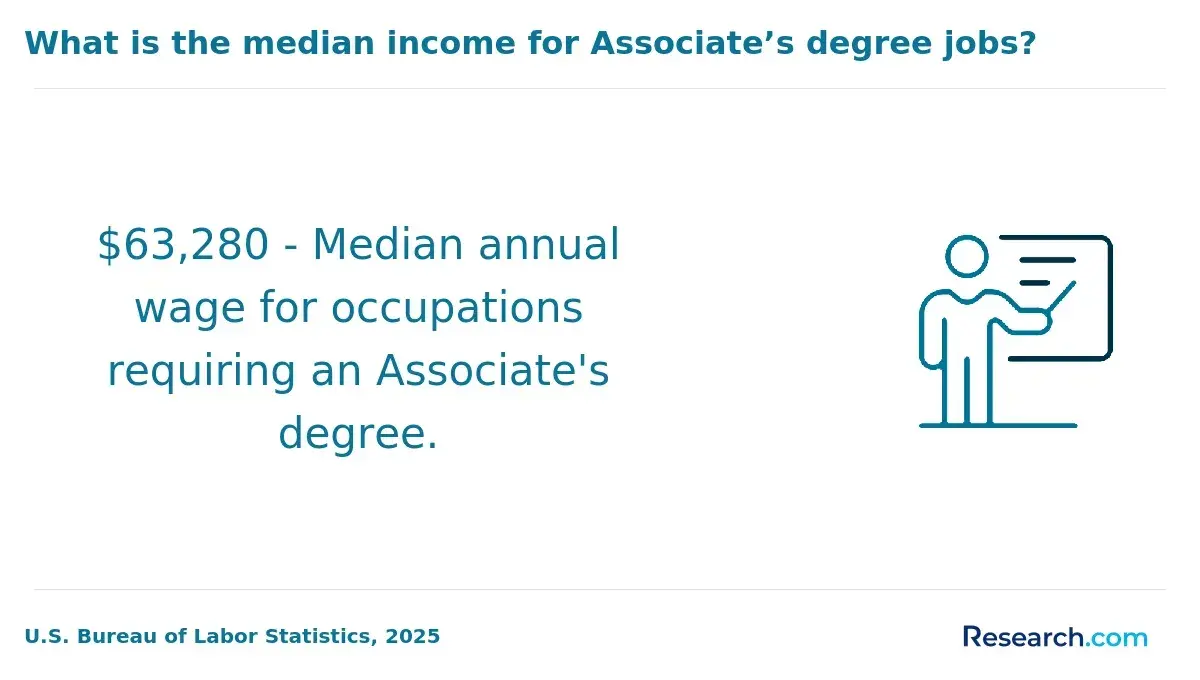
Educational leadership graduates can work in K-12 education, higher education, workforce training, nonprofits, government agencies, edtech, and corporate learning. During downturns, industry resilience often matters as much as the job title because the same leadership skill set can be stable in one sector and vulnerable in another.
Education is not the only field people examine for downturn-resistant work. Readers comparing long-term resilience across essential sectors sometimes also look at healthcare education pathways, including online pharmacy school, because healthcare demand is often less discretionary than many consumer-facing industries.
The table below compares major industries for educational leadership graduates. It summarizes typical recession behavior, but individual employers can differ sharply based on funding, enrollment, reserves, leadership decisions, and state policy.
| Industry | Recession-resilience level | Why it may hold up | Main downturn risk |
| Public K-12 education | Strong | Compulsory schooling, public funding, required services, local community need | State budget cuts, hiring freezes, school consolidation, declining enrollment |
| Special education and student support services | Strong | Legal obligations and ongoing student service requirements | Staffing shortages, compliance pressure, budget disputes over service delivery |
| Public higher education | Moderate to strong | Large systems, public funding, adult learners seeking credentials during weak labor markets | Legislative cuts, tuition pressure, enrollment shifts, program closures |
| Community colleges and workforce education | Moderate to strong | Retraining demand can rise when workers need new credentials | Local tax revenue declines and inconsistent state workforce funding |
| Private nonprofit colleges | Moderate to lower | Established institutions with strong brands and reserves can remain stable | Enrollment decline, tuition discounting, small endowment, program consolidation |
| Corporate learning and development | Moderate to lower | Compliance training and safety training may continue | Leadership development, travel training, and optional programs can be reduced quickly |
| Edtech and education consulting | Variable | Digital learning, compliance tools, and mission-critical systems may remain necessary | Client budget cuts, contract delays, investor pressure, sales-cycle slowdowns |
For most educational leadership graduates, public K-12 systems, special education services, and operational roles in large public institutions offer the best defensive profile. Private-sector and consulting paths may offer more upside, but they usually require a stronger tolerance for revenue-driven staffing changes.
The lowest-risk educational leadership careers are usually those that combine required credentials, essential service delivery, and limited substitution. In practice, that often means school-site leadership, special education administration, compliance, student safety, records, financial aid, and accountability functions.
Layoff risk is hard to measure precisely for educational leadership because national data often groups administrators with broader occupations. Still, BLS 2024 occupation data shows that many education administration roles remain large replacement-driven labor markets even when projected growth is modest, which means retirements and turnover continue to create openings.
When comparing roles, focus on whether the position would still be needed if the organization froze hiring or cut optional programs. The following risk tiers can help you separate durable roles from roles that may be first in line for reductions.
| Risk tier | Career examples | Why the risk level looks this way | Best defensive move |
| Lower layoff risk | Principal, assistant principal, special education director, compliance administrator, registrar, financial aid administrator | These roles support required operations, legal compliance, student services, or institutional continuity | Maintain required credentials and document measurable operational results |
| Moderate layoff risk | Instructional coordinator, curriculum specialist, student success manager, assessment coordinator, program chair | These roles are important but may be consolidated if budgets tighten | Build evidence of impact on retention, achievement, accreditation, or compliance |
| Higher layoff risk | Innovation director, edtech implementation consultant, corporate leadership trainer, grant-funded program manager | These roles may depend on discretionary spending, short-term funding, or growth initiatives | Keep transferable skills current and monitor contract, grant, or revenue signals |
Common mistakes include assuming a public-sector job cannot be cut, accepting a grant-funded role without asking when the grant ends, and focusing only on title prestige. A less glamorous compliance or operations role may offer stronger protection than a high-visibility innovation role with uncertain funding.
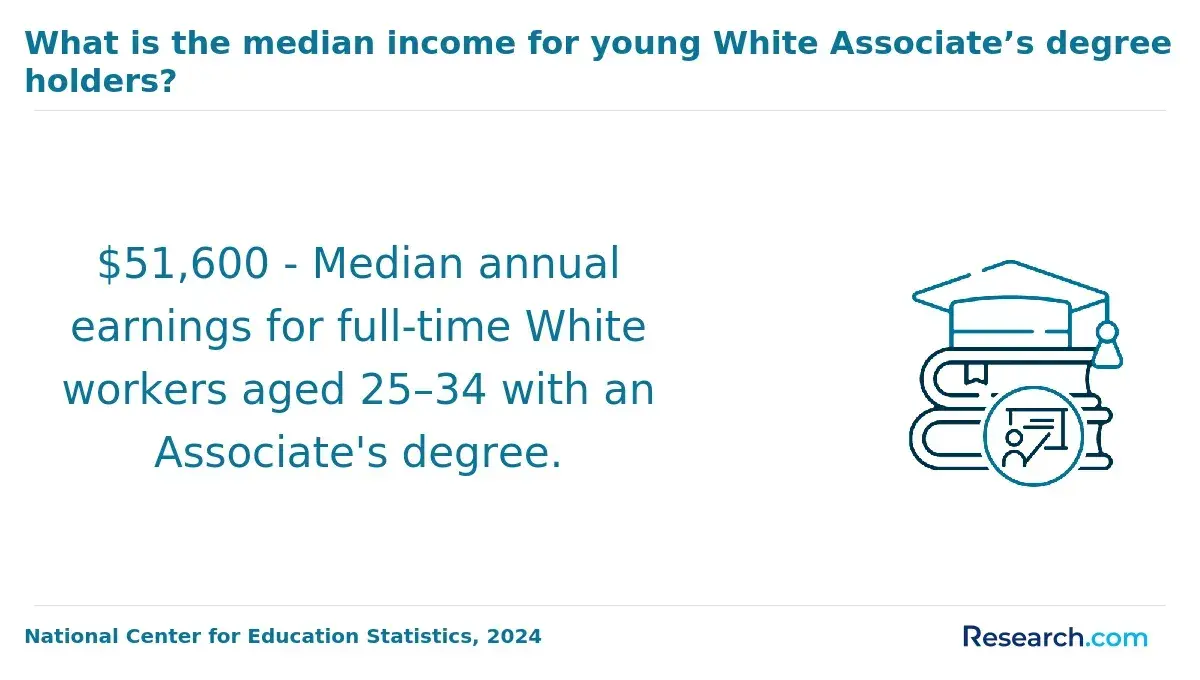
The best recession-resilient choice is not always the highest salary. A strong mix of salary stability and job security usually comes from roles with clear institutional value, predictable funding, and compensation tied to formal salary schedules or long-term contracts.
Some readers compare educational leadership with other stable-service fields before committing to graduate study. If healthcare feels like a better match than school administration, comparing options such as fast-track LPN programs online can help clarify whether your risk tolerance, timeline, and service interests point outside education.
The table below highlights career paths that often balance income potential with stability. Salary data is national and should be adjusted for local cost of living, union rules, contract length, and employer size.
| Career path | Job security profile | Salary stability profile | Trade-off |
| K-12 principal or assistant principal | Strong in stable districts because schools need site leadership | Often tied to district salary schedules and contracts | High workload, public accountability, evening events, crisis management |
| Special education administrator | Strong because services are legally required | Often aligned with administrator pay scales | High compliance burden and frequent staffing challenges |
| District operations, assessment, or compliance administrator | Strong to moderate because reporting and policy functions continue | Stable in larger systems with defined administrative bands | May be less visible and more policy-heavy than campus leadership |
| Postsecondary registrar or financial aid leader | Moderate to strong in stable institutions | Often more stable than grant-funded student programming roles | Enrollment pressure and federal compliance changes can increase workload |
| Training and development manager | Moderate because essential training may remain but optional programs can be cut | BLS reported May 2023 median pay of $125,040, but private-sector volatility can be higher | Higher upside paired with greater exposure to corporate cost cutting |
If your top priority is security, lean toward public K-12 administration, compliance, special education, and large public institutions. If your top priority is compensation growth, corporate learning or edtech may be attractive, but you should build a backup plan before a slowdown arrives.
Entry-level educational leadership roles are usually not "entry-level" in the same way as first jobs after a bachelor's degree. Many employers expect teaching experience, student services experience, supervisory exposure, or a graduate credential. The most resilient early-career options place graduates near essential services rather than optional initiatives.
For professionals interested in student wellness, athletics administration, or community health education, an adjacent pathway such as an exercise science online degree may also be worth comparing before choosing a specialized education leadership track.
These entry-level or early-leadership roles can be safer starting points because they build transferable evidence of institutional value. They are not risk-free, but they can create a stronger bridge into administrator-level positions.
- Assistant principal or dean of students: Often available to licensed educators moving into building leadership; stability improves when the role covers discipline, attendance, family communication, and operational support.
- Instructional coach or curriculum specialist: Useful for educators who want leadership experience without leaving instruction entirely; resilience is stronger when the role is tied to mandated curriculum, assessment, or improvement plans.
- Assessment or accountability coordinator: A practical fit for graduates with data and reporting strengths; these roles support compliance and school improvement documentation.
- Academic advisor or student success coordinator: Common in higher education; stability is stronger when the institution prioritizes retention and when the role is not temporary or grant-funded.
- Financial aid, registrar, or admissions operations specialist: These roles build experience in systems, compliance, and student records, which can transfer across colleges and universities.
- Program coordinator in workforce education or community college administration: Often connected to local labor needs; risk depends on whether the position is funded through recurring budgets or short-term grants.
Before accepting an early-career role, ask whether it is permanent, grant-funded, enrollment-dependent, or part of a pilot program. The title may sound promising, but the funding source often tells you more about recession risk than the job description does.
Location can change the recession resilience of an educational leadership career more than many students expect. A principal role in a growing district may be far more stable than a similar role in a district facing population decline, while a higher education administrator at a large public university may have more options than one at a small college with shrinking enrollment.
NCES projections published in recent education data show that U.S. public elementary and secondary enrollment remains a massive labor market, with roughly tens of millions of students served each year. The practical meaning is that K-12 leadership demand does not disappear during recessions, but it can shift by state, district, and demographic trend.
Remote work adds both opportunity and competition. Higher education advising, instructional design, compliance support, and edtech implementation may offer remote or hybrid options, but remote roles often attract national applicant pools. Building a remote-friendly profile requires more than leadership theory; employers want proof that you can manage systems, people, data, and communication without constant in-person supervision.
Use these location and remote-work filters before choosing a role or program:
- Check whether the region has growing, flat, or declining school-age population because enrollment affects staffing, consolidation, and leadership openings.
- Review state and district budget news, especially if public education funding is tied to volatile tax revenue.
- Compare rural, suburban, and urban demand; rural districts may have fewer applicants but broader responsibilities, while urban systems may offer more specialized roles.
- Ask whether a remote higher education or edtech role is tied to a stable recurring function or a temporary expansion project.
- Confirm licensure portability if you may relocate, because principal and superintendent credentials are state-specific.
The strongest geographic strategy is flexibility. Educational leadership professionals who can work across K-12, higher education operations, compliance, and remote program administration usually have more options when a local market weakens.
Transferable skills are a major source of recession resilience because they reduce dependence on one employer type. If a district freezes hiring, a college consolidates departments, or an edtech company cuts staff, the ability to move into adjacent roles can protect your career momentum.
Data skills are especially valuable because education employers increasingly expect leaders to interpret outcomes, retention, attendance, assessment, and budget information. Professionals exploring analytics-heavy alternatives can also review fields such as bioinformatics degree salary and jobs to understand how data-centered career paths compare outside education.
The most protective skills are those that solve problems institutions cannot ignore during a downturn. Prioritize skills that connect to compliance, revenue, retention, performance, and operational continuity.
- Budget and resource management: Helps you defend programs, manage cuts responsibly, and show leadership under financial pressure.
- Compliance and policy interpretation: Transfers across K-12, higher education, accreditation, federal reporting, special education, and workforce programs.
- Data analysis and assessment: Supports decisions about student outcomes, retention, staffing, program quality, and accountability.
- People leadership and conflict resolution: Remains essential when organizations restructure, merge teams, or manage morale during uncertainty.
- Grant management and program evaluation: Useful in nonprofits, higher education, community colleges, and public agencies, especially when funding must be justified.
- Technology implementation and AI literacy: Helps leaders evaluate learning platforms, automation tools, advising systems, and responsible AI use without overpromising results.
- Communication with families, boards, faculty, and community partners: Strong communication becomes more valuable when budgets, staffing, or services are under pressure.
AI and automation are changing educational leadership rather than replacing it outright. Leaders who can use AI for scheduling, reporting, communication drafts, and data review while protecting privacy, equity, and academic integrity will be better positioned than leaders who avoid technology entirely.
A recession-resilient career plan should combine stable-role targeting, financial caution, credential planning, and transferable skill development. The goal is not to predict the next downturn perfectly; it is to avoid being locked into a narrow role with weak funding and few alternatives.
Use the steps below to compare opportunities before enrolling in a program, changing jobs, or accepting a promotion. This sequence is especially useful for educators deciding between K-12 leadership, higher education administration, corporate learning, or edtech roles.
- Define your risk tolerance: Decide whether you value job security, salary growth, mission fit, remote flexibility, or advancement speed most.
- Map required credentials: Check state principal, superintendent, or administrator licensure rules before choosing a degree, because requirements vary by state.
- Verify accreditation and program fit: Prefer institutions with recognized accreditation, transparent outcomes, fieldwork support, and coursework aligned with your target role.
- Research employer funding: Look for recurring public funding, stable enrollment, strong reserves, long-term contracts, or required compliance functions.
- Ask recession-focused interview questions: Ask how the role is funded, whether it is permanent, how the organization handled past budget cuts, and which functions are protected during hiring freezes.
- Build a proof portfolio: Track outcomes such as attendance improvements, compliance success, retention gains, staff development results, budget savings, or program evaluations.
- Keep a pivot list: Identify adjacent roles you could pursue quickly, such as compliance coordinator, student success leader, instructional designer, assessment analyst, or workforce program manager.
- Review warning signs every quarter: Watch for enrollment drops, delayed vendor payments, repeated leadership turnover, grant uncertainty, hiring freezes, and vague restructuring announcements.
Cost should also be part of the plan. Educational leadership graduate programs can vary widely by public or private status, online format, residency requirements, fees, and field placement costs. A lower-cost accredited program that meets licensure rules may offer better recession resilience than a more expensive program if your target salary is tied to a fixed public salary schedule.
Employer type is one of the clearest job-security filters. A curriculum leader in a public district, a dean at a tuition-dependent college, and a learning director at a technology company may all use similar leadership skills, but their layoff risks come from different economic pressures.
BLS JOLTS data published in 2024 continued to show that layoffs and discharges behave differently across sectors, with government employment generally less volatile than many private industries. For readers, the practical takeaway is to evaluate the employer's funding model before assuming a title is stable.
| Employer type | Relative job security | Why it may be safer | What to investigate before accepting |
| Large public school district | High | Essential services, public funding, established administrative structure | Enrollment trend, state aid formula, recent school closures, administrative restructuring |
| State education agency | High to moderate | Regulatory and policy functions continue across economic cycles | Grant dependency, political priorities, contract vs. permanent status |
| Public university system | Moderate to high | Scale, public support, multiple campuses, research and student service infrastructure | State budget exposure, enrollment mix, department-level cuts |
| Community college | Moderate to high | Workforce retraining demand and local access mission | Local funding, program demand, adjunct reliance, enrollment volatility |
| Private nonprofit college | Moderate to low | Strong institutions may have loyal alumni, reserves, and specialized programs | Financial statements, discount rate, enrollment trend, bond rating, merger rumors |
| Nonprofit education organization | Moderate to low | Mission-driven funding may continue if grants are stable | Grant renewal dates, donor concentration, program restrictions |
| Private edtech or consulting company | Variable to low | High-demand products can grow even during budget pressure | Runway, contract renewals, customer concentration, recent layoffs, sales pipeline |
The safest employer is not always the highest-paying employer. If your priority is recession resilience, favor employers with stable funding, required services, transparent finances, and a clear need for your role even under budget pressure.
Other Things You Should Know About Educational Leadership
No. Principal, assistant principal, and some district roles usually require state-specific administrator licensure, but higher education, nonprofit, corporate training, student services, and edtech roles may not. Always check the requirements for your target state and employer before enrolling.
It can be, especially if the school is properly accredited, the program meets licensure requirements, and it includes relevant fieldwork or internship experiences. Employers usually care more about accreditation, credential eligibility, leadership experience, and measurable results than whether coursework was online or on campus.
Yes, but movement may be slower. Teachers can improve their chances by taking on department leadership, mentoring, assessment, curriculum, attendance, or family engagement responsibilities that show readiness for formal administrator roles when openings return.
Choose carefully. K-12 principal and district leadership roles are usually location-dependent, while higher education operations, instructional design, advising, compliance, and edtech roles may offer more remote options. Remote roles can be competitive, so build evidence of digital collaboration, data management, and independent project leadership.
- The Impact of the COVID-19 Recession on Teaching Positions https://learningpolicyinstitute.org/blog/impact-covid-19-recession-teaching-positions
- Human Capital and Unemployment Dynamics: Why More Educated Workers Enjoy Greater Employment Stability https://www.federalreserve.gov/pubs/feds/2014/201409/index.html
- Recession-Proof Jobs That Thrive During Downturns https://create.fit/recession-proof-jobs/
- Teachers hired in recessions get better results, says US study https://www.bbc.com/news/education-34062880
- During the pandemic, ‘lost’ education jobs aren’t what they seem | Brookings https://www.brookings.edu/articles/during-the-pandemic-lost-education-jobs-arent-what-they-seem/
- Lessons Learned: Avoiding Inequitable Teacher Layoffs https://edtrust.org/rti/lessons-learned-avoiding-inequitable-teacher-layoffs/
- Resilience and perseverance: Keys to effective leadership in schools https://www.smartbrief.com/original/resilience-and-perseverance-keys-to-effective-leadership-in-schools
- 3 types of recession-proof skills and how to develop them | edX https://www.edx.org/resources/how-to-future-proof-your-skills
- The Role of Resilience in Leadership and Culture https://www.aasa.org/resources/resource/the-role-of-resilience-in-leadership-and-culture
- 5 Ways to Maintain Job Stability During a Recession https://www.snu.edu/blog/5-ways-to-maintain-job-stability-during-a-recession