2027 Educational Leadership Degree Automation Exposure Report: Which Career Paths Face the Most AI and Technology Disruption

Co-Founder and Chief Data Scientist
Educational leadership careers are not disappearing, but many are being redesigned around data systems, AI tutoring tools, automated reporting, and predictive analytics. This matters because the U. S. Bureau of Labor Statistics reported a May 2024 median wage of $104,070 for K-12 principals, making career direction and automation exposure financially important decisions. This guide is for students, educators, and career changers weighing educational leadership degrees. You will learn which paths face the most disruption, which remain resilient, and how to choose skills, specializations, and employers that improve long-term career value.
Key Things You Should Know
- Highest exposure is concentrated in data-heavy administrative roles such as registrar operations, compliance reporting, enrollment management, scheduling, assessment coordination, and routine program evaluation, where AI can automate document review, forecasting, dashboards, and communication workflows.
- Lower-risk educational leadership paths combine accountability with human judgment, including school principalship, special education administration, student services leadership, community engagement, instructional coaching, and equity-focused change management; BLS May 2024 median pay for K-12 principals was $104,070.
- The strongest strategy is not avoiding AI-intensive roles but becoming AI-augmented: educational leaders who can interpret data, supervise ethical technology use, lead people through change, and protect student privacy are likely to be more competitive than leaders who rely only on traditional management experience.
- Which Educational Leadership Career Paths Face the Greatest Risk of AI and Automation?
- Which Job Tasks Are Most Likely to Be Automated in Educational Leadership Careers?
Which Educational Leadership Career Paths Face the Greatest Risk of AI and Automation?
Educational leadership includes roles that manage schools, districts, colleges, training programs, student services, curriculum, compliance, and organizational improvement. Automation exposure is highest when a job is built around repeatable information processing and lowest when it depends on trust, conflict resolution, ethical judgment, instructional expertise, and accountability for people.
The table below ranks common educational leadership career paths by likely AI and automation exposure. The ranking is practical rather than absolute because risk varies by employer size, funding, state rules, student population, union agreements, and how aggressively an organization adopts technology.
| Career path | Typical setting | Automation exposure | Why it is exposed or resilient | Decision value for students |
| Registrar or academic records leadership | Colleges, universities, school districts | High | Transcript evaluation, degree audits, scheduling, records verification, and compliance workflows are increasingly system-driven. | Best for students who also build data governance, privacy, systems integration, and policy expertise. |
| Enrollment management leadership | Higher education, private schools, online programs | High | AI can support lead scoring, marketing automation, chatbot advising, application triage, and retention prediction. | Strong opportunity if paired with ethics, student success strategy, and analytics interpretation. |
| Assessment and accountability coordinator | Districts, state-aligned school systems | Medium-high | Automated dashboards can summarize assessment trends, flag gaps, and generate compliance reports. | More stable when the role includes instructional improvement, equity analysis, and stakeholder communication. |
| Instructional coordinator or curriculum leader | K-12 districts, charter networks, education vendors | Medium | AI can draft lesson materials and analyze standards alignment, but curriculum decisions require educator judgment and local context. | Good fit for educators who want to lead AI-supported instruction rather than routine content production. |
| Postsecondary education administrator | Colleges and universities | Medium | Student services, advising, admissions, and operations are becoming more automated, but policy and people leadership remain central. | Attractive for students who combine higher education knowledge with analytics, compliance, and change management. |
| K-12 principal or assistant principal | Public, private, and charter schools | Low-medium | AI can support attendance tracking, intervention alerts, and communication, but school leadership depends on accountability, relationships, safety, and culture. | One of the stronger stability options for candidates who meet state licensure requirements. |
| Special education administrator | Districts, schools, agencies | Low-medium | Documentation tools can assist with IEP workflows, but legal compliance, family collaboration, and individualized services require expert human oversight. | Strong long-term value for leaders comfortable with regulation, advocacy, and complex service coordination. |
| Student affairs or student support director | Colleges, universities, school systems | Low-medium | AI can triage questions and flag risk indicators, but crisis response, belonging, conduct, and advising require human judgment. | Stable for candidates with counseling-adjacent, equity, disability services, or retention strategy experience. |
A high-exposure path is not automatically a bad choice. It can be a strong career move when the role gives you ownership of AI governance, data quality, student privacy, cross-functional leadership, or strategy rather than only routine processing.
Which Job Tasks Are Most Likely to Be Automated in Educational Leadership Careers?
AI is most disruptive at the task level, not the degree level. A principal, dean, or program director may be safe overall while still seeing major parts of the work automated, delegated to platforms, or redesigned around dashboards.
The table below separates tasks that are easier to automate from responsibilities that still require human leadership. Use it to evaluate internships, job descriptions, and graduate program learning outcomes.
| Task area | Automation likelihood | Examples of AI-enabled change | Human value that remains important |
| Routine reporting | High | Auto-generated attendance, assessment, enrollment, accreditation, and compliance summaries. | Explaining implications, correcting data errors, and making defensible decisions. |
| Scheduling and resource allocation | High | AI-assisted master schedules, classroom assignments, staffing scenarios, and meeting coordination. | Negotiating trade-offs, labor constraints, family needs, and equity impacts. |
| Student communication | Medium-high | Chatbots, automated reminders, multilingual message drafts, and early-alert outreach. | Trust-building, escalation, empathy, and sensitive conversations. |
| Curriculum drafting | Medium | Draft lesson plans, rubrics, quiz items, standards maps, and intervention materials. | Instructional judgment, cultural relevance, accessibility, and teacher coaching. |
| Predictive analytics | Medium | Risk scoring for absenteeism, course failure, retention, or graduation barriers. | Ethical review, bias detection, intervention design, and family or student consent considerations. |
| Personnel leadership | Low-medium | Performance dashboard summaries and documentation assistance. | Observation, mentoring, conflict resolution, due process, and culture-building. |
| Crisis and safety leadership | Low | Alert systems and incident documentation tools. | Real-time judgment, legal accountability, communication, and emotional steadiness. |
The practical takeaway is that educational leadership students should learn how to supervise automated work. If a system generates a risk score, a leader still needs to ask whether the score is fair, whether the data is complete, and whether the recommended action helps students.
Common mistakes usually happen when students evaluate a job title instead of the work behind it. Watch for these red flags when comparing roles:
- Assuming "administrator" always means low automation risk, even when the job is mostly records processing, reporting, or templated communication.
- Choosing a career only because the current salary looks strong without asking whether the role is becoming platform-dependent.
- Avoiding AI tools entirely instead of learning how to audit, explain, and improve them.
- Ignoring privacy, accessibility, and bias risks when using AI-generated recommendations for students or employees.
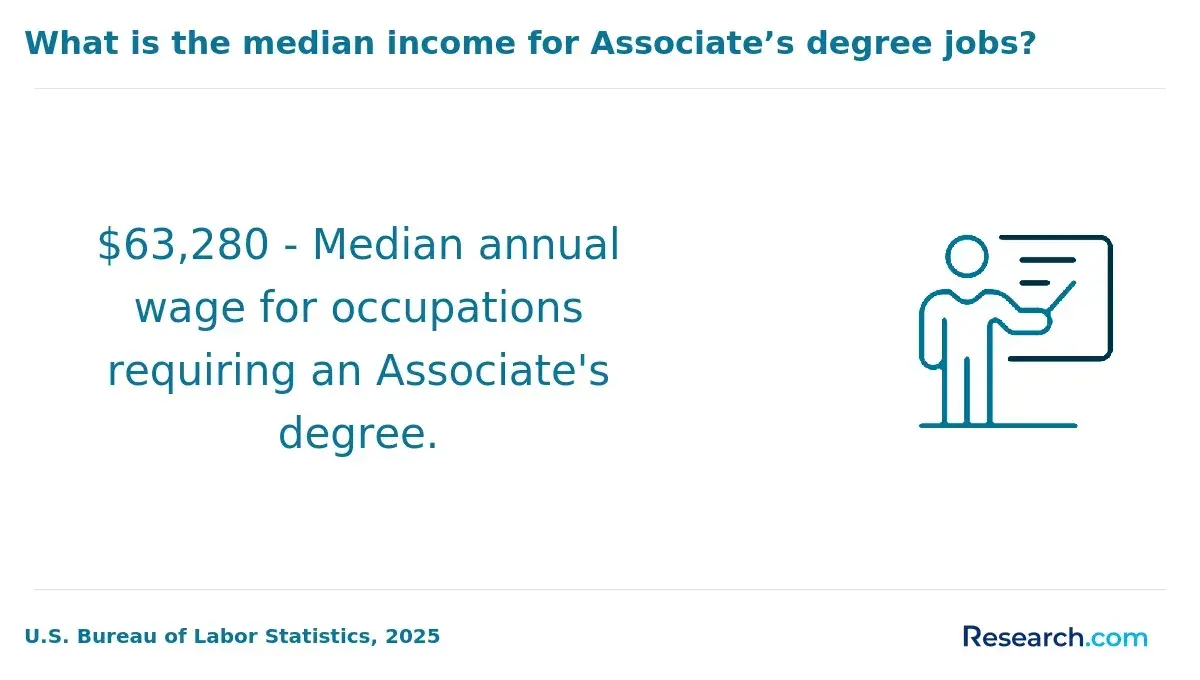
AI adoption is moving fastest where education organizations already have large data systems, high service volume, budget pressure, or competition for students. For educational leadership graduates, this means industry setting can matter as much as job title.
The table below compares common employment settings for educational leadership graduates. It shows where AI adoption is likely to affect daily work most quickly and what that means for career planning.
| Industry or employer type | AI adoption pace | How work is changing | Best-fit leadership profile |
| Online and hybrid higher education | Fast | Automated advising, learning analytics, enrollment funnels, retention alerts, and course quality monitoring are central to operations. | Leaders who understand student success analytics, digital learning, and ethical platform governance. |
| Large public school districts | Moderate-fast | AI tools support assessment analysis, attendance monitoring, staffing models, procurement, and family communication. | Leaders who can translate data into school improvement without losing community trust. |
| Education technology companies | Fast | Product teams need education experts to guide AI tutoring, assessment, intervention, and compliance features. | Leaders who combine instructional knowledge with product thinking and responsible AI awareness. |
| Universities and community colleges | Moderate-fast | Admissions, advising, financial aid support, course scheduling, and institutional research increasingly rely on automation. | Administrators who can manage change, data privacy, and cross-campus collaboration. |
| Private K-12 schools and charter networks | Moderate | Adoption varies widely, but marketing, parent communication, student tracking, and curriculum tools are growing. | Leaders who can evaluate tools without overbuying technology that does not improve learning. |
| Government and nonprofit education agencies | Moderate | Grant reporting, program evaluation, compliance, and service coordination can be automated, but public accountability slows risky adoption. | Leaders with policy, evaluation, procurement, and stakeholder engagement skills. |
Students should not assume the fastest-adopting industry is the most dangerous. In many cases, it offers better advancement because organizations need leaders who can choose tools, train staff, set guardrails, and measure whether AI improves outcomes.
The most resilient educational leadership skills are those that make AI more useful, safer, and more aligned with student outcomes. A leader does not need to become a software engineer, but relying only on intuition or seniority is risky.
The table below compares technical and human-centered skills that improve resilience. The strongest candidates usually combine both categories rather than choosing one.
| Skill category | High-resilience skill | Why it matters in AI-enabled education | How to demonstrate it |
| Data literacy | Interpreting trends, anomalies, and limitations | AI outputs are only useful when leaders understand what the data can and cannot prove. | Program evaluation project, dashboard analysis, assessment review, or retention initiative. |
| Ethical judgment | Bias review, privacy protection, and transparency | Education data affects minors, families, employees, and vulnerable learners. | Responsible AI policy memo, FERPA-related training, or accessibility review. |
| Instructional leadership | Coaching educators and improving teaching quality | AI can draft materials, but leaders must evaluate whether instruction actually improves. | Teacher coaching cycle, curriculum audit, or professional development plan. |
| Change management | Moving teams from resistance to responsible adoption | Technology projects fail when people do not trust or understand them. | Implementation plan, stakeholder map, pilot evaluation, or training rollout. |
| Communication | Explaining complex decisions clearly | AI-supported decisions require transparency with students, families, staff, and boards. | Board presentation, family communication plan, or crisis communication example. |
| Systems thinking | Connecting budgets, staffing, technology, outcomes, and equity | Automation changes workflows across departments, not just individual tasks. | Strategic plan, operations redesign, or multi-year improvement proposal. |
To build these skills, students should choose assignments and field experiences that produce portfolio evidence. Employers are more likely to trust a candidate who can show a data-informed decision, an implementation plan, or an ethical review than one who only lists AI familiarity on a resume.
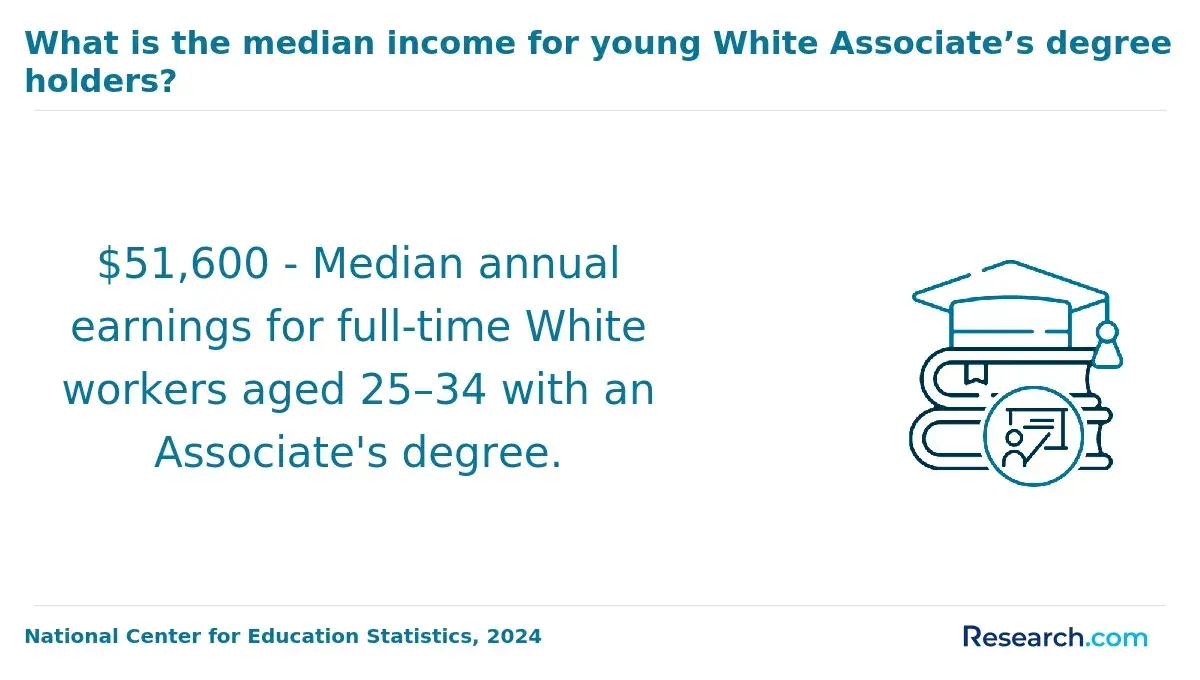
Specialization choice can strongly affect long-term stability. The safest options are not always the least technical; they are the areas where human accountability, regulation, student needs, and strategic judgment remain hard to automate.
The table below compares common educational leadership specializations by stability and AI exposure. Use it to decide whether a degree concentration aligns with your preferred risk level and work style.
| Specialization | Long-term stability | AI exposure | Why it may be stable | Best for |
| Principal preparation or K-12 administration | High | Low-medium | Schools need licensed leaders accountable for safety, instruction, staffing, family relationships, and compliance. | Experienced educators pursuing school leadership roles. |
| Special education leadership | High | Low-medium | Legal requirements, individualized services, family collaboration, and multidisciplinary coordination require expert oversight. | Educators interested in advocacy, compliance, and complex student support. |
| Student affairs and student success | Medium-high | Low-medium | Retention analytics can help, but belonging, crisis support, conduct, and advising still require human judgment. | Higher education professionals focused on student outcomes. |
| Instructional leadership and curriculum | Medium-high | Medium | AI can generate content, but curriculum quality, teacher development, and equity require local expertise. | Teachers moving into coaching, curriculum, or district improvement roles. |
| Higher education administration | Medium | Medium | Automation affects advising, enrollment, records, and operations, but institutional strategy remains human-led. | Professionals interested in colleges, universities, or adult learning systems. |
| Education data, assessment, and accountability | Medium | Medium-high | Technical tools automate analysis, but leaders are needed to validate, interpret, and act on results. | Candidates who enjoy analytics and policy but want leadership responsibility. |
If your goal is maximum stability, prioritize principal preparation, special education leadership, or student support. If your goal is faster innovation and broader mobility, data, digital learning, or higher education operations can be worthwhile, but only if you intentionally build AI governance and analytics skills.
AI can affect salaries in two opposite ways. It may reduce demand for roles built around routine processing, but it can increase the value of leaders who can manage complex systems, improve outcomes, and oversee technology responsibly.
For salary context, BLS May 2024 data placed instructional coordinators at a median annual wage of $74,720, K-12 principals at $104,070, and postsecondary education administrators at $103,960. These figures are not guarantees, but they help students compare the economic trade-off between lower-risk leadership paths and more automation-exposed administrative roles.
The table below summarizes how salary, stability, and automation exposure interact. A high salary can still be a weak long-term choice if the role offers little opportunity to move into strategic work.
| Career option | Salary context | Automation exposure | Advancement outlook in an AI-enabled workplace | Best long-term value when |
| K-12 principal or assistant principal | High relative to many education roles | Low-medium | Advancement may lead to district leadership, operations, curriculum, or superintendent-track roles. | You meet licensure requirements and are prepared for high accountability. |
| Instructional coordinator | Moderate-high | Medium | Growth depends on ability to lead curriculum quality, teacher development, and AI-supported instruction. | You can coach adults and evaluate instructional technology critically. |
| Postsecondary administrator | High in many leadership settings | Medium | Advancement favors leaders who improve retention, enrollment, compliance, or student services through data. | You combine student-centered leadership with operational and analytics skills. |
| Registrar or records leader | Varies widely by institution | High | Routine work may shrink, but systems governance and compliance leadership can expand. | You move beyond transactions into policy, data integrity, and platform management. |
| Enrollment management leader | Can be high in competitive institutions | High | AI may automate outreach, but strategy, ethics, market positioning, and student fit remain valuable. | You can balance growth targets with transparency and student success. |
The best salary strategy is to avoid becoming the person who only prepares reports and become the person who decides which reports matter, what actions follow, and how to protect students from poor automated decisions.
AI is not only a threat to educational leadership graduates; it is also creating roles that did not exist in many schools and colleges a few years ago. These opportunities sit at the intersection of education, data, ethics, product evaluation, and organizational change.
The most promising new opportunities are useful for graduates who want to lead transformation rather than remain in traditional administrative lanes. They often fit people who enjoy solving messy institutional problems.
- AI implementation lead: Coordinates pilots, trains staff, evaluates vendor claims, and ensures tools align with instructional or student success goals.
- Learning analytics manager: Helps schools or colleges use attendance, assessment, advising, and engagement data responsibly to identify barriers and improve support.
- Responsible AI policy coordinator: Drafts usage policies, reviews privacy concerns, supports accessibility, and creates guidelines for staff and students.
- Digital learning director: Oversees online, hybrid, and technology-enhanced learning while measuring quality and equity.
- Education technology product or customer success leader: Uses school leadership experience to help vendors design, implement, and improve tools for real education settings.
Some educational leaders also move into adjacent program areas where technology, health, wellness, and student outcomes overlap. For example, a professional comparing school leadership with an exercise science online degree might explore roles in student wellness initiatives, athletic program administration, health education, or community-based learning programs where leadership and evidence-based practice intersect.
Students can prepare for AI-driven change by choosing programs, internships, and projects that build evidence of adaptability. The goal is not to master every tool but to become the kind of leader who can evaluate tools, guide people, and make defensible decisions.
A practical preparation plan should include both academic choices and career-building habits. These steps are useful whether you are pursuing a master's, EdD, certificate, principal preparation program, or higher education administration pathway:
- Choose coursework that includes data-informed decision-making, program evaluation, education law, organizational change, digital learning, and ethics.
- Ask whether fieldwork includes real exposure to student information systems, assessment dashboards, advising platforms, or learning management systems.
- Build a portfolio with at least one data analysis project, one policy or ethics memo, and one change-management plan.
- Practice using AI tools for drafting, summarizing, scenario planning, and communication, but always document how you checked accuracy and bias.
- Learn the privacy rules that apply to your setting, especially when student records, minors, disability services, or sensitive advising data are involved.
- Develop facilitation skills because technology adoption often fails when leaders cannot train, listen, and build trust.
If you are comparing educational leadership with regulated healthcare education paths, remember that automation risk, licensing, clinical requirements, and liability work very differently. For instance, researching an online pharmacy school can help illustrate how professional programs may require a different balance of online learning, supervised practice, licensure preparation, and technology readiness.
The best way to evaluate educational leadership careers is to compare automation risk alongside salary, licensure, job availability, stress level, mission fit, and advancement potential. A role with moderate AI exposure can still be a good choice if it builds transferable leadership skills.
Before committing to a degree concentration or career path, use a structured decision process. This reduces the chance of reacting to hype or choosing solely based on today's job title.
- Identify the core tasks of the role, not just the title, and separate routine processing from judgment-heavy leadership.
- Check whether the role is tied to licensure, legal accountability, student safety, special populations, or community trust, because these factors usually increase human oversight.
- Compare salary with workload and advancement, not just median pay, because leadership roles often involve evenings, crisis response, and high accountability.
- Review job postings for evidence of AI-related expectations, including analytics, systems management, digital learning, privacy, and change leadership.
- Ask schools how their educational leadership curriculum addresses AI, data ethics, accessibility, cybersecurity awareness, and workforce changes.
- Choose field experiences that put you near decision-making, not only administrative support work that may be automated.
Students considering faster workforce entry should also compare educational leadership with shorter credential routes in other fields, but they should not treat them as interchangeable. A search for fast-track LPN programs online, for example, involves clinical training and state nursing rules, while educational leadership usually centers on school or institutional administration, licensure for certain K-12 roles, and organizational improvement.
A balanced decision is usually better than an AI-avoidance strategy. If a career path offers strong mission fit, reasonable salary potential, and opportunities to lead technology responsibly, AI exposure may become a source of advancement rather than a reason to avoid the field.
Employers increasingly want educational leaders who can manage both people and systems. Traditional experience in teaching, advising, supervision, or program coordination still matters, but job postings are more likely to mention data use, digital learning, learning management systems, accessibility, compliance, and change leadership.
For context, the BLS reported a May 2024 median annual wage of $103,960 for postsecondary education administrators. That salary level reflects the complexity of the work, but it also raises the bar: employers may expect leaders to improve retention, use analytics responsibly, and document outcomes more clearly than in the past.
Students comparing educational leadership with more technical fields should notice a broader hiring pattern: employers often reward candidates who can connect domain expertise with data. For example, students researching bioinformatics degree salary and jobs will see how strongly analytics can shape career options; educational leadership is different, but the same lesson applies-data fluency now improves mobility.
As expectations change, strong candidates can show evidence in several areas. These signals are especially useful for career changers and educators moving into administration:
- Experience using student information systems, learning management systems, assessment platforms, or advising tools to solve real problems.
- Ability to interpret dashboards without treating them as unquestionable truth.
- Knowledge of privacy, accessibility, records retention, and responsible AI policies.
- Evidence of leading adults through change, including teacher adoption, staff training, or cross-department collaboration.
- Clear communication with families, students, faculty, boards, unions, or community partners.
Other Things You Should Know About Educational Leadership
It can be worth it if the program prepares you for licensure, leadership, data use, ethics, and organizational change. The degree is weaker as an investment if it focuses only on traditional administration and does not address technology-driven workplace changes.
Roles involving direct accountability for people, safety, compliance, family engagement, conflict resolution, and instructional quality are generally more resilient. Examples include principalship, special education administration, student affairs leadership, and district-level student support roles.
AI is more likely to change these jobs than replace them entirely. Tools may automate reporting, scheduling, communication drafts, and analytics, but leaders remain responsible for judgment, ethics, staff supervision, community trust, and final decisions.
Ask how the curriculum covers data-informed decision-making, AI ethics, privacy, accessibility, digital learning, program evaluation, and change management. Also ask whether internships or capstone projects involve real education technology systems.
- What Can Educational Institutions Do to Remain Relevant in the Digital Age? | Digital Marketing Institute https://digitalmarketinginstitute.com/blog/what-can-educational-institutions-do-to-remain-relevant
- Educational Leadership in the Age of AI: The New Role of the Leader in Education - MUST University https://mustedu.com/educational-leadership-in-the-age-of-ai-the-new-role-of-the-leader-in-education/
- Educating In The AI Era: The Urgent Need To Redesign Schools https://learningpolicyinstitute.org/blog/educating-ai-era-urgent-need-redesign-schools
- Leadership Guide to Using AI In the Classroom (Without Losing Learning) https://learningfocused.com/blogs/leadership/are-your-students-using-ai-to-train-or-just-ride-a-strategic-guide-for-education-leaders
- 5 Biggest K–12 Education Trends for 2026 | Discovery Education Blog https://www.discoveryeducation.com/blog/educational-leadership/2026-education-trends/
- Jobs of the Future https://www.digitaleducationcouncil.com/executive-briefings-event/jobs-of-the-future
- Adaptive Leadership In The AI Era | Institute Of Managers And Leaders https://managersandleaders.com.au/resources/adaptive-leadership-in-the-ai-era/
- Measuring US workers’ capacity to adapt to AI-driven job displacement | Brookings https://www.brookings.edu/articles/measuring-us-workers-capacity-to-adapt-to-ai-driven-job-displacement/
- Automation in Education: The Fuel of Efficiency is here! https://goedmo.com/blog/automation-in-education-the-fuel-of-efficiency-is-here/