2027 Educational Leadership Degree Payback Report: Which Programs Deliver the Best Cost-to-Salary Return

Co-Founder and Chief Data Scientist
Choosing an educational leadership degree is often a career investment, not just an academic step. The question is whether the tuition, time, and licensure requirements lead to enough salary growth to pay off. BLS data shows elementary, middle, and high school principals had a median annual wage of $104,070 in 2024, making leadership roles financially meaningful for educators ready to advance.
This guide helps teachers, administrators, and career changers compare program types, costs, salaries, break-even timelines, and red flags so they can choose a program with stronger cost-to-salary value.
Key Things You Should Know
- The strongest payback usually comes from accredited, state-approved master's or specialist programs with low net tuition, employer tuition support, and clear alignment with principal or administrator licensure.
- Salary upside depends heavily on role: BLS reported a 2024 median wage of $104,070 for K-12 principals, while instructional coordinators had a lower median wage of $74,720.
- A simple break-even test is net program cost divided by realistic annual salary increase; a $24,000 program with an $8,000 annual raise has a three-year simple payback before taxes, loan interest, or opportunity costs.
- What Is the Return on Investment of an Educational Leadership Degree?
- Which Educational Leadership Programs Deliver the Best Cost-to-Salary Return?
What Is the Return on Investment of an Educational Leadership Degree?
The return on investment of an educational leadership degree is the financial and career value you receive compared with what you spend to earn the credential. For most students, ROI depends on whether the degree helps them qualify for higher-paying roles such as assistant principal, principal, district administrator, instructional leader, dean, student affairs director, or training and development manager.
In practical terms, the degree pays back when the additional income, career mobility, job security, or pension impact outweighs tuition, fees, books, commuting, lost work time, and loan interest. A high-ROI program is not always the cheapest program. It is the program that gives you the required credential for your target role at the lowest reasonable total cost and with the least delay.
Educational leadership programs are usually offered as Master of Education, Master of Arts, Master of Science, Education Specialist, Doctor of Education, or certificate-only pathways. For K-12 public school leadership, the most important ROI question is whether the program meets your state's administrator or principal licensure requirements. A low-cost program that does not lead to the credential you need can have poor ROI even if the tuition looks attractive.
Use this comparison to understand how different educational leadership credentials usually function in the labor market. The best option depends on your current teaching license, experience level, state rules, and target leadership role.
| Credential type | Typical fit | Common target roles | ROI strength |
| Graduate certificate in educational leadership | Licensed educators who already have a master's degree and need administrator coursework | Assistant principal, principal candidate, department leader | Often strong if it meets state licensure rules and avoids the cost of a second full degree |
| Master's in educational leadership | Teachers seeking their first leadership credential or salary-lane movement | Assistant principal, principal, instructional leader, program coordinator | Often strong when tuition is moderate and the degree qualifies the student for licensure or a salary schedule increase |
| Education Specialist degree | Experienced educators who already have a master's and want advanced administrator preparation | Principal, district leader, curriculum director, superintendent-track roles | Strong for candidates whose districts reward advanced credits or require post-master's preparation |
| Doctor of Education in leadership | Experienced administrators seeking senior district, higher education, consulting, or executive roles | Superintendent, cabinet-level administrator, college administrator, executive director | Variable; strongest when tied to a specific promotion path or employer support |
| PhD in education leadership or policy | Students targeting research, faculty, policy, or academic leadership roles | Researcher, professor, policy analyst, senior academic administrator | Depends on funding and career goal; full funding can improve ROI substantially |
ROI also includes non-salary benefits. Some educators pursue leadership degrees to gain decision-making authority, improve school systems, move into policy, or qualify for roles with stronger retirement benefits. Those benefits matter, but they should be weighed alongside measurable costs and realistic job openings in your region.
Which Educational Leadership Programs Deliver the Best Cost-to-Salary Return?
The best cost-to-salary return usually comes from programs that combine three features: recognized accreditation, state licensure alignment, and low net cost after grants, employer reimbursement, transfer credits, or in-district partnerships. Because educational leadership salaries are often tied to public salary schedules, paying more for prestige alone may not produce a higher salary if the credential leads to the same licensure outcome.
For most working educators, the strongest payback profile is a public university or mission-focused nonprofit program that is online or hybrid, accepts prior graduate credits when appropriate, and publishes licensure outcomes clearly. Campus-based programs can also be worth it when they offer strong district pipelines, internships, or local leadership placements.
The table below ranks program profiles by typical ROI logic rather than by brand name. This helps you compare schools even when they use different tuition models or degree titles.
| Program profile | Why it can deliver strong payback | Best for | Main caution |
| Low-cost online master's with state-approved principal licensure | Lower tuition and flexible scheduling reduce both direct cost and work disruption | Licensed teachers seeking assistant principal or principal eligibility | Must confirm the program meets licensure rules in the student's state |
| Post-master's administrator certificate | Targets the credential gap without requiring a second full graduate degree | Educators who already hold a master's degree | May not provide the same salary-lane benefit as a full degree in some districts |
| District-partnered cohort program | Employer partnerships may include tuition support, internship access, or hiring pipelines | Teachers already working in a district with leadership needs | Value may be tied to staying with that employer or region |
| Education Specialist program | Can support advanced licensure, district leadership, or salary-lane advancement | Experienced educators pursuing principal-plus or district-level roles | Higher credit load can reduce ROI if no promotion or salary increase follows |
| Executive Ed.D. in educational leadership | Can be valuable for senior leadership, higher education administration, or consulting | Administrators with a defined promotion goal | Weak ROI if pursued before gaining leadership experience or without employer support |
A good value program should make its outcomes easy to verify. Before applying, look for institutional accreditation, state approval for administrator licensure, internship requirements, graduate employment support, total program cost, and whether online students receive the same licensure preparation as campus students.
Students comparing education with other professional paths should also consider how credential requirements differ by field. For example, an online pharmacy school pathway may involve a very different mix of licensure exams, clinical requirements, and tuition exposure than educational leadership.
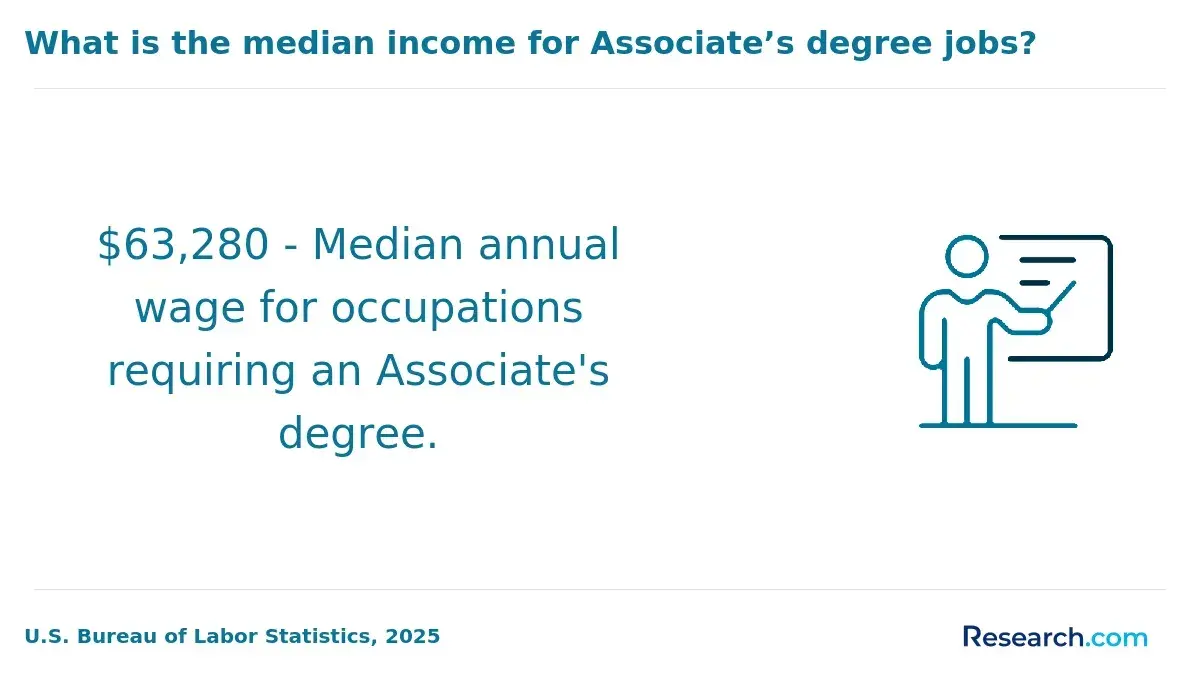
Tuition has a direct effect on payback because many leadership roles have salary ranges set by districts, states, or institutional pay bands. If two approved programs qualify you for the same license and the same salary schedule, the lower net-cost option usually has the stronger financial return.
NCES data published in its recent higher education reporting shows that average graduate tuition and required fees for the recent academic year were $12,596 at public institutions and $29,931 at private nonprofit institutions. The key lesson is not that one institution type is always better; it is that students should compare the full program price, because a higher annual sticker price can substantially lengthen the break-even period.
Educational leadership tuition varies because schools price programs by credit, term, residency status, delivery format, and degree level. The following cost factors are the ones most likely to change ROI.
- Credit load: A 30-credit master's or certificate pathway usually pays back faster than a 60-credit doctoral program unless the doctorate is tied to a clear senior-level promotion.
- State residency rules: Public universities may charge different rates for in-state, out-of-state, and online students, so the advertised tuition may not be your actual tuition.
- Licensure add-ons: Internship supervision, background checks, testing fees, and state application fees can raise total cost even when tuition appears low.
- Employer reimbursement: District tuition assistance can sharply improve ROI, but students should check service commitments and grade requirements.
- Loan interest: Federal graduate Direct Unsubsidized Loans for 2025-26 carried a 7.94% fixed interest rate, so borrowing the full cost can make an otherwise reasonable program less attractive.
Online study can improve payback when it allows students to keep working full time, avoid relocation, and complete fieldwork in their current district. However, online does not automatically mean cheaper. Some programs charge technology fees, flat-rate tuition, or the same rate to all students regardless of residency.
Career changers should be especially careful when comparing program costs across fields. A short credential such as fast-track LPN programs online may have a very different payback timeline because it targets direct entry into a licensed healthcare role rather than advancement from an existing teaching career.
The break-even period is the time it takes for the financial benefit of the degree to equal the net cost of earning it. For educational leadership, the cleanest calculation is simple payback: total net cost divided by expected annual salary increase.
For example, if a program costs $24,000 after scholarships and fees, and it helps you move into a role that pays $8,000 more per year, the simple payback period is three years. If the same credential costs $48,000 and leads to the same raise, the simple payback period doubles before considering taxes, loan interest, or time value of money.
Students can use the following step-by-step method to estimate a realistic break-even timeline before applying.
- Identify the exact job you are targeting, such as assistant principal, principal, curriculum director, dean, or student affairs administrator.
- Confirm whether the degree, certificate, internship, and exam requirements meet the rules for that role in your state or employer system.
- Add total tuition, required fees, books, testing fees, travel, technology costs, and expected loan interest.
- Subtract grants, scholarships, tuition reimbursement, assistantships, and any employer-paid benefits.
- Compare your current pay with realistic salary ranges for the target role in your district, state, or institution.
- Divide net cost by the annual salary increase you reasonably expect after promotion or job change.
Part-time study can improve ROI if it lets you keep your current income and benefits. Full-time study may make sense when the program is funded, the student can complete it quickly, or the credential is required for an imminent promotion. The weaker option is usually a high-cost program that forces reduced income without a clear pathway to a higher-paying role.
Break-even calculations should also account for timing. If the leadership degree qualifies you for a salary-lane increase while you remain in your current teaching role, payback may begin before you become an administrator. If the salary benefit only appears after a competitive promotion, the break-even clock may start later.
The biggest ROI factors are not always the same as the factors highlighted in advertisements. A program's name recognition may matter in some hiring networks, but licensure fit, total cost, field placement quality, and employer demand usually matter more for financial return.
Use these factors as a practical filter when comparing programs. They help separate programs that are merely convenient from programs that are likely to support a financially sound career move.
- Licensure alignment: For K-12 administration, confirm state approval before you compare rankings, tuition, or convenience.
- Total net cost: Include all fees, books, testing costs, loan interest, and lost income rather than relying on per-credit tuition alone.
- Current career position: Teachers with strong evaluations, leadership experience, and district relationships may convert the degree into promotion faster than students with limited school experience.
- Internship access: Strong field placements can help students build evidence of leadership ability and make hiring committees more confident.
- Salary schedule rules: Some districts reward graduate credits or degrees automatically, while others only pay more after a role change.
- Program length: A shorter approved pathway can improve payback, but only if it does not leave out required licensure components.
- Local job market: ROI is stronger when districts, colleges, or education organizations in your region are actively hiring for leadership roles.
Accreditation deserves special attention. At minimum, students should choose an institution with recognized institutional accreditation. For licensure-focused programs, state approval is essential. Professional accreditation or recognition can add value, but it should not replace state licensure verification.
Technology is also changing educational leadership. Administrators increasingly work with student information systems, learning analytics, online learning platforms, cybersecurity policies, and AI-related academic integrity issues. A program that teaches data-informed decision-making and responsible technology use may provide stronger long-term career value than one focused only on traditional administration theory.
Employer demand affects degree value because educational leadership credentials are most valuable when they lead to accessible openings. A school leadership degree may have strong salary potential, but payback can slow if leadership roles are scarce, turnover is low, or promotions depend heavily on local networks.
BLS projected employment for elementary, middle, and high school principals to show little or no change from 2024 to 2034. For students, this means the degree can still be valuable, but competition and local hiring patterns matter. Candidates should build leadership experience before graduation rather than assuming the credential alone will open doors.
Demand is shaped by several current trends. Districts are dealing with staffing pressures, student mental health needs, learning recovery, compliance requirements, family engagement challenges, and the rapid adoption of digital tools. Leaders who can manage instruction, operations, people, and data are better positioned than candidates who only complete coursework.
Higher education and workforce learning offer additional pathways. Postsecondary education administrators, training managers, nonprofit program directors, and education technology leaders may value educational leadership training, especially when combined with budgeting, assessment, compliance, or adult learning experience.
Students maximize value by choosing the least expensive credible pathway that meets their career goal, then using the program to build real leadership evidence. The degree should not be treated as a passive credential; it should be a structured bridge to a specific role.
These actions can improve payback before and during enrollment. They are especially important for working educators who need to balance tuition, time, and promotion timing.
- Start with the job title, not the degree title. Decide whether you want assistant principal, principal, district leadership, higher education administration, curriculum leadership, or corporate learning.
- Verify licensure rules with your state education agency or licensing board before applying.
- Ask each school for the total program cost, including fees, internship charges, testing costs, and required campus visits.
- Compare salary schedules or posted pay ranges in your target district or employer system.
- Prioritize programs that let you complete internships in your current workplace if that placement is accepted by the state and employer.
- Use employer tuition reimbursement, scholarships, assistantships, and district cohort discounts before borrowing.
- Choose electives that match marketable leadership skills, such as school finance, special education law, data analysis, human resources, or technology leadership.
- Document leadership outcomes during the program, including projects, observation feedback, budget work, instructional coaching, and measurable school improvement initiatives.
Students should also avoid common mistakes that weaken ROI. The biggest red flags are enrolling before checking state approval, choosing a doctoral program without a promotion plan, focusing only on rankings, ignoring loan interest, assuming online programs automatically meet local licensure requirements, and paying for a broad leadership degree when a targeted certificate would satisfy the same credential gap.
A strong admissions conversation should feel specific. Ask where graduates work, whether the program is approved for your state, how field placements are arranged, what support exists for working adults, and whether completion qualifies you for the role you want. If a school cannot answer those questions clearly, treat that as a warning sign.
Students evaluating a full career switch should compare salary evidence across fields rather than relying on broad assumptions. For example, reviewing bioinformatics degree salary and jobs can show how ROI works in a data-heavy STEM pathway where employer types, technical skills, and degree expectations differ sharply from education administration.
An educational leadership degree is usually an advancement degree for people already working in education. That makes its ROI different from degrees designed for entry into a new profession. The strongest comparison is not simply "which field pays more," but "which credential gets you from your current role to your next role with the least unnecessary cost."
The table below compares educational leadership with related pathways. It can help readers decide whether leadership, counseling, curriculum, higher education, or another professional route better matches their financial and career goals.
| Field | Best-fit student | ROI profile | When it may be a better choice |
| Educational leadership | Licensed educators seeking school, district, or education administration roles | Strong when it leads to licensure, promotion, or salary-lane movement | Best for educators who want management, policy, operations, and instructional leadership responsibilities |
| Curriculum and instruction | Teachers who prefer instructional design, coaching, assessment, and curriculum work | Moderate to strong, especially for instructional coordinator or teacher-leader roles | Better for educators who do not want building-level administration |
| School counseling | Students seeking direct student support roles with counseling licensure | Depends heavily on state licensure, practicum requirements, and local hiring | Better for those focused on student social, emotional, and academic guidance |
| Higher education administration | Professionals targeting colleges, universities, student affairs, admissions, or academic operations | Strongest when paired with higher education experience and a clear functional specialty | Better for those who prefer adult learners and institutional administration over K-12 schools |
| Organizational leadership or training | Educators moving into corporate learning, nonprofits, HR, or workforce development | Variable but can be strong in employers that value leadership and learning strategy | Better for those who want to leave school systems but use education skills in business settings |
Compared with many fields, educational leadership can have a favorable payback because students often keep working while studying and may already qualify for internal promotions. However, it is not ideal for someone who dislikes supervision, conflict resolution, budgeting, compliance, or high-stakes decision-making.
An educational leadership degree is worth it when it is required or strongly preferred for the role you want, meets licensure rules, fits your budget, and has a realistic path to higher compensation or more stable advancement. It is less likely to be worth it when the student is unsure about leading adults, has no plan to pursue administrator roles, or chooses an expensive program without a clear salary benefit.
The best candidates are experienced educators who already show leadership potential. They may chair departments, mentor new teachers, lead professional learning communities, manage curriculum projects, coordinate student programs, or serve on school improvement teams. For these students, the degree can formalize skills they are already using and make them eligible for the next level.
The degree may not be the best first step for students who have not taught, do not understand school operations, or mainly want a general management credential. Some leadership roles require classroom experience, a teaching license, administrator exams, or supervised internships. Requirements vary by state and employer, so students should verify the path before enrolling.
Use this final decision checklist before committing to a program. If you cannot answer these questions confidently, gather more information before applying.
- Does the program meet the licensure or credential requirements for the exact state and role I want?
- What is the total net cost after scholarships, employer support, transfer credits, and fees?
- What salary increase is realistic in my district, college, nonprofit, or target employer?
- Can I keep working while enrolled, and will the schedule protect my current income?
- Does the program provide fieldwork, mentoring, or leadership projects that strengthen my promotion case?
- Would a certificate, endorsement, or Education Specialist program meet my goal more efficiently than a full degree?
The strongest conclusion is this: educational leadership can deliver solid payback for educators with a specific leadership goal and a cost-controlled program. It is a weaker investment when chosen mainly for prestige, convenience, or uncertainty about next steps. The smartest move is to compare programs by credential fit, total net cost, and realistic salary movement-not by tuition or rankings alone.
Students comparing education leadership with health, wellness, or workforce development careers may want to examine adjacent degree paths. An exercise science online degree, for instance, can lead to different employer markets and may require a separate ROI analysis based on healthcare, fitness, or graduate-school goals.
Educational leadership earnings depend on the role, employer, region, years of experience, and whether the position is in K-12, higher education, nonprofit education, government, or corporate learning. A degree can help a candidate qualify for leadership roles, but it does not guarantee a particular salary.
BLS reported a 2024 median annual wage of $104,070 for elementary, middle, and high school principals. That figure is useful because many educational leadership students target K-12 administration, but actual pay can vary widely between small rural districts, large urban systems, charter networks, and high-cost metropolitan areas.
The table below summarizes common roles connected to educational leadership training. Use it to compare whether your target job has enough salary upside to justify the credential you are considering.
| Role | Typical responsibilities | Salary context | Degree value |
| Assistant principal | Student discipline, teacher support, scheduling, family communication, school operations | Often above teacher pay but below principal pay; varies by district salary schedule | High when the degree meets administrator licensure requirements |
| K-12 principal | School leadership, staffing, budgeting, instructional improvement, compliance, community engagement | BLS listed a 2024 median wage of $104,070 for elementary, middle, and high school principals | High for educators moving from classroom teaching to administration |
| Instructional coordinator | Curriculum review, teacher coaching, assessment planning, instructional materials | BLS reported a 2024 median wage of $74,720 | Moderate to strong if the student wants leadership without full building administration |
| Postsecondary education administrator | Admissions, student affairs, registrar services, academic operations, institutional programs | BLS reported a 2024 median wage of $103,960 | Strongest when paired with higher education experience or a specialized administrative track |
| Training and development manager | Workforce learning strategy, staff development, compliance training, leadership programs | BLS reported a 2024 median wage of $127,090 | Variable; strong for educators moving into corporate learning or organizational development |
Salary should be interpreted alongside job accessibility. A high median wage does not help if the role is highly competitive in your area or requires years of administrative experience. Before enrolling, compare your current compensation with the salary range for assistant principal, principal, curriculum, or higher education roles in your target region.
Other Things You Should Know About Educational Leadership
In many states and districts, principal roles require a master's degree, administrator preparation, supervised experience, exams, and prior teaching experience. Requirements vary, so check your state education agency and target district before enrolling.
Yes, an online degree can be respected if the institution is properly accredited and the program meets state licensure requirements. Employers usually care most about credential eligibility, leadership experience, fieldwork quality, and fit for the role.
An Ed.D. can be worth it for experienced administrators pursuing senior district, higher education, policy, or executive leadership roles. It is usually a weaker ROI choice if you do not yet have leadership experience or a clear promotion path.
Confirm licensure fit, calculate total net cost, compare local salary schedules, and ask your employer about tuition reimbursement. These steps prevent costly mismatches and help you choose the shortest credible route to your target role.
- Research Summary: Education and Lifetime Earnings https://www.ssa.gov/policy/docs/research-summaries/education-earnings.html
- Advancing Your Teaching Career with an MEd in Educational Leadership https://unima.ecampus.ac.mw/advancing-your-teaching-career-with-an-med-in-educational-leadership/
- How does a college degree improve graduates’ employment and earnings potential? - APLU https://www.aplu.org/our-work/4-policy-and-advocacy/publicuvalues/employment-earnings/
- What Is an Educational Leadership Degree and Who Is It For? https://learn.neumann.edu/neuperspectives/what-is-an-educational-leadership-degree
- 2025 Most Affordable Online Master's Degrees in Educational Leadership https://www.onlineu.com/most-affordable-colleges/educational-leadership-masters-degrees
- Average Cost of a Master's Degree: 2025 Analysis https://educationdata.org/average-cost-of-a-masters-degree
- What are average graduate salaries over a 3-year programme? https://ise.org.uk/knowledge/insights/423/what_are_average_graduate_salaries_over_a_3year_programme/
- How Much Does a Master’s in Educational Leadership Cost? https://www.educationalleadershipdegree.com/frequently-asked-questions/how-much-does-a-masters-in-educational-leadership-cost/
- Tuition & ROI | ACE https://ace.edu/tuition-and-admissions/tuition-details/
- The Payback Period for Individual Investments in Higher Education https://gnpje.sgh.waw.pl/Okres-zwrotu-indywidualnych-inwestycji-w-wyzsze-wyksztalcenie,101441,0,2.html