2027 Educational Leadership Degree Underemployment Report: Which Graduates Are Most Likely to Work Below Their Education Level

Co-Founder and Chief Data Scientist
Educational Leadership graduates often face a narrow hiring gate: many degree-level roles require classroom experience, state administrator credentials, or supervisory proof before employers will treat the degree as job-ready. Federal Reserve Bank of New York labor market data shows that about 40% of recent college graduates are underemployed, making overqualification a real concern for new education professionals. This guide is for students, recent graduates, teachers considering leadership, and career changers. You will learn where mismatch risk is highest, what employers expect, and how to build a path toward roles that fully use your training.
Key Things to Know About Underemployment in Educational Leadership Industry
- Educational Leadership underemployment risk is highest for graduates who have the degree but lack administrator licensure, teaching experience, budget exposure, assessment experience, or documented school-improvement results.
- Degree-level education leadership roles generally pay far more than common fallback jobs: BLS May 2024 wage data places K-12 education administrators at a median of about $104,070, compared with about $35,240 for teacher assistants.
- The labor market is selective rather than universally weak: BLS 2024-2034 projections show modest demand for postsecondary education administrators but little or negative growth for school principal roles, so location, credentials, and experience matter heavily.
- How likely is it for Educational Leadership graduates to become underemployed?
- Is the college curricula for Educational Leadership keeping up with employer expectations?
How likely is it for Educational Leadership graduates to become underemployed?
Educational Leadership graduates can become underemployed when their first job does not require the level of education they completed. In this field, underemployment usually means working as a classroom aide, office coordinator, enrollment assistant, substitute teacher, or general program assistant while holding a leadership-focused graduate degree or bachelor's preparation intended for higher-responsibility roles.
There is no single public federal underemployment rate specifically for Educational Leadership graduates, so the best way to estimate risk is to combine the national recent-graduate benchmark with field-specific hiring requirements. The Federal Reserve Bank of New York's recent college graduate dashboard has placed underemployment near 40% in recent reporting, which means Educational Leadership students should assume the risk is real unless they graduate with credentials that employers directly request.
The table below summarizes how different Educational Leadership graduate profiles usually map to underemployment risk. It is not a prediction for any individual graduate; it is a practical way to identify which credentials and experiences reduce mismatch risk.
| Graduate profile | Likely underemployment risk | Why the risk changes |
| Licensed teacher with leadership coursework and documented committee, curriculum, or assessment work | Lower | Employers can see direct school operations experience and a pathway into instructional coach, department chair, assistant principal, or coordinator roles. |
| Graduate degree holder without administrator licensure in a state that requires it | Higher | The degree may not satisfy eligibility rules for principal, assistant principal, or district administrator positions. |
| Recent bachelor's graduate targeting leadership jobs immediately | Higher | Many leadership roles require prior teaching, supervisory, program management, or compliance experience. |
| Career changer with management experience but no K-12 or higher education context | Moderate | Transferable leadership skills help, but the candidate may need education policy, student data, accreditation, or licensure knowledge. |
| Graduate with internship, practicum, data project, and strong local district network | Lower | Employers have evidence of job-ready skills and existing references from education settings. |
The most important takeaway is that Educational Leadership is not usually a "degree alone" labor market. It is a credential-plus-experience field, and graduates who treat the degree as one part of a broader professional package are better positioned to avoid low-credential work.
Is the college curricula for Educational Leadership keeping up with employer expectations?
Educational Leadership curricula are strongest when they connect leadership theory to the actual tools and decisions used in schools, districts, colleges, nonprofits, and education agencies. Programs that focus only on broad leadership concepts can leave graduates less competitive for roles that require evidence-based decision-making, compliance knowledge, budget literacy, staff supervision, and measurable improvement planning.
Employer expectations have moved toward practical proof. Hiring committees increasingly want candidates who can interpret student outcome data, lead professional learning, manage conflict, support equity and compliance obligations, and use education technology platforms responsibly. This is similar to other regulated professional pathways where curriculum must map clearly to practice requirements; students comparing options such as an online pharmacy school path will see the same principle: the closer the program is to licensure and workplace expectations, the lower the mismatch risk.
The table below shows common curriculum-to-employer gaps that can push Educational Leadership graduates toward roles below their education level.
| Curriculum area | What employers often expect | Underemployment risk if missing |
| Leadership theory | Evidence of leading teams, meetings, improvement cycles, or staff development | Graduates may be viewed as academically prepared but not operationally ready. |
| Education law and policy | Practical understanding of state rules, special education obligations, labor issues, and compliance documentation | Applicants may be screened out of administrator or coordinator roles. |
| Data and assessment | Ability to use dashboards, identify performance gaps, and connect interventions to measurable results | Graduates may be limited to support roles instead of improvement-focused positions. |
| Budget and resource management | Experience with staffing, grants, procurement, or program cost tracking | District and nonprofit leadership roles may go to candidates with stronger operations experience. |
| Internship or practicum | Supervisor evaluation, site-based project, and documented impact | Graduates may struggle to prove readiness beyond coursework. |
A useful curriculum audit is simple: collect five job postings for the exact role you want, highlight repeated requirements, and compare them with your courses, practicum, portfolio, and references. If the same requirement appears repeatedly but is absent from your resume, that is a gap to fix before graduation.
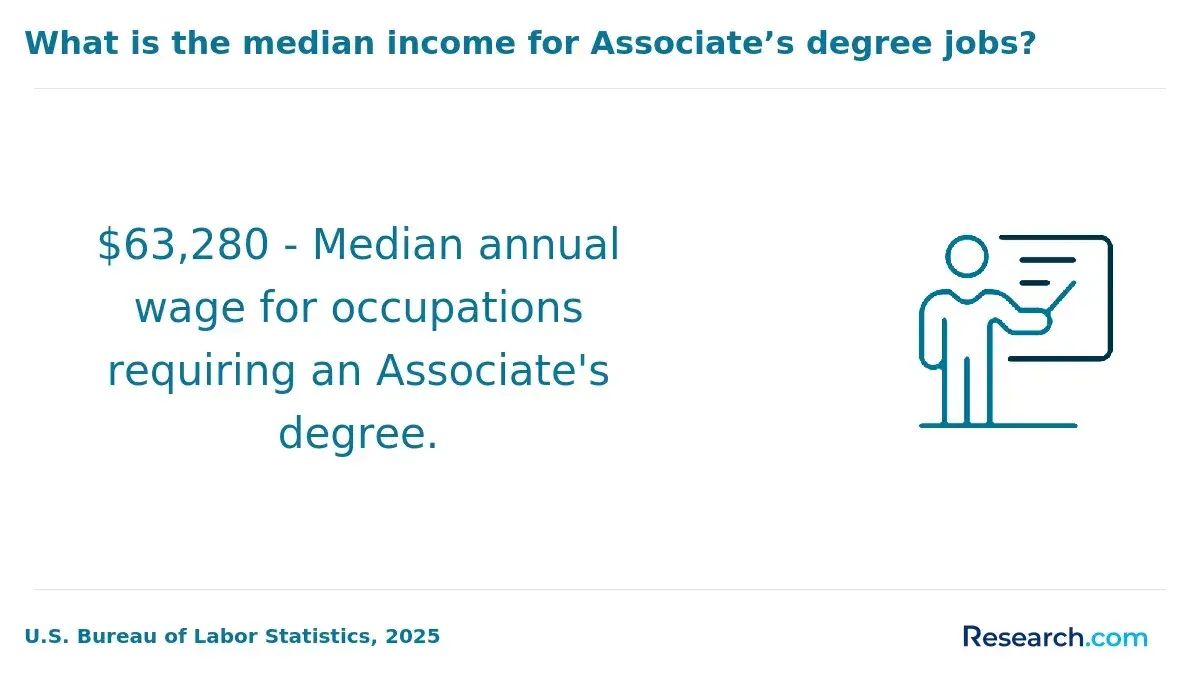
Compared with many majors, Educational Leadership has an unusual underemployment pattern. The degree can align very well with higher-responsibility roles, but many of those roles are not truly entry-level. That means graduates may not be underemployed because the field lacks relevant jobs; they may be underemployed because the relevant jobs sit behind experience, licensure, and local hiring networks.
The table below compares Educational Leadership with several broad academic and career pathways. It is designed to show labor-market structure, not to rank degrees universally.
| Field or major type | Typical underemployment pattern | What protects graduates |
| Educational Leadership | Mismatch occurs when graduates lack administrator credentials or leadership experience. | Licensure, teaching record, practicum results, data skills, and district relationships. |
| General education studies | Graduates may enter teaching aide, tutoring, or program support jobs if they lack certification. | State teacher certification, classroom experience, and subject specialization. |
| Business administration | Graduates may start in sales, customer service, or office roles before moving into management. | Internships, analytics, operations experience, and industry specialization. |
| Psychology and social sciences | Many degree-level clinical or counseling roles require graduate education or licensure. | Graduate pathway planning, supervised experience, and applied research skills. |
| Health and licensed technical fields | Underemployment risk is often lower when the credential directly qualifies graduates for regulated roles. | Licensure eligibility, clinical hours, and employer-recognized certification. |
Students comparing Educational Leadership with healthcare bridge options such as fast-track LPN programs online should notice the difference in hiring logic. LPN pathways are typically licensure-gated for a defined clinical role, while Educational Leadership roles often require a sequence of teaching, leadership, and state-specific administrator preparation.
That does not make Educational Leadership a poor choice. It means the smartest candidates plan backward from the role they want, rather than assuming the degree itself will open every leadership job immediately.
Taking a low-credential role can affect Educational Leadership career growth because leadership hiring is cumulative. Employers look for a record of progressively responsible work: classroom leadership, team leadership, program leadership, budget exposure, staff evaluation, and measurable outcomes. A job that does not build any of those signals may slow the transition into degree-level employment.
The impact is not only about salary. It can also affect professional identity, references, and applicant tracking system results. If a graduate spends multiple years in roles that do not require a degree, hiring committees may ask whether the candidate has enough decision-making experience for leadership work.
Graduates can reduce long-term damage by turning even a lower-level job into evidence of leadership. The most practical approach is to create an advancement plan within the first 90 days:
- Identify one leadership task your supervisor needs solved, such as onboarding, attendance tracking, family communication, training logistics, or data cleanup.
- Ask to own a bounded project with a timeline, deliverable, and measurable result.
- Document the baseline, action steps, tools used, and outcome so the work can be added to a portfolio.
- Request a written recommendation that describes leadership behavior, not just reliability or friendliness.
- Set a deadline for applying to degree-level roles so the fallback job does not become permanent by default.
This approach does not make underemployment harmless, but it gives graduates a way to convert a weak starting point into evidence that supports the next move.
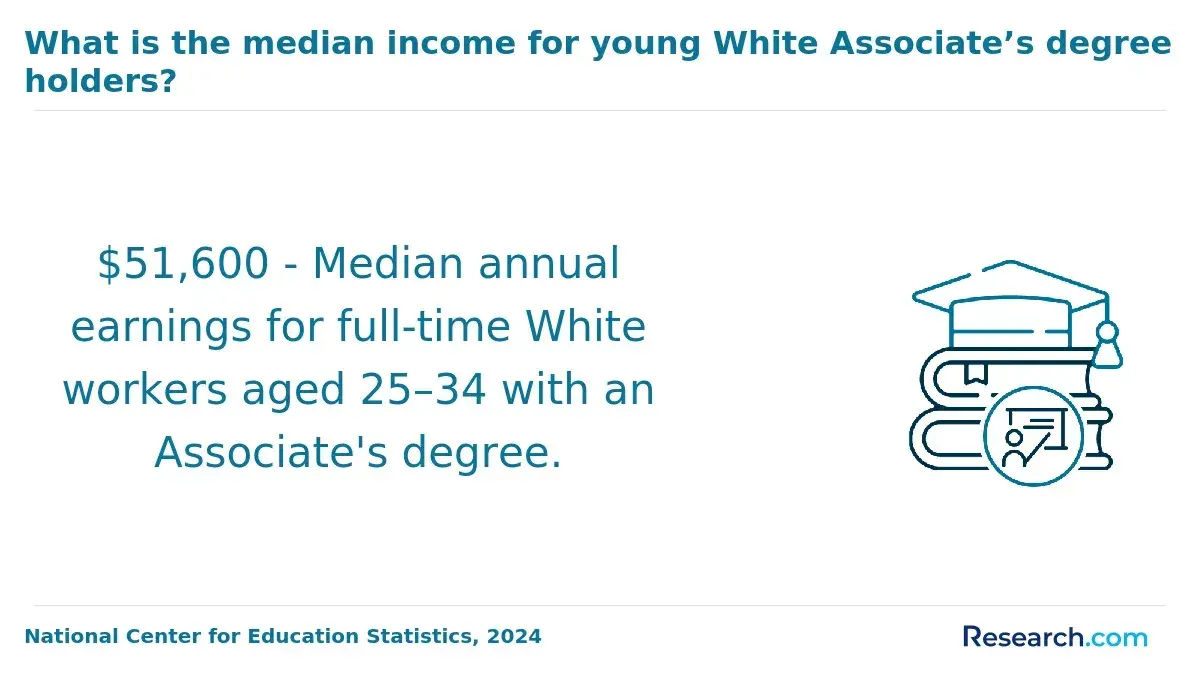
The salary gap between underemployed Educational Leadership graduates and those in degree-level jobs can be substantial. BLS May 2024 wage data shows a median annual wage of about $104,070 for K-12 education administrators, while teacher assistants had a median of about $35,240. That simple comparison illustrates why underemployment can create a serious return-on-investment problem for graduates who financed their degree with loans.
The table below uses national BLS wage medians where available. These are role-level medians, not guaranteed earnings for any graduate, and local salaries can vary widely by state, district budget, union contract, institution type, and years of experience.
| Role type | Example roles | Typical credential match | Median annual wage context |
| Degree-level K-12 leadership | Assistant principal, principal, district administrator | Often requires teaching experience and state administrator credential | About $104,070 for K-12 education administrators in BLS May 2024 data |
| Degree-level postsecondary administration | Student affairs administrator, admissions director, academic program manager | Often requires bachelor's or master's plus higher education experience | About $103,960 for postsecondary education administrators in BLS May 2024 data |
| Adjacent degree-level education improvement | Instructional coordinator, curriculum specialist, assessment coordinator | Often requires teaching experience, curriculum expertise, or graduate education | Generally above common support-role wages, with pay varying by employer and state |
| Low-credential school support | Teacher assistant, aide, general school support worker | Often does not require a leadership degree | About $35,240 for teacher assistants in BLS May 2024 data |
| Low-credential administrative support | Office assistant, records clerk, front desk coordinator | Often does not require a leadership degree | Typically below administrator-level pay and highly dependent on employer type |
The financial risk compounds when graduates carry student debt. A lower salary can make it harder to cover loan payments, delay relocation to stronger hiring markets, or pay for additional licensure exams and professional development. For that reason, students should evaluate a program's cost against realistic first-role options, not only against long-term administrator salaries.
Educational Leadership graduates are usually pushed into low-credential roles by a combination of structural barriers and avoidable planning mistakes. The biggest issue is that many leadership jobs are not designed for new graduates, even when the degree title sounds directly relevant.
Common barriers include the following, and each one should be addressed before the job search becomes urgent:
- Licensure mismatch: Some states require a specific administrator credential for principal or district roles, so a leadership degree without the right endorsement may not qualify the graduate.
- Limited teaching or school-based experience: Many K-12 employers prefer candidates who have already managed classrooms, led teams, or served on school improvement committees.
- Weak evidence of measurable impact: Employers want proof that a candidate improved attendance, instruction, retention, enrollment, compliance, or student outcomes.
- Geographic constraints: Education leadership hiring depends heavily on local district budgets, retirements, enrollment trends, and state funding cycles.
- Generic coursework without specialization: Graduates who cannot point to strengths in curriculum, special education administration, higher education operations, student success, or data analysis may be harder to place.
- Overreliance on online applications: Education hiring is relationship-heavy, and many strong candidates gain traction through supervisors, alumni, practicum mentors, and district contacts.
The common mistake is waiting until after graduation to discover these barriers. Students should verify licensure rules, practicum quality, local hiring demand, and alumni outcomes before enrolling or early in the program.
A strong Educational Leadership resume should show that the graduate can solve leadership problems, not just complete leadership coursework. Hiring committees and applicant tracking systems both respond better to role-specific language, measurable outcomes, and evidence that the candidate understands education operations.
Graduates should build the resume around the target role. A principal-track resume should emphasize instructional leadership and school operations, while a higher education administration resume should highlight student services, enrollment, compliance, retention, advising systems, or program management.
Use this sequence to reposition a resume for degree-level roles:
- Choose one target role family, such as assistant principal, instructional coordinator, student affairs administrator, enrollment manager, or nonprofit education program director.
- Copy the repeated requirements from 10 current job postings and group them into skills, credentials, tools, and experience themes.
- Rewrite the summary section around those themes instead of using broad phrases like "passionate educational leader."
- Convert coursework into project evidence by naming the problem, stakeholders, action taken, and measurable result.
- Add a leadership portfolio link if it includes sanitized work samples, such as improvement plans, training agendas, data dashboards, grant summaries, or policy memos.
- Remove or shrink unrelated duties that make the resume look like a clerical, aide, or general support profile.
A useful resume test is whether a stranger can identify your target job within 10 seconds. If the resume reads like a general education background rather than a leadership profile, it may unintentionally steer employers toward lower-credential openings.
Certifications can help Educational Leadership graduates qualify for degree-level roles, but the best credential depends on the target job. In K-12 administration, state licensure or an administrator endorsement is often more important than an optional certificate. In higher education, nonprofit education, corporate learning, or education technology, specialized certificates can strengthen a candidate's evidence of job-ready skills.
The table below summarizes credentials that may reduce underemployment risk when they align with the graduate's intended role. Requirements vary by state, employer, and institution, so students should verify eligibility before paying for any program.
| Credential or certification area | Best fit | How it can help reduce mismatch risk |
| State principal or administrator certification | K-12 assistant principal, principal, district leadership | May be required for administrator eligibility and can move a candidate out of support-role consideration. |
| Teacher leadership or instructional coaching certificate | Instructional coach, curriculum lead, department chair pathway | Shows readiness to support teachers and lead school improvement without immediately holding a principal title. |
| Project management certification or coursework | Program coordinator, grant manager, education nonprofit leader | Signals ability to manage timelines, budgets, stakeholders, and implementation work. |
| Data analytics or assessment certificate | Assessment coordinator, institutional research support, student success analyst | Strengthens evidence that the graduate can use data for decisions, not only discuss policy. |
| Higher education administration certificate | Student affairs, admissions, registrar, academic program management | Can help career changers show familiarity with postsecondary systems and student services operations. |
| Human resources or training credential | Professional learning, staff development, corporate learning roles | Supports pivots into roles that use leadership skills outside traditional school administration. |
Students comparing education leadership with wellness, coaching, or human performance pathways such as an exercise science online degree should use the same credential test: does the certificate qualify you for a specific role, or does it merely add a line to the resume? The faster return usually comes from credentials that match posted job requirements.
The best way to avoid underemployment is to treat career preparation as part of the degree, not something that starts after graduation. Educational Leadership students should build a role-specific employment strategy early, especially if they are aiming for K-12 administration, higher education administration, instructional leadership, or education nonprofit management.
The following steps help students improve their chances of securing degree-level work:
- Pick a target role before choosing electives, because principal preparation, higher education administration, instructional coaching, and nonprofit program leadership require different evidence.
- Verify state licensure rules if you want K-12 administrator jobs, including teaching experience requirements, exams, practicum hours, and endorsement rules.
- Complete a practicum or internship that produces measurable results, not only observation hours.
- Build a leadership portfolio with sanitized samples of improvement plans, data summaries, training materials, policy briefs, budget notes, or program evaluations.
- Develop one technical strength, such as assessment analysis, student information systems, grant reporting, scheduling, compliance tracking, or learning management systems.
- Network with alumni, principals, deans, district administrators, and practicum supervisors before job postings open.
- Apply for gateway roles strategically, prioritizing titles that include project ownership, staff coordination, instructional support, data work, or program management.
- Set a time limit for any low-credential job and define what experience, credential, or reference you must gain before moving on.
Students should also compare degree return on investment with the transparency of other fields. For example, resources that break down bioinformatics degree salary and jobs often show clearer links between technical skills and job titles; Educational Leadership students need to create that same clarity by mapping every course, practicum, and credential to a specific employer requirement.
The smartest strategy is not necessarily to reject every lower-level role. It is to avoid roles that do not build toward licensure, leadership evidence, or a stronger next application.
Educational Leadership graduates do not all stay long in low-credential roles, but the first job after graduation can shape the next several years. A short-term support role can be useful if it provides access to district decision-makers, student data systems, compliance work, grant operations, or leadership projects. It becomes risky when the role offers no path to supervising people, managing programs, or earning the credential needed for advancement.
A low-credential role is most likely to become a trap when the graduate accepts it without an exit plan. In education settings, job titles can be misleading: a "coordinator" role may involve real program leadership, while an "assistant" role may be clerical with little upward mobility.
Before accepting a lower-level job, graduates should evaluate whether it can realistically become a bridge. The following questions help separate a gateway role from a dead-end mismatch:
- Will the role let you lead a project, committee, training session, budget item, assessment cycle, or compliance process within the first 6 to 12 months?
- Will you work directly with principals, deans, program directors, superintendents, or senior administrators who can become references?
- Does the employer support administrator licensure, tuition assistance, or paid professional development?
- Can the role produce measurable resume evidence, such as attendance improvement, grant reporting, curriculum rollout, or student success metrics?
- Is there a written internal promotion pathway, or are similar employees staying in the same low-credential title for years?
If most answers are "no," the role may provide income but not career momentum. In that case, the graduate should keep applying, pursue certification, and build a leadership portfolio while employed.
Other Things You Should Know About Educational Leadership
Yes, but the target role should be clear. The degree can support careers in instructional coaching, curriculum coordination, higher education administration, education nonprofits, student success, compliance, and training leadership. It is less likely to pay off quickly if you enroll without knowing which role requirements the program satisfies.
For K-12 leadership, many employers and state credentialing pathways value teaching experience heavily. Earning the degree before gaining classroom or school-based experience can limit immediate leadership options, so prospective students should check state rules and job postings before enrolling.
Not automatically. Employers usually care more about accreditation, licensure alignment, practicum quality, supervisor references, and demonstrated leadership outcomes. An online program can be competitive if it includes strong fieldwork and meets the requirements for the student's target state or role.
The biggest red flag is vague career alignment. If a program cannot clearly explain licensure eligibility, practicum structure, employer partnerships, alumni job outcomes, and how coursework maps to specific leadership roles, students should ask more questions before committing.
- Half of graduates end up underemployed - what does that mean for colleges? https://www.highereddive.com/news/half-of-graduates-end-up-underemployed-what-does-that-mean-for-colleges/710836/
- The Labor Market for Recent College Graduates https://www.newyorkfed.org/research/college-labor-market
- Educational Attainment, Income and Earnings, and Unemployment | NEA https://www.nea.org/resource-library/educational-attainment-income-and-earnings-and-unemployment
- Educational Requirements Are Gradually Disappearing From Job Postings - Indeed Hiring Lab https://www.hiringlab.org/2024/02/27/educational-requirements-job-postings/
- Room for Progress in College Graduates’ Transition to the Labor Market - Public Policy Institute of California https://www.ppic.org/blog/room-for-progress-in-college-graduates-transition-to-the-labor-market/
- Talent Disrupted | Strada Education Foundation https://www.strada.org/reports/talent-disrupted
- A Greater Number of Jobs Require More Education, Leaving Middle-Skill Workers with Fewer Opportunities | Cooper Center https://www.coopercenter.org/research/greater-number-jobs-require-more-education-leaving-middle-skill-workers-fewer
- WSJ: Half of College Grads Are Working Jobs That Don’t Use Their Degrees - The Burning Glass Institute https://www.burningglassinstitute.org/news/half-of-college-grads-are-working-jobs-that-dont-use-their-degrees