Choosing an online counseling master's program in Columbia means looking beyond convenience: the degree must fit the counseling work you want to do and the state where you plan to practice. This guide compares training paths, licensure considerations, costs, timelines, and career outcomes. It also features the 2027 Best Online Master's in Counseling Degree Programs Ranking in Columbia, created by the Research.com team of data scientists to help students make an informed choice about which programs are worth considering. Use it to narrow your options before committing to a substantial investment.
Key findings about online Counseling degrees in Columbia
Match the degree to the license first: Clinical mental health, school, and rehabilitation counseling prepare students for different roles. An online format does not establish South Carolina licensure eligibility.
Plan for substantial supervised training: Online coursework can reduce trips to campus, but practicum and internship placements still require an approved site and supervisor; confirm who arranges them before enrolling.
Compare costs against the career you want: The U.S. median annual wage was $59,350 for substance abuse, behavioral disorder, and mental health counselors in May 2025, versus $46,850 for rehabilitation counselors (U.S. Bureau of Labor Statistics). Neither figure predicts an individual graduate's pay.
What can I expect from an online Counseling degree in Columbia?
An online master's in counseling combines graduate coursework with supervised practice. Depending on the track, students learn assessment, counseling techniques, ethics, research literacy, and how to work with clients from different backgrounds. "Online" usually describes the academic delivery - not the entire degree. Clinical placements take place in person, and some programs require scheduled virtual classes or campus visits.
Start with the role, not the program label. A clinical mental health track is the more direct option for someone seeking a path toward professional counseling practice; a school counseling track is designed around work in educational settings; rehabilitation counseling focuses on disability, access, and employment-related needs. In South Carolina, degree content and supervised experience matter to licensing decisions, so ask the South Carolina Board of Examiners for Licensure of Professional Counselors, Marriage and Family Therapists, Addiction Counselors and Psycho-Educational Specialists about the requirements applicable to your intended credential. A school position may also involve South Carolina educator-certification rules (South Carolina Department of Education).
Where can I work with an online Counseling degree in Columbia?
Potential workplaces in and around Columbia include outpatient behavioral health providers, hospitals, schools, colleges, community agencies, rehabilitation services, and organizations serving people with substance-use or disability-related needs. The right setting depends on your specialization and credential: a rehabilitation-focused degree is not interchangeable with preparation for school counseling or independent clinical practice.
Columbia's combination of state agencies, healthcare organizations, and schools makes placement planning especially relevant. Ask each program which local sites have accepted its students, whether employed students can use their workplace for training, and what happens if a preferred site cannot provide the required supervision. A site's willingness to host an intern is not the same as approval by a program or licensing board.
National occupational medians provide a benchmark, not a Columbia salary offer. The figures below are U.S. median annual wages for May 2025; the projections cover 2025-2035 (U.S. Bureau of Labor Statistics, Occupational Outlook Handbook and Employment Projections). Different roles have different credential requirements, and these occupation-wide wages are not starting salaries for new master's graduates.
Counseling-related path
U.S. median annual wage, May 2025
Projected U.S. employment growth, 2025-2035
Clinical mental health or addiction counseling
$59,350
18%
School counseling
$64,330
3%
Marriage and family counseling
$66,940
14%
Rehabilitation counseling
$46,850
2%
For a Columbia applicant, the useful question is whether a program prepares you for the occupation you actually want - not which row has the highest median. Local pay may differ from these national figures, and earnings can vary with employer, experience, setting, and licensure. Compare likely pay with the full cost of your degree and any period of supervised work required afterward.
These programs point toward different professional goals. Their names or locations alone do not establish that every course or placement can be completed remotely from Columbia; verify the current delivery format and clinical-placement arrangements with each school.
University of South Carolina School of Medicine: Its rehabilitation counseling offering is the clearest discipline-specific option here for applicants interested in disability, rehabilitation, and participation in work and community life (University of South Carolina School of Medicine). That focus is more useful than a general clinical curriculum if rehabilitation is your intended field; confirm the current degree format and how its requirements fit the credential you seek.
Columbia International University: Its MA in Clinical Counseling connects clinical training with the university's Christian educational approach (Columbia International University). This is a meaningful distinction for students who want faith integrated into their graduate education, but applicants should separately check curriculum, accreditation, placement support, and South Carolina licensure fit rather than treating the institution's identity as proof of eligibility.
Webster University: Its MA in Counseling offers another counseling-degree option through a university with a South Carolina presence (Webster University). For a working Columbia applicant, the decisive comparison is which current emphasis and course schedule are available locally or online - and whether the school can support an approved placement where the student lives.
For any of these options, request the current catalog and a written explanation of delivery, required credits, supervised hours, and applicable accreditation before making a side-by-side comparison. Program offerings can change, and a campus presence should not be mistaken for a fully online degree.
Many counseling master's students should plan on roughly two to three years of study, with part-time attendance potentially taking longer. The controlling factors are required coursework, course availability, and the sequence of supervised experiences - not simply how quickly online classes can be completed. Ask for a term-by-term plan showing when practicum and internship begin and whether placements run through summer.
An accelerated timetable may reduce time away from full-time earnings, but it can also concentrate coursework alongside unpaid or schedule-restricted fieldwork. Compare fastest counseling programs against their actual placement calendars, rather than assuming a shorter advertised duration will work with your job.
The principal difference is how students attend classes. Both formats can require in-person client-facing training, approved supervisors, and demonstrated counseling skills. An online program can make coursework easier to fit around work in Columbia, while a campus program may simplify access to faculty and local placement relationships. Neither format is inherently better for licensure; curriculum and supervised training are what need scrutiny.
Ask whether online classes meet live, whether any campus intensives are compulsory, and whether the school approves sites near your home. If you work shifts or live outside the city, those answers may matter more than the online label. If you want regular in-person skills practice or need help securing nearby supervisors, compare a campus or hybrid option as well.
There is no single defensible Columbia-wide average for an online counseling master's: the available choices differ by institution, required credits, residency rules, and delivery format. Instead of relying on a tuition headline, obtain a written estimate for the entire degree. Include per-credit tuition, mandatory fees, books, technology, travel for any campus meetings, and costs associated with finding or completing placements.
Public-university resident pricing can differ from nonresident pricing, while private nonprofit institutions set their own tuition policies; neither institutional type alone establishes value. Compare most affordable counseling programs using the total price for your intended track and enrollment pace. A lower sticker price may lose its advantage if required courses are offered infrequently or local placement support is limited.
Students can ask about institutional scholarships, assistantships, employer tuition assistance, and federal graduate aid. Federal aid eligibility depends on factors including the institution and program, enrollment status, and the student's aid application; an online course format alone does not decide eligibility (Federal Student Aid). Ask each financial-aid office for a program-specific offer and whether summer enrollment or placement terms affect disbursement.
Borrowing less is useful, but the cheapest offer is not necessarily the best investment. To compare most valuable counseling programs, weigh aid and expected debt alongside completion likelihood, time away from work, the licensing path, and realistic earnings relative to what you make now. Do not assume a scholarship renews automatically; check its academic and enrollment conditions.
View the chart data as a table
Best score by program (Source: Research.com)
Category
Value
Webster University, Sout
83.98
Columbia International U
88.93
University of South Caro
90.33
Applicants generally need a bachelor's degree and the materials specified by the individual program, which may include transcripts, recommendations, a statement of purpose, and an interview. A particular undergraduate major is not necessarily required, but schools can set prerequisite courses or other conditions. Use the current admissions page for the exact track you want rather than relying on general university requirements (University of South Carolina School of Medicine; Columbia International University; Webster University).
Admission and eventual licensure are separate decisions. Before accepting an offer, ask for the curriculum map, the school's explanation of South Carolina credential alignment, and its policies for accepting prior graduate credits. Transfer credit may reduce coursework, but do not assume it will replace required clinical training or shorten the placement sequence.
Common subjects include counseling theories, interviewing and helping skills, ethics, assessment, research methods, group counseling, and human development, followed by supervised practicum and internship. The track changes the emphasis: clinical mental health study typically centers on mental health assessment and treatment, whereas rehabilitation study gives greater attention to disability-related counseling and services.
Read course descriptions for what they require students to do, not just their titles. For example, an applicant seeking clinical practice should check how the program teaches assessment, diagnosis where relevant, documentation, and supervised client work. Also ask how the school evaluates skills in online courses and whether required classes are offered often enough to keep you on schedule.
The most consequential choice is often between clinical mental health, school, rehabilitation, addiction, and marriage and family counseling paths. These labels can represent distinct degrees, emphases, or credentials rather than interchangeable electives. A student aiming to counsel children in schools should investigate school-counselor certification requirements; someone aiming for clinical practice should investigate the relevant professional license (South Carolina Department of Education; South Carolina Board of Examiners for Licensure of Professional Counselors, Marriage and Family Therapists, Addiction Counselors and Psycho-Educational Specialists).
Choose a specialization by working backward from the position and setting you want. If you are unsure, ask schools which credentials their graduates commonly pursue and whether switching tracks would add courses or supervised hours. A short certificate can deepen an existing practitioner's skills, but it should not be assumed to substitute for a qualifying master's degree.
The best choice is the program that meets your intended credential's education requirements at a cost and pace you can sustain. A ranking helps identify candidates, but it cannot verify your personal licensure eligibility or guarantee a placement. Use this sequence to investigate the finalists:
Name the target role and jurisdiction. Decide whether you want clinical, school, rehabilitation, or another counseling role, and identify the state where you expect to practice.
Check recognition and eligibility. Verify institutional accreditation, any relevant programmatic accreditation, and the current education rules with the appropriate South Carolina board or certification authority.
Test the placement plan. Ask who identifies sites, approves supervisors, handles a rejected site, and supports students outside central Columbia.
Compare complete costs and schedules. Request a degree-wide estimate, aid conditions, a term-by-term course plan, and policies on transfer credit and time to completion.
Request relevant outcomes. Ask for clearly dated, program-level completion and applicable licensure-exam results, including how the school defines each measure.
A common mistake is treating "online," "accredited," or "easy to enter" as a shortcut for licensure fit. If admissions accessibility is a concern, compare easiest counseling programs without relaxing the checks on curriculum, supervision, and total cost.
View the chart data as a table
Pay vs projected growth by counseling career path (U.S., BLS) (Source: BLS)
Name
Median annual wage (USD/year)
Projected growth (%)
Mental Health Counselors
59,350
18
School & Career Counselors
64,330
3
Rehabilitation Counselors
46,850
2
Marriage & Family Therapists
66,940
14
Psychologists
99,110
6
Postsecondary Teachers
85,330
7
A relevant master's can support a path toward clinical counseling, school counseling, rehabilitation counseling, or a more specialized counseling role. The route after graduation varies. Some positions require a state license or school certification; independent clinical practice can involve supervised post-degree experience and examinations in addition to graduate education (South Carolina Board of Examiners for Licensure of Professional Counselors, Marriage and Family Therapists, Addiction Counselors and Psycho-Educational Specialists; South Carolina Department of Education).
For a career changer, the degree is most compelling when it leads toward a clearly identified credential and work you want to perform. Someone primarily seeking a quick move into a nonlicensed support role should compare job postings and alternative training before taking on master's-level costs. Someone already employed in a related agency should ask whether the degree changes the roles they can pursue there - and whether the employer will help pay for it.
View the chart data as a table
Wage range - Mental Health Counselors in South Carolina (BLS OEWS, May 2025) (Source: BLS)
Category
Value
10th percentile
35,010
25th percentile
43,070
Median
52,370
75th percentile
65,070
90th percentile
81,420
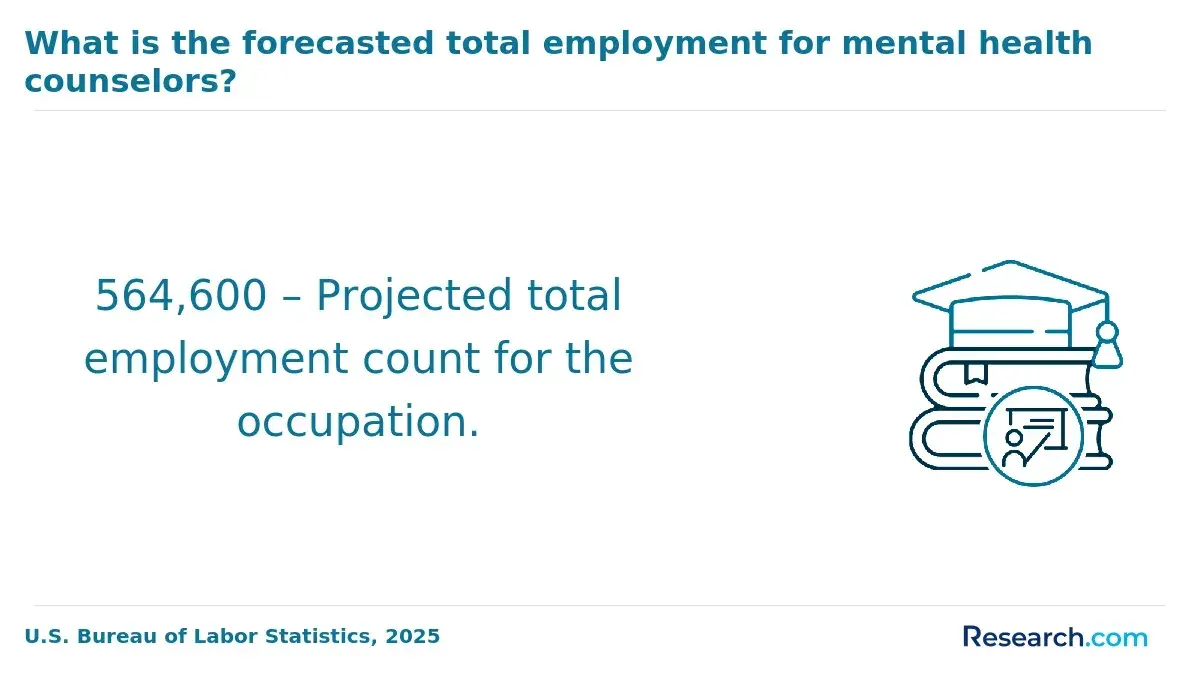
National projections point to uneven demand across counseling occupations. Employment of substance abuse, behavioral disorder, and mental health counselors is projected to grow 18% from 2025 to 2035, while the projection for rehabilitation counselors is 2% (U.S. Bureau of Labor Statistics, Employment Projections). These are U.S. occupational projections, not forecasts of openings in Columbia or promises of employment for graduates.
Use the national trend to frame questions, then test local demand. Review current Columbia-area postings for the exact job title you want: note the license requested, whether associate-level applicants qualify, required experience, and whether the employer provides supervision. A growing occupation may still be difficult to enter without the right credential, while a smaller specialty may be worthwhile if it closely matches your interests and available employers.
2027 Best Online Master's in Counseling Degree Programs Ranking in Columbia
Investing in graduate education is an important decision. Research.com created its counseling rankings to help readers assess programs using documented outcomes, accreditation, eligibility for federal aid, and cost - not reputation alone. The team uses multiple education data sources to strengthen the quality, credibility, and accuracy of the comparisons:
IPEDS database: institutional reporting on enrollment, completions, and other education measures.
Peterson's database: program and institution information used in comparing options.
College Scorecard database: federal institutional data, including information relevant to costs and outcomes.
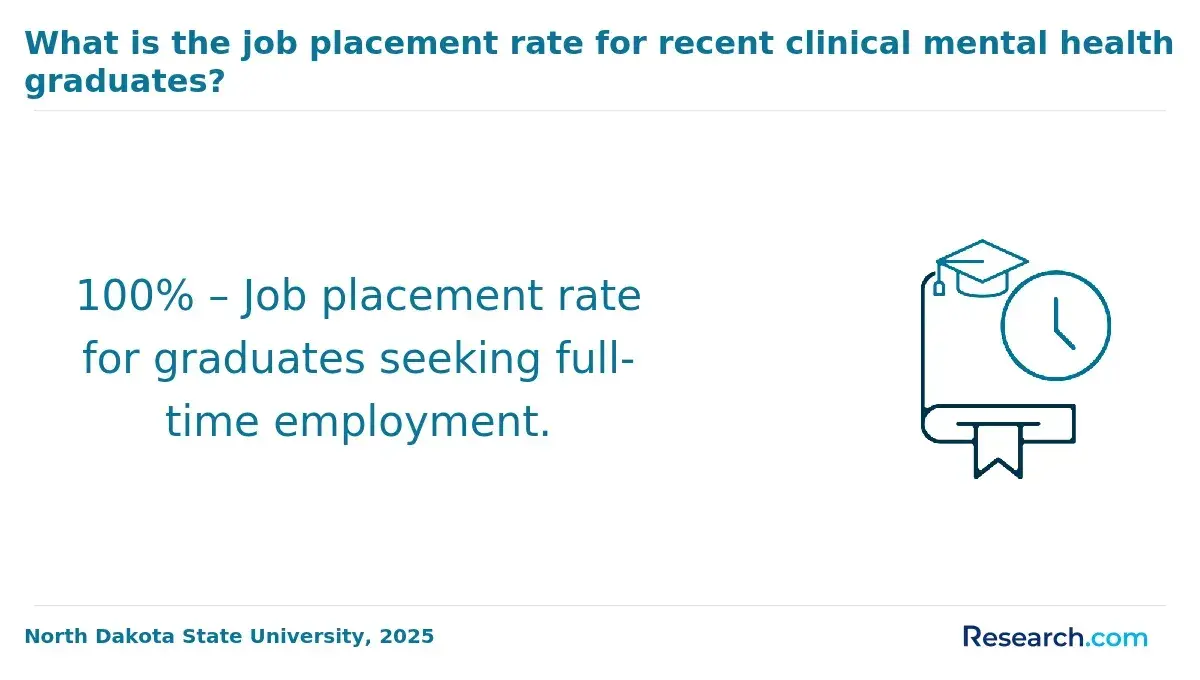
For the Best ranking, Research.com first calculates a graduate-outcomes-and-accreditation score: program completion accounts for 40%; employment or doctoral admission, 20%; applicable licensure-exam pass rates, 20%; CACREP programmatic accreditation, 16%; and institutional Title IV eligibility, 4%. Shares are renormalized when a measure does not apply. Program cost then contributes a smaller component - about 7% of the final score. Online and on-campus programs use the same method; rankings focused on affordability, value, speed, or ease order programs by their named dimension. Read more about Research.com's methodology. The ranking is a starting point: confirm a program's current delivery format, total price, and fit with your intended license directly with the school and licensing board.
# 1 position
University of South Carolina, School of Medicine
Master
Master of Arts in Counseling and Rehabilitation
Delivery mode: hybrid
90.33
/ 100
Final score
Specialization
Rehabilitation Counseling
Required credits
60 semester credits
GPA range
3.00 - 4.00
Application deadline
Fall: June 1; Spring: October 1
Application process
USC Graduate School online application
GRE
no
Prerequisites
Baccalaureate or higher degree from a regionally accredited institution
Additional requirements
Applications ranked on undergraduate GPA, relevant experience, letters of recommendation; interview required.
Accreditation
Accredited by the Council for Accreditation of Counseling and Related Educational Programs (CACREP), with institutional accreditation from the Southern Association of Colleges and Schools Commission on Colleges (SACSCOC).
University of South Carolina, School of Medicine earned a Research.com Counseling Program Score of 90.33/100. The program is CACREP-accredited, valid through 2029-03-31.
# 2 position
Columbia International University
Master
Master of Arts in Clinical Counseling
Delivery mode: hybrid
88.93
/ 100
Final score
Program length
Typical completion: 3 years; completion deadline: 7 years
Specialization
Clinical Mental Health Counseling
Required credits
60 semester credits
GPA range
3.00 - 4.00
Program completion rate
71% (2024-25)
Employment or doctoral admission
100% (2024-25)
Licensure exam pass rate
95% (2024-25)
Application process
direct
GRE
no
Prerequisites
Undergraduate Introduction/General Psychology, and Old or New Testament Survey (or biblical competency exam), each with a minimum 'C' (or CLEP 50); applicants missing these may be conditionally accepted.
Additional requirements
Online application, application fee, affirmation of CIU's Statement of Faith, official transcripts (min 3.0 GPA on most recent degree), 800-word essay, professional reference, and an in-person or online interview.
Accreditation
Accredited by the Council for Accreditation of Counseling and Related Educational Programs (CACREP), with institutional accreditation from the Southern Association of Colleges and Schools Commission on Colleges (SACSCOC) and the Association for Biblical Higher Education, Commission on Accreditation (ABHE).
Columbia International University earned a Research.com Counseling Program Score of 88.93/100, supported by 95% licensure exam pass rate and 71% program completion rate. The program is CACREP-accredited, valid through 2032-10-31.
# 3 position
Webster University, South Carolina
Master
Master of Arts in Counseling with an Emphasis in Clinical Mental Health Counseling
Delivery mode: online
83.98
/ 100
Final score
Program length
2 to 4 years
Specialization
Clinical Mental Health Counseling
Required credits
60 semester credits
Acceptance rate
71.9%
GPA range
2.50 - 4.00
Program completion rate
60% (2024-25)
Employment or doctoral admission
86% (2024-25)
Application deadline
Rolling review; priority consideration: Fall 1 by July 1; Spring 1 by December 1
Application process
direct
GRE
no
Prerequisites
Bachelor's degree
Additional requirements
Bachelor's degree with minimum 2.5 GPA; official transcripts from all institutions; three professional references
Accreditation
Accredited by the Council for Accreditation of Counseling and Related Educational Programs (CACREP), with institutional accreditation from the Higher Learning Commission (HLC).
Webster University, South Carolina earned a Research.com Counseling Program Score of 83.98/100, supported by 60% program completion rate and 86% employment or doctoral admission rate. The program is CACREP-accredited, valid through 2027-10-31.
Frequently asked questions about online Counseling degree in Columbia
Can I complete an online counseling master's without visiting a training site?
Generally, no. Online classes do not remove supervised practicum or internship requirements. Confirm any campus visits and the school's site-approval process before enrolling.
Will an online degree qualify me for a South Carolina counseling license?
Possibly, but delivery format does not determine eligibility. Compare the specific degree, coursework, and supervised training against the requirements for your intended credential with the relevant South Carolina licensing board.
Is CACREP accreditation the same as university accreditation?
No. CACREP accredits eligible counseling programs; institutional accreditation applies to the college or university. Check both where relevant, along with the rules for the license you seek (Council for Accreditation of Counseling and Related Educational Programs; South Carolina licensing board).
Can I keep working while enrolled?
Many students can work during online coursework. Practicum and internship schedules may be harder to combine with full-time employment, so request a placement calendar before choosing a pace of study.
Is an online counseling master's worth the cost?
It can be if it supports the credential and work you want at a manageable total cost. Compare aid, debt, completion time, lost work hours, and plausible post-degree earnings; a national median salary is not a personal return-on-investment estimate.
See What Experts Have To Say About Studying Counseling
Webster University, South Carolina - Master of Arts in Counseling with an Emphasis in Clinical Mental Health Counseling Official program page (curriculum, tuition, admissions). https://www.webster.edu/science-health/ma-counseling.php