2027 Most Popular Computer Science Degree Programs Ranking in Massachusetts

Co-Founder and Chief Data Scientist
Choosing the right computer science degree can shape your future career and open exciting opportunities. For students in Massachusetts, making an informed decision is easier with the 2027 Most Popular Computer Science Degree Programs Ranking in Massachusetts.
This ranking was created by the Research.com team of data scientists to highlight top programs worth considering. Exploring this article will help you understand which programs align with your goals and interests.
A computer science degree offers rewarding challenges and growth, making it a valuable step toward a fulfilling career.
Key benefits of getting computer science degree in Massachusetts
- Graduates with a computer science degree in Massachusetts can earn strong salaries, such as software engineers and developers making about $138,110 annually, while web developers earn around $95,570, providing financial stability and growth opportunities.
- Career paths are diverse, including roles like software engineer, IT support specialist, and data analyst, making it easy to find a job that fits your skills and interests after studying at universities like MIT or UMass.
- Online computer science degrees offer flexibility for busy students in Massachusetts, allowing you to balance work and study while gaining the same quality education as traditional programs, which helps you stay motivated and focused on your goals.
- 2027 Most Popular Computer Science Degree Programs Ranking in Massachusetts
- What can I expect from computer science degree in Massachusetts?
- Where can I work with computer science degree in Massachusetts?
What can I expect from computer science degree in Massachusetts?
The average cost of obtaining a computer science degree in Massachusetts varies significantly depending on the type of institution. For example, graduates from elite private universities such as MIT or Harvard often face higher tuition fees, which can exceed $50,000 per year. These prestigious programs offer cutting-edge resources and extensive research opportunities, making the investment appealing to students focused on innovation and networking within the tech industry.
Conversely, public institutions like the University of Massachusetts system, especially UMass Amherst, provide more affordable options, with in-state tuition typically around $17,000 to $20,000 per year. Many students appreciate this balance between quality education and manageable costs, particularly when factoring in opportunities for internships and cooperative education facilitated by Massachusetts's abundant tech companies.
It's worth noting that while sticker price is an important consideration, numerous graduates highlight the value gained through immersive research projects and local industry connections, which may justify higher expenses at top-tier schools. Therefore, prospective students should weigh both financial and experiential factors when assessing the true cost of their education in Massachusetts.
Where can I work with computer science degree in Massachusetts?
Graduates with a computer science degree in Massachusetts often find diverse employment opportunities across several thriving sectors. Many who graduate from institutions like MIT or Boston University take advantage of the dense tech ecosystem in Greater Boston, where established companies such as Microsoft, Amazon, and Google offer roles in software development, AI, and cybersecurity. This concentration of innovative firms creates an energizing environment that recent graduates describe as both challenging and rewarding.
Others pursue careers in finance or healthcare, leveraging their skills at major employers like Fidelity Investments or Massachusetts General Hospital. Graduates often highlight how their coursework prepared them for tasks like developing trading algorithms or working on health IT systems, turning complex theories into practical solutions that impact daily lives.
Academic and government sectors also provide steady opportunities. Graduates from state universities frequently mention positions in research labs or public IT projects, where their knowledge supports educational advancements or cybersecurity improvements. Though competition can be strong, exposure to startup incubators nearby offers exciting alternatives for entrepreneurial graduates eager to create new technologies.
Graduates from computer science programs at universities like MIT and Harvard often find strong earning potential in Massachusetts, with salaries reflecting the region's robust tech ecosystem. According to recent data, software engineers and developers typically earn around $138,110 annually, highlighting how entry into these roles can lead to lucrative careers. This aligns well with reports from graduates who land positions at Boston-area tech firms, where competitive pay supports a high quality of life despite the area's costly living expenses.
Web developers in Massachusetts earn a mean annual wage of approximately $95,570, providing a solid income for those focused on front-end and full-stack development. Meanwhile, IT support specialists, who may begin in more entry-level roles, have a mean wage around $63,640, which can quickly increase with experience and specialization.
Data analysts with computer science backgrounds report salaries near $119,040 annually, reflecting demand for skills in interpreting and managing large data sets. Many graduates describe the financial rewards as motivating, especially when combining strong starting salaries with benefits like stock options and bonuses commonly offered by local employers.
While salary varies by experience, role, and degree level, Massachusetts students pursuing computer science consistently benefit from a thriving job market that exceeds national averages, making the degree a strategic investment.
- Annual tuition for in-state students at public universities in Massachusetts ranges from $15,000 to $20,000, while private institutions may charge over $50,000 per year.
- Early career salaries for computer science graduates typically start between $75,000 and $85,000 annually in Massachusetts.
- Experienced professionals in tech hubs like Boston and Cambridge can earn over $120,000 per year on average.
- The state has a strong demand for tech roles in software development, cybersecurity, data science, and artificial intelligence.
- Many programs offer internships and cooperative education, helping students gain practical skills valued by employers.
- Universities provide career support, including networking events, tech fairs, and alumni connections to aid job placement.
Completing a computer science degree in Massachusetts usually takes about four years for full-time students pursuing a Bachelor of Science, which aligns with the experience of many graduates from universities such as MIT or Northeastern. However, this timeframe isn't fixed-factors like part-time enrollment, co-op programs, or pursuing double majors can extend the period. For instance, graduates who balanced internships at Boston's tech companies appreciated the extended time, as it allowed them to build crucial skills and networks, even if it meant studying longer than four years.
Associate degrees from community colleges typically require two years full-time, and students often transfer credits to well-known four-year institutions in Massachusetts to finish their bachelor's in about two additional years.
Master's degrees in computer science usually take 1.5 to 2 years full-time, but part-time or online options offered by schools like Boston University can stretch to three years or more, providing flexibility to those working simultaneously.
These varied pathways show that the duration is influenced not just by curriculum but by personal goals and circumstances, making the Massachusetts computer science education landscape both dynamic and adaptable.
Online and on-campus computer science degrees in Massachusetts differ mainly in structure and student experience. Graduates from institutions like MIT or Northeastern often recall the energy of face-to-face collaboration, where working in campus labs and spontaneous discussions with peers enriched their learning. This environment fosters immediate feedback and networking opportunities essential for breaking into the tech industry.
Conversely, online students appreciate the flexibility to balance studies with work or family, joining virtual classes from any location. One graduate shared how discussion boards and video lectures enabled deep engagement despite distance, though they noted the challenge of maintaining discipline without in-person structure. Tuition disparities also emerge, as public on-campus programs typically cost $15,000 to $25,000 per year for residents, while online options might reduce extra expenses but sometimes carry similar tuition from prestigious schools.
Both formats deliver comparable academic rigor in Massachusetts, but personal learning style and social needs influence the choice. Those craving hands-on interaction may thrive on campus, while self-motivated learners find online study rewarding.
Navigating the application process for Computer Science degree programs in Massachusetts requires careful planning and attention to detail. Most institutions follow a similar timeline, with deadlines typically falling between December and February for fall admission. To strengthen your application:
- Gather Transcripts and Test Scores: Ensure official high school or undergraduate transcripts are submitted, and if required, upload SAT, ACT, GRE, or other test scores by each school’s deadline.
- Craft a Compelling Statement of Purpose: Highlight your passion for technology, relevant projects, internships, and long-term goals. Tailor each essay to the program’s strengths-whether that’s artificial intelligence at MIT or cybersecurity at Northeastern.
- Secure Strong Recommendations: Request letters from professors, internship supervisors, or employers who can attest to your technical skills, problem-solving ability, and teamwork. Aim for a mix of academic and professional references.
- Highlight Extracurriculars and Portfolios: Showcase hackathon awards, GitHub repositories, open-source contributions, or leadership roles in tech clubs to demonstrate initiative and practical experience.
- Research Financial Aid and Alternate Pathways: Investigate scholarships, grants, and work-study programs early. Additionally, consider leveraging flexible options such as online master data science programs if you plan to advance your education while working.
- Prepare for Interviews or Portfolios Reviews: Some programs, especially competitive master’s tracks, conduct online interviews or request a coding portfolio. Practice common technical questions and be ready to discuss your projects in depth. By following these steps, you’ll present a well-rounded application that showcases both your academic readiness and real-world experience, increasing your chances of admission into Massachusetts’s top Computer Science programs.
The average cost of obtaining a computer science degree in Massachusetts typically falls around $74,477, with little difference between in-state and out-of-state students, though individual experiences vary widely. Graduates from the University of Massachusetts system often recall paying closer to $58,867 when factoring in scholarships and living expenses, illustrating how financial aid and careful budgeting can substantially reduce the total cost. However, students at prestigious private institutions like MIT or Harvard frequently encounter tuition closer to $55,000 to $60,000 per year before additional fees, reflecting the high value placed on access to advanced research opportunities and influential networks.
The Massachusetts computer science degree expenses also include substantial living costs, especially in areas like Boston and Cambridge. Students share that managing $15,000 to $20,000 annually for housing, food, and transportation is challenging but doable with thoughtful planning. Many find funding options crucial to making these costs manageable, emphasizing the importance of exploring scholarships, state grants, and work-study programs. Prospective students should leverage each university's net price calculator to get a clear picture tailored to their situation.
For those looking for cost-effective options, Massachusetts offers several affordable computer science programs in Massachusetts, balancing strong academic reputation with reasonable tuition. These programs appeal to students eager to launch their tech careers without overwhelming debt, reflecting the diverse paths available within the state's higher education system.
Beyond academics and career preparation, a vibrant campus life is essential for a well-rounded Computer Science education in Massachusetts. Prospective students often seek environments that offer more than rigorous coursework-campus culture, student organizations, and facilities can significantly enhance the educational journey. Many universities in Massachusetts provide state-of-the-art labs, innovation centers, and tech hubs where students collaborate on projects, attend hackathons, and engage in peer-led workshops. These resources not only foster creativity but also build networks that can last a lifetime. Campus clubs and associations dedicated to coding, robotics, and entrepreneurship are common, allowing students to gain practical experience and explore emerging trends in technology. Whether you’re interested in participating in coding competitions or attending guest lectures by industry experts, these extracurricular activities can be instrumental in building both soft and technical skills. For instance, joining a computer science club can provide opportunities to work on group projects, thus refining your teamwork and problem-solving abilities in real-world scenarios. Additionally, many institutions offer comprehensive career services that include mentorship programs, industry networking events, and alumni outreach initiatives. These resources are designed to help students navigate the transition from academic life to the professional world. Prospective students should also explore options that emphasize financial accessibility; for example, you might start by checking out affordable computer science programs in massachusetts, which often combine outstanding academic offerings with robust student support systems. In summary, the campus environment and its array of resources greatly influence a student’s overall experience. A thriving campus life not only enriches personal growth but also reinforces the practical skills needed for a successful career in the fast-paced tech industry.
Financial aid for computer science students in Massachusetts typically includes federal, state, institutional, and employer-sponsored options. Graduates from schools like the University of Massachusetts Amherst often highlight how Pell Grants-offering up to $7,395-immediately ease tuition burdens. Yet, since these grants rarely cover full costs, many supplement with Direct Subsidized or Unsubsidized Loans despite the obligation to repay later.
State programs also play a crucial role. For example, students attending Worcester Polytechnic Institute frequently benefit from the MassGrant Program, which provides need-based grants averaging $1,700. These grants, although modest compared to overall expenses, contribute meaningful financial relief.
Merit scholarships at Massachusetts universities range widely, from $1,000 to over $10,000 annually, rewarding academic effort and financial need alike. Alumni often recall discussions with financial aid offices emphasizing the importance of applying early and exploring specific CS-related scholarships.
Tech-sector employees pursuing degrees appreciate employer tuition assistance, which can sometimes fully cover costs-a vivid advantage amid Massachusetts' thriving technology industry. Federal tax credits like the American Opportunity Tax Credit further supplement aid, offering up to $2,500 annually for qualified education expenses, helping to brighten the financial outlook over a four-year CS degree.
Prospective students aiming for top Computer Science programs in Massachusetts should familiarize themselves with a competitive admissions landscape marked by rigorous requirements and selective acceptance rates. Typical application components include official high school or college transcripts, standardized test scores (SAT Math or ACT STEM subscores), letters of recommendation from STEM instructors, and a compelling personal statement highlighting research, internships, or coding projects. Many institutions set early action or priority deadlines between November 1 and January 15, with regular decision deadlines extending into late February. Acceptance rates vary widely:
- Massachusetts Institute of Technology (MIT): ~7%
- Boston University (BU): ~19%
- University of Massachusetts Amherst (UMass Amherst): ~64%
- Northeastern University: ~18% To strengthen your application, emphasize quantitative achievements-AP calculus, computer science coursework-and showcase hands-on experience such as hackathon participation or open-source contributions. Detail any leadership roles in tech clubs or research collaborations, and tailor your personal statement to each school’s unique strengths, whether that’s MIT’s pioneering AI labs or UMass Amherst’s co-op partnerships. While Massachusetts programs offer unparalleled academic depth, applicants balancing competitiveness with affordability may also consider other regions. For example, our Low Cost Computer Science Degree Programs Ranking in Nashville, TN highlights budget-friendly alternatives that maintain strong industry connections and student support services.
To enroll in a computer science degree program in Massachusetts, applicants typically need a high school diploma or equivalent with strong math skills, particularly in algebra and often calculus. For example, graduates from well-known institutions like MIT or Boston University often reflect on how their solid math foundation made coursework manageable and rewarding. Some students mention that having basic programming knowledge before starting eased their transition, even though it's not strictly required.
Standardized tests like the SAT or ACT used to be a bigger factor, but many schools have shifted to optional submissions. Still, competitive SAT math scores above 600 out of 800 often indicate preparedness and can boost applications. This flexible approach helps applicants from diverse backgrounds, acknowledging that not all applicants have access to testing resources.
Transfer or graduate-level applicants usually face steeper prerequisites: courses in data structures or discrete math and sometimes proof of a bachelor's degree in related fields. Some graduates recall how writing personal statements or securing recommendation letters highlighted their motivation and practical experience, which admissions committees value highly in Massachusetts programs.

Computer science degree programs in Massachusetts commonly include foundational courses such as Introduction to Programming, which familiarizes students with languages like Python or Java. Graduates from well-regarded universities in Boston or Cambridge often recall how these early classes helped them build confidence by writing simple programs before tackling more complex challenges.
Core subjects also emphasize Data Structures and Algorithms, essential for developing problem-solving skills applicable to real-world software projects. For instance, students at local colleges describe spending late nights debugging algorithm assignments, which, though difficult, proved rewarding when their code finally worked efficiently.
Other typical courses like Computer Systems and Architecture or Operating Systems provide hands-on experience with hardware and software interactions, grounding students in how technology operates beneath the user interface. Software Engineering classes, often involving team projects, encourage collaboration and practical application-skills highly valued by Boston-area tech employers.
Many programs balance rigorous theory, such as Theory of Computation, with electives in cutting-edge fields including AI and cybersecurity, reflecting the innovation-driven environment of Massachusetts' tech hubs.
Computer science degree specializations in Massachusetts typically span areas that reflect the state's robust tech and research sectors. Graduates from institutions like MIT and Harvard often highlight their focus in artificial intelligence and machine learning, fields that integrate algorithm design with real-world applications such as autonomous systems and predictive analytics. Many students find this specialization both challenging and exciting due to its rapid growth and Massachusetts' active AI innovation landscape.
Others pursue cybersecurity, attracted by the critical need to defend digital infrastructure in both public and private sectors around Boston and beyond. This specialization offers practical skills for tackling contemporary threats, which recent graduates report feeling well-equipped to handle after hands-on projects at their universities.
Among the best computer science concentration options Massachusetts offers, data science and big data stand out. Students often engage with vast datasets tied to local healthcare and finance industries, appreciating the relevance to their career goals. For those interested in expanding their expertise, online master data science programs provide flexible pathways to enhance these skills while working.
Furthermore, software engineering and computer networks remain foundational specializations, with students frequently remarking on how their coursework connects theory with the needs of Massachusetts' tech companies. While these areas may seem traditional, graduates emphasize their continued importance in building and maintaining the state's technology backbone.
When choosing the best computer science degree in Massachusetts, it's crucial to look beyond rankings and consider factors like curriculum depth, accreditation, and the real-world experience offered. Graduates from prominent Massachusetts universities often highlight how programs with strong ties to Boston's tech industry provided them with invaluable internships and hands-on projects, boosting their confidence and career prospects. However, students should balance these benefits with the program's cost, especially since tuition at top private schools can be significantly higher than public options, which remain excellent for affordable computer science degrees in Massachusetts.
Furthermore, evaluating departmental reputation and research output helps gauge the quality of education. Some students find that institutions with active research labs and partnerships create more stimulating learning environments that foster personal growth and enthusiasm for emerging fields like artificial intelligence. Considering flexible study options and financial aid opportunities is also wise. For those concerned about expenses, exploring rankings such as the Low Cost Computer Science Degree Programs Ranking in Nashville, TN can provide useful perspectives on affordability relative to quality.
Graduates with a computer science degree in Massachusetts find diverse career paths shaped by the state's tech-intensive environment and academic prestige. Many enter software development roles at companies ranging from global giants to local startups, experiencing firsthand the excitement of creating new technologies. Others pursue job opportunities for Massachusetts computer science graduates in data science, benefiting from the state's biotech and healthcare sectors that demand advanced data analytics skills. A cybersecurity analyst role offers an alternative route, where graduates protect critical infrastructures such as universities and government facilities, often feeling a strong sense of purpose in safeguarding public resources.
Those interested in cutting-edge fields might gravitate toward artificial intelligence and machine learning, particularly around Boston and Cambridge's research institutions like MIT. However, some graduates also find rewarding careers outside purely technical roles, such as IT consulting or project management, where problem-solving and communication skills honed during their studies prove invaluable. Many students recognize the financial investment required, comparing options carefully and sometimes opting for an accelerated online associates degree to supplement or fast-track their education.
Ultimately, navigating computer science careers in Massachusetts demands evaluating both passion and practical considerations, with pathways reflecting the state's dynamic and multifaceted tech landscape.
The computer science job outlook Massachusetts offers is robust, supported by a diverse tech ecosystem including biotech, finance, and robotics sectors. Graduates from universities like MIT or Harvard often find themselves with multiple opportunities nearby, ranging from promising startups in Cambridge to established firms such as Biogen and IBM. For many graduates, landing a role in software development or cybersecurity feels achievable given the state's growing demand for specialists.
However, the competitive nature of the job market should not be overlooked. While entry-level salaries often start between $75,000 and $90,000, as reported by local graduates, those entering niche areas like machine learning feel the pressure to continually upgrade skills. The Massachusetts tech industry employment trends emphasize growth, yet students must balance this optimism with realistic expectations about work experience requirements and networking efforts.
Cost of education also plays a critical role in this landscape. Students pursuing a computer science degree in Massachusetts face tuition fees ranging broadly from public to private institutions. Still, many find the investment worthwhile due to strong job placement rates and salary potential. For those seeking a pathway with less financial burden, exploring options like the easiest bachelors degree to get in related fields can provide practical alternatives.
2027 Most Popular Computer Science Degree Programs Ranking in Massachusetts
Investing in your education is a significant decision that can shape your career and future, and the Research.com team recognizes the importance of making well-informed choices. To assist students exploring computer science programs in Massachusetts, we have carefully developed the "2027 Most Popular Computer Science Degree Programs Ranking in Massachusetts." Our dedication to quality, credibility, and accuracy is demonstrated through thorough research and detailed analysis. We utilized the following reputable data sources to ensure a comprehensive evaluation of programs:
By exploring this ranking, readers will gain valuable insights into leading computer science degree programs in Massachusetts, empowering them to make confident educational choices. For more information on how this ranking was compiled, please visit our Research.com methodology page.


# 14 position
Massachusetts Institute of Technology
Bachelor of Science in Computer Science and Engineering

# 15 position
Massachusetts Institute of Technology
Master of Engineering in Electrical Engineering and Computer Science
# 16 position
Massachusetts Institute of Technology
Doctor of Philosophy in Electrical Engineering and Computer Science


Frequently Asked Questions About computer science
Students pursuing computer science degrees in Massachusetts can enhance their learning by engaging with the state's vibrant tech ecosystem. Massachusetts hosts top universities like MIT and Harvard, renowned for cutting-edge research and internships. Seeking internships and cooperative education opportunities with local companies-such as those in Cambridge's tech corridor-boosts practical skills and networking.
Joining student organizations and hackathons allows hands-on experience beyond the classroom. According to the Massachusetts Technology Collaborative, over 250,000 tech jobs exist in the state, highlighting strong industry demand.
Enrolling in research projects and accessing available coding bootcamps or certificate courses can further strengthen knowledge and employability.
Emerging niches within computer science in Massachusetts reflect broader national trends, with several areas gaining rapid importance. Artificial intelligence and machine learning remain at the forefront, driven by local tech hubs like Boston and Cambridge. Cybersecurity is another critical field, responding to increasing threats across industries.
Data science continues to grow, as businesses seek experts to manage and analyze vast information. Additionally, quantum computing is gaining attention, supported by research institutions such as MIT and Harvard.
Massachusetts also sees growth in health informatics, combining computing with medical data to innovate healthcare solutions. According to the Massachusetts Technology Collaborative, tech employment in AI and cybersecurity grew by 15% from 2020 to 2023, highlighting strong regional demand.
Graduates with a computer science degree in Massachusetts should build strong technical skills, including proficiency in programming languages like Python, Java, and C++. According to the Massachusetts Technology Collaborative, over 60,000 tech jobs are projected in the state by 2030, emphasizing a steady demand for skilled workers.
Internships and cooperative education programs at local tech firms or startups provide practical experience and networking opportunities. Many Massachusetts universities collaborate with companies in the Greater Boston area, a significant tech hub.
Participating in coding bootcamps, hackathons, and contributing to open-source projects also enhances employability. Additionally, obtaining certifications in cloud computing or cybersecurity can differentiate candidates in a competitive market.
Employers in Massachusetts prioritize a range of technical and soft skills when hiring computer science graduates. Proficiency in programming languages such as Python, Java, and JavaScript is highly valued, reflecting the demands of the state's robust tech industry. According to the Massachusetts Technology Leadership Council, experience with cloud computing platforms like AWS and Azure is increasingly sought after.
Problem-solving and critical thinking abilities remain fundamental, enabling graduates to tackle complex coding challenges and system design tasks. Additionally, strong communication skills are essential for collaborating within diverse teams and explaining technical concepts clearly.
Data analysis, machine learning knowledge, and cybersecurity fundamentals are also growing in importance due to Massachusetts' expanding sectors in biotech and finance. These combined skills increase graduates' employability in competitive local markets.
Finding internships in Massachusetts relevant to a computer science degree involves leveraging the state's strong tech industry and academic resources. Massachusetts is home to over 17,000 technology companies, including major firms like IBM, Google, and local startups in Boston and Cambridge (MassTech Report, 2023). Students should start by utilizing their university's career center, which often lists exclusive internship opportunities and hosts job fairs.
Online platforms such as Handshake and Glassdoor also feature numerous tech internships in Massachusetts. Networking is crucial; attending local tech meetups or joining student organizations like ACM can connect you with industry professionals.
Additionally, partnering with Massachusetts workforce boards and internship programs like MassHire can provide guidance and placement assistance.
A computer science degree significantly enhances career mobility and advancement in Massachusetts, a state known for its strong tech industry and innovation hubs. Graduates often find opportunities across diverse sectors such as finance, biotechnology, and software development, given the state's demand for skilled tech professionals.
According to the Massachusetts Executive Office of Labor and Workforce Development, employment for computer and information technology occupations is projected to grow by 15% from 2020 to 2030, outpacing many other fields. This growth reflects increasing demand for advanced technical skills.
Additionally, earning a computer science degree from a Massachusetts institution can provide valuable networking opportunities through connections with local companies and research centers. These relationships often lead to internships and jobs, supporting upward career movement.
Studying for a computer science degree in Massachusetts offers strong preparation for interdisciplinary roles through its integration of technical skills with applications across multiple fields. Many programs emphasize collaboration with departments like biology, economics, and engineering, reflecting the state's innovative industry landscape. For example, institutions such as MIT and Harvard provide opportunities to engage in research that combines computer science with medical technology or environmental science.
According to the Massachusetts Department of Higher Education, over 40% of computer science graduates find roles requiring cross-disciplinary knowledge. This trend highlights the importance of Massachusetts' academic focus on problem-solving in diverse teams.
Choosing between a thesis and a non-thesis computer science degree program in Massachusetts depends on your career goals and learning preferences. Thesis programs emphasize research, requiring original work and are suited for students aiming at a PhD or research careers. Non-thesis tracks focus on coursework and practical skills, ideal for those pursuing industry roles or professional advancement.
In Massachusetts, top universities like MIT and Harvard often offer both options. According to the National Center for Education Statistics, about 40% of graduate CS students nationwide choose the non-thesis route, valuing flexibility and faster completion times.
Consider faculty expertise, research facilities, and Massachusetts' tech job market, which is strong in software development and AI. Your decision should align with whether you prefer hands-on projects or academic research.
Students based in Massachusetts interested in studying computer science abroad have several opportunities through exchange programs and partnerships coordinated by local universities. Many institutions, such as MIT and Harvard, participate in global academic networks that allow students to spend a semester or full year at partner universities worldwide.
Additionally, some Massachusetts universities offer dual-degree arrangements with foreign schools, enabling students to earn credentials recognized both in the U.S. and internationally. These programs provide exposure to diverse computing cultures and methodologies, enhancing career prospects.
Financial aid and scholarships for study abroad in computer science are also available, often supported by federal and state education grants. According to the Institute of International Education, approximately 2% of STEM students from Massachusetts engage in study abroad experiences annually, reflecting a growing interest in global technical education.
Massachusetts offers robust part-time job opportunities that can complement computer science degree education, especially given its thriving tech sector. Students can find roles such as software development interns, data analysts, or IT support specialists. According to the Massachusetts Executive Office of Labor and Workforce Development, tech occupations are projected to grow faster than average, reflecting strong local demand.
Local startups and established companies alike often seek skilled student workers for coding, testing, and system maintenance tasks. Positions on campus, such as research assistants in computer science labs, provide hands-on experience aligned with academic work.
Additionally, freelance roles in web development or tutoring fellow students in programming languages are common flexible options for gaining practical skills while studying.
Computer science students in Massachusetts benefit from a wide range of networking opportunities due to the state's strong technology sector. The Boston metropolitan area, often called the "Tech Hub of New England," hosts numerous tech meetups, conferences, and career fairs specifically for STEM fields. Organizations like the Massachusetts Technology Leadership Council offer students chances to connect with industry leaders and startups.
Many universities in Massachusetts have active computer science clubs and host guest lectures featuring professionals from companies such as IBM, Microsoft, and Google. Internship programs, often supported by the Massachusetts Technology Collaborative, provide direct industry experience and professional contacts. According to the Massachusetts Department of Higher Education, 70% of tech graduates secure employment within six months after graduation, highlighting the effectiveness of networking efforts in the state.
Alumni networks play a crucial role for computer science degree students in Massachusetts by providing valuable professional connections. Many universities in the state have active alumni communities that host networking events, mentoring programs, and job fairs. According to the Massachusetts Technology Collaborative, over 65% of tech jobs are filled through professional networks, highlighting the importance of alumni connections.
These networks also offer access to internships and job opportunities at leading companies such as MIT, Harvard, and Boston University. Furthermore, alumni often share industry insights and career advice, which helps students navigate the competitive tech landscape in Massachusetts.
To customize a computer science degree program in Massachusetts, students can select electives and specializations aligned with their career goals. Many universities offer tracks in areas like artificial intelligence, cybersecurity, data science, and software engineering.
Internships and cooperative education are widely available, especially in the Boston-Cambridge area, home to numerous tech companies. Gaining hands-on experience during your studies enhances job readiness.
Massachusetts schools often collaborate with local industries, enabling students to work on real-world projects. According to the Massachusetts Department of Higher Education, 65% of computer science students participate in experiential learning.
Additionally, students can pursue research opportunities or dual degrees to deepen expertise in interdisciplinary fields.
Computer science students in Massachusetts often face several common challenges throughout their studies. The rigorous curriculum demands strong problem-solving skills and persistent effort, especially in areas such as algorithms, data structures, and software development. According to the Massachusetts Department of Higher Education, many students report difficulty balancing coursework with internships and part-time jobs needed to offset high tuition costs.
Additionally, the competitive nature of the Boston tech job market puts pressure on students to maintain high GPAs while gaining relevant experience. Access to resources varies among institutions, which can affect students' ability to complete complex projects. Those from underrepresented groups may also encounter challenges related to diversity and inclusion within STEM programs, as highlighted by research from the Massachusetts Institute of Technology's Office of Institutional Research.
With a computer science degree in Massachusetts, graduates can pursue a variety of professional certifications to enhance their careers. Popular options include the Certified Information Systems Security Professional (CISSP), which is valuable for cybersecurity roles. The Certified ScrumMaster (CSM) helps those interested in agile project management. Massachusetts has a strong presence of technology companies, especially in Boston and Cambridge, where such certifications are highly regarded.
Other certifications like Microsoft Certified: Azure Solutions Architect and Amazon Web Services (AWS) Certified Solutions Architect align well with current cloud computing trends in the state. According to the Massachusetts Technology Leadership Council, certified professionals often see improved job prospects and salaries.
Applying to a computer science program in Massachusetts requires a strategic approach. Start by researching top schools in the state, such as MIT, Harvard, and UMass Amherst, which are known for strong CS programs. Highlight your academic achievements, especially in math and science courses, as these are critical for computer science admissions. According to the Massachusetts Department of Higher Education, applicants with a GPA above 3.5 have a better chance at competitive programs.
Demonstrate relevant experience, such as coding projects or internships, to showcase your practical skills. Many programs also require standardized test scores or essays, so prepare thoroughly to reflect your passion and problem-solving abilities.
Computer science careers hold significant global importance due to rapid technological growth and digital transformation. In the United States, and specifically Massachusetts, the demand for skilled computer science professionals continues to rise. According to the Massachusetts Technology Collaborative, the state has seen a 13% growth in technology-related jobs over the last five years, signaling strong regional opportunities.
Globally, computer science skills open doors to diverse industries like finance, healthcare, and artificial intelligence. Massachusetts hosts leading tech companies and research centers, offering graduates access to cutting-edge projects and innovation.
The U.S. Bureau of Labor Statistics projects a 15% increase in computer and information technology jobs nationwide from 2021 to 2031, reflecting strong career stability and growth prospects for students pursuing these degrees.
Gaining practical experience while studying for a computer science degree in Massachusetts is essential for career readiness. Many universities in the state offer cooperative education programs that integrate classroom learning with real-world work experience. For example, Northeastern University is renowned for its co-op program, which allows students to work full-time for up to six months in tech firms across Boston and beyond.
Internships are another popular option, with numerous technology companies in Massachusetts providing opportunities specifically for computer science students. According to the Massachusetts Technology Leadership Council, the state hosts over 4,000 tech startups, creating a robust market for internships.
Students can also engage in research projects through partnerships between universities and industry, enhancing problem-solving skills on practical issues.
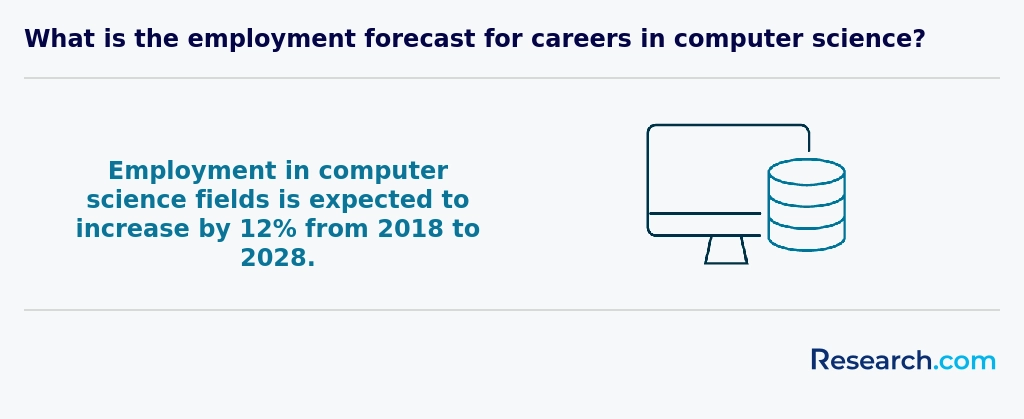
Choosing the right concentration within a computer science degree program in Massachusetts involves aligning your interests with regional industry demands. Popular concentrations include cybersecurity, artificial intelligence, data science, and software engineering. Massachusetts' tech sector is strong in AI and biotechnology, influencing many local programs to emphasize these fields. According to the Massachusetts Technology Collaborative, employment in computer and information technology occupations is projected to grow by 12% through 2028.
Consider your career goals and internships offered by schools. Many Massachusetts institutions have strong ties to companies like MIT, Harvard, and tech startups in Boston. Research program curricula and faculty expertise, and seek concentrations offering hands-on projects and co-op opportunities. This approach helps ensure your specialization matches both personal interests and job market trends in Massachusetts.
- 2027 Most Popular Computer Science Degree Programs Ranking in Connecticut
- 2027 Most Popular Computer Science Degree Programs Ranking in New Hampshire
- 2027 Most Popular Computer Science Degree Programs Ranking in New Jersey
- 2027 Most Popular Computer Science Degree Programs Ranking in Maine
- 2027 Most Popular Computer Science Degree Programs Ranking in Maryland
- 2027 Most Popular Computer Science Degree Programs Ranking in Kentucky
- 2027 Most Popular Computer Science Degree Programs Ranking in Indiana
- 2027 Most Popular Computer Science Degree Programs Ranking in Michigan
- 2027 Most Popular Computer Science Degree Programs Ranking in Georgia
- 2027 Most Popular Computer Science Degree Programs Ranking in Illinois
See What Experts Have To Say About Studying Computer Science
Read our interview with Computer Science experts

Imed Bouchrika, Phd
Computer Science Expert
Professor of Computer Science
National Higher School of Artificial Intelligence

Derek Riley
Computer Science Expert
Professor, Program Director
Milwaukee School of Engineering

Martin Kang
Computer Science Expert
Assistant Professor
Loyola Marymount University

Elan Barenholtz
Computer Science Expert
Associate Professor
Florida Atlantic University

- A Holistic Approach to Studying Interdisciplinary Collaboration: Computer Science https://sciety.org/articles/activity/10.21203/rs.3.rs-8694985/v1
- 5 Challenges in Teaching Computer Science & Solutions https://www.computingolympiad.org/post/top-5-challenges-in-teaching-computer-science-in-schools-and-how-to-overcome-them
- Computer Science Alumni Council https://www.myniu.com/article.html
- New and Future Computer Science and Technology Trends https://www.computerscience.org/resources/computer-science-trends/
- Computer Science Degree https://mcla.edu/academics/academic-departments/computer-science/
- Computer Science students create live network in simulated scenario https://www.stmartin.edu/news-and-stories/stories/computer-science-students-create-live-network-simulated-scenario
- How to Find Computer Science Work Experience in Year 12 https://www.savemyexams.com/learning-hub/careers/how-to-find-computer-science-work-experience-year-12/
- 8 Tips for Computer Science Graduates to Get Their First Job https://allthecode.co/blog/post/tips-for-computer-science-graduates-to-get-their-first-job
- Why your computer science degree won't get you an IT job https://targetjobs.co.uk/careers-advice/information-technology/why-your-computer-science-degree-wont-get-you-it-job
- Ada Computer Science https://adacomputerscience.org/student_challenges