2027 Most Popular Computer Science Degree Programs Ranking in Maryland

Co-Founder and Chief Data Scientist
Choosing the right computer science degree program is an important step for Maryland students planning their future. This article introduces the 2027 Most Popular Computer Science Degree Programs Ranking in Maryland, created by the Research.com team of data scientists to offer clear, data-driven insights.
By exploring this ranking, you'll discover programs that align with your goals and interests, helping you make an informed decision. Pursuing a computer science degree opens doors to exciting career opportunities and personal growth, making this guide a valuable resource on your educational journey.
Key benefits of getting computer science degree in Maryland
- Salary for computer science degree graduates: Graduates in Maryland can expect competitive earnings, with average annual wages around $138,110 for software engineers and developers, and $95,570 for web developers, offering strong financial stability.
- Career paths: Computer science graduates from Maryland universities have diverse options including software engineering, data analysis, and IT support, allowing them to find roles that fit their skills and passions.
- Online degree benefits: Completing a computer science degree online in Maryland offers flexibility and convenience, enabling students to balance work and study while gaining skills recognized by employers statewide.
- 2027 Most Popular Computer Science Degree Programs Ranking in Maryland
- What can I expect from computer science degree in Maryland?
- Where can I work with computer science degree in Maryland?
What can I expect from computer science degree in Maryland?
The average cost of pursuing a computer science degree in Maryland can vary, but many students find in-state public universities offer the most accessible tuition rates. For example, graduates from institutions like the University of Maryland, College Park often share how state residency significantly lowers expenses, making the dream of earning a tech degree feel within reach. Their out-of-pocket costs typically fall well below private college fees, helping them focus more on exploring cutting-edge topics like artificial intelligence or cybersecurity.
Meanwhile, students enrolled at private Maryland schools experience a different financial journey, often supported by STEM scholarships or financial aid programs specifically designed to ease the burden. Many alumni mention how these resources transformed their college experience from daunting to exciting, enabling them to dive deep into internships with local tech firms or federal contractors such as the NSA.
Ultimately, the cost reflects not just tuition but an investment in Maryland's vibrant tech ecosystem, where hands-on learning meets career-launching opportunities-all within budgets that can be managed with smart planning and aid.
Where can I work with computer science degree in Maryland?
Graduates with a computer science degree in Maryland often find themselves stepping into vibrant tech ecosystems right at their doorstep. Imagine a recent graduate from the University of Maryland, College Park, landing a cybersecurity role at the National Security Agency, where each day offers new challenges in protecting national data. Others from Johns Hopkins University might dive into bioinformatics projects, developing software that helps breakthrough medical research come alive.
The thrill of working with innovative startups or established firms like Lockheed Martin in the Baltimore-Washington area is a reality for many. These jobs often involve cloud computing, software engineering, or data analysis, fueling growth and career excitement. Even those inclined toward academia find opportunities, blending IT support and research in Maryland's universities, creating a dynamic blend of learning and applying new technology.
For students, this means adventure awaits beyond the classroom with abundant government, private sector, healthcare, and education paths all within Maryland's booming tech landscape.
Picture yourself walking out of a top Maryland university like the University of Maryland, College Park, diploma in hand, ready to dive into the tech world. What can you expect to earn? Software engineers and developers in Maryland are thriving, with average annual salaries reaching around $138,110. That's a thrilling jump from the classroom to a paycheck that supports your adventurous lifestyle.
For those tapping into the web development scene, the ballpark is about $95,570 annually-enough to fuel exploration while you craft the next big website or app. Graduates venturing into data analysis can anticipate around $119,040, uncovering insights that energize businesses and careers alike.
Even if you choose IT support, often a springboard role, you'll still earn a respectable $63,640 per year, all while sharpening your skills for the tech frontier ahead. Maryland's rich tech job market, boosted by areas like Baltimore and the D.C. suburbs, offers a promising playground for any eager CS grad ready to turn knowledge into opportunity.
- Maryland has several well-known universities for computer science, including University of Maryland, College Park, Towson University, and Johns Hopkins University.
- In-state tuition for a bachelor's degree in computer science typically ranges from $10,000 to $14,000 per year at public universities, while out-of-state tuition can be $30,000 to $40,000 annually.
- Private colleges may charge over $50,000 per year for computer science programs, but many schools offer scholarships and financial aid.
- Starting salaries for computer science graduates in Maryland average about $70,000 per year, with mid-career professionals earning around $110,000 or more.
- The state's job market in tech fields like cybersecurity, software development, and data analysis is growing faster than the national average.
- Maryland schools offer strong internship programs and work with local tech companies to improve student job prospects.
Diving into a computer science degree in Maryland typically takes you on a journey lasting about four years if you pursue a Bachelor of Science full-time. Imagine walking through the lively campus of the University of Maryland, College Park, following a structured path designed to immerse you completely in programming, algorithms, and tech innovation. Many graduates recall balancing late-night coding sessions with vibrant campus life, all within those four focused years.
But what if life calls for a different rhythm? Many students at Maryland's universities choose part-time or evening classes, stretching their adventure to five years or more, blending work, family, and studies. Johns Hopkins University and the University of Maryland, Baltimore County offer master's programs that welcome those eager to deepen their knowledge in one to two years, whether on a fast track or paced to fit a busy life.
For those starting out, community colleges like Montgomery College provide exciting two-year associate degrees, opening doors to either direct careers or seamless transfers to bigger programs. The journey time varies, but the excitement of unlocking new tech skills and opportunities lights every step of the way.
Pursuing a Computer Science degree in Maryland equips you with a strong foundation, but mastering key programming languages and tools will set you apart in today’s competitive tech landscape. Start with Python for its versatility in data analysis, machine learning, and scripting. Java and C++ form the backbone of large-scale software development, enabling you to build robust, high-performance applications. JavaScript, along with frameworks like React or Angular, is essential for front-end web development and interactive user interfaces. In addition to languages, familiarity with development tools such as Git for version control and Docker for containerization is highly valued by employers. Integrated Development Environments (IDEs) like IntelliJ IDEA, Visual Studio Code, and PyCharm streamline coding workflows, while command-line proficiency accelerates project setup and automation. Learning SQL and NoSQL databases (e.g., MySQL, MongoDB) ensures you can design, query, and manage data effectively, a skill critical for roles in data science and backend engineering. Cloud platforms-AWS, Google Cloud, and Microsoft Azure-are integral to modern infrastructure. Understanding cloud services, from compute instances to serverless functions, prepares you for deployments in both startups and enterprise environments. Experiment with DevOps practices using CI/CD pipelines (Jenkins, GitLab CI) to deliver code faster and more reliably. These competencies align with employer expectations and enhance your résumé as you explore what jobs can you get with coding beyond graduation. By focusing on these languages and tools throughout your coursework and internships, you’ll build a portfolio that demonstrates technical depth and practical experience. Hands-on projects-whether contributing to open-source, developing mobile apps, or automating workflows-showcase your ability to solve real-world problems. This proactive approach not only reinforces classroom learning but also signals to recruiters that you possess the skills needed to thrive in Maryland’s fast-growing tech sector.
Choosing between online and on-campus computer science degrees in Maryland feels like stepping into two very different worlds, each with its own kind of adventure. Imagine attending the University of Maryland, College Park, a hub of in-person energy where students thrive on lively classroom debates, hands-on labs, and spontaneous study sessions with peers. Graduates often recall the excitement of collaborating face-to-face, the buzz of campus life energizing their learning journey.
Now picture the flexibility of an online program, where Maryland students log in from cozy home offices or favorite coffee shops, balancing coursework with jobs or family life. These graduates highlight the freedom to learn at their own pace, accessing video lectures and virtual labs whenever inspiration strikes. Although real-time interactions can feel limited, discussion boards and online meetups spark connection and support across distances.
Both paths cover core computer science topics and rigorous curriculum, but whether it's Maryland's campus camaraderie or the adaptable rhythm of online study, the choice is a personal journey.
Maryland CS programs emphasize real-world experience through structured internships and co-op placements that boost skills and career readiness.
Students benefit by:
- Applying classroom theory in professional settings for 3–6 months
- Building portfolios with tangible projects and code samples
- Networking with industry leaders and securing job offers before graduation
Popular internship hosts include:
- Federal labs (NSA, DoD) for cybersecurity and software development
- Tech contractors (Lockheed Martin, Northrop Grumman) in systems engineering
- Healthcare tech firms working on bioinformatics and patient-data platforms
- Startups in the Baltimore-Washington area focusing on cloud, data science, and AI
Secure positions via university career centers, job fairs, and faculty referrals. Those exploring AI specializations can find affordable options with our ai degrees guide.
The average cost of a computer science degree in Maryland paints an interesting picture, especially when you look closely at public universities versus private institutions. For in-state students diving into this exciting field at a public college, the expenses typically hover around $11,800 for the entire degree, making it a much more approachable goal than many expect. Graduates from these programs often share how this affordability allowed them to focus on learning cutting-edge technology without the constant stress of overwhelming debt.
On the flip side, out-of-state students and those attending private schools encounter a steeper climb. The median total cost for a computer science degree reaches approximately $50,921, reflecting the higher tuition and fees plus living expenses that come with prestigious institutions. A common experience among graduates from renowned schools like Johns Hopkins is balancing the high sticker price with generous financial aid, which can make a significant difference.
Curious students often discover that total expenses include more than just tuition - books, supplies, and room and board add to the picture, making it an adventure in budgeting and resourcefulness. To explore the most affordable computer science programs in maryland is often a thrilling next step for prospective learners eager to chart their own unique course.
With Maryland's thriving tech environments and educational opportunities, understanding these Maryland computer science degree total expenses helps future students prepare smartly while looking forward to inspiring journeys in technology.

Maryland’s top computer science programs connect theory to practice through hands-on placements and collaborative research:
- Federal agency internships at NSA, DoD and NASA centers, offering real-world cybersecurity and software development experience
- Research labs like UMD’s UMIACS and Johns Hopkins’ Whiting School, where undergraduates contribute to funded AI and data science projects
- Industry partnerships with Lockheed Martin, Northrop Grumman and local startups, providing co-op placements and professional mentorship
- AI specialization pathways, including an online ai degree option for flexible, expert-led study
Exploring financial aid options as a computer science student in Maryland can feel like unlocking hidden treasures. Imagine a graduate from the University of Maryland, College Park, relieved when a merit-based departmental scholarship lightened the cost of their studies, rewarding their academic drive and leadership. Many students tap into the powerful Pell Grant-offering up to $7,395 annually-which acts like a welcome boost to reduce tuition burdens at public universities where in-state fees average $10,000 to $15,000.
State programs like the Delegate Howard P. Rawlings Educational Assistance Scholarship offer essential support, especially for those demonstrating financial need, while Educational Assistance Grants help bridge the gap at Maryland's public colleges. Beyond grants, Maryland students often explore subsidized federal loans that pause interest while they focus on mastering algorithms and coding challenges. Some even harness partnerships between schools and employers, landing paid internships or tuition help, creating a perfect blend of earning and learning during their degree journey.
Beyond the rigorous academics and career-focused curriculum, thriving student life and strong campus support are crucial components that enrich a computer science degree experience in Maryland. Engaging campus communities provide opportunities for networking, leadership development, and hands-on projects through clubs, hackathons, and tech meetups-all of which help build practical skills and a sense of belonging. Universities such as the University of Maryland and Towson University offer extensive career counseling, mentorship programs, and research initiatives designed to support both academic pursuits and personal growth. Moreover, affordable programs-like our detailed guide on the most affordable computer science programs in maryland-ensure that students can balance high-quality education with financial sustainability. By actively participating in these vibrant campus settings, prospective and current students can benefit from collaborative projects, industry partnerships, and real-world experiences that refine their technical expertise while fostering professional development. This holistic approach not only builds a strong academic foundation but also cultivates the soft skills and resilience needed to thrive in Maryland’s competitive tech job market.
Ready to dive into computer science in Maryland? First, you'll need a solid high school foundation loaded with algebra, geometry, and ideally some calculus-just like many Maryland students aiming for University of Maryland, College Park. Graduates often share how those math and science classes built their confidence to tackle coding challenges ahead.
Many admit they wished they had taken computer programming or IT classes in high school when they arrived at colleges like Towson University, where programming is a daily adventure. Imagine walking into your first class, already familiar with basic coding concepts-what a boost!
Standardized tests like the SAT or ACT have historically played a role, with Maryland computer science hopefuls aiming for scores around 1350 or higher for the SAT. But some schools now ease this pressure with test-optional policies, helping you focus more on your passion and less on stress.
If you're transferring or targeting a bachelor's degree, expect to clear courses like discrete mathematics and data structures beforehand. Many students appreciate how Maryland's community college pathways create smooth bridges to four-year programs, turning the journey into an exciting progression rather than a hurdle.
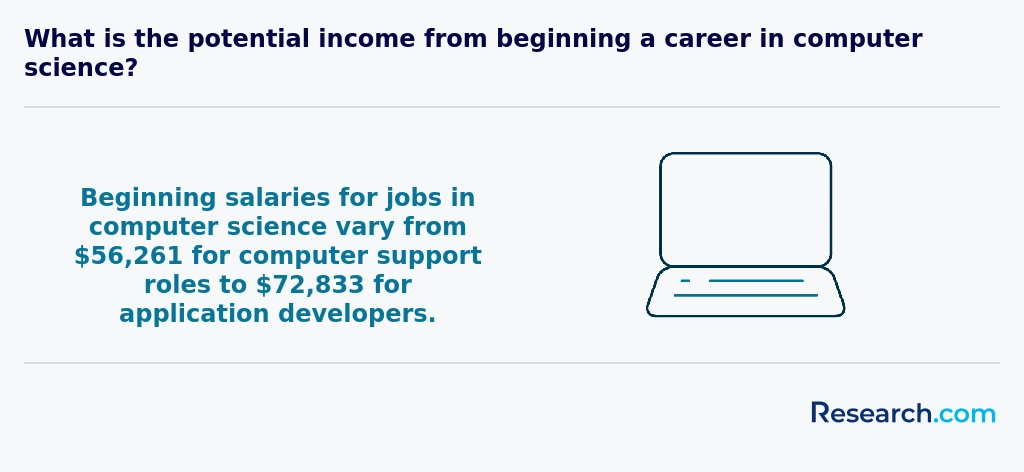
Prospective students often weigh the cost of education against future earnings when evaluating computer science programs. In Maryland, the average tuition for a four-year public institution is approximately $38,384 total (in-state), while private universities average $136,164. By contrast, the mean starting salary for Computer Science graduates-ranging from $61,580 for IT Support Specialists to $132,930 for Software Engineers-translates to a typical payback period of 2–4 years. This estimate assumes in-state tuition rates and excludes living expenses, making financial aid and scholarships critical to minimizing debt. When considering advanced study, online master’s degrees can further boost salary potential by 20–30%. Students seeking cost-effective graduate options should explore our Most Affordable Online Master’s in Computer Science Degree Programs Ranking in the South, which highlights programs combining low tuition with high career outcomes. By selecting an affordable, accredited master’s program, graduates can often recover tuition costs within 3–5 years through roles in data science, cloud engineering, and cybersecurity. Employers in Maryland value not only technical skills but also demonstrated ROI in terms of internships, co-op experiences, and project portfolios. To maximize return, students should:
- Leverage paid internships in Baltimore and D.C. tech hubs
- Apply for state grants like the Guaranteed Access Grant
- Participate in high-impact research or industry partnerships By aligning program costs, financial aid strategies, and experiential learning opportunities, Maryland computer science graduates can achieve a strong return on investment and position themselves for long-term career growth.
Introduction to Programming, learning languages like Python or Java as a beginner coder at the University of Maryland. Graduates often recall that initial thrill of seeing their code come alive, turning ideas into reality.
As you progress, courses like Data Structures and Algorithms dive into problem-solving, teaching you to unravel complex puzzles efficiently-a skill Maryland Tech students find crucial when developing apps or games.
Exploring Computer Systems and Architecture reveals how hardware and software dance together behind the scenes, sparking curiosity about the invisible inner workings of machines. At Johns Hopkins University, hands-on labs make this exploration feel like uncovering a tech world's secret map.
Operating Systems courses immerse you in managing processes and resources, echoing the multitasking real-life challenges enjoyed by Baltimore students balancing intense projects and internships.
Other core classes like Theory of Computation, Software Engineering, Database Systems, and Computer Networks build layers of knowledge seen vividly in capstone projects where students craft real software solutions for Maryland's bustling tech industry.
Exploring the computer science specializations in Maryland feels like stepping into a world where innovation meets opportunity. At universities like the University of Maryland, students dive into cybersecurity, data science, AI, and software engineering, shaping their skills to fit the dynamic tech landscape nearby. Graduates speak eagerly about hands-on projects, blending classroom theory with real-world challenges, such as developing secure systems inspired by federal agencies like the NSA.
Many learners find themselves captivated by Maryland computer science degree focus areas like data science and machine learning, where the thrill of uncovering patterns in big data meets the power of artificial intelligence. Others venture into software engineering, crafting scalable apps that fuel startups cropping up across the state. Networking and human-computer interaction are also prominent, inviting students to design seamless user experiences or manage intricate communication infrastructures.
Curious students often wonder what jobs can you get with coding, and Maryland's specialized tracks make the journey exciting and practical, connecting education with promising career paths.
Diving into the best computer science degree programs in Maryland means immersing yourself in dynamic curricula that ignite curiosity and challenge your creativity. Imagine joining a program near Baltimore where you collaborate with passionate faculty on cutting-edge AI research, just like recent graduates who cherished the perfect blend of theory and hands-on projects. These experiences open doors to internships in Washington, D.C.'s vibrant tech scene, making your learning practical and exciting.
Choosing affordable computer science colleges Maryland offers involves balancing tuition costs with the value of opportunities. Many students reflect joyfully on how in-state tuition at public universities paired with scholarships lightened their financial load, letting them focus on innovation rather than money worries. For a deeper dive into budget-friendly options, check out the Most Affordable Online Master's in Computer Science Degree Programs Ranking in the South, which highlights accessible paths to advancing skills without strain.
Graduates from universities like the University of Maryland or Johns Hopkins often find their computer science degree opening doors to thrilling career paths across Maryland's tech landscape. Whether diving into software development, becoming cybersecurity specialists within agencies near Washington, D.C., or innovating as artificial intelligence engineers, the possibilities spark a sense of adventure. Many alumni recount how their projects working with local startups or government contractors fueled their excitement, blending creativity with impactful problem-solving.
Those exploring computer science career opportunities in Maryland frequently discover dynamic roles such as data scientists, network administrators, and IT project managers, leveraging skills honed in immersive campus labs. Picture yourself supporting cybersecurity efforts alongside the NSA or shaping healthcare informatics-opportunities that make tech feel alive and consequential. The state's commitment to nurturing talent means access to internships and collaborative programs that enhance real-world readiness.
With pathways so varied, some students opt for fast paced degree programs offered by Maryland's institutions to jumpstart their careers faster. The journey through Maryland's tech sector is not just about employment; it's about embracing a vibrant career story waiting to be written.
Graduates with a computer science degree in Maryland find themselves in an exciting and dynamic job market fueled by the state's proximity to major tech hubs and influential federal agencies. Imagine landing a role at a cutting-edge defense contractor or a rapidly growing startup in Baltimore - many Maryland schools like the University of Maryland, College Park, connect students directly with these opportunities. This robust ecosystem makes the computer science job opportunities in Maryland inspiring for newcomers eager to innovate and grow.
Maryland's thriving tech sector extends into government positions where cybersecurity is critical, offering fresh graduates rewarding career paths. For example, graduates often share stories of transitioning smoothly from college projects to software development roles at firms serving the National Security Agency. This employment outlook encourages students to see their degree as a ticket into diverse fields, from cloud computing to data analysis.
While pursuing your studies, exploring the easiest associates degrees to get can sometimes complement your skillset or provide alternative ways to enter the tech world. The salary prospects give graduates a positive outlook too, with the mean annual wage surpassing the national average, reflecting both the demand for talent and Maryland's vibrant job market.
2027 Most Popular Computer Science Degree Programs Ranking in Maryland
Investing in your education is a significant decision that can profoundly influence your future, and the Research.com team is fully aware of the importance of making well-informed choices. To support prospective students in Maryland, we have carefully developed the "2027 Most Popular Computer Science Degree Programs Ranking in Maryland." Our dedication to quality, credibility, and accuracy is demonstrated by the rigorous research and careful analysis backing this ranking.
We utilized the following reputable data sources to create a comprehensive evaluation of computer science programs:
By consulting this ranking, readers will gain valuable insights into the most popular and respected computer science degree programs in Maryland, empowering them to choose the best educational path for their careers. For further information on how this ranking was constructed, please visit our Research.com methodology page.


# 7 position
United States Naval Academy
Bachelor of Science in Computer Science


Frequently Asked Questions About computer science
Computer science students in Maryland can maximize their learning by actively engaging with both academic and practical experiences. Maryland is home to renowned institutions, such as the University of Maryland College Park, which ranks highly in computer science nationally. Students should take advantage of research opportunities, internships, and co-op programs offered through these universities to build real-world skills.
Networking within Maryland's growing tech industry, particularly in the Baltimore-Washington corridor, is crucial. Students can benefit from attending local tech meetups, workshops, and career fairs that connect them to employers in cybersecurity, software development, and data science.
Finally, leveraging online platforms for supplemental learning and participating in coding competitions can enhance problem-solving skills. The Maryland Department of Labor reported increasing job growth in IT sectors, indicating strong career prospects for proactive students.
Emerging niches within the computer science field reflect rapid technological advancements, especially relevant for students pursuing degrees in Maryland. Areas like artificial intelligence (AI) and machine learning continue to grow, supported by Maryland's strong research environment and proximity to federal agencies.
Cybersecurity is another key niche, with Maryland ranking among the top states for cybersecurity jobs, partly due to agencies like the National Security Agency (NSA) located nearby. Data science and big data analytics also represent expanding opportunities, as organizations increasingly rely on data-driven decision making.
Additionally, fields such as cloud computing, Internet of Things (IoT), and quantum computing are gaining momentum. According to the Maryland Department of Labor, computer and information technology occupations are projected to grow 15% by 2030, highlighting these niches' importance.
After completing a computer science degree in Maryland, preparing for the job market involves combining technical skills with practical experience. Many graduates benefit from internships, often arranged through university career centers, which provide valuable workplace exposure. According to the Bureau of Labor Statistics, Maryland's technology sector is growing faster than the national average, offering diverse job opportunities in cybersecurity, software development, and data analysis.
Networking is crucial; joining local tech groups or events like those hosted in Baltimore or the Washington, D.C. metropolitan area can connect graduates with employers. Additionally, staying current with certifications in cloud computing or programming languages boosts employability. Maryland's universities often provide career services to support resume building and interview preparation.
Employers in Maryland highly value a blend of technical and soft skills in computer science graduates. Proficiency in programming languages such as Python, Java, and C++ remains fundamental. Additionally, knowledge of data structures, algorithms, and software development lifecycle is critical to meet industry standards. According to the Maryland Department of Labor, demand for cybersecurity skills has notably increased, reflecting the region's focus on secure IT infrastructure.
Beyond coding, problem-solving and analytical thinking are essential. Employers also prioritize teamwork and communication abilities, which enable graduates to work effectively in diverse project environments. Familiarity with cloud computing platforms like AWS or Azure is increasingly advantageous, given Maryland's growing tech sector.
Finding internships in Maryland for computer science students involves leveraging local resources and university connections. Many Maryland universities, such as the University of Maryland College Park, have strong ties with nearby tech companies, offering career fairs and internship listings. According to the Maryland Department of Labor, Baltimore and the DC metropolitan area host numerous IT firms providing internships.
Students should also explore platforms like Handshake or LinkedIn, which feature Maryland-specific computer science internship openings. The Maryland Center for Computing Education highlights programs that connect students with industry partners, increasing chances to secure paid internships.
Networking events, coding bootcamps, and Maryland-based tech meetups provide additional pathways to find relevant internships.
Obtaining a computer science degree in Maryland significantly enhances career mobility and advancement opportunities. Maryland's growing tech industry, especially in areas near Baltimore and the D.C. metropolitan region, values graduates with strong technical skills. According to the Bureau of Labor Statistics, computer and information technology occupations in Maryland are projected to grow 13% from 2022 to 2032, faster than the national average.
Employers often seek candidates with formal education due to the complexity of modern technology roles. A degree opens doors to higher-paying positions, such as software development, cybersecurity, and data analysis. Graduates can also benefit from Maryland's robust network of federal agencies and private tech firms, fostering career growth and transitions.
Internships and local partnerships offered by Maryland universities further support practical experience, which employers highly value when considering advancement.
Studying for a computer science degree in Maryland equips students with skills that cross traditional disciplinary boundaries. Many Maryland institutions emphasize collaboration between computer science and fields such as biology, engineering, and business. For example, the University of Maryland offers programs integrating data science with healthcare and environmental studies, reflecting the state's growing tech and biotech industries. According to Maryland's Department of Labor, tech employment is expected to grow by 8% over the next decade, highlighting opportunities in multifaceted roles. This environment encourages students to develop problem-solving abilities applicable in diverse professional settings.
Additionally, Maryland's proximity to federal agencies and research centers fosters unique internships and partnerships. These experiences allow students to work on projects that combine computer science with public policy, cybersecurity, and education. As a result, graduates often enter the workforce prepared for interdisciplinary roles requiring both technical expertise and domain knowledge. Universities also incorporate communication and teamwork skills into their curricula, vital for success in collaborative, cross-sector jobs. Overall, Maryland's educational and professional landscape makes it an ideal place for students seeking versatile, interdisciplinary computer science careers.
When deciding between a thesis and a non-thesis computer science degree in Maryland, consider your career goals and learning style. Thesis programs emphasize research, requiring you to produce original work, which is beneficial if you aim for a PhD or a research-oriented job.
Non-thesis options focus more on coursework and practical skills, suitable for students targeting industry roles or immediate employment after graduation. Many Maryland universities, such as the University of Maryland, College Park, offer both tracks with similar core courses but differing in their final project requirements.
According to the Maryland Higher Education Commission, about 40% of computer science graduate students choose thesis tracks, reflecting a balanced interest in research careers.
Students based in Maryland who wish to study computer science abroad have several opportunities through their home institutions. Many Maryland universities, including the University of Maryland College Park, offer exchange programs with partner schools worldwide. These programs allow students to complete part of their degree overseas while earning credits transferable to their Maryland degree.
Additionally, some Maryland schools participate in consortiums like the Education Abroad Network, providing access to campuses in Europe, Asia, and Australia. According to NAFSA, approximately 11% of U.S. study abroad students between 2019-2020 pursued engineering or technology fields, indicating a growing interest in computer science abroad.
Financial aid and scholarships are sometimes available specifically to support study abroad for STEM students, including those in computer science. Students should consult their university's international office for tailored advice and options.
Maryland offers various part-time job opportunities that complement computer science degree education, especially in tech hubs like Baltimore and the Washington, D.C. metropolitan area. Students often find roles as software development interns, IT support technicians, or data analysts, providing hands-on experience alongside their studies.
According to the Maryland Department of Labor, the state's technology sector grew by 4.5% in 2023, increasing demand for student workers in areas such as cybersecurity and cloud computing. Many local businesses and government agencies seek part-time help in coding, testing, and network management.
Additionally, Maryland's proximity to federal agencies like the National Security Agency (NSA) allows students to gain unique internship positions that supplement academic knowledge with real-world security challenges. These jobs not only enhance resumes but also help build professional networks critical for post-graduation employment.
Computer science students in Maryland benefit from numerous networking opportunities supported by local universities and the state's vibrant tech industry. Major institutions like the University of Maryland and Johns Hopkins University often host career fairs, tech talks, and industry panels, providing direct contact with employers and experts. According to the Maryland Department of Labor, the state has over 10,000 IT firms, making it one of the top regions for tech employment on the East Coast.
Students can also join professional organizations such as the Maryland Technology Council and ACM student chapters, which organize regular events and mentorship programs. Additionally, Maryland's proximity to Washington, D.C. opens doors to internships at federal agencies and cybersecurity firms, enhancing real-world experience.
Alumni networks in Maryland play a crucial role for computer science students by providing valuable connections within the tech industry. Many universities in Maryland, including the University of Maryland and Johns Hopkins University, have active alumni groups that offer mentorship, internships, and job opportunities.
This networking can be especially beneficial given Maryland's growing tech sector, which includes over 15,000 IT firms statewide, according to the Maryland Department of Commerce. Alumni often share insights about local employers, such as federal agencies and cybersecurity firms, helping students tailor their skills.
Furthermore, alumni events foster professional relationships that may lead to collaborative projects or startup ventures, strengthening career prospects early on.
Customizing a computer science degree program in Maryland allows students to align their education with specific career objectives. Many Maryland universities offer flexible curricula with elective courses in areas such as cybersecurity, artificial intelligence, data science, and software engineering. Students can also pursue minors or certificates that complement their major, enhancing specialized skills.
Internships and cooperative education programs are widely available through Maryland institutions, connecting students with local tech companies and government agencies. These experiences provide practical knowledge and professional networking opportunities.
According to the Maryland Higher Education Commission, over 70% of computer science students engage in hands-on learning experiences that improve employability after graduation.
Computer science students in Maryland often encounter several common challenges throughout their academic journey. One significant obstacle is the rigorous curriculum, which demands strong skills in mathematics, programming, and problem-solving. Many students report struggling with advanced topics such as algorithms and software engineering, which require considerable time and effort.
Maryland's competitive job market, especially in technology hubs near Baltimore and the Washington, D.C., metro area, adds pressure on students to gain internships and relevant experience early. According to the Maryland Higher Education Commission, approximately 30% of computer science undergraduates participate in internships, highlighting its importance.
Additionally, access to diversity and inclusion resources remains a concern. National Science Foundation data show that women and minorities are underrepresented in Maryland's computer science programs, contributing to potential feelings of isolation and lack of mentorship for these groups.
With a computer science degree from Maryland, graduates can pursue widely recognized professional certifications to enhance their career prospects. Popular certifications include CompTIA Security+, which focuses on cybersecurity skills, and Certified Information Systems Security Professional (CISSP), ideal for experienced security professionals. The Project Management Professional (PMP) credential is also valued, particularly in tech project leadership roles.
Many Maryland employers seek certifications like AWS Certified Solutions Architect due to the state's growing cloud computing sector, supported by agencies such as the NSA and federal contractors. Additionally, certifications in programming, like Microsoft Certified: Azure Developer Associate, align well with local industry needs.
According to Maryland's Department of Labor, certified professionals often earn 10-20% higher salaries. These credentials complement a computer science degree by validating specialized skills in the competitive Maryland tech market.
To write a winning application for a computer science program in Maryland, start by showcasing your strong foundation in math and science, essential for this field. Highlight relevant coursework, coding projects, or internships that demonstrate practical skills.
Maryland hosts prestigious institutions like the University of Maryland, College Park, whose computer science program is highly ranked nationally. Including specifics about why you chose a Maryland school-such as faculty expertise or research opportunities-can strengthen your statement.
Make sure to meet all prerequisites, including standardized test scores if required. Tailor your personal statement to emphasize problem-solving abilities and passion for technology.
According to data from the National Center for Education Statistics, computer science enrollments in Maryland have increased by over 20% in recent years, reflecting growing demand. Reflecting awareness of industry trends, like cybersecurity and AI, can add value.
Computer science careers are increasingly valued worldwide, reflecting rapid technological advances and growing demand for digital solutions. In the United States, and specifically Maryland, computer science graduates benefit from strong job markets in sectors like cybersecurity, software development, and data analysis. Maryland is home to major federal agencies, including the National Security Agency (NSA), which heavily invests in technology and innovation.
Global employers often seek candidates with skills developed in accredited U.S. programs, particularly those that emphasize both theory and practical application. According to the U.S. Bureau of Labor Statistics, the demand for computer and information technology occupations is projected to grow 15% from 2021 to 2031, much faster than average. This trend applies locally in Maryland, where tech job openings continue rising, supported by initiatives such as the Maryland Innovation Economy.
Furthermore, computer science degrees from Maryland equip students with competencies sought after worldwide, making graduates competitive in global markets. The degree also offers pathways to remote work, international collaboration, and ongoing professional growth, reflecting a globally connected industry and diverse career possibilities.
Gaining practical experience while studying computer science in Maryland can significantly enhance your skills and employability. Many universities in the state offer internship programs that connect students with local tech companies such as Lockheed Martin and Northrop Grumman. According to the Maryland Department of Labor, internships can lead to job offers for up to 40% of participants in tech fields.
Additionally, students can participate in cooperative education (co-op) programs that alternate semesters of study with full-time work. This hands-on approach helps build real-world experience. Many Maryland institutions also support student involvement in research projects and coding competitions, providing valuable opportunities to apply classroom knowledge.
Choosing the right concentration within a computer science degree program in Maryland depends on your career goals and interests. Popular concentrations include artificial intelligence, cybersecurity, software engineering, and data science. Maryland has strong industry ties, especially in cybersecurity, due to proximity to federal agencies like the NSA and Department of Defense.
Data from the Maryland Higher Education Commission highlights a growing demand for cybersecurity professionals, with a 12% job growth projected through 2030. Additionally, software development roles remain abundant in the Baltimore and Washington D.C. metro areas. Consider concentrations aligned with local job markets for better employment prospects.
Review each university's curriculum and internship opportunities to ensure practical experience. Johns Hopkins and University of Maryland campuses offer specialized tracks reflecting industry needs, which can influence your choice.
- 2027 Most Popular Computer Science Degree Programs Ranking in New Jersey
- 2027 Most Popular Computer Science Degree Programs Ranking in Kentucky
- 2027 Most Popular Computer Science Degree Programs Ranking in Connecticut
- 2027 Most Popular Computer Science Degree Programs Ranking in Massachusetts
- 2027 Most Popular Computer Science Degree Programs Ranking in Indiana
- 2027 Most Popular Computer Science Degree Programs Ranking in New Hampshire
- 2027 Most Popular Computer Science Degree Programs Ranking in Georgia
- 2027 Most Popular Computer Science Degree Programs Ranking in Maine
- 2027 Most Popular Computer Science Degree Programs Ranking in Michigan
- 2027 Most Popular Computer Science Degree Programs Ranking in Florida
See What Experts Have To Say About Studying Computer Science
Read our interview with Computer Science experts

Kathleen M. Carley
Computer Science Expert
Professor of Computer Science
Carnegie Mellon University

Elan Barenholtz
Computer Science Expert
Associate Professor
Florida Atlantic University

Imed Bouchrika, Phd
Computer Science Expert
Professor of Computer Science
National Higher School of Artificial Intelligence

Derek Riley
Computer Science Expert
Professor, Program Director
Milwaukee School of Engineering

- Computer Science students create live network in simulated scenario https://www.stmartin.edu/news-and-stories/stories/computer-science-students-create-live-network-simulated-scenario
- Software Engineering Talent Report: Supply vs Demand in Maryland | BairesDev https://www.bairesdev.com/reports/cs-graduates-job-market/maryland/
- Computer Science - SWPS University https://english.swps.pl/academics/warsaw/ba-programs/computer-science
- Empowering Students with Computer Science https://blog.definedlearning.com/empowering-students-with-computer-science/
- 8 Tips for Computer Science Graduates to Get Their First Job https://allthecode.co/blog/post/tips-for-computer-science-graduates-to-get-their-first-job
- Discover Scholarships for Computer Science Majors https://www.computerscience.org/scholarships-overview/
- Computer Science Alumni Council https://www.myniu.com/article.html
- What Can You Do With a CS Degree? 12 Paths for 2026 | Extern https://www.extern.com/post/computer-science-degree-careers-guide
- Computer Science Major https://www.towson.edu/fcsm/departments/computerinfosci/undergrad/computersci.html
- The Crucial Role of Networking for Computer Science Students https://dev.to/thisisaayush/the-crucial-role-of-networking-for-computer-science-students-4k2i