2027 Best Udacity AI Courses for AI Strategy

Co-Founder and Chief Data Scientist
Many professionals with unrelated undergraduate degrees face challenges adapting to the rapidly evolving AI landscape, struggling to identify reliable and flexible education paths. Companies increasingly demand strategic understanding beyond technical skills, making it critical to align learning with real-world applications. Finding the right courses that balance theoretical foundations with practical AI strategy can be overwhelming and time-consuming.
This article examines top Udacity AI courses curated to equip learners with the strategic insight necessary to transition effectively into AI roles while accommodating busy schedules and diverse backgrounds, ultimately guiding readers toward informed decisions for career advancement.
Key Things You Should Know
- Udacity's AI Strategy courses in 2026 emphasize practical skills in managing AI implementations, blending technical knowledge with business acumen for leadership roles.
- Enrollment in AI programs grew 35% in 2025, reflecting increased demand for strategic AI expertise amid rapid industry adoption.
- Courses offer updated curricula featuring ethics, AI governance, and emerging technologies, helping students align strategies with evolving market and regulatory trends.
Advance Your Career with AI Online Courses
Artificial Intelligence: Implications for Business Strategy
This program provides an introduction to Artificial Intelligence and their implications for business strategy. Earn an official digital certificate.

Oxford Artificial Intelligence Programme
Explore this Oxford Artificial Intelligence programme offered in a flexible learning environment and explore topics like machine learning, automation, and robotics.

Implementing Agentic AI: Building Your Organizational Playbook
This online MIT Agentic AI course offers a practical approach to deploying AI agents in your organization, including a custom playbook. 3 weeks, exclusive launch price.

AI Adoption: Driving Business Value and Impact
This online MIT AI Adoption: Driving Business Value and Impact offers practical frameworks to close the gap between AI potential and business reality.

Artificial Intelligence in Pharma and Biotech
Discover the applications and limitations of artificial intelligence in pharma and biotech with this MIT online short course.

What are the best Udacity AI courses for AI strategy?
Udacity's best Udacity courses for ai strategy in 2026 combine technical skills with business leadership, addressing the growing demand for AI-driven decision makers. The AI Product Manager Nanodegree teaches how to align AI model development with strategic goals, covering project management, use case definition, and impact measurement. These skills are increasingly vital as AI strategy job postings have risen 2.3 times since 2022, according to LinkedIn's 2025 Global Future of Work Report.
The AI for Business Leaders course offers foundational knowledge of AI systems and ethical frameworks essential for integrating AI responsibly at the organizational level. It supports professionals shifting from traditional leadership roles to top AI strategy positions by emphasizing both market trends and ethical considerations. This course is particularly relevant for those exploring top Udacity artificial intelligence programs for strategic planning.
For deeper technical expertise, the Machine Learning Engineer Nanodegree builds a bridge between machine learning capabilities and strategic decision-making. This helps professionals understand AI's technical limitations and enhances collaboration with engineering teams.
Practical skills emphasized include:
- Identifying AI use cases with measurable value
- Designing AI adoption roadmaps aligned with business goals
- Managing cross-functional AI teams
- Evaluating AI risks, fairness, and compliance
Successful AI strategy requires more than programming-it demands strategic insight, risk management, and leadership. Professionals seeking a comprehensive data science degree can benefit significantly from Udacity's multifaceted course offerings designed for AI strategy careers.
Advance Your Career with AI Online Courses
Artificial Intelligence: Implications for Business Strategy
This program provides an introduction to Artificial Intelligence and their implications for business strategy. Earn an official digital certificate.
Oxford Artificial Intelligence Programme
Explore this Oxford Artificial Intelligence programme offered in a flexible learning environment and explore topics like machine learning, automation, and robotics.
Implementing Agentic AI: Building Your Organizational Playbook
This online MIT Agentic AI course offers a practical approach to deploying AI agents in your organization, including a custom playbook. 3 weeks, exclusive launch price.
Who should take Udacity AI strategy courses?
Udacity AI strategy courses target professionals seeking to develop AI strategy skills for business growth, including mid-level managers, business analysts, and those moving into AI-focused roles. These programs emphasize aligning AI initiatives with organizational objectives, ideal for managers aiming to implement artificial intelligence solutions effectively. Product managers and supply chain leaders can leverage AI to enhance user experience and optimize operations, while entrepreneurs benefit from frameworks evaluating innovation feasibility and ethical aspects.
Data scientists and engineers aspiring to leadership roles will find value in these courses' focus on strategic thinking beyond technical skills. According to Udacity's 2024 Impact Report, 73% of Nanodegree graduates in AI or data roles achieved career advancement within a year, showing practical benefits. Additionally, working professionals navigating rapid AI adoption will acquire skills in governance, risk management, and stakeholder communication.
Those without deep coding expertise who want to direct AI projects learn to bridge the gap between technology and strategy through use cases and ethical frameworks. The programs provide actionable insights across diverse roles demanding an understanding of AI's organizational impact and how to drive successful transformation. For those combining AI education with technical degrees, consider exploring the cheapest online electrical engineering degree to further enhance career prospects.
What skills do Udacity AI strategy courses teach?
Udacity AI strategy courses develop essential skills for designing and implementing artificial intelligence frameworks tailored to business applications. These programs emphasize proficiency in programming languages like Python and mastery of machine learning tools such as TensorFlow and PyTorch, enabling the creation of scalable AI solutions.
The curriculum focuses on AI strategy development for business success by teaching data curation techniques, including assessing data quality and selecting relevant datasets critical for model training. Ethical considerations and governance practices are also integral, preparing learners to navigate bias mitigation and regulatory compliance for responsible AI deployment.
Students learn to translate business objectives into actionable AI projects, aligning technology with organizational goals. Key problem-solving skills include identifying automation opportunities and optimizing customer experience through natural language processing.
Course projects simulate real-world challenges, fostering collaboration among cross-functional teams-data scientists, engineers, and executives alike. This hones communication abilities critical for explaining AI concepts to non-technical stakeholders and securing project buy-in.
According to Udacity's 2024 Learner Outcomes, alumni of the AI Programming with Python Nanodegree report a median salary increase of 22% within a year, highlighting the career value of strategic and technical expertise gained.
- AI strategy development for business success
- designing and implementing artificial intelligence frameworks
For those interested in expanding their digital expertise, consider a game development online degree, which complements AI knowledge with creative software skills.
How do Udacity AI courses compare with degrees and certificates?
Udacity AI courses offer a practical, skills-oriented alternative to traditional degrees and certificates, focusing on job-ready competencies rather than broad academic theory. This approach suits professionals aiming to meet immediate industry demands, especially since 70% of CEOs plan to significantly increase AI investments, yet only 27% feel their leadership possesses sufficient AI strategy skills. Compared to traditional programs, Udacity's courses emphasize hands-on projects, real-world case studies, and mentorship that help learners build portfolios aligned with AI strategy and business roles.
Regarding how Udacity AI courses compare to traditional degrees, Udacity provides faster skills deployment with targeted content on AI adoption frameworks, ethical considerations, and data-driven decision-making. While traditional degrees offer comprehensive theoretical grounding and institutional prestige, certificates from Udacity demonstrate current, applicable skills that employers increasingly value in fast-changing markets.
The value of Udacity certificates versus university diplomas is evident for working professionals who need flexible pacing and credentials that highlight strategic implementation skills. However, roles requiring deep technical expertise or advanced research may still favor formal degrees, such as a PhD in data science online.
Ultimately, Udacity AI courses complement degrees by closing critical skill gaps, especially for leadership roles focused on applied AI strategy and business impact.
What is included in a Udacity AI strategy curriculum?
Udacity's AI strategy curriculum delivers essential skills for professionals aiming to lead AI adoption in businesses. It covers foundational topics like machine learning principles, data analysis, and AI model deployment, alongside strategic aspects such as evaluating AI opportunities, risk assessment, and project management.
Students explore real-world case studies spanning industries like finance, healthcare, and retail, gaining insight into AI's strategic roles and challenges within diverse business models. The curriculum also stresses AI ethics, data privacy, and regulatory compliance, which are critical for responsible leadership in AI projects.
Key components often include:
- Fundamentals of AI and machine learning algorithms
- Data-driven decision making and performance measurement techniques
- Designing AI workflows and automation strategies
- Leadership skills for managing multidisciplinary AI teams
- AI governance and ethical frameworks
Hands-on projects using platforms like Python and TensorFlow help learners prototype AI solutions relevant to business challenges. According to Coursera's 2024 Global Skills Report, completing foundational AI or machine learning courses increases the chance of entering AI-related roles by 40% within a year, highlighting the value of such programs for career development in AI strategy.
What are the admission requirements for Udacity AI courses?
Udacity's AI courses require students to have a solid foundation in programming and mathematics to handle the technical demands. Most programs, including the popular Artificial Intelligence Nanodegree focused on classical AI and planning, emphasize proficiency in Python and familiarity with libraries like NumPy and Pandas.
Applicants should understand algebra, calculus, and linear algebra, as these mathematical concepts support many AI algorithms. Although some advanced classes suggest a basic understanding of machine learning, this is usually not mandatory.
For those lacking experience, Udacity offers preparatory options such as Intro to Programming and Programming Foundations with Python. These courses help bridge gaps and provide readiness assessments before starting the main AI programs.
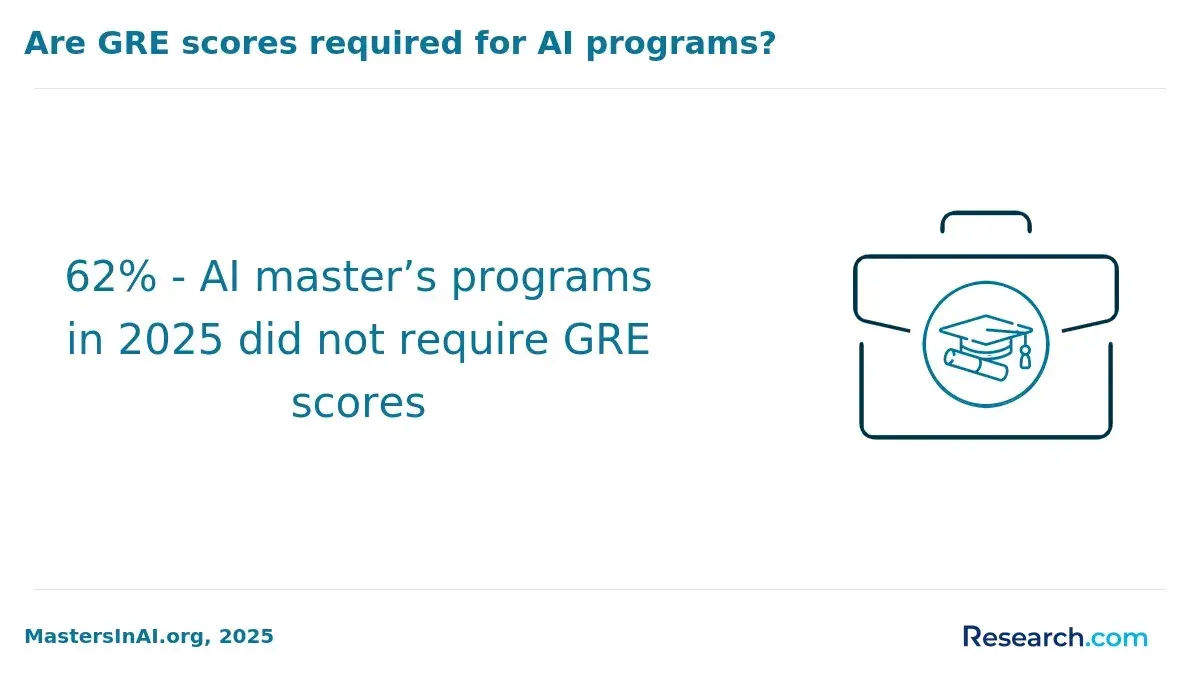
There are no formal academic requirements such as degrees or standardized tests, making these courses accessible to professionals aiming to enter or advance in AI careers. Success relies heavily on self-paced learning and problem-solving capabilities.
Job growth in AI roles is substantial. The U.S. Bureau of Labor Statistics projects a 23% increase in AI computer and information research positions from 2022 to 2032, with a median annual salary of $145,080. Meeting Udacity's admission criteria enhances chances of succeeding in the evolving AI job market.
How long do Udacity AI strategy courses take to complete?
Udacity AI strategy courses usually take between 3 and 6 months to complete, depending on the specific nanodegree or program and the learner's pace. For instance, the Udacity Generative AI Nanodegree is designed for about 4 months at a pace of 10 hours per week. More intensive tracks with applied projects or extra specializations may extend up to 6 months.
Part-time learners balancing work or other commitments typically require 6 to 9 months if studying 5 to 7 hours weekly. On the other hand, highly motivated students dedicating 15 or more hours per week might finish some courses in under 3 months. Udacity's flexible model supports learners progressing at a speed that fits their schedule.
Courses emphasizing project-based learning help students immediately apply AI-driven strategy skills in practical business contexts. McKinsey's 2024 "Economic Potential of Generative AI" report highlights the rising strategic importance of generative AI across marketing, customer operations, software engineering, and R&D. This underscores the value of gaining AI strategy expertise promptly to capitalize on emerging opportunities.
Prospective students should consider:
- Course complexity and prerequisites, which impact study length
- The availability of mentor support and project feedback, affecting weekly time needs
- Certification deadlines aligned with career goals
Careful course selection and realistic planning enable learners to maximize the benefits of their AI strategy education.
How much do Udacity AI strategy courses cost?
Udacity's ai strategy courses offer flexible options for learners seeking advanced skills in this growing field. Pricing typically ranges from $399 to $1,599 depending on the program length and content depth. Most Nanodegree programs are subscription-based, costing between $399 and $499 per month, usually lasting three to six months. For full program access, prices hover around $1,200 to $1,599. More comprehensive courses that blend ai with business strategy or cloud integration can be at the higher end of this range.
Discounts and scholarships are frequently available, helping reduce the financial barrier. Notably, partnerships like the one with AWS create scholarship opportunities aimed at ai and machine learning learners, emphasizing cloud-related skills. The rising industry demand for cloud ai and ml expertise is evident; according to Amazon's AWS AI & ML Jobs Study, roles requiring AWS skills often command salaries 27% higher than those without cloud specialization.
Udacity's focus on practical, industry-relevant training makes these programs suitable for both new graduates and working professionals seeking to enhance their ai strategy capabilities. Flexible payment plans accommodate various budgets and timelines, ensuring accessibility to high-quality education aligned with current market needs.
What jobs can Udacity AI strategy courses prepare you for?
Udacity's AI strategy nanodegree programs prepare students for critical roles such as AI product manager, AI consultant, machine learning strategist, and data-driven business analyst. These roles demand not only technical expertise but also the strategic ability to align AI technologies with business objectives, guiding adoption and optimization decisions.
AI product managers lead the development of AI-powered products, ensuring models address market needs while adhering to ethical standards. AI consultants help organizations leverage AI to enhance efficiency, lower costs, and gain competitive advantages. Machine learning strategists create plans that move projects from proof-of-concept to scalable AI solutions. Business analysts with AI strategy skills interpret complex data to provide actionable insights, bridging technical teams and leadership.
Udacity combines core AI knowledge-including machine learning, computer vision, and natural language processing-with essential strategic topics like AI ethics, governance, and market analysis. This well-rounded curriculum equips students to solve real-world business challenges related to digital transformation and innovation.
According to analysis from the 2024 Stack Overflow Developer Survey, completing intensive programs such as nanodegrees boosts salary potential by an average of 18% compared to purely self-taught learning. This highlights the value of specialized AI strategy education for improving career prospects in the competitive tech industry.
Do Udacity AI strategy courses help with AI certifications?
Udacity AI strategy courses focus on building practical skills for leading AI initiatives and aligning them with business objectives, rather than solely preparing for vendor-specific certification exams. These programs provide hands-on project experience, strategic frameworks, and technical insights that connect ai concepts to real-world business challenges. For professionals pursuing formal AI certifications from cloud providers or institutions, Udacity courses offer a valuable foundation that complements exam preparation.
Beyond certifications, Udacity emphasizes applied capabilities in AI strategy, ethical considerations, and implementation planning. Courses like "AI Product Manager" and "AI for Business Leaders" combine technical knowledge with strategic decision-making, essential for embedding AI within organizational processes.
IBM's 2024 Global AI Adoption Index reveals that 61% of leading organizations have formal AI upskilling programs aligned with business goals, compared to only 22% of lower-performing firms. This highlights the significance of training programs, such as Udacity's, that link AI learning with broader organizational strategies and maturity.
Key benefits of Udacity's AI strategy courses include:
- Developing skills to manage AI deployment and adoption
- Bridging the gap between AI technology and business value
- Supporting organizational AI maturity and leadership
These courses serve as a strategic complement to formal certification efforts, helping learners excel in complex enterprise environments.
Other Things You Should Know About Artificial Intelligence
In 2027, some of the best Udacity AI courses for AI strategy include "AI for Business Leaders," offering strategic insights for implementing AI in business, and "AI Product Management," which focuses on integrating AI technologies into product lines effectively.
Artificial intelligence enhances business decision-making by providing data-driven insights and predictive analytics. It can identify trends, optimize operations, and improve customer experiences through automation and personalized recommendations. AI strategy involves integrating these capabilities to drive competitive advantage and operational efficiency.
Key challenges in implementing artificial intelligence include data quality and availability, integration with existing systems, and a shortage of skilled professionals. Organizations also face obstacles related to change management, setting realistic expectations, and ensuring ethical AI deployment that complies with regulations.
Yes, artificial intelligence systems can adapt to changing environments through continuous learning and model updating. Techniques like reinforcement learning and online learning enable AI to improve performance based on new data and evolving conditions. However, maintaining adaptability requires ongoing monitoring and retraining efforts.
References
- Udacity Agentic AI Nanodegree Review (My Learning Expereince) https://devopscube.com/udacity-agentic-ai-nanodegree-review/
- Online Course: Machine Learning and AI for Business Leaders from Udacity | Class Central https://www.classcentral.com/course/udacity-machine-learning-and-ai-for-business-leaders-475322
- 6 Udacity Courses To Help You Master AI At Any Skill Level https://www.billboard.com/culture/product-recommendations/udacity-ai-courses-sign-up-online-1236053870/
- Is the Udacity AI for Trading Nanodegree Any Good? https://oscarleo.com/udacity-ai-for-trading-nanodegree-review/
- Udacity AI for Business Leaders Review: A Strategic Analysis for the C-Suite in 2025 - EnterpriseZone.cc https://enterprisezone.cc/udacity-ai-for-business-leaders-review/
- The Top AI Skills Everyone's Trying to Learn Right Now (And the Courses They're Using to Catch Up) https://www.rollingstone.com/product-recommendations/finance/top-ai-skills-2025-udacity-courses-online-1235410030/
- DeepLearning.AI vs Udacity Gen AI Courses: Which is Right for You? https://futurense.com/blog/deeplearning-ai-vs-udacity-gen-ai-courses