2027 Best AI Courses for Leadership Teams

Co-Founder and Chief Data Scientist
Leadership teams often face challenges integrating artificial intelligence into their decision-making processes due to gaps in technical knowledge and rapidly evolving technology. This gap can limit a team's ability to leverage AI strategically, causing slower innovation and missed market opportunities. Many executives seek flexible, accredited programs that accommodate their schedules and backgrounds while delivering practical AI insights. This article will examine top AI courses designed specifically for leadership, highlighting how these programs equip professionals with essential skills to drive successful AI adoption and align initiatives with organizational goals.
Key Things You Should Know
- Leadership teams adopting AI courses in 2026 focus on strategic decision-making, with 72% reporting improved organizational outcomes within six months of training.
- Top AI courses emphasize ethical AI use, data governance, and risk management, essential for executive-level leadership to ensure responsible deployment.
- Blended learning formats combining live sessions and self-paced modules result in 35% higher retention rates among professionals compared to traditional training methods.
Advance Your Career with AI Online Courses
Artificial Intelligence: Implications for Business Strategy
This program provides an introduction to Artificial Intelligence and their implications for business strategy. Earn an official digital certificate.

Oxford Artificial Intelligence Programme
Explore this Oxford Artificial Intelligence programme offered in a flexible learning environment and explore topics like machine learning, automation, and robotics.

Implementing Agentic AI: Building Your Organizational Playbook
This online MIT Agentic AI course offers a practical approach to deploying AI agents in your organization, including a custom playbook. 3 weeks, exclusive launch price.

AI Adoption: Driving Business Value and Impact
This online MIT AI Adoption: Driving Business Value and Impact offers practical frameworks to close the gap between AI potential and business reality.

Artificial Intelligence in Pharma and Biotech
Discover the applications and limitations of artificial intelligence in pharma and biotech with this MIT online short course.

What makes an AI course valuable specifically for executive and senior leadership teams?
AI courses designed for executive leadership emphasize strategic integration over technical depth. These programs equip leaders to identify AI-driven opportunities, evaluate risks, and make decisions aligned with organizational goals. Key topics include AI's influence on business models, ethical challenges, and regulatory compliance. Effective leadership also involves inspiring teams and managing change during AI adoption.
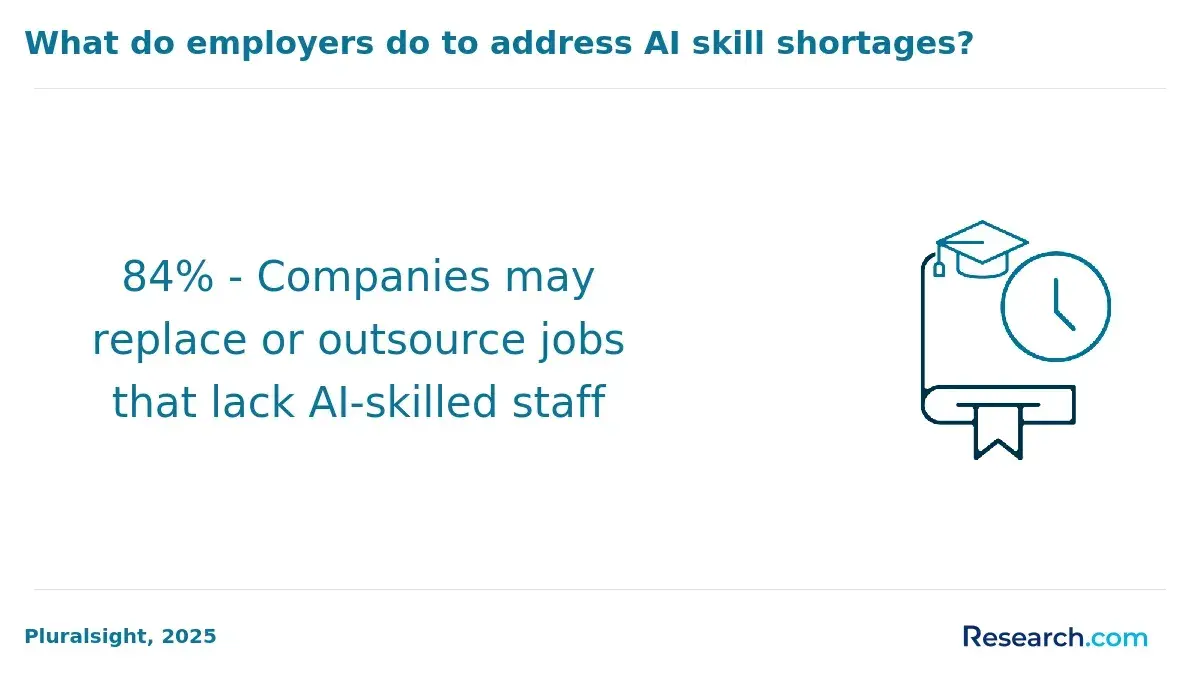
Practical case studies show AI transformations in industries like finance, where leaders improve risk modeling, and healthcare, where executives apply patient data analytics. Interactive simulations and peer discussions prepare leaders for implementation challenges and resistance. The urgency of AI literacy is highlighted by data: in 2025, 72% of managers sought upskilling, with 71% motivated by AI advancements, underscoring how essential such knowledge is for senior roles. This need strengthens the benefits of artificial intelligence course benefits for senior management.
For professionals aiming to deepen AI expertise, pursuing a computer science accelerated degree can provide a strong technical foundation supporting leadership in AI-driven environments.
Advance Your Career with AI Online Courses
Artificial Intelligence: Implications for Business Strategy
This program provides an introduction to Artificial Intelligence and their implications for business strategy. Earn an official digital certificate.
Oxford Artificial Intelligence Programme
Explore this Oxford Artificial Intelligence programme offered in a flexible learning environment and explore topics like machine learning, automation, and robotics.
Implementing Agentic AI: Building Your Organizational Playbook
This online MIT Agentic AI course offers a practical approach to deploying AI agents in your organization, including a custom playbook. 3 weeks, exclusive launch price.
Which types of AI courses are best for C-suite, VP, and director-level professionals?
Courses designed for c-suite, VP, and director-level professionals focus on strategic AI applications and leadership rather than technical skills. These programs emphasize decision-making frameworks, ethical considerations, and AI-driven business transformation. Executives need to understand how AI integrates with organizational goals, risk management, and competitive advantage, which is key in advanced artificial intelligence courses for c-suite and directors.
Recommended course types include:
- AI strategy and governance programs that align AI initiatives with corporate vision and compliance requirements.
- Leadership courses covering AI ethics, data privacy, and responsible AI use to prepare leaders for regulatory and societal challenges.
- Workshops on AI-powered decision-making showcasing case studies on optimizing operations, marketing, or customer experience.
- Industry-specific courses in finance, healthcare, or manufacturing to help leaders grasp relevant AI opportunities and risks.
By 2025, nearly 95% of organizations reported AI use, with 58% using it daily across the enterprise. This highlights why mastering ai leadership training programs for executive teams is essential to foster adoption and maintain competitiveness.
For example, a director in retail might study AI-driven supply chain optimization, while a VP in finance focuses on fraud detection and compliance. C-suite executives benefit from education programs offering frameworks for enterprise-wide transformation through AI. Courses that balance managerial insight with operational understanding empower leadership teams to drive innovation, mitigate risks, and champion AI adoption across their organizations. Professionals interested in expanding their knowledge can explore areas like engineering degrees to complement their AI expertise.
How should leadership teams evaluate online versus on-campus AI programs?
Leadership teams evaluating how to evaluate online versus on-campus artificial intelligence programs for leadership teams should consider flexibility, engagement, and applicability. Online programs offer accessibility and convenience, allowing participants to balance work and learning, ideal for dispersed teams or executives needing customized pacing. However, they may lack the immersive experience and direct interaction with instructors and peers that on-campus settings provide.
On-campus programs excel in networking and hands-on workshops, essential for leadership roles focused on strategic AI implementation. These environments foster real-time problem-solving and complex scenario simulations more effectively than asynchronous online courses.
Decision-makers should also assess curriculum design and leadership focus. Organizations with CHRO-led AI workforce strategies report 54% training effectiveness-more than double the 21% in CIO- or CTO-led models-highlighting the importance of combining technical AI skills with human resource strategies, often emphasized in on-campus leadership training.
Leadership teams often benefit from hybrid models or programs aligned with their operational style and strategic AI goals. For professionals exploring options, courses such as a game design degree online can demonstrate the growing accessibility of quality education through online formats.
What core AI topics and skills should leadership-focused courses cover?
Leadership-focused AI courses emphasize core skills crucial for AI management teams, including understanding generative AI and machine learning fundamentals. In 2025, 55% of organizations highlighted these areas in leadership development programs, according to harvardbusiness.org. Data literacy is essential, enabling leaders to interpret AI outputs accurately and assess data quality for better decision-making and risk control.
Ethics and governance play a significant role in AI leadership education. Programs must cover bias mitigation, transparency, and compliance with evolving regulations. Leaders should also evaluate AI's impact on organizational culture and stakeholder trust to ensure responsible adoption.
Practical knowledge in AI transformation strategy is vital. Leaders need skills to identify AI opportunities, manage resources, and guide cross-functional teams through digital change. This includes overseeing innovation pipelines and scaling pilot projects into production-ready solutions.
Risk assessment and cybersecurity concerning AI systems require attention. Understanding vulnerabilities and mitigation tactics helps leaders protect AI deployments. Additionally, grasping AI-driven automation's pros and cons supports workforce planning and organizational change management.
Case studies illustrating AI successes and failures enhance strategic thinking. Examples might include AI-driven customer insights boosting sales or machine learning models optimizing supply chain forecasting. Effective communication skills tailored to AI contexts help leaders translate complex ideas for diverse stakeholders, fostering collaboration. Professionals seeking advanced knowledge may explore the best masters in data analytics programs to deepen their understanding and leadership capacity in AI-related fields.
How can leaders verify accreditation and institutional quality for AI education providers?
Leaders assessing accreditation and institutional quality for ai education providers should begin with recognized agencies approved by the U.S. Department of Education or the Council for Higher Education Accreditation. Regional accreditation, such as from the Middle States Commission on Higher Education or the Western Association of Schools and Colleges, confirms academic standards and updated content.
Evaluating the institution's reputation is crucial. Faculty credentials matter most when instructors are active researchers or professionals experienced in AI. Partnerships with reputable technology firms or research institutions also indicate curriculum relevance and practical application.
Transparency in curriculum and learning outcomes is essential. Request detailed syllabi that cover real-world leadership challenges in ai, including ethics, implementation, and strategic management. Programs offering certification pathways or continuing education credits provide added legitimacy.
Regulatory compliance and data security should not be overlooked, especially when training involves sensitive leadership scenarios or proprietary data. Ensuring providers uphold these standards confirms ethical and professional rigor throughout the educational process.
What are the typical formats, length, and time commitments of AI programs for leaders?
AI programs for leadership teams come in various formats to suit busy schedules and different learning styles. These include intensive weekend workshops lasting two to five days, multi-week online courses spanning four to twelve weeks, and hybrid models combining live sessions with self-paced study. Such options offer flexibility, enabling leaders to balance AI training with professional responsibilities.
Time commitments depend on the program's focus and depth. Executive AI courses for managers typically require 15 to 40 total hours, covering core concepts, strategic application, and ethics. Specialized tracks-like AI project management or innovation leadership-may extend beyond 60 hours and include hands-on assignments. Cohort-based programs, usually lasting 6 to 8 weeks, emphasize peer interaction and case studies, benefiting teams focused on shaping organizational culture.
Experiential learning plays a key role, including simulations of AI-human team collaborations. Research from the 2025 NBER study demonstrates a strong correlation (ρ=0.81) between leadership skills managing AI agents and traditional human teams, highlighting the need for applied training. Additionally, microlearning modules of 15 to 30 minutes offer targeted development for specific AI leadership skills just in time.
When evaluating programs, leadership should weigh the benefits of intensive immersion versus extended development to ensure skill growth aligns with organizational goals.
How much do AI courses for leadership teams cost, and what funding options exist?
AI courses for leadership teams vary widely in cost, typically ranging from $1,000 to over $10,000 depending on the provider, format, and depth. Executive programs offered by universities often fall between $5,000 and $8,000 for multi-week sessions, while online platforms provide shorter, more affordable options priced between $1,000 and $3,000. Custom corporate training can be more expensive but generally offers tailored content and group discounts. Factors impacting pricing include certification type, faculty expertise, and participant support.
Funding options help alleviate these costs. Many organizations use professional development budgets to sponsor AI course fees, especially since 65% of managers recognize AI skills as essential for competitive leadership, according to edX.org. Employers frequently support enrollment through workforce upskilling initiatives.
Independent learners might access sliding scale fees or scholarships targeted at underrepresented groups in technology leadership. Given the broad range of AI skillsets-from data literacy to ethical applications-leaders should choose courses aligned with their strategic goals to maximize return on investment and secure funding support.
How do AI courses support leadership career advancement, board readiness, and pay growth?
AI courses equip professionals with crucial skills in data-driven decision-making, strategic automation, and AI ethics, directly enhancing leadership career advancement. These capabilities help leaders effectively manage AI-driven projects and teams, strengthening their qualifications for executive roles. For example, mastering AI integration techniques can position a senior manager competitively for C-suite roles that require both technical understanding and business insight.
AI education also enhances board readiness by improving awareness of emerging risks like algorithmic bias and privacy issues. Nearly 67% of senior leaders in 2025 expressed concerns about AI-related privacy, according to the American Management Association. Directors knowledgeable about AI's impact can better guide governance on technology investments and regulatory compliance, reducing organizational risk.
Pay growth often correlates with AI proficiency. Leaders with AI certifications tend to negotiate higher salaries or bonuses due to the demand for skills driving innovation and digital transformation. Expertise in AI ethics and risk management helps leaders protect brand reputation, an asset valued in compensation discussions.
What AI-related roles and responsibilities should executives expect to own after completing training?
Executives who complete artificial intelligence training play pivotal roles in steering AI integration within their organizations. They are responsible for defining adoption roadmaps aligned with business objectives, overseeing ethical AI governance to prevent bias and privacy issues, and evaluating AI vendor solutions. Managing cross-functional teams that implement AI initiatives is essential to their role.
Leadership must foster AI literacy across all employees to enhance collaboration with AI tools and promote continuous learning cultures that adapt to rapid technological advances. Risk management is another critical function, involving monitoring AI system outcomes and ensuring compliance with evolving regulations. Transparency is key, requiring leaders to clearly communicate AI-driven decisions to stakeholders and customers.
Examples of these responsibilities include finance executives overseeing fraud detection AI, marketing leaders managing personalization algorithms, and manufacturing managers optimizing predictive maintenance and supply chains. These roles require bridging technical expertise with business acumen.
How can organizations choose and implement AI training for entire leadership teams at scale?
Organizations can scale ai training for leadership by taking a structured, needs-driven approach. Start by assessing leadership roles and pinpointing necessary technical skills like prompt design, data workflows, and ethical considerations. Tailoring training to these precise needs promotes engagement across various executive functions.
Practical training is crucial. Over half of employees prefer experiential learning focused on applied skills, such as prompt design and data workflows, rather than theory, as noted by amanet.org. Programs featuring interactive workshops, real-world case studies, and simulations help leaders internalize and apply ai concepts effectively.
Blended learning models combining synchronous virtual sessions, asynchronous online modules, and in-person workshops accommodate diverse schedules and preferences within leadership teams. Integrating ai training metrics into performance plans drives accountability and tracks impact, with KPIs like improved decision-making speed when using ai tools or demonstrated oversight of ai-driven projects.
Effective implementations often include cohort-based certifications customized for industries like finance or healthcare, giving leaders domain-specific ai expertise. Executive coaching embedding ai literacy strengthens ongoing skill development. Key enablers for success include clear executive sponsorship, budget for quality content, and continuous program evaluation to keep pace with innovation.
Other Things You Should Know About Artificial Intelligence
In 2027, AI courses for leadership teams integrate ethical considerations by addressing data privacy, algorithmic bias, and transparency. These courses emphasize the significance of ethical AI practices to ensure fairness, legal compliance, and the protection of stakeholder interests, preparing leaders to make informed decisions in AI integration.
Artificial intelligence can enhance decision-making by providing data-driven insights, predictive analytics, and automation of routine tasks. However, leaders must balance AI recommendations with human judgment, ensuring AI tools support rather than replace critical thinking. This integration improves efficiency while maintaining strategic oversight.
Leadership teams need strong change management, strategic vision, and communication skills to implement AI initiatives successfully. Understanding how to align AI projects with organizational goals and managing diverse teams throughout transformation is crucial. These soft skills complement technical AI knowledge for effective leadership.
Yes, AI courses often address managing workforce impacts such as job redesign and upskilling. Leadership training includes strategies to reskill employees, maintain morale, and align human capital with new AI-driven workflows. This prepares leaders to navigate change while minimizing disruption.
References
- How Much Does AI Training for Finance Teams Cost in 2026? https://www.learnsignal.com/blog/ai-training-finance-teams-cost-2026/
- AI for Executives: Top AI Training Programs (2025) https://www.corpoladder.com/blog/ai-strategy-leadership-training-executives
- AI Certificate Program & Online AI Courses | Coursiv https://coursiv.io/courses/ai-courses-for-executives
- Skills and Talent Development in the Age of AI https://www.jff.org/idea/skills-and-talent-development-in-the-age-of-ai/
- Harvardbusiness https://harvardbusiness.org
- Artificial Intelligence (AI) for Leaders and Managers Training Course https://glomacs.com/training-course/artificial-intelligence-ai-for-leaders-and-managers
- Which AI course should I do? https://www.afr.com/work-and-careers/education/which-ai-course-should-i-do-20250312-p5lixe
- AI for Leaders Training | Agile Academy https://www.agile-academy.com/en/ai/ai-for-leaders/
- Amanet https://amanet.org
- 5 AI Leadership Training Strategies You Need to Know About - Ervy â Training that actually gets completed https://www.ervy.ai/blog/5-ai-leadership-training-strategies