2027 Best AI Courses for AI Performance Monitoring

Co-Founder and Chief Data Scientist
Organizations increasingly rely on AI systems to automate critical functions, yet many struggle to ensure these models perform reliably over time. Performance degradation, bias, and unclear decision-making threaten operational efficiency and compliance. Professionals entering the field must grasp how to monitor AI models effectively to prevent costly failures. This challenge is particularly acute for those transitioning from unrelated disciplines without prior AI experience. This article highlights the best AI courses designed to build expertise in AI performance monitoring, focusing on accredited, flexible programs that prepare learners to oversee and optimize AI systems in real-world scenarios.
Key Things You Should Know
- Top AI courses for 2026 emphasize monitoring model performance, bias detection, and real-time analytics to ensure ethical and efficient AI deployment in critical sectors like healthcare and finance.
- Recent studies show a 42% increase in demand for AI performance monitoring skills, reflecting industry needs for transparency and compliance with evolving regulations.
- Most comprehensive programs include hands-on training with tools like TensorFlow Model Analysis and MLflow, enabling students to track and optimize AI system accuracy continuously.
Advance Your Career with AI Online Courses
Artificial Intelligence: Implications for Business Strategy
This program provides an introduction to Artificial Intelligence and their implications for business strategy. Earn an official digital certificate.

Oxford Artificial Intelligence Programme
Explore this Oxford Artificial Intelligence programme offered in a flexible learning environment and explore topics like machine learning, automation, and robotics.

Implementing Agentic AI: Building Your Organizational Playbook
This online MIT Agentic AI course offers a practical approach to deploying AI agents in your organization, including a custom playbook. 3 weeks, exclusive launch price.

AI Adoption: Driving Business Value and Impact
This online MIT AI Adoption: Driving Business Value and Impact offers practical frameworks to close the gap between AI potential and business reality.

Artificial Intelligence in Pharma and Biotech
Discover the applications and limitations of artificial intelligence in pharma and biotech with this MIT online short course.

What is AI performance monitoring and why should you take a specialized AI course?
AI performance monitoring involves continuously tracking and evaluating AI models post-deployment to ensure accuracy, reliability, and fairness. This process helps detect issues like model drift and bias, which can negatively impact real-world applications such as healthcare diagnosis or financial forecasting. Implementing ai performance monitoring techniques for business enhances decision-making and system trustworthiness over time.
Specialized ai courses in performance tracking provide learners with hands-on skills for interpreting model outputs and applying metrics to optimize AI systems. These courses cover essential topics such as statistical testing for performance degradation and feedback loops to maintain model accuracy. Challenges like distinguishing data problems from model errors and meeting compliance requirements are also addressed through frameworks for validation and transparency.
Enrolling in focused AI courses equips professionals to improve model robustness and meet growing demands for AI accountability in various industries. For example, Coursera's AI For Everyone course holds a 4.8/5 rating, highlighting strong learner satisfaction for foundational AI knowledge that supports advanced topics like performance monitoring.
Career opportunities expand significantly for those trained in AI performance monitoring, aligning with the increasing need for ethical and efficient AI systems. Prospective students interested in exploring roles can learn more about artificial intelligence degree jobs that leverage these specialized skills.
Advance Your Career with AI Online Courses
Artificial Intelligence: Implications for Business Strategy
This program provides an introduction to Artificial Intelligence and their implications for business strategy. Earn an official digital certificate.
Oxford Artificial Intelligence Programme
Explore this Oxford Artificial Intelligence programme offered in a flexible learning environment and explore topics like machine learning, automation, and robotics.
Implementing Agentic AI: Building Your Organizational Playbook
This online MIT Agentic AI course offers a practical approach to deploying AI agents in your organization, including a custom playbook. 3 weeks, exclusive launch price.
Which types of AI courses focus specifically on AI performance monitoring and evaluation?
Courses that focus on AI performance monitoring often teach practical evaluation techniques essential for ensuring model reliability. These specialized courses cover key skills like AI model validation, bias detection, interpretability, and operational monitoring. Learners explore metrics such as precision, recall, F1-score, ROC curves, and confusion matrices for comprehensive model assessment. Fairness and bias evaluation remain integral, helping to detect and address discriminatory behaviors in AI systems.
advanced courses in AI model performance assessment frequently incorporate MLOps principles to manage AI in production. Students gain experience with real-time monitoring tools, error analysis, and alerting mechanisms. Explainable AI (XAI) is another critical topic, with training focused on models' transparency and decision interpretability to satisfy stakeholder needs.
Programs like the Artificial Intelligence Nanodegree by LearnDataSci earn strong peer reviews (4.8/5) for blending theory with hands-on projects in AI performance monitoring and evaluation. These programs guide learners through challenges such as data drift and model recalibration, preparing them for the ongoing assessment roles in industry.
Proactive students should seek courses featuring case studies from high-stakes fields like healthcare, finance, and autonomous systems. A robust curriculum combines assessment metrics, fairness audits, interpretability techniques, and MLOps strategies. For those exploring affordable options, the cheapest online mechanical engineering degree programs may offer a relevant pathway to gain skills applicable in AI performance monitoring.
How can you choose the best AI performance monitoring course for your career goals?
Selecting the best AI performance monitoring course for your career involves aligning the curriculum with your technical skills and goals. Focus on programs that offer hands-on training with widely used frameworks such as TensorBoard, MLflow, or Prometheus. Practical experience with model drift detection, bias assessment, latency tracking, and anomaly alerts is essential for maintaining AI systems effectively.
Top factors to consider in AI performance monitoring certification programs include targeting your current role: data scientists and ML engineers benefit from courses emphasizing model interpretability and deployment monitoring, while managers or product owners should seek programs covering KPI design and AI governance. Accreditation and industry-recognized certifications, such as Harvard's Computer Science for Artificial Intelligence Professional Certificate, enhance employability and credibility.
Course duration and flexibility matter, especially for working professionals. Self-paced or modular layouts offer convenience. Review faculty expertise and learner feedback to ensure quality instruction. Also, verify that courses update content regularly to keep pace with evolving AI monitoring tools and standards.
Investing in a comprehensive program with practical skill development and certification prepares you to monitor AI systems reliably in production environments. For professionals considering broader technology education, exploring an online cyber security degree can complement AI monitoring expertise and open additional career pathways.
What degrees, certificates, or microcredentials prepare you for AI performance monitoring roles?
Degrees, certificates, and microcredentials in computer science, data science, and machine learning help prepare candidates for roles in AI performance monitoring. Bachelor's or master's programs in these areas generally cover essential subjects such as algorithm design, statistical modeling, and software engineering, which are critical for monitoring and optimizing AI models. These degrees provide a strong foundation for career advancement in this field.
Professional certificates focusing on machine learning operations (MLOps), AI model evaluation, and performance tracking offer targeted skills for AI performance monitoring certifications for career advancement. Certifications from leading technology companies or specialized platforms emphasize practical knowledge in deployment, continuous evaluation, bias detection, and model drift management, validating hands-on capabilities in real-world scenarios.
Microcredentials deliver focused expertise through short, skill-specific courses. For example, "LangChain - Develop LLM powered applications with LangChain" offers practical training in building and handling large language model applications. LearnDataSci's 4.6/5 rating for this course highlights strong demand for competencies in LLM application-building, which is closely linked to AI performance management.
Combining foundational degrees with specialized certificates or microcredentials is highly effective for professionals targeting AI performance monitoring. This approach supports understanding of data pipelines, model lifecycle management, and real-time anomaly detection. Practical experience with tools for continuous retraining and evaluation enhances employability. Employers seek candidates who demonstrate both theory and hands-on skill in monitoring AI outcomes to ensure reliability and fairness at scale. For guidance on entering this field, see how to become an AI trainer with no experience.
How do online AI performance monitoring programs compare with campus-based options?
Online AI performance monitoring programs offer a flexible, practical approach focused on real-world skills and continuous updates. These programs allow learners to progress at their own pace and often provide immediate access to the latest industry tools and environments. For example, Databricks' Large Language Models Professional Certificate, rated 4.6 out of 5 by LearnDataSci, demonstrates how online platforms effectively deliver targeted expertise in large language model applications.
Campus-based programs provide a more structured experience, fostering direct interaction among students and faculty. These settings promote deeper theoretical understanding and collaborative work, supported by access to university resources like research labs and internship opportunities. However, they typically follow fixed schedules and may update curricula less frequently to reflect industry advances.
Professionals aiming for rapid upskilling or specific certifications benefit from the dynamic, case-study-driven nature of online courses. Students seeking comprehensive knowledge, including strong theory and networking, may prefer campus options. Both formats incorporate hands-on labs, but online courses often use cloud platforms to simulate large-scale production environments.
When considering AI education paths, reflect on your career goals and learning preferences. Aligning your choice with these factors ensures the best fit for skill development and professional growth.
What core topics and tools are covered in AI performance monitoring curricula?
AI performance monitoring programs focus on crucial topics that enable learners to evaluate and maintain AI systems effectively. Key subjects include model evaluation metrics such as accuracy, precision, recall, F1-score, and ROC-AUC, which help interpret model performance across various scenarios. Real-time monitoring techniques target the detection of data drift, concept drift, and prediction errors, essential for sustaining reliability in production.
These curricula emphasize tools and frameworks widely used in the industry. TensorBoard aids in visualizing training, while MLflow and Weights & Biases track experiments. Prometheus and Grafana monitor system health and resource usage. Proficiency in Python libraries like scikit-learn and TensorFlow is critical, especially for integrating continuous evaluation processes. Alert systems and automated retraining protocols are also covered to address model degradation promptly.
Explainability and fairness receive significant attention through methods like SHAP, LIME, and counterfactual analysis to elucidate model decisions and reduce bias. Ethical considerations and regulatory compliance are woven into the coursework, preparing students for realistic monitoring challenges and promoting trust in AI outputs.
Special programs such as the Deep Learning Specialization from LearnDataSci, rated 4.9/5, illustrate a well-rounded approach combining theory and practice. This blend equips learners with the skills necessary for careers centered on AI performance monitoring and sustainable AI system management.
What are the typical admission requirements and prerequisites for AI performance monitoring courses?
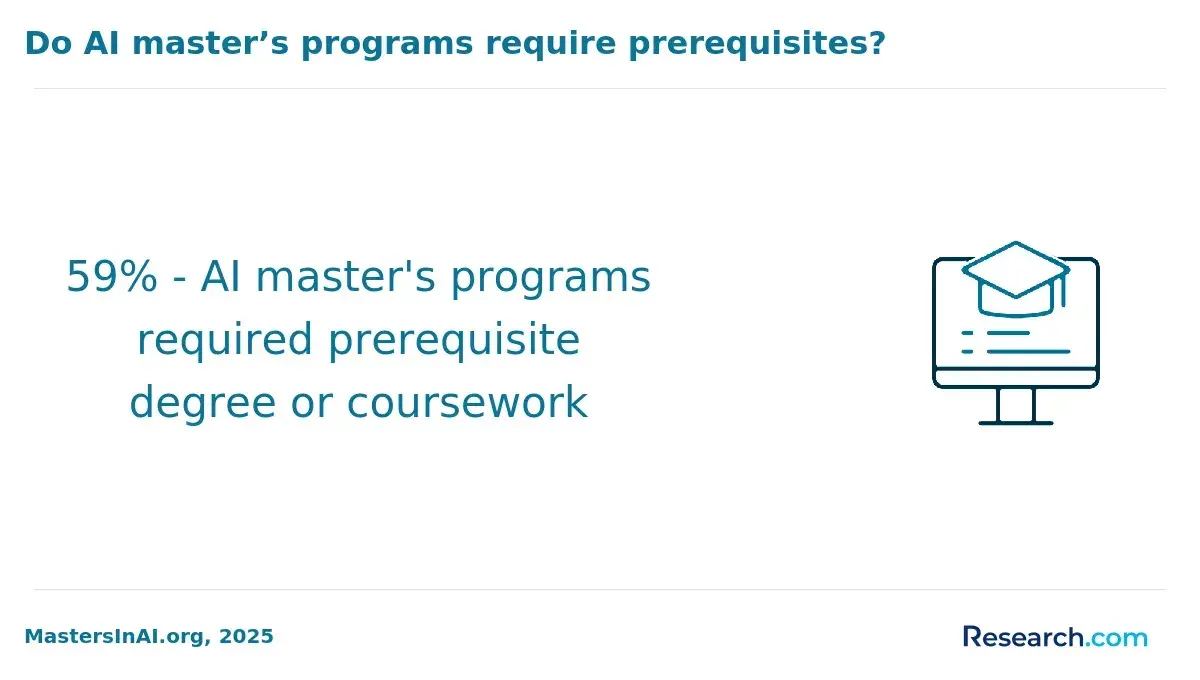
Admission to AI performance monitoring courses generally requires a solid foundation in computer science, mathematics, and programming. Applicants are often expected to have completed undergraduate coursework or have practical experience with algorithms, linear algebra, calculus, probability, and statistics. Many programs prefer candidates holding a bachelor's degree in computer science, engineering, data science, or related STEM fields. Advanced courses may demand prior knowledge of machine learning, neural networks, or software development.
Proficiency in programming languages like Python, R, or MATLAB is commonly required, as hands-on coding plays a key role in performance monitoring. Some courses ask for a programming portfolio or prerequisites completed through coding assignments. Professional certificates aimed at working professionals might waive formal degrees but expect demonstrable skills with AI frameworks.
Prerequisites vary by course type and level. Entry-level courses focus on basics and require little prior experience. University courses, such as ETH Zurich's highly rated "Self-Driving Cars with Duckietown," require deeper expertise in computer vision and robotics, appealing to advanced learners. Applicants often must validate their skills through transcripts, recommendation letters, or technical assessments.
Students should review detailed syllabi to understand specific requirements and prepare to demonstrate a clear understanding of AI system workflows and monitoring metrics to succeed.
How long do AI performance monitoring programs take, and what do they cost?
AI performance monitoring programs generally last between 4 and 12 weeks, varying by depth and format. Short bootcamp-style courses focus on practical skills such as model validation, drift detection, and deployment monitoring, typically lasting 4 to 6 weeks. More extensive university or online programs, including hands-on tools and case studies, extend from 10 to 12 weeks. For example, MIT's advanced AI course spans about 12 weeks, reflecting a demand for rigorous academic training.
Costs differ significantly based on program type and provider. Bootcamps and certificate courses usually range from $1,200 to $3,000, catering to professionals seeking rapid upskilling. In contrast, comprehensive university-level courses or those from institutions like MIT can cost between $3,500 and $6,000 or more, reflecting deeper content and credential value.
Key factors influencing duration and price include program delivery (online vs. in-person), credential type (certificate vs. credit-bearing), and whether project work or mentorship is offered. Prospective students should align their choice with career goals and prior experience:
- Shorter, affordable programs suit those seeking immediate, practical skills.
- Longer, more rigorous paths benefit research-focused or academic careers.
Additional considerations such as schedule flexibility and financial aid availability impact affordability and time investment. A clear grasp of these elements supports informed decisions tailored to professional growth in AI performance monitoring.
What jobs, career paths, and salary ranges are available in AI performance monitoring?
Careers in AI performance monitoring focus on optimizing and evaluating AI systems to ensure fairness, reliability, and efficiency. Common roles include AI Performance Engineer, MLOps Specialist, AI Quality Assurance Analyst, and Model Validation Expert. These professionals collaborate closely with data scientists and software engineers to monitor model behavior, detect performance issues, and implement fixes.
Salary ranges vary with experience, starting around $85,000 for entry-level positions and reaching between $120,000 and $170,000 for specialists. Senior managers and MLOps architects in sectors like finance or healthcare can earn over $200,000 annually.
Key skills include managing the machine learning lifecycle, data engineering, interpretability techniques, and rigorous testing. Expertise in deep learning and advanced NLP models is valuable, as highlighted by the CS224N: Natural Language Processing with Deep Learning course rated 4.8/5 on LearnDataSci. This underscores the need for professionals capable of fine-tuning complex algorithms and monitoring performance continuously.
- Implementing continuous integration and deployment (CI/CD) pipelines to catch real-time anomalies.
- Developing fairness audits and bias mitigation frameworks to ensure ethical AI.
- Translating business KPIs into actionable AI performance metrics.
- Ensuring compliance with AI governance standards and documentation.
Ongoing learning is crucial to stay current with evolving AI architectures and deployment tools like TensorFlow Extended and MLflow. Strong communication skills also help translate technical findings to stakeholders and support model refinement processes.
Are there industry certifications or standards that validate skills in AI performance monitoring?
Industry certifications and standards validate key skills in AI performance monitoring. Professionals can pursue credentials like the Certified AI Practitioner (CAIP) and vendor-specific certifications from major platforms such as Microsoft Azure AI and Google Cloud AI. These focus on practical expertise in evaluating metrics, detecting model drift, and optimizing model performance.
Standards groups, including IEEE, are developing frameworks to improve AI system reliability, safety, and fairness. For example, the IEEE P7003 standard targets algorithmic bias, encouraging transparency and accountability in performance monitoring. Meeting these standards complements certifications by demonstrating adherence to best practices.
Core competencies in AI monitoring cover data quality assessment, full model lifecycle tracking, and real-time monitoring dashboards. Employers increasingly value certifications as proof of managing AI risk and ensuring effectiveness in production environments.
Top-rated training programs combine practical skill development with certification preparation and exposure to emerging standards. According to LearnDataSci's 2025 ranking, highly rated AI courses (4.9/5) equip learners with advanced skills in performance evaluation, anomaly detection, and retraining workflows.
Prospective students should seek programs integrating exam readiness with up-to-date standard compliance, establishing a strong foundation for careers in AI performance monitoring validated by recognized credentials and evolving regulatory guidance.
Other Things You Should Know About Artificial Intelligence
In 2027, top AI courses for AI performance monitoring include "AI Monitoring and Diagnostics" from Stanford Online, "AI Operations Management" from Coursera, and Udacity's "AI Performance Optimization Nanodegree." These courses cover critical skills in monitoring AI algorithms, enhancing system performance, and understanding key performance indicators.
Explainability refers to the ability to understand how an AI model makes decisions. It is vital for performance monitoring because it helps detect errors, biases, and unexpected behaviors in the model. Monitoring explainability ensures that AI systems operate transparently and build trust with users and stakeholders.
Yes, many AI systems incorporate mechanisms such as continuous learning or online learning to improve their performance as new data becomes available. However, these updates require careful monitoring to avoid model drift or degradation, ensuring the AI remains accurate and aligned with its intended purpose.
Data governance establishes policies and standards for data management, which is fundamental for AI education and training. Proper governance ensures data privacy, security, and quality, which are essential for building effective AI models. These principles are often integrated into AI courses focused on responsible and compliant model development.
References
- What to Test in AI-Based Systems Micro-Credential https://atsqa.org/micro-credentials/what-to-test-in-ai-based-systems
- AI Course - EvalCommunity Academy https://academy.evalcommunity.com/ai-course/
- How to measure AI performance and ensure your AI investment pays off https://toloka.ai/blog/how-to-measure-ai-performance-and-ensure-your-ai-investment-pays-off/
- AI Careers - Top AI Jobs with Education Requirements and Pay https://aidegreeprograms.org/ai-careers/
- AI Career Path Guide 2026 â All Roles Explained | Shifttotech https://shifttotech.co.in/learn/ai-career-path-guide
- How AI helps school admins optimize performance monitoring https://schoolai.com/blog/how-ai-helps-school-admins-optimize-performance-monitoring
- What certifications are best for AI and ML careers? https://forums.h2kinfosys.com/community/main-category-artificial-intelligence/what-certifications-are-best-for-ai-and-ml-careers/
- AI-Driven Data Science Jobs: Career Paths and Salary Insights https://www.ironhack.com/gb/blog/ai-driven-data-science-jobs-career-paths-and-salary-insights
- 16 Artificial Intelligence Career Paths https://www.calmu.edu/news/artificial-intelligence-career-paths
- 11 AI certifications to grow your career https://www.cio.com/article/4175403/11-ai-certifications-to-grow-your-career.html