2027 Best AI Adoption Courses for Anti-Money Laundering Teams

Co-Founder and Chief Data Scientist
Anti-money laundering (AML) teams face growing challenges as financial crimes evolve rapidly. Manual detection methods struggle to keep pace with increasingly sophisticated schemes, leading to costly compliance risks and regulatory penalties. Teams often lack the technical expertise needed to implement advanced solutions effectively. This gap impedes the timely identification of suspicious activities, putting organizations at risk.
The article provides a detailed review of top courses focused on AI adoption for AML professionals. It aims to guide readers toward flexible, accredited programs that enhance technical skills and improve AML outcomes through practical artificial intelligence applications.
Key Things You Should Know
- AI adoption courses for anti-money laundering teams focus on practical machine learning applications, enhancing detection accuracy by up to 40% compared to traditional methods, according to 2025 compliance reports.
- These courses increasingly include regulatory compliance training, integrating evolving 2024 AML laws with AI ethics, ensuring legal and responsible AI implementation in financial institutions.
- Most programs offer modular online formats, attracting 70% of working professionals seeking upskilling, reflecting rising industry demand and a projected 15% annual growth in AI-driven AML roles through 2026.
Advance Your Career with AI Online Courses
Artificial Intelligence: Implications for Business Strategy
This program provides an introduction to Artificial Intelligence and their implications for business strategy. Earn an official digital certificate.

Oxford Artificial Intelligence Programme
Explore this Oxford Artificial Intelligence programme offered in a flexible learning environment and explore topics like machine learning, automation, and robotics.

Implementing Agentic AI: Building Your Organizational Playbook
This online MIT Agentic AI course offers a practical approach to deploying AI agents in your organization, including a custom playbook. 3 weeks, exclusive launch price.

AI Adoption: Driving Business Value and Impact
This online MIT AI Adoption: Driving Business Value and Impact offers practical frameworks to close the gap between AI potential and business reality.

Artificial Intelligence in Pharma and Biotech
Discover the applications and limitations of artificial intelligence in pharma and biotech with this MIT online short course.

What are the best AI adoption courses for anti-money laundering teams and who are they for?
Top AI adoption courses for anti-money laundering (AML) teams emphasize practical skills in machine learning, data analytics, and risk assessment tailored to financial crime detection. Leading programs include specialized offerings from ACAMS that blend AML expertise with AI applications. Additionally, well-established platforms like Coursera and Udacity offer AML case studies integrated into broader AI training, making them ideal top AI training programs tailored for AML compliance professionals.
These courses benefit compliance officers, data analysts, and AML investigators aiming to incorporate AI tools effectively into their workflows. Key features include hands-on training with real-world AML datasets, guidance on interpreting AI models, and navigating regulatory compliance considerations. For example, ACAMS's AI in AML certification framework covers deploying both supervised and unsupervised learning algorithms to flag suspicious transactions.
A 2025 SAS-ACAMS global survey of 850 AML professionals reveals only 18% have AI/ML solutions in production while 40% report having no plans to adopt these technologies, underscoring the urgent need for targeted education. Practical benefits from these courses include higher anomaly detection rates, fewer false positives, and accelerated investigation workflows.
Prospective learners are advised to choose programs offering foundational AI concepts alongside AML-specific scenarios, with modules addressing ethical AI use and evolving regulatory standards relevant to U.S. financial institutions. For foundational knowledge, consider an online computer science degree that supports advanced AI learning and AML integration.
Advance Your Career with AI Online Courses
Artificial Intelligence: Implications for Business Strategy
This program provides an introduction to Artificial Intelligence and their implications for business strategy. Earn an official digital certificate.
Oxford Artificial Intelligence Programme
Explore this Oxford Artificial Intelligence programme offered in a flexible learning environment and explore topics like machine learning, automation, and robotics.
Implementing Agentic AI: Building Your Organizational Playbook
This online MIT Agentic AI course offers a practical approach to deploying AI agents in your organization, including a custom playbook. 3 weeks, exclusive launch price.
How can AI adoption training strengthen AML compliance programs and reduce financial crime risk?
AI adoption training for AML compliance teams is essential to enhance anti-money laundering programs with artificial intelligence. It equips compliance professionals with the skills to interpret AI outputs accurately, reducing false positives and prioritizing true suspicious activities. This enhances transaction monitoring, customer due diligence, and risk scoring, enabling faster detection and response to financial crime. Trained experts can continuously refine AI algorithms based on emerging patterns, improving effectiveness over time.
Such training also ensures AML programs meet regulatory expectations by addressing governance issues like model bias, explainability, and auditability. Without proper understanding, teams may misinterpret AI recommendations or underutilize these tools, risking non-compliance and missed illicit activities.
According to the 2025 SAS-ACAMS study, 18% of firms are piloting AI/ML solutions for AML, while 25% plan to implement within 12-18 months, showing a significant shift toward AI integration. Training bridges technology and operations with practical skills like tuning anomaly detection thresholds and explaining model decisions during audits. AML teams with AI adoption training can:
- Enhance detection accuracy and reduce investigation workloads.
- Adapt AI models to evolving money laundering tactics.
- Maintain compliance through transparent AI use and thorough documentation.
- Collaborate with data scientists to optimize AI deployment within compliance frameworks.
For those interested in furthering their expertise in related fields, pursuing a cheapest online computer engineering degree can provide a strong technical foundation.
What should an AI for AML adoption course curriculum cover in terms of tools, models, and use cases?
An AI for AML adoption course curriculum should equip financial crime prevention teams with practical tools, advanced models, and relevant use cases. Students typically begin by mastering data preprocessing techniques to clean and normalize transaction records, customer profiles, and behavioral data. Familiarity with Python and integrated AML solutions supports hands-on learning and contextualizes training. Key AI tools for anti-money laundering detection include supervised learning algorithms like random forests and gradient boosting machines, as well as unsupervised models such as clustering and autoencoders that reveal hidden transaction patterns.
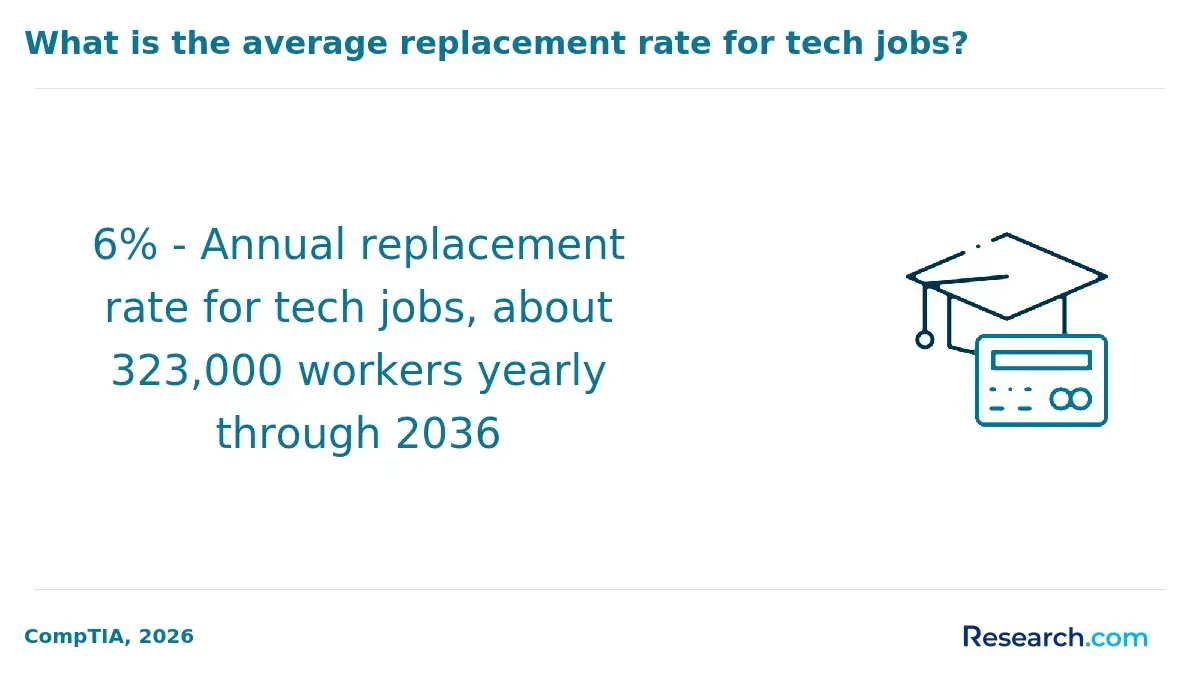
Instruction often covers natural language processing (NLP) techniques to analyze unstructured data like transaction narratives and customer communications, alongside reinforcement learning methods for adaptive risk scoring. Practical exercises focus on building transaction monitoring models to increase detection accuracy while minimizing false positives-a critical challenge in AML workflows. Advanced AI-driven transaction monitoring can reduce false positives by 20-30%, improving true positive rates and cutting wasted investigation time.
AML use cases for artificial intelligence models span alert generation, risk prediction, complex network analysis for uncovering money laundering via shell companies, and behavioral profiling to flag suspicious activity. Real-world modules address AML system integration, compliance reporting, and regulatory issues to prepare students for operational environments. Challenges such as model explainability, bias mitigation, and continuous retraining to counter evolving criminal tactics are also critical components.
Prospective students interested in enhancing their AI skills for AML should consider the best online data science masters programs, which provide valuable foundations for careers in this growing field.
How do online AI adoption courses for AML compare with on-campus or hybrid training options?
Online AI adoption courses for anti-money laundering (AML) teams offer superior flexibility compared to traditional on-campus learning, allowing professionals to study without disrupting their busy schedules. This flexibility is especially valuable given the rapidly evolving nature of AML compliance. Unlike fixed-timetable classes, online courses support self-paced learning, which helps students tackle complex topics such as generative AI applications in financial crime investigations more effectively. This adaptability makes online options a strong competitor against on-campus and hybrid models.
Incorporating the keyword online AI adoption courses vs on-campus aml training, many online programs quickly update content to stay current with industry trends. For example, given that nearly half of AML professionals are exploring or piloting generative AI tools-as reported in the 2025 SAS-ACAMS survey-course curricula now include case studies reflecting these developments.
By contrast, on-campus classes often experience delays in updating materials due to administrative hurdles. Hybrid AI training options for anti-money laundering teams can somewhat blend flexibility and direct interaction, but fully online platforms often excel in delivering cutting-edge content and accessibility.
Some advanced online courses even offer virtual labs simulating real-world AML investigations enhanced by artificial intelligence, matching the practical experience of classroom labs without location constraints. Those seeking a career in AI within AML may also be interested in learning what does an AI trainer do, as this role intersects with emerging AI skills and compliance knowledge essential for AML professionals.
Which accreditation, industry standards, or regulatory expectations matter when choosing AI and AML courses?
Selecting AI and AML courses requires careful consideration of accreditation, industry standards, and regulatory expectations. Courses should align with frameworks such as the Financial Action Task Force (FATF) recommendations and U.S. regulatory bodies like FinCEN to ensure comprehensive coverage of legal, technical, and operational compliance aspects.
Key certifications to look for include specialized AML credentials integrating AI elements and recognized qualifications from organizations such as ACAMS or CAMS-Audit. These certifications reflect evolving AI applications in transaction monitoring, risk assessment, and customer due diligence. Course content needs to emphasize best practices including controlled model risk management and AI explainability standards.
Regulatory guidance stresses transparency and accountability. FATF notes that institutions leveraging AI in AML processes can realize up to 50% efficiency gains in due diligence and transaction monitoring compared to traditional methods. This highlights the practical benefits and challenges professionals face when implementing AI under compliance rules.
Essential topics covered in effective programs include:
- Integration of AI within existing AML compliance frameworks under regulatory oversight.
- Methods to comply with data privacy laws and safeguard sensitive customer data.
- Techniques for testing and validating AI models to reduce bias and false positives.
Students and practitioners should prioritize courses offering up-to-date instruction on federal AML laws, FATF principles, and AI applications tailored to U.S. regulatory nuances, ensuring readiness to deploy ai while maintaining compliance.
What are the typical admission requirements, timelines, and costs for AI adoption programs focused on AML?
Admission to AI adoption programs for anti-money laundering (AML) usually requires a bachelor's degree in finance, computer science, data science, or related fields. Some programs expect prior AML regulation knowledge or compliance experience. Advanced courses often ask candidates to demonstrate proficiency in programming languages like Python or R and a basic grasp of machine learning. Applicants may need to submit professional references or complete a skills assessment to confirm readiness for technical content.
Program formats vary widely:
- Intensive boot camps lasting 4 to 12 weeks.
- Comprehensive part-time courses spanning 6 to 12 months.
- Flexible online and hybrid options suited for working professionals.
Shorter courses focus on hands-on AI tools and AML applications, while longer ones cover data science methods, regulatory frameworks, and detailed case studies. Costs range from $2,000 to $10,000 depending on course depth, credential type, and institution reputation. For instance, certificates from well-known universities may exceed $7,500, while vendor workshops tend to be cheaper. Many financial institutions subsidize training due to the urgent demand for skilled AI talent in AML teams.
Moody's "AML in 2025" insight reveals that over 60% of financial institutions identify lack of in-house AI and data science skills as the major barrier to adopting AI-powered AML solutions. This highlights the need for programs combining technical and regulatory knowledge to bridge this critical gap.
What career paths, job roles, and advancement opportunities can AI-literate AML professionals pursue?
AI-literate anti-money laundering (AML) professionals are increasingly essential in advancing compliance and financial crime prevention. Roles like AI AML analyst, AI compliance officer, and AML data scientist require strong machine learning, predictive analytics, and automation skills focused on detecting and investigating illicit activities.
Career growth can lead to positions such as AI AML strategy consultant and AML technology project manager, where one drives the seamless integration of AI within enterprise compliance frameworks. These experts often lead teams to enhance transaction monitoring, cut false positives, and streamline case workflows, improving overall operational efficiency.
Research highlighted by Moody's shows large banks leveraging AI-based AML systems reduce compliance operating costs by 20-30%, thanks to automation in alert triage, case management, and regulatory reporting. This shift creates demand for professionals skilled in AI model validation, tuning, and regulatory compliance with automated decision-making frameworks.
Expertise in governance, risk, and compliance (GRC) is also vital, ensuring AI models adhere to ethical standards, data privacy, and anti-bias requirements. Experienced AML professionals may advance into senior leadership roles like chief risk officer or head of AI governance within financial crime technology.
What salaries and compensation trends can AML analysts with AI skills realistically expect?
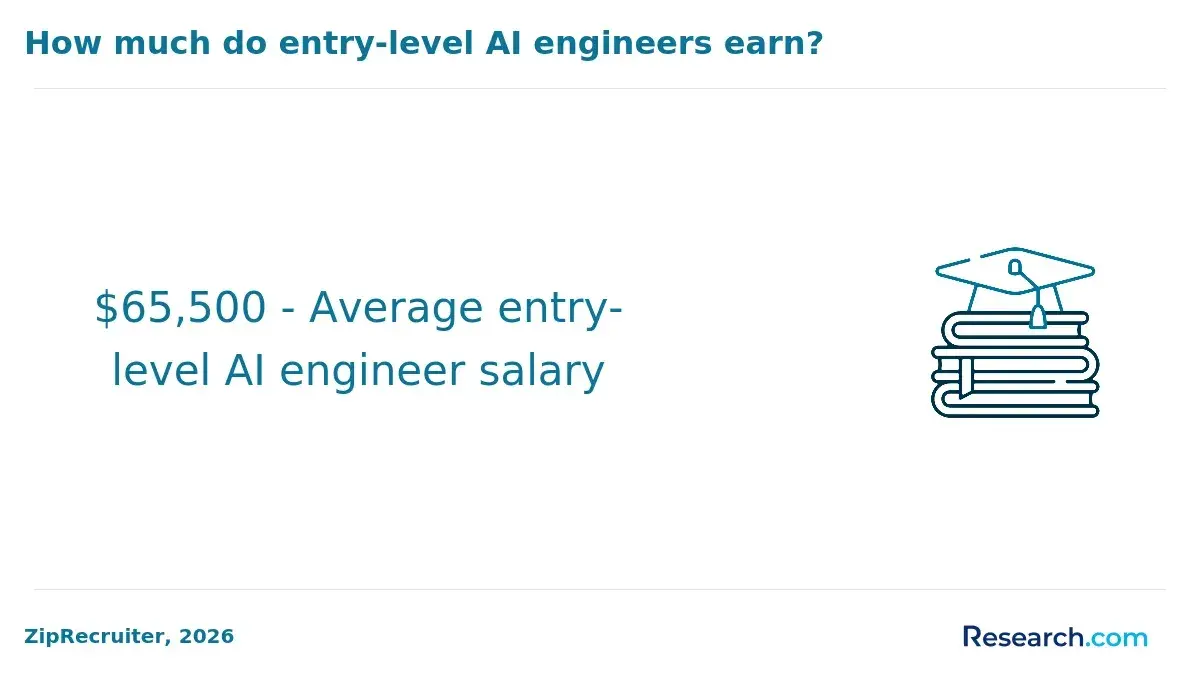
AML analysts with AI expertise earn substantially higher salaries than their peers lacking these skills. In the U.S., annual wages for professionals skilled in anti-money laundering combined with AI typically range from $80,000 to $130,000, depending on experience, location, and employer size. Entry-level positions start near $75,000, while senior analysts or specialists utilizing AI-driven transaction monitoring often command salaries above $140,000, especially in major financial centers like New York or San Francisco.
Certification and training in AI tools boost compensation, often accompanied by bonuses or equity awards. Employers highly value proficiency in machine learning models and real-time detection technologies. Studies from Moody's show AI-enabled transaction monitoring increases detection of complex laundering schemes by 30-50% compared to traditional systems while reducing false alerts, justifying premium pay.
Career advancement and salary growth are more frequent for AI-skilled AML professionals, as institutions adopt AI to satisfy regulatory demands and minimize manual costs. Contract analysts focused on AI-driven AML strategies negotiate hourly rates 20-40% above industry averages. Developing programming and AI model oversight skills accelerates career growth in banking, fintech, and compliance consulting.
Are there recognized certifications in AI for AML, and how do they support professional credibility?
Recognized certifications in artificial intelligence tailored for anti-money laundering (AML) professionals significantly bolster credibility and career opportunities. Credentials such as the Certified Artificial Intelligence Practitioner (CAIP) and specialized industry courses blend essential AI skills with deep AML regulatory knowledge. These certifications validate expertise in deploying AI technologies within compliance frameworks, highlighting mastery in risk assessment, data analytics, and automation strategies focused on AML challenges.
Employers value these certifications as measurable proof of proficiency in emerging AI tools that enhance AML processes. Certified professionals can effectively implement AI-driven improvements in KYC procedures, transaction monitoring, and suspicious activity reporting. For instance, Moody's 2024 AML technology outlook reports that AI-enhanced KYC and customer risk scoring reduce manual reviews by 30-50% through automated document analysis and adverse media screening.
Key practical skills covered by AI-AML certification programs include:
- Developing machine learning algorithms for customer risk profiling.
- Integrating AI into existing AML compliance systems.
- Interpreting AI outputs within regulatory frameworks.
- Ensuring ethical AI use and mitigating bias in financial crime detection.
These credentials help professionals navigate fast-evolving technology, meet regulatory demands, and justify AI-based decisions to auditors and compliance officers. They offer verified expertise that supports career advancement in an increasingly AI-driven AML environment.
How can AML teams evaluate and select a reputable AI adoption course or training provider?
AML teams selecting AI adoption courses should prioritize providers with demonstrated expertise in both anti-money laundering and practical AI applications. A focus on reducing false positives and negatives is critical; according to the 2025 SAS-ACAMS survey, 38% of AML professionals see this as where AI/ML offers the most value. Training should address model quality and governance frameworks to help mitigate risks effectively.
Look for courses that provide up-to-date case studies or hands-on labs with real-world AML datasets and AI tools. Collaboration with recognized AML organizations or technology vendors often ensures content relevance. Instructor qualifications matter-ideally, those with a blend of compliance and data science experience offer the best guidance.
Flexibility in delivery modes-such as online self-paced, live virtual sessions, or hybrid formats-can better accommodate diverse team schedules and learning preferences. Certification or accreditation from credible industry bodies adds legitimacy and career value.
Effective programs include transparent evaluation metrics measuring proficiency in AI model deployment for AML. Topics covering governance, ethics, and organizational culture prepare teams to implement AI responsibly. Also consider providers offering post-course support or community access for ongoing development.
Compare pricing with the depth of content and support provided to ensure a strong return on investment. Avoid programs focusing narrowly on theory without practical application or insufficient emphasis on governance protocols essential for risk reduction and operational improvement.
Other Things You Should Know About Artificial Intelligence
AML teams encounter challenges when adopting AI, such as integrating AI with legacy systems, handling data privacy concerns, and ensuring regulatory compliance. Additionally, securing organizational buy-in and managing data quality are crucial for successful AI implementation.
Artificial intelligence enhances transaction monitoring by analyzing large volumes of data in real time to detect unusual patterns and anomalies that may indicate money laundering. Machine learning algorithms can adapt to evolving schemes, reducing false positives and helping analysts focus on genuinely suspicious activities. This leads to more efficient investigations and faster regulatory reporting.
Machine learning, natural language processing, and network analytics are among the most effective AI technologies for AML compliance. Machine learning models detect patterns and anomalies, while natural language processing helps analyze unstructured data like customer communications. Network analytics uncovers hidden relationships between individuals and entities involved in suspicious activities.
AI cannot fully replace manual review but serves as a powerful tool to augment human expertise. While AI systems efficiently filter and prioritize alerts, human analysts provide the necessary judgment to interpret complex cases and comply with regulatory requirements. Combining AI with expert input achieves the best results in AML investigations.
References
- How to implement compliance-first AI for AML | Napier AI https://www.napier.ai/post/how-to-implement-compliance-first-ai-for-aml
- 10 TOP AML (Anti-Money Laundering) Software For Banks in 2026 | TTMS https://ttms.com/best-aml-software/
- Hybrid Data can Enhance the Utility of Synthetic Data for Training Anti-Money Laundering Models https://arxiv.org/html/2509.18499v1
- Elevate Your AML Career: Discover AML Technology Certifications https://financialcrimeacademy.org/aml-technology-certifications/
- The AI compensation and talent trends shaping the job market in 2026 https://ravio.com/blog/ai-compensation-and-talent-trends
- AML Career Paths in 2026: Roles, Responsibilities and Progression https://amlcertification.com/blog/aml-roles-explained/
- Responsible AI Adoption in AML Compliance https://amluae.com/responsible-ai-adoption-in-aml-compliance/
- Anti-Money Laundering Certificate: Is it worth it, and how long does it last? | azakaw https://www.azakaw.com/blog/anti-money-laundering-certificate
- Becoming an AML Officer: Essential 2025 Guide and Career Roadmap | sanctions.io https://www.sanctions.io/blog/the-complete-guide-to-becoming-an-anti-money-laundering-officer-essential-strategies-and-career-roadmap
- AI for Fraud Detection & Anti‑Money Laundering Training Course https://www.nobleprog.ie/cc/aifdaml