2027 Best AI Agent Courses for Innovation Leaders

Co-Founder and Chief Data Scientist
Innovation leaders often face the challenge of rapidly integrating artificial intelligence solutions without formal training in the field. This gap hinders strategic decision-making and slows the adoption of AI-driven tools essential for competitive advantage. Finding accessible, accredited courses tailored to professionals transitioning from unrelated backgrounds is critical to overcoming such barriers. These educational pathways must balance technical depth with flexibility to fit busy schedules and evolving industry demands. This article explores top AI agent courses that empower leaders to harness AI technologies effectively, ensuring they can lead innovation initiatives confidently and stay ahead in fast-changing markets.
Key Things You Should Know
- In 2026, top AI agent courses emphasize practical skills in machine learning, natural language processing, and autonomous systems, addressing a 40% industry demand increase from 2024 to 2025.
- Leading programs integrate ethics and innovation leadership, preparing professionals to responsibly advance AI technologies in business and society.
- Online and hybrid formats dominate, offering flexible access with 55% enrollment growth among working professionals seeking AI expertise last year.
Advance Your Career with AI Online Courses
Artificial Intelligence: Implications for Business Strategy
This program provides an introduction to Artificial Intelligence and their implications for business strategy. Earn an official digital certificate.

Oxford Artificial Intelligence Programme
Explore this Oxford Artificial Intelligence programme offered in a flexible learning environment and explore topics like machine learning, automation, and robotics.

Implementing Agentic AI: Building Your Organizational Playbook
This online MIT Agentic AI course offers a practical approach to deploying AI agents in your organization, including a custom playbook. 3 weeks, exclusive launch price.

AI Adoption: Driving Business Value and Impact
This online MIT AI Adoption: Driving Business Value and Impact offers practical frameworks to close the gap between AI potential and business reality.

Artificial Intelligence in Pharma and Biotech
Discover the applications and limitations of artificial intelligence in pharma and biotech with this MIT online short course.

What is an AI agent course and why does it matter for innovation leaders?
An AI agent course trains individuals to design, develop, and use autonomous systems capable of performing tasks, making decisions, and adapting within various environments. These training programs integrate core aspects such as machine learning, agent architectures, natural language processing, and real-time decision-making algorithms. For innovation leaders, mastering these skills is essential to harnessing AI's potential and driving competitive advantage in fast-changing markets. AI agent training programs for innovation leaders offer practical knowledge to navigate these complex technologies effectively.
AI agents power many real-world applications beyond theory, including chatbots, recommendation engines, robotic process automation, and complex simulations. These tools can transform product development and service delivery, enabling leaders to optimize workflows, cut costs, and enhance customer experiences. Innovation leaders also face challenges in identifying the best AI applications for their business and managing AI-driven projects ethically. The importance of artificial intelligence agent courses in business innovation lies in providing frameworks for strategic deployment, evaluation, and continuous improvement.
Executives skilled in integrating AI can better align initiatives with overall business goals. Accenture reports organizations incorporating agentic AI systems may increase profitability by up to 38% by 2035, underscoring AI literacy's economic impact. Such courses differentiate reactive agents, responding to stimuli, from proactive agents, which anticipate and plan ahead, guiding leaders to select appropriate solutions for specific innovation needs. Often, hands-on projects with real data enhance practical understanding.
For U.S. students and professionals aiming to lead AI innovation, these programs provide a direct path to impact by blending technical insight with strategic leadership. Those exploring educational options can consult rankings of the best universities for data science undergraduate programs, which often include relevant AI agent coursework.
Advance Your Career with AI Online Courses
Artificial Intelligence: Implications for Business Strategy
This program provides an introduction to Artificial Intelligence and their implications for business strategy. Earn an official digital certificate.
Oxford Artificial Intelligence Programme
Explore this Oxford Artificial Intelligence programme offered in a flexible learning environment and explore topics like machine learning, automation, and robotics.
Implementing Agentic AI: Building Your Organizational Playbook
This online MIT Agentic AI course offers a practical approach to deploying AI agents in your organization, including a custom playbook. 3 weeks, exclusive launch price.
What skills and outcomes should innovation leaders expect from top AI agent courses?
Top AI agent course skills for innovation leaders include designing autonomous agent architectures, integrating natural language processing (NLP), and applying machine learning techniques to dynamic business settings. Graduates gain expertise in strategic decision-making frameworks enhanced by AI agents, enabling optimized operations and personalized services through intelligent automation.
Expected outcomes from top AI agent training programs emphasize system interoperability, ethical AI deployment, and robust data governance. Participants learn to evaluate risks, ensure compliance with regulations, and manage human-agent collaboration effectively to maintain productivity and foster trust.
Innovation leaders also acquire the ability to perform real-time performance evaluation and agent optimization, leveraging simulations to predict market trends or supply chain behaviors. This capability provides a competitive edge by enabling iterative improvements in AI agent functionality.
Given Gartner's projection that by 2027, 40% of large enterprises will use AI-augmented decision-making, including agent-based systems, in key operations, proficiency in these technologies is critical. Practical applications often include customer engagement automation, predictive maintenance, and personalized marketing that deliver measurable business value.
For those seeking further education, exploring the cheapest online master's mechanical engineering programs can provide affordable pathways to related technical expertise supporting AI innovations.
How do you choose the best AI agent course for your role and industry?
Choosing the best AI agent courses for innovation leaders in the US requires aligning course content carefully with practical industry demands. Focus on programs that emphasize skills directly relevant to your role, whether in healthcare, finance, marketing, or manufacturing, as this ensures the training applies to your daily challenges. For example, innovation leaders in healthcare might prioritize courses covering clinical decision support or patient data management tailored for AI agents.
Evaluate courses with advanced topics such as multi-agent coordination, prompt engineering, and ethical AI deployment to gain expertise in designing and managing AI systems. According to PwC, leaders skilled in these areas can see salary increases of up to 56%. Hands-on projects or simulations relevant to your sector are essential for bridging theory with real-world application.
- Does the course provide industry-specific case studies and examples?
- Are there opportunities to work with real-world datasets related to your role?
- Does it cover the latest AI agent frameworks and orchestration tools?
- Is the course certified by reputable organizations or offers recognized credentials?
When choosing the right AI agent course for your industry role, consider the instructor's expertise and the provider's reputation. Courses taught by established AI researchers or industry veterans generally offer superior insights and updated content. Also, match course format and duration to your schedule-intensive bootcamps for quick upskilling or modular online options for ongoing learning.
Networking opportunities within courses can foster connections with peers and AI leaders, enhancing career growth. For those seeking advanced options, exploring an online PhD in AI can provide deep specialization and research opportunities aligned with career ambitions.
What types of AI agent programs exist (short courses, certificates, degrees, bootcamps)?
AI agent programs come in various formats tailored to educational and professional goals. Short courses and bootcamps in AI agent development are popular for working professionals seeking quick skill upgrades. Short courses focus on specific skills like conversational agents or workflow automation, typically lasting days to weeks. Bootcamps provide intensive, project-based learning with mentorship over weeks or months, emphasizing coding, agent architecture, and deployment tools for rapid job readiness.
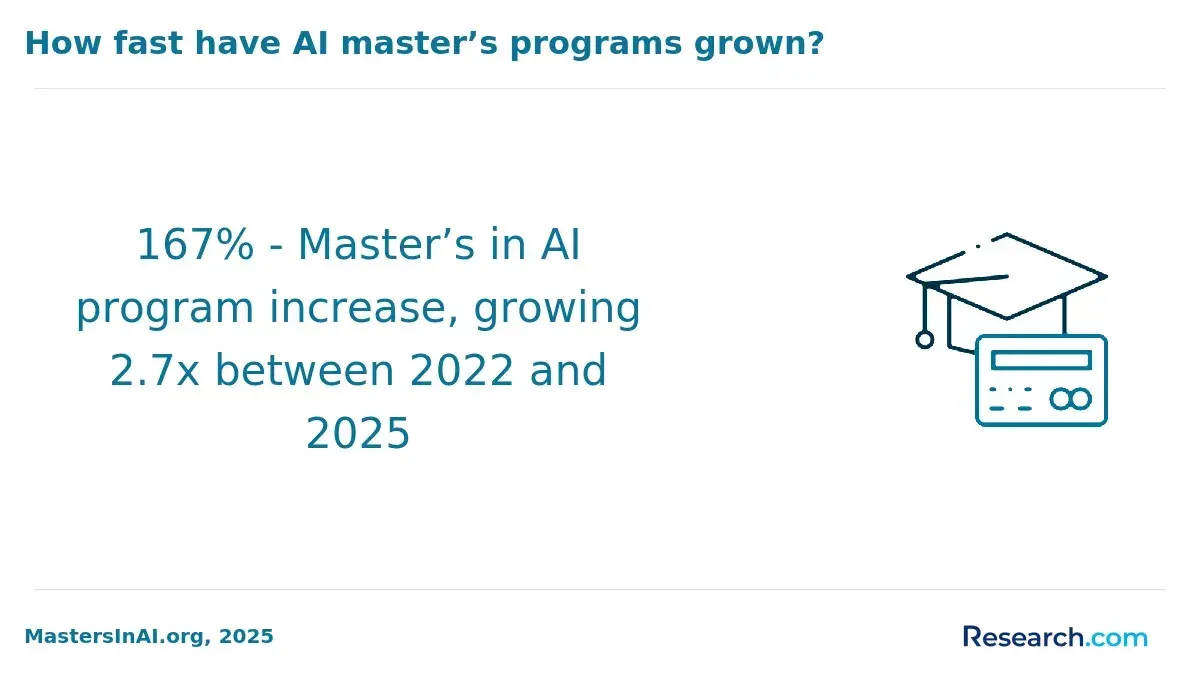
Certificate programs extend over months, delivering structured curricula on AI agent concepts, applications, and ethics. Earning certificates from recognized institutions helps validate expertise and bridge educational gaps. For those seeking deeper theoretical and practical training, degree programs such as bachelor's or master's degrees in AI or related fields offer more comprehensive preparation. These degrees ready graduates for advanced roles in AI research and leadership. A useful resource for exploring advanced education options is data analytics masters programs.
IDC projects that by 2026, 75% of enterprise applications will embed AI or agentic automation, driving up to 30% higher operational efficiency. This surge raises demand for skills that these educational formats target, although depth and specialization vary significantly. AI agent certification programs for innovation professionals are particularly valuable for demonstrating applied knowledge in emerging technologies.
Choosing the right program depends on your background, timeline, and career goals. Bootcamps suit those seeking immediate practical skills, while degrees prepare for leadership roles in AI innovation. Certificates and short courses fit professionals targeting specific AI agent technologies or roles.
How do online AI agent courses compare with campus and hybrid options for busy leaders?
Online AI agent courses provide busy leaders with unparalleled flexibility compared to campus and hybrid options. These programs let participants engage asynchronously or during off-hours, accommodating demanding schedules. For instance, senior executives can complete coursework while traveling or between meetings, unlike campus courses that require fixed attendance. Hybrid formats often combine in-person and online elements but still may limit true flexibility due to on-site commitments.
Content updates occur faster in online courses, reflecting swift AI advancements without semester delays. Leaders gain immediate access to the latest tools, such as intelligent automation frameworks and agent deployment strategies. While campus programs excel in networking opportunities, they can lag in keeping curricula current because of institutional constraints.
Hybrid and campus programs offer direct mentorship, peer collaboration, and hands-on labs, fostering problem-solving skills that benefit leaders focusing on team integration and organizational change management. Although online platforms are increasingly interactive, they may fall short on intensive group dynamics found in physical settings.
McKinsey estimates firms behind in AI adoption risk losing 20-25% of cash flow over a decade to more mature competitors, underlining the need for accessible leadership education.
Key decision factors for leaders include:
- Time constraints and availability favor modular online learning.
- Networking and mentorship opportunities point to campus or hybrid choices.
- Demand for rapid content updates and flexible pacing supports online formats.
- Budget advantages often make online courses more affordable.
What do AI agent course curricula typically cover, from foundations to autonomous workflows?
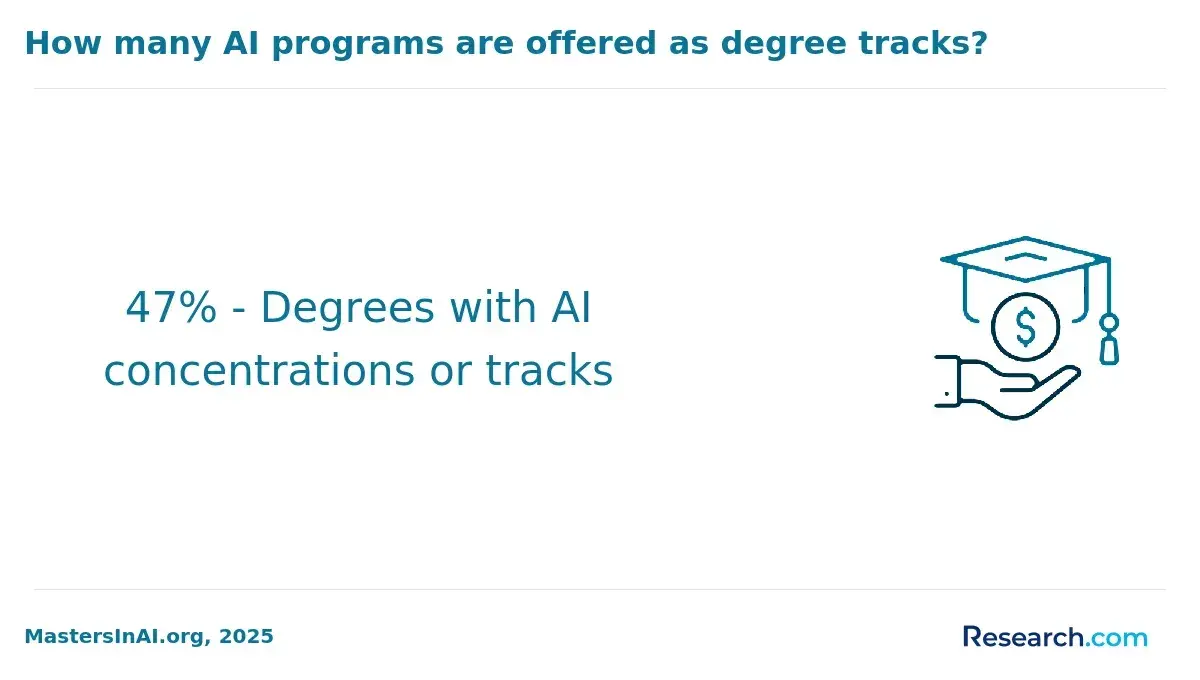
AI agent courses guide learners through key concepts like machine learning algorithms, natural language processing, and neural networks, which are fundamental to how these agents perceive, learn, and decide. They focus heavily on data management, model training, and evaluation methods that ensure reliable AI agent performance.
Practical training covers frameworks for developing autonomous agents capable of adapting to real-world challenges. Topics include reinforcement learning, multi-agent systems, and human-AI interaction, with case studies drawn from finance, healthcare, and supply chain sectors.
Advanced modules explore integrating AI agents into complex workflows, automating decisions, scaling collaborations, and maintaining ethical compliance. Students gain insights into AI governance, explainability, and robustness to promote responsible implementation.
- Hands-on projects and simulations build skills in creating and managing autonomous AI systems.
- Graduates become equipped to lead innovation by transforming AI agent capabilities into business value.
A survey by MIT Sloan found organizations led by executives who completed AI strategy programs saw a 5-10% revenue increase within 12-18 months, mainly through AI-driven products and automation.
Challenges addressed include aligning AI agents with strategic goals, safeguarding data privacy, and integrating AI outputs within existing IT infrastructure. Training balances theoretical foundations and practical deployments, tailored for both executive and technical roles.
Top Firm Initiatives That Would Encourage Daily GenAI Usage

What admission requirements, prior experience, or technical background do AI agent programs expect?
Admission to AI agent programs typically requires a solid technical foundation in computer science, software engineering, data science, or related STEM fields. These skills are essential for understanding machine learning algorithms and agentic reasoning.
Many programs expect proficiency in programming languages like Python or R and familiarity with machine learning frameworks such as TensorFlow or PyTorch. Experience in AI-related projects-including automation, natural language processing, or robotics-is often valued, especially for leadership-oriented tracks seeking candidates with 2-5 years managing AI initiatives or digital transformation.
Non-technical applicants can succeed by completing prerequisite courses covering calculus, linear algebra, and introductory coding. Some hybrid programs provide bridging modules to help those without formal technical backgrounds. Statements of purpose outlining career goals in AI innovation or transformation may also be requested.
Practical skills are critical; many admissions panels evaluate portfolios documenting hands-on experience with agent design or business deployments. Certifications in cloud computing, data analytics, or AI ethics can strengthen applications.
A 2024 analysis by Emeritus shows that short, intensive online AI programs cost 80-90% less than traditional one-year master's degrees while delivering immediately applicable skills. This affordability and focus make them an excellent option for professionals aiming to upskill quickly without lengthy prerequisites.
How long do AI agent courses take, and what tuition, fees, and funding options are available?
AI agent courses vary significantly in length, from intensive bootcamps lasting 4 to 8 weeks to master's or executive education programs extending 6 to 12 months. Part-time online courses may last between 3 and 9 months, depending on program depth and pacing. Programs combining theory, hands-on projects, and leadership training are ideal for professionals aiming to excel in innovation roles.
Tuition fees reflect course format and prestige:
- Short intensive programs: $1,000 to $5,000
- University certificates: $7,000 to $20,000
- Executive education for innovation leaders: often over $15,000
- Master's degree programs: $30,000 to $60,000
Funding options include employer sponsorship, scholarships, federal student aid for accredited courses, and flexible payment solutions like income-share agreements. Supporting this, a Deloitte survey found 82% of "AI leader" companies have at least one C-suite executive formally trained in advanced AI, underscoring the value of employer-backed tuition assistance.
Before enrolling, check course accreditation, refund policies, and career support services. Prioritizing programs with practical training in AI agent development strengthens skills for operational leadership and innovation management positions.
What career paths, leadership roles, and industries can AI agent training prepare you for?
Training in AI agent technologies prepares professionals for diverse careers such as AI product management, data strategy leadership, and intelligent automation consulting. Leadership roles include chief AI officer, innovation director, and head of AI-driven transformation, where expertise enables managing teams that deploy autonomous systems.
Key industries adopting AI agents rapidly are technology, finance, healthcare, marketing, and manufacturing. For instance, software engineers use AI skills to build agile code assistance tools, marketing managers employ AI agents for personalized customer engagement, and healthcare leaders apply AI to optimize diagnostic workflows and patient data analysis.
Research from McKinsey highlights that AI assistants and agents can automate or accelerate up to 70% of employee activities in marketing, sales, and software engineering. This underscores the strategic advantage professionals gain from AI agent expertise across knowledge-driven sectors.
AI agent training builds essential problem-solving abilities, enabling professionals to innovate workflows that minimize manual effort and speed decision-making. Graduates often lead AI integration projects, develop adaptive AI tools, and shape strategic AI adoption within organizations.
Additionally, practical skills in AI agents support workforce resilience by helping professionals reskill for roles centered on AI collaboration, fostering sustainable leadership amid digital transformation challenges.
What salaries, job outlook, and certifications are relevant for AI agent-focused innovation leaders?
Innovation leaders specializing in AI agents can expect competitive salaries and strong job growth. Median salaries for roles such as AI product managers, machine learning engineers, and AI strategy leads generally range from $120,000 to $180,000 annually, depending on experience and location. Senior and leadership roles may earn over $200,000. This demand reflects the expanding need for agentic AI expertise and offers robust career prospects.
The World Economic Forum's Future of Jobs 2025 report projects a 40% increase in demand for AI and machine-learning specialists, including those in agentic AI roles, by 2028. This rate places these positions among the fastest-growing high-skill occupations worldwide, signaling sustained advancement opportunities for innovation leaders.
Certifications enhance professional credibility and marketability. Key certifications include the Certified Artificial Intelligence Practitioner (CAIP), TensorFlow Developer Certificate, and Microsoft Certified: Azure AI Engineer Associate. These demonstrate proficiency in machine learning frameworks, neural networks, and AI deployment. Project management credentials such as PMP or Agile Scrum Master also support leadership capabilities in AI innovation projects.
Candidates should target certifications blending AI technical knowledge with strategic leadership skills to meet employer demands for guiding AI agent development aligned with business goals. Continuous upskilling in innovative AI methodologies is essential for long-term career resilience amid rapid technological evolution.
Other Things You Should Know About Artificial Intelligence
In 2027, leading AI agent courses for innovation leaders include Stanford’s AI Leadership Program, MIT's Applied AI in Innovation, and Coursera's AI Strategy for Innovators. These courses provide comprehensive training in leveraging AI for strategic decision-making and fostering innovation.
Ethical issues in artificial intelligence include bias, transparency, accountability, and privacy. Organizations must ensure AI systems are fair and do not perpetuate discrimination. Clear documentation and explainability of AI decisions are essential to build trust, while respecting user data privacy and compliance with regulations is mandatory.
Innovation leaders can stay current by engaging with ongoing education such as specialized courses, attending industry conferences, and participating in professional AI networks. Following reputable AI research publications and collaborating with AI experts also helps maintain an informed perspective on emerging trends and technologies.
Common challenges include data quality and availability, resistance from employees, and compatibility with legacy systems. Additionally, developing the necessary infrastructure and expertise requires significant investment. Successful integration often depends on clear strategy, change management, and continuous evaluation of AI's impact on workflows.
References
- Ultimate Guide: How to Choose the Right AI Training Course to Boost Your Career - ONLC https://www.onlc.com/blog/how-to-choose-ai-training-courses/
- AI Agent Development Cost in 2026 [+Team Calculator] https://softteco.com/blog/ai-agent-development-cost
- Best Agentic AI Course Bangalore Master AI Agents Fast 2026 https://cambridgeinfotech.io/agentic-ai-course-bangalore/
- How much does an AI agent cost? Your guide to 2026 https://www.bakedwith.com/en/blog/how-much-does-an-ai-agent-cost
- The AI Agents Roadmap Nobody Is Teaching You https://www.decodingai.com/p/ai-agents-foundations-course
- AI Agent Bootcamps & Certifications | Programs | MindStudio University https://university.mindstudio.ai/programs/ai-agent-bootcamps-and-certifications
- Best AI Agent Courses for C-Level Leaders (2026 Guide) https://aiagentsacademy.ai/blog/best-ai-agent-courses-c-level-leaders-2026
- Leaders will soon be managing AI agents - these are the skills they'll need, according to experts https://www.weforum.org/stories/2025/07/leaders-will-soon-be-managing-ai-agents-these-are-the-skills-theyll-need/
- AI Training & Certification: Complete Career Guide https://www.tsa-bildung.de/en/blog/ai-training-certification-complete-career-guide
- Become an AI Engineer in 3 Months | Turing College https://www.turingcollege.com/ai-engineering