2027 Best AI Courses for Vendor Management Teams With Certificates

Co-Founder and Chief Data Scientist
Vendor management teams face increasing pressure to leverage artificial intelligence for optimizing supplier relationships and improving decision-making efficiency. However, many professionals lack the specialized training to apply AI tools effectively within procurement and contract management contexts. This skill gap can lead to missed opportunities and competitive disadvantages.
Accessible, certificate-based courses designed specifically for vendor management can bridge this divide by equipping teams with the necessary knowledge and practical skills. This article reviews the best courses available, detailing their content, flexibility, and certification value to help professionals strategically integrate artificial intelligence into vendor management workflows.
Key Things You Should Know
- Vendor management teams benefit from AI courses emphasizing automation and predictive analytics, with 65% of certified professionals reporting improved contract negotiation outcomes in 2025 studies.
- Certified AI courses for vendor management increasingly focus on ethical data use and compliance, addressing rising regulatory demands in supply chain transparency through 2026.
- Completion of AI certification correlates with a 40% salary increase for vendor management professionals, reflecting high industry demand for AI proficiency and strategic decision-making skills.
Advance Your Career with AI Online Courses
Artificial Intelligence: Implications for Business Strategy
This program provides an introduction to Artificial Intelligence and their implications for business strategy. Earn an official digital certificate.

Oxford Artificial Intelligence Programme
Explore this Oxford Artificial Intelligence programme offered in a flexible learning environment and explore topics like machine learning, automation, and robotics.

Implementing Agentic AI: Building Your Organizational Playbook
This online MIT Agentic AI course offers a practical approach to deploying AI agents in your organization, including a custom playbook. 3 weeks, exclusive launch price.

AI Adoption: Driving Business Value and Impact
This online MIT AI Adoption: Driving Business Value and Impact offers practical frameworks to close the gap between AI potential and business reality.

Artificial Intelligence in Pharma and Biotech
Discover the applications and limitations of artificial intelligence in pharma and biotech with this MIT online short course.

What are AI courses for vendor management teams, and who are they best suited for?
AI courses for vendor management teams with certificates focus on equipping professionals to integrate AI tools into procurement and supplier management. These programs cover leveraging AI algorithms to analyze supplier data, automate sourcing, predict risks, and optimize contract negotiations. Key topics include machine learning applications, AI-driven analytics, robotic process automation, and ethical vendor management.
These best AI training programs for vendor management professionals suit supply chain managers, procurement specialists, vendor relationship coordinators, and contract managers aiming to improve efficiency and decision-making. For example, procurement officers shortening sourcing cycles or vendor analysts monitoring supplier performance benefit greatly.
Additionally, professionals handling compliance and risk mitigation gain from AI-driven predictive models taught in these courses.
A 2024 McKinsey Global Sourcing & Procurement report notes AI-enabled vendor tools can reduce sourcing cycle times by up to 40% and decrease external spend by 5-10%, showing the importance of acquiring AI skills to stay competitive and reduce costs.
Practical applications include automating repetitive invoice processing, improving supplier selection with data-driven scoring, and forecasting supply chain disruptions. Vendor teams lacking AI capabilities risk slower decisions and higher operational costs. Choosing AI courses that offer certificates validates expertise and supports career advancement.
Prospective students should look for programs combining technical AI knowledge with vendor management strategies. For those considering broader education, an accelerated bachelor's degree computer science online can provide a strong foundation to build AI skills applicable across industries.
Advance Your Career with AI Online Courses
Artificial Intelligence: Implications for Business Strategy
This program provides an introduction to Artificial Intelligence and their implications for business strategy. Earn an official digital certificate.
Oxford Artificial Intelligence Programme
Explore this Oxford Artificial Intelligence programme offered in a flexible learning environment and explore topics like machine learning, automation, and robotics.
Implementing Agentic AI: Building Your Organizational Playbook
This online MIT Agentic AI course offers a practical approach to deploying AI agents in your organization, including a custom playbook. 3 weeks, exclusive launch price.
What skills should the best AI courses for vendor management teams teach?
The best AI courses for vendor management teams focus on practical skills that connect technical understanding with strategic use. Essential competencies include data literacy to effectively interpret AI-driven outputs. Teams benefit from mastering vendor evaluation methods enhanced by predictive analytics, which aid in vendor risk assessment strategies and cost optimization. Training also involves AI-driven contract analysis for identifying compliance and financial risks.
Mastering machine learning skills for vendor management optimization is necessary for integrating AI tools with procurement software, enabling smooth workflow automation and real-time decisions. Risk management through AI requires awareness of model limitations and bias detection to ensure ethical vendor assessments. Effective communication skills help teams present AI-driven insights clearly to stakeholders.
Project management frameworks adapted to AI initiatives are vital for managing AI deployments within vendor management. Knowledge of emerging AI regulations and data privacy laws supports compliance and governance. Continuous learning and adapting to AI advancements remain critical operational skills.
According to the Gartner Procurement & Sourcing Technology User Survey, only 12% of leaders rate their teams as "highly proficient" in AI tools, despite 71% piloting them. This gap highlights the need for comprehensive, hands-on training with AI platforms used in sourcing, automated supplier scoring, and spend analysis.
For those interested in affordable technical education, consider exploring the cheapest online master's mechanical engineering programs as an option to strengthen STEM and AI capabilities in vendor management.
How do AI vendor management courses with certificates differ from general AI certificates?
AI vendor management certification courses focus on skills essential for managing AI technology vendors in procurement and supply chain roles, unlike general AI certificates that cover broad concepts applicable across many industries. These emphasize vendor evaluation, risk assessment, contract negotiation, and performance monitoring with AI as a business enabler. General AI certificates, by contrast, highlight foundational AI technologies like machine learning algorithms or data science without a procurement perspective.
This reflects real job demands faced by vendor managers, such as selecting appropriate AI tools, ensuring vendor compliance, and measuring AI project outcomes. For instance, an AI vendor management certification might include case studies on integrating third-party AI solutions into enterprise workflows, while a general certificate would focus more on algorithm design or AI model deployment.
Companies adopting short, practical AI bootcamps tailored for busy vendor managers reported a 24% increase in procurement process productivity, compared to an 8% improvement from generic AI training, according to the Deloitte Human Capital Trends in Procurement study. These results highlight the measurable workplace advantages of role-specific AI education.
When choosing courses, students should ensure the curriculum covers vendor contract analytics, compliance frameworks, and ROI evaluation of AI-driven services. Specialized certificates may also support career advancement within procurement teams by demonstrating targeted expertise, unlike broad AI certificates aimed at data scientists or software engineers.
For professionals exploring related fields, examining affordable cybersecurity degrees can offer additional career opportunities.
Which AI-related certificates are most recognized for vendor and supplier management roles?
The most recognized AI certifications for vendor management professionals focus on integrating artificial intelligence with risk, compliance, and data-driven decision-making. Key recognized supplier management AI certificate programs include Certified Third-Party Risk Professional (CTPRP) with AI specialization, AI in Supply Chain Management Certificates, and Certified Artificial Intelligence Practitioner (CAIP) programs tailored specifically to vendor risk.
CTPRP programs incorporating AI modules teach professionals to leverage machine learning for efficient supplier risk analysis. The CAIP provides a broader AI foundation, emphasizing automation and data interpretation skills applicable across vendor risk and compliance functions.
Certificates focusing on AI-driven compliance and fraud detection technologies are increasingly crucial in third-party risk frameworks. For instance, AI in supply chain management certifications highlight natural language processing and anomaly detection applied to supplier performance and contract adherence.
Organizations using AI-based third-party risk monitoring report identifying vendor-related compliance problems 30-50% faster than firms relying on manual systems, underscoring the importance of specialization in real-time data analysis and automated risk alerts. Practical program features include hands-on experience with AI platforms like robotic process automation (RPA) and AI-powered dashboards.
Professionals should prioritize certifications recognized by industry groups such as the Shared Assessments Program or other risk management bodies to ensure skills enhance vendor governance. Those interested in further technical education might explore an online electrical engineering bachelor degree for veterans for complementary expertise that supports advanced AI applications.
How can I evaluate accreditation and institutional quality for AI courses in this niche?
Accreditation from recognized bodies like ABET, AACSB, or regional accreditors endorsed by the U.S. Department of Education is crucial when evaluating AI courses in vendor management. This ensures programs meet high educational standards and stay relevant. Additionally, investigate the institution's reputation through faculty expertise, published research, and partnerships with industry leaders in vendor and contract management.
Content should align with current industry requirements, focusing on contract analytics, vendor risk assessment, negotiation strategies, and compliance monitoring. Affiliation with established procurement organizations such as the Institute for Supply Management (ISM) can indicate strong program quality.
Measurable outcomes—like certificates recognized by employers and case studies showing AI's impact—are vital. For instance, the 2024 KPMG Procurement & Contract Management Insights report highlights that enterprises applying AI to contract analytics reduce value leakage in contracts by 20-30% on average, emphasizing the value of practical, results-oriented training.
Look for verified certificates or digital badges recognized in business circles, transparent admission criteria, clear learning objectives, and access to industry mentors. Alumni reviews and success stories also offer insights into program effectiveness.
Programs offering continuing education credits or pathways to advanced supply chain or procurement certifications combined with AI training provide enhanced professional credibility and vendor performance optimization benefits.
What does a typical AI vendor management curriculum include, from basics to advanced topics?
A comprehensive AI vendor management curriculum builds from foundational principles to advanced strategic applications vital for procurement optimization and supplier engagement. It begins with core concepts such as machine learning basics, natural language processing, and data analytics. These technologies enhance vendor management tasks like automating supplier risk assessments and monitoring contract compliance.
Mid-level studies emphasize AI-powered vendor evaluation, predictive analytics to forecast supplier performance, and seamless integration of AI tools within procurement platforms. Essential skills include training AI models on procurement data, interpreting insights, and addressing ethics and data privacy concerns during vendor interactions.
Advanced topics focus on strategic sourcing improvements driven by AI algorithms for category management and dynamic pricing analysis. Case studies reveal companies embedding AI in sourcing achieve 2-3 percentage points more savings compared to traditional approaches, as highlighted in a 2024 BCG report on AI in Procurement and Sourcing.
This curriculum encourages collaboration between vendor management professionals, data scientists, and IT specialists. Hands-on projects with real-world datasets and simulations of complex negotiation scenarios reinforce practical knowledge. It also prepares learners for professional certifications, ensuring familiarity with industry standards and AI adoption best practices.
Such programs equip teams to leverage AI for cost reduction, risk mitigation, and ongoing supplier performance improvement, adapting to evolving market needs.
How do online, hybrid, and campus-based AI programs for vendor teams compare?
Online, hybrid, and campus-based AI programs each offer unique benefits suited to vendor management teams focused on practical skills and certification. Online programs provide flexibility and convenience, allowing professionals to learn AI-driven vendor analytics, contract optimization, and risk management alongside their work. These programs often update content quickly to reflect industry trends, enabling immediate application of the latest AI tools.
Hybrid programs blend online flexibility with in-person sessions, creating opportunities for hands-on workshops and deeper interaction. This format is ideal for teams needing experience with supplier diversity and ESG compliance AI tools through live simulations and case studies, which help meet regulatory and social responsibility goals.
Campus programs emphasize foundational AI education with structured coursework and lab work. They benefit those seeking comprehensive expertise or leadership roles and foster networking with peers and industry experts—important for collaborative supplier diversity efforts.
Procurement teams leveraging AI to monitor supplier diversity and ESG data are 1.7 times more likely to achieve or exceed diversity targets, according to a 2024 Accenture Sustainable Procurement & Supply Chains study. Selecting programs focused on practical AI applications thus enhances vendor management outcomes.
Key factors to consider include:
- Time flexibility and workload favor online programs.
- Hands-on learning suits hybrid models.
- In-depth foundational knowledge aligns with campus programs.
What are typical admission requirements, time commitments, and costs for these AI courses?
Admission requirements for AI courses aimed at vendor management teams typically include a bachelor's degree or equivalent work experience in business, supply chain, or IT-related disciplines. Many programs expect basic data analysis skills and familiarity with procurement or vendor management processes. More specialized courses, especially those combining AI with finance or operations, may require prior knowledge in statistics or programming languages like Python.
Time commitments vary by course type. Short certificate programs usually last 4 to 6 weeks with 3 to 6 hours of study weekly. Intensive bootcamps or professional certificates can extend from 3 to 6 months, demanding 5 to 10 hours per week. Self-paced online courses offer flexible timelines but often expect completion within 3 to 12 months.
Costs also differ based on provider and course complexity. Entry-level certificates generally range from $500 to $1,500. Comprehensive programs that integrate procurement, finance, and operations training may cost between $2,000 and $6,000. Corporate discounts are sometimes available for group enrollments spanning vendor, procurement, and finance teams.
Organizations investing in cross-functional AI training report a 60% greater likelihood of realizing significant value from AI in spend management, according to the IBM Global AI Adoption in the Enterprise survey. This underlines the importance of selecting courses that blend domain-specific expertise with AI skills relevant to vendor management professionals.
What job roles, career paths, and industries value AI training in vendor management?
Vendor management professionals, procurement specialists, contract managers, and supply chain analysts greatly benefit from training in artificial intelligence for vendor management. These roles leverage AI to automate supplier evaluations, enhance contract negotiations, and improve risk assessment accuracy. Career advancement in procurement leadership or vendor risk management increasingly demands proficiency in AI tools to boost decision-making and operational efficiency.
Industries such as manufacturing, retail, healthcare, and technology prioritize AI-powered vendor management. Manufacturing uses AI for predictive analytics related to supplier performance, healthcare applies it to maintain regulatory compliance among contractors, and technology firms integrate AI to streamline vendor ecosystems and speed procurement cycles.
Key challenges addressed by AI training include data overload, supplier diversification risks, and complex compliance requirements. Familiarity with machine learning algorithms helps vendor managers identify cost-saving opportunities and detect unusual supplier behavior. Practical experience with AI-driven analytics software is critical for minimizing supply chain disruptions.
Companies that invest $1,000 or more per employee annually in AI and data skills for procurement report a median 4.2x return on investment within two years, according to a Hackett Group procurement benchmarking study.
Professionals aiming for growth should pursue AI certifications focused on vendor management, including skills in predictive analytics, robotic process automation, and data-driven decision frameworks. Graduates with AI expertise entering procurement or supply chain roles often experience faster career advancement and stronger performance outcomes.
What salary ranges and job outlook can graduates expect after AI vendor management training?
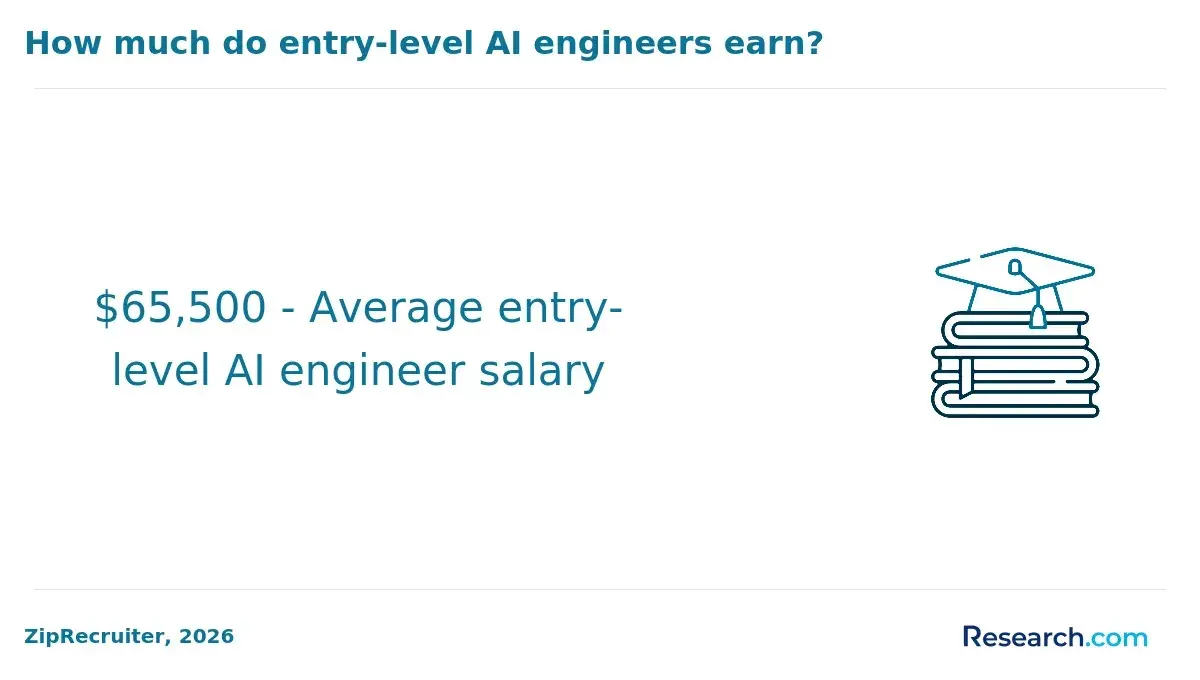
Graduates of AI vendor management training in the U.S. can expect salaries from $75,000 to $130,000 annually, with variations depending on experience, industry, and location. Entry-level roles generally start between $75,000 and $90,000, while those with five or more years of specialized experience may earn $110,000 to $130,000 or higher. Sectors like technology, finance, and healthcare often provide the highest compensation, reflecting the importance of managing AI vendor relationships effectively.
The job outlook remains strong, with demand projected to increase by approximately 15% through 2030, driven by expanding corporate adoption of AI tools and more complex vendor ecosystems. Employers seek candidates skilled in contract negotiation and assessing vendor performance via quantitative KPIs.
However, prospective students should carefully evaluate AI procurement education programs. According to the 2025 CIPS learning effectiveness review, only 29% of evaluated AI-related procurement courses demonstrated measurable business outcomes linked to KPIs. This reveals that many programs may not adequately prepare graduates to add tangible value in vendor management roles.
Prioritizing courses with clear learning outcomes related to vendor risk assessment, AI ethics compliance, and contract performance metrics enhances career prospects. Combining practical experience with certification in business-aligned AI vendor management significantly boosts employability and salary potential.
Other Things You Should Know About Artificial Intelligence
In 2027, courses like MIT's "AI Strategies for Business," Coursera's "AI for Decision Making," and edX's "AI Applications in Vendor Management" are recommended. They address challenges such as integration, resistance to change, and understanding AI capabilities.
AI enhances risk assessment by analyzing vast amounts of data to identify patterns and predict potential vendor risks. It enables real-time monitoring of supplier performance and flags anomalies automatically. This proactive approach helps teams mitigate risks before they affect the supply chain.
AI tools typically use data such as vendor performance history, delivery times, pricing trends, and compliance records. They may also incorporate external data sources like market conditions and customer reviews. By combining these datasets, AI can suggest the most suitable vendors based on quantitative and qualitative factors.
Yes, AI can streamline contract management by automating document review, tracking key dates, and identifying contract risks. Natural language processing (NLP) techniques help analyze contract clauses for compliance and consistency. This reduces manual errors and accelerates contract lifecycle management.
References
- Webinar-Confronting the Unspoken: The Impact of AI Adaptation on Institutional Policy and Accreditation | Council for Higher Education Accreditation https://www.chea.org/webinar-confronting-unspoken-impact-ai-adaptation-institutional-policy-and-accreditation
- AI Policies Every Online Institution Should Adopt Before 2027 https://iacde.org/uncategorized/ai-policies-every-online-institution-should-adopt-before-2027/
- How AI Transforms Procurement and Vendor Management https://www.techclass.com/resources/learning-and-development-articles/how-ai-is-transforming-procurement-and-vendor-management
- AI in Vendor Management: 6 Use Cases and Key Risks https://precoro.com/blog/ai-in-vendor-management/
- Artificial intelligence | Adding Value Consulting https://www.addingvalue.nu/courses/artificial-intelligence
- Best AI Certifications to Boost Your Career in 2026 – Dataquest https://www.dataquest.io/blog/best-ai-certifications/
- What are the requirements for completing the Introduction to AI and Building AI courses? https://www.elementsofai.com/ie/faq/what-are-the-requirements-for-completing-the-introduction-to-ai-and-building-ai-courses
- AI Vendor Management: The Procurement Revolution You Need https://www.kodiakhub.com/blog/ai-vendor-management
- 16 Artificial Intelligence Career Paths https://www.calmu.edu/news/artificial-intelligence-career-paths
- Supply Chain Skills for AI: What Actually Matters in 2026 https://www.scoperecruiting.com/blog/supply-chain-skills-ai