2027 Best AI Courses for Real Estate Market Analysis Teams

Co-Founder and Chief Data Scientist
Real estate market analysis teams often struggle to interpret vast, complex data sets quickly and accurately. Without advanced tools, they risk missing key trends or making costly misjudgments. Integrating artificial intelligence techniques can automate data processing and reveal deeper insights, but many professionals lack the technical background to apply these solutions effectively. This gap hampers decision-making and strategic planning in dynamic markets.
The article will identify top courses designed to equip real estate analysts with the artificial intelligence skills needed for sophisticated market analysis and better business outcomes.
Key Things You Should Know
- Top AI courses for real estate market analysis in 2026 emphasize practical skills in predictive analytics, enhancing decision-making with 65% of professionals noting improved asset valuation accuracy.
- Integration of machine learning tools in curricula reflects a 40% growth in demand for AI-savvy analysts to optimize property investment strategies in U.S. urban markets.
- Courses now prioritize ethical AI use and data privacy, crucial as 72% of real estate firms face increased scrutiny over automated valuation models in 2025 regulations.
Advance Your Career with AI Online Courses
Artificial Intelligence: Implications for Business Strategy
This program provides an introduction to Artificial Intelligence and their implications for business strategy. Earn an official digital certificate.

Oxford Artificial Intelligence Programme
Explore this Oxford Artificial Intelligence programme offered in a flexible learning environment and explore topics like machine learning, automation, and robotics.

Implementing Agentic AI: Building Your Organizational Playbook
This online MIT Agentic AI course offers a practical approach to deploying AI agents in your organization, including a custom playbook. 3 weeks, exclusive launch price.

AI Adoption: Driving Business Value and Impact
This online MIT AI Adoption: Driving Business Value and Impact offers practical frameworks to close the gap between AI potential and business reality.

Artificial Intelligence in Pharma and Biotech
Discover the applications and limitations of artificial intelligence in pharma and biotech with this MIT online short course.

What is an AI course for real estate market analysis and who are these programs for?
AI courses for real estate market analysis professionals focus on leveraging data-driven models, machine learning algorithms, and predictive analytics tailored to property valuation, demand forecasting, and investment decision-making. These trainings equip students with skills to analyze large datasets covering market trends, demographic changes, and economic indicators, enhancing pricing strategies and risk assessments.
Real estate market analysis training programs for teams, analysts, portfolio managers, and market researchers help incorporate advanced analytics into their processes. These courses are also ideal for recent graduates in finance, urban planning, or data science who want to specialize in real estate analytics. For instance, students might learn to use neural networks for predicting housing price fluctuations or develop models highlighting optimal investment locations based on historical trends.
Participants gain proficiency in software tools such as Python, R, and specialized AI platforms essential for real estate analytics. This expertise reduces reliance on intuition and shortens the analytical cycle, which is vital in competitive markets. Many professionals enhance their qualifications by pursuing a 2-year computer science degree online to deepen their technical foundation.
A 2024 McKinsey report notes that real estate companies adopting AI-driven analytics have seen a 10-15% rise in net operating income and a 20-25% faster time-to-decision on investments. This data underscores the importance of targeted AI education for teams aiming for competitive advantage and increased operational efficiency.
Advance Your Career with AI Online Courses
Artificial Intelligence: Implications for Business Strategy
This program provides an introduction to Artificial Intelligence and their implications for business strategy. Earn an official digital certificate.
Oxford Artificial Intelligence Programme
Explore this Oxford Artificial Intelligence programme offered in a flexible learning environment and explore topics like machine learning, automation, and robotics.
Implementing Agentic AI: Building Your Organizational Playbook
This online MIT Agentic AI course offers a practical approach to deploying AI agents in your organization, including a custom playbook. 3 weeks, exclusive launch price.
Which AI skills matter most for real estate market analysis careers today?
The AI skills essential for real estate market analysis today revolve around data science, machine learning, and advanced analytics. These competencies enable professionals to analyze vast datasets, identify trends, and provide AI-driven predictive analytics for real estate market trends with accuracy.
According to Deloitte's 2024 Commercial Real Estate Outlook, 62% of CRE firms prioritize upskilling in AI-related fields, yet only 28% have sufficient in-house expertise, revealing a significant talent gap.
Key skills include:
- Data manipulation and cleaning using Python or R to prepare raw real estate datasets.
- Machine learning techniques in property value forecasting, such as regression and classification models.
- Geospatial analysis to evaluate location-based factors impacting property prices.
- Utilizing AI-powered visualization platforms to clearly communicate complex insights.
- Natural language processing (NLP) for extracting value from market reports and social media sentiment analysis.
For example, clustering methods help segment neighborhoods by investment potential, while predictive modeling identifies emerging markets ahead of competitors. Hands-on experience deploying AI in real estate software improves readiness for evolving roles.
Those interested in enhancing these skills may consider specialized courses, including popular options like the best online masters in artificial intelligence, to meet employer expectations in 2026.
What types of AI programs prepare you for real estate data and analytics roles?
AI programs preparing candidates for real estate data and analytics roles emphasize machine learning, data analysis, and domain-specific applications. Practical courses cover supervised and unsupervised learning techniques for analyzing market trends, property valuations, and risk assessment. They also provide training in handling large datasets and using programming languages such as Python or R for real estate forecasting, along with integrating geospatial data to enhance location-based insights.
Programs teaching real estate data analytics skills often include regression model training, vital for predicting property prices based on historical sales data and economic indicators. Natural language processing modules help analyze customer reviews and market reports to identify sentiment and emerging trends. Familiarity with predictive analytics platforms tailored to property management and investment strategies is also critical.
Prospective learners should choose courses offering hands-on projects with real estate data sets to gain experience in data cleaning, visualization, and model deployment. Training in cloud computing and database management improves efficiency in handling vast property records. Given the sensitivity of client information, understanding ethical AI use and data privacy is essential for real estate market analysis teams.
A 2024 Coursera Global Skills Report highlights a 46% year-over-year increase in enrollment for AI and machine learning courses by professionals in real estate or property management. Those interested may also consider pursuing an online cyber security degree to complement their data expertise.
How do online AI courses for real estate compare with on-campus options?
Online AI courses vs on-campus courses for real estate analysis differ significantly in flexibility, cost, and accessibility. Online options allow real estate teams to enhance their skills without disrupting their work schedules. Platforms like Coursera and edX offer asynchronous modules focused on data analysis, predictive modeling, and AI-driven market forecasting tailored to real estate professionals.
On-campus courses provide immersive face-to-face interaction, real-time feedback, and valuable networking opportunities. However, their fixed schedules and geographic limitations make participation challenging for busy professionals. Moreover, campus curricula may update more slowly, potentially delaying the inclusion of the latest AI tools relevant to real estate.
PwC's 2024 Global Real Estate Deals & AI survey reveals a training gap: 54% of institutional real estate investors are adopting machine-learning, but only 31% have staff with advanced AI skills. Virtual AI training for real estate market teams addresses this gap effectively, offering frequent content updates and a wide range of course options for continuous learning.
Many online courses include hands-on projects with real estate datasets for practical experience in valuations and trend predictions. Blended models combining online theory with occasional in-person workshops strike a balance between convenience and direct engagement. Teams should weigh their skill needs, time commitments, and budget when choosing between formats.
For those interested in advancing their career, resources like how to become an AI trainer with no experience can provide valuable guidance.
What should you look for in accreditation and program quality for AI real estate courses?
Accreditation by recognized bodies like ABET or regional education accreditors is vital when choosing AI courses for real estate market analysis teams. Such accreditation ensures programs meet academic standards and focus on industry-relevant skills, particularly in automated valuation models (AVMs) and pricing strategies.
Effective courses include practical training with real estate datasets and machine learning algorithms designed for price forecasting. Programs that incorporate case studies from CoreLogic's 2024 AVM Performance Study are especially valuable. This study shows AI-enhanced AVMs reduce forecast standard deviations by 15-25% compared to traditional methods and are used in over half of U.S. mortgage originations for collateral valuation.
- Partnerships with industry leaders
- Access to proprietary real estate databases
- Projects simulating real-world valuation challenges
- Certification or recognized credentials to boost employability
- Strong job placement rates in AI-driven real estate roles
Faculty expertise is another crucial factor. Instructors with proven experience applying AI in real estate markets offer essential insights on market volatility, data integrity, and regulatory challenges. Programs should also regularly update their content to reflect rapid advances in AI and changing market conditions.
What core curriculum and tools do top AI real estate market analysis courses cover?
Top AI real estate market analysis courses blend data science, machine learning, and real estate expertise to equip students with the skills to analyze complex datasets. Techniques like regression analysis, clustering, and natural language processing help extract meaningful insights from market data. Demand forecasting models enable learners to predict leasing trends, pricing changes, and investment risks by leveraging both historical and real-time information.
Key tools include Python and R for building models, along with machine learning frameworks such as TensorFlow and scikit-learn. Geographic Information Systems (GIS) and spatial analysis software play a crucial role in evaluating location-driven market factors. Cloud-based platforms and APIs are also integrated to enable big data handling and scalable predictive analytics.
According to a 2024 JLL Future of Real Estate Intelligence report, firms utilizing AI-powered demand forecasting tools enhance lease forecast accuracy by up to 35% compared to traditional spreadsheet methods. This highlights the value of courses that teach time series forecasting and ensemble modeling techniques.
Hands-on projects and case studies on rent price prediction, vacancy rate analysis, and portfolio optimization offer practical experience. Students work with diverse data types, including transactional records, social sentiment, and economic indicators.
Focusing on programs providing practical AI toolkits, demand forecasting methods, and GIS integration prepares professionals to deliver precise, data-driven market insights that support better investment decisions.
What are typical admission requirements, timelines, and costs for these AI programs?
Admission requirements for AI courses aimed at real estate market analysis teams typically include a bachelor's degree in business, data science, computer science, or real estate. Some programs accept work experience as an alternative to formal education. Candidates should have basic skills in statistics, coding-usually Python-and knowledge of real estate market principles.
Program durations vary widely:
- Intensive boot camps lasting 8-12 weeks
- Part-time certificate courses spanning 3-6 months
- University programs requiring 6 to 12 months, combining coursework and projects
Costs reflect program depth and reputation. Boot camps can range from $1,500 to $5,000, while certificate programs typically cost $4,000 to $12,000. Full academic degrees focusing on AI and real estate analytics may exceed $20,000. Flexible payment plans and scholarships are often available.
Choosing a timeline depends on your career and learning style. Working professionals often prefer part-time options that fit around their schedules. For example, a real estate analyst might select a 12-week boot camp to quickly improve skills in lead scoring and client segmentation.
According to Salesforce's 2024 State of Sales in Real Estate report, teams utilizing AI for lead scoring and segmentation close deals 32% faster and achieve a 27% higher lead-to-opportunity conversion rate. This data highlights the practical benefits of investing in AI education to boost real estate team performance and outcomes.
What real estate job roles can AI market analysis training help you qualify for?
AI market analysis training prepares professionals for specialized roles in real estate that demand advanced data interpretation and strategic decision-making. Key positions include real estate data analysts, who extract actionable insights from trends, and portfolio managers, who optimize asset allocation using predictive analytics. Valuation analysts apply AI algorithms for more precise property assessments, while risk analysts use machine learning models to detect potential investment threats.
Emerging Proptech roles, such as data engineers and AI integration specialists, focus on building and maintaining the infrastructure to enable efficient AI applications across property portfolios.
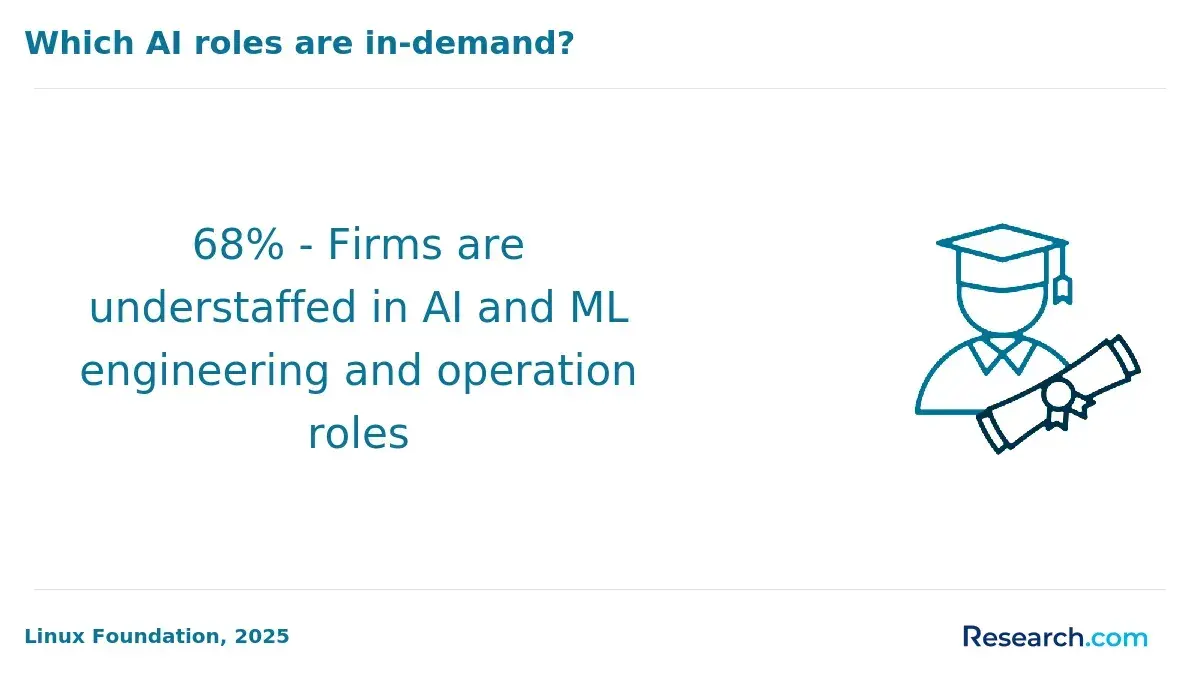
According to KPMG's 2024 Global Proptech Survey, 68% of large real estate firms cite a shortage of data engineering and integration skills as a major barrier to expanding AI capabilities. This skills gap represents a strong opportunity for those trained in AI and real estate.
Additional roles benefiting from AI skills include strategy consultants advising on technology adoption, product managers overseeing AI-powered tools, and leasing and sales professionals improving client targeting through AI insights.
Leveraging data and AI enhances the ability to navigate complex market dynamics, improve operational efficiency, and gain a competitive edge in the real estate industry.
What salary ranges and advancement opportunities exist for AI-driven real estate analysts?
AI-driven real estate analysts in the U.S. typically earn starting salaries between $70,000 and $90,000 annually, depending on education and experience. Mid-level analysts usually make from $95,000 to $120,000, while senior analysts and team leads often surpass $130,000. Those skilled in machine learning, data science, and domain-specific knowledge receive the highest offers.
Certifications focusing on ethics, bias mitigation, and regulatory compliance are increasingly valuable as firms aim to reduce discriminatory impacts in AI algorithms.
Career progression often leads to senior analyst roles, data science management, or consultancy specializing in real estate technology. Expanding beyond technical skills to include regulatory and ethical expertise is critical-research from the Urban Institute found that 43% of AI tenant-screening tools exhibit significant racial or ethnic biases.
Employers now prioritize professionals trained to address these challenges, making ethics and compliance education essential for advancement.
Advancement examples include becoming a compliance officer responsible for AI oversight or a strategic analyst guiding investment decisions through AI insights. Analysts who combine technical modeling expertise with knowledge of legal AI implications in the housing market are well-positioned for leadership. Experience integrating diverse datasets to improve fairness and accuracy also accelerates career growth.
Practical advice for candidates: pursue courses covering ethics, bias, and regulatory compliance alongside core AI skills. Highlighting this multidisciplinary knowledge can notably enhance job prospects and salary negotiations in this evolving field.
How can you evaluate and compare AI real estate courses to choose the best fit?
When evaluating AI real estate courses, prioritize curriculum relevance, practical application, and measurable outcomes. Focus on whether the coursework includes market analysis skills like predictive modeling, data visualization, and machine learning tailored for property valuation and investment decisions. Courses featuring case studies or projects tied to commercial or residential real estate offer valuable hands-on experience.
Instructor expertise is crucial; seek those with direct industry experience or academic credentials in AI and real estate. Transparency about instructor backgrounds often reflects the course's quality and relevance.
Course format and duration should fit your team's availability and learning style. Self-paced courses provide flexibility, while cohort-based formats offer interaction and networking opportunities, supporting professional growth.
Certification value and industry recognition matter. Certifications supported by established real estate or AI organizations boost credibility and career prospects. Analyze student reviews and outcomes, focusing on skill acquisition and the successful application of AI tools in real estate.
- Focus on courses integrating real-world case studies or projects.
- Verify instructors' credentials and industry experience.
- Choose course formats that align with your availability.
- Prioritize certifications with strong industry recognition.
- Consider student outcomes and success testimonials.
A survey by CBRE Global Real Estate highlights that investors with high AI and analytics maturity achieve portfolio returns 8-12% higher over three years compared to those with low maturity. This data underscores the ROI of quality AI training for teams aiming to enhance decision-making and investment performance.
Other Things You Should Know About Artificial Intelligence
Artificial intelligence can analyze large datasets to identify patterns and trends that humans may overlook. While AI models provide valuable insights and improve accuracy, their predictions depend on the quality of input data and algorithm design. External factors like economic shifts or policy changes may impact outcomes, so AI forecasts should be combined with expert judgment.
AI has the potential to reduce human biases by focusing on objective data rather than subjective opinions. However, if the training data contains historical biases, AI systems can inadvertently perpetuate them. Careful data selection and ongoing monitoring of AI models are necessary to ensure fair and unbiased analysis in real estate.
Ethical use of artificial intelligence involves transparency, data privacy, and accountability in decision-making processes. Real estate professionals must ensure AI tools do not discriminate against any group and comply with legal standards. Maintaining clear documentation and reviewing algorithms regularly helps uphold ethical standards.
AI courses in 2027 equip real estate teams with the skills to leverage the latest AI tools and techniques, ensuring adaptation to swiftly evolving technologies. They focus on practical applications like predictive analytics, machine learning, and AI-driven market strategies to maintain competitiveness in the dynamic real estate landscape.
References
- Choosing the right AI tools for your real estate scenarios https://www.mrisoftware.com/blog/choosing-the-right-ai-tools-for-your-real-estate-scenarios/
- Overwhelmed by AI? This New Certification Breaks It Down | McKissock Learning https://www.mckissock.com/blog/real-estate/ai-training-for-real-estate-agents/
- Mapping the role of Artificial Intelligence in real estate: A bibliometric and case study analysis https://jemi.edu.pl/vol-21-issue-3-2025/mapping-the-role-of-artificial-intelligence-in-real-estate-a-bibliometric-and-case-study-analysis
- AI Powered Real Estate Professional https://www.rebinstitute.com/REBInstitute/REBInstitute/Education/AI_Real_Estate_Professional.aspx
- Exploring AI in Real Estate: Transformative Use Cases and Examples https://www.icertglobal.com/blog/ai-in-real-estate-transformative-use-cases-and-strategy
- Professional AI Training: How to Choose the Right Program https://www.strategicaileader.com/professional-ai-training-how-to-choose-the-right-program/
- How to Use AI for Real Estate Market Analysis https://www.floridarealtors.org/news-media/news-articles/2025/02/how-use-ai-real-estate-market-analysis
- Artificial Intelligence (AI) in Real Estate https://proptechjobs.com/artificial-intelligence-ai-in-real-estate/
- What is the best AI model for real estate right now? https://www.adventuresincre.com/what-is-best-ai-model-for-real-estate/
- AI in Real Estate: Unlocking the Future with Innovative Training https://www.learningeverest.com/ai-in-real-estate-unlocking-the-future-with-innovative-training/