2027 Best AI Courses for Office Managers With Certificates

Co-Founder and Chief Data Scientist
Office managers often face pressure to streamline workflows and integrate advanced technologies but lack the necessary skills in artificial intelligence to lead such initiatives. This gap limits their ability to adopt AI tools that could enhance productivity and decision-making within their teams.
With rapidly evolving technologies, finding flexible, credible courses that offer certification can be challenging, especially for professionals transitioning from unrelated fields. This article reviews top AI courses designed for office managers, highlighting programs that balance practical skills, accreditation, and scheduling flexibility to help professionals confidently leverage AI in their roles and advance their careers.
Key Things You Should Know
- AI courses for office managers in 2026 emphasize practical skills in automation, data analytics, and decision-making, aligning with 74% of U.S. businesses adopting AI tools to boost productivity.
- Certification in AI enhances job prospects, with certified professionals earning up to 25% more on average and gaining an advantage in competitive administrative roles.
- Top courses offer flexible formats, including online and hybrid models, allowing working professionals to upskill without disrupting their careers, reflecting a 40% annual growth in AI education enrollment.
Advance Your Career with AI Online Courses
Artificial Intelligence: Implications for Business Strategy
This program provides an introduction to Artificial Intelligence and their implications for business strategy. Earn an official digital certificate.

Oxford Artificial Intelligence Programme
Explore this Oxford Artificial Intelligence programme offered in a flexible learning environment and explore topics like machine learning, automation, and robotics.

Implementing Agentic AI: Building Your Organizational Playbook
This online MIT Agentic AI course offers a practical approach to deploying AI agents in your organization, including a custom playbook. 3 weeks, exclusive launch price.

AI Adoption: Driving Business Value and Impact
This online MIT AI Adoption: Driving Business Value and Impact offers practical frameworks to close the gap between AI potential and business reality.

Artificial Intelligence in Pharma and Biotech
Discover the applications and limitations of artificial intelligence in pharma and biotech with this MIT online short course.

What are the best AI courses for office managers with certificates?
The best AI courses with certificates for office managers focus on practical skills that enhance workflow automation, data management, and decision-making efficiency.
Top certified artificial intelligence training for office managers includes "AI For Everyone" by Coursera, offering foundational knowledge suited for non-technical professionals. This course provides a solid understanding of AI concepts.
The "Artificial Intelligence: Business Strategies and Applications" course on edX integrates AI tools into office management processes through real-world applications. This course equips office managers with the ability to apply AI in their work.
These programs cover key topics such as natural language processing (NLP), robotic process automation (RPA), and data analysis-skills essential for streamlining administrative duties. For instance, mastering RPA lets office managers automate repetitive tasks like scheduling and document management, saving valuable time and resources.
Recognition matters: industry-backed certificates prove competence in ai, which increasingly attracts employer demand. According to LinkedIn's 2025 Global Workplace AI Skills Report, office managers skilled in ai experienced a 6.2x increase in employer demand year over year, underscoring the importance of upskilling.
Additional courses like "Microsoft Power Platform Fundamentals" offer low-code automation tools, while "Google IT Automation with Python" suits those seeking technical depth. Selecting well-recognized courses with certification paths enhances employment prospects and salary negotiation strength.
Consider when choosing programs:
- The level of technical depth that matches your background
- Practical case studies and tools covered
- Recognition of the issuing institution or platform
Exploring further education can also involve researching degrees in AI to expand career options in related fields.
Advance Your Career with AI Online Courses
Artificial Intelligence: Implications for Business Strategy
This program provides an introduction to Artificial Intelligence and their implications for business strategy. Earn an official digital certificate.
Oxford Artificial Intelligence Programme
Explore this Oxford Artificial Intelligence programme offered in a flexible learning environment and explore topics like machine learning, automation, and robotics.
Implementing Agentic AI: Building Your Organizational Playbook
This online MIT Agentic AI course offers a practical approach to deploying AI agents in your organization, including a custom playbook. 3 weeks, exclusive launch price.
How do AI certificates help office managers advance careers?
AI certificates equip office managers with verified credentials and technical skills to utilize artificial intelligence tools effectively. As 54% of operations and administrative professionals use AI weekly for tasks like scheduling and documentation, career advancement with ai certificates for office managers is becoming increasingly important to remain competitive.
These certifications validate expertise in AI-driven software and automation, helping office managers optimize resource allocation and minimize manual errors. Certified managers can implement AI-powered scheduling algorithms that enhance team productivity and lead digital transformation efforts, strengthening their leadership potential.
Benefits of ai certification for office management professionals include the ability to negotiate higher salaries and qualify for specialized roles such as workflow automation specialist or data-driven operations manager. Certificate programs often provide hands-on experience with AI analytics platforms, natural language processing tools, and robotic process automation to improve decision-making.
AI knowledge assists office managers in managing digital communications and coordinating complex projects efficiently. Employers value certified candidates for their problem-solving abilities that reduce bottlenecks and enhance operational efficiency.
Further advantages of certification include greater career mobility and protection against automation risks. Without formal AI proficiency, managers risk being sidelined as AI adoption grows. Demonstrating commitment to ongoing professional development signals readiness for evolving job requirements.
For those considering expanding their expertise further, exploring the cheapest online engineering degree options can provide additional technical foundations that complement AI certification.
What skills do office managers learn in AI courses?
Office managers who complete ai skill development for office management courses gain vital abilities that improve workplace efficiency and decision-making. These include data literacy to analyze trends and guide operational strategies. They also learn to automate routine tasks like scheduling, reporting, and email management with AI-powered tools, allowing more focus on higher-value activities.
Many office manager artificial intelligence certification courses include training on natural language processing (NLP), enabling the use of virtual assistants or chatbots for handling common queries and enhancing internal communications. Ethical AI use and compliance are also major components, ensuring managers apply AI responsibly within corporate and legal frameworks.
Project management skills tailored to AI initiatives are emphasized, helping office managers collaborate effectively with IT teams to implement AI solutions. Hands-on projects are common, simulating real scenarios such as optimizing document workflows or enhancing customer relationship management using AI insights. A survey by Coursera for Business found employees were 2.4 times more likely to apply AI skills when training included role-specific, practical projects rather than generic tutorials.
Overall, these courses equip office managers to identify automation opportunities, manage AI tools, ensure ethical use, and employ data-driven decision-making, which reduces manual workloads and supports digital transformation. For those curious about related educational costs, a useful resource on cyber security online degree cost offers insight into affordable degree options in tech fields that complement AI expertise.
Are online AI certificate programs better than campus options?
Online AI certificate programs for office managers offer notable flexibility, allowing learners to study at their own pace while managing busy work schedules. This flexibility is a significant advantage over campus courses, which often require fixed attendance and longer time commitments, potentially limiting accessibility for working adults.
Cost-effectiveness is another benefit of online AI certificate programs. Lower tuition and the elimination of commuting and accommodation expenses make education more affordable without compromising quality. Many reputable online courses provide certifications that employers recognize, enhancing career prospects.
From a content perspective, online programs frequently emphasize practical AI literacy tailored specifically for office environments. IBM's 2024 Global AI Adoption Index found that 43% of non-technical employees who completed a basic AI literacy course felt more confident using AI at work, compared to 12% prior to training. This highlights the effectiveness of targeted online learning modules for immediate workplace application.
Campus AI courses, by contrast, may appeal to those seeking immersive learning experiences, with direct faculty interaction and networking opportunities in traditional academic settings. Some office managers prefer campus courses for their structured environment and access to on-site resources.
Choosing between campus and online ai courses depends on individual preferences and needs:
- Online programs suit learners requiring flexible, cost-effective training with up-to-date AI basics.
- Campus courses benefit those who prefer structured environments and face-to-face mentorship.
- Hybrid formats combine convenience with occasional in-person sessions.
For those interested in becoming AI trainers, understanding these educational options is essential to selecting the right pathway.
How much do AI certificate programs for office managers cost?
AI certificate programs for office managers vary widely, from free introductory classes to premium certifications priced between $200 and $2,000. Many platforms offer tiered pricing structures based on course depth, access length, and certification type. Entry-level courses often focus on automating office workflows, costing between $200 and $500, with content tailored to essential AI tools for administrative tasks.
More advanced programs featuring hands-on projects, personalized feedback, or industry-recognized certificates can exceed $1,000.
Balancing cost with certificate value is a common challenge. According to McKinsey's 2025 Future of Work in Office Support report, generative AI could automate 37% of current administrative tasks without sacrificing service quality, making programs emphasizing workflow automation particularly practical for immediate workplace benefits.
Open enrollment courses from well-known providers frequently offer free access but charge $100 to $300 for certificates. Bootcamps or instructor-led workshops designed for office managers tend to start around $500. Subscription models, with monthly fees between $30 and $50, provide access to multiple AI courses, which is cost-effective for ongoing learning.
When selecting a program, consider:
- Certification credibility
- Curriculum relevance
- Instructor expertise
Lower-cost options exist, but higher-priced courses often deliver more career support and in-depth skill development. Choosing the right AI certification depends on whether formal credentials or practical skills are your priority.
What are the admission requirements for AI certificate programs?
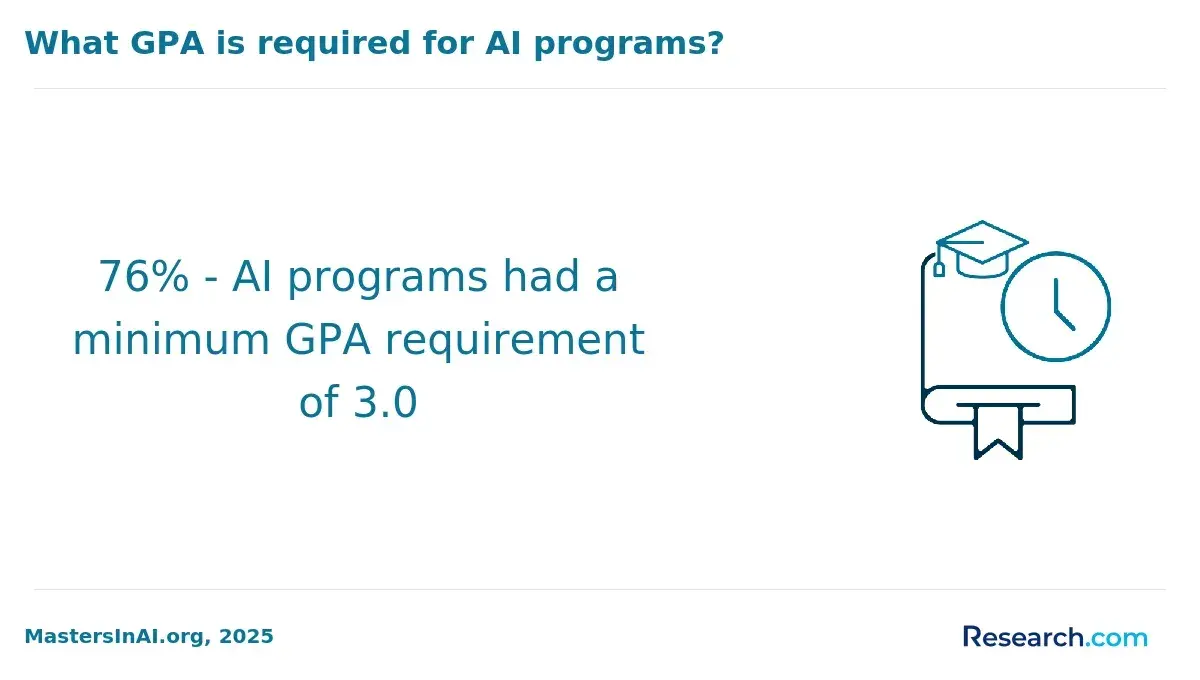
Admission requirements for AI certificate programs differ by institution and program level, typically emphasizing foundational skills and relevant experience rather than advanced degrees. Most applicants need at least a high school diploma or equivalent. Many programs cater to working professionals, with minimal formal prerequisites, focusing on practical readiness.
Some courses expect basic computer literacy or familiarity with data concepts. Beginner AI classes might require experience with spreadsheet software or introductory statistics, while advanced certificates often ask for programming knowledge in languages such as Python or R. Online platforms frequently offer preparatory modules to help applicants build necessary skills.
Employers enrolling office managers often prefer programs with flexible scheduling and accessible content. Many encourage candidates to highlight professional experience related to ai applications in tasks like writing, email management, or data handling, reflecting actual workplace needs. According to Microsoft's Work Trend Index 2024, employees using AI to write emails and documents save an average of 1.8 hours weekly, and 64% report AI reduces meeting preparation time.
International applicants may need to prove English proficiency through tests like TOEFL or IELTS. Some programs request a statement of purpose or a skills assessment to personalize learning paths. Financial documents and payment plans are usually separate from admissions but should be arranged beforehand.
How long does it take to finish an AI certificate?
The time to complete an AI certificate varies greatly depending on the course format and depth. For most office managers, foundational ai programs can be finished part-time within 3 to 6 months. More intensive bootcamp-style courses may take only 6 to 8 weeks, while comprehensive university-affiliated or professional certificates can extend up to 12 months.
Shorter certificates emphasize practical applications such as automating dashboards, tracking KPIs, and generating executive updates. According to Deloitte's 2024 Human Capital Trends report, these tools reduce routine reporting time by 29% and increase reporting frequency by 23%. These programs generally require 40 to 80 hours of study.
Longer courses offer deeper technical training, including machine learning basics and data analytics, which are useful for office managers leading ai projects. Such programs often demand 120 to 200 hours, spread over multiple modules.
Factors affecting duration include whether the program is self-paced or instructor-led, prior technical knowledge, and availability. Hybrid formats can suit busy working professionals by providing flexibility.
When choosing a certificate, balance your time commitment with the ai competencies needed to enhance office efficiency and decision-support systems. Accelerated courses provide quicker credentials, while longer programs offer broader expertise.
Which AI certifications are most respected by employers?
AI certifications valued by employers in 2026 emphasize practical skills, recognized standards, and industry relevance. Certifications such as Microsoft Certified: Azure AI Fundamentals and Google Cloud Professional Machine Learning Engineer are highly respected for demonstrating proficiency in AI tools within cloud environments, essential for office management roles involving automation and data analysis.
Independent professional certifications like the Certified Artificial Intelligence Practitioner (CAIP) and the Artificial Intelligence Board of America (ARTiBA) offer comprehensive coverage of AI concepts and practical applications, often serving as prerequisites for advanced positions.
Employers now prefer courses with hands-on labs and portfolio-building projects rather than solely theoretical credentials. Programs like Stanford University's AI Professional Certificate and MIT's AI: Implications for Business Strategy combine depth and reputation to enhance career prospects.
Cost-effective options remain important. According to a 2024 World Economic Forum white paper on Reskilling in the Age of AI, 58% of workers completing free or affordable AI courses with certification experienced role expansion or pay increases within a year. Platforms such as Coursera and edX make respected AI certifications accessible for office managers seeking growth without large tuition fees.
Choosing certifications aligned with specific AI tools and business goals improves hiring and promotion opportunities by demonstrating measurable impact on workflow efficiency and decision-making processes.
What jobs can office managers get with an AI certificate?
An AI certificate can significantly expand career opportunities for office managers by preparing them for roles that integrate artificial intelligence-driven tools and data analysis. Common positions include AI project coordinator, digital transformation specialist, and automation consultant. These roles involve managing AI implementation, optimizing workflows, and collaborating with technical teams to enhance efficiency.
Office managers may also transition to data analyst roles that interpret AI-generated insights to support business decisions.
Certification equips professionals with skills for emerging positions like process automation manager, where they deploy AI-powered tools such as robotic process automation (RPA) to streamline administrative tasks. Additionally, they can apply AI knowledge to vendor management and procurement, evaluating AI tool providers and negotiating contracts.
Versatility extends into AI-enabled customer relationship management and marketing analytics, improving personalized communications and campaign effectiveness. AI literacy also unlocks opportunities in human resources technology, managing AI-driven recruitment and employee engagement platforms.
According to PwC, employees with employer-funded AI training are 39% more likely to remain with their company for at least three years, highlighting enhanced job security and retention. Combining AI coursework with domain expertise enables office managers to lead AI adoption initiatives and bridge IT and business functions effectively.
What is the salary outlook for office managers with AI skills?
Office managers with AI skills can expect a notable boost in salary prospects by 2026. The integration of ai and automation into business processes has revolutionized traditional office management, enhancing efficiency and enabling data-driven decisions. LinkedIn Learning's 2025 Workplace Learning Report highlights that 84% of learning and development leaders plan to prioritize ai and automation skills training, up from 52% in 2023, signaling strong demand for these competencies.
Combining office management experience with proficiency in ai tools like workflow automation, data analysis software, and intelligent scheduling systems often results in higher pay. For instance, office managers skilled in AI-based project management platforms can cut administrative costs, making them more valuable. Salary increases typically range from 10% to 25% compared to peers without ai expertise, varying by industry and company size.
Job postings increasingly list AI literacy as a preferred or required qualification, influencing hiring and promotion opportunities. Organizations employing ai to streamline communication and resource allocation tend to offer better compensation to managers who can effectively utilize these technologies. This trend is especially evident in finance, healthcare, and technology sectors.
To maximize earnings, office managers should pursue certified education in ai applications relevant to administration, such as ai-powered CRM platforms, automated reporting, and digital assistants. This aligns with industry trends and meets employer expectations for leveraging technology to enhance operational effectiveness.
Other Things You Should Know About Artificial Intelligence
Yes, office managers without a technical background can learn artificial intelligence effectively. Many 2027 AI courses are designed with beginners in mind, using clear language and practical examples. These courses often offer certificates to validate the skills acquired, which helps professionals integrate AI tools into their daily work efficiently.
Artificial intelligence can both enhance and challenge data security. AI-driven tools improve threat detection and response times, helping to identify cyberattacks faster. However, AI systems themselves can be targets for manipulation or exploitation, making it essential to implement strong safeguards and continuous monitoring.
Office managers with AI skills find benefits across numerous industries such as healthcare, finance, retail, and technology. AI enhances operational efficiency, data management, and decision-making processes, making these skills valuable in any sector reliant on digital workflows. This versatility expands career opportunities within and beyond traditional office management roles.
References
- The 5 Most Valuable Generative AI Certifications https://www.coursereport.com/blog/the-5-most-valuable-generative-ai-certifications
- AI certifications: What employers actually want in 2026 - Spiceworks https://www.spiceworks.com/it-careers/ai-certifications-what-employers-actually-want-in-2026/
- AI Skills for Life and Work: Labour market and skills projections https://www.gov.uk/government/publications/ai-skills-for-life-and-work-labour-market-and-skills-projections/ai-skills-for-life-and-work-labour-market-and-skills-projections
- How to Use AI as an Office Manager (Without Risk) https://dibsido.com/office-insider/how-to-use-ai-as-office-manager
- Top 10 AI certifications and courses for 2025 https://www.techtarget.com/whatis/feature/10-top-artificial-intelligence-certifications-and-courses
- Artificial Intelligence Courses | Canadian Management Centre https://cmcoutperform.com/artificial-intelligence-courses
- Best Online AI Courses and Certifications in 2025 https://www.upskillist.com/blog/online-ai-courses-certifications/
- Digital Education Council | Certificate in AI for Higher Education https://www.digitaleducationcouncil.com/digital-education-council-certificate-in-ai-for-higher-education
- Google AI Professional Certificate | Become Fluent in AI at Work https://grow.google/ai-professional/
- University Degree vs AI Bootcamp: Which is Best Career Path? https://agilefever.com/university-degree-vs-ai-bootcamp-which-is-best/