2027 Best Generative AI Courses for Marketing Leaders

Co-Founder and Chief Data Scientist
Marketing leaders face escalating pressure to harness generative AI tools effectively while navigating rapid technology changes and unclear skill requirements. Without targeted education, adapting to generative AI risks wasted resources and missed opportunities for innovation. Many professionals with unrelated academic backgrounds seek flexible, credible learning pathways that deliver practical expertise aligned with industry needs.
This article examines top generative AI courses designed specifically for marketing leaders, highlighting options that balance accessibility and depth. It aims to guide readers toward programs that empower them to confidently integrate generative AI capabilities into marketing strategies and decision-making processes.
Key Things You Should Know
- In 2026, marketing leaders prioritize generative AI courses that emphasize practical applications, with 65% of professionals reporting improved campaign efficiency after completion.
- Top courses integrate data ethics and AI transparency, addressing growing concerns that 58% of marketers consider vital for responsible AI use.
- Certification from accredited programs correlates with a 40% higher salary boost for marketing managers incorporating generative AI skills in their roles.
Advance Your Career with AI Online Courses
Artificial Intelligence: Implications for Business Strategy
This program provides an introduction to Artificial Intelligence and their implications for business strategy. Earn an official digital certificate.

Oxford Artificial Intelligence Programme
Explore this Oxford Artificial Intelligence programme offered in a flexible learning environment and explore topics like machine learning, automation, and robotics.

Implementing Agentic AI: Building Your Organizational Playbook
This online MIT Agentic AI course offers a practical approach to deploying AI agents in your organization, including a custom playbook. 3 weeks, exclusive launch price.

AI Adoption: Driving Business Value and Impact
This online MIT AI Adoption: Driving Business Value and Impact offers practical frameworks to close the gap between AI potential and business reality.

Artificial Intelligence in Pharma and Biotech
Discover the applications and limitations of artificial intelligence in pharma and biotech with this MIT online short course.

What makes a generative AI course specifically valuable for marketing leaders today?
Generative AI course benefits for marketing leaders include acquiring practical skills that directly influence measurable outcomes. Marketing leaders increasingly require training that integrates generative AI tools into everyday marketing workflows, emphasizing how to design AI-driven content strategies, automate personalized campaigns, and enhance customer segmentation through data-driven models.
According to McKinsey's 2024 State of AI report, companies adopting generative AI technologies experience a 10-20% revenue increase and a 10-15% reduction in marketing spend, highlighting the tangible business impact of these tools.
As a result, courses focus on cost efficiency and revenue growth through hands-on learning instead of just theoretical knowledge.
Key features of effective courses include:
- Hands-on experience with AI tools designed for marketing, such as automated copy generators and AI-powered analytics platforms.
- Training on ethical AI use and compliance to mitigate reputational risks in customer engagement.
- Modules that teach interpretation of AI outputs to make informed decisions instead of blind reliance on automation.
- Case studies demonstrating AI's role in content creation, social media, customer insights, and lead scoring.
Marketing leaders face challenges balancing creative intuition with AI-generated insights. Courses that emphasize when to trust AI suggestions and when to apply human judgment add critical value.
Enhancing skills on how generative AI enhances marketing strategy skills also involves learning to collaborate effectively with data scientists and AI specialists, ensuring smooth AI adoption within teams.
Those interested can explore related educational opportunities such as a computer science degree online to deepen their technical expertise in AI-driven marketing applications.
Advance Your Career with AI Online Courses
Artificial Intelligence: Implications for Business Strategy
This program provides an introduction to Artificial Intelligence and their implications for business strategy. Earn an official digital certificate.
Oxford Artificial Intelligence Programme
Explore this Oxford Artificial Intelligence programme offered in a flexible learning environment and explore topics like machine learning, automation, and robotics.
Implementing Agentic AI: Building Your Organizational Playbook
This online MIT Agentic AI course offers a practical approach to deploying AI agents in your organization, including a custom playbook. 3 weeks, exclusive launch price.
What are the best types of generative AI programs for marketing leaders to consider?
Marketing leaders benefit most from generative AI programs focused on practical applications that drive business results. Courses emphasizing AI-driven content creation cover copywriting, video production, and design automation, helping marketing teams produce high-quality campaigns more efficiently. These programs address common creative bottlenecks and speed up material development.
Another critical area includes data analytics and customer insights powered by generative AI. Training in this domain enhances skills in personalized targeting, segmentation, and predictive customer behavior analysis, boosting campaign effectiveness and conversion rates.
Programs featuring hands-on tools like generative AI chatbot builders and automated social listening platforms equip leaders with immediately applicable marketing skills. These top generative AI tools for marketing decision makers are becoming essential for competitive advantage.
Courses on AI ethics, governance, and responsible use are vital for protecting brand reputation and ensuring regulatory compliance. Marketing leaders learn to manage risks related to content authenticity, bias, and data privacy to maintain trustworthy campaigns.
Businesses adopting generative AI report an average 24.69% increase in productivity and 15.7% cost reductions, with 74% seeing ROI in at least one use case, demonstrating how targeted AI education translates into measurable improvements.
When selecting programs, marketers should evaluate curriculum relevance, project-based learning elements, and instructor expertise. Certifications blending technical skills with strategic marketing applications prepare leaders to deploy AI solutions effectively.
Those interested may also explore online engineering programs as part of expanding their technical foundation in related fields.
How do online generative AI courses for marketing leaders compare with campus-based options?
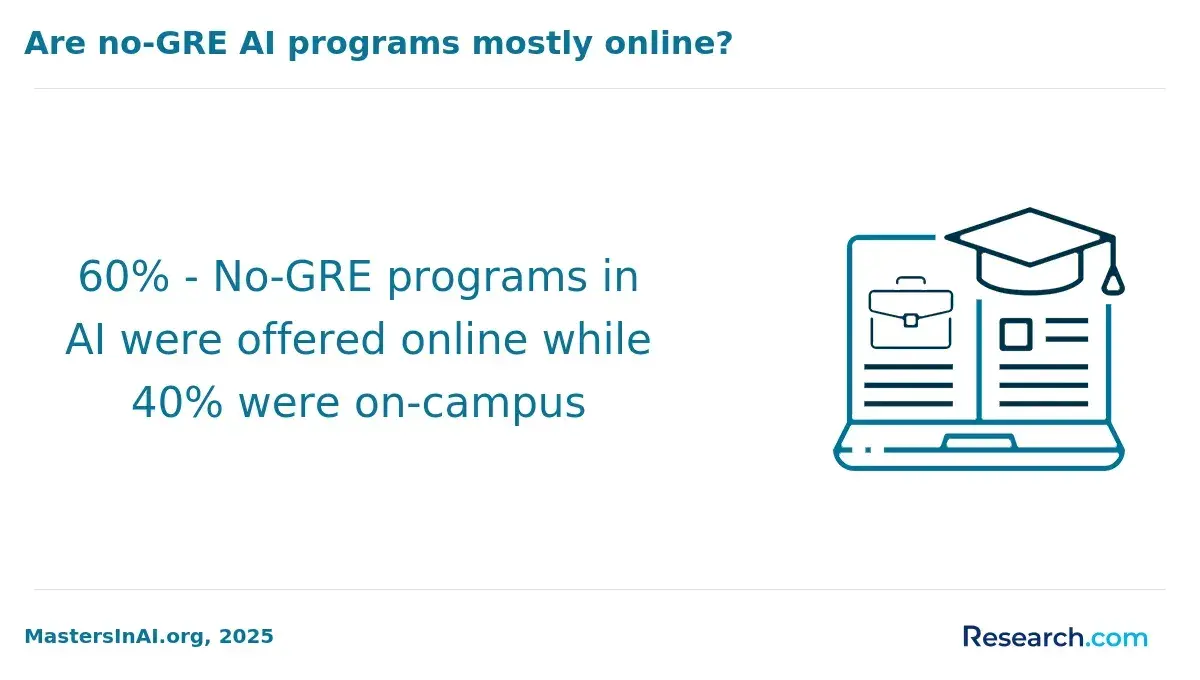
Online generative AI marketing courses versus campus programs highlight key differences in flexibility and curriculum agility. Online offerings update content monthly or quarterly to keep pace with rapid advances in AI tools, which benefits marketing leaders seeking current, practice-oriented skills.
In contrast, campus programs revise curricula annually and focus on theoretical foundations, providing structured frameworks and face-to-face networking opportunities.
Many marketing leaders face a skills gap: while a majority have experimented with generative AI, fewer apply it professionally. Online courses address this by emphasizing real-world marketing use cases such as AI-driven content creation, customer segmentation, and campaign optimization.
These courses often include case studies, simulations, and live demonstrations tailored specifically for marketers. Choosing between these formats depends on individual goals:
- Working professionals gain from the agility and flexibility of online courses.
- Those pursuing comprehensive credentials and networking might prefer campus-based programs.
- Hybrid models are emerging, offering both credibility and nimbleness.
For marketing leaders exploring education options in AI, it's useful to compare with other fields' offerings, such as cyber security degrees, which also emphasize online accessibility. Ultimately, the advantages of generative AI courses for marketing leaders online lie in delivering scalable, practical training aligned to fast-changing industry demands.
What core skills and topics should top generative AI marketing courses cover?
Top generative AI marketing courses equip professionals with technical, strategic, and ethical competencies essential for success. Core skills include understanding AI model architectures and capabilities, crucial for selecting and fine-tuning tools like GPT or diffusion models.
Emphasis on generative AI applications in marketing strategy is vital, demonstrating how these models enhance content creation, customer segmentation, and personalization efforts to boost campaign performance.
Data literacy remains a cornerstone, with professionals learning to interpret AI outputs and address data quality and bias risks. Training covers data collection, cleaning, and preprocessing methods to maximize AI effectiveness, along with approaches to evaluate model fairness and transparency.
Marketers develop skills to integrate generative AI seamlessly into existing workflows, aligning AI initiatives with business objectives. This includes mastering ROI measurement for AI-driven campaigns and managing diverse teams working with AI technologies.
Ethical and regulatory considerations ensure professionals are aware of data privacy laws and responsible AI use, which builds trust and mitigates legal risks as generative AI transforms customer interactions.
Hands-on exercises like designing AI-generated ads or automating customer service improve practical abilities through simulated real-world scenarios.
According to a Salesforce survey, 54% of marketers feel pressure to adopt generative AI to meet customer expectations, yet only 41% have a clear AI skills strategy, highlighting a significant gap that training must address.
For those curious about career prospects, understanding how much do AI trainers make can offer insight into professional opportunities linked to these growing skills. Gaining essential skills for generative AI marketing professionals positions individuals to close the competitive gap in AI maturity and advance their careers effectively.
How can marketing leaders evaluate accreditation and credibility of generative AI programs?
Marketing professionals assessing generative AI programs should verify accreditation from recognized educational or industry bodies. Accredited courses have passed thorough evaluations, confirming the reliability of their content, instructors, and assessment methods.
Regional accreditors like the Middle States Commission on Higher Education or specialized tech training agencies enhance a program's credibility. Additionally, review faculty qualifications with attention to their expertise in AI applications relevant to marketing.
Look for partnerships with established AI developers or marketing technology companies. Such collaborations help ensure that course materials remain current and focused on real-world tools and techniques. Industry-backed programs usually offer practical, market-ready skills.
Evaluate measurable outcomes, such as employment rates, promotion statistics, course completion data, and testimonials from recognized professionals. A 2024 Coursera industry report highlights learners completing AI and data skills courses were 25% more likely to receive promotions or significant role expansions within 12 months, demonstrating the tangible career benefits of structured AI education.
Examine course syllabi carefully to ensure coverage of generative AI's marketing applications, including ethics, content creation, data analysis, and process automation. Avoid programs that lack depth or practical relevance.
Finally, seek transparency in certification. Authentic programs provide verifiable credentials via digital badges or blockchain certificates, not just informal completion notes.
What backgrounds, prerequisites, and admission requirements do these generative AI courses expect?
Generative AI courses for marketing leaders typically require foundational knowledge in marketing principles and basic data literacy. Candidates often need a bachelor's degree in marketing, business, communications, or related fields.
Advanced programs, especially those tailored for executives, prefer applicants with several years of management or leadership experience due to the strategic focus involved.
Prerequisites usually include familiarity with digital marketing tools, analytics platforms, and a basic understanding of AI concepts. Some offerings require prior experience with machine learning or data science fundamentals, while others incorporate introductory modules to support marketers new to technical subjects.
Admission processes vary from simple applications to detailed statements outlining career goals in the context of AI-driven marketing transformation. Select programs also conduct interviews or request recommendations emphasizing leadership skills and adaptability.
The World Economic Forum's 2025 Future of Jobs report highlights that 75% of surveyed companies plan to adopt generative AI by 2027, but only 45% believe their leadership is adequately trained to manage its impact. This statistic stresses the need for programs that prepare marketing professionals to lead AI integration, not just understand the technology.
Entry requirements differ by course level:
- Executive programs usually require at least 5 years in strategic roles with proficiency in interpreting AI-generated insights.
- Beginner courses target mid-level managers prioritizing openness to learning new technologies over prior AI experience.
How long do generative AI programs for marketing leaders take, and what do they cost?
Generative AI programs for marketing professionals vary in duration and format, ranging from brief courses of a few hours to intensive 12-week certificate programs. Many offer flexibility, allowing participants to complete content part-time within 4 to 8 weeks. Executive education modules typically emphasize actionable skills over 20-30 hours, catering to busy marketers seeking rapid application.
Costs depend on program depth and provider reputation. Entry-level workshops or webinars may be free or under $500, while more comprehensive certificate programs generally range from $1,000 to $4,000.
Premier bootcamps or university-affiliated courses can exceed $5,000 due to extensive curricula and career support. Self-paced online options often fall between $300 and $1,200.
A 2024 Gartner survey cited by Master of Code highlights that 70% of companies using generative AI in customer engagement saw revenue growth, and 61% reported higher conversion rates. These statistics underscore the importance of developing skills in AI-enabled marketing experimentation and optimization.
When selecting a program, consider time availability, budget, and goals. Short courses provide immediate skill application; longer certifications offer in-depth mastery valuable for leadership roles. Some programs include real-world projects and mentorship, enhancing learning outcomes.
Employer support can significantly affect cost-effectiveness, as many companies subsidize courses given their direct impact on growth metrics. Carefully evaluating curricula against pricing will help professionals maximize their investment in generative AI education.
What career outcomes and leadership roles can generative AI training unlock in marketing?
Training in generative AI empowers marketing professionals to pursue leadership roles focused on innovation and data-driven strategies. Careers such as Chief Marketing Officer (CMO), AI Marketing Strategist, or Director of Content Innovation are increasingly accessible to those skilled in leveraging AI to automate content creation, personalize campaigns, and enhance customer engagement at scale.
Experts trained in generative AI can design efficient workflows that boost productivity without adding staff. By 2025, 60% of marketing content will be at least co-created by generative AI, according to IDC, highlighting the growing importance of AI literacy for scaling personalized marketing across diverse channels.
This shift drives demand for professionals able to lead AI-driven content teams while ensuring ethical alignment with brand values.
Opportunities also exist in roles like AI Program Manager or Content Automation Lead, where operationalizing AI technologies supports marketing execution. Marketing leaders with generative AI expertise can reduce content production time and tailor messaging using real-time analytics, supporting strategic collaboration with data science and technology teams.
To grow in these careers, practical AI fluency is essential. This includes skills in model prompt design, data curation, and AI ethics. Training that blends technical knowledge with leadership abilities prepares professionals to manage interdisciplinary teams navigating rapid AI adoption. Balancing creative vision with AI-driven efficiency positions marketing leaders for success in today's evolving digital landscape.
What salary impact and advancement potential can marketing leaders expect after AI upskilling?
Marketing leaders with skills in artificial intelligence experience notable salary growth and enhanced career advancement. The World Economic Forum projects roles requiring AI and data expertise will grow by 30% by 2027, while demand for traditional marketing roles stays flat. This underscores the increasing value of combining technical marketing knowledge with AI capabilities.
Professionals proficient in AI-driven analytics, automation, and customer segmentation often earn 15-25% more than those without these skills. For instance, a marketing manager using AI tools for campaign optimization can see salaries rise from $85,000 to over $100,000. Senior leaders managing AI integration initiatives may surpass six-figure salaries.
AI competence also opens doors to strategic roles such as AI marketing strategist, data-driven brand manager, or head of marketing analytics. These jobs carry more responsibility, budget oversight, and leadership opportunities that accelerate career progression.
Marketers experiencing stagnation in conventional roles should prioritize AI upskilling to stay relevant and improve promotion potential.
Career advice for those seeking AI advancement includes:
- Focusing on AI courses related to data analytics, customer insights, and marketing automation.
- Gaining hands-on experience with AI tools to showcase measurable campaign success.
- Targeting roles blending creativity and technical AI applications to boost strategic impact.
AI upskilling is essential for marketing leaders aiming for higher pay and leadership growth within their fields.
Which certificates or microcredentials in generative AI for marketing are most respected by employers?
Certificates and microcredentials in generative AI for marketing that employers respect combine technical skills with real-world applications. Notable programs include MIT's Professional Certificate in AI in Business and the University of California San Diego's Generative AI in Marketing specialization.
These credentials focus on hands-on model-building and strategic marketing insights, which align closely with employer demands.
Industry-recognized certifications from companies like Google and IBM highlight essential skills in prompt engineering, content automation, and optimizing data-driven campaigns. Employers value these credentials for their emphasis on rapid skill development and practical tool usage.
Platforms such as Coursera and edX collaborate with universities and corporations to offer certificates verifying knowledge of generative AI frameworks, ethical considerations, and marketing automation.
Skillsoft's 2024 IT & Skills report reveals that 72% of organizations have increased AI and data upskilling budgets, while 80% of learning leaders see measurable ROI from AI training within a year. This emphasizes the demand for verifiable training programs that deliver immediate business impact.
Employers prioritize credentials that include:
- Applied projects on AI-driven customer segmentation and content creation.
- Case studies demonstrating ROI improvement through AI marketing automation.
- Knowledge of AI ethics and data privacy regulations in marketing.
- Skills in budgeting and evaluating AI tools from a business perspective.
Microcredentials with modular, focused learning and recognized affiliations offer working professionals a strong balance of credibility and practical skills.
Other Things You Should Know About Artificial Intelligence
In 2027, top generative AI courses for marketing leaders include programs from renowned institutions like MIT, Coursera, and Udemy. These courses offer deep dives into leveraging AI for marketing strategies, focusing on customer personalization, data-driven decisions, and efficient campaign management.
Artificial intelligence transforms customer engagement by enabling personalized communication at scale through chatbots, recommendation engines, and predictive analytics. It allows marketers to respond in real-time to consumer behavior and preferences, enhancing relevance and satisfaction. This automation also frees up time for strategic planning and creative activities.
Marketing leaders should be mindful of data privacy, transparency, and bias when deploying artificial intelligence solutions. Ensuring that AI systems handle customer data ethically and avoid discriminatory practices is paramount. Clear communication about AI usage helps build trust and fosters responsible adoption of these technologies.
Key challenges include data quality issues, integration with existing systems, and skills gaps within the marketing team. Additionally, the rapidly evolving AI landscape requires continuous learning and adaptation to keep strategies relevant. Budget constraints and managing organizational change can also impede successful AI implementation.
References
- The GenAI Talent Shift: Every Marketing Team Will Need New Roles in 2025 https://www.marketingprofs.com/articles/2025/53285/generative-ai-marketing-role-changes-team-evolution
- AI-First Leadership: Embracing the Future of Work - Harvard Business Impact https://www.harvardbusiness.org/insight/ai-first-leadership-embracing-the-future-of-work/
- 10 Best Free AI Courses for Marketing and Business Professionals (2026) https://willfrancis.com/10-best-free-ai-courses-for-marketing-and-business-professionals-2026/
- AI in Marketing Career Path: Skills, Strategy & Roadmap to Future-Proof Growth https://cxl.com/b2b-marketing-career-guide/ai-in-marketing-career-guide/
- Generative AI and LLMs Certification https://www.nvidia.com/en-us/learn/certification/generative-ai-llm-associate/
- Mastering Generative AI for Marketers - Oxford College of Marketing https://www.oxfordcollegeofmarketing.com/short-courses/mastering-generative-ai-for-marketers/
- Generative AI and the Future of Work https://www.deloitte.com/us/en/what-we-do/capabilities/applied-artificial-intelligence/articles/generative-ai-and-the-future-of-work.html
- Effective Marketing with Generative AI: Optimize Your SEO and Content Strategies https://aattraininghub.com/courses/genai-for-marketing-and-seo/
- How AI is Shaping the Future of Marketing Leadership: A Guide for Today’s CMOs https://www.mavuus.com/post/how-ai-is-shaping-the-future-of-marketing-leadership-a-guide-for-todays-cmos-tips-tools-more
- Smart Marketing with Generative AI: From Strategy to Execution https://members.sbf.org.sg/Smart-Marketing-with-Generative-AI-From-Strategy-to-Execution