2027 Best AI Ethics Courses for Workforce Planning Teams

Co-Founder and Chief Data Scientist
Workforce planning teams face growing pressure to integrate ethical considerations into their use of artificial intelligence tools to avoid bias, discrimination, and regulatory risks. Companies struggle to find professionals who understand both AI technologies and the complex ethical frameworks guiding their responsible deployment. This gap can result in costly missteps and reputational damage. Accessing the right education is crucial for teams aiming to embed ethical standards into workforce strategies effectively. This article will review top AI ethics courses tailored for workforce planning professionals, offering guidance on selecting flexible, accredited programs that enhance ethical competence and support informed decision-making in AI-driven environments.
Key Things You Should Know
- By 2025, 68% of U.S. workforce planning teams prioritize AI ethics knowledge to ensure responsible algorithm deployment and avoid costly compliance issues.
- Top courses integrate real-world case studies focusing on bias mitigation, transparency, and accountability to prepare professionals for evolving regulatory landscapes.
- Demand for AI ethics expertise is rising sharply, with a 40% job growth projected in ethics-related roles within workforce planning through 2027.
Advance Your Career with AI Online Courses
Artificial Intelligence: Implications for Business Strategy
This program provides an introduction to Artificial Intelligence and their implications for business strategy. Earn an official digital certificate.

Oxford Artificial Intelligence Programme
Explore this Oxford Artificial Intelligence programme offered in a flexible learning environment and explore topics like machine learning, automation, and robotics.

Implementing Agentic AI: Building Your Organizational Playbook
This online MIT Agentic AI course offers a practical approach to deploying AI agents in your organization, including a custom playbook. 3 weeks, exclusive launch price.

AI Adoption: Driving Business Value and Impact
This online MIT AI Adoption: Driving Business Value and Impact offers practical frameworks to close the gap between AI potential and business reality.

Artificial Intelligence in Pharma and Biotech
Discover the applications and limitations of artificial intelligence in pharma and biotech with this MIT online short course.

What are the best AI ethics courses for workforce planning and responsible AI adoption?
The best AI ethics courses for workforce planning teams integrate ethical principles with practical applications in organizational settings. Key topics include bias mitigation, transparency, accountability, and regulatory compliance. Programs such as MIT's "Ethics of AI and Big Data," Stanford's "AI Ethics and Society," and Harvard's "AI and Responsible Innovation" provide comprehensive frameworks to assess AI's impact on employment and labor dynamics.
Responsible AI adoption training for workforce planning emphasizes creating policies that address workforce displacement and promote equitable implementation. Short-term certifications from the IEEE and the Partnership on AI focus on governance frameworks and ethical risk assessments tailored to business contexts.
High-impact learning in these courses often includes case studies on AI-induced workforce disruption and scenario planning for human-AI collaboration. Practical elements such as hands-on policy design and ethical audits help translate theory into actionable guidelines.
According to the IBM Institute for Business Value, 42% of firms have introduced generative AI training widely, but only 21% have formal responsible AI policies, demonstrating a significant gap in governance education.
When selecting AI ethics programs, workforce planning teams should look for those combining ethical theory, sector-specific challenges, and regulatory expertise. Courses offering resources for policy drafting, stakeholder engagement, and continuous ethical monitoring ensure AI strategies align with both organizational values and legal standards.
For those interested in broader educational pathways related to artificial intelligence, the data science undergraduate rankings offer valuable insights into accessible degree programs that complement AI ethics training.
Advance Your Career with AI Online Courses
Artificial Intelligence: Implications for Business Strategy
This program provides an introduction to Artificial Intelligence and their implications for business strategy. Earn an official digital certificate.
Oxford Artificial Intelligence Programme
Explore this Oxford Artificial Intelligence programme offered in a flexible learning environment and explore topics like machine learning, automation, and robotics.
Implementing Agentic AI: Building Your Organizational Playbook
This online MIT Agentic AI course offers a practical approach to deploying AI agents in your organization, including a custom playbook. 3 weeks, exclusive launch price.
How do AI ethics courses differ from general AI courses for workforce planning teams?
AI ethics training tailored for workforce planning teams emphasizes understanding and addressing the social and legal impacts of algorithmic decision-making. Unlike general AI courses, which focus mainly on technical skills such as model building and data analysis, these specialized courses concentrate on ethical frameworks, fairness, and transparency when applying AI in hiring and workforce management.
A 2024 study from Revelio Labs and Reuters highlighted that 8 of the 10 most-used AI hiring tools still showed measurable adverse impacts despite claimed bias mitigation, underscoring the need for this focused training.
Key differences between AI ethics and general AI courses in workforce planning include:
- Emphasis on ethical and regulatory compliance over coding or algorithm optimization.
- Use of in-depth case studies showcasing workforce-related AI successes and failures.
- Training in interpretability techniques to explain AI-driven decisions to stakeholders and employees.
- Methods for auditing and monitoring AI systems continuously for bias and fairness after deployment.
Workforce planners learn to integrate ethics into standard operating procedures, balancing efficiency with legal and moral responsibilities. General AI courses build foundational technical knowledge, while ethics training equips professionals to identify hidden risks and establish accountability, critical in sensitive areas like hiring where ethical lapses may lead to legal and reputational consequences.
For individuals seeking broader educational options in technology-related fields, exploring online engineering programs can provide valuable complementary skills supporting careers in AI and workforce planning.
What should you look for in an AI ethics course curriculum focused on workforce planning?
When evaluating an AI ethics course curriculum for workforce planning professionals, look for content that tackles fairness, accountability, and transparency in AI-driven hiring, promotion, and compensation. Effective programs teach how to detect and reduce bias in workforce data and algorithms through practical case studies reflecting real-world challenges.
Strong courses also cover governance frameworks and regulatory compliance related to workforce analytics, including EEOC guidelines and data privacy laws. Focus on offerings that provide hands-on sessions about creating ethical AI policies and auditing models for bias, equipping participants with actionable skills rather than abstract knowledge.
Integrating ethics with data science and human resources ensures a well-rounded perspective beneficial to workforce planners and ethical considerations in AI.
Interactive exercises, such as simulated decision-making and fairness assessment tools, enhance students' ability to evaluate AI outcomes. Training in communication strategies helps workforce planners clearly present AI ethics issues and solutions across different organizational levels.
Finally, prioritize programs backed by the latest research and industry best practices. A recent Deloitte survey found companies offering structured AI ethics and governance training to HR and people-analytics teams are 3.1 times more likely to report "high confidence" in the fairness of their AI-enabled workforce decisions.
For those seeking to deepen their understanding through further education, exploring options like a data science masters online can provide valuable technical skills that complement ethical training.
Are there accredited AI ethics certificates, degrees, or microcredentials relevant to workforce planning roles?
Accredited AI ethics certifications for workforce planning professionals are increasingly essential as organizations adopt AI-driven tools. Workforce planners benefit from formal education that addresses ethical AI implementation, bias mitigation, and governance in HR technologies. As demand rises, varied programs offer specialized knowledge tailored to workforce roles.
University-backed options include graduate certificates from Harvard Extension School and the University of Texas at Austin, focusing on practical AI ethics applications relevant to workforce planning. Master's degrees blending data science and ethics, like Carnegie Mellon University's Ethics and Responsible AI program, prepare professionals managing AI-enhanced human resource systems.
Additionally, microcredentials from platforms like edX and Coursera-affiliated with top universities-provide focused learning on key workforce AI challenges.
- Graduate certificates that combine foundational AI ethics with workforce case studies
- Master's degrees offering in-depth ethical frameworks and data analysis skills
- Flexible microcredentials targeting bias reduction and governance in AI hiring algorithms
These credential types vary by depth and duration, accommodating career-stage goals. Accredited programs ensure standards recognized by employers and provide legal and policy context critical for compliance in workforce planning.
For ongoing skill development, microcredentials are ideal. Workforce professionals can also explore related fields through a master in data analytics to enhance their understanding of data-driven AI tools.
Overall, earning AI ethics degrees and microcredentials relevant to workforce planning roles equips teams to design responsible AI solutions that uphold fairness, diversity, and transparency in workforce management.
How do online AI ethics programs compare with campus-based options for working professionals?
Online AI ethics programs offer valuable flexibility and accessibility for working professionals balancing career demands. With asynchronous coursework and modular lessons, learners can engage in focused study during convenient times, supporting ongoing skill development without disrupting their jobs. These programs often scale well across organizations, delivering consistent training that impacts workplace behavior.
Campus-based programs provide a more immersive experience, fostering direct faculty access and peer collaboration. This setup supports richer discussions and immediate feedback but can be challenging for professionals due to fixed schedules and commuting.
While campus courses typically emphasize theoretical frameworks, online options tend to prioritize practical application through case studies and scenario-based learning, often paired with industry-recognized certifications.
From a workforce planning perspective, the results of certification programs matter. CertNexus reported that 76% of organizations implementing its Certified Ethical Emerging Technologist (CEET) training saw a reduction in AI-related ethics or compliance incidents within 12 months. This highlights the effectiveness of well-structured training, especially when delivered online, enabling scalable and repeatable upskilling across multiple locations.
For professionals aiming to impact their roles immediately, selecting programs focusing on workplace relevance and measurable outcomes is essential. Whether online or campus-based, the choice depends on individual preferences and organizational needs.
What are the typical admission requirements and prerequisites for AI ethics programs in the U.S.?
Admission to AI ethics programs in the U.S. generally requires a bachelor's degree from an accredited institution, often favoring applicants with backgrounds in computer science, philosophy, law, or social sciences. Many graduate certificates and professional courses also expect prior coursework in ethics, data science, or AI fundamentals.
Applicants typically submit transcripts, recommendation letters, and a statement of purpose highlighting their interest in AI ethics and workforce planning.
Prerequisites often emphasize core knowledge of AI principles and ethical issues, including data privacy, algorithmic bias, and regulatory frameworks. Key concepts like fairness, accountability, transparency, and compliance with regulations such as the EU AI Act or U.S. policies are commonly expected. Workforce planning professionals especially benefit from programs integrating regulatory readiness training.
PwC's 2024 EU AI Act Readiness Report shows only 28% of companies using AI in HR felt well prepared for regulation; however, those with targeted responsible-AI training were 2.5 times more likely to feel ready.
Some programs require bridge courses for professionals without formal AI experience, covering introductory AI technology and policy. Even entry-level curricula often include case studies on AI ethics challenges in workforce management.
Admission standards and accreditation vary, so prospective students should carefully review specific program requirements to ensure alignment with their career goals and compliance needs.
How long do AI ethics courses usually take and what do they cost for organizations and individuals?
AI ethics courses vary from a few hours to several weeks, depending on whether they are designed for organizations or individual learners. Organizations often invest 4 to 12 hours in comprehensive, scenario-based programs that focus on role-specific applications, enhancing practical learning for employees. Individual participants usually access shorter workshops lasting 2 to 6 hours or self-paced modules extending over multiple weeks.
According to NAVEX's 2024 Benchmark Report on Ethics & Compliance Training, scenario-based, role-specific training results in a 33% higher completion rate and 45% greater knowledge retention compared to generic e-learning. This highlights the importance of tailored, practical courses in ethical AI education.
Pricing reflects the course format and target audience. Organizations typically pay between $50 and $150 per employee for licensed group access, with some enterprise solutions exceeding $200 annually per user, especially when including support and compliance tracking.
Individual courses range from free introductory sessions to $500 for advanced certificates or university-affiliated programs. Basic overviews tend to cost less but often lack interactive and role-specific elements that improve learning outcomes.
Workforce planning should balance costs and time commitment while prioritizing scenario-based training tailored to HR, talent acquisition, or people analytics roles. Such training, lasting 8-12 hours annually per employee, not only boosts compliance but prepares staff for real-world ethical challenges posed by AI adoption.
Which careers and job roles benefit most from AI ethics training in workforce planning?
Workforce planning professionals, HR analysts, data scientists, compliance officers, and AI project managers rely heavily on AI ethics training to handle the complexities of modern AI tools responsibly. These roles engage directly with AI systems that influence hiring, workforce analytics, and regulatory compliance, making ethical awareness essential to avoid biased algorithms and privacy violations.
Key benefits of AI ethics education include:
- Helping workforce planners assess the fairness of recruitment algorithms before launch
- Allowing HR analysts to maintain transparency in employee performance evaluations
- Equipping data scientists with knowledge to prevent harmful biases in AI models
- Training compliance officers to enforce legal standards and monitor AI applications
- Guiding AI project managers to align technology with organizational values
A Gartner survey highlights that organizations with formal AI ethics training reduce "material" AI incidents-those causing financial, legal, or reputational harm-by an average of 39%. This underscores the value of targeted courses that empower professionals to anticipate ethical challenges such as biased data, explainability of AI decisions, and employee data protection.
Implementing continuous monitoring and proactive evaluation strategies after ethics training builds trust in AI-driven workforce solutions and minimizes costly risks. For individuals pursuing careers involving AI, gaining expertise in ethics is increasingly indispensable to navigating both technical and societal impacts of AI technology.
What is the salary outlook for professionals who specialize in AI ethics and responsible AI governance?
The salary outlook for professionals with expertise in AI ethics and responsible AI governance is expanding rapidly. Skills combining AI and ethics rank among the fastest-growing for HR professionals, with demand increasing over 30% annually in job postings focused on AI governance. This momentum boosts salary trends for experts skilled in AI ethics frameworks, compliance, and responsible algorithm design.
Salary ranges vary by experience level:
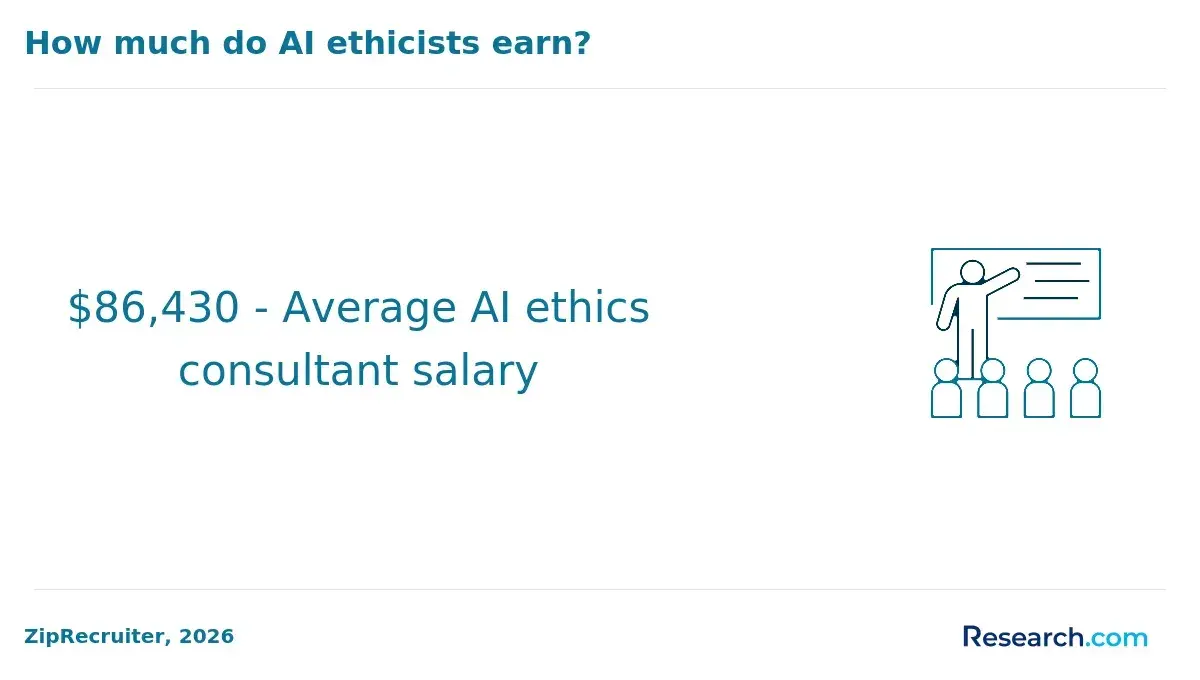
- Entry-level AI compliance analysts or ethics program coordinators typically earn between $70,000 and $90,000 annually.
- Mid-level roles, such as ethics officers and governance managers, command $100,000 to $140,000.
- Senior professionals with expertise in AI risk management and regulatory strategy can earn upwards of $150,000.
Industry also impacts compensation. Tech companies and financial services usually offer higher pay due to complex AI uses and tight regulations. Nonprofits and academia may pay less but provide unique opportunities to influence public-interest AI initiatives.
To enhance salary prospects, professionals should invest in education that combines technical AI knowledge with ethics and governance frameworks. Certifications and continuous learning are critical as AI regulation evolves quickly. Maintaining current expertise ensures competitiveness in this dynamic field.
How can workforce planning leaders evaluate and choose reputable AI ethics programs and providers?
Workforce planning leaders must prioritize accreditation and curriculum quality when evaluating AI ethics education programs. Ensuring the program is certified by recognized academic or professional institutions validates its credibility. It's important to verify that the curriculum addresses practical governance frameworks, compliance standards, bias mitigation, and real-world case studies instead of focusing solely on theory.
Programs that offer micro-credentials or digital badges are increasingly valuable. According to a 2024 Degreed report, organizations incorporating such credentials see 58% higher voluntary enrollment in advanced governance courses than those relying on traditional training methods.
Leaders should consider delivery options-classroom, hybrid, and online-to accommodate diverse learning preferences and geographic locations. Also, transparency regarding faculty expertise and the provider's history in AI ethics education ensures content aligns with current regulatory and ethical standards.
Additional practical steps include:
- Requesting sample course modules
- Checking alumni outcomes and peer reviews from similar industries
- Assessing support services like mentoring, forums, and updates on evolving regulations
Evaluating scalable offerings such as internal academies or tailored workshops can help integrate AI ethics education with existing workforce development plans. This comprehensive approach enables organizations to build meaningful competency and encourage responsible AI adoption across teams.
Other Things You Should Know About Artificial Intelligence
Ethical concerns in artificial intelligence often focus on bias, privacy, transparency, and accountability. AI systems can perpetuate or amplify existing biases if training data is not carefully managed. Protecting user data privacy and explaining AI decision-making processes are also critical to maintain trust and fairness in AI deployment.
Artificial intelligence influences workforce planning by enabling more accurate demand forecasting and talent management. AI tools can analyze large data sets to identify skills gaps and optimize hiring strategies. However, integrating AI also requires ethical consideration to ensure equitable opportunities and prevent unfair displacement of workers.
In 2027, some of the top AI ethics courses for workforce planning teams include "AI Ethics in Organizational Strategy" by Coursera, "Ethical AI Design for Businesses" by edX, and "AI and Ethics: Navigating Workforce Challenges" offered by FutureLearn. These courses provide insights into integrating ethical practices within AI development and usage.
Transparency in artificial intelligence allows stakeholders to understand how AI models make decisions and on what data. This clarity is essential for accountability, building user trust, and ensuring that AI applications comply with ethical standards and legal regulations in workforce contexts.
References
- Ethics of Artificial Intelligence Program Requirements https://www.uoguelph.ca/arts/ethics-of-artificial-intelligence/requirements
- Workforce AI training: What works (and what doesn’t) - General Assembly https://generalassemb.ly/blog/ai-training-what-works-and-what-doesnt/
- How the 100 Best Companies Are Training Their Workforce for AI https://www.greatplacetowork.com/resources/blog/100-best-training-workforce-ai
- Rethinking Strategic Workforce Planning with AI Agents https://kpmg.com/us/en/articles/2025/strategic-workforce-planning-with-ai-agents.html
- Ethical Considerations in Using AI for HR | myHRfuture https://www.myhrfuture.com/blog/ethical-considerations-in-using-ai-for-hr
- Best AI Ethics Certification Courses for Business Leaders in 2026 https://www.teamland.com/post/best-ai-ethics-certification-courses
- AI training for employees: How to upskill your team in 2026 | Go1 https://www.go1.com/blog/ai-training
- AI is critical in workforce planning: expert https://www.hrreporter.com/focus-areas/hr-technology/ai-is-critical-in-workforce-planning-expert/393589
- Building a responsible AI-ready workforce for the future https://www.weforum.org/stories/2025/01/unlocking-human-potential-building-a-responsible-ai-ready-workforce-for-the-future/
- Certified AI Ethics and Governance Course | Turing College https://www.turingcollege.com/ai-ethics