2027 Best AI Courses for Foundations and Philanthropy Teams

Co-Founder and Chief Data Scientist
Foundations and philanthropy teams often struggle to integrate artificial intelligence into their workflows without extensive technical backgrounds. This gap limits their ability to leverage AI tools for data analysis, impact measurement, and donor engagement. Many professionals find existing courses either too technical or irrelevant to nonprofit contexts, creating barriers to effective upskilling.
Access to flexible, accredited programs designed specifically for career changers is crucial to overcoming these challenges. This article reviews the best available AI courses tailored to foundations and philanthropy teams, focusing on accessibility, relevance, and practical skills needed to facilitate a successful transition into the artificial intelligence field.
Key Things You Should Know
- Leading AI courses in 2026 integrate ethical frameworks and social impact, preparing students for philanthropy-focused roles amid 42% industry demand growth predicted by 2027.
- Foundations teams benefit from programs emphasizing machine learning fundamentals, with top courses reporting 85% placement rates in nonprofit and social enterprise sectors.
- Latest curricula include hands-on projects using real-world data to enhance decision-making in philanthropy, supported by partnerships with major research institutions and NGOs.
Advance Your Career with AI Online Courses
Artificial Intelligence: Implications for Business Strategy
This program provides an introduction to Artificial Intelligence and their implications for business strategy. Earn an official digital certificate.

Oxford Artificial Intelligence Programme
Explore this Oxford Artificial Intelligence programme offered in a flexible learning environment and explore topics like machine learning, automation, and robotics.

Implementing Agentic AI: Building Your Organizational Playbook
This online MIT Agentic AI course offers a practical approach to deploying AI agents in your organization, including a custom playbook. 3 weeks, exclusive launch price.

AI Adoption: Driving Business Value and Impact
This online MIT AI Adoption: Driving Business Value and Impact offers practical frameworks to close the gap between AI potential and business reality.

Artificial Intelligence in Pharma and Biotech
Discover the applications and limitations of artificial intelligence in pharma and biotech with this MIT online short course.

What are the best AI courses specifically designed for foundations and philanthropy teams?
Foundations and philanthropy teams focusing on advancing AI literacy need targeted courses addressing sector-specific applications and ethics. According to Google.org's 2024 AI Opportunity Agenda, only 10% of social impact organizations worldwide report "advanced" or "expert" AI skills, while 70% believe AI will be crucial to their missions within five years. This highlights the urgent need for specialized training, especially through top AI training programs for nonprofit foundations.
Leading offerings such as "AI for Social Good" courses from universities like Stanford and MIT emphasize practical uses-data-driven grantmaking, impact measurement, and responsible AI deployment-in nonprofit contexts. Foundations and AI, a professional training initiative, provides modular courses centered on AI ethics, transparency, and community engagement tailored to leaders in philanthropy.
Effective courses combine technical basics, including machine learning fundamentals and data ethics, with real-world case studies relevant to social impact. For instance, learning natural language processing can help foundations analyze beneficiary feedback, while AI-driven predictive analytics support improved resource allocation.
Hands-on projects and collaboration with AI experts enhance practical readiness. Flexible online options benefit working professionals. In addition to foundational skills, philanthropy teams must address algorithmic bias and equitable AI policy development to maintain mission alignment and build community trust.
Considering the scarcity of in-house expertise, selecting the best AI courses for foundations and philanthropy teams is essential for leading innovation effectively and ethically. For those seeking accelerated pathways, pursuing a one year computer science degree can also reinforce foundational knowledge quickly.
Advance Your Career with AI Online Courses
Artificial Intelligence: Implications for Business Strategy
This program provides an introduction to Artificial Intelligence and their implications for business strategy. Earn an official digital certificate.
Oxford Artificial Intelligence Programme
Explore this Oxford Artificial Intelligence programme offered in a flexible learning environment and explore topics like machine learning, automation, and robotics.
Implementing Agentic AI: Building Your Organizational Playbook
This online MIT Agentic AI course offers a practical approach to deploying AI agents in your organization, including a custom playbook. 3 weeks, exclusive launch price.
How can philanthropy and foundation staff evaluate whether an AI course is reputable and accredited?
Philanthropy and foundation staff can assess the credibility of AI courses by examining key criteria for evaluating reputable AI training programs for foundations. Start by confirming if the course is offered by an accredited institution or a recognized professional organization, as accreditation ensures adherence to quality standards. Next, review the syllabus to verify coverage of ethical AI use, data privacy, and nonprofit-specific applications.
Instructor credentials and affiliations matter; courses led by experts with proven AI and social impact experience provide stronger learning outcomes. Look for references to case studies, published research, or partnerships that reinforce credibility. Alumni success and positive feedback from peers in philanthropy demonstrate practical value and applicability.
Seeking certification or digital badges recognized within the nonprofit or technology sectors helps validate skill acquisition to employers and grant-makers. Online platforms with industry endorsements tend to maintain higher standards. It's also important to consider whether the course adapts to evolving AI technologies and social sector needs by checking update frequency and ongoing support.
With rising demand-job postings mentioning AI rose 21% year-over-year in nonprofits compared to 13% across all sectors, per LinkedIn Economic Graph-it's essential to invest in reputable learning. For those exploring options, online AI degree programs can be a valuable resource to identify trusted paths for building these skills.
What types of AI learning pathways exist for philanthropy teams, from short courses to graduate programs?
Philanthropy teams can pursue AI learning pathways that range from brief practical courses to comprehensive graduate programs. Short courses, lasting hours to weeks, offer essential AI concepts with hands-on experience in tools designed for nonprofit use. These are well suited for staff who require quick adoption of AI without deep technical skills. Certificate programs covering AI ethics, data analysis, and implementation extend over several months, helping teams improve program impact measurement.
Graduate programs and short courses in AI for foundations include master's degrees in data science or specialized AI tracks. These offer a combination of theoretical knowledge and applied projects, equipping professionals with machine learning, natural language processing, and advanced analytics skills. This enables philanthropy experts to lead AI initiatives or build tailored AI solutions within nonprofits.
Many organizations blend internal workshops with external training, balancing cost and depth. According to a Salesforce Nonprofit Trends report, training existing staff in AI tools costs about 4-5 times less per full-time equivalent than hiring external AI specialists after recruitment and salary considerations. Practical options include online platforms, technical boot camps, and university continuing education.
Teams focused on rapid AI adoption may prefer short applied courses, while those aiming for innovation and leadership should consider graduate credentials. For those exploring related technical educational options, a cybersecurity degree online can also complement AI skill sets.
How do online AI programs for philanthropy compare to campus-based options in flexibility and outcomes?
Online AI course flexibility and outcomes for philanthropy teams often surpass campus options in adaptability. These programs offer asynchronous lectures, modular content, and case studies focused on nonprofit applications, enabling professionals to balance education with work. Campus-based courses provide structured schedules and direct faculty interaction but may be less convenient for busy students.
Comparing campus-based versus online AI programs in philanthropy education shows that both can deliver strong results when emphasizing applied learning and support. Research from the "AI & Fundraising: Revolutionizing Your Fundraising Efforts" course highlights a 15-20% donation increase within one year for nonprofits using AI donor tools, demonstrating that skills gained remotely or on campus impact fundraising success.
Key factors to consider include:
- Flexibility: Online learning allows self-paced progress and remote access, vital for working professionals.
- Networking: Campus programs may foster deeper peer and faculty connections, aiding collaborative projects.
- Curriculum Focus: Online courses typically highlight sector-specific AI use cases, while campus courses offer broader AI theory.
- Technology Access: Online learners often get hands-on experience with AI fundraising platforms integrated into coursework.
Choosing the right program means evaluating content, support, and delivery aligned with personal goals. For those considering options, exploring a computer science online degree may provide additional relevant skills to complement philanthropy-focused AI education.
What core AI skills and topics should foundations and philanthropy professionals look for in the curriculum?
Foundations and philanthropy professionals benefit greatly from core AI skills focused on data literacy, ethical application, and automating routine processes. Mastery of natural language processing (NLP) enhances tasks such as proposal evaluation and document summarization, which can reduce staff time by 30-40% during initial grant reviews, according to Foundant Technologies (2024). This improvement demonstrates how AI tools boost operational efficiency and grantmaking productivity.
Important areas include foundational machine learning concepts that help professionals grasp model behavior and limitations. Knowledge in data management and cleaning remains vital given the varied data types found in grantee reports and impact assessments.
Ethical AI use is critical to mitigate biases and promote transparency, especially in grant allocation affecting vulnerable groups. Coursework on fairness, accountability, and privacy safeguards enables professionals to align technology use with philanthropic values.
Practical skills in AI-driven analytics and visualization aid in interpreting complex data, supporting strategic grant targeting and impact measurement. Case studies on AI implementation within nonprofits deepen understanding of both benefits and challenges.
Training should also emphasize collaboration between AI specialists and program teams, as clear communication of AI insights fosters trust and adoption among nontechnical stakeholders.
Combining technical fundamentals, ethical considerations, and real-world applications provides the strongest foundation for philanthropy professionals leveraging AI effectively.
What are typical admission requirements for AI certificates and degrees relevant to philanthropy careers?
Admission requirements for AI certificates and degrees relevant to philanthropy careers often include a bachelor's degree in fields such as computer science, data science, social sciences, or public policy. Foundational knowledge in mathematics, statistics, or programming is frequently required; for instance, many master's programs expect prior coursework in linear algebra and probability. Some certificates designed for working professionals may prioritize relevant work experience and analytical skills over formal degrees.
Applicants usually must submit a statement of purpose outlining their interest in AI's role in philanthropy or social impact, demonstrating a commitment to ethical AI use. This focus addresses a notable gap: fewer than 25% of foundations had formal AI policies or advisory groups, despite over 60% experimenting with AI tools (Center for Effective Philanthropy, 2025).
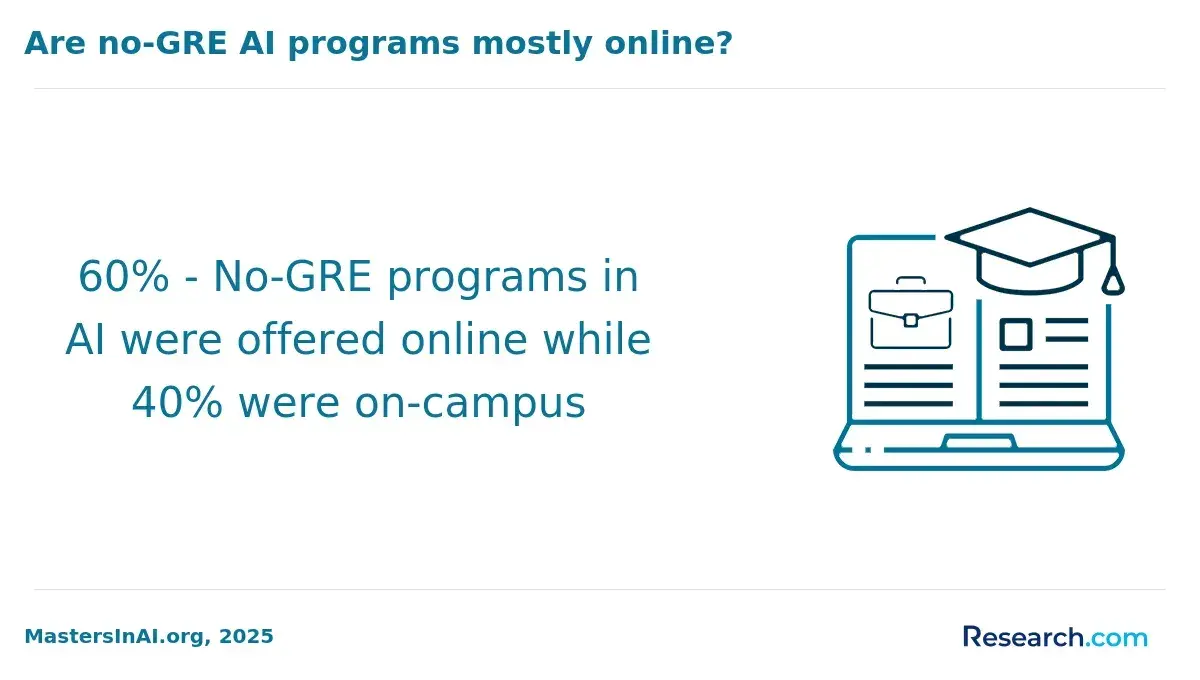
Standardized test scores like the GRE are often optional but can strengthen applications. Letters of recommendation from academic or professional contacts familiar with the applicant's analytical or ethical reasoning are valuable.
Programs emphasizing AI ethics, governance, and social responsibility may require prior coursework or certifications in ethics or nonprofit management. Practical experience with AI projects or philanthropy volunteering can also compensate for less traditional education.
Applicants without strong technical backgrounds can enroll in bridge courses or preparatory certificates to build essential skills before advanced study, important given ongoing concerns about ethical risks and governance gaps in foundation operations.
How long do AI programs for philanthropy usually take, and what tuition and fees should teams expect?
AI programs designed for philanthropy teams vary from brief workshops lasting a few days to in-depth courses spanning several months. Short-term sessions cover foundational knowledge crucial for ethically integrating AI tools into grantmaking. Longer programs offer comprehensive training on data science, AI ethics, bias mitigation, and practical applications tailored to nonprofit and foundation environments.
Costs depend on the program's length and provider. Introductory workshops are often free or low-cost, especially those supported by nonprofit coalitions or technology partners. More formal certificate programs or specialized training typically range from $1,500 to $7,000 per participant. Executive education hosted by universities or corporations can exceed $10,000, especially when including personalized consultation and hands-on projects.
Additional expenses may include software access, ongoing support, and travel. Many programs now focus on responsible AI and bias mitigation due to concerns in sector research. According to the 2024 NetHope "Unlocking AI for Nonprofits" report, over 40% of nonprofit and foundation leaders worry AI systems could unintentionally reinforce existing inequities, yet fewer than one-third have structured bias-mitigation processes. This highlights the urgent need for specialized training in equity and ethical AI use.
Choosing programs with strong emphasis on equity, case studies, and simulations relevant to philanthropy improves impact. Flexible, modular courses that encourage collaborative learning tend to enhance knowledge retention and practical application for busy professionals.
- Program lengths range from days to six months
- Costs vary from free workshops to $10,000+ executive education
- Bias mitigation and ethical use are crucial training components
- Flexible pacing and real-world case studies improve learning outcomes
Which AI-related roles are emerging in foundations and philanthropy, and how do these courses prepare professionals?
Emerging roles in foundations and philanthropy around artificial intelligence include AI data governance specialists, ethical AI officers, and AI program managers. These positions focus on managing sensitive data, ensuring ethical AI use, and integrating AI-driven solutions into grantmaking and impact measurement. According to Foundant Technologies, over half of foundations lack clear data inventories and pipelines, making the expertise of data governance specialists essential for protecting beneficiary information.
Courses tailored for these professionals teach skills in data management, privacy compliance, and ethical frameworks specific to nonprofit settings. For example, training in AI data governance helps learners develop protocols to safeguard data and build organizational trust. Ethical AI modules concentrate on mitigating bias and ensuring accountability aligned with philanthropic values.
Program manager training prioritizes project coordination, stakeholder management, and risk assessment, enabling effective implementation of AI initiatives that optimize grant distribution and improve impact evaluation. Practical assignments often include designing AI integration strategies within foundations and fostering collaboration across teams.
These educational paths help bridge gaps in data readiness and ethical AI usage, preparing professionals to safely advance AI adoption in the nonprofit sector. Professionals with backgrounds in nonprofit management, social sciences, or technology benefit by combining domain expertise with actionable AI governance and operational skills.
What salary ranges and career advancement opportunities exist for philanthropy professionals with AI training?
Philanthropy professionals skilled in AI can expect salaries ranging from around $65,000 for entry-level roles to over $130,000 in senior positions that blend technical and strategic expertise. Career progression often depends on integrating AI within organizational goals, requiring abilities in data analysis, algorithmic understanding, and ethical application.
Mid-career specialists working in foundations or nonprofits who excel in AI-based decision tools and impact measurement often advance to roles such as AI program manager, data strategist, or director of innovation. Growth in this field is closely linked to managing the complexities and increased costs of scaling AI projects. Organizations that have expanded from pilot programs to full adoption report a two- to threefold increase in AI-related software and computing expenses within 12 months, mainly due to usage-based pricing models as more staff adopt the technology.
Philanthropy teams must balance budget planning with maximizing social impact, making expertise in total cost of ownership critical. Additionally, professionals frequently serve as liaisons between technical experts and program officers, addressing challenges like data licensing, privacy compliance, and algorithmic bias. Demonstrated knowledge in these areas can unlock opportunities in AI governance, ethical boards, or strategic foresight units.
Direct experience implementing AI for grantee selection and impact evaluation significantly boosts market value. Those combining AI skills with strong nonprofit sector insight occupy a vital role where technology meets social good.
Are there industry-recognized AI certifications or ethical guidelines philanthropy teams should prioritize?
Philanthropy teams are increasingly turning to industry-recognized AI certifications and ethical guidelines to integrate artificial intelligence responsibly into their work. Programs like NTEN's "AI for Foundations" certificate and "Practical AI for Philanthropy Professionals" courses focus on practical AI skills alongside ethical frameworks specific to philanthropy's unique challenges. Enrollment in these courses saw over 150% growth from 2023 to 2024, signaling strong demand for trustworthy, sector-focused training.
Effective certifications cover both technical knowledge and ethical considerations, particularly in areas such as data privacy, bias mitigation, and transparency. Key focuses include:
- Ensuring beneficiary data is handled in compliance with privacy laws and trust standards.
- Applying ethical guidelines to minimize bias in grantmaking and resource distribution.
- Maintaining accountability through explainability and audit trails of AI decisions.
Following recommendations from ethical bodies like the Partnership on AI and the AI Ethics Lab helps align AI use with fairness, inclusivity, and social impact. Selecting programs with curricula tailored to philanthropy-rather than generic corporate training-ensures relevance to grantmaking, fundraising, and evaluation.
Prioritizing specialized certifications and ethical guidance not only mitigates risks but also strengthens outcomes by enabling informed adoption of artificial intelligence tools in philanthropic operations.
Other Things You Should Know About Artificial Intelligence
Philanthropy teams in 2027 encounter hurdles like integrating AI with existing systems, ensuring data privacy, and addressing ethical concerns. Understanding AI's limitations and managing change within organizations also pose challenges. These obstacles require strategic planning and ongoing education to fully embrace AI's potential in advancing social causes.
Foundations can measure AI impact by setting clear, quantifiable objectives tied to their goals, such as increased efficiency or better beneficiary outcomes. Using data analytics and continuous monitoring helps evaluate AI-driven projects' effectiveness. Additionally, incorporating feedback from stakeholders ensures the results reflect real-world benefits and challenges.
Ongoing AI education keeps professionals updated on rapid technological advances, regulatory changes, and emerging best practices. This continuous learning helps them adapt AI tools effectively to evolving philanthropic needs. It also fosters critical thinking to evaluate new AI solutions and integrate them responsibly within their programs.
References
- The Top 10 AI-Powered Learning Platforms in 2026 https://360learning.com/blog/ai-learning-platforms/
- Why philanthropy needs to prepare itself for a world powered by AI https://www.weforum.org/stories/2021/04/philanthropists-developed-an-action-plan-for-ethical-ai/
- AI Courses for Charities | Practical AI Skills for Non-Profits https://www.theaitrainingcompany.com/ai-courses-for-charities
- AI for Foundations Professional Certificate | NTEN https://www.nten.org/learn/professional-certificates/ai-for-foundations
- AI Foundations to Enhance Human Skills https://www.digitaleducationcouncil.com/best-practices-entries/ai-foundations-to-enhance-human-skills
- 3 Core Human Skills to Build Before AI Use | Common Sense Education https://www.commonsense.org/education/articles/3-core-human-skills-to-build-before-ai-use
- Ethical AI certifications https://verifywise.ai/lexicon/ethical-ai-certifications
- How Foundations Are Using AI to Multiply Impact: A Strategic Guide https://www.foundant.com/blog/how-foundations-are-using-ai-to-multiply-impact-a-strategic-guide-for-philanthropic-leaders/
- AI With Purpose: How Foundations and Nonprofits Are Thinking About and Using Artificial Intelligence | The Center for Effective Philanthropy https://cep.org/report-backpacks/ai-with-purpose-how-foundations-and-nonprofits-are-thinking-about-and-using-artificial-intelligence/
- New Jobs & Roles Emerging Due to AI in 2026 | Mercor https://www.mercor.com/resources/experts/new-artificial-intelligence-job-opportunities/