2027 Best AI Courses for Business Leaders With Certificates

Co-Founder and Chief Data Scientist
Business leaders often struggle to integrate artificial intelligence into their strategies without formal training or clear guidance. This gap can limit innovation and slow digital transformation in competitive markets. Acquiring relevant skills while managing existing responsibilities demands flexible, credible learning options that provide recognized certification. Navigating the vast field of artificial intelligence courses can be overwhelming, especially when seeking programs tailored to business applications.
This article explores the best artificial intelligence courses offering certification designed for leaders aiming to bridge knowledge gaps effectively and advance their careers by applying AI solutions in business contexts.
Key Things You Should Know
- In 2026, business leaders increasingly seek AI courses with certificates to enhance decision-making, boosting leadership impact in digital transformation across industries.
- Top programs emphasize practical AI applications, with 68% of courses updated post-2024 to include ethical considerations, data-driven strategies, and automation tools.
- Certified AI proficiency correlates with a 25% higher likelihood of promotion or salary increase among professionals in U.S. business sectors, highlighting growing market demand.
Advance Your Career with AI Online Courses
Artificial Intelligence: Implications for Business Strategy
This program provides an introduction to Artificial Intelligence and their implications for business strategy. Earn an official digital certificate.

Oxford Artificial Intelligence Programme
Explore this Oxford Artificial Intelligence programme offered in a flexible learning environment and explore topics like machine learning, automation, and robotics.

Implementing Agentic AI: Building Your Organizational Playbook
This online MIT Agentic AI course offers a practical approach to deploying AI agents in your organization, including a custom playbook. 3 weeks, exclusive launch price.

AI Adoption: Driving Business Value and Impact
This online MIT AI Adoption: Driving Business Value and Impact offers practical frameworks to close the gap between AI potential and business reality.

Artificial Intelligence in Pharma and Biotech
Discover the applications and limitations of artificial intelligence in pharma and biotech with this MIT online short course.

What makes an AI course for business leaders reputable, credible, and worth the investment?
Reputable ai courses for business leaders with recognized certification offer a blend of rigorous curriculum, practical application, and industry acknowledgment. These programs teach fundamental ai concepts like machine learning, data analytics, and automation, with an emphasis on business relevance. This approach helps leaders convert technical knowledge into effective strategic decisions. Credibility is often linked to institutions with proven expertise, including university-affiliated programs or collaborations with leading technology firms. Verified certificates from these sources are highly valued by employers.
Key criteria for reputable and credible artificial intelligence training programs include practical case studies and interactive learning elements. Executives benefit from dealing with challenges such as supply chain optimization, customer segmentation, and risk management through workshops or live projects. Courses covering ai governance and ethics equip leaders to address compliance and societal concerns appropriately.
Transparency regarding instructors' qualifications and course outcomes is crucial. Experienced faculty and positive student feedback enhance trustworthiness. Considering that many CEOs recognize AI as a competitive advantage but report a skill gap, a comprehensive course effectively bridges this divide. Flexibility and duration are also important, allowing busy leaders to learn without compromising depth, while alumni networks foster ongoing growth.
For those seeking further insights into related fields, the data science master degree ranking offers a useful resource to explore affordable and credible options.
Advance Your Career with AI Online Courses
Artificial Intelligence: Implications for Business Strategy
This program provides an introduction to Artificial Intelligence and their implications for business strategy. Earn an official digital certificate.
Oxford Artificial Intelligence Programme
Explore this Oxford Artificial Intelligence programme offered in a flexible learning environment and explore topics like machine learning, automation, and robotics.
Implementing Agentic AI: Building Your Organizational Playbook
This online MIT Agentic AI course offers a practical approach to deploying AI agents in your organization, including a custom playbook. 3 weeks, exclusive launch price.
Which are the best AI certificate programs specifically designed for business leaders?
Business leaders seeking the best ai certificate programs for business leaders should consider top offerings from MIT Sloan, Wharton, and Northwestern Kellogg. These programs combine technical insight with strategic application, ensuring executives gain practical skills to integrate ai into business decision-making. For instance, MIT Sloan's "Artificial Intelligence: Implications for Business Strategy" focuses on deploying ai to foster growth, manage risks, and drive innovation.
Northwestern's Kellogg School offers "Artificial Intelligence and Analytics for Business Leaders," which blends ai fundamentals with data-driven leadership techniques. Wharton's "AI For Business" course provides real-world case studies emphasizing competitive advantages and adoption challenges. These top ai courses with certificates for executives generally last between 6 to 12 weeks and award certificates recognized by employers.
Such programs tackle common executive challenges, including ai literacy gaps and aligning technology initiatives with strategy. As highlighted by PwC's Global CEO Survey, organizations with advanced ai adoption outperform their peers, making ai skills critical to leadership and compensation.
When choosing a course, look for programs offering:
- Hands-on applications linking ai capabilities with corporate strategy
- Exposure to ethical, legal, and operational ai issues
- Networking with fellow executives and ai experts
- Flexible schedules for busy professionals
These elements ensure actionable insights beyond technical knowledge. For broader educational options, explore AI degree online resources to complement certificate programs.
How do online AI courses for executives compare to in-person and hybrid options?
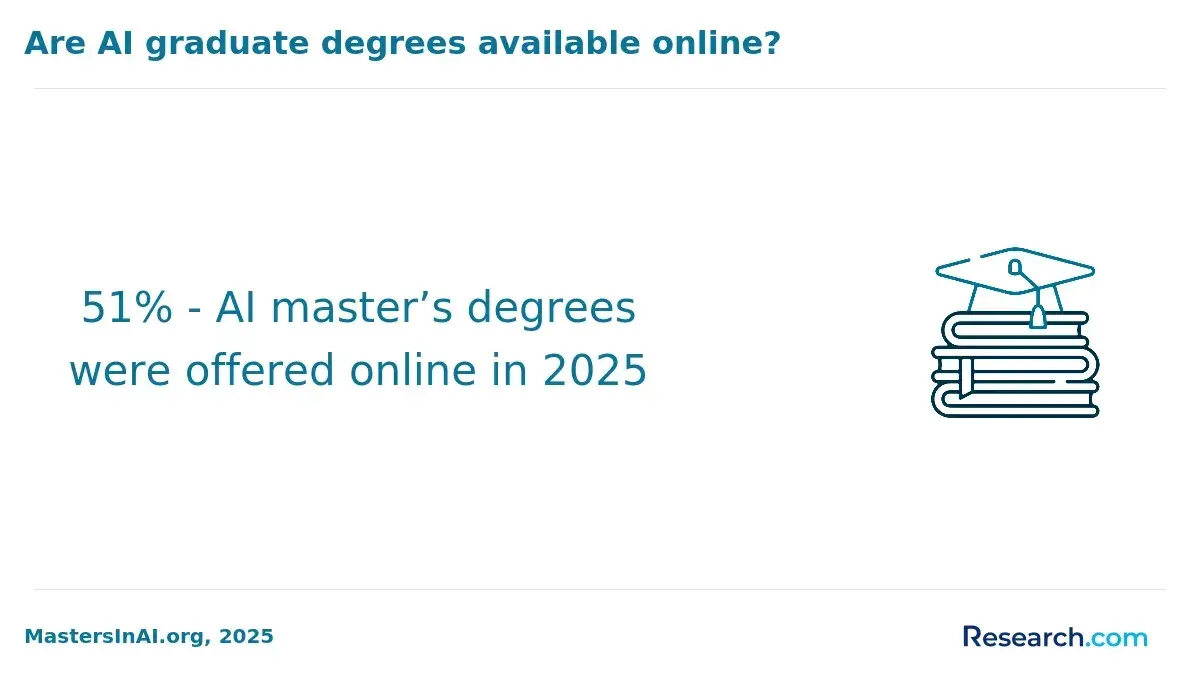
Online AI courses for executives offer unmatched flexibility and accessibility, making them ideal for leaders balancing busy schedules. These programs enable professionals to learn at their own pace without travel, allowing immediate application of concepts in the workplace. In contrast, in-person training offers valuable networking and face-to-face interaction but demands fixed schedules and travel commitments. Hybrid ai learning options for business leaders combine both approaches but may reduce the intensity of direct engagement while still requiring some on-site presence.
From a cost-benefit perspective, online AI certifications provide strong returns. The 2024 Coursera for Business report highlights that professionals completing AI and data-related certificates saw an average 9% salary increase within a year and a 34% higher likelihood of promotion compared to peers who did not upskill. This underscores how well-designed online programs can rival traditional formats in career impact.
Executives should assess their learning style and goals carefully. Those opting for online paths often find that courses with structured deadlines and cohort interaction enhance engagement and completion rates compared to purely self-paced options. Moreover, online curricula tend to update more rapidly to keep pace with AI's fast evolution.
For professionals interested in advancing through data science, exploring a master of data science online can be a strategic step to bolster expertise and career prospects.
What admission requirements do AI certificate programs for business leaders typically have?
Admission criteria for AI certificate programs aimed at business leaders often combine professional experience, educational background, and technical skills. Most require a bachelor's degree in business, technology, or a related field. However, some programs accept significant leadership experience-generally 3 to 5 years in strategic or managerial roles-in lieu of formal education. These requirements align with the needs of business professionals targeting AI certificate programs admission criteria for business leaders.
Technical prerequisites vary but generally include familiarity with data analytics, basic programming, or foundational AI concepts such as machine learning or statistics. Some courses offer bridge modules for business leaders who may lack a strong technical foundation. Quantitative skills are emphasized since AI-driven decision-making largely relies on interpreting data results.
Applicants may need to provide certifications from data science courses, coding bootcamps, or submit letters of recommendation demonstrating analytical capabilities or leadership in AI-related projects. This emphasis on practical readiness reflects the market demand for AI-savvy business leaders, where job postings related to AI have grown faster than qualified applicants. As such, programs often prioritize candidates who show strategic and technical potential, rather than solely academic credentials.
In summary, successful applications for requirements for business leadership in AI certificate courses typically include:
- A bachelor's degree or notable leadership experience in relevant industries
- Basic technical or quantitative proficiency
- Proof of ability to integrate AI into corporate strategy through recommendations or past projects
Those seeking advanced education in this area might also consider exploring an online data science doctorate to further deepen their expertise and leadership potential.
What topics and skills are covered in leading AI courses for business decision-makers?
Leading ai courses designed for business decision-makers blend technical knowledge, strategic frameworks, and governance principles. They cover ai fundamentals tailored to executives, data-driven decision-making, and ai model evaluation to empower informed technology deployment decisions.
Key topics include ai strategy development to align initiatives with business goals and gain competitive advantage. Governance and ethical considerations are core components, addressing compliance, bias mitigation, risk management, and transparency. Evidence shows organizations with formal ai governance structures are 1.6 times more likely to meet ai objectives and 1.4 times more likely to report significant financial benefits, according to Deloitte's 2024 State of AI in the Enterprise report.
Operational skills often emphasize ai project management, cross-functional collaboration, and vendor assessment. Participants learn to evaluate ai solution providers and guide teams through adoption phases. Real-world case studies from finance, healthcare, and retail illustrate practical applications.
Advanced courses explore ai-driven innovation, change management, and digital transformation leadership. Topics include integrating ai insights into customer engagement or supply chain optimization to foster measurable ROI. Leaders also learn to interpret ai outputs and communicate risks clearly and confidently.
By mastering these areas, business leaders are prepared to steer ai initiatives that balance technical potential with ethical use, strategic goals, and operational feasibility.
How long do AI certificate programs for business leaders take and what do they cost?
AI certificate programs for business leaders typically range from 6 weeks to 6 months, depending on depth and format. Short courses lasting 4 to 8 weeks focus on foundational concepts and practical applications, ideal for busy executives seeking quick, actionable insights. More comprehensive programs that cover advanced topics like AI strategy, implementation, and leadership in AI-driven transformation usually extend from 3 to 6 months with part-time or modular schedules.
Costs vary significantly, generally between $1,000 and $5,000. Entry-level certificates from reputable providers start around $1,000 to $2,000, while extensive options affiliated with leading universities or industry experts can exceed $3,000, reflecting curriculum depth and included resources. Many programs offer payment plans or employer-subsidized options to make them more accessible.
The focus is often on practical applications in areas such as customer operations, marketing and sales, and R&D, aligning with McKinsey's 2024 report estimating generative AI's potential to add $2.6-$4.4 trillion annually concentrated in these functions. Courses that integrate case studies and real-world business scenarios provide immediate utility.
When selecting a program, consider your availability and learning pace. Intensive bootcamps demand full-time commitment but accelerate certification, whereas longer courses offer greater flexibility. Cost assessments should weigh the return on investment in skills that support digital leadership amid growing AI adoption.
How do AI business certificates impact career advancement, leadership roles, and promotion potential?
AI business certificates enhance career prospects by validating a leader's ability to integrate AI strategies into business operations. These credentials highlight proficiency in managing AI projects without requiring deep technical skills, making candidates more competitive for leadership roles. For instance, managers with certificates focused on low-code or no-code AI applications are well-equipped to guide teams in deploying AI-driven solutions efficiently. Gartner projects that by 2027, 70% of new enterprise applications will use these technologies, up from less than 25% in 2020.
Leadership positions demand insight into AI's business impact beyond technical details. Certificates help professionals translate AI capabilities into strategic decisions, increasing promotion potential by aligning AI initiatives with organizational goals. Certified leaders develop skills to:
- Communicate effectively with technical teams and stakeholders
- Identify AI opportunities that boost operational efficiency
- Lead AI adoption confidently, minimizing organizational resistance
- Manage AI ethics and compliance risks
Employers favor certified candidates who can bridge AI innovation with business outcomes, reducing dependence on IT specialists. These credentials build trust in a leader's ability to oversee AI investments and adapt swiftly to technological changes. As AI literacy becomes essential in leadership roles, these certificates are practical tools that strengthen resumes and prepare professionals for the future demands of business.
What salary benefits and compensation outcomes are linked to AI skills for managers?
Managers with ai skills often command salary premiums between 10% and 25%, reflecting the growing demand for leaders who can embed ai into business operations. This expertise enhances decision-making and drives efficiency, leading to improved compensation packages that frequently include bonuses tied to the success of ai projects.
For example, managers spearheading ai initiatives in marketing or supply chain management commonly receive enhanced incentive plans linked to revenue growth and cost savings. Many organizations also offer profit-sharing or stock options as part of their rewards for demonstrated ai fluency.
The LinkedIn Workplace Learning Report highlights that 90% of learning and development leaders prioritize ai training, with over half boosting budgets to support skill development in this area. This trend underscores that ai proficiency is increasingly vital for career advancement across industries.
Upskilling in fields such as machine learning, data ethics, or natural language processing opens pathways to roles like ai project manager, data strategy director, and digital transformation lead, which often have median salaries above $130,000 in the U.S. market.
- Salary premiums of 10%-25% for ai-skilled managers
- Bonuses and incentives tied to ai project success
- Leadership roles with $130,000+ median pay
- Corporate focus on ai as a key learning priority
- Access to profit-sharing and stock options through ai initiatives
How should business leaders evaluate accreditation and certificate legitimacy for AI programs?
When selecting AI programs, business leaders should rigorously verify accreditation and certificate legitimacy to ensure skills translate into real career value. Confirm the institution's accreditation through trusted bodies like the U.S. Department of Education's Database of Accredited Postsecondary Institutions or the Council for Higher Education Accreditation (CHEA). Accredited programs meet established academic standards and gain employer recognition.
Certificates should demonstrate mastery of applicable AI competencies such as machine learning basics, data ethics, and AI-driven decision-making. Programs developed with industry partners or corporations tend to offer practical, real-world training. Look for certificates detailing specific learning outcomes and skills rather than mere course completion.
The provider's reputation and certificate format also matter. Credentials from established universities or recognized professional organizations generally hold more weight. Digital badges with verifiable metadata can boost legitimacy and distinctiveness on resumes.
Regional demand trends impact relevance. According to the World Economic Forum's Future of Jobs Report, 61% of large North American enterprises will substantially invest in AI and big data training by 2028, higher than Europe at 49% and East Asia's 42%. This highlights strong market growth and demand for certified AI skills in North America.
Finally, alumni success-measured by job placement data and testimonials-provides transparency on career outcomes. Business leaders should evaluate all factors to confidently select AI certificates that effectively enhance expertise and market competitiveness.
Which industries and roles most demand business leaders with formal AI training?
Industries with the highest demand for business leaders skilled in artificial intelligence include technology, finance, healthcare, manufacturing, and retail. In technology companies, leaders focus on AI-driven product development, data strategies, and automation. Finance executives use AI for algorithmic trading, risk management, fraud detection, and creating personalized customer experiences. Healthcare professionals apply AI to enhance diagnostics, patient care, and operational workflows.
Manufacturing leaders leverage AI for predictive maintenance, supply chain improvements, and quality assurance. Retail managers rely on AI for demand forecasting, inventory planning, and personalized marketing approaches. Across these sectors, formal training in artificial intelligence enables leaders to interpret complex data, guide responsible AI adoption, and balance innovation with ethical concerns.
Key roles requiring AI competence include chief executives, chief data officers, product managers, strategy officers, and operations managers. Those leading digital transformation or AI implementation benefit greatly from AI fluency, aligning technology with organizational goals. For instance, a product manager with AI skills can identify feasible use cases and collaborate efficiently with technical teams, minimizing costly errors.
According to Accenture's "AI Reinvented Enterprise" study, companies with leaders who quickly build AI fluency and redesign roles around AI may achieve labor productivity gains up to 50% by 2030, significantly surpassing gains in slower adopters. This underscores the critical role of AI competency in driving competitive advantage through operational transformation and workforce evolution.
Other Things You Should Know About Artificial Intelligence
One common misconception is that artificial intelligence will replace all human jobs; however, it typically automates repetitive tasks and enhances decision-making rather than fully replacing employees. Another myth is that AI systems are infallible, but they rely heavily on the quality of data they are trained on and can produce biased or inaccurate outcomes. Understanding these nuances helps business leaders implement AI effectively and responsibly.
In 2027, top AI courses for business leaders include MIT's AI: Implications for Business Strategy, Northwestern's AI Leadership for Business, and Oxford’s Artificial Intelligence Programme. These courses offer certificates upon completion and focus on strategic applications of AI in business contexts.
Business leaders must address issues such as data privacy, algorithmic bias, transparency, and accountability when deploying artificial intelligence. Ensuring that AI systems do not perpetuate discrimination or invades user privacy is crucial for maintaining trust and compliance with regulations. Ethical AI practices also promote long-term sustainable adoption in organizations.
Yes, artificial intelligence supports strategic decision-making by analyzing vast amounts of data to identify trends, risks, and opportunities faster than traditional methods. AI-powered tools provide predictive insights that help leaders optimize resources, forecast market changes, and develop data-driven strategies. This improves agility and competitive advantage.
References
- Creating Opportunities For All In The Intelligent Age https://www.weforum.org/stories/2026/01/creating-economic-opportunities-for-all-in-the-intelligent-age/
- Choosing the Right AI Course for Business Leaders https://www.tsa-bildung.de/en/blog/choosing-the-right-ai-course-for-business-leaders
- AI to Improve Decision-Making & Business Performance Course https://aztechtraining.com/course/ai-to-improve-decision-making-business-performance
- Which AI course should I do? https://www.afr.com/work-and-careers/education/which-ai-course-should-i-do-20250312-p5lixe
- AI and Analytics Programs https://esmt.berlin/executive-education/analytics-ai-programs
- Four AI Upskilling Strategies for Business Leaders https://www.jff.org/blog/four-ai-upskilling-strategies-business-leaders/
- The Certification Advantage: How Credentials Drive Career Growth https://courses.msicertified.com/blog/the-certification-advantage-how-credentials-drive-career-growth
- 16 Artificial Intelligence Career Paths https://www.calmu.edu/news/artificial-intelligence-career-paths
- AI certificates | edX https://www.edx.org/certificates/ai-certificates
- AI is the future of total rewards https://www.mercer.com/insights/total-rewards/employee-benefits-strategy/ai-is-the-future-of-total-rewards/