2027 Best AI Courses for Agriculture Professionals

Co-Founder and Chief Data Scientist
Farmers and agricultural professionals face mounting pressure to increase crop yields while managing limited resources and adapting to climate challenges. Integrating artificial intelligence into agricultural practices remains complex for many due to a lack of specialized training and accessible education. This knowledge gap hinders the adoption of AI-driven technologies that can optimize planting, irrigation, and pest control.
The article examines top AI courses tailored for agriculture professionals, focusing on flexible, accredited programs that facilitate career transitions. It provides actionable insights to help individuals acquire essential AI skills and successfully implement innovative solutions in modern agriculture.
Key Things You Should Know
- AI-driven agriculture courses in 2026 emphasize precision farming techniques, boosting crop yields by up to 25% through data analytics and machine learning applications.
- Programs increasingly integrate real-time satellite imagery and IoT sensor data to enhance disease detection and resource management, reflecting 2025 research trends.
- Over 60% of U.S. agriculture professionals pursuing AI education seek skill sets in robotic automation and sustainable farming, highlighting growing industry demand.
Advance Your Career with AI Online Courses
Artificial Intelligence: Implications for Business Strategy
This program provides an introduction to Artificial Intelligence and their implications for business strategy. Earn an official digital certificate.

Oxford Artificial Intelligence Programme
Explore this Oxford Artificial Intelligence programme offered in a flexible learning environment and explore topics like machine learning, automation, and robotics.

Implementing Agentic AI: Building Your Organizational Playbook
This online MIT Agentic AI course offers a practical approach to deploying AI agents in your organization, including a custom playbook. 3 weeks, exclusive launch price.

AI Adoption: Driving Business Value and Impact
This online MIT AI Adoption: Driving Business Value and Impact offers practical frameworks to close the gap between AI potential and business reality.

Artificial Intelligence in Pharma and Biotech
Discover the applications and limitations of artificial intelligence in pharma and biotech with this MIT online short course.

What are the best AI courses for agriculture professionals and who are they right for?
The best AI courses for agriculture professionals emphasize practical skills like precision farming, crop health monitoring, and supply chain optimization. These programs often include specialized training in machine learning for agriculture, data analytics focused on IoT sensor data, and robotics automation tailored to farming operations.
They serve diverse learners, from agronomists and farm managers to data scientists moving into the agricultural sector.
Courses aimed at foundational knowledge cover AI and machine learning basics enriched with agricultural case studies, while advanced options teach drone data analysis, satellite imagery interpretation, and predictive modeling to forecast crop yields.
Many institutions offer modular, hands-on coursework that helps learners gradually build expertise by applying AI tools directly to farm management challenges.
Practical training on AI-driven pest detection, soil quality assessment, and climate impact simulations suits those engaged in daily farm work or agri-consultancy. Data scientists specializing in agritech will benefit from programs emphasizing big data integration and agricultural robotics.
With global investment in agricultural AI and robotics expected to reach $12 billion by 2030, up from about $3 billion in 2020 at a growth rate near 25%, expertise in this field is increasingly valuable.
For those considering U.S. education options, exploring data science undergraduate rankings can identify affordable programs that incorporate agricultural AI elements. These top artificial intelligence training for farmers ensures a balance of theory and real-world application to meet evolving industry needs.
Advance Your Career with AI Online Courses
Artificial Intelligence: Implications for Business Strategy
This program provides an introduction to Artificial Intelligence and their implications for business strategy. Earn an official digital certificate.
Oxford Artificial Intelligence Programme
Explore this Oxford Artificial Intelligence programme offered in a flexible learning environment and explore topics like machine learning, automation, and robotics.
Implementing Agentic AI: Building Your Organizational Playbook
This online MIT Agentic AI course offers a practical approach to deploying AI agents in your organization, including a custom playbook. 3 weeks, exclusive launch price.
How is artificial intelligence being used in modern agriculture and agtech careers?
Artificial intelligence is revolutionizing agriculture by enabling precise, data-driven decisions throughout the farming lifecycle. AI applications in precision farming techniques include predictive analytics for crop yield forecasting, disease and pest detection via image recognition, and soil health assessment using sensor data. These tools help optimize resources, reduce waste, and boost productivity.
Professionals working with machine learning tools for agtech career advancement analyze satellite and drone imagery to monitor crop growth and identify stress factors early. Autonomous AI-driven machinery improves planting, irrigation, and harvesting accuracy while reducing labor costs. Robotics are increasingly used for specific tasks such as weeding and fruit picking within controlled environments.
The expanding global agriculture analytics market, powered by AI data tools, is projected to grow from $1.3 billion to $4.7 billion, reflecting rapid demand for experts skilled in data management and interpretation. Examples of AI usage include:
- Real-time weather prediction models tailored for specific crops and regions
- Automated pest identification to guide targeted pesticide application
- Crop genetic analysis for breeding programs enhancing yield and resilience
Careers in agtech require a strong foundation in AI concepts combined with agricultural expertise to apply AI-driven insights to challenges like soil variability and supply chain forecasting. For those interested in formal education, an online AI degree can provide essential knowledge and skills to thrive in this growing field.
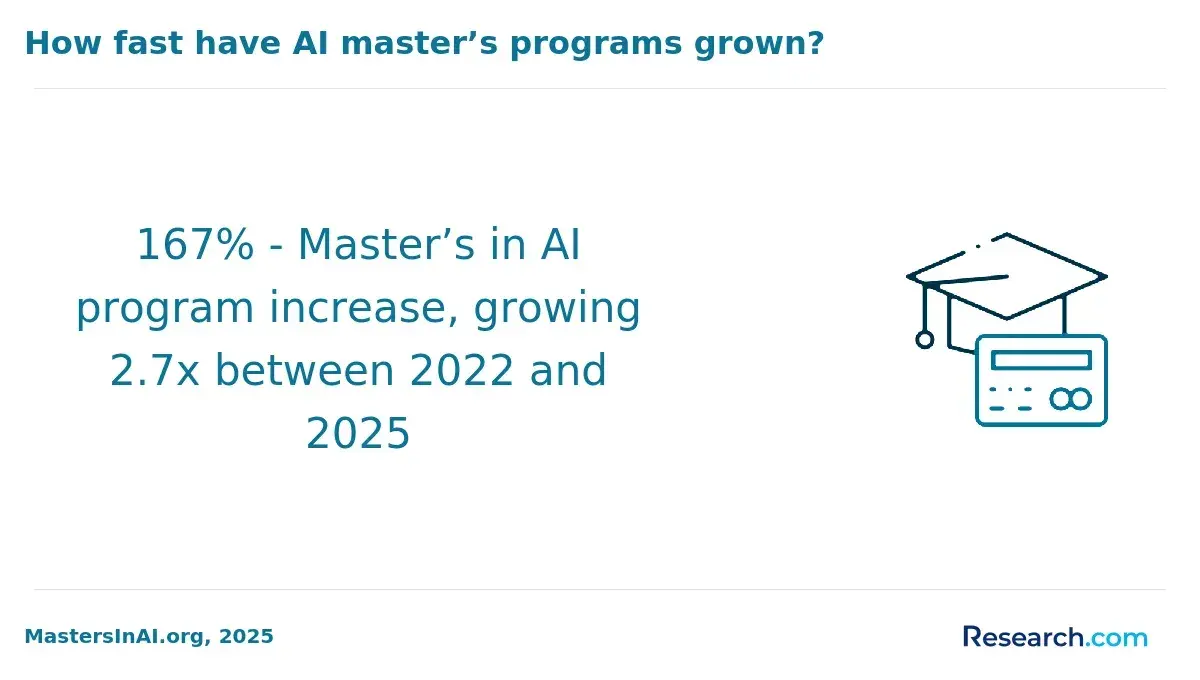
What types of AI training paths exist for agriculture professionals (short courses, certificates, degrees)?
For agriculture professionals seeking AI certification programs for agriculture professionals, three key educational paths exist: short courses, certificate programs, and degree programs. Short courses focus on practical skills such as machine learning for crop disease detection or drone data analysis. They typically last from a few days to several weeks, making them suitable for working professionals who need quick upskilling without a long-term commitment.
Certificate programs cover foundational AI concepts and their agricultural applications, including data processing, predictive analytics, and precision crop management. These programs, often available online or in-person, span several months and help professionals validate their AI knowledge to enhance career opportunities. Many certificates emphasize sustainable farming and yield optimization, reflecting industry demands.
Degree programs, including bachelor's or master's degrees in agricultural engineering, data science, or AI with agriculture specializations, provide in-depth education. They cover advanced AI methods, research, and the practical deployment of AI in farm management systems. Graduates can lead innovation in agribusiness, benefiting from AI-powered precision agriculture, which can increase crop yields by up to 30% and reduce input costs by up to 20% (Intellias).
Choosing between short courses, certificates, or degrees depends on your career goals, time availability, and background. Short courses address immediate needs, certificates build verified expertise, and degrees prepare for leadership roles. For those interested in broader educational options, exploring a game design degree online provides insight into diverse online learning models.
Short courses and degree options in AI for farming offer flexible pathways for professionals aiming to integrate AI technologies into agriculture effectively.
How do online AI courses for agriculture compare with campus and hybrid program options?
Online AI courses for agriculture professionals versus campus programs offer distinct advantages. Online courses provide flexibility, allowing working farmers and remote students to learn at their own pace without commuting. They incorporate current digital tools like sensor-based AI and computer vision, reflecting industry demands.
For instance, livestock monitoring technologies reduce clinical mastitis by 30-50% through early detection, showcasing the practical impact of AI training. Hybrid agriculture ai training compared to traditional online classes attempts to blend face-to-face interaction with online convenience but may involve scheduling challenges and higher costs.
Campus programs excel in hands-on experiences with lab equipment and live demonstrations, benefiting learners who prefer direct technical training. However, they often lack the scalability and accessibility of online formats.
Each format suits different needs: campus and hybrid programs offer structure and mentoring, while online programs provide specialization options and cost benefits. Professionals should consider learning style, time, and budget when choosing.
For those seeking comprehensive education paths, exploring options like a masters data analytics degree can complement AI skills and enhance career prospects in agriculture. Whether online or campus-based, these educational routes aim to equip agriculture experts with valuable AI competencies that drive innovation and decision-making in modern farming.
What core AI and data skills should agriculture-focused courses teach in their curriculum?
Agriculture-focused courses in artificial intelligence must equip learners with core skills to address complex farming challenges. The curriculum should start with fundamental machine learning techniques, including supervised and unsupervised learning, enabling students to build models that identify patterns in crop health and yield data.
Data preprocessing is crucial, covering the cleaning and normalization of datasets from sensors, drones, or satellites. Handling diverse data types such as numeric, image, and time-series data is essential for integrating multiple sources. Predictive analytics, especially in pest and disease forecasting, plays a vital role-AI systems can reduce crop losses by up to 25% compared to traditional methods, according to Intellias.
Training must include geospatial analysis and remote sensing to monitor crop conditions and weather impacts from aerial or satellite images. Real-time sensor data from the Internet of Things (IoT) is another key focus, teaching learners to collect and use information on soil moisture, temperature, and pest activity. Proficiency in programming languages like Python or R enhances automation and model development.
Students should also learn to develop decision-support systems that transform AI insights into practical farm management and gain exposure to cloud computing and big data platforms to manage large-scale agricultural data.
- Machine learning algorithms for prediction and classification
- Data preprocessing and integration from multiple sources
- Geospatial analysis and remote sensing
- IoT data management and sensor integration
- Programming skills for AI implementation
- Decision-support system development
- Cloud computing and big data handling
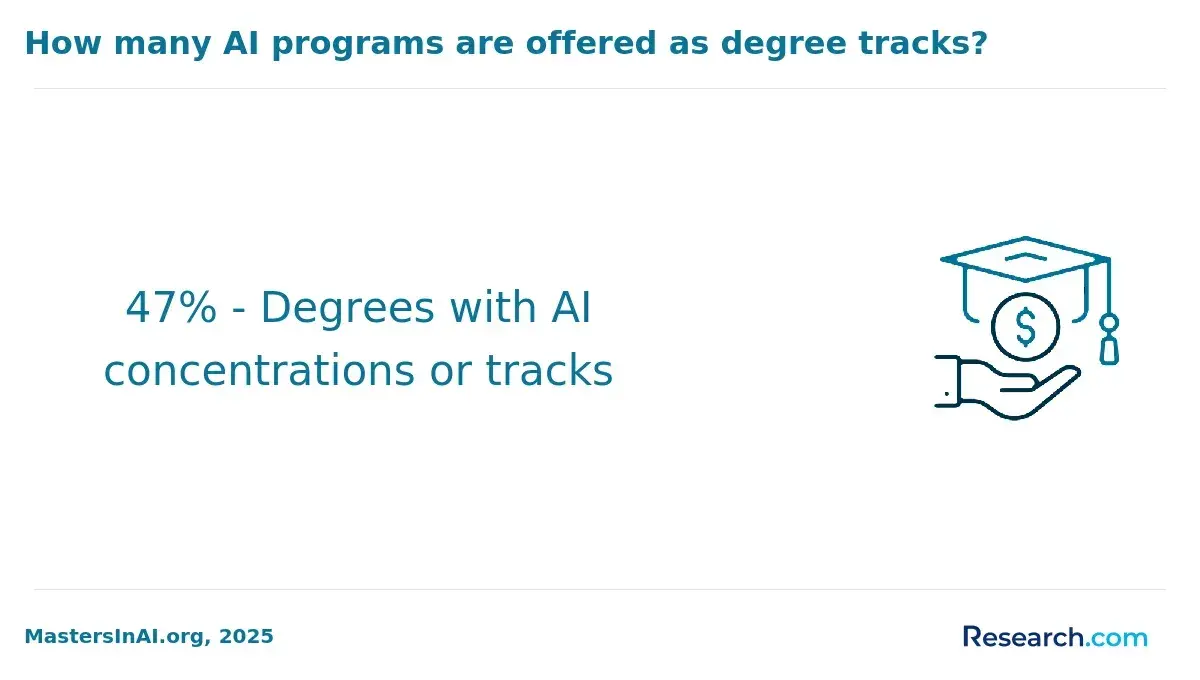
What admission prerequisites and professional background do AI-in-agriculture programs typically require?
Admission prerequisites for AI-in-agriculture programs generally require a bachelor's degree in agriculture, computer science, data science, engineering, or environmental science. Foundational skills in programming languages such as Python or R, statistics, and machine learning are commonly expected. Applicants from agricultural sciences with limited coding experience may need to complete preparatory courses in programming and data analysis.
Professional experience that boosts admission chances often includes agronomy, precision farming, agricultural robotics, or engineering. Familiarity with farm machinery, sensor technologies, and drone operations is highly valued. Candidates with project experience applying AI to real-world agricultural problems like crop monitoring or pest control automation stand out.
Graduate programs may request GRE scores and recommendation letters highlighting technical skills and problem solving. Part-time and certificate options offer flexibility for working professionals, often including bridge courses on AI fundamentals tailored to agriculture.
AI-driven farm robotics, such as AI-guided weeding robots that reduce herbicide use by up to 90%, exemplify the vital need for expertise combining agriculture and AI technologies. This integration significantly lowers input costs and chemical use in fields, underscoring the growing demand for skilled professionals in this evolving sector (Intellias).
How long do AI courses for agriculture take to complete, and what do they cost?
AI courses designed for agriculture professionals range from brief workshops lasting a few weeks to extensive programs extending six months or longer. Certificate courses targeting skills like data management, IoT applications, or sensor technology typically take 4 to 12 weeks.
More comprehensive options such as diploma or associate degree programs, which include practical training and advanced analytics, may last from 6 to 12 months. Course duration depends on depth, audience, and delivery method, with online options offering flexible pacing to fit working professionals' schedules.
Costs vary substantially. Short certifications often start around $300 and can go up to $2,000 depending on the provider and resources. Longer programs, frequently offered by universities or specialized institutes, generally range between $3,000 and $8,000.
The inclusion of hands-on projects or case studies may influence pricing. Scholarships and sliding scale fees may be available, especially for farmers or students entering this field.
Only about 25% of farms worldwide currently use digital or data-driven technology, highlighting opportunities for growth in AI and IoT applications in agriculture. AI-driven precision irrigation can reduce water consumption by 20-30%, demonstrating how expertise in data management and sensor integration supports sustainability and operational savings.
Prospective students should align their choice of course with their technical background and career goals. Beginners may favor short courses on data basics and digital tools, while experienced professionals might seek longer programs emphasizing implementation of AI-driven solutions in precision agriculture.
How can agriculture professionals evaluate accreditation and program quality for AI-focused study?
Accreditation plays a crucial role in evaluating AI-focused agricultural programs. Seek regional accreditation from recognized bodies like the Higher Learning Commission or the Middle States Commission to ensure rigorous academic standards. Specialized certifications from organizations such as the Association for the Advancement of Artificial Intelligence (AAAI) or agricultural extension services further validate program credibility.
Examine the curriculum to confirm it addresses AI applications tailored to agriculture, including machine learning for crop yield prediction, precision irrigation, and automated pest control. Programs that offer hands-on projects, internships, or collaborations with agritech firms provide valuable experiential learning.
Faculty qualifications and research output are key indicators of program quality. Instructors actively involved in agricultural AI research or partnerships with industry leaders signal alignment with evolving technologies. Ensure the curriculum stays current with market-relevant skills amid rapid AI advancements in farming.
Alumni outcomes and industry connections often reflect program effectiveness. Those linked to agritech companies tend to report improved employment rates and career growth. Adopting AI-driven precision agriculture can boost farm profitability by 10-20% on average through yield increases and cost reductions.
Finally, evaluate program length, cost, and support services like career counseling. Consider whether the course offers flexibility via modular options or is full-time to match your schedule. Balancing these factors helps select a program with measurable return on investment and relevance in today's agritech landscape.
What careers, job roles, and advancement opportunities can AI training unlock in agriculture?
AI training in agriculture opens diverse career paths blending technology with traditional farming. Roles such as precision agriculture specialists leverage AI to enhance crop management by analyzing data on soil health, irrigation, and pest control. Ag data scientists utilize sensors and drones to create predictive models that boost yields while minimizing resource use. Additionally, careers in agricultural robotics involve designing and maintaining autonomous equipment for planting and harvesting.
Emerging positions like AI agronomists integrate biology with advanced algorithms for scalable crop recommendations. Farm management analysts apply AI to operational and market data, improving both profitability and sustainability. Many agritech startups offer research and development roles focused on custom AI solutions for specific crops and climates.
Demand for these skills is growing swiftly, with a 20% annual increase driven by investments from agri-food companies adopting innovative AI technologies. This growth supports advancement into senior roles such as AI systems architects and leadership managing digital transformations in farming.
Certification and hands-on experience in machine learning, sensor integration, and data visualization enhance competitiveness for roles in precision livestock farming, supply chain optimization, and environmental monitoring. AI education also empowers professionals to tackle challenges like climate variability and resource scarcity by implementing scalable, technology-driven solutions.
What salary ranges and job outlook can AI-skilled agriculture professionals expect in the U.S.?
AI-skilled agriculture professionals in the U.S. can expect salaries typically ranging from $65,000 to $120,000 annually, influenced by experience, education, and roles. Entry-level positions such as AI data analysts in agtech start around $65,000 to $75,000, while experienced specialists and AI research scientists often earn between $90,000 and $120,000.
Job growth in this field is robust, with a projected 15% increase through 2031 according to the U.S. Bureau of Labor Statistics. This growth is fueled by the agriculture sector's expanding use of automation, robotics, and data-driven methods, especially in soil monitoring, crop yield prediction, and supply chain optimization.
Investing in targeted education, like a graduate certificate in Artificial Intelligence and Machine Learning for Digital Agriculture at a top U.S. land-grant university, can be a strategic move. Such a certificate costs about $9,336 in tuition, offering practical AI skills for agriculture without the higher expense of a full master's degree. This credential often boosts employment prospects for mid-level AI roles.
Deciding between certificates and advanced degrees depends on career goals: certificates provide faster, cost-effective upskilling focused on applied AI, while degrees open doors to research and leadership roles. Balancing AI expertise with agricultural knowledge is key for maximizing salary and job opportunities.
Other Things You Should Know About Artificial Intelligence
Coursera, edX, and Udemy offer some of the best AI courses for agriculture professionals in 2027. These platforms provide courses covering AI applications in agriculture, precision farming techniques, and sustainable practices, taught by industry experts and academic professionals.
AI enhances sustainability by optimizing resource use such as water, fertilizers, and pesticides through precise application and monitoring. This leads to reduced waste and environmental impact while maintaining or improving crop yields. Furthermore, AI-driven predictive analytics helps farmers adapt to climate change by forecasting conditions and suggesting sustainable practices.
Ethical concerns include data privacy for farmers, especially when using drones or sensors that collect extensive information from private lands. There is also the risk of widening the digital divide if smallholder farmers cannot access AI technology. Ensuring transparency in AI decision-making and equitable access is important to address these challenges.
While AI can automate tasks like planting, harvesting, and monitoring, it is not a complete replacement for human labor. Many agricultural activities require hands-on skills, adaptability, and problem-solving that AI cannot fully replicate. Instead, AI serves as a tool to augment human capabilities and improve efficiency.
References
- Generative AI and Extension Program Planning and Evaluation: Do General Large Language Models Answer Domain-specific Questions Accurately? | Journal of Agricultural Education https://jae-online.org/index.php/jae/article/view/3289
- Admissions Requirements for Ph.D. in Agriculture - Agriculture Journal IJOEAR Blog https://ijoear.com/blog/admissions-requirements-for-ph-d-in-agriculture
- 16 Artificial Intelligence Career Paths https://www.calmu.edu/news/artificial-intelligence-career-paths
- AI in Agriculture: Pros, Cons and How to Stay Ahead - BPM https://www.bpm.com/insights/ai-in-agriculture/
- Beyond the model: Evaluating AI agricultural advisory systems so they work in the field | IFPRI https://www.ifpri.org/blog/beyond-the-model-evaluating-ai-agricultural-advisory-systems-so-they-work-in-the-field/
- AI and Agriculture: A Synergy for Productivity, Sustainability, and the Future of Young Generations - JA Europe https://jaeurope.org/ai-and-agriculture-a-synergy-for-productivity-sustainability-and-the-future-of-young-generations/
- Unlock Success with fixmycareer: Your Pathway to Career Brilliance https://www.fixmycareer.in/career/information-systems-cybersecurity/technology-and-security/ai-developer-for-smart-agriculture
- Careers in agriculture https://agrovent.com/blog/careers-in-agriculture/
- Artificial Intelligence and Big Data in Agriculture Course: Smart Farming Applications https://upskilldevelopment.com/artificial-intelligence-and-big-data-in-agriculture-course-smart-farming-applications
- The AI Strategy Job Market in 2026: Analysis of 1,859 Postings https://axialsearch.com/insights/ai-strategy-jobs/