2027 Best AI Courses for Last-Mile Delivery Teams

Co-Founder and Chief Data Scientist
Last-mile delivery teams face growing pressure to optimize routes, reduce costs, and improve customer satisfaction amid increasing demand. Many professionals lack specialized skills in artificial intelligence needed to implement efficient solutions.
Without targeted training, teams struggle to leverage AI tools effectively, limiting operational advancements and competitive edge. This gap often results in slower deliveries and higher expenses.
This article explores the best AI courses tailored for last-mile delivery professionals, highlighting flexible, accredited programs designed to equip learners with practical knowledge and skills essential for transforming delivery operations and driving measurable improvements.
Key Things You Should Know
- Last-mile delivery teams increasingly rely on artificial intelligence to optimize routing, reducing delivery times by up to 25% according to 2025 logistics studies.
- AI courses now emphasize practical machine learning applications and real-time data analytics to improve operational efficiency and customer satisfaction in last-mile logistics.
- Enrollments in specialized artificial intelligence programs for supply chain management grew 40% in 2024, reflecting strong industry demand for skilled professionals.
Advance Your Career with AI Online Courses
Artificial Intelligence: Implications for Business Strategy
This program provides an introduction to Artificial Intelligence and their implications for business strategy. Earn an official digital certificate.

Oxford Artificial Intelligence Programme
Explore this Oxford Artificial Intelligence programme offered in a flexible learning environment and explore topics like machine learning, automation, and robotics.

Implementing Agentic AI: Building Your Organizational Playbook
This online MIT Agentic AI course offers a practical approach to deploying AI agents in your organization, including a custom playbook. 3 weeks, exclusive launch price.

AI Adoption: Driving Business Value and Impact
This online MIT AI Adoption: Driving Business Value and Impact offers practical frameworks to close the gap between AI potential and business reality.

Artificial Intelligence in Pharma and Biotech
Discover the applications and limitations of artificial intelligence in pharma and biotech with this MIT online short course.

What are the best AI courses tailored specifically for last-mile delivery and logistics teams?
For last-mile delivery and logistics teams, effective AI training programs for logistics and last mile delivery emphasize practical skills like route optimization, demand forecasting, and automated dispatching. These programs blend data analytics with machine learning fundamentals and logistics-specific scenarios.
Since last-mile delivery accounts for 53% of total shipping costs according to Capgemini Research Institute, focusing on these areas delivers significant cost-saving potential.
Recommended courses frequently include real-world simulations that optimize delivery sequences to reduce fuel consumption and time. They also teach predictive analytics to help anticipate demand shifts using historical data and factors like weather or traffic.
Many of the best AI courses for last mile delivery teams offer specialized tracks integrating AI tools within transportation management systems (TMS), covering:
- Machine learning algorithms for route and inventory optimization
- Utilization of AI-powered dashboards for operational monitoring
- Automation of scheduling and dynamic resource allocation
Top-tier AI training programs feature instructor-led courses from institutions partnered with logistics firms, providing hands-on project experience. Online certificates often focus on deploying AI models in cloud environments, crucial for scalable last-mile solutions.
Professionals should choose courses that balance theory with applied skills, enabling cost reduction, improved delivery accuracy, and better customer management. Exploring artificial intelligence career paths can further clarify how these programs support long-term growth.
Advance Your Career with AI Online Courses
Artificial Intelligence: Implications for Business Strategy
This program provides an introduction to Artificial Intelligence and their implications for business strategy. Earn an official digital certificate.
Oxford Artificial Intelligence Programme
Explore this Oxford Artificial Intelligence programme offered in a flexible learning environment and explore topics like machine learning, automation, and robotics.
Implementing Agentic AI: Building Your Organizational Playbook
This online MIT Agentic AI course offers a practical approach to deploying AI agents in your organization, including a custom playbook. 3 weeks, exclusive launch price.
How can last-mile delivery professionals choose between online and on-campus AI training options?
Last-mile delivery professionals choosing between online and on-campus AI training programs for last-mile delivery professionals should weigh schedule flexibility, interactivity, and practical experience. Online courses offer flexibility with self-paced modules and recorded lectures, ideal for balancing work demands.
In contrast, on-campus programs provide immersive, hands-on opportunities that foster collaboration and immediate feedback, benefiting those who prefer structured learning.
Considering the benefits of online versus in-person AI courses for last-mile delivery teams requires attention to the type of AI skills needed. Complex applications like route optimization algorithms benefit from practical exercises with real data, often better supported by on-campus labs and workshops.
However, online platforms increasingly use advanced simulations and interactive tools to offer comparable experiences.
Cost and location remain factors, but curriculum quality and instructor expertise should take priority. Logistics-specific AI applications deliver higher returns, with companies reporting a 10-30% cut in delivery costs through reduced mileage, fuel use, and driver hours, based on Burq's analysis.
Check if training includes recognized certification, as online credentials backed by reputable institutions can be valuable, while on-campus degrees may have broader professional recognition but require more time and money.
Explore options like AI degrees to find programs that align with your career goals, learning style, and the complexity of AI skills required for last-mile delivery success.
Which accredited U.S. universities and platforms offer recognized AI programs for delivery operations?
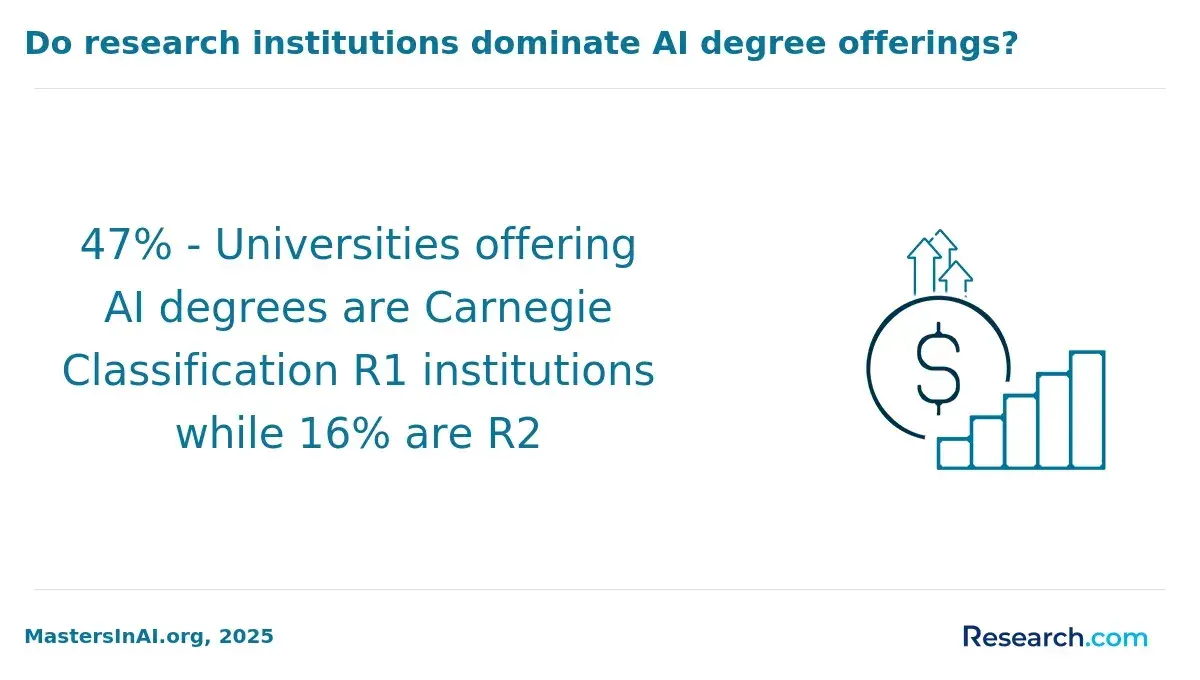
Several accredited U.S. universities offer AI programs tailored for delivery operations. Carnegie Mellon University, recognized for leadership in AI research, provides specialized courses in machine learning and autonomous systems that enhance dispatch and routing efficiency. The Massachusetts Institute of Technology (MIT) also awards a professional certificate in AI and supply chain management, integrating intelligent algorithms into delivery networks.
Top online platforms with recognized AI courses for last-mile delivery teams include Coursera and edX. Coursera collaborates with institutions like Stanford and the University of Washington to offer accredited AI programs emphasizing real-world optimization techniques.
edX features MicroMasters and professional certificates from schools such as Columbia University, focusing on AI-driven data analytics and decision-making for route planning and fleet management.
These programs emphasize hands-on experience with AI tools to improve last-mile efficiency. Students learn predictive analytics for demand forecasting and reinforcement learning to optimize routing decisions.
This approach aligns with data showing that brands deploying AI-based dispatch and routing solutions have reduced delivery windows by up to 20%, enhancing on-time performance and customer satisfaction.
Prospective students should seek programs with strong industry connections and practical labs that address delivery challenges like delay reduction and vehicle utilization. Accreditation ensures curriculum rigor and value to employers.
For those exploring further education, the best online data science masters often include AI components relevant to these logistics advancements.
What foundational AI skills and concepts should last-mile delivery teams learn first?
Last-mile delivery teams benefit significantly from mastering foundational machine learning techniques for last-mile delivery to enhance operational efficiency. Core concepts like supervised and unsupervised learning help teams understand how AI models predict delivery times and optimize routes.
Familiarity with data analytics is essential to interpret real-time delivery information, including traffic patterns and customer preferences. Practical skills in AI-driven dispatch systems equip teams to manage dynamic rerouting in response to delays or exceptions.
Proficiency in automation tools and their integration with existing delivery platforms reduces manual effort, supporting reports of a 30-50% reduction in logistics management time after AI adoption, according to Burq's analysis. Natural language processing (NLP) knowledge further assists with customer communication and automated notifications.
Key practical skills include:
- Using AI dashboards to monitor and manage delivery operations in real time
- Interpreting predictive analytics for demand forecasting and resource allocation
- Basic programming or configuration of AI tools to customize workflows
- Data privacy and ethical considerations relevant to customer data handling
Training should focus on problem-solving via scenario-based learning, such as managing rerouting during traffic congestion or handling delayed packages. This approach leverages AI's adaptive decision-making to improve accuracy and speed.
Developing proficiency in essential artificial intelligence concepts for delivery team training empowers professionals to maximize AI's benefits and improve outcomes. Those interested in advancing their skills may explore reputable data analysis programs that provide comprehensive knowledge aligned with these needs.
What does a typical AI course curriculum for route optimization and fleet management include?
Courses focusing on route optimization and fleet management with artificial intelligence blend theoretical knowledge and practical skills to enhance delivery efficiency.
Central topics include graph theory and network optimization algorithms that model routes and reduce travel distances. Reinforcement learning and other machine learning methods are taught to enable real-time route adjustments based on traffic and delivery constraints.
Students also learn to deploy predictive models using historical and sensor data, improving delivery timing and customer availability insights. Burq's 2024 report highlights that these predictive AI techniques can boost first-attempt delivery success rates by up to 15%. Hands-on training often involves geographic information system (GIS) data and simulation tools to test different scenarios.
Fleet management content covers demand forecasting, vehicle assignment, and maintenance scheduling, typically supported by specialized optimization software.
Advanced topics include integrating Internet of Things (IoT) data streams to address issues such as vehicle breakdowns and traffic delays effectively. Ethical aspects and data privacy concerns in AI logistics applications are essential components of the curriculum.
This combination of skills prepares students for the complexities of real-world deployment, enabling them to utilize AI tools that improve operational efficiency and delivery performance, especially in dense urban environments.
What are the usual admission requirements for AI certificates, bootcamps, and degrees in logistics?
Admission requirements for AI certificates, bootcamps, and degrees in logistics vary by program but typically demand foundational skills in mathematics, programming, and data analysis.
Most certificate programs require a high school diploma or equivalent, and some expect basic familiarity with Python or statistical software to ensure effective engagement with machine learning tools. Community colleges often offer pre-course refreshers in coding or statistics if needed.
Bootcamps usually require intermediate coding skills, especially in Python, plus some knowledge of algorithms. Applicants often must pass a skills assessment or complete preparatory lessons since bootcamps cover complex AI topics quickly.
Many programs prefer candidates with prior logistics or supply chain experience, recognizing its importance in optimizing last-mile delivery.
Degree programs in artificial intelligence or data science related to logistics have more rigorous prerequisites. These often include a bachelor's degree in STEM fields or equivalent coursework in calculus, linear algebra, and programming. Some universities request GRE scores and work experience in supply chain management, particularly for advanced master's degrees.
AI-driven route optimization can reduce fuel use and CO₂ emissions by 10-15%, according to RTS Labs' 2024 analysis, highlighting the value of well-prepared professionals equipped to implement these solutions effectively.
How long do AI programs for last-mile delivery usually take, and what do they cost?
AI programs designed for last-mile delivery typically run from 4 to 12 weeks, varying by depth and format. Short bootcamp-style courses, lasting 4 to 6 weeks, cover foundational AI concepts such as route optimization and predictive analytics.
More comprehensive certifications or professional tracks of 8 to 12 weeks deliver hands-on projects, advanced machine learning techniques, and logistics-specific AI tool integration.
Costs depend on providers and scope. Entry-level courses start around $500, ideal for individuals or companies training frontline staff. Advanced programs range from $1,500 to $4,000, reflecting in-depth content and applied learning. Some organizations can access bundle or custom corporate pricing for training teams.
Nearly 70% of logistics firms cite insufficient employee AI skills as a barrier to scaling AI-driven last-mile solutions. Choosing a course that balances duration, cost, and practical relevance is crucial. Key topics to look for include AI model deployment for route efficiency, data handling for delivery forecasting, and automation tools integration.
For working professionals, flexible part-time or online options help manage time constraints. Modular course designs allow pacing progress, which may lengthen total duration but improve skill retention and applicability. Verifiable certifications enhance employability in an AI-focused logistics field.
What AI-related job roles can last-mile delivery workers pursue after completing these courses?
Last-mile delivery workers trained in artificial intelligence can transition into several specialized roles that merge frontline experience with new technical skills. Common paths include AI logistics coordinators, who use machine learning to optimize delivery routes, boosting efficiency and lowering fuel consumption.
Data annotators or labelers represent another role, where workers improve AI training datasets to enhance algorithm accuracy.
Other opportunities include AI system operators and technicians monitoring autonomous delivery vehicles or drones, roles requiring knowledge of AI-driven navigation and troubleshooting. Additionally, AI-powered customer service agents use chatbots and voice recognition to handle delivery inquiries and exceptions more effectively.
Some workers can advance into predictive analytics within warehousing, applying AI to forecast demand and optimize inventory. For those interested in coding, roles such as AI integration specialists or junior data scientists focus on embedding AI solutions into delivery workflows.
Investing in structured artificial intelligence training delivers tangible returns: companies have reported a 3-7 percentage point increase in delivery operating margins within 12-18 months, according to RTS Labs' client outcomes review.
What salary ranges and career advancement opportunities exist for AI-skilled last-mile professionals?
AI-skilled last-mile delivery professionals in the U.S. earn between $55,000 and $120,000 annually, depending on their expertise and roles. Entry-level positions such as AI data analysts or deployment coordinators typically start at $55,000 to $70,000.
Mid-level specialists focused on machine learning model implementation or route optimization earn $75,000 to $95,000. Advanced roles like AI project managers or system architects can exceed $110,000, reflecting the importance of AI in enhancing operational efficiency.
Career progression often moves from technical execution to strategic leadership, with roles such as AI integration managers or innovation leads overseeing entire last-mile operations. These positions use predictive analytics and automated decision-making to boost delivery accuracy and reduce costs, involving collaboration across teams and vendor management.
By 2025, over 60% of leading parcel and express delivery companies will actively use AI-enabled tools, according to Descartes Systems Group's 2024 last-mile innovation outlook. This trend increases salary potential, job security, and career mobility within logistics and supply chain sectors.
Continuous skill development is essential, including proficiency in AI platforms, data engineering, and emerging technologies like autonomous delivery systems. In addition, strong problem-solving and communication skills are vital for succeeding in hybrid technical-managerial roles.
Are there industry certifications or professional standards for applying AI in last-mile delivery?
Industry certifications and professional standards are becoming essential for integrating artificial intelligence in last-mile delivery. These programs emphasize expert skills in agentic workflows, autonomous optimization, and data-driven route planning, preparing professionals to deploy AI-driven, single-platform systems that enhance operational efficiency.
Organizations such as the Institute for Operations Research and the Management Sciences (INFORMS) offer certifications that focus on optimization algorithms and supply chain analytics vital for efficient last-mile delivery. In addition, some logistics tech providers deliver specialized credentials on their proprietary AI platforms to support real-time delivery management.
Research from Infosys highlights that companies using single-platform AI solutions can boost delivery capacity by up to 25% without increasing fleet size. This data underscores the value of formal training in end-to-end AI workflows and autonomous decision-making, which can significantly improve delivery operations.
Key areas covered in these certification programs include:
- Design and implementation of agentic workflows for automated dispatch and dynamic rerouting
- Machine learning models for predictive delivery demand and traffic analysis
- Integration of autonomous optimization with human oversight for safety and compliance
- Hands-on experience with leading last-mile AI platforms and APIs
Obtaining recognized credentials enhances job readiness and credibility, positioning professionals to meet industry demands for scalable, efficient, and compliant AI-driven last-mile delivery solutions.
Other Things You Should Know About Artificial Intelligence
Top AI courses in 2027 address implementation challenges by teaching problem-solving in data integration, algorithm customization, and system scalability. They provide practical insights into overcoming technical hurdles while promoting the adoption of efficient AI solutions specific to last-mile delivery.
Artificial intelligence enhances customer experience by enabling accurate delivery time predictions, personalized notifications, and flexible rescheduling options. AI-powered chatbots and virtual assistants can handle inquiries instantly, improving communication and customer satisfaction throughout the delivery process.
Yes, artificial intelligence can reduce the environmental impact by optimizing delivery routes to minimize fuel consumption and emissions. AI algorithms also support the use of electric vehicles and can coordinate consolidated delivery efforts to lower the number of trips required.
Last-mile delivery workers need digital literacy skills including familiarity with AI-driven apps and platforms, basic data interpretation, and understanding of automated scheduling tools. Adaptability and problem-solving abilities are also important to interact effectively with AI systems and handle exceptions.
References
- The Difference Between an AI Bootcamp, a Certificate, and a Degree https://www.nexford.edu/insights/the-difference-between-an-ai-bootcamp-a-certificate-and-a-degree
- Best 5 use cases of AI in last-mile delivery https://coaxsoft.com/blog/best-use-cases-of-ai-in-last-mile-delivery
- How AI and Machine learning help Last Mile Delivery https://anyline.com/news/ai-machine-learning-last-mile-delivery
- AI in Logistics and Last-Mile Delivery | DHL Global https://www.dhl.com/discover/en-global/logistics-advice/logistics-insights/ai-in-logistics-and-last-mile-delivery
- Machine Learning in Last-Mile Delivery: Transforming Logistics for the Future – Solomon Partners https://solomonpartners.com/insights/reports/machine-learning-in-last-mile-delivery-transforming-logistics-for-the-future/
- AI & Deep Learning Career Path: Roles, Salary & Growth Opportunities https://www.icertglobal.com/blog/deep-learning-career-path-roles-salary-and-growth
- 16 Artificial Intelligence Career Paths https://www.calmu.edu/news/artificial-intelligence-career-paths