2027 Best AI Business Case Development Courses for Business Leaders

Co-Founder and Chief Data Scientist
Business leaders often face challenges when trying to justify investments in artificial intelligence projects. Without a clear, compelling business case, securing stakeholder buy-in and funding becomes difficult. Many professionals lack the specialized skills needed to align AI initiatives with organizational goals and measurable outcomes. This gap can stall innovation and delay digital transformation efforts.
The article explores the best courses designed to equip leaders with practical tools and strategies for AI business case development. It aims to guide readers toward programs that balance theoretical knowledge with real-world application, helping them drive successful AI adoption in their organizations.
Key Things You Should Know
- Top AI business case development courses in 2026 emphasize practical skills in strategy, data ethics, and financial modeling to prepare leaders for AI-driven decision-making.
- Recent studies show a 40% increase in demand for AI-savvy business leaders, making these courses critical for career advancement and competitive advantage.
- Programs often include hands-on projects and case studies using the latest AI tools, aligning education with real-world corporate challenges and ROI-focused outcomes.
Advance Your Career with AI Online Courses
Artificial Intelligence: Implications for Business Strategy
This program provides an introduction to Artificial Intelligence and their implications for business strategy. Earn an official digital certificate.

Oxford Artificial Intelligence Programme
Explore this Oxford Artificial Intelligence programme offered in a flexible learning environment and explore topics like machine learning, automation, and robotics.

Implementing Agentic AI: Building Your Organizational Playbook
This online MIT Agentic AI course offers a practical approach to deploying AI agents in your organization, including a custom playbook. 3 weeks, exclusive launch price.

AI Adoption: Driving Business Value and Impact
This online MIT AI Adoption: Driving Business Value and Impact offers practical frameworks to close the gap between AI potential and business reality.

Artificial Intelligence in Pharma and Biotech
Discover the applications and limitations of artificial intelligence in pharma and biotech with this MIT online short course.

What are AI business case development courses?
AI business case development training for executives equips leaders with the skills to build comprehensive, data-driven proposals that justify AI investments. These courses emphasize identifying AI opportunities aligned with strategic goals and quantifying benefits such as cost savings, revenue growth, or competitive advantage.
Participants learn methodologies for assessing AI feasibility, costs, risks, and organizational impact, while constructing financial models, defining key performance indicators, and tailoring narratives for stakeholders.
Corporate AI business case creation courses typically cover key areas including:
- Market and internal data analysis to locate AI applications relevant to industries or business functions.
- Cost-benefit frameworks that evaluate upfront expenses, operational costs, and expected returns.
- Risk assessments addressing challenges like data quality, change management, and ethical considerations.
- Communication strategies designed to clearly convey AI value propositions to executives, investors, or boards.
Formats vary from short executive workshops focused on rapid AI project assessment to longer programs with hands-on business case building using real datasets. Many programs include case studies from sectors such as finance, healthcare, and supply chain, providing context for AI's benefits and obstacles. Tools for sensitivity analysis often allow leaders to model scenarios under changing assumptions.
Given that executives leveraging AI effectively could see up to a 38% profitability lift by 2035, mastering these skills is vital. For those interested in accelerating their expertise, an accelerated computer science degree can further enhance AI knowledge and application in business.
Advance Your Career with AI Online Courses
Artificial Intelligence: Implications for Business Strategy
This program provides an introduction to Artificial Intelligence and their implications for business strategy. Earn an official digital certificate.
Oxford Artificial Intelligence Programme
Explore this Oxford Artificial Intelligence programme offered in a flexible learning environment and explore topics like machine learning, automation, and robotics.
Implementing Agentic AI: Building Your Organizational Playbook
This online MIT Agentic AI course offers a practical approach to deploying AI agents in your organization, including a custom playbook. 3 weeks, exclusive launch price.
Who should take AI business case development training?
AI business case development courses for business leaders provide vital skills to justify investments in AI technologies. These courses are especially relevant for executives driving digital transformation, product managers exploring AI integration, and business leaders training in artificial intelligence case development. Professionals who align AI projects with strategic goals, manage budgets, and communicate with stakeholders gain significant advantages from this training.
The demand for AI expertise in business and management roles has surged dramatically, with LinkedIn reporting a 21-fold increase since 2016. Organizations expect leaders to evaluate AI's impact on cost savings, revenue growth, and competitive positioning effectively. This makes the ability to develop strong AI business cases an essential professional competency.
Across industries such as financial services, healthcare, manufacturing, and retail, employees benefit by acquiring practical skills in cost-benefit analysis, risk assessment, and forecasting returns on AI investments. For instance, supply chain managers can use these skills to present the benefits of automation, while marketing directors quantify AI-driven customer segmentation's value.
Training in AI business case development also supports those transitioning from technical roles to leadership by enhancing their capability to communicate AI's value to non-technical audiences.
Prospective students and professionals can enhance their qualifications by pursuing an AI degree online, which complements these essential skills.
What skills do these courses teach business leaders?
AI business case development courses equip business leaders with essential skills to leverage AI technologies effectively. These programs help leaders identify high-impact AI opportunities aligned with strategic goals, enabling them to prioritize initiatives with measurable benefits.
Participants gain expertise in conducting cost-benefit analyses, including quantifying intangible benefits like customer satisfaction and risk reduction. This foundational knowledge supports improved business leaders' proficiency in AI-driven decision making.
Courses emphasize framing AI projects with clear objectives, milestones, and success metrics to secure executive buy-in and budget approval. Leaders learn to translate technical AI capabilities into value-driven statements that resonate with stakeholders. Risk assessment and change management are key components, preparing leaders to anticipate and mitigate implementation challenges.
Data literacy is a vital focus area, covering evaluation of data quality, availability, and governance that affect AI feasibility. Leaders develop a high-level understanding of AI model types, integration needs, and technological infrastructure, supporting informed decision-making and collaboration with technical teams.
Building cross-functional teams is also taught, clarifying roles for data scientists, engineers, and business analysts, along with frameworks for ethical considerations and compliance to ensure AI deployments meet legal and societal expectations. According to IBM's 2024 Global AI Adoption Index, organizations investing in AI skills are 36% more likely to achieve significant cost savings and efficiency gains.
For those interested in further developing related digital skills, programs such as online cyber security degrees offer complementary expertise to enhance overall business strategy. These education opportunities build strong ai business strategy development skills for business leaders, positioning them to lead successful AI initiatives.
How do online and campus formats compare?
Online vs campus AI business case development courses offer distinct advantages tailored to different professional needs. Online formats provide unmatched flexibility for leaders balancing work and study, enabling access to updated AI business case development courses without geographic constraints.
Participants can learn asynchronously during off-hours or travel, benefiting from simulations and peer discussions that enhance practical skills. However, this format requires strong self-discipline and technological proficiency.
Campus formats deliver immersive, face-to-face learning experiences where leaders access instructors and network in real time. Physical presence enables dynamic workshops and role-playing exercises, deepening understanding of complex strategic AI applications. These programs often have structured schedules that help maintain focus and commitment.
Many institutions now offer hybrid models that blend the benefits of both formats. Choosing the right format depends on a leader's professional demands, learning style, and networking goals. For example, working executives managing global teams may prefer online courses with modular content and recorded sessions, while those seeking intensive collaboration often favor campus settings.
Data from a 2024 BCG survey shows companies incorporating AI into strategic decisions are 2.5x more likely to outperform peers in total shareholder return. Leaders must select training that ensures sufficient depth and application focus through hands-on campus interaction or high-quality virtual simulations.
For those exploring flexible pathways in technology training, consider programs such as a cyber security course online that similarly blend flexibility with rigor. The benefits of online and campus formats for AI training hinge on aligning format strengths with individual career and learning objectives.
What accreditation should a reputable program have?
Accreditation from recognized educational or professional bodies is crucial for AI business case development programs to ensure quality and industry relevance. Regional U.S. agencies like the Middle States Commission on Higher Education (MSCHE) and the Western Association of Schools and Colleges (WASC) verify that programs meet high academic standards.
Additionally, specialized accreditation from technology-focused organizations such as ABET, and endorsements by industry leaders like Amazon Web Services (AWS), add credibility and practical benefits.
Programs designed for business leaders to upskill should feature curricula vetted by AI experts and include real-world case studies. Alignment with frameworks like the IEEE AI Ethics Guidelines or partnerships with leading AI companies signals updated and responsible content. This kind of accreditation assures employers recognize the skills graduates gain, which is essential for career growth.
A recent Amazon Web Services study reported a 47% salary premium on average for professionals with generative-AI skills compared to peers without them. This highlights the economic advantage of completing accredited programs that integrate these competencies effectively.
Approvals or endorsements from professional associations, such as the Association for Talent Development (ATD), further signal program quality. Employers often prefer candidates from accredited programs to minimize training risks. Non-accredited courses may lack the rigor needed to deliver strategic insights crucial for successful AI business case development.
What are the typical admission requirements?
Admission requirements for AI business case development courses differ across institutions but typically include a bachelor's degree from an accredited university. Candidates with backgrounds in business, technology, engineering, or related fields are often preferred, ensuring they have foundational knowledge in analytics and strategy. A minimum GPA, often around 3.0 on a 4.0 scale, may be required to demonstrate academic readiness.
Professional experience is a significant factor. Many programs targeting business leaders ask for two to five years of work experience in management, consulting, or technology roles. Executive-level courses may require greater leadership experience, reflecting the practical application of AI concepts in business settings.
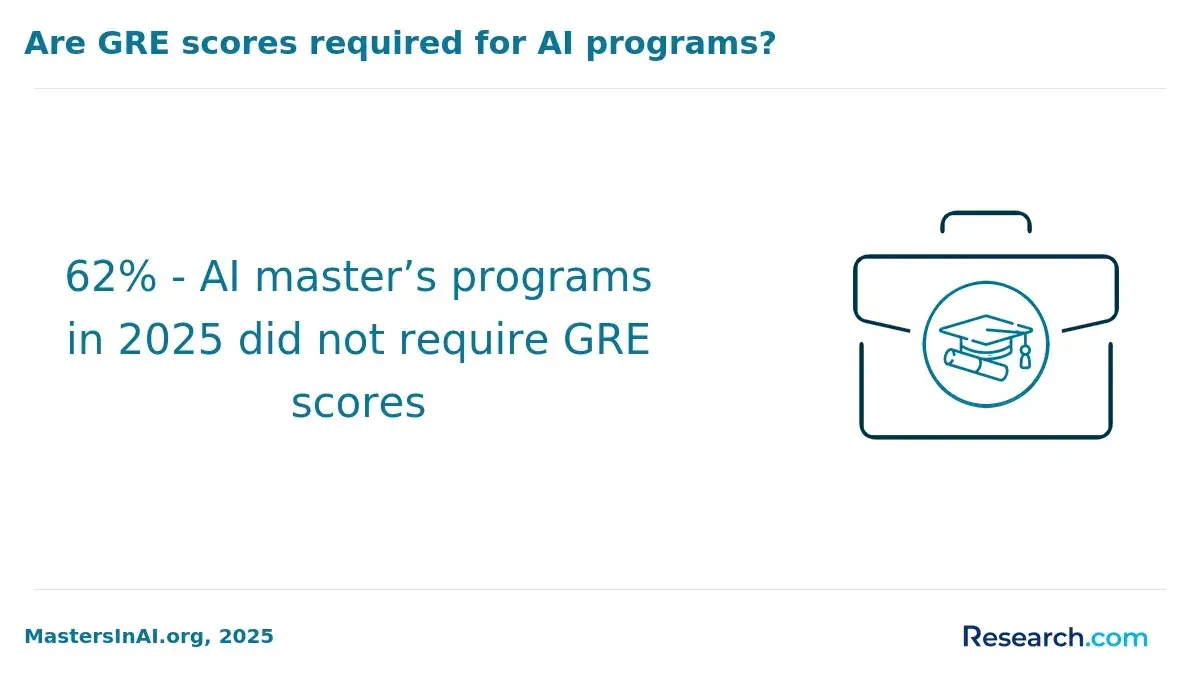
Standardized tests such as the GMAT or GRE might be requested but are increasingly optional, with waivers available for those with robust professional backgrounds or prior graduate study. Admissions committees prioritize quantitative reasoning and analytical skills shown through these scores.
Additional materials often include a statement of purpose outlining goals for applying AI in business strategy, letters of recommendation, and a resume or CV. Some programs offer foundation courses or bootcamps to help students from non-technical backgrounds meet admission standards effectively.
According to GMAC's 2024 Prospective Students Survey, 66% of MBA programs worldwide have integrated dedicated AI or analytics coursework recently, emphasizing the growing importance of AI expertise in business education.
How long do these programs take and what do they cost?
AI business case development courses typically range from 4 to 12 weeks, making them manageable alongside full-time jobs. Short programs last about one month and focus on intensive learning, while longer specializations of up to three months provide deeper strategic understanding and hands-on case studies. Many courses use modular formats, allowing learners to progress at their own pace.
The cost remains highly accessible compared to traditional MBA programs. For example, Coursera's pricing data shows many top AI for business specializations cost under 2% of average U.S. MBA tuition, which exceeds $60,000 annually. This places most courses in the $1,000 to $1,200 range. Financial aid or subscription models can reduce upfront costs further.
Specific offerings include the "AI for Business Strategy" specialization, which costs $399 and takes roughly eight weeks, combining lectures with practical projects. Another, "Business Applications of AI," runs six weeks and costs about $499. Executive programs with personalized coaching and certificates may exceed $1,000 but remain affordable versus MBAs.
Key considerations for professionals: shorter, lower-cost courses suit quick skill upgrades, while longer, comprehensive programs better prepare leaders for strategic AI deployment.
What topics are covered in the curriculum?
AI business case development courses cover essential skills for leaders to effectively identify, evaluate, and justify AI investments. Key topics include problem identification and framing to target suitable business challenges, along with selecting practical AI use cases that align with strategic objectives.
Training emphasizes quantitative financial modeling methods such as cost-benefit analysis, ROI calculations, and risk assessment to develop strong, data-driven business cases.
Students also learn stakeholder engagement and communication techniques critical for aligning technical teams with business goals. The curriculum addresses important regulatory, ethical, and governance considerations, helping leaders manage compliance risks and societal impact responsibly.
Scenario planning and sensitivity analysis prepare professionals to handle uncertainties in AI adoption.
Many programs incorporate case studies from diverse industries-including healthcare, finance, and manufacturing-to highlight the variability in AI implementation challenges and successes. Practical exercises typically include developing pitch documents and presentations aimed at executive decision-makers.
Reflecting Gartner's 2024 findings that 80% of organizations may underperform in AI business value through poor use-case selection and weak justifications rather than technology limitations, these courses directly target common pitfalls.
By mastering these areas, leaders can bridge the divide between AI capabilities and measurable business outcomes, enhancing their strategic impact in AI investments.
What jobs can this training support?
AI business case development training is vital for various organizational roles aiming to leverage AI strategically. Key professionals such as product managers, strategy consultants, innovation officers, and operations executives benefit by learning how to identify AI use cases, evaluate business impact, and justify AI investments.
For example, product managers can prioritize AI features that improve user experience, while strategy consultants incorporate AI insights into digital transformation initiatives.
Finance managers and budget analysts use frameworks from this training to assess AI project costs against expected returns, optimizing budgeting and resource allocation. Project managers improve their ability to coordinate cross-functional teams and manage AI deployments, overcoming common implementation challenges.
Organizations increasingly emphasize AI literacy for non-technical staff. According to Deloitte's 2024 State of AI in the Enterprise report, companies with broad AI literacy programs are 1.6x more likely to move over five AI use cases into production than those limiting training to technical teams. This underscores the growing demand for professionals who can transform technical possibilities into operational strategies.
AI business case training also aids change management specialists and internal consultants in fostering AI adoption culture. Sectors like healthcare, financial services, and supply chain management benefit as leaders identify AI opportunities linked to compliance, risk reduction, and efficiency.
What salary and job outlook can graduates expect?
Graduates skilled in AI business case development often start with salaries between $85,000 and $110,000 in the U.S., with mid-level managers and business leaders earning from $130,000 to $180,000, particularly in tech-driven industries. These competencies are increasingly valued as core leadership skills.
McKinsey's 2024 Global Survey on AI highlights that 72% of top-performing AI organizations include AI fluency and use-case prioritization as key criteria for leadership evaluation and promotion. This trend enhances career growth prospects for professionals mastering these areas.
Job opportunities in AI strategy and business implementation roles, such as AI business analysts and strategy consultants, are expected to grow 15% to 20% over five years, outpacing average growth in business and technology sectors.
- Focus on industries investing heavily in AI, including finance, healthcare, and manufacturing
- Build a portfolio of successful AI projects to stand out and command higher salaries
- Develop strong communication skills to effectively translate technical AI concepts for business leaders
Professionals who bridge the gap between AI engineers and executives are highly valued for ensuring AI investments align with strategic business goals and deliver measurable ROI.
Other Things You Should Know About Artificial Intelligence
While some familiarity with programming can be helpful, it is not strictly necessary to succeed in AI business case development courses. These programs generally focus on strategic use, impact assessment, and integration of AI within business contexts rather than technical coding skills. Business leaders can grasp key concepts and frameworks without deep technical expertise.
AI enhances decision-making by providing data-driven insights, predictive analytics, and automation of routine tasks. It enables leaders to make more informed, timely, and objective decisions by uncovering patterns and trends not easily visible through traditional analysis methods. Incorporation of AI can improve efficiency and reduce human bias in business processes.
AI can automate many repetitive and data-intensive tasks, but it is unlikely to fully replace human roles that require creativity, emotional intelligence, and complex judgment in the near future. Instead, AI is generally viewed as augmenting human capabilities, allowing employees to focus on higher-value activities while machines handle routine operations.
References
- Curriculum - Wikipedia https://en.wikipedia.org/wiki/Curriculum
- The Importance of Business School Accreditation https://www.allbusinessschools.com/how-to-get-into-mba-program/accreditation/
- I want to help and support people in my job https://www.careerpilot.org.uk/job-sectors/strengths-and-values/i-want-to-help-and-support-people-in-my-job
- Learning areas | V9 Australian Curriculum https://www.australiancurriculum.edu.au/help/learning-areas
- Business, Leadership & Management Courses | The Skills Network https://courses.theskillsnetwork.com/courses/find-a-course
- ACBSP Accreditation Overview - Accreditation Council for Business Schools and Programs https://acbsp.org/page/accreditation-overview
- The national curriculum https://www.gov.uk/national-curriculum
- Building a Business Case for AI Training in Finance | Learnsignal https://www.learnsignal.com/blog/business-case-ai-training-finance/
- How Long Does a PhD Degree Take https://henryharvin.ae/blog/how-long-does-a-phd-degree-take/
- A Comparison of Online and Face-To-Face Instruction in an Undergraduate Foundations of American Education Course https://citejournal.org/volume-4/issue-2-04/general/a-comparison-of-online-and-face-to-face-instruction-in-an-undergraduate-foundations-of-american-education-course/