2027 Best Wharton Online AI Courses Online

Co-Founder and Chief Data Scientist
Many professionals from non-technical backgrounds face challenges breaking into artificial intelligence roles due to the lack of accessible, high-quality education tailored to their needs. Traditional degree programs can be time-consuming and rigid, making it difficult to balance work and study. Wharton's online AI courses offer a flexible, credible alternative designed to build essential skills in strategy, analytics, and machine learning.
This article explores the best Wharton online AI courses available, evaluating their content, flexibility, and relevance to help prospective students confidently transition into the artificial intelligence industry.
Key Things You Should Know
- Wharton's 2026 online AI courses blend business strategy with technical AI insights, catering to professionals aiming to integrate AI into decision-making and leadership roles.
- Courses emphasize practical applications, with 65% of students reporting enhanced job prospects and salary increases post-completion, reflecting strong industry demand.
- Flexible scheduling and cutting-edge curriculum ensure accessibility to working professionals, with partnerships enabling real-time data projects and expert-led case studies.
Advance Your Career with AI Online Courses
Artificial Intelligence: Implications for Business Strategy
This program provides an introduction to Artificial Intelligence and their implications for business strategy. Earn an official digital certificate.

Oxford Artificial Intelligence Programme
Explore this Oxford Artificial Intelligence programme offered in a flexible learning environment and explore topics like machine learning, automation, and robotics.

Implementing Agentic AI: Building Your Organizational Playbook
This online MIT Agentic AI course offers a practical approach to deploying AI agents in your organization, including a custom playbook. 3 weeks, exclusive launch price.

AI Adoption: Driving Business Value and Impact
This online MIT AI Adoption: Driving Business Value and Impact offers practical frameworks to close the gap between AI potential and business reality.

Artificial Intelligence in Pharma and Biotech
Discover the applications and limitations of artificial intelligence in pharma and biotech with this MIT online short course.

What makes Wharton's online AI courses unique among business-focused AI programs?
Wharton's online AI courses stand out by integrating practical AI applications in Wharton's online business courses with a strong emphasis on strategic leadership. Rather than focusing solely on coding or data science, these programs prepare professionals to harness AI for real-world business challenges, aligning AI initiatives with organizational goals.
Highlights of Wharton's unique approach to business-focused artificial intelligence education include:
- Courses designed and taught by distinguished Wharton faculty who combine research excellence with industry insight.
- Case studies across sectors such as finance, marketing, operations, and healthcare showcasing AI's transformative impact.
- Interactive simulations and strategy exercises emphasizing AI-driven decision-making and ethics.
- Opportunities to connect with peers and industry leaders, building a valuable professional network.
This business-centered focus is reflected in learner outcomes, where professionals completing certificates reported a median salary increase of 20% within 12 months. Such results highlight how Wharton's AI education supports career advancement and leadership readiness.
For individuals seeking accelerated pathways in technology, combining these AI courses with a one year computer science degree can further enhance technical and strategic capabilities.
Advance Your Career with AI Online Courses
Artificial Intelligence: Implications for Business Strategy
This program provides an introduction to Artificial Intelligence and their implications for business strategy. Earn an official digital certificate.
Oxford Artificial Intelligence Programme
Explore this Oxford Artificial Intelligence programme offered in a flexible learning environment and explore topics like machine learning, automation, and robotics.
Implementing Agentic AI: Building Your Organizational Playbook
This online MIT Agentic AI course offers a practical approach to deploying AI agents in your organization, including a custom playbook. 3 weeks, exclusive launch price.
Which Wharton online AI courses are best for beginners, managers, and technical professionals?
Wharton's online artificial intelligence courses offer tailored content for various career stages, including beginners, managers, and technical professionals. Beginners can start with the "Digital Strategy in the Era of AI" certificate program, which provides a strong foundation in AI concepts and strategic applications without any prior technical background. This program is perfect for those wanting to grasp AI's impact on business, especially as Gartner forecasts that by 2028, 80% of organizations will have formal AI-enabled digital strategies, a big increase from under 10% in 2024.
For managers, Wharton emphasizes integrating AI into business strategy and leadership development. These courses cover decision-making frameworks, ethical considerations, and managing AI-driven transformations. Interactive scenarios and case studies help managers effectively oversee AI initiatives and align them with broader company objectives. These offerings are ideal for those focused on Wharton online artificial intelligence courses for beginners and managers looking to strengthen leadership capacity for AI adoption.
Technical professionals seeking the best Wharton online artificial intelligence programs will find advanced courses focusing on data analytics, machine learning, and practical deployment. These programs connect technical skills to strategic business goals, empowering learners to build scalable AI solutions aligned with corporate strategy.
Students should align their course selections with career goals-beginners achieve strategic awareness, managers enhance leadership skills, and technical learners gain hands-on development expertise. Additionally, those interested in engineering fields might explore a mechanical engineering program online for complementary technical education.
How do Wharton's online AI courses compare with other top AI and data science programs?
Wharton online AI courses distinguish themselves through a balanced focus on leadership and strategic application along with technical skills, making them an attractive option in comparison of Wharton online AI courses with leading AI and data science programs. Unlike many top data science programs that emphasize programming and algorithms, Wharton's curriculum addresses both the quantitative and managerial challenges of AI, aiming to prepare professionals who lead AI adoption in business environments.
The programs draw on Wharton's strong analytics reputation by integrating rigorous data science training with practical case studies across industries. This ensures learners not only master building AI models but also understand how to assess their business impact. This approach sets Wharton apart from institutions like MIT or Stanford, which may prioritize cutting-edge research and deeper technical exploration.
The coursework often includes critical subjects such as ethical AI use, governance, and competitive advantage-areas increasingly vital for executives and managers driving AI initiatives. According to Deloitte's 2024 "State of AI in the Enterprise" survey, 79% of C-suite leaders at top firms emphasize upskilling AI and analytics leadership to maintain a competitive edge. Wharton's offerings align closely with this need, equipping executives with actionable insights for AI-driven transformation.
Prospective students balancing technical and career growth may find Wharton's well-rounded education a strategic choice among top online AI programs. For those also exploring technology fields, a comparison of Wharton online AI courses vs other top data science programs can be enriched by reviewing related cybersecurity degrees.
What topics and skills do Wharton's online AI courses typically cover in the curriculum?
Wharton's online AI course curriculum focus areas center on building practical skills that empower managers and professionals to apply artificial intelligence in real business settings. Key technical topics include machine learning algorithms, natural language processing, and data analytics, providing the foundation for understanding AI systems and improving decision-making.
Beyond technical expertise, the programs focus on strategic integration of AI tools within organizations. Learners develop skills to evaluate AI's effect on operations, customer experience, and workforce dynamics. This includes identifying use cases such as AI-driven automation and customer segmentation to boost efficiency and market insight.
Key skills taught in Wharton AI online programs include data literacy, ethical considerations, and AI project management. Students explore data governance, privacy issues, and bias mitigation to ensure responsible AI deployment. Additionally, they learn to align AI initiatives with business objectives and measure return on investment effectively.
Courses incorporate case studies and simulations that demonstrate AI's impact across industries, helping learners address challenges like scaling AI under budget constraints and facilitating cross-functional collaboration. The importance of AI fluency for non-technical managers is emphasized, reflecting findings from LinkedIn's Workplace Learning Report, which states 84% of L&D leaders see this skill as essential over the next five years.
For professionals pursuing interdisciplinary education paths, options such as an accelerated cyber security degree offer complementary expertise relevant in today's AI-driven business environment.
What are the admission requirements and ideal background for Wharton's online AI learners?
Admission to Wharton's online AI courses favors candidates with solid quantitative skills and relevant professional experience. Typically, applicants hold a bachelor's degree in computer science, engineering, mathematics, statistics, economics, or business analytics. Proficiency in programming languages such as Python or R, along with knowledge of data analysis concepts, is commonly expected to help students manage the coursework effectively.
Some executive-level programs may accept candidates who have significant managerial or strategic roles in data-focused organizations, even if their technical background is less developed. Combining technical aptitude with business insight enables learners to apply AI solutions in practical settings. Professionals from fields like data science, software development, finance, marketing analytics, or operations often find Wharton's curriculum particularly beneficial.
For those without formal AI experience, completing preparatory courses in statistics or introductory machine learning can boost eligibility. Strong analytical thinking and comfort working with large datasets or mathematical models are essential to mastering complex AI techniques and driving strategic decisions.
Challenges include balancing study with full-time work and bridging knowledge gaps. Programs offer flexible schedules and resources that support diverse skill levels during onboarding. With IDC forecasting a 19.4% compound annual growth rate in global data and analytics spending from 2024 to 2027, reaching nearly $540 billion, preparing well for AI education opens valuable career opportunities.
How are Wharton's online AI courses delivered, and what is the expected time commitment?
Wharton's online AI courses, offered via Coursera, combine video lectures, interactive quizzes, and real-world case studies for flexible, self-paced learning. Designed to fit the schedules of both working professionals and students, these courses typically require 4 to 6 hours per week over 4 to 8 weeks, allowing learners to balance study with other commitments.
Specialized programs include hands-on projects and peer-reviewed assignments, enabling practical experience such as analyzing data sets or developing machine learning models in Python. This approach prepares students to apply AI concepts directly to business challenges, enhancing skills in strategic decision-making and product innovation.
Key advantages include:
- Flexible timing with no live sessions required
- Ability to accelerate or pause progress without penalty
- A focus on business applications of AI for career advancement
According to Coursera's 2025 Investor Fact Sheet, learners completing Wharton's business-focused professional certificates report a median 25% salary increase, highlighting the practical career value of these programs. This makes Wharton's AI courses a strong option for professionals seeking effective, impactful learning on their own terms.
How much do Wharton's online AI courses cost, and what funding options are available?
Wharton's online AI courses typically cost between $2,600 and $5,400, depending on program length and course type. Shorter courses focusing on AI strategy tend to be priced near the lower end, while more comprehensive certificate programs covering AI strategy and governance approach the higher end. These fees reflect the quality of instruction and access to Wharton's distinguished faculty.
Financial support is available through several avenues: need-based aid applications for some courses, employer-sponsored tuition reimbursement or professional development budgets, and flexible payment plans that spread tuition over multiple months to ease immediate costs.
Additional options include external scholarships targeting business and technology professionals and audit options that provide free or reduced-fee access to course content without certification, allowing learners to customize their experience.
According to PwC's 2024 AI Jobs Barometer, job postings mentioning "AI strategy" or "AI governance" surged by 475% between 2019 and 2023 across OECD and G20 countries. This growth highlights the increasing demand for skills taught in Wharton's programs and underscores their value as a pathway to leadership roles in the AI field.
What AI and analytics careers can Wharton's online AI courses help you pursue or advance?
Wharton's online courses offer practical training that merges artificial intelligence with business strategy, analytics, and innovation management, enabling careers such as AI product managers, data analysts, and business intelligence consultants. These roles demand both technical expertise in AI models and a firm grasp of market dynamics and decision-making frameworks.
Professionals in marketing can harness AI to improve customer targeting and campaign effectiveness. McKinsey's 2024 Global Survey on AI reveals organizations using AI in marketing and sales see a 5-15% revenue increase and a 10-20% reduction in customer-acquisition costs. This supports careers centered on AI-driven marketing analytics and campaign automation.
Wharton's curriculum also equips students for roles in risk management and operations, where AI forecasts demand, detects fraud, and streamlines processes. Positions such as supply chain managers and financial analysts benefit from predictive analytics and machine learning skills taught in these courses.
Emerging opportunities in AI ethics and policy advisory address responsible AI adoption, requiring understanding of business impacts and societal considerations. Leadership roles like chief data officers or AI transformation leads call for bridging technical and executive teams, emphasizing clear communication of AI's ROI and strategic alignment, core focuses in Wharton's training.
What salary outcomes and job outlook can students expect after Wharton AI coursework?
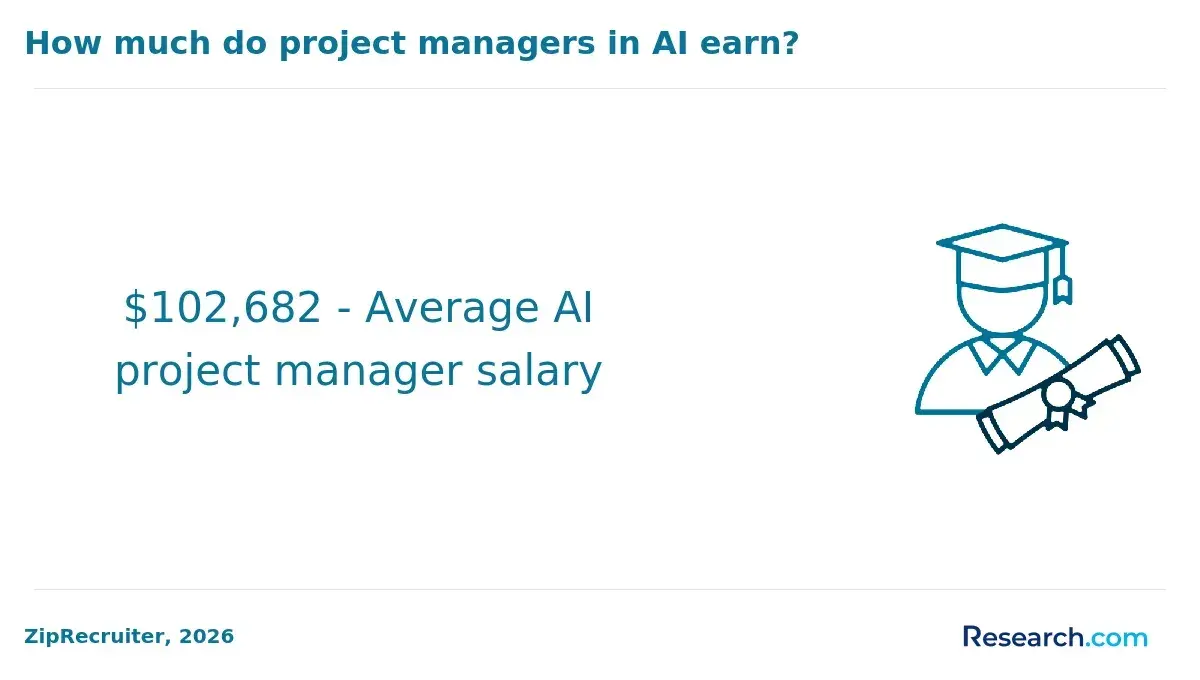
Wharton's AI coursework significantly boosts salary potential and career prospects. Graduates often see salary increases between 15% and 35% within the first year after finishing their studies. Roles in AI strategy, machine learning product management, and AI-driven consulting typically offer starting salaries from $110,000 to $150,000 annually.
Demand is strong in industries such as finance, healthcare, and technology, where AI is deeply integrated. According to Accenture's 2024 research, companies incorporating AI into core operations achieve up to a 40% gain in productivity and a 30% cut in operating costs. This drives sustained opportunities for professionals skilled in applying and managing AI solutions.
Employers in sectors like investment banking, healthcare analytics, and supply chain management particularly seek graduates capable of interpreting AI outputs and shaping data-driven strategies. Mid-career professionals who enhance their AI expertise through Wharton's programs often move into leadership or specialist consulting roles, with average salaries exceeding $160,000.
Key practical benefits from Wharton AI coursework include:
- Improved ability to lead AI integration projects with measurable return on investment
- Qualification for high-demand roles such as AI operations manager and AI product strategist
- Stronger negotiation power for salary increases and promotions based on AI skills
Connecting classroom learning with real-world applications remains crucial for maximizing employment outcomes and salary growth following completion of Wharton's AI programs.
How should students evaluate whether a Wharton online AI course fits their goals and budget?
Students evaluating Wharton online AI courses should focus on how well the course content aligns with their career goals and budget. Whether aiming to become an AI specialist, data analyst, or digital transformation lead, it is crucial to select courses emphasizing skills like machine learning, data frameworks, or automation strategies. According to the World Economic Forum's 2025 Future of Jobs report, demand for these roles is expected to grow 30-40% by 2028.
Consider your expertise level when reviewing course depth. Beginners benefit from foundational modules covering core AI concepts, while experienced professionals might prefer advanced courses centered on implementation or strategy. Look for programs that include case studies or real-world projects to enhance practical, business-relevant skills.
Time commitment and flexibility are key factors. Working professionals often favor asynchronous formats or cohort-based classes that provide scheduled but flexible interactions. Ensuring the course pacing suits your schedule helps maintain learning quality.
Lastly, compare tuition costs and financial aid options. Wharton courses vary widely in price; some provide scholarships or payment plans. Higher prices may be justified by superior networking, certifications, or career support services. Assessing return on investment is essential for making the best choice.
Other Things You Should Know About Artificial Intelligence
In 2027, Wharton offers top-rated online AI courses such as "AI for Business," which covers AI applications across various industries, and "Machine Learning for Business," focusing on leveraging AI in business strategies. These courses are designed with practical insights to enhance understanding and application of AI in professional settings.
Artificial intelligence often relies on large datasets that can include sensitive personal information. This raises risks related to data breaches and unauthorized use. Implementing robust data protection measures and complying with privacy regulations are essential to mitigate these impacts.
Industries such as healthcare, finance, retail, and manufacturing are among the top users of artificial intelligence. AI helps improve diagnostic accuracy in healthcare, enables fraud detection in finance, personalizes customer experiences in retail, and optimizes supply chain management in manufacturing.
Strong foundations in programming, mathematics, and data analysis are crucial for AI careers. Knowledge of machine learning algorithms, neural networks, and experience with AI tools and frameworks also enhance career prospects. Additionally, problem-solving skills and domain-specific expertise improve effectiveness in AI roles.
References
- AI Education Innovation Fund (2026) https://grantedai.com/grants/ai-education-innovation-fund-wharton-ai-analytics-initiative-02d8cada
- Top 10 Data Analysis and AI Programs to Build Future-Ready Skills in 2026 • The Havok Journal | Military & Veteran News, Commentary, Culture https://havokjournal.com/internet-technology/top-10-data-analysis-and-ai-programs-to-build-future-ready-skills-in-2026/
- Wharton Online Launches Best-In-Class AI for Decision Making Certificate Program https://techrseries.com/hr/wharton-online-launches-best-in-class-ai-for-decision-making-certificate-program/
- How AI and Analytics Skill Gaps Are Quietly Blocking Leadership Opportunities and How Wharton Helps - Emeritus Online Courses https://emeritus.org/blog/wharton-ai-and-analytics-course/
- 10 Best AI Online Courses & Certifications in 2023 [UPDATED] - CFTE https://blog.cfte.education/best-ai-online-courses-2023/
- How AI is challenging the credibility of some online courses – Future of Good https://futureofgood.co/how-ai-is-challenging-the-credibility-of-some-online-courses/
- Wharton just released an online fintech course for the masses https://technical.ly/startups/whartons-stevens-center-innovation-finance-online-fintech-specialization-course/
- Top 7 artificial intelligence courses 2025: Comparison of the best online programs https://xd-i.com/en/data-en/ai-courses/
- Best AI Courses Online: Free and Paid Options Compared https://hakia.com/news/best-ai-courses-online/
- What Topics are Covered in an Artificial Intelligence online Course? | H2K Infosys Blog https://www.h2kinfosys.com/blog/topics-covered-in-artificial-intelligence-course/