2027 Best LinkedIn Learning AI Courses for Agentic AI

Co-Founder and Chief Data Scientist
Professionals from unrelated fields often struggle to find relevant, flexible courses that enable a career transition into agentic AI. Traditional programs can be time-consuming, costly, or misaligned with industry needs. Without clear guidance, learners risk investing in outdated or overly technical content that lacks practical application. This gap creates a barrier for motivated individuals aiming to develop agentic AI skills that are immediately usable in real-world projects.
This article presents a curated selection of LinkedIn Learning courses designed to address these challenges by offering up-to-date, accessible training paths tailored for effective entry into the agentic AI domain.
Key Things You Should Know
- The 2026 best LinkedIn Learning courses on agentic AI emphasize practical skills in autonomous decision-making, aligning with a 42% projected job growth in AI-related roles by 2030.
- Curricula integrate ethical AI principles, essential as 68% of employers prioritize responsible AI understanding in hiring professionals.
- Courses frequently update with 2025 innovations in machine learning frameworks, ensuring learners access cutting-edge tools for agentic AI development and deployment.
Advance Your Career with AI Online Courses
Artificial Intelligence: Implications for Business Strategy
This program provides an introduction to Artificial Intelligence and their implications for business strategy. Earn an official digital certificate.

Oxford Artificial Intelligence Programme
Explore this Oxford Artificial Intelligence programme offered in a flexible learning environment and explore topics like machine learning, automation, and robotics.

Implementing Agentic AI: Building Your Organizational Playbook
This online MIT Agentic AI course offers a practical approach to deploying AI agents in your organization, including a custom playbook. 3 weeks, exclusive launch price.

AI Adoption: Driving Business Value and Impact
This online MIT AI Adoption: Driving Business Value and Impact offers practical frameworks to close the gap between AI potential and business reality.

Artificial Intelligence in Pharma and Biotech
Discover the applications and limitations of artificial intelligence in pharma and biotech with this MIT online short course.

What is agentic AI, and how can LinkedIn Learning courses help you master it?
Agentic AI refers to autonomous systems capable of performing complex, multi-step workflows with minimal human input. Unlike traditional AI models, which handle narrow tasks, agentic AI can independently make decisions, plan, and adapt to changing environments or data. Growing industry interest is evident as a McKinsey survey highlights that 65% of organizations deploying generative AI aim to implement agentic AI workflows within three years.
The opportunity for mastering agentic AI with LinkedIn learning is significant. Their courses offer hands-on training in reinforcement learning, autonomous system design, and decision-making algorithms crucial for developing these advanced AI technologies. Learners gain practical skills, such as building adaptive models and designing chatbots capable of managing entire customer interactions end-to-end.
These agentic AI learning courses on LinkedIn also prepare professionals for integration challenges with existing IT infrastructures, ethical implementations, and transparency requirements. Case studies and industry tools ensure students develop competencies aligned with real-world demands, enhancing efficiency and reducing operational costs.
- Programming autonomous agents with Python and AI libraries
- Coordinating multi-step task pipelines for agent collaboration
- Evaluating agentic AI performance using business-relevant metrics
These courses create a learning pathway from beginner concepts to advanced implementations, keeping pace with one of the fastest-evolving areas in artificial intelligence today. For those exploring career options, an AI degree can provide a strong foundation to enter this dynamic field.
Advance Your Career with AI Online Courses
Artificial Intelligence: Implications for Business Strategy
This program provides an introduction to Artificial Intelligence and their implications for business strategy. Earn an official digital certificate.
Oxford Artificial Intelligence Programme
Explore this Oxford Artificial Intelligence programme offered in a flexible learning environment and explore topics like machine learning, automation, and robotics.
Implementing Agentic AI: Building Your Organizational Playbook
This online MIT Agentic AI course offers a practical approach to deploying AI agents in your organization, including a custom playbook. 3 weeks, exclusive launch price.
Which LinkedIn Learning AI courses are best for building agentic AI skills today?
LinkedIn Learning offers some of the best LinkedIn Learning courses for building agentic AI skills, focusing on practical and specialized knowledge essential for AI professionals. A standout is "Building Intelligent Agents with Python," which teaches programming autonomous agents capable of decision-making through reinforcement learning. This is crucial for designing agents suited to dynamic, real-world environments.
Another important course, "Multi-Agent Systems and Coordination," covers interaction among multiple AI agents-a must-have skill for scalable solutions. It includes coordination algorithms, negotiation, and distributed problem solving, aligned with IDC's forecast of $36 billion global spending on AI agents and multi-agent orchestration platforms by 2027, growing at a 48% compound annual rate from 2024.
For those aiming at broader architectural understanding, "AI Frameworks and Architectures" offers hands-on experience with tools like TensorFlow and PyTorch and deployment of agent-based models in cloud environments. These tools support innovative applications such as automated customer support and autonomous robotics.
Designed for practical learners, "Designing Autonomous AI Systems" integrates perception, reasoning, and action modules to solve adaptive behavior and environment-sensing challenges. These top LinkedIn Learning artificial intelligence courses for agentic AI development include hands-on projects critical for mastering system-level thinking and software development.
Prospective students seeking cost-effective education pathways may also consider the cheapest mechanical engineering degree online to complement AI skills with engineering fundamentals.
How do LinkedIn Learning AI paths compare with university AI degrees and certificates?
LinkedIn Learning AI paths provide flexible, skill-focused options that suit professionals better than traditional multi-year university AI degrees. These online courses allow learners to progress at their own pace, benefiting working individuals seeking targeted expertise without the extensive time and financial commitments typical of a full degree. This approach highlights the benefits of LinkedIn Learning AI paths versus traditional AI certificates by emphasizing up-to-date, practical skills.
University AI degrees offer a deep theoretical foundation in mathematics, algorithms, and ethics, which is essential for careers demanding comprehensive technical knowledge. However, they often lack the agility needed to update curricula rapidly in response to fast-evolving trends such as agentic AI-autonomous systems capable of decision-making. LinkedIn Learning quickly integrates these emerging topics, aligning with workforce demands. For instance, Gartner forecasts that by 2026, 30% of new enterprise applications will include AI agents, up from less than 2% in 2023.
Certificates from universities carry strong academic prestige but often come with prerequisites and structured enrollment. LinkedIn Learning certifications demonstrate current, applied abilities valuable for immediate employment in roles focused on AI implementation and integration. This distinction is central to how linkedin learning ai certification compares to university degrees for many professionals.
Those pursuing leadership or research positions should consider traditional degrees for their rigorous training. Conversely, individuals seeking rapid upskilling or transitioning from non-technical fields benefit from LinkedIn's practical learning approach. Combining both methods can maximize expertise and job marketability. For a broader perspective on cost-effective education options, explore affordable cybersecurity programs.
What agentic AI fundamentals and tools should a strong LinkedIn Learning course cover?
A strong LinkedIn Learning course on agentic AI fundamentals covers key principles of autonomous system design such as goal-setting, decision-making frameworks, and environmental interactions. Emphasis on architectures that enable AI agents to sense, reason, and act independently is essential. Reinforcement learning techniques must be included to show how agents learn and improve through feedback loops. Integrating essential agentic AI tools in LinkedIn Learning programs involves popular frameworks like TensorFlow, PyTorch, and OpenAI's API, giving learners practical experience building functional AI agents.
Training should also focus on natural language processing technologies, enabling agents to interact through human-like text, a common interface in agentic systems. Collaborative workflows between AI agents and human developers are crucial, as Gartner reports 47% of software engineering leaders saw AI agents and copilots reduce development cycle times by 25% or more. This underscores the need for skills in supervising and refining AI outputs.
Data management and ethics are critical topics, addressing bias mitigation and transparency in agent decisions. Real-world examples include autonomous customer support agents, supply chain bots, and AI copilots in coding, which prepare learners with project-based challenges. For professionals interested in advancing their analytics skills alongside AI, an MS in data analytics provides valuable complementary expertise.
Overall, comprehensive LinkedIn Learning courses that combine theory with hands-on practice equip students for the expanding role of agentic AI across industries.
How can LinkedIn Learning AI coursework stack into formal college credit or certificates?
LinkedIn Learning AI courses can often be credited toward formal college degrees or industry certifications through partnerships and credit recommendations. Accredited colleges frequently accept these courses as transfer credit, especially if they align with degree programs or professional certificates. Institutions may evaluate content from modules like machine learning, data analysis, or AI fundamentals to award credit.
Students should confirm credit transfer policies with their target schools, as requirements vary. Some colleges request detailed syllabi, learning outcomes, and instructor qualifications, while others rely on third-party evaluators to assess course equivalency. This process helps increase acceptance of LinkedIn Learning AI coursework.
LinkedIn Learning certificates have growing recognition as verifiable credentials, enhancing resumes or fulfilling continuing education needs. They also contribute to stackable credentials, enabling learners to build industry-recognized certifications incrementally. For instance, professionals may complete multiple courses to qualify for micro-credentials or competency badges from universities or industry groups.
The demand for AI-skilled workers is rising, with a World Economic Forum analysis forecasting significant job shifts and 69 million new AI-complementary roles by 2030. Maintaining detailed records of coursework, projects, and assessments is crucial. Engaging academic advisors or career counselors early can help optimize how these courses support formal education and career advancement.
What background do you need to start LinkedIn Learning AI courses focused on agents?
LinkedIn Learning AI courses centered on agents require a solid foundation in programming and basic ai concepts, with Python being the favored language. Familiarity with machine learning principles like supervised and unsupervised learning enhances understanding of agent-based models, including neural networks and decision trees that underpin agent decisions.
Essential mathematics skills include linear algebra, probability, and statistics to analyze the algorithms guiding autonomous agents. Thankfully, many courses offer refreshers for those less confident in these areas. Proficiency in data structures and algorithms supports developing efficient, autonomous behaviors in agents.
While a background in computer science, engineering, or data science is advantageous, it is not mandatory. Professionals from fields such as business analytics or information systems can benefit by focusing on applied courses that merge agent theory with practical programming. Notably, only 21% of organizations experimenting with ai agents have formal governance frameworks, even though 62% recognize uncontrolled agent action as a major risk.
Ethics, governance, and risk management are integral topics, preparing learners for real-world deployment challenges. Students develop analytical skills to evaluate agent outputs and cultivate ethical sensitivity critical for advancing in this ai specialization.
How do time commitment, costs, and subscription models work for LinkedIn Learning AI training?
LinkedIn Learning's AI courses accommodate busy schedules with durations ranging from under an hour to about 10 hours. Their modular design lets learners concentrate on specific topics like agentic AI, autonomous system design, or AI-agent engineering without committing to lengthy programs. Interest in agentic AI has surged, shown by a 310% increase in enrollments between Q1 2024 and Q1 2025, compared to a 41% rise in broader AI courses (Class Central).
The platform uses a subscription model, typically costing $39.99 per month or about $239.88 annually, which provides unlimited access to all courses. This is cost-effective for those who want to explore multiple AI subjects or keep their skills updated. Occasionally, a free one-month trial is offered, allowing learners to assess course relevance and depth.
- Course lengths vary from less than 1 hour up to 10 hours.
- Subscriptions cost around $39.99 monthly or $239.88 annually for unlimited access.
- Free one-month trials may be available for new users.
These flexible options make LinkedIn Learning a practical choice for professionals and students seeking targeted AI education and skill development.
What AI and agentic AI careers can LinkedIn Learning courses realistically prepare you for?
LinkedIn Learning offers courses that prepare professionals for diverse careers in AI and agentic AI, reflecting current industry needs. Key roles include AI developer, machine learning engineer, and data scientist, who create algorithms and automated systems that enable decision-making. The platform also supports career paths such as AI product manager and AI business analyst, focusing on integrating agentic AI to enhance workflows and business outcomes.
Agentic AI careers involve developing autonomous systems capable of complex tasks with minimal human oversight. Examples include AI automation specialist, deploying AI agents to streamline processes, and AI ethics officer, ensuring these systems adhere to ethical standards. AI integration engineers embed agentic AI within enterprise infrastructures, highlighting the variety of roles accessible through LinkedIn Learning's specialized curriculum.
Many professionals encounter challenges like managing the AI lifecycle or translating AI capabilities into measurable business value. LinkedIn Learning addresses these through practical training in AI model deployment, monitoring, and continuous improvement. It emphasizes how autonomous agents can improve operational efficiency, a vital skill for managing scalable AI implementations.
A 2024 Accenture study revealed that companies piloting AI agents at scale experienced an average 19% revenue growth increase and a 23% reduction in operating costs compared to competitors. These findings underscore the rising demand for skilled experts who can build, maintain, and optimize agentic AI systems in competitive markets.
What salary ranges and job outlook apply to roles using agentic AI skills in the U.S.?
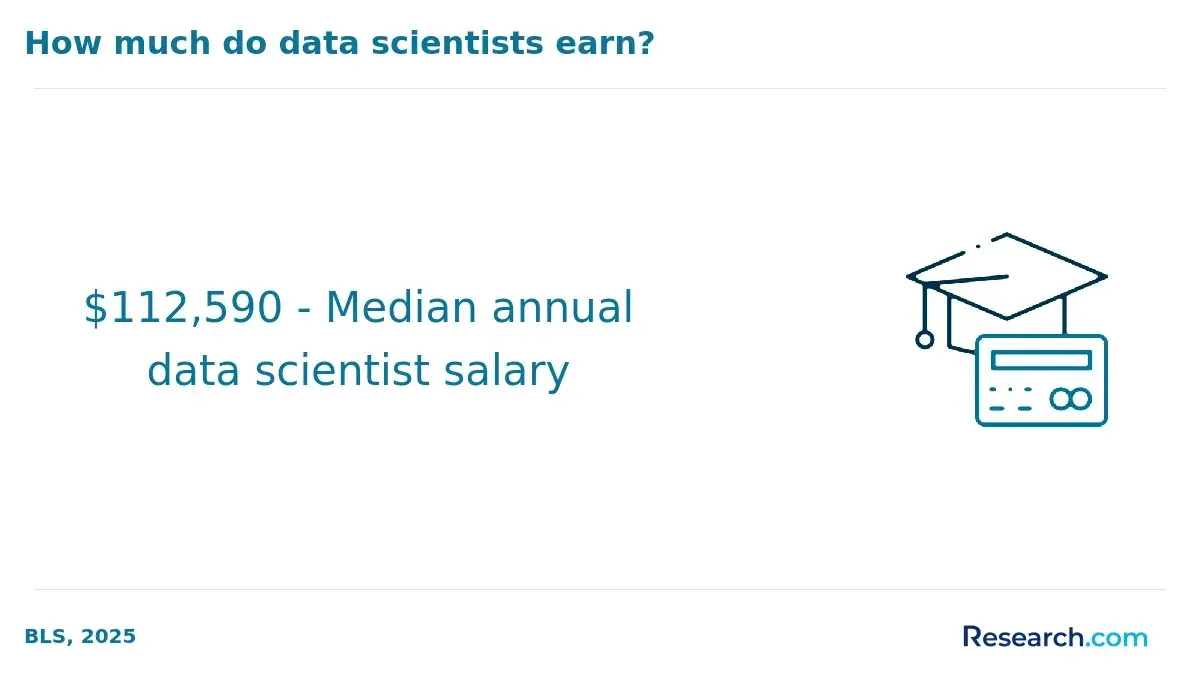
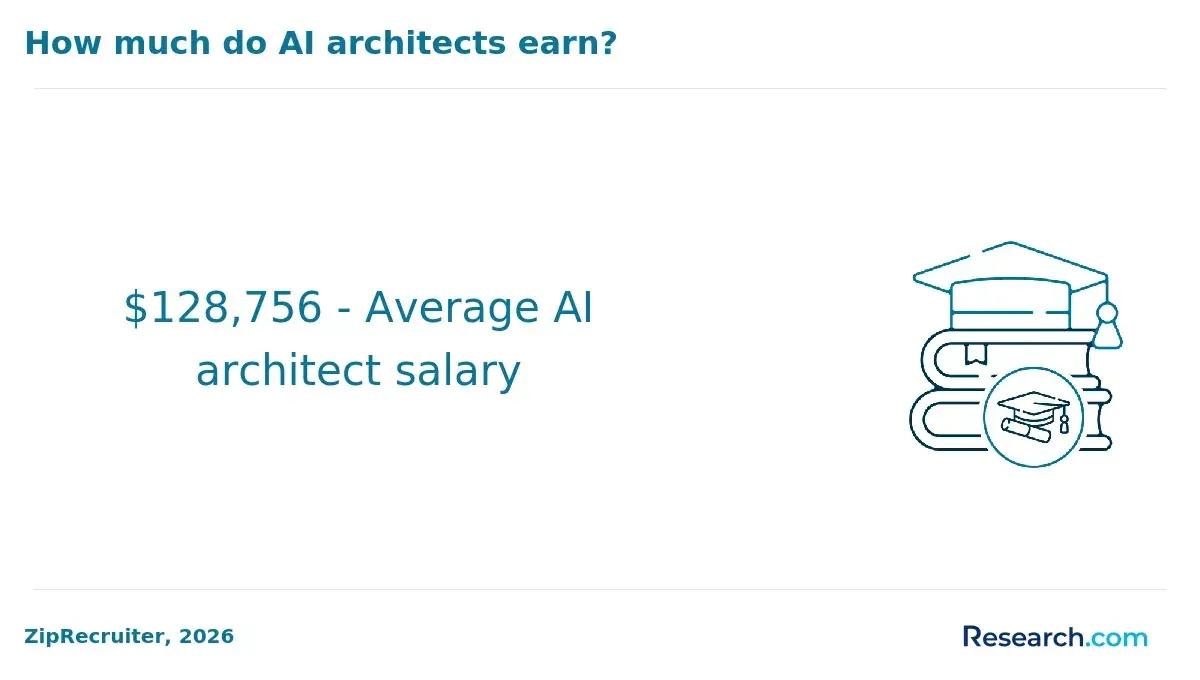
Agentic AI expertise commands salaries in the U.S. ranging from $90,000 to $160,000 annually, influenced by experience, industry, and job role. Positions like AI product managers and machine learning engineers specializing in agentic AI typically earn between $120,000 and $160,000, while AI analysts and software developers with these skills often see starting salaries from $90,000 to $130,000. Demand for such proficiencies is accelerating as service automation evolves.
The outlook for agentic AI careers is strong. According to Gartner, by 2025, AI agents will handle 95% of all online customer service interactions, up from 59% in 2023. About one-third of these interactions will be fully autonomous, increasing the need for professionals skilled in designing and managing agentic AI systems that integrate autonomy and decision-making.
Key industries experiencing growth include technology, finance, healthcare, and customer service. Roles such as AI system architects, chatbot developers, and AI compliance specialists are increasingly important as these sectors adopt advanced agentic AI solutions.
Prospective professionals should pursue certifications and training focused on AI autonomy, natural language processing, and real-time decision algorithms. Emphasizing ethical AI use and system debugging also boosts employability and potential salary.
Agentic AI skills thus position candidates for rewarding roles in a labor market shifting toward autonomous AI-driven solutions.
How should you choose reputable LinkedIn Learning AI courses aligned with your career goals?
Choose LinkedIn Learning AI courses by aligning them with your career goals in agentic AI, focusing on skill relevance, instructor expertise, and practical outcomes. Prioritize courses covering advanced topics like autonomous systems, reinforcement learning, and natural language processing, which are vital for agentic AI roles. Verify instructor credentials by examining their industry experience and contributions to AI research or development.
Analyze course objectives to ensure they align with your career path, whether in AI engineering, product development, or research specialization. For instance, professionals targeting AI agent design should favor hands-on projects and coding exercises over generic AI theory.
Review course syllabi for inclusion of current tools and frameworks such as OpenAI APIs, TensorFlow, or PyTorch, which are standard in the industry. Look for modules featuring case studies or real-world applications that reflect the rapidly evolving job market.
LinkedIn Economic Graph data shows job postings mentioning "AI agents" or "agentic AI" increasing over 420% year-over-year, with median advertised salaries above $180,000 in the U.S. tech sector. This highlights the importance of courses emphasizing cutting-edge skills linked to employability.
Consider practical factors like course duration and delivery format to fit your schedule and learning style. Learner feedback and LinkedIn's skill assessment features offer valuable insights into course effectiveness and help benchmark your progress with potential employers.
Other Things You Should Know About Artificial Intelligence
In 2027, LinkedIn Learning's AI courses offer valuable insights across various sectors, not just tech. Industries like healthcare, finance, and advertising benefit from tailored AI applications that enhance efficiency, personalization, and innovation. These courses equip professionals in non-tech sectors with essential skills to leverage AI technologies effectively.
Artificial intelligence is a key driver of job automation by handling repetitive and data-heavy tasks. While it may reduce some manual jobs, it also creates new roles focused on AI system development, maintenance, and oversight. The net effect varies by industry and depends on how companies implement AI technologies.
Some AI systems use techniques like natural language processing and sentiment analysis to interpret human emotions in text or speech. However, these systems do not genuinely understand emotions but rather detect patterns to respond appropriately. Emotional AI remains limited compared to human emotional intelligence.
Ethical concerns around artificial intelligence include data privacy, bias in algorithmic decision-making, and accountability for AI-driven actions. Ensuring transparency and fairness in AI systems is critical to avoid harm and discrimination. Ongoing research and regulation aim to address these challenges responsibly.
References
- Agentic AI https://www.deeplearning.ai/courses/agentic-ai
- Agentic AI and Your Career: 5 Skills That... | Metaintro https://www.metaintro.com/blog/agentic-ai-career-skills-define-next-wave-hiring-2026
- 10 Top LinkedIn Learning AI Courses to Build Skills in 2025 | DigitalOcean https://www.digitalocean.com/resources/articles/linkedin-learning-ai-courses
- Professional AI Training: How to Choose the Right Program https://www.strategicaileader.com/professional-ai-training-how-to-choose-the-right-program/
- Agentic AI Jobs in 2026: Skills, Careers & Industry Demand https://online.iitkgp.ac.in/blog/agentic-ai-jobs
- LinkedIn Learning Cost 2026: All Plans + Hidden Renewal Fees https://scrupp.com/blog/linked-in-learning-costs
- Understanding Agentic AI and the Growing Impact on Tech Jobs https://motionrecruitment.com/blog/understanding-agentic-ai-and-its-growing-impact-on-tech-jobs
- LinkedIn Learning Cost: 2026 Pricing Guide for Individuals & Business Teams https://www.linkedhelper.com/blog/linkedin-learning-cost/
- How Entry-Level Jobs Are Being Reimagined in the Agentic AI Era https://www.salesforce.com/news/stories/agentic-ai-reshaping-entry-level-jobs/
- Online Course: AI Pricing and ROI: A Technical Breakdown from LinkedIn Learning | Class Central https://www.classcentral.com/course/linkedin-learning-ai-pricing-a-technical-breakdown-of-the-cost-and-revenue-opportunities-300684