2027 Best AI Courses for Controllers Using Generative AI

Co-Founder and Chief Data Scientist
Controllers often struggle to integrate generative AI into their workflows due to a lack of specialized training tailored to their unique financial and operational needs. This knowledge gap can hinder effective decision-making and slow down digital transformation in organizations. Many available courses either target programmers or data scientists, leaving controllers without practical guidance on leveraging generative AI tools.
This article highlights the best AI courses designed specifically for controllers, focusing on flexible, accredited programs that enable professionals with unrelated undergraduate degrees to confidently pivot into AI-enhanced roles. Readers will discover how to upskill efficiently and stay competitive in evolving industries.
Key Things You Should Know
- Top AI courses for controllers emphasize practical use of generative AI in finance, boosting forecasting accuracy by up to 35%, according to 2025 industry surveys.
- Most programs combine accounting fundamentals with hands-on AI tools like GPT-4 and custom models, reflecting demand for data-driven financial decision-making skills.
- Enrollment in AI-focused controller courses grew 42% between 2024 and 2025, highlighting increasing adoption of AI to streamline reporting and compliance tasks.
Advance Your Career with AI Online Courses
Artificial Intelligence: Implications for Business Strategy
This program provides an introduction to Artificial Intelligence and their implications for business strategy. Earn an official digital certificate.

Oxford Artificial Intelligence Programme
Explore this Oxford Artificial Intelligence programme offered in a flexible learning environment and explore topics like machine learning, automation, and robotics.

Implementing Agentic AI: Building Your Organizational Playbook
This online MIT Agentic AI course offers a practical approach to deploying AI agents in your organization, including a custom playbook. 3 weeks, exclusive launch price.

AI Adoption: Driving Business Value and Impact
This online MIT AI Adoption: Driving Business Value and Impact offers practical frameworks to close the gap between AI potential and business reality.

Artificial Intelligence in Pharma and Biotech
Discover the applications and limitations of artificial intelligence in pharma and biotech with this MIT online short course.

What is generative AI for controllers, and why are specialized AI courses important?
Generative AI applications for financial controllers leverage advanced machine learning models to automate tasks such as forecasting, anomaly detection, and report generation. This technology enables controllers to move beyond manual reconciliations toward more strategic decision-making.
Specialized AI courses are vital as they equip controllers with the skills to implement, manage, and interpret generative AI tools effectively within financial operations.
Controllers encounter challenges like ensuring compliance, maintaining data accuracy, and managing month-end closes under tight deadlines. Generic AI education often overlooks these specific needs.
Courses tailored to controllers focus on practical applications including automating journal entries, enhancing fraud detection, and optimizing cash flow predictions, which accelerate adoption and maximize return on investment.
By 2026, AI-driven automation has enabled controllers to reduce routine reconciliation time by 60-80% and achieve 50-70% faster month-end close cycles.
These gains correspond to annual savings of $150K to $300K per controller within 6-12 months, according to ChatFin (2025). These outcomes highlight the growing importance of specialized AI courses for controllers to stay competitive in finance roles.
Additionally, such courses emphasize ethical considerations and governance to maintain transparency when AI systems generate critical financial statements. They provide hands-on training on integrating AI outputs into ERP systems, ensuring compliance and smooth workflows.
For those interested in exploring further, understanding what is applied artificial intelligence offers valuable insight into related career paths and educational opportunities.
Advance Your Career with AI Online Courses
Artificial Intelligence: Implications for Business Strategy
This program provides an introduction to Artificial Intelligence and their implications for business strategy. Earn an official digital certificate.
Oxford Artificial Intelligence Programme
Explore this Oxford Artificial Intelligence programme offered in a flexible learning environment and explore topics like machine learning, automation, and robotics.
Implementing Agentic AI: Building Your Organizational Playbook
This online MIT Agentic AI course offers a practical approach to deploying AI agents in your organization, including a custom playbook. 3 weeks, exclusive launch price.
Which types of AI courses best fit the skills controllers need today?
AI courses tailored for financial controllers focus on data analytics, machine learning fundamentals, and practical AI applications specific to finance. Controllers must develop the skills to manage large datasets, build predictive models, and leverage AI tools for automation and risk assessments.
According to the Controllers Council, 82% of CFOs recognize a significant gap in data analytics and AI skills within finance teams, highlighting the need for specialized education.
Generative AI training programs for accounting professionals cover essential topics such as extracting actionable insights from financial data to improve budgeting, forecasting, and compliance.
These programs also teach machine learning algorithms that help detect anomalies and patterns beyond human capabilities, boosting fraud detection and operational efficiency.
Recommended course content includes:
- Statistical analysis and data visualization techniques.
- Supervised and unsupervised machine learning methods.
- Implementation of AI in financial reporting systems.
- Hands-on experience with AI-enabled accounting software.
- Cybersecurity fundamentals related to AI tools.
Specialized training in AI-driven automation tools, like robotic process automation (RPA), helps controllers streamline repetitive tasks and focus on strategic priorities. Ethical AI use and data privacy instruction ensure responsible handling of sensitive financial data.
Controllers benefit from programs combining theory, case studies, and software practice offered by accredited institutions or reputable platforms. Prospective students can explore affordable options for degrees in AI designed to meet industry demands.
How do AI courses for controllers differ from general artificial intelligence programs?
AI courses tailored for financial controllers using generative AI focus on practical skills rather than broad theoretical knowledge found in general artificial intelligence programs. These specialized programs emphasize prompt engineering and effectively using large language models (LLMs) to enhance financial reporting, automate compliance controls, and generate precise insights.
Controllers learn to design AI prompts that deliver compliance-friendly data summaries, automate audit trails, and detect anomalies within financial governance frameworks.
Generative AI training programs for corporate controllers also address unique challenges such as minimizing AI bias in sensitive financial datasets and understanding AI limitations in regulatory environments. Practical case studies often cover automating month-end closing processes and generating forecasts powered by generative AI tools.
- Designing compliant AI prompts for accurate data extraction.
- Automating financial audits and anomaly detection.
- Interpreting AI outputs within strict governance standards.
According to TimTis's 2025 report, professionals who complete these targeted courses typically see a 22-35% salary premium after as little as 4 to 8 weeks of training.
This highlights the career advantage for finance professionals gaining proficiency in generative AI, compared to general AI learners who spend more time on unrelated subjects like computer vision.
For those interested in expanding their financial and AI skills, exploring options such as a game design online degree may offer valuable insight into specialized technical training pathways that complement AI expertise in corporate environments.
What are the admission requirements and prerequisites for AI courses aimed at controllers?
Admission requirements for AI courses for controllers generally include a solid foundation in finance, accounting, or business administration, with many programs requiring at least a bachelor's degree or equivalent professional experience.
Prerequisites emphasize quantitative skills such as statistics, programming knowledge (commonly Python), and familiarity with data analysis tools. Some courses demand prior experience with finance-specific software or ERP systems to help students contextualize AI applications within financial environments.
Controllers pursuing advanced generative AI training for financial controllers are often expected to demonstrate practical experience in financial reporting, budgeting, or compliance.
This experience supports mastering AI-driven automation and predictive analytics geared toward financial control. Preliminary courses on AI fundamentals or machine learning basics are sometimes required to bridge any knowledge gaps.
Workplace role criteria in corporate-sponsored programs may specify positions like controller, assistant controller, or finance manager to ensure alignment with job responsibilities. Online programs tend to offer more flexible admission paths but recommend proficiency in data manipulation and business intelligence concepts.
Formal training in AI strategy and governance notably enhances career prospects. The Controllers Council found that controllers and CFOs completing such training are 2.1 times more likely to lead organization-wide AI initiatives. Prospective students should carefully review prerequisite lists and consider preparatory courses in data science or coding.
For those exploring education options beyond AI, resources for cybersecurity courses can also be valuable in broadening expertise in tech-driven financial roles.
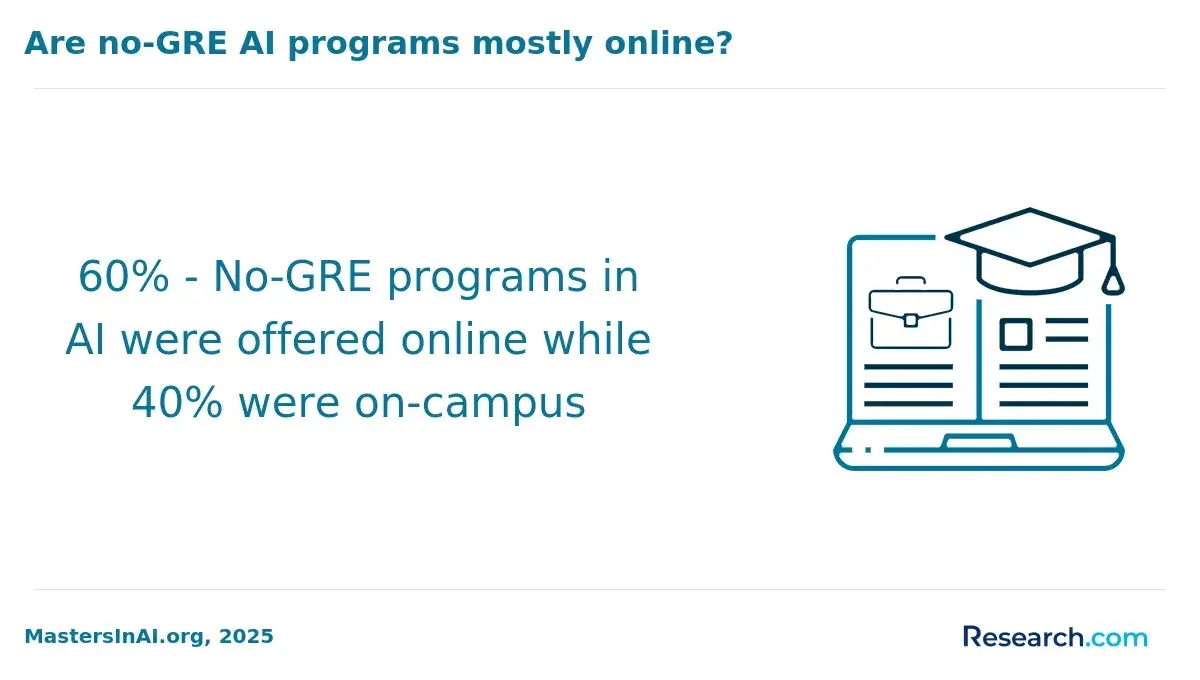
How do online, hybrid, and campus AI programs for controllers compare?
Controllers seeking to upskill in AI have flexible learning paths tailored to different needs. Online courses provide rapid, modular training in Python, data analysis, and generative AI, allowing professionals to earn valuable credentials while balancing work.
Hybrid programs mix online study with limited in-person sessions, offering practical experience and peer networking. Campus programs deliver immersive, full-time learning with direct faculty access and collaborative projects, but require relocation and greater time commitment.
All delivery methods stress Python and data analysis as essential skills, reflecting industry demand. According to TimTis' Best AI Courses in 2026, professionals who integrate Python-driven data analysis can expect a 38-55% salary increase within months. Controllers should seek programs integrating these competencies with domain-specific case studies to maximize relevance.
Factors to consider include current job flexibility, learning style, and career goals. Fast-paced, hands-on training suits online learners, while those aiming for deeper mastery and professional networking may prefer hybrid or campus options. Evaluating program reputation, faculty expertise, and employer ties is essential when choosing.
In essence, online courses excel in accessibility and speed; hybrid programs balance practical engagement with convenience; campus programs offer the richest academic experience at higher time and cost. Controllers can strategically select based on their immediate goals and lifestyle preferences.
What core topics and tools are covered in leading AI courses for controllers?
Leading AI courses for controllers cover core topics vital for embedding generative AI in finance operations. Key areas include advanced data analytics, natural language processing (NLP), automation of routine reporting, and AI-powered decision support.
Controllers are trained to transform raw financial data into actionable insights and cohesive narratives, often using business intelligence tools like Power BI and Tableau combined with generative AI to simplify report creation and board pack preparation.
Practical training focuses on Python coding and familiarity with AI platforms such as OpenAI and Microsoft Azure AI. Skills like prompt engineering and fine-tuning AI outputs for accuracy and relevance are emphasized. In addition, courses address data governance, AI ethics, and regulatory compliance to promote responsible AI use within finance teams.
Students learn integration strategies that connect generative AI tools with existing ERP and BI systems, reducing manual effort and improving data consistency.
Real-world case studies reveal 30-40% time savings in preparing management reports when these technologies are combined, along with improved stakeholder satisfaction, according to the Controllers Council report on upskilling.
Controllers also gain expertise in designing AI-enhanced dashboards and automated alert systems that detect financial anomalies or forecast trends. These capabilities enable finance professionals to move beyond traditional reporting towards predictive and prescriptive analytics essential in today's data-driven environment.
How long do AI courses for controllers take, and what do they typically cost?
AI courses for controllers typically span 4 to 12 weeks, depending on course depth and format. Shorter programs, around 4 to 6 weeks, cover foundational generative AI concepts and their practical use in finance, including automating reconciliations and forecasting.
Longer courses, from 8 to 12 weeks, often feature hands-on projects, ERP system integration, and AI agent workflows for month-end close processes.
Course pricing varies based on provider and complexity. Entry-level training ranges from $300 to $800, ideal for professionals seeking quick upskilling. More comprehensive certifications or bootcamps with instructor-led sessions and personalized feedback cost between $1,500 and $4,000.
Advanced executive or university-affiliated programs may surpass $5,000 but typically provide credentials recognized across the accounting sector.
Implementing AI agents in controller workflows yields significant efficiency improvements. Research from ChatFin's "Best AI Agents for Controllers" shows 60-80% reductions in routine reconciliation hours and 50-70% faster month-end closes. These benefits translate into ROI within 6 to 12 months, highlighting the importance of AI education tailored to controllers.
Flexible learning formats, such as online or hybrid courses, enable students to balance work with study while immediately applying skills. Evaluating courses by relevance to accounts payable, accounts receivable, and financial close cycles ensures quicker returns on investment.
How can controllers verify that an AI course or certificate is accredited and reputable?
Controllers can confirm that an AI course or certificate is reputable by verifying its accreditation through recognized bodies like the Accreditation Council for Business Schools and Programs (ACBSP) or regional accreditors.
Courses affiliated with established educational institutions or partnered with leading technology companies and AI research centers often deliver quality, relevant content. Reviewing instructor credentials is crucial; experienced professionals with verifiable AI and finance expertise enhance the program's reliability.
Essential factors include measurable outcomes such as industry-recognized certificates or micro-credentials widely accepted by employers.
Prospective students should evaluate whether the curriculum covers current AI techniques tailored to finance and controlling, with practical learning opportunities like hands-on projects or case studies. Positive endorsements from industry experts on platforms such as Coursera and LinkedIn Learning offer additional validation.
Research from the Controllers Council's AI Upskilling for Controllers shows that professionals completing accredited AI programs are 1.8 times more likely to lead AI-related initiatives within a year. This underscores the importance of choosing programs with strong industry connections and a proven track record of career impact.
What career outcomes, job roles, and salary impacts can AI skills have for controllers?
Controllers who develop skills in generative AI and related technologies significantly enhance their career prospects and earning potential. AI literacy enables controllers to move into advanced roles such as AI finance strategist, data-driven risk manager, or automated reporting specialist.
These roles leverage AI to optimize financial planning, forecasting, and compliance, providing strategic insights beyond traditional control functions.
AI skills also equip controllers to lead digital transformation efforts by integrating machine learning models into accounting systems, improving decision-making speed and accuracy.
Professionals with generative AI expertise often take on hybrid roles-like financial data scientist or AI governance specialist-that blend finance and technology, which are increasingly in demand.
Salary impacts are substantial. According to Wall Street Prep's 2025 report on finance and business professionals, AI-capable controllers and analysts earn 30-50% more than peers without AI skills. This premium reflects strong employer demand and the value of enhanced analytical capabilities in reducing errors and boosting efficiency.
In smaller companies, AI training can expand controller responsibilities to include budgeting automation and real-time financial monitoring. In multinational corporations, AI helps navigate complex regulatory environments through predictive compliance tools.
Prospective learners should master generative AI applications tailored to finance, data interpretation, and integrating AI outputs with existing systems to maximize career growth and compensation.
Which industry certifications or credentials complement AI coursework for controllers?
Industry certifications that complement ai coursework for controllers bridge essential technical and finance-specific expertise. Key credentials include the Certified Management Accountant (CMA), which enhances financial planning and analysis skills, and the Chartered Financial Analyst (CFA) designation, valued for insights into investment and risk assessment. Both boost controllers' ability to apply AI-driven analytics within complex financial environments.
Specialized certifications like Certified Information Systems Auditor (CISA) and Certified in Risk and Information Systems Control (CRISC) provide critical knowledge in AI governance, cybersecurity, and risk management-key areas for integrating AI into financial controls.
Programming and data science certifications, particularly in Python and machine learning, further empower controllers to design and manage AI models tailored to accounting. Certificates from recognized platforms on Python for data analysis, for example, align well with AI coursework to equip practical skills.
Research by TimTis in "AI Learning Path for 2026" outlines a structured six- to twelve-month learning plan that covers foundational AI concepts, prompt engineering, python, machine learning fundamentals, and AI application development.
This approach correlates strongly with completing portfolio projects and earning certifications, boosting marketability for finance professionals.
Controllers should pursue a mix of finance, risk, and technical certifications alongside AI coursework to demonstrate well-rounded expertise, meeting rising employer demand for AI literacy combined with financial and compliance acumen.
Other Things You Should Know About Artificial Intelligence
Yes, many AI courses for controllers are structured to accommodate learners without a purely technical background. These courses often start with foundational concepts and provide practical, business-oriented examples. While some programming basics may be introduced, the focus is usually on applying AI insights to financial and operational decision-making rather than deep technical development.
Ethical topics in AI courses for controllers include bias mitigation, transparency, and accountability in AI models. Students learn to identify potential ethical risks related to automated decision-making that affects financial reporting or forecasting. The curriculum stresses the importance of ethical AI use to maintain trust and fairness within organizational processes.
AI courses for controllers typically demonstrate how AI applications can be integrated with popular financial software like ERP and accounting platforms. They cover automation of routine tasks, predictive analytics for cash flow management, and anomaly detection within transactional data. This practical integration ensures controllers can enhance productivity and accuracy without disrupting established workflows.
References
- Hybrid Programs- Which Students Want Them? https://encoura.org/resources/wake-up-call/hybrid-programs-which-students-want-them
- Artificial intelligence in controlling: How the role of controllers is changing https://www.coplanner.com/en/academy/controlling-hub/artificial-intelligence-in-controlling-the-future-belongs-to-strategists
- The Rise of the AI Controller: New Hybrid Roles in Accounting https://www.learnsignal.com/blog/ai-controller-accounting-roles/
- AI Governance Professional Certification | CertiProf https://certiprof.com/products/ai-governance-certification-iso-42001
- Best Courses of Generative AI in Finance for Professionals - CFTE https://blog.cfte.education/best-generative-ai-in-finance-courses/
- AI Courses & Certifications https://www.intel.com/content/www/us/en/developer/topic-technology/artificial-intelligence/training/overview.html
- Online vs Campus Artificial Intelligence Degree Programs: Complete Comparison https://hakia.com/compare/artificial-intelligence-online-vs-campus/
- AI Training Courses - Artificial Intelligence https://www.bsigroup.com/en-GB/products-and-services/training-courses-and-qualifications/iso-iec-42001-training-courses/
- Artificial Intelligence in Finance: 9 AI Courses to Build Your Skills https://xledger.com/blog/artificial-intelligence-in-finance-9-ai-courses-to-build-your-skills/
- The Impact of AI on Job Roles, Workforce, and Employment: What You Need to Know | Innopharma Education https://www.innopharmaeducation.com/blog/the-impact-of-ai-on-job-roles-workforce-and-employment-what-you-need-to-know