2027 Best Agentic AI Courses for Email and Calendar Automation Teams

Co-Founder and Chief Data Scientist
Teams handling email and calendar automation often face challenges integrating intelligent workflows with minimal disruption. Existing training options may lack focus on the agentic capabilities required to optimize task delegation, scheduling, and communication efficiency.
For professionals from unrelated fields, finding flexible courses that balance practical application with accreditation can be daunting. This article explores leading agentic AI courses tailored for email and calendar automation teams, highlighting accredited programs that provide targeted skills to enhance automated operations and improve productivity in dynamic work environments.
Key Things You Should Know
- Agentic AI courses in 2026 emphasize practical skills in automating email and calendar workflows, crucial for boosting workplace efficiency by up to 40%, according to recent industry analyses.
- Leading programs integrate hands-on training with tools like GPT-driven assistants, reflecting a 35% industry growth in AI-adoption for administrative automation since 2024.
- Certification in agentic AI for email and calendar automation enhances job prospects, with a 25% salary increase reported for professionals skilled in these technologies.
Advance Your Career with AI Online Courses
Artificial Intelligence: Implications for Business Strategy
This program provides an introduction to Artificial Intelligence and their implications for business strategy. Earn an official digital certificate.

Oxford Artificial Intelligence Programme
Explore this Oxford Artificial Intelligence programme offered in a flexible learning environment and explore topics like machine learning, automation, and robotics.

Implementing Agentic AI: Building Your Organizational Playbook
This online MIT Agentic AI course offers a practical approach to deploying AI agents in your organization, including a custom playbook. 3 weeks, exclusive launch price.

AI Adoption: Driving Business Value and Impact
This online MIT AI Adoption: Driving Business Value and Impact offers practical frameworks to close the gap between AI potential and business reality.

Artificial Intelligence in Pharma and Biotech
Discover the applications and limitations of artificial intelligence in pharma and biotech with this MIT online short course.

What is agentic AI for email and calendar automation, and why does it matter for teams?
Agentic AI applications for email and calendar automation teams play a vital role in streamlining communication and scheduling tasks. These intelligent systems analyze incoming messages, prioritize important emails, draft responses, and manage calendar events with minimal human input.
By automating repetitive duties, they help reduce email overload and prevent scheduling conflicts, significantly improving team efficiency.
Employees often spend the majority of their work hours on email, meetings, and chat, with less time available for deep, creative work. Agentic AI tools in team-based email and calendar management address this imbalance by handling routine communications and optimizing meeting schedules automatically.
Calendar automation, for example, can coordinate availability, send reminders, and reschedule appointments while syncing preferences across teams.
Teams can benefit from agentic AI courses that cover practical implementation, natural language processing, and integration with platforms like Outlook and Gmail. These trainings empower professionals to cut communication management time in half, enhancing productivity and responsiveness in dynamic work environments.
For those interested in advancing their expertise, pursuing an AI degree can provide foundational knowledge and skills to develop or manage these advanced automation systems.
Advance Your Career with AI Online Courses
Artificial Intelligence: Implications for Business Strategy
This program provides an introduction to Artificial Intelligence and their implications for business strategy. Earn an official digital certificate.
Oxford Artificial Intelligence Programme
Explore this Oxford Artificial Intelligence programme offered in a flexible learning environment and explore topics like machine learning, automation, and robotics.
Implementing Agentic AI: Building Your Organizational Playbook
This online MIT Agentic AI course offers a practical approach to deploying AI agents in your organization, including a custom playbook. 3 weeks, exclusive launch price.
What types of agentic AI courses best support email and calendar automation workflows?
The types of agentic AI training programs for email automation teams that best support workflows focus on intelligent process automation, natural language processing (NLP), and workflow optimization. These courses build practical skills in configuring AI agents to handle scheduling conflicts, prioritize emails, and extract meaningful insights from communication patterns.
Essential features include training on API integrations with popular email clients and calendar tools using automation frameworks.
Certain courses teaching reinforcement learning and adaptive AI decision-making models empower learners to create agents that refine scheduling accuracy over time by analyzing user behavior. For example, intent detection through NLP lets AI agents distinguish urgent emails from routine ones, aiding task prioritization in automated inbox management.
Similarly, the best agentic AI courses for calendar workflow automation often cover semantic parsing and contextual analysis, improving calendar assistants' management of overlapping appointments and suggesting optimal meeting times.
Technical instruction in robotic process automation (RPA) combined with AI modules provides the skills needed to design workflows that connect multiple software environments. This integration streamlines repetitive scheduling tasks and reduces manual errors. Additionally, foundational knowledge of AI ethics and security ensures compliance when managing sensitive communication data.
Considering IDC's forecast that global spending on AI-centric systems will reach $308 billion in 2027 with a 29.2% CAGR from 2023 to 2027, particularly driven by automation in knowledge worker workflows, students should seek courses offering hands-on integration experiences. Programs offering capstone projects or labs focused on real-world email and calendar automation scenarios help solidify these agentic AI applications.
Prospective learners looking for affordable options may explore AI degrees online to find suitable programs.
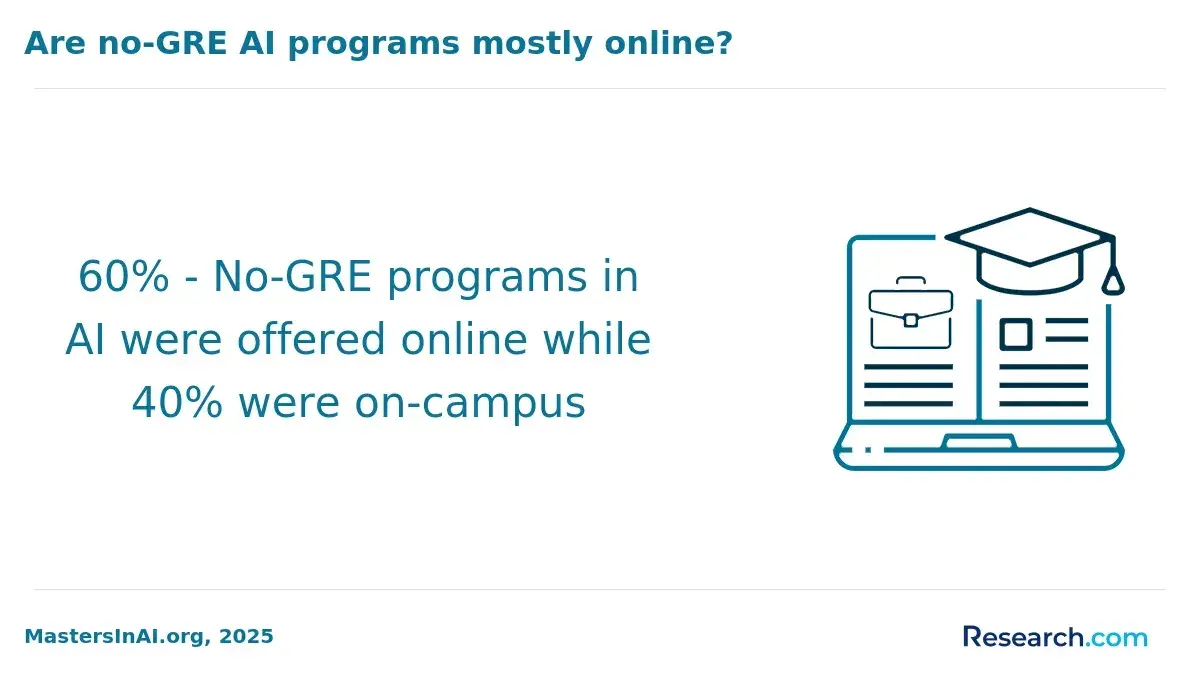
How do online agentic AI programs compare with campus-based options for automation teams?
Online agentic AI courses offer notable flexibility and accessibility compared to campus-based programs for automation teams. They allow participants to learn at their own pace, which is especially beneficial for busy professionals managing demanding workloads. These courses quickly integrate the latest AI tools and techniques, ideal for roles focused on email and calendar automation.
Campus-based programs provide more structured learning with mentorship, collaboration opportunities, and hands-on labs, but often require higher tuition, commuting, and fixed schedules. Online options generally cost less and feature modular learning paths customizable for specific roles, such as AI prompt engineering or workflow integration within automation teams.
According to a McKinsey analysis, generative AI can automate or accelerate nearly 30% of the workload for knowledge workers in communication-intensive roles. Online courses tend to incorporate these advances more rapidly, helping teams acquire up-to-date skills that improve productivity and ROI. This advantage makes them some of the best agentic AI training options for email and calendar automation currently available.
For early-career professionals, campus programs may better provide comprehensive foundational knowledge. However, combining both approaches-starting with online training for quick skill adoption, then advancing to campus courses for deeper expertise-can optimize career growth. Those interested in broader technology education might also explore a game design and development degree as an alternative or complementary skill path.
What should automation teams look for in accredited AI programs and industry-recognized providers?
Automation teams focused on agentic AI courses for email automation teams should prioritize programs with accredited curricula that emphasize hands-on experience and recognized certification. Ideal programs provide comprehensive training on natural language processing, workflow integration, and API deployment tailored for email and calendar automation.
Accreditation from established educational bodies ensures alignment with industry standards and employer recognition.
Practical experience through projects simulating real-world challenges is critical. For instance, working with generative AI APIs like OpenAI's GPT or Microsoft Azure's cognitive services equips learners for actual deployment scenarios. Providers endorsed by leading AI companies typically offer curriculum that reflects up-to-date industry practices.
Certified courses validating proficiency in popular automation platforms such as Google Workspace, Microsoft Power Automate, and specialized AI workflow builders are essential. Emphasizing security and ethical AI use is mandatory, especially due to the sensitivity of email and calendar data; compliance with GDPR and HIPAA standards should be covered thoroughly.
Enterprise adoption of agentic AI accelerates rapidly, with Gartner predicting that by 2026, 80% of enterprises will employ generative AI models in production. This highlights the importance of skills in scalable AI deployment, performance monitoring, and iterative improvements. Accredited AI training programs for calendar automation specialists must therefore balance technical expertise with practical certification and security awareness.
Prospective students interested in related STEM fields might also explore the best military friendly online electrical engineering degrees to complement their AI automation skill set.
What core skills and coursework do top agentic AI automation courses typically include?
Agentic AI automation courses designed for email and calendar teams develop core skills to create and optimize intelligent workflows independently. These programs emphasize programming languages like Python, essential for scripting automation and connecting APIs. Students also gain expertise in natural language processing (NLP), which helps systems understand and generate human-like text for composing emails and managing schedules.
- Automation frameworks, including RPA platforms and workflow orchestrators, aid in streamlining calendar and email task management.
- API integration is crucial for linking email clients and calendar software with AI components for effortless automation.
- Data management and security protocols ensure privacy compliance throughout automated processes.
- Basic machine learning teaches how to build adaptive systems that enhance email prioritization and scheduling accuracy over time.
- User experience design focuses on creating intuitive interactions between automation tools and end users to boost productivity.
These courses typically include hands-on projects that simulate real-world problems such as handling email overload and coordinating meetings across time zones. Learners also troubleshoot issues like duplicate calendar entries or misinterpreted email commands.
According to LinkedIn's 2024 Emerging Jobs report, roles requiring AI and automation skills offer a median pay premium of 21% compared to jobs lacking this expertise. This pay advantage highlights the career potential tied to mastering agentic AI automation for email and calendar systems, making these courses strategically valuable.
What are the typical admission requirements for AI courses focused on email and calendar automation?
Admission requirements for AI courses centered on email and calendar automation typically include a foundational knowledge of computer science or related fields. Basic programming skills in languages like Python or JavaScript are commonly expected, as scripting is crucial for automating tasks.
Applicants may also need familiarity with APIs or automation platforms such as Zapier and Microsoft Power Automate, tools that enhance AI-driven solutions. For beginners, understanding email protocols (SMTP, IMAP) and calendar APIs (Google Calendar API, Microsoft Graph) can suffice.
Advanced or specialized programs often request a resume showcasing relevant experience or completed projects in automation or machine learning fundamentals. Some require prerequisite coursework in machine learning or data processing, along with assessments to gauge technical skills and analytical thinking, especially for certificate or professional diploma options.
- Completion of introductory AI and automation classes is frequently recommended or required, particularly for non-technical applicants.
- Experience in operations, customer service, or administrative roles using automation tools can strengthen an application.
- Applicants should also understand data privacy concerns related to email and calendar automation.
A recent Salesforce survey revealed that 54% of global knowledge workers say they lack the skills to effectively use generative AI at work, even as 86% of IT leaders consider AI essential for business competitiveness. Demonstrating problem-solving abilities with automation and familiarity with relevant tools can greatly improve admission prospects for these specialized AI courses.
How long do agentic AI automation programs take, and what do they usually cost?
Agentic AI automation programs designed for email and calendar management typically last between 4 and 12 weeks, tailored to cover foundational to advanced skills. Shorter bootcamps, often around one month, concentrate on core automation tools and workflows with hands-on practice.
More extensive courses of up to three months delve into complex topics such as multi-agent coordination, CRM system integration, and custom script development. This timeline supports working professionals balancing learning with job responsibilities.
Costs vary widely depending on the provider, course length, and included features. Entry-level options start at approximately $500, focusing on certifications for popular platforms like Zapier, Microsoft Power Automate, and Calendly integrations. Mid-tier offerings, featuring instructor support and project-based learning, generally run between $1,200 and $3,000.
Premium programs from well-known AI education firms or universities, often including career services and advanced content, may exceed $5,000.
According to Calendly's 2024 usage data, automated scheduling can save users an average of 4.2 hours per week by removing manual email negotiations. These productivity gains highlight the value of agentic AI skills for teams seeking efficiency. When choosing a course, consider:
- The depth of practical automation skills taught
- The relevancy of tools included
- The flexibility of course pacing
What career paths and roles can agentic AI email and calendar skills lead to?
Agentic AI skills in email and calendar automation open diverse career paths in automation engineering, workflow management, and digital operations. Professionals skilled in these areas often become automation specialists who design AI-driven systems to streamline email routing and calendar management, significantly reducing manual workload and human error while boosting operational efficiency.
Career options include:
- Business process analysts who implement agentic AI to optimize communication workflows
- Compliance officers managing risk through automated tracking and approvals
- IT project managers leading AI integration in corporate communication platforms
- Customer success managers leveraging AI to improve client interactions and scheduling
- Product managers developing AI-powered automation tools for enterprises
An IBM study from 2024 showed a 30% reduction in human error rates in organizations using AI for tasks like email routing and approvals, highlighting the demand for professionals proficient in agentic AI deployment. Collaboration with data scientists and AI developers is common to refine models and ensure smooth integrations, requiring technical skills in AI platforms and scripting languages.
Hands-on experience with automation tools and a clear understanding of compliance protocols are crucial. The ability to map complex workflows for AI implementation is highly valued across sectors such as finance, healthcare, and logistics, where email and calendar automation support critical decision-making and operational reliability.
What salary ranges and job outlook can professionals expect with agentic AI automation expertise?
Professionals skilled in agentic AI automation for email and calendar workflows can expect competitive salaries and strong job prospects. Entry-level automation specialists earn between $65,000 and $85,000 annually, influenced by industry and location. Those with mid-career experience in deploying complex automated processes and integrating tools like Zapier, Microsoft Power Automate, or Google Workspace APIs typically earn $90,000 to $120,000. Senior roles, including automation architects or AI workflow strategists, may surpass $140,000 per year due to their role in improving organizational efficiency.
The demand for these skills continues to rise, with Zapier's 2024 State of Business Automation report showing 77% of knowledge workers using automation tools-email and calendar workflows rank among the top three automated categories. This trend highlights the need for specialists adept at designing, implementing, and maintaining agentic AI systems that minimize repetitive tasks and enhance communication flows.
Valuable skills include proficiency with no-code/low-code platforms, understanding AI decision models, and optimizing multi-application integrations. Tailoring solutions for sectors like finance, healthcare, and legal services often yields higher pay due to regulatory and productivity needs. Roles increasingly focus on training AI agents, monitoring automation, and ensuring security.
Agentic AI automation experts benefit from both lucrative pay and sustained career growth given the strong business imperative for workflow automation.
Which certifications and tools are most valuable for agentic AI email and calendar specialists?
Certifications in machine learning, natural language processing, and automation tools play a crucial role for agentic AI email and calendar specialists. Key credentials include Google Cloud's Professional Machine Learning Engineer and Microsoft Certified: Azure AI Engineer Associate, which build a strong foundation for deploying AI models that streamline routine communications.
Training in platforms like Microsoft Power Automate, Zapier, and UiPath enhances skills for integrating AI-driven workflows in email and calendar management. Professionals with mastery of these tools can design agentic systems that reduce manual scheduling and message triage, boosting organizational productivity.
Valuable technical skills include:
- Python programming with libraries like spaCy and NLTK for advanced text processing
- Certifications in data privacy and compliance standards such as GDPR and CCPA
These capabilities enable customization of automation beyond standard solutions, addressing complex challenges like prioritizing emails by intent or context while maintaining strong data privacy.
The World Economic Forum's 2025 Future of Jobs report highlights that 44% of workers' skills will be disrupted within five years, primarily due to AI and automation in routine digital tasks. This trend pushes professionals to secure broad certifications and practical expertise to stay competitive in this evolving field.
Other Things You Should Know About Artificial Intelligence
Agentic AI operates with a higher level of autonomy compared to traditional AI, which typically requires more direct human input to perform tasks. In email and calendar automation, agentic AI can proactively manage schedules, draft responses, and optimize workflows without constant user intervention, making it more efficient for team collaboration.
Yes, many agentic AI solutions are designed to seamlessly integrate with popular email and calendar platforms such as Microsoft Outlook, Google Workspace, and others. These integrations allow agentic AI to access and update information in real time, enhancing automation while maintaining data security within familiar environments.
Privacy is critical because agentic AI systems typically access sensitive communication and scheduling data. Teams should ensure that any AI tool complies with relevant data protection regulations, employs robust encryption, and provides clear controls over data access and retention to safeguard user information.
In 2027, agentic AI significantly boosts team productivity by automating routine tasks, scheduling, and email analysis. Its ability to learn and adapt to team preferences reduces the time spent on manual organization, allowing teams to focus on complex and strategic initiatives.
References
- NVIDIA Agentic AI LLMs Certification https://www.nvidia.com/en-us/learn/certification/agentic-ai-professional/
- qa.com | Agentic AI Training For Businesses https://www.qa.com/browse/courses/ai/agentic-ai/
- Choosing AI Training for Your Team: What Actually Matters https://acuityai.co/blog/choosing-ai-training-for-your-team
- What is Agentic AI? Key Benefits & Features https://www.automationanywhere.com/rpa/agentic-ai
- AI Automation Certification Programs & Courses - MastersInAI.org https://www.mastersinai.org/certifications/ai-automation/
- How agentic workflows transform enterprise automation https://www.kore.ai/blog/agentic-workflows-and-how-are-they-redefining-process-automation-in-enterprises
- AI for Time Management: Smarter Schedules & Workflows https://www.techclass.com/resources/learning-and-development-articles/ai-for-time-management-smarter-scheduling-workflow-automation
- What is agentic AI in the workplace: A practical guide for modern teams | Plane Blog https://plane.so/blog/what-is-agentic-ai-in-the-workplace-a-practical-guide-for-modern-teams
- Best AI Training Platforms for Employees (2026) Compared https://www.goodhabitz.com/resources/blog/best-ai-training-for-employees
- AI Agents FAQs | Agentic Workforce https://www.agenticworkforce.io/ai-agents-faqs