2027 Best AI Courses for Business Analysts Managing AI Adoption

Co-Founder and Chief Data Scientist
Many business analysts face challenges integrating artificial intelligence into organizational processes due to knowledge gaps and rapid technological change. Without a clear understanding of AI concepts and management strategies, adoption efforts often stall, limiting potential business value. Professionals need accessible, comprehensive training that bridges technical and strategic skills to lead AI initiatives effectively.
This article explores the best AI courses designed for business analysts aiming to manage AI adoption successfully. It highlights programs that balance flexibility, accreditation, and practical relevance, helping readers select educational paths that enable them to drive AI projects with confidence and competence.
Key Things You Should Know
- Business analysts adopting AI need courses combining data analytics, machine learning basics, and ethical frameworks to navigate AI integration effectively in corporate environments.
- By 2025, 72% of organizations require analysts skilled in AI tools, highlighting the importance of up-to-date training to influence strategic decisions and technology management.
- Top AI courses emphasize practical applications, including using AI for predictive modeling and process automation, equipping analysts to optimize operations and support digital transformation.
Advance Your Career with AI Online Courses
Artificial Intelligence: Implications for Business Strategy
This program provides an introduction to Artificial Intelligence and their implications for business strategy. Earn an official digital certificate.

Oxford Artificial Intelligence Programme
Explore this Oxford Artificial Intelligence programme offered in a flexible learning environment and explore topics like machine learning, automation, and robotics.

Implementing Agentic AI: Building Your Organizational Playbook
This online MIT Agentic AI course offers a practical approach to deploying AI agents in your organization, including a custom playbook. 3 weeks, exclusive launch price.

AI Adoption: Driving Business Value and Impact
This online MIT AI Adoption: Driving Business Value and Impact offers practical frameworks to close the gap between AI potential and business reality.

Artificial Intelligence in Pharma and Biotech
Discover the applications and limitations of artificial intelligence in pharma and biotech with this MIT online short course.

What do AI courses for business analysts cover when managing enterprise AI adoption?
AI courses for business analysts managing enterprise AI adoption emphasize integrating artificial intelligence strategies into business processes while mastering data-driven decision-making skills within AI-powered environments.
These programs combine technical knowledge of machine learning, natural language processing, and data analytics with practical business applications. Analysts learn to translate complex AI capabilities into actionable insights that improve operations and optimize decisions.
Core topics include stakeholder and change management, ethical AI deployment, and identifying business challenges addressed by AI. Participants develop project roadmaps that align AI initiatives with organizational goals, focusing on assessing AI readiness, leading cross-functional teams, and measuring impacts on metrics such as EBIT.
Risk management and compliance are vital, covering regulatory frameworks, data privacy, and mitigating bias in AI models. Many courses feature hands-on case studies simulating challenges faced during AI integration.
McKinsey & Company's Global AI Survey highlights that organizations with non-technical fusion roles, such as business analysts embedded in AI teams, are 1.8 times more likely to achieve significant EBIT gains, showing the value of this skill set.
Programs vary by industry focus, addressing sector-specific applications in finance, healthcare, or retail, plus advanced topics like AI governance and continuous performance optimization. For those curious about broader career paths, see what can you do with an applied artificial intelligence degree.
Advance Your Career with AI Online Courses
Artificial Intelligence: Implications for Business Strategy
This program provides an introduction to Artificial Intelligence and their implications for business strategy. Earn an official digital certificate.
Oxford Artificial Intelligence Programme
Explore this Oxford Artificial Intelligence programme offered in a flexible learning environment and explore topics like machine learning, automation, and robotics.
Implementing Agentic AI: Building Your Organizational Playbook
This online MIT Agentic AI course offers a practical approach to deploying AI agents in your organization, including a custom playbook. 3 weeks, exclusive launch price.
Which types of AI programs best fit business analysts (certificates, bootcamps, or degrees)?
Certificate programs are ideal for business analysts seeking targeted, practical AI skills without the time or financial investment of a full degree. These best AI certification programs for business analysts often concentrate on applied analytics, machine learning fundamentals, and AI tools essential for enhancing business intelligence.
Typically lasting from weeks to a few months, they are perfect for professionals needing rapid upskilling to integrate AI into their current roles.
Top AI bootcamps and degrees for business analyst careers provide intensive, hands-on training that builds working proficiency quickly. Bootcamps emphasize project-based learning, coding, and real-world problem solving, benefiting analysts with limited technical backgrounds by enabling effective collaboration with technical teams.
However, they usually require a significant time commitment and can be challenging for those without prior programming or statistics experience.
Degree programs, including master's degrees in data science or AI, deliver comprehensive foundational knowledge along with advanced specialization. They suit analysts aspiring to leadership roles in AI strategy or full transitions into technical positions.
These degrees cover algorithm development, ethical considerations, and advanced methodologies, supporting long-term career growth and adaptability. Prospective students can explore options for an engineering degree online as part of their pathway.
The World Economic Forum's Future of Jobs Report projects a 30% growth in AI and Machine Learning specialists and 14% growth in Business Intelligence Analysts and Data Scientists by 2028.
This data underscores the necessity for business analysts to achieve AI fluency through carefully chosen education paths, balancing time, career objectives, and technical background.
How can business analysts evaluate accredited, high-quality AI programs in the United States?
Business analysts seeking accredited AI programs in the United States should prioritize institutional accreditation from recognized bodies such as the Accreditation Board for Engineering and Technology (ABET) or regional accreditors like the Higher Learning Commission. Accreditation ensures academic rigor and is vital for professional certification and employer recognition.
Programs must offer curricula aligned with practical business applications, including data literacy, analytics, and AI prompting techniques.
This focus matches the rapid growth of AI-related roles, as seen in PwC's 2024 AI Jobs Barometer, which found that AI job postings requiring these skills increased 3.5 times faster than other roles since 2016. High-quality programs integrate hands-on projects, internships, and industry partnerships, giving students essential real-world experience.
Evaluating faculty expertise is equally important. Instructors engaged in current AI research or active consulting bring valuable insight into emerging trends. Graduate outcomes, such as job placement rates and connections with employers, reveal the program's effectiveness in preparing analysts for AI adoption roles.
A business analyst guide to accredited AI courses in the United States should also consider flexible delivery formats like hybrid or online options, supporting professionals balancing education with work. For those interested in related fields, exploring reputable online cyber security degrees may offer complementary career paths.
What core skills and topics should AI courses teach for responsible AI adoption in business?
Business analysts adopting AI must develop core skills for responsible AI adoption in business analysis, including a thorough grasp of machine learning models, natural language processing, and data analytics. This technical foundation empowers them to critically evaluate AI solutions and align them with business needs.
Essential topics for AI courses in business analyst training also include ethics and bias mitigation, ensuring analysts understand the impact of AI decisions on stakeholders, how to identify and reduce bias, and the importance of compliance with data privacy regulations.
Practical knowledge in AI project management and governance frameworks is vital. Analysts learn to oversee AI initiatives, define performance metrics, and maintain transparency during development and deployment, while tools for monitoring AI outcomes help ensure alignment with business objectives and prevent unintended consequences.
Given Gartner's forecast that by 2026, 75% of new enterprise software will use low-code or no-code platforms, up from less than 25% in 2020, training on these environments is crucial. Business analysts gain skills to leverage no-code and low-code AI tools for rapid prototyping and effective requirements gathering, streamlining collaboration between technical and business teams.
Data literacy is another key area, emphasizing data quality, preparation, and interpretation. Analysts bridge communication between data scientists and business units, so mastering these skills supports managing AI adoption change management effectively. F
or prospective students interested in technical programs, exploring the best military friendly online electrical engineering degrees can complement AI expertise.
How do online, hybrid, and campus AI programs compare for working business analysts?
Online ai courses provide crucial flexibility for working business analysts, allowing them to learn at their own pace without disrupting full-time jobs or projects. Many programs incorporate interactive simulations and collaborative tools to mirror real-world challenges, essential for mastering applications like generative AI in user stories and process mapping.
Additionally, online learning often reduces costs by eliminating travel or relocation expenses, offering up-to-date content accessible anytime.
Hybrid programs blend online learning with in-person sessions, combining theoretical study with practical workshops and networking. This format supports hands-on experience with AI tools while fostering critical face-to-face collaboration, important for managing AI adoption within teams.
For example, a hybrid course might cover generative AI techniques online and use on-campus sessions to integrate these tools into existing business processes.
Campus-based programs deliver immersive learning with structured schedules and direct mentorship. They provide access to faculty experts and peer interactions, enriching the understanding of AI adoption strategies in business analytics. However, these programs require more time and may be less practical for busy professionals.
A study by the MIT Sloan Management Review and BCG reveals that 79% of "GenAI high performers" automate knowledge work with generative AI, compared to only 22% of others.
This highlights the need for education formats focused on practical application and seamless integration into daily workflows, a challenge addressed differently across online, hybrid, and campus settings.
What are typical admission requirements for AI courses designed for business analysts?
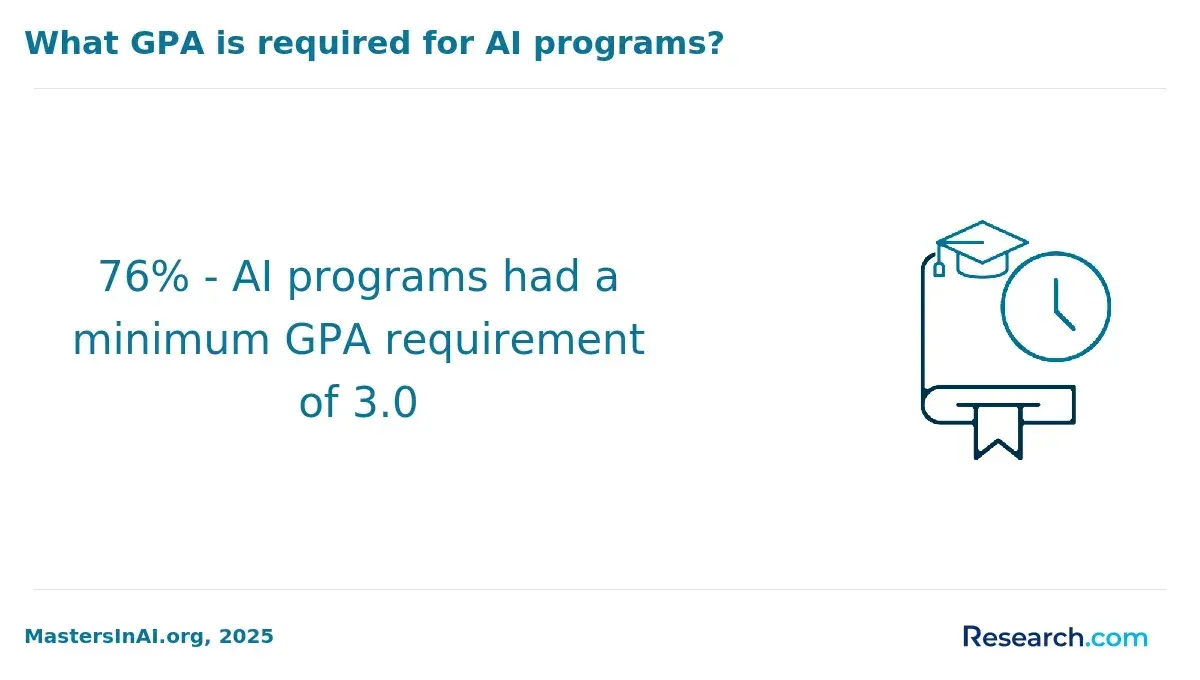
Admission requirements for AI courses tailored to business analysts typically combine educational background and practical experience. Most programs expect a bachelor's degree in areas like business, economics, statistics, or computer science. Candidates with relevant professional experience, especially in analytics, consulting, or IT, may also qualify.
Proficiency in programming languages such as Python or R is often required or strongly recommended, enabling students to work effectively with machine learning models and data manipulation essential for applied ML & GenAI methods.
Familiarity with data analysis tools and foundational statistics or calculus coursework is frequently sought to ensure a solid grasp of underlying mathematical principles.
Applicants are usually asked to submit a statement of purpose detailing their objectives for applying AI in business workflows, such as forecasting, customer segmentation, or decision support.
Highlighting alignment with industry data, like Accenture's 2024 "State of AI in Business" report, which reveals companies using AI in key decisions are 2.6 times likelier to achieve revenue growth over 10%, can strengthen applications.
Some advanced or graduate programs may require GRE scores or recommendation letters, but many professional AI courses prioritize relevant work experience over standardized testing. Preparing evidence of quantitative skills, programming competence, and clear understanding of AI's business impact is essential to meet admission criteria.
How long do AI programs for business analysts take, and what do they typically cost?
AI programs for business analysts vary widely in length, typically lasting from four weeks to six months. Shorter courses of one to two months focus on foundational skills like data analysis, basic machine learning, and AI ethics.
Longer programs, spanning three to six months, delve deeper into responsible AI, data governance, and risk management frameworks necessary for scaling AI initiatives.
Costs depend on program length and provider, with prices ranging from around $500 for brief online certificates to over $5,000 for comprehensive bootcamps or professional diplomas.
For instance, a four-week course on AI fundamentals may cost under $1,000, while a six-month program covering AI adoption and regulatory compliance can exceed $4,000.
IBM's 2024 AI Adoption Index highlights that 57% of organizations see data governance, privacy, and model risk as major obstacles to AI scaling, yet only 35% have formal governance frameworks.
This reveals a strong need for business analysts to gain expertise in responsible AI and governance, skills often emphasized in longer, more detailed courses.
When selecting a program, consider if it addresses key barriers such as ethical risk management, compliance standards, and practical strategies for AI adoption. Programs including modules on responsible AI and data governance can enhance a business analyst's capability to effectively manage complex AI projects.
What career paths can AI-trained business analysts pursue in product, data, and strategy roles?
AI-trained business analysts play vital roles across product management, data, and strategy, leveraging their ability to connect technical insights with business goals. In product teams, they guide AI feature development by translating data into user-focused solutions and aligning engineering efforts with market needs.
For instance, they may prioritize algorithm updates based on user feedback and usage trends to support agile development.
In data-centered positions, these analysts act as bridges among data scientists, engineers, and business units. They shape data governance processes, define performance metrics, and assist in deploying AI models while addressing potential ethical and compliance concerns.
Strategically, AI business analysts evaluate AI adoption impacts, pinpoint growth opportunities, and build technology roadmaps. They counsel executives on investments, workforce changes, and competitive strategy, using evidence-based methods to measure AI's value and track key performance indicators.
The Deloitte 2024 State of AI Report highlights that companies with cross-functional AI teams, including AI-trained business analysts, are 3.3 times more likely to scale AI successfully than those relying solely on IT or data science leadership. This growing demand underscores the importance of combining AI expertise with business acumen.
Excelling in these roles requires mastery of AI concepts and strong business skills to solve cross-functional challenges and deliver measurable enterprise value.
What salaries and job outlook can business analysts expect after upskilling in AI?
Business analysts who develop skills in artificial intelligence experience notable career benefits. According to Coursera's 2024 Impact Report, 77% of learners completing AI and data-focused certificates saw positive career changes within a year, including promotions, salary increases, or new job opportunities. This reflects a strong demand for AI expertise in the analysis field.
Salaries for AI-skilled business analysts range from $80,000 to over $130,000 annually, influenced by experience, industry, and location.
Entry-level positions generally start near $80,000, while advanced AI project experience can command salaries above $120,000. Those working in sectors like finance or healthcare using AI-driven analytics tend to earn more due to specialized knowledge.
The outlook for business analysts with AI skills is promising, with the U.S. Bureau of Labor Statistics projecting a 19% growth rate in analyst roles over the next decade, exceeding the average occupational growth. Industries embracing AI for automation, customer insights, and operational improvements show the highest demand.
- Emerging roles include AI product analyst, automation strategist, and data-driven business consultant.
- Employers value professionals who bridge business objectives with AI capabilities.
- Success combines AI knowledge with strong communication and project management skills.
Continuous learning aligned with evolving AI technologies is essential to remain competitive and access senior positions with higher pay. This integration of AI in business analysis represents a transformative career opportunity.
Which AI certifications and microcredentials are most valuable for business analysts?
For business analysts advancing AI adoption, certifications and microcredentials that blend practical AI skills with strategic implementation prove most valuable. Leading programs include edX's AI Business Analyst Professional Certificate, which focuses on AI-driven decision-making and analytics integration.
Stanford's AI For Everyone course on Coursera introduces foundational concepts crucial for translating AI technologies into business value.
Certifications like IBM's AI Engineering Professional Certificate emphasize data literacy and machine learning basics-key for analysts interpreting AI model results accurately.
Ethical AI and responsible data use microcredentials from institutions such as the University of Washington address concerns around bias and governance in AI projects.
Courses centered on change management and stakeholder communication tailored for AI, available on platforms like LinkedIn Learning, equip analysts to lead AI adoption teams effectively and clearly communicate AI's benefits and limitations.
Building a continuous AI learning plan is essential: LinkedIn's 2024 Workplace Learning Report highlights that employees engaging in at least 20 hours of AI and analytics learning annually were 39% more likely to earn internal promotions.
This trend underscores the importance of regularly updating certifications to stay current as AI technologies evolve.
Other Things You Should Know About Artificial Intelligence
In 2027, some of the best AI courses for business analysts include Coursera's "AI for Business Leaders," edX’s "AI Strategy and Governance," and Udacity’s "AI for Business Analysts Nanodegree." These programs focus on AI literacy, ethical considerations, and practical applications within business environments.
Artificial intelligence enhances decision-making by providing data-driven insights, automating routine analysis, and identifying patterns that humans may overlook. This leads to faster, more accurate business decisions. However, the quality of AI outputs depends heavily on the data and models used, requiring careful validation by business analysts.
One common challenge is understanding the complexity and limitations of AI models, especially with black-box algorithms like deep learning. Business analysts must critically assess the relevance, accuracy, and context of AI-generated insights before applying them to strategic decisions. Clear communication between data scientists and analysts is essential to address these issues.
Business analysts benefit from familiarity with AI tools such as automated machine learning platforms, data visualization software, and workflow automation systems. Proficiency in tools like Python libraries (e.g., pandas, scikit-learn) or enterprise AI platforms can enhance their ability to analyze AI outputs and manage AI projects effectively. Choosing tools aligned with business needs is important for practical implementation.
References
- How AI Can Improve Career Opportunities for Business Analysts? | H2K Infosys Blog https://www.h2kinfosys.com/blog/how-ai-can-improve-career-opportunities-for-business-analysts/
- AI Business Analyst Course | Get Future Ready with AI skills https://techcanvass.com/Courses/AI-Certification-for-Business-Analysts
- Best AI Certifications to Boost Your Career in 2026 – Dataquest https://www.dataquest.io/blog/best-ai-certifications/
- AI for Business | Turing College https://www.turingcollege.com/ai-for-business
- Business Analysis with AI Certified (BAAIC) https://www.balearning.com/certification/Business-Analysis-With-Ai-Certified
- Business Analyst Salary in 2025: A Comprehensive Guide to Earnings and Growth https://www.dice.com/career-advice/business-analyst-salary-starting-average-and-how-to-boost-it
- Best AI course for Business Analyst? https://elisto.org/blogs/best-ai-course-for-business-analyst/best-ai-course-for-business-analyst
- Top AI Tools for Business Analysis in 2026 https://www.zerve.ai/blog/ai-tools-for-business-analysis
- Future-proof your career: 5 skills you need to stay relevant in the age of AI | Multiverse https://www.multiverse.io/blog/future-proof-your-career-ai