2027 Best LinkedIn Learning AI Courses for Corporate Teams

Co-Founder and Chief Data Scientist
Many corporate teams face the challenge of upskilling staff efficiently in artificial intelligence without disrupting ongoing projects. Rapid technological evolution demands targeted training that balances depth with accessibility. Traditional, lengthy courses often fail to address immediate business needs or varied team skill levels, leading to skill gaps and productivity lags. Employers seek flexible, reputable, and practical learning solutions to ensure their teams remain competitive and innovative. This article highlights top LinkedIn Learning AI courses tailored for corporate teams to accelerate learning outcomes and help organizations implement effective, workforce-ready AI skills quickly and confidently.
Key Things You Should Know
- LinkedIn Learning's AI courses for corporate teams emphasize practical skills, with 65% of businesses adopting AI-based tools to improve productivity by 30% according to 2025 industry reports.
- Top courses cover machine learning fundamentals, ethical AI deployment, and AI integration strategies, reflecting the growing demand for responsible and business-focused AI knowledge.
- Corporate learners benefit from flexible, role-specific content designed to upskill diverse teams rapidly, supporting workforce transformation amid a predicted 40% rise in AI-related jobs by 2026.
Advance Your Career with AI Online Courses
Artificial Intelligence: Implications for Business Strategy
This program provides an introduction to Artificial Intelligence and their implications for business strategy. Earn an official digital certificate.

Oxford Artificial Intelligence Programme
Explore this Oxford Artificial Intelligence programme offered in a flexible learning environment and explore topics like machine learning, automation, and robotics.

Implementing Agentic AI: Building Your Organizational Playbook
This online MIT Agentic AI course offers a practical approach to deploying AI agents in your organization, including a custom playbook. 3 weeks, exclusive launch price.

AI Adoption: Driving Business Value and Impact
This online MIT AI Adoption: Driving Business Value and Impact offers practical frameworks to close the gap between AI potential and business reality.

Artificial Intelligence in Pharma and Biotech
Discover the applications and limitations of artificial intelligence in pharma and biotech with this MIT online short course.

What are LinkedIn Learning AI courses for corporate teams?
LinkedIn Learning courses focused on ai skills development for corporate teams offer tailored online training designed to help employees acquire practical abilities in artificial intelligence tools and strategies relevant to business settings. These corporate training programs featuring ai and professional development on LinkedIn Learning cover topics such as machine learning fundamentals, natural language processing, data analysis, and automation-emphasizing real-world applications like AI-driven customer service chatbots and predictive supply chain forecasting.
A significant challenge for learners is grasping complex algorithms without coding backgrounds; LinkedIn Learning addresses this with beginner to advanced tracks, allowing teams to progress at their own pace. These courses help businesses integrate AI ethically and efficiently across workflows, enhancing operational performance and compliance.
In recent reports, 71% of global organizations have adopted generative AI compared to 32% the previous year, underscoring the urgency of upskilling corporate teams to sustain competitive advantage and internal innovation. LinkedIn Learning's programs support this by standardizing AI knowledge company-wide, promoting cross-department collaboration, and reducing external hiring needs through internal skill development. Examples include specialized training in AI strategy for managers and hands-on AI tools for technical staff.
For those interested in accelerating their tech careers further, pursuing the fastest computer science degree can complement LinkedIn's AI courses and deepen foundational knowledge in this expanding field.
Advance Your Career with AI Online Courses
Artificial Intelligence: Implications for Business Strategy
This program provides an introduction to Artificial Intelligence and their implications for business strategy. Earn an official digital certificate.
Oxford Artificial Intelligence Programme
Explore this Oxford Artificial Intelligence programme offered in a flexible learning environment and explore topics like machine learning, automation, and robotics.
Implementing Agentic AI: Building Your Organizational Playbook
This online MIT Agentic AI course offers a practical approach to deploying AI agents in your organization, including a custom playbook. 3 weeks, exclusive launch price.
Which AI courses does LinkedIn Learning offer for businesses?
LinkedIn Learning ai courses for corporate teams focus on developing targeted ai skills applicable across various business functions. These offerings range from foundational subjects such as ai fundamentals, machine learning, and natural language processing to practical, role-specific training. Courses like "Artificial Intelligence Foundations: Machine Learning" introduce core concepts without relying on advanced coding, while "AI in Business: Applications and Strategy" helps professionals apply ai to improve workflows and decision-making.
For business professionals seeking hands-on experience, options include "Building AI Powered Chatbots" and "AI for Everyone," which clarify ai's role in automation and customer engagement. These courses support diverse teams, enabling marketing specialists to leverage ai-driven analytics and HR managers to utilize predictive hiring models effectively. Such targeted skill development is essential for the best AI training programs for business professionals.
Leadership-oriented content such as "Leading AI Transformation" guides executives in integrating ai strategically and fostering innovation across organizations. This structured progression assists companies in building comprehensive ai capabilities that align with long-term goals.
Data from the LinkedIn Workplace Learning Report 2024 shows employees who complete at least one LinkedIn Learning course increase retention rates by 7% annually, highlighting the value of investing in ai education for workforce stability and growth.
Companies can choose courses tailored to their strategic objectives and team expertise, ensuring measurable business impact. Those interested in further education may explore online AI degrees to complement professional development.
How do LinkedIn Learning AI courses support team training?
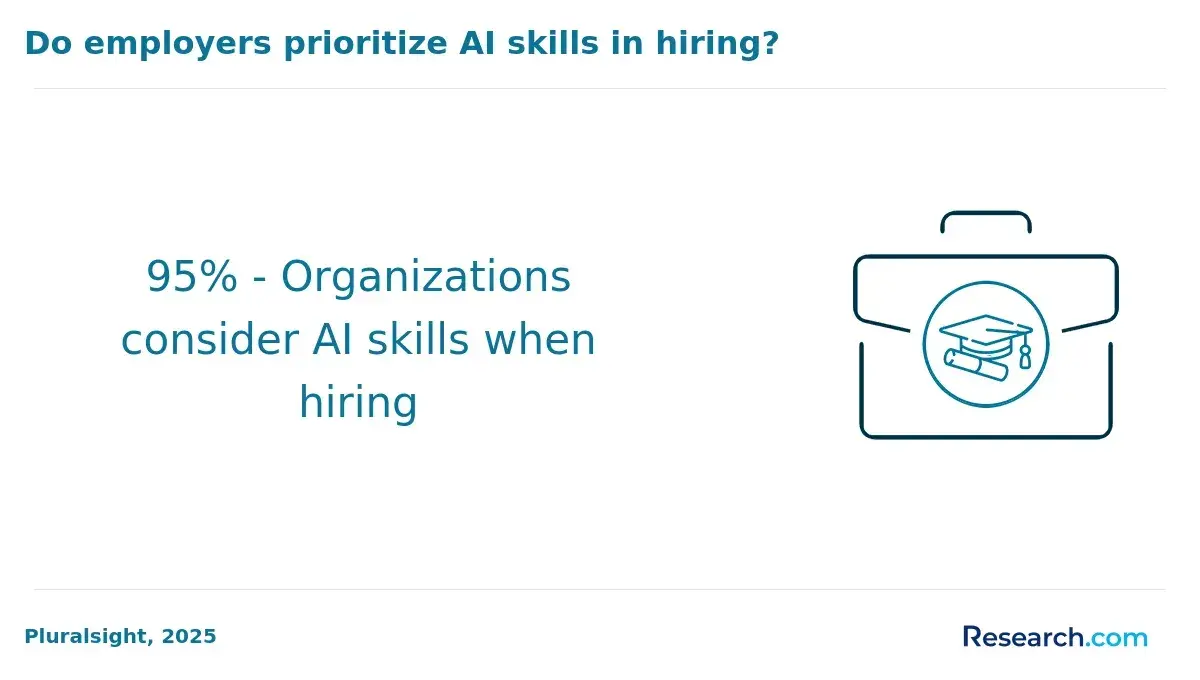
LinkedIn Learning AI courses for corporate team development offer scalable, role-specific content that addresses various skill levels and job functions. These courses allow organizations to upskill employees efficiently through flexible, on-demand modules that accommodate diverse schedules and learning styles. For example, foundational AI courses designed for non-technical teams simplify complex concepts, making AI accessible to staff in marketing, HR, and operations. This tailored approach helps close training gaps as Microsoft's Work Trend Index shows 87% of employees want AI training, but only 38% receive it from employers.
The benefits of AI training programs for workplace teams include continuous learning through bite-sized lessons and practical exercises that improve knowledge retention and application. Companies can customize learning paths focused on specific objectives, such as data analysis, AI ethics, or automation strategies. Integrated progress tracking and skill assessments enable managers to monitor growth, identify gaps, and allocate training resources effectively.
LinkedIn Learning's AI courses incorporate the latest industry developments, helping teams stay updated with rapidly evolving technology. These programs also foster cross-functional collaboration by offering courses tailored to different expertise levels, reducing silos and enhancing communication around AI initiatives.
Additionally, professionals exploring career advancement may consider pursuing a game development online degree, which often intersects with AI skills in the tech industry, broadening job opportunities and technical proficiency. By blending targeted content, practical experience, and measurable outcomes, LinkedIn Learning AI courses prepare corporate teams to adapt to AI-driven workplace shifts and improve operational efficiency.
How do you choose the right AI course for employees?
Choosing the right ai course for employees hinges on aligning the curriculum with the specific skills your team needs to develop. Focus first on tasks where ai integration can notably improve efficiency. For example, teams using generative AI tools like Copilot or ChatGPT should seek courses that emphasize practical, everyday applications. Research from McKinsey Global Institute reports that knowledge workers leveraging generative AI save roughly 30 minutes daily, or about 10% of their work time.
Key factors to evaluate artificial intelligence courses for employee skill development include:
- Relevance: Does the course cover AI technologies and workflows pertinent to your industry and roles?
- Skill level and prerequisites: Are courses suitable for your employees' experience, from beginner to advanced?
- Hands-on training: Are practical exercises included to enable real-world application?
- Customization options: Can content be tailored to your company's processes or specific AI tools?
- Instructor expertise: Are instructors experienced professionals with applied AI knowledge in corporate settings?
Consider flexible learning formats such as self-paced or instructor-led modes depending on team needs. Gathering feedback from pilot groups facilitates refining course choices. To boost your team's capabilities, assessing courses against clear business objectives and measurable outcomes is vital. For those interested in related tech education, exploring online cyber security courses can offer complementary skills enhancing overall digital proficiency.
How to select the best artificial intelligence training for corporate teams involves balancing these factors to maximize training returns and skill impact.
What skills do LinkedIn Learning AI courses teach?
LinkedIn Learning AI courses equip corporate teams with essential skills across technical, leadership, and soft skill areas. Participants gain practical expertise in machine learning fundamentals, data analysis, algorithm design, model training, and evaluation techniques. This helps professionals accurately interpret AI outputs and apply them effectively within various business processes.
Leadership training focuses on integrating AI into strategic decision-making, including data-driven strategy development, managing AI projects, and facilitating collaboration between technical and business teams. Managers learn to identify AI applications for business challenges and to oversee implementation successfully.
Technical skills include programming languages like Python and working with AI platforms such as TensorFlow and Azure AI. Hands-on experience building and deploying AI models enhances problem-solving abilities within operational settings.
Soft skills emphasize critical thinking around ethical considerations and societal impacts of AI, as well as change management and communication strategies. These prepare professionals to lead responsible AI adoption and align organizations around AI initiatives.
According to Deloitte Global Human Capital Trends 2024, 75% of business leaders are concerned their leadership teams lack AI skills necessary for future strategies. LinkedIn Learning addresses this gap by combining technical proficiency with leadership acumen to help teams leverage AI competitively.
How long do LinkedIn Learning AI courses take to complete?
LinkedIn Learning AI courses generally take between 1 to 10 hours to complete, depending on the depth and focus. Shorter courses of 1 to 3 hours concentrate on foundational concepts or specific tools, making them suitable for professionals wanting a quick introduction or skill refresh. Longer courses lasting 6 to 10 hours cover AI applications, strategy, and corporate integration, offering a comprehensive perspective useful for team leaders and managers.
Many courses are modular, allowing learners to progress at their own pace without needing extensive continuous study. This flexibility benefits busy professionals who balance training with work. Organizational leaders looking to establish AI strategies often find dedicating 6 to 10 hours essential, reflecting findings from Boston Consulting Group's AI Radar for Business Leaders, which highlights that 68% of high-performing companies have a clear AI vision and roadmap, compared to just 15% of underperformers.
Courses focusing on AI strategy and management demand more time but deliver high value in leadership insights. Meanwhile, technical courses on AI tools require less time but necessitate hands-on practice afterward to master skills. Choosing courses aligned with specific goals-whether gaining foundational knowledge, enhancing technical skills, or developing leadership strategy-helps maximize learning within realistic timeframes.
What do LinkedIn Learning AI courses cost for companies?
LinkedIn Learning provides AI courses for corporate teams through subscription models, with companies typically paying a per-user fee between $30 and $60 monthly, billed annually. This subscription grants unlimited access to a wide range of professional development content, including thousands of courses in AI, business, technology, and creative skills, allowing teams to develop tailored learning paths.
For organizations needing more specialized AI training, LinkedIn Learning offers enterprise solutions with custom pricing based on license volume, integrations, and support requirements. Large companies often negotiate discounts and add services like onboarding and analytics dashboards to track employee progress and course engagement.
Research from McKinsey's "State of AI in 2024" highlights that businesses expanding AI adoption across departments are 2.6 times more likely to reach EBIT margins above 10% compared to those in pilot stages. These findings emphasize the importance of equipping diverse corporate teams with strong AI skills to enhance operational and strategic results.
Key practical considerations for companies include:
- Evaluating team size and roles to optimize licensing costs.
- Selecting subscription plans offering relevant AI content for data scientists, analysts, and strategists.
- Accounting for renewal terms and optional add-ons such as hands-on labs or certification prep.
Thoughtful planning in selecting LinkedIn Learning AI courses supports better investment returns and sustains long-term business competitiveness.
How do LinkedIn Learning AI courses compare with other platforms?
LinkedIn Learning AI courses provide distinct advantages for corporate teams seeking practical and scalable training. Their curriculum focuses on industry-relevant skills combined with hands-on projects, ensuring immediate application for sales, marketing, and support roles. Unlike other platforms centered mostly on theory, LinkedIn Learning emphasizes business outcomes and certifications recognized by employers.
Research shows that incorporating AI into customer-facing functions significantly boosts productivity. According to McKinsey's report on "The Economic Potential of Generative AI," companies using AI in sales and marketing see a 10-20% increase in sales productivity and a 20-30% reduction in marketing costs. LinkedIn Learning's courses align with these findings by offering real-world scenarios and AI tools designed to drive measurable results.
Other providers such as Coursera and Udacity often present more academic content requiring longer commitments and less immediate business relevance. LinkedIn Learning's modular design allows teams to upskill flexibly without disrupting operations. Integration with the LinkedIn ecosystem also enhances networking and job placement opportunities.
Additional benefits include industry-recognized certification and analytics that help managers monitor progress and skill gaps-features not consistently available on competing platforms.
What job roles benefit from LinkedIn Learning AI training?
LinkedIn Learning offers AI training that supports diverse professional roles across industries focused on innovation, security, and ethical compliance. Data scientists and machine learning engineers gain advanced skills in algorithms and model deployment. Software developers and IT professionals enhance their ability to integrate AI tools and automate processes, boosting productivity.
Business analysts and project managers become adept at interpreting AI-driven insights for data-informed decisions. Marketing professionals improve customer segmentation, campaign optimization, and behavioral analytics, which increase targeted outreach and return on investment.
Compliance officers, risk managers, and legal experts need AI literacy to manage evolving governance and regulatory challenges. Given that 61% of organizations reported AI-related security or privacy incidents, with only 36% implementing formal AI governance (Cisco Data Privacy Benchmark Study 2024), training focused on AI risk management is essential.
Operations managers and HR professionals use AI for workforce analytics, efficiency, and talent acquisition automation, while product managers ensure ethical AI product development and lifecycle oversight.
Overall, this comprehensive AI training equips professionals at the intersection of technology, ethics, and strategy with skills to navigate deployment, security, and compliance challenges, helping sustain competitive advantage in technology-driven markets.
How can companies measure ROI from AI course training?
Companies gauge the return on investment (ROI) from AI course training by monitoring key performance indicators tied to employee growth and business results. Common measures include boosted productivity, higher project quality, and faster innovation cycles. For instance, firms compare task completion rates and error reductions before and after training within AI-related workflows to assess effectiveness.
Employee engagement and retention are vital indirect ROI markers. Research from Bersin by Deloitte Corporate Learning indicates companies offering at least one day of learning per month report 30-50% greater engagement and retention. This helps reduce turnover costs and preserves organizational knowledge, contributing to tangible financial gains.
Effective ROI tracking involves:
- Defining clear learning goals linked to business needs, such as proficiency in AI tools or methods.
- Using periodic assessments and skill validation to measure knowledge retention.
- Surveying employees on their confidence and satisfaction with AI skill growth.
- Monitoring project outcomes and time-to-market improvements from trained teams.
- Reviewing workforce data for promotions or mobility fueled by AI expertise.
Financially, organizations calculate ROI by weighing training costs against benefits like automation efficiencies, fewer errors, or increased revenue from AI-driven products. Combining quantitative metrics with qualitative insights ensures a well-rounded evaluation. Such data empowers leaders to justify training investments and optimize AI learning strategies for lasting organizational impact.
Other Things You Should Know About Artificial Intelligence
In 2027, top-rated LinkedIn Learning AI courses for corporate teams include "AI for Business Leaders: Integrating AI into Your Strategy," "Machine Learning for Data-Driven Decision Making," and "AI Ethics and Governance: Ensuring Responsible AI Use." These courses focus on strategic AI integration, practical applications, and ethical considerations in business environments.
Artificial intelligence can automate repetitive tasks, allowing employees to focus on higher-value work. However, it also requires workers to develop new technical skills and adapt to changing roles. AI may lead to job displacement in some areas but often creates opportunities for roles involving AI system management and data analysis.
Companies often struggle with data quality, lack of technical expertise, and integration of AI with existing systems. Ensuring AI models are reliable and scalable can be difficult without sufficient resources. Moreover, managing change among employees and aligning AI initiatives with business goals are common hurdles.
Yes, artificial intelligence can enhance decision-making by providing data-driven insights and pattern recognition. AI systems can analyze large datasets quickly, identifying trends and risks that might be missed by humans. This supports more informed and timely decisions across various business functions.
References
- 5Mins.ai vs LinkedIn Learning | Learning Platform Comparison https://www.5mins.ai/compare/5mins-ai-vs-linkedin-learning
- How to Measure the ROI of AI Training Programs https://auzmor.com/blog/measure-the-roi-of-ai-training-programs/
- Best AI Training Platforms for Employees (2026) Compared https://www.goodhabitz.com/resources/blog/best-ai-training-for-employees
- AI Training for Employees: How HR Can Build AI Skills at Work https://www.aihr.com/blog/ai-training-for-employees/
- Measuring the ROI of AI in corporate training and academies https://www.evolmind.com/en/blog/measuring-the-roi-of-ai-in-corporate-training-and-academies/
- Ultimate Guide: How to Choose the Right AI Training Course to Boost Your Career - ONLC https://www.onlc.com/blog/how-to-choose-ai-training-courses/
- 10 Top LinkedIn Learning AI Courses to Build Skills in 2025 | DigitalOcean https://www.digitalocean.com/resources/articles/linkedin-learning-ai-courses
- AI Training ROI: How to Measure Business Impact of AI Learning https://alicelabs.ai/en/insights/ai-training-roi-measurement
- LinkedIn Learning Cost: 2026 Pricing Guide for Individuals & Business Teams https://www.linkedhelper.com/blog/linkedin-learning-cost/
- How to Measure ROI of Corporate AI Training: A 2026 Strategic Guide https://traineticsacademy.com.sg/how-to-measure-roi-of-corporate-ai-training-a-2026-strategic-guide/