2027 Best AI Courses for College Students

Co-Founder and Chief Data Scientist
Many college students with degrees outside STEM fields face challenges entering the Artificial Intelligence workforce due to gaps in foundational knowledge and rigid course schedules. They often struggle to find flexible, accredited programs that balance practical skills with theoretical understanding. This gap limits career pivot opportunities in a rapidly growing industry. Navigating diverse course options without clear guidance can lead to wasted time and resources. This article reviews top Artificial Intelligence courses designed for college students seeking accessible learning paths. It aims to help readers identify programs that align with their schedules and career goals while building essential competencies in the field.
Key Things You Should Know
- AI course enrollment in U.S. colleges surged by over 40% in 2025, reflecting growing demand for AI skills across industries.
- Top programs emphasize practical experience in machine learning, data ethics, and AI governance to prepare students for diverse roles.
- Average starting salaries for graduates with AI expertise reached $95,000 in 2025, highlighting strong job market prospects.
Advance Your Career with AI Online Courses
Artificial Intelligence: Implications for Business Strategy
This program provides an introduction to Artificial Intelligence and their implications for business strategy. Earn an official digital certificate.

Oxford Artificial Intelligence Programme
Explore this Oxford Artificial Intelligence programme offered in a flexible learning environment and explore topics like machine learning, automation, and robotics.

Implementing Agentic AI: Building Your Organizational Playbook
This online MIT Agentic AI course offers a practical approach to deploying AI agents in your organization, including a custom playbook. 3 weeks, exclusive launch price.

AI Adoption: Driving Business Value and Impact
This online MIT AI Adoption: Driving Business Value and Impact offers practical frameworks to close the gap between AI potential and business reality.

Artificial Intelligence in Pharma and Biotech
Discover the applications and limitations of artificial intelligence in pharma and biotech with this MIT online short course.

What are the best AI courses for college students and who are they right for?
The best ai courses for college students in the US emphasize core topics such as machine learning, neural networks, and data science while providing practical experience with programming languages like Python. Leading options come from top accredited artificial intelligence programs for undergraduates at prestigious universities including Stanford and MIT. Additionally, online platforms like Coursera and edX offer specialized tracks that cater to various learning needs.
Courses with hands-on projects using real-world datasets help prepare students to address challenges in natural language processing, computer vision, and predictive analytics. Stanford's "Machine Learning" by Andrew Ng remains a highly recommended course for beginners, whereas advanced learners gain from study in deep learning and reinforcement learning.
Students should select courses aligned with their professional goals: those targeting software development should favor programming-intensive classes, while those interested in research or algorithm design might prefer theory-heavy courses. Programs offering capstone projects or industry collaborations enhance immediate job readiness.
According to the World Economic Forum's 2025 Future of Jobs report, roles demanding AI and machine learning skills will increase by 39% between 2025 and 2030, generating roughly 5.5 million new positions worldwide. This growth highlights the benefit of pursuing comprehensive education that balances technical skill-building with practical application.
Prospective learners must also verify prerequisites, credit transfer options, and certification advantages to ensure the chosen course supports their academic and career paths effectively. For those curious about the applications of AI careers, resources such as what is applied artificial intelligence provide valuable insights.
Advance Your Career with AI Online Courses
Artificial Intelligence: Implications for Business Strategy
This program provides an introduction to Artificial Intelligence and their implications for business strategy. Earn an official digital certificate.
Oxford Artificial Intelligence Programme
Explore this Oxford Artificial Intelligence programme offered in a flexible learning environment and explore topics like machine learning, automation, and robotics.
Implementing Agentic AI: Building Your Organizational Playbook
This online MIT Agentic AI course offers a practical approach to deploying AI agents in your organization, including a custom playbook. 3 weeks, exclusive launch price.
How do AI certificates, minors, and full degrees differ for undergraduates?
AI certificate programs versus minors for undergraduates offer distinct pathways depending on a student's time commitment and career goals. Certificates usually consist of 3 to 6 courses focusing on practical skills such as machine learning basics, data analysis, or AI ethics. They are ideal for rapid upskilling or career pivots without requiring a long-term commitment.
Minors require around 15 to 20 credit hours and provide a structured AI component alongside a student's major. These programs cover foundational AI concepts and complementary subjects like programming and statistics. Although minors do not offer the depth of a full degree, they enhance employability by demonstrating dedicated AI competency.
Differences between AI full degrees and certificates for college students are significant. Full AI degrees typically demand 40 to 60 credit hours with a comprehensive curriculum including core theories, advanced algorithms, mathematics, and hands-on projects. They prepare students for specialized AI roles or graduate studies and are suited for those pursuing deep expertise and research careers.
Enrollment trends highlight growing interest beyond traditional computer science majors. According to the 2024 Coursera Global Skills Report, beginner-level AI and machine learning course enrollments among non-CS majors increased 46% year-over-year, showing the value of certificates and minors for building AI literacy.
Students should weigh their time, cost, and career aspirations carefully. For those considering a full commitment, exploring online degrees in AI can offer access to comprehensive training and flexible options.
- Certificates for rapid upskilling or career pivots
- Minors to complement another major while gaining AI literacy
- Degrees for deep expertise and research careers
What should students look for to choose a reputable, accredited AI program?
Students seeking accredited artificial intelligence programs for college students should prioritize accreditation and reputation to ensure a quality education and career readiness. Accreditation by recognized agencies like ABET or regional bodies such as Middle States, WASC, or SACS guarantees that the curriculum meets established academic standards. This also affects eligibility for financial aid and employer recognition, making it a critical factor when choosing a program.
Evaluating curriculum relevance is essential. Look for programs offering applied AI coursework aligned with your professional goals. IBM's AI Skills Gap report reveals that 41% of organizations struggle to hire business professionals skilled in AI applications for marketing, operations, and strategy-highlighting the value of interdisciplinary courses that blend AI with business or social sciences. This criterion for choosing reputable AI degree programs ensures graduates meet evolving employer needs.
Faculty expertise and industry connections significantly impact learning quality. Programs with professors engaged in AI research or partnerships with companies provide practical experience through real-world projects. Such exposure is vital as 64% of employers plan to increase AI adoption in customer-facing roles.
Flexibility and student support are also important. Accredited online or hybrid AI programs can accommodate working professionals, while career counseling, internship opportunities, and alumni networks boost job placement prospects. For more options, explore online MS data science programs that might complement your AI education.
How do online AI courses compare with on-campus options for college students?
Online AI courses versus on-campus programs for college students offer distinct advantages depending on an individual's needs. Online programs provide flexibility and accessibility, allowing students to engage with advanced AI and deep learning content without relocating or conforming to strict schedules. This flexibility benefits those juggling part-time jobs, internships, or other academic commitments. Additionally, many online courses update their curricula rapidly to reflect the latest AI advancements, which can be more current than traditional programs.
Benefits of online AI education compared to traditional college classes include diverse course options and specialized training often focused on real-world projects. However, on-campus programs excel at offering a structured, immersive environment with direct access to faculty expertise, research labs, and peer collaboration. These resources are invaluable for hands-on experience, project supervision, and networking, especially for students pursuing graduate studies or research-intensive roles.
Students should consider their learning preferences and career goals carefully. Computer science and engineering majors aiming for rapid specialization might favor top online AI courses that feature cutting-edge modules. Meanwhile, those seeking foundational knowledge combined with research opportunities may prefer traditional settings.
Indeed's 2024 salary data highlights the premium on advanced AI skills: U.S. machine learning engineers earn a median base salary around $153,000, nearly 49% higher than software engineers earning about $103,000. This wage gap underscores the importance of acquiring specialized, practical skills emphasized in leading online programs. For those exploring career pathways related to AI education and training, the role of AI trainers offers promising prospects.
What core skills and topics do college-level AI courses typically cover?
College-level artificial intelligence courses focus on core skills essential for applying AI technologies effectively. Key topics include machine learning algorithms-such as supervised, unsupervised, and reinforcement learning-that enable model training and prediction.
- Data structures and algorithms to enhance computational efficiency.
- Mathematics including linear algebra, probability, statistics, and calculus, providing the foundation for AI model development.
- Proficiency in programming languages like Python, with libraries such as TensorFlow and PyTorch.
- Natural language processing (NLP) for enabling AI to understand and generate human language.
- Computer vision techniques for interpreting and analyzing visual information.
- Ethical considerations addressing bias, privacy, and responsible AI use.
Practical experience is often gained through projects or internships, such as developing AI models for healthcare or creating customer service chatbots. These experiences are valuable for building real-world skills.
Employment trends highlight the growing demand for AI expertise. A 2025 Handshake Early Talent Trends report showed a 78% increase in applications for AI-related job postings among students and recent graduates. Additionally, candidates with AI coursework listed were 32% more likely to receive employer responses, emphasizing the importance of these skills for early career success.
What math, coding, and academic prerequisites do AI courses usually require?
AI courses demand a strong foundation in mathematics and programming to succeed. Essential math topics include calculus, linear algebra, probability, and statistics. Calculus aids in understanding optimization, while linear algebra is key for working with vectors and matrices. Probability and statistics underpin machine learning and data analysis.
Python is the preferred programming language due to its extensive AI libraries and community support. Prospective students should be familiar with programming fundamentals like loops, functions, and data structures such as lists and dictionaries. Experience with libraries like NumPy, pandas, TensorFlow, or PyTorch is often recommended, although beginner courses may include introductory coding modules.
Academic requirements frequently extend to computer science fundamentals, including data structures, algorithms, and sometimes discrete mathematics-subjects that enhance algorithmic logic and efficiency. Students with backgrounds in engineering, physics, or mathematics often find AI coursework more approachable, but learners from other fields can succeed with dedication.
Examining course syllabi is important, as advanced AI programs call for stronger prerequisites. According to Class Central's 2024 MOOC report, over 1,900 AI and machine learning courses offer free audit options, helping students evaluate required skills before committing. MOOCs make up 12% of new courses, providing flexible and accessible learning paths for diverse learners.
How long do AI certificates and degrees take, and what do they cost?
AI certificate programs generally take between three to twelve months, depending on course intensity and whether students study part-time or full-time. Certificates from leading companies like Google, IBM, and Microsoft usually require 20 to 40 hours of coursework, often spread out over a few months. Platforms such as Coursera or edX offer flexible micro-credentials tailored for working professionals or students managing other commitments.
Degree programs vary more widely. A bachelor's degree focusing on AI or computer science with an AI concentration typically takes four years full-time. Master's degrees usually take one to two years, though some accelerated programs condense study into a single intensive year.
Costs range significantly:
- Certificates from major tech firms or online platforms: $300 to $2,000
- University degrees: $10,000 to over $50,000 annually, depending on institution and residency status
According to Coursera's "2025 Global Higher Education & Employability" survey, 72% of employers believe industry-recognized AI certificates enhance candidate competitiveness. Meanwhile, 44% accept these certificates as partial substitutes for traditional coursework. This trend underscores the growing value of certificates for those seeking affordable, accelerated pathways into AI careers without committing to full-degree programs.
What AI-related careers can college students pursue after these courses?
College students studying artificial intelligence can pursue varied careers across industries impacted by AI technologies. Roles include machine learning engineer, who designs systems that learn from data, and data scientist, tasked with analyzing large datasets using AI algorithms. AI research scientists innovate new methods in areas like natural language processing and computer vision. Other career paths include AI product manager, who connects technical teams and business goals, along with AI ethics specialists focused on responsible AI development.
Robotics engineers apply AI to automate sectors such as manufacturing and healthcare, while AI software developers integrate AI into applications ranging from finance to entertainment. Building a strong portfolio is essential to stand out. GitHub's 2024 State of the Octoverse reveals a 65% increase in public repositories tagged "machine-learning" or "deep-learning" by student developers, highlighting project-based learning's importance.
Students benefit by demonstrating real-world projects like predictive modeling or chatbot development. Strengthening skills in programming languages like Python and frameworks such as TensorFlow or PyTorch is critical. Internships and open-source contributions also bridge academic learning to career readiness.
- Machine learning engineer
- Data scientist
- AI research scientist
- AI product manager
- AI ethics specialist
- Robotics engineer
- AI software developer
What are typical starting salaries and earning potential for AI-related roles?
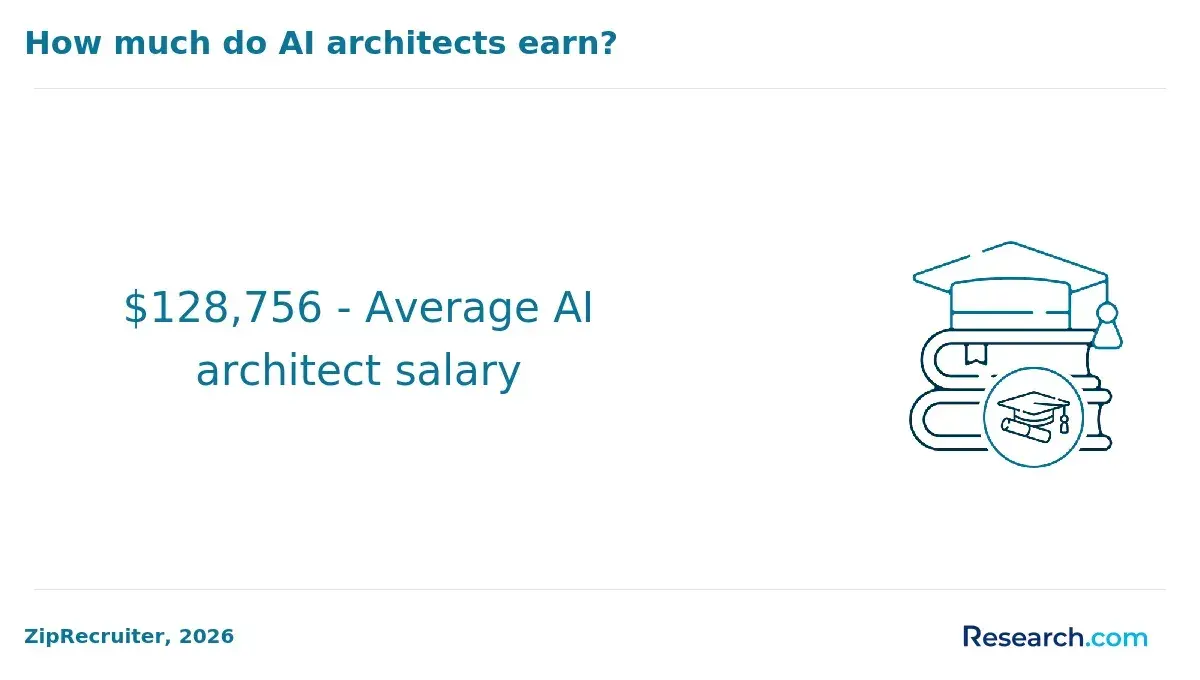
Starting salaries for AI-related roles in the U.S. commonly fall between $80,000 and $120,000 annually for entry-level positions. Recent graduates with degrees that include AI skills, such as computer science, data science, or engineering, often begin near $95,000, especially in roles like AI software engineer, machine learning engineer, or data scientist. With experience, salaries can increase to $150,000-$200,000 within five years. Senior AI specialists, research scientists, and AI architects may earn $250,000 or more, notably in tech hubs like Silicon Valley and Seattle.
Salary varies according to degree relevance, internships, and industry sectors. For instance, healthcare and finance AI roles often start at higher pay rates due to sector complexity. Although 57% of students regularly use AI tools, only 29% report formal AI coursework in their majors, according to the 2025 Lumina Foundation-Gallup State of Higher Education study. Bridging this gap with certifications or supplementary AI training can boost earning potential.
Employers value candidates who combine AI expertise with strong domain knowledge. This integrated skill set supports career paths such as AI product management or AI ethics compliance, which present differing salary trends but strong demand. Investing in formal AI education or additional training significantly enhances salary prospects and career advancement.
How strong is the job outlook for AI skills across U.S. industries?
The demand for AI skills continues to surge across major U.S. industries, driven by rapid technological advancements and expanding applications. LinkedIn's 2025 Workplace Learning report identifies AI-related competencies-such as machine learning, natural language processing, and generative AI-as some of the fastest-growing skills globally. However, supply currently lags behind demand, creating strong hiring opportunities for qualified professionals.
Key sectors actively recruiting AI talent include:
- Technology firms hiring machine learning engineers and data scientists to enhance software intelligence and automation.
- Healthcare organizations integrating AI for improved diagnostics and personalized treatments, increasing demand for AI researchers and bioinformatics experts.
- Financial institutions applying AI models for fraud detection, risk management, and algorithmic trading, driving openings for quantitative analysts and AI developers.
- Manufacturing and logistics deploying AI to optimize supply chains and enable predictive maintenance, requiring AI system integrators and automation engineers.
For students and professionals, gaining proficiency in Python, TensorFlow, or PyTorch alongside domain knowledge significantly enhances career prospects. Understanding ethical AI practices, data privacy, and explainability is increasingly valued amid growing industry focus on AI governance.
Choosing educational programs with hands-on projects and interdisciplinary approaches is essential to developing relevant skills aligned with industry needs. This strategy prepares learners to successfully navigate the evolving AI job market while addressing critical skill shortages identified in authoritative workplace learning research.
Other Things You Should Know About Artificial Intelligence
Artificial intelligence can be challenging due to its reliance on advanced mathematics, programming, and algorithmic thinking. However, with structured courses and consistent practice, college students from diverse backgrounds can develop competence. Foundational knowledge in linear algebra, calculus, and programming languages like Python helps ease the learning curve.
In 2027, college students can harness AI course learnings to enhance non-technical fields such as marketing, finance, or humanities. Using AI for data analysis can improve decision-making, while machine learning helps predict consumer behavior patterns, increasing operational efficiency without needing advanced technical know-how.
Yes, artificial intelligence skills are increasingly applicable beyond traditional tech roles. Fields such as healthcare, finance, marketing, and even law benefit from AI-driven data analysis and automation. College students with AI knowledge can enhance decision-making and efficiency across diverse disciplines.
Python is the most widely used programming language for artificial intelligence due to its extensive libraries and community support. Other languages like R, Java, and C++ are also valuable in specific contexts but less common for beginner AI projects. Students should prioritize learning Python to build a solid AI foundation.
References
- What Do You Learn In an Artificial Intelligence Course? | CompSci https://www.computerscience.org/resources/artificial-intelligence/
- Ultimate Guide: How to Choose the Right AI Training Course to Boost Your Career - ONLC https://www.onlc.com/blog/how-to-choose-ai-training-courses/
- 5 of the best AI study tools for students | Genio https://genio.co/blog/5-of-the-best-ai-study-tools-for-students
- Best Online AI Courses and Certifications in 2025 https://www.upskillist.com/blog/online-ai-courses-certifications/
- Online vs Campus Artificial Intelligence Degree Programs: Complete Comparison https://hakia.com/compare/artificial-intelligence-online-vs-campus/
- How to Choose the Right AI Course? – AiXQP https://aixqp.com/how-to-choose-the-right-ai-course/
- Which Course do you recommend after AI For Everyone? https://community.deeplearning.ai/t/which-course-do-you-recommend-after-ai-for-everyone/834556
- AI Is Routine for College Students, Despite Campus Limits https://news.gallup.com/poll/704090/routine-college-students-despite-campus-limits.aspx
- The Best Self-Paced AI Programs for High School Students in 2025 https://www.bettermindlabs.org/post/best-self-paced-ai-program-for-high-school-students
- How Will AI Affect the US Labor Market? https://www.goldmansachs.com/insights/articles/how-will-ai-affect-the-us-labor-market