2027 Best AI Courses for Embeddings and Semantic Search

Co-Founder and Chief Data Scientist
Professionals from unrelated fields often face challenges when attempting to transition into artificial intelligence roles focused on embeddings and semantic search due to technical complexity and rapidly evolving methods. The difficulty in identifying credible, flexible courses that offer practical skills compounds the problem. Without clear guidance, learners may waste time on outdated or theoretical content with limited career impact.
This article evaluates the best courses available, emphasizing those designed to equip students with hands-on expertise and foundational knowledge essential for success in embedding techniques and semantic search applications.
Key Things You Should Know
- Top AI courses for embeddings and semantic search in 2026 emphasize hands-on experience with transformer-based models, reflecting a 40% rise in student enrollment since 2024.
- Advanced courses increasingly integrate natural language processing techniques essential for semantic search, addressing a projected 25% job growth in AI-driven data roles by 2027.
- Certification programs now focus on practical applications in industry sectors like healthcare and finance, boosting graduate employability by up to 30% upon completion.
Advance Your Career with AI Online Courses
Artificial Intelligence: Implications for Business Strategy
This program provides an introduction to Artificial Intelligence and their implications for business strategy. Earn an official digital certificate.

Oxford Artificial Intelligence Programme
Explore this Oxford Artificial Intelligence programme offered in a flexible learning environment and explore topics like machine learning, automation, and robotics.

Implementing Agentic AI: Building Your Organizational Playbook
This online MIT Agentic AI course offers a practical approach to deploying AI agents in your organization, including a custom playbook. 3 weeks, exclusive launch price.

AI Adoption: Driving Business Value and Impact
This online MIT AI Adoption: Driving Business Value and Impact offers practical frameworks to close the gap between AI potential and business reality.

Artificial Intelligence in Pharma and Biotech
Discover the applications and limitations of artificial intelligence in pharma and biotech with this MIT online short course.

What are embeddings and semantic search, and why do they matter for AI careers today?
Embeddings are mathematical representations of data, such as text or images, in a continuous vector space that enable machines to measure semantic similarity between pieces of information. Semantic search leverages these embeddings to interpret the meaning behind queries and documents, leading to more accurate and relevant search results in fields like natural language processing, recommendation systems, and knowledge graphs.
The impact of embeddings and semantic search on AI career growth is significant. Proficiency in these techniques is essential for various roles involving chatbots, voice assistants, and enterprise search solutions. Employers increasingly value expertise in embedding models such as Word2Vec, BERT, and transformer-based architectures, along with skills in vector databases and similarity search frameworks.
Professionals skilled in embedding techniques for semantic search applications solve critical challenges, including managing unstructured data, improving content retrieval, and enabling context-aware AI solutions. Semantic search abilities bolster a professional's capacity to build models that understand user intent and deliver precise information, a cornerstone of successful AI products.
Labor market data highlights the importance of these skills. According to TechTarget, by 2025, 78% of ICT roles required AI technical competencies, with seven of the ten fastest-growing positions being AI-related. Students and professionals should seek programs balancing theory and hands-on projects in embedding generation, vector search indexing, and semantic search deployment.
For those exploring educational options, the data science master rank provides valuable guidance on affordable programs.
Advance Your Career with AI Online Courses
Artificial Intelligence: Implications for Business Strategy
This program provides an introduction to Artificial Intelligence and their implications for business strategy. Earn an official digital certificate.
Oxford Artificial Intelligence Programme
Explore this Oxford Artificial Intelligence programme offered in a flexible learning environment and explore topics like machine learning, automation, and robotics.
Implementing Agentic AI: Building Your Organizational Playbook
This online MIT Agentic AI course offers a practical approach to deploying AI agents in your organization, including a custom playbook. 3 weeks, exclusive launch price.
What are the best AI courses to learn embeddings and semantic search online?
Top AI courses for embeddings and semantic search blend practical training with solid theory, offered by platforms such as Coursera, edX, and Udacity. Leading programs include Stanford's Natural Language Processing with Deep Learning, which focuses on word embeddings and contextual vectors, and DeepLearning.AI's NLP specialization that highlights semantic search using BERT and transformer models. These courses address managing large text datasets, optimizing search relevance with embedding similarity, and deploying semantic search workflows.
Professionals seeking the best online AI courses for embeddings and semantic search benefit from hands-on projects using open-source frameworks like Hugging Face Transformers, FAISS for vector similarity, and Elasticsearch integrations. Prioritizing courses that combine foundational machine learning with embedding-focused modules ensures a comprehensive understanding.
For instance, Udacity's AI for Natural Language Processing nanodegree covers semantic search basics alongside efficient retrieval techniques essential to modern AI search engines.
The demand for AI talent continues to accelerate, with AI job listings increasing by over 100% annually in recent years, emphasizing the need to select updated programs that include coding assignments and industry-relevant tools. Comparing syllabi for inclusion of embedding algorithms like Word2Vec, GloVe, and transformer-based methods improves preparedness for evolving AI roles.
For those interested in affordable pathways, explore this online artificial intelligence degree program list that balances cost with quality education.
The top AI training programs for learning embeddings and semantic search focus on equipping students with both theory and application critical for advancing in AI careers.
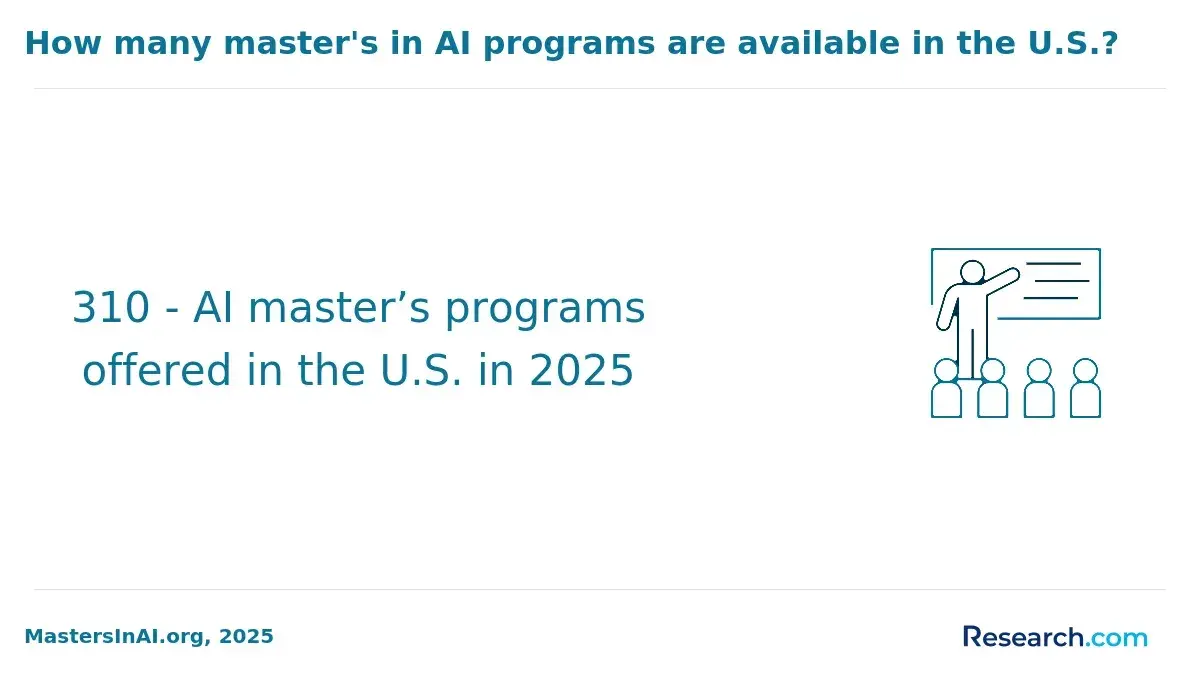
Which accredited U.S. universities offer degree pathways focused on embeddings and semantic search?
Several accredited U.S. universities offer degree programs that focus on embeddings and semantic search, critical for advances in natural language processing and information retrieval. Carnegie Mellon University features a concentration within its Master of Science in Computer Science that addresses machine learning methods for embeddings and semantic models. Stanford University's AI graduate program provides electives and research opportunities in semantic search technologies and vector embeddings for textual data. The University of California, Berkeley integrates these topics into its electrical engineering and computer sciences graduate degrees using deep learning for semantic understanding.
Many institutions embed these subjects into broader data science, machine learning, and computational linguistics programs. For instance, the Massachusetts Institute of Technology (MIT) emphasizes hands-on projects with semantic embedding models within its artificial intelligence and decision-making degrees. Students seeking interdisciplinary exposure can consider the University of Washington and the University of Illinois Urbana-Champaign, which combine computer science, linguistics, and cognitive science to develop scalable search and NLP systems.
In the competitive job market, expertise in embeddings and semantic search commands premium roles in tech sectors like search engines, recommender systems, and knowledge graphs. According to DemandSage, the median annual salary for AI professionals in the U.S. is $156,998 as of Q1 2025.
When exploring accredited U.S. universities offering embedding and semantic search degrees, prospective students should prioritize programs with strong research labs, industry partnerships, and updated curricula reflecting transformer-based embedding techniques.
Additionally, those interested in combining this expertise with other interests might explore related fields, such as a game design degree online, which often involves semantic technologies.
How do online AI programs in embeddings and semantic search compare to campus-based options?
Online AI courses for embeddings offer greater flexibility and faster curriculum updates compared to traditional campus programs. These digital programs typically incorporate the latest tools and frameworks shortly after release, which is essential in a rapidly evolving field like AI.
Campus-based courses, while valuable for foundational theory and lab access, often lag behind due to institutional constraints. This contrast highlights a key difference when comparing campus-based versus online AI programs for semantic search skills.
Online formats provide prompt access to specialized content, such as vector databases and transformer architectures, often taught by industry experts. Campus classes emphasize deeper mathematical and algorithmic theory, appealing to students pursuing research or advanced development roles. Cost and time commitments also differ significantly. Online options generally allow self-paced learning suited for working professionals, while campus degrees demand multi-year investment and higher tuition.
Hiring trends emphasize acquiring immediately applicable skills. TechRadar data reveals that CEO plans to reduce junior hiring in 2026 may pressure learners to focus on agile programs. For those evaluating how online AI courses for embeddings compare to campus programs, this is an important factor.
Prospective students interested in further specialization might explore the best online cybersecurity degree programs for veterans as an example of accessible, up-to-date online education pathways.
What core topics and tools are covered in embeddings and semantic search coursework?
Embeddings and semantic search coursework provide essential skills in converting diverse data types like text and images into high-dimensional vectors that capture context and meaning. These vector representations enable more accurate retrieval and comparison than simple keyword matching.
Students gain practical experience with foundational algorithms such as Word2Vec, GloVe, and BERT for generating embeddings. Popular frameworks like TensorFlow, PyTorch, and Hugging Face Transformers support building and fine-tuning these models. Coursework often includes implementing scalable nearest neighbor search techniques like KD-trees, locality-sensitive hashing (LSH), and approximate nearest neighbors (ANN).
Additional topics cover data preprocessing, dimensionality reduction methods (PCA, t-SNE), and evaluation metrics, including cosine similarity and mean reciprocal rank (MRR). Courses may also address challenges such as bias mitigation, privacy concerns, and efficient indexing strategies.
Expertise in these areas supports careers in data science, search engineering, and AI development. Developing strong AI skills correlates with career advancement—63% of businesses consider these abilities for promotions, and 31% link them to pay raises.
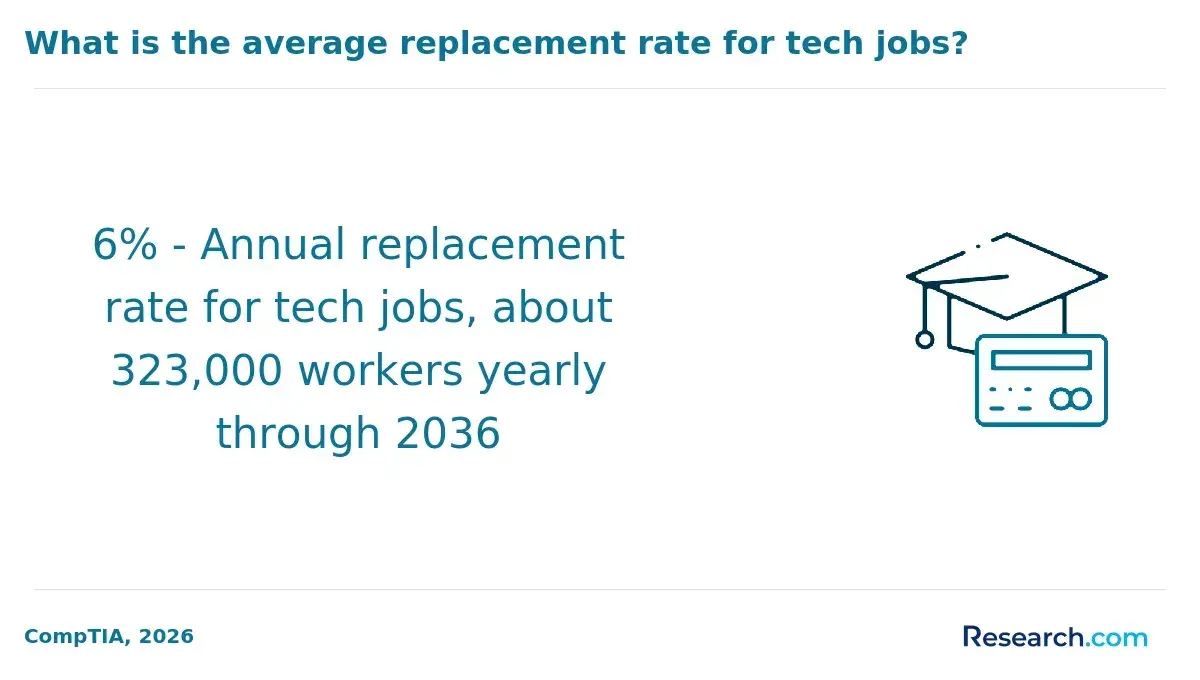
What are the typical admission requirements for AI programs emphasizing embeddings and semantic search?
Admission to AI programs focusing on embeddings and semantic search typically requires a bachelor's degree in computer science, data science, mathematics, or related STEM fields. Strong foundations in linear algebra, probability, and programming languages like Python are essential for working effectively with vector embeddings and semantic search models. Many programs expect prior coursework or experience in machine learning, natural language processing (NLP), or information retrieval.
Standardized test scores, such as the GRE, may be required for some competitive programs, but this is becoming less common. Relevant professional experience—including internships or AI-related projects—can boost an application, especially for programs emphasizing practical embedding techniques. Letters of recommendation that attest to analytical skills and familiarity with AI methodologies are usually requested.
Industry reports noted that in Q1 2026, 47.9% of 78,557 tech layoffs related to AI and automation. This underscores the importance of demonstrating adaptability and forward-thinking in ai education and career goals.
How long do these AI programs take, and what tuition and total costs should students expect?
Programs focused on embeddings and semantic search vary widely in duration, from a few weeks to several months. Certificate courses usually last 4 to 12 weeks, making them suitable for working professionals wanting targeted skills without a long-term commitment. More intensive options like bootcamps or professional diplomas can run from 3 to 6 months, while university-level courses or specializations might span a full semester or up to a year for part-time study.
Tuition costs differ depending on the program and institution. Short online courses from platforms such as Coursera or edX typically range from $300 to $1,200, providing accessible entry points. Bootcamps usually cost between $7,000 and $15,000, delivering immersive, project-based learning. University certificates and professional diplomas might cost anywhere from $5,000 to $20,000 or more, depending on prestige and resources.
Additional expenses may include materials, software, or computing resources, which can add several hundred dollars. Many employers offer subsidies or reimbursements, reflecting the growing demand for AI talent evidenced by the federal government's increase in AI use cases from 700 to over 3,600 across 41 agencies between 2023 and 2025. When choosing a course, consider schedule flexibility and whether tuition covers hands-on components essential to mastering embeddings and semantic search.
What AI and data roles use embeddings and semantic search skills, and what do they pay?
Embeddings and semantic search play key roles for professionals like AI engineers, data scientists, machine learning engineers, and NLP specialists. They design models that improve information retrieval by capturing context and meaning beyond traditional keyword matching.
For instance, AI engineers use semantic search to enhance customer support chatbots, while data scientists leverage embeddings to extract insights from unstructured data.
There is a growing emphasis on AI governance and ethics as embedding-based systems raise new concerns. Demand for skills in AI governance surged by 150%, and AI ethics by 125%, indicating an increased focus on responsible AI development.
Salary ranges vary by expertise and role:
- AI engineers earn $110,000 to $160,000, often with premium wages in major tech centers.
- Data scientists working with embeddings typically make between $95,000 and $140,000.
- Machine learning engineers focusing on semantic search average $120,000 to $170,000.
- Professionals specializing in AI governance and ethics have salaries ranging from $90,000 to $130,000.
Mastering both the technical and ethical dimensions of embeddings can provide a competitive edge. Challenges include mitigating bias in semantic models and scaling enterprise search solutions. These combined skills prepare practitioners for roles across industries such as healthcare, finance, and legal tech.
What is the job outlook for professionals specializing in embeddings and semantic search technologies?
Job opportunities for professionals skilled in embeddings and semantic search are expanding quickly across industries like e-commerce, healthcare, finance, and information retrieval. These experts develop systems that understand language context to enhance search accuracy and recommendation engines, improving user experiences and decision-making.
A rising specialization is prompt engineering, which, despite representing less than 0.5% of job postings in 2025, demands a blend of expertise: 22.8% require AI knowledge, 18.7% prompt design, 21.9% communication skills, and 15.8% creative problem-solving. This role highlights the need to combine technical proficiency with clear query crafting and interpretation.
Career paths include AI research engineers, machine learning specialists, and NLP-focused data scientists who build embedding models and semantic search algorithms and integrate these into chatbots, virtual assistants, or analytics platforms. Expertise with vector databases, transformer architectures, and open-source embedding frameworks offers a competitive edge.
Students and graduates should emphasize hands-on experience via projects, internships, and coursework that balance theory and practical skills. Proficiency in Python, TensorFlow or PyTorch, and cloud platforms is highly valued. Employers favor candidates who can optimize embeddings for varied datasets and explain semantic search results to non-technical stakeholders.
How can students evaluate the quality and accreditation of embeddings and semantic search programs?
Students exploring embeddings and semantic search programs should verify institutional accreditation from recognized agencies like ABET or regional bodies. Accreditation ensures programs meet quality standards and are valued by employers.
Reviewing course content against industry benchmarks is vital; programs should cover topics such as vector representations, transformer architectures, and information retrieval techniques. Practical experience is enhanced by hands-on projects with real-world datasets or access to AI development platforms.
Instructor expertise is another key consideration. Faculty with published research, conference presentations, or industry experience in embeddings and semantic search demonstrate credible knowledge. Additionally, strong student outcomes, including job placement rates and alumni success in AI roles, indicate program effectiveness.
Given the growing demand for remote learning, program flexibility and support services matter. AI positions are twice as likely to offer parental leave and nearly three times more likely to provide remote working options, according to a recent arXiv study. Programs with flexible schedules and robust online resources cater to diverse learner needs.
Compare tuition and financial aid options carefully. Seek programs with industry partnerships offering internships or mentorship. Checking student feedback across multiple platforms helps identify recurring strengths and weaknesses in the program's value and accreditation integrity.
Other Things You Should Know About Artificial Intelligence
Python is the most widely used programming language for embeddings and semantic search due to its rich ecosystem of libraries such as TensorFlow, PyTorch, and scikit-learn. Other languages like Java and C++ are also used, particularly in production environments requiring high efficiency. Familiarity with SQL can be beneficial when working with databases that store vector representations for semantic queries.
A leading course for 2027 is "Advanced Natural Language Processing with Deep Learning" by Stanford University, offering comprehensive insights into embeddings and semantic search, including practical modules and hands-on projects.
Embeddings convert words, phrases, or documents into dense vector representations that capture semantic meaning, allowing search engines to understand intent beyond keyword matching. This helps in retrieving more relevant results by recognizing synonyms, context, and user preferences. Recommendation systems use embeddings to identify similarities between items and users, thereby enhancing personalization and accuracy.
Key challenges include managing high computational requirements for storing and searching large vector embeddings efficiently. Ensuring scalability while maintaining low latency is critical for user experience. Additionally, keeping embeddings updated with evolving data and addressing noisy or ambiguous inputs require ongoing effort and specialized expertise.
References
- Certificates & Degrees Overview https://www.byupathway.edu/degrees
- How do vector embeddings work in semantic search? https://milvus.io/ai-quick-reference/how-do-vector-embeddings-work-in-semantic-search
- Semantic Search vs Vector Search in AI Systems https://www.altexsoft.com/blog/semantic-search-vs-vector-search/
- Beyond the ATS: How Semantic Search and AI Are Changing Candidate Discovery https://www.recruitmint.com/beyond-the-ats-how-semantic-search-and-ai-are-changing-candidate-discovery
- What is Semantic Search? | Cohere Blog https://cohere.com/llmu/what-is-semantic-search
- Semantic Search Explained for Developers | Unstructured https://unstructured.io/insights/semantic-search-explained-for-developers
- What is semantic search? How it works, use cases & more https://www.meilisearch.com/blog/semantic-search
- Cost of studying Artificial Intelligence in Germany | YES Germany https://www.yesgermany.com/cost-of-studying-artificial-intelligence-in-germany/
- How Much Do AI Research Programs Cost? [2026 Pricing Guide] https://algoverseairesearch.org/blog/ai-research-program-cost-pricing