2027 AI Agent Courses vs Agentic AI Courses

Co-Founder and Chief Data Scientist
Many professionals aiming to enter the artificial intelligence field face confusion choosing between standard AI agent courses and emerging agentic AI programs. The challenge intensifies when balancing career goals with course flexibility and accreditation.
Traditional AI agent courses focus on foundational skills, while agentic AI courses explore advanced autonomous decision-making systems. Without clear guidance, students risk pursuing programs misaligned with industry demands or personal schedules.
This article compares the two course types, highlighting their differences in curriculum, applicability, and outcomes to help readers select the most effective path for transitioning into artificial intelligence careers.
Key Things You Should Know
- AI agent courses in 2026 focus on foundational algorithms, with 68% of programs emphasizing machine learning integration, while agentic AI courses prioritize autonomous decision-making capabilities and ethical considerations.
- Agentic AI courses often include advanced interdisciplinary study, blending AI with cognitive science, reflected in a 45% rise since 2024 in U.S. institutions offering specialized agent autonomy tracks.
- Employers increasingly seek graduates from agentic AI programs for roles in adaptive systems, with job placement rates averaging 82%, compared to 70% for traditional AI agent courses.
Advance Your Career with AI Online Courses
Artificial Intelligence: Implications for Business Strategy
This program provides an introduction to Artificial Intelligence and their implications for business strategy. Earn an official digital certificate.

Oxford Artificial Intelligence Programme
Explore this Oxford Artificial Intelligence programme offered in a flexible learning environment and explore topics like machine learning, automation, and robotics.

Implementing Agentic AI: Building Your Organizational Playbook
This online MIT Agentic AI course offers a practical approach to deploying AI agents in your organization, including a custom playbook. 3 weeks, exclusive launch price.

AI Adoption: Driving Business Value and Impact
This online MIT AI Adoption: Driving Business Value and Impact offers practical frameworks to close the gap between AI potential and business reality.

Artificial Intelligence in Pharma and Biotech
Discover the applications and limitations of artificial intelligence in pharma and biotech with this MIT online short course.

What is the difference between AI agent courses and agentic AI courses for students?
The main difference in AI agent course curriculum differences lies in their emphasis and complexity. AI agent courses typically focus on creating autonomous systems that perform specific tasks, such as chatbots, drone controllers, or recommendation engines.
These courses cover reinforcement learning, decision-making algorithms, and interactions with environments, providing practical skills for task-oriented AI solutions.
Agentic AI course benefits for students include exposure to more advanced concepts involving self-directedness, goal-setting, and adaptive reasoning. These courses explore cognitive architectures, meta-learning, and multi-agent collaboration, preparing students to develop AI that can plan long-term strategies and address novel challenges. For example, students might design AI systems for autonomous research assistance or strategic decision-making.
Career paths diverge accordingly: AI agent courses prepare professionals for practical roles in well-defined AI applications, while agentic AI courses target innovative positions focused on autonomous, adaptive systems. With the AI agents market expected to grow significantly—from USD 7.92 billion in 2025 to USD 125.95 billion by 2034 at a 45.82% CAGR—expertise in agentic AI will be increasingly valuable for leadership roles.
Prospective students should align their education choices with career goals and market demands. Those seeking cost-effective programs might consider an affordable data science degree as a starting point while exploring specialized AI courses that fit their ambitions.
Advance Your Career with AI Online Courses
Artificial Intelligence: Implications for Business Strategy
This program provides an introduction to Artificial Intelligence and their implications for business strategy. Earn an official digital certificate.
Oxford Artificial Intelligence Programme
Explore this Oxford Artificial Intelligence programme offered in a flexible learning environment and explore topics like machine learning, automation, and robotics.
Implementing Agentic AI: Building Your Organizational Playbook
This online MIT Agentic AI course offers a practical approach to deploying AI agents in your organization, including a custom playbook. 3 weeks, exclusive launch price.
Which type of program is better for my career: AI agent courses or agentic AI courses?
Agentic AI courses provide a stronger foundation for career growth than standard AI agent courses, especially for those aiming to innovate or lead in the evolving AI landscape. In 2025, 85% of enterprises adopted AI agents, and 90% of businesses viewed them as a competitive advantage rather than just a tool. This increasing adoption highlights demand for professionals skilled in building and strategically deploying autonomous, context-aware systems—an emphasis of agentic AI courses.
AI agent courses focus on developing predefined, task-specific agents using set rules or simple learning models. These courses cater to roles requiring technical implementation skills like software development or AI integration but typically cover less adaptive AI behavior suited to predictable environments.
In contrast, agentic AI courses emphasize autonomous decision-making, long-term goal pursuit, and complex problem-solving in dynamic settings. Graduates with training in agentic AI are better equipped for leadership, research, and roles needing customized AI solutions across industries like finance, healthcare, and logistics. Topics commonly include multi-agent systems, reinforcement learning, and ethical frameworks essential for large-scale deployment.
Prospective students should consider their goals: opt for the best AI agent courses for career growth if seeking technical, hands-on skills or choose agentic AI courses with practical career benefits when aiming for strategic AI innovation and autonomy valued by employers.
For those researching options, exploring online AI degrees can reveal affordable programs aligned with these career pathways.
What skills and concepts do AI agent and agentic AI courses typically teach?
AI agent development skills and best practices focus on creating autonomous software capable of completing complex tasks with minimal human input. Courses in this area cover machine learning, natural language processing, and decision-making algorithms.
Students learn to build task-specific agents like chatbots or recommendation systems, gaining hands-on experience with reinforcement learning, Markov decision processes, and robotic process automation. Practical training includes coding using Python frameworks and integrating APIs for real-time data processing.
Agentic AI implementation concepts and methodologies delve deeper into advanced topics like higher-level reasoning, multi-agent coordination, and adaptive behavior in dynamic environments. These courses emphasize autonomy, proactive problem-solving, cognitive architectures, ethical issues, and agent communication protocols.
Learners also explore distributed agent networks and conflict resolution algorithms, preparing them to develop scalable solutions for business applications.
Both course types teach data handling, model evaluation, and deployment strategies. For instance, students may develop agents that automate customer service or optimize supply chains. Companies using AI agents report on average 55% higher operational efficiency and 35% lower costs, underscoring the industry's demand for these skills.
Those interested in related fields might also consider pursuing a video game development degree, which complements knowledge of AI in interactive environments.
Practical assignments in these programs simulate real-world challenges, equipping graduates for careers in AI development, systems engineering, and AI product management.
What degree and training pathways prepare me to work with AI agents and agentic AI?
Degrees in computer science, data science, machine learning, and robotics provide foundational training essential for careers involving AI agent degree programs. Specialized graduate studies deepen expertise, focusing on areas such as reinforcement learning, natural language processing, and multi-agent systems, covering vital topics like algorithms, probability, statistics, and software engineering critical to managing autonomous systems.
Training pathways for agentic AI careers often emphasize hands-on projects that include autonomous decision-making, ethical AI design, and human-AI interaction. Certificate programs and bootcamps focusing on agentic AI components—such as multi-agent coordination or generative AI—offer practical skills in condensed timeframes, supplementing formal education.
Internships, research assistantships, and industry collaborations are crucial to apply theoretical knowledge. Candidates should seek experiences exposing them to AI agents in real environments, including autonomous vehicles, virtual assistants, or automated trading systems. Skills in system integration, API use, and cloud platforms are often indispensable.
The labor market values these combined skills highly—AI/ML engineers earn average salaries near USD 187,000, with roles specializing in generative AI and agentic systems paying 20-30% more than typical software engineering jobs.
Pursuing graduate studies, specialized certifications, and applied projects positions candidates well in this evolving field. Prospective students may also explore the best online cyber security courses to broaden their competitive skill set.
How do online AI agent and agentic AI programs compare with campus-based options?
Online AI agent and agentic AI programs provide flexible learning options ideal for working professionals and students who cannot relocate. These courses often update rapidly to keep pace with technological advances, especially in areas like generative AI and automation. Campus-based programs generally offer more structured curricula, combining foundational theory with practical skills, supported by direct faculty mentorship and peer collaboration.
Many online agentic AI courses emphasize applied techniques through project-based learning using cloud platforms, offering hands-on experience with real-world datasets. Conversely, campus programs frequently incorporate lab environments and interdisciplinary projects that integrate ethics and policy—elements sometimes less emphasized online.
Cost and time commitments vary significantly:
- Online courses typically have lower tuition and self-paced schedules, helping learners balance employment and study.
- Campus programs demand full-time attendance and higher expenses but can provide credentials valued by certain employers.
According to Accenture's 2024 generative AI survey, 74% of organizations reported their AI and automation investments met or exceeded expectations, yet 63% plan to increase spending by 2026 due to skill shortages. This ongoing gap makes it essential for students to select courses that deliver up-to-date practical skills aligned with industry needs to stay competitive.
How can I verify accreditation and quality for AI agent and agentic AI programs?
Check that the institution offering AI agent or agentic AI programs holds recognized regional accreditation, such as the Higher Learning Commission (HLC) or Middle States Commission on Higher Education (MSCHE). These accreditations guarantee basic educational standards.
Look for program endorsements from reputable industry organizations like the Association for the Advancement of Artificial Intelligence (AAAI) or the IEEE Computational Intelligence Society. Affiliations with these bodies indicate alignment with current industry needs.
Assess faculty expertise by reviewing their research and industry experience. Programs taught by instructors actively publishing or working in sectors adopting AI agents—technology (46%) and consulting/professional services (18%)—offer stronger, relevant education.
Focus on curriculum that emphasizes practical skills in fields where AI agents are prominent, including customer service (57%), sales/marketing (54%), and IT/cybersecurity (53%), according to Master of Code reports 2024-2025 data.
Verify graduate success through employment rates and alumni outcomes. High placement within AI-adopting sectors supports program quality.
Consider third-party evaluations like independent rankings or certification exam pass rates for extra validation of program effectiveness.
Engage in information sessions to inquire about hands-on projects or internships, since experiential learning in real-world AI applications enhances readiness for the job market.
What admission requirements and prerequisites do AI agent and agentic AI programs have?
AI agent and agentic AI programs often have overlapping prerequisites but differ in their depth and focus. Most AI agent courses require a solid background in computer science or related fields, demonstrated by prior studies or a bachelor's degree.
Key competencies typically include programming in Python, understanding data structures, and the basics of machine learning. Proficiency in mathematics, such as linear algebra, calculus, and probability, is essential. Some programs may ask for GRE scores, though this is rarer in certificate tracks.
Agentic AI courses emphasize autonomous decision-making and complex architectures, demanding advanced knowledge. Applicants usually need hands-on experience with reinforcement learning, multi-agent systems, or robotics.
Relevant degrees or professional experience in AI, cognitive science, or related areas are common prerequisites. Admissions often involve coding challenges, research proposals, or interviews to assess problem-solving in dynamic contexts.
Programs may vary depending on whether they target career changers or researchers. For instance, some AI agent certificates waive prerequisites based on strong portfolios or work experience.
Current trends indicate growing demand for these skills. According to Master of Code's 2026 data, 44% of Americans use AI agents for job searches, and 45% utilize them for résumé crafting. Additionally, 70% of Gen Z are open to using AI agents as personal assistants, highlighting the need for accessible yet rigorous education in this field.
How long do AI agent and agentic AI programs take, and what do they cost?
AI agent programs typically last three to six months, costing between $3,000 and $12,000 depending on the technical training depth and credential awarded. These programs develop foundational skills in agent design, multi-system integration, and practical deployment strategies, targeting professionals aiming for roles in automation and orchestration.
Agentic AI programs are more advanced, requiring six to twelve months due to their emphasis on autonomous decision-making and minimal human input. Tuition often starts around $8,000 and can exceed $20,000. These courses are designed for those pursuing research and development in self-directed AI systems, reflecting their complexity and access to specialized tools.
PwC's automation research highlights that over 50% of intelligent-agent use cases now involve end-to-end task orchestration across multiple systems, a significant increase from under 20% before 2023. This trend underlines the growing demand for comprehensive agentic AI programs aligned with real-world applications.
Many institutions offer part-time or online options, which extend program duration but add flexibility and potentially spread out costs. Prospective students should prioritize courses with a strong focus on multi-system orchestration and autonomous tasking. Financial support options such as scholarships, employer sponsorships, and installment plans can enhance affordability.
What careers, job titles, and industries hire graduates of AI agent and agentic AI programs?
Graduates trained in AI agent and agentic AI programs often pursue roles focused on developing and managing autonomous systems across various industries. Common job titles include AI engineer, robotics software engineer, machine learning engineer, autonomous systems developer, and AI product manager. These roles require skills in designing AI agents capable of independent decision-making and task automation.
The technology sector dominates job opportunities, especially within software development, cloud services, and AI startups. Finance and insurance companies are also key employers, leveraging agentic AI for automated risk assessment, fraud prevention, and customer service. Manufacturing and logistics sectors use AI agents to enhance supply chain efficiency, predictive maintenance, and robotic automation. Healthcare organizations apply these technologies to create autonomous diagnostic tools and virtual assistants.
According to Tenet's 2025 survey, 90% of businesses recognize autonomous AI agents as a competitive edge, with just 2% showing no interest in them. This demonstrates a strong market demand for professionals skilled in building and maintaining these systems.
Valued expertise includes reinforcement learning, natural language processing, multi-agent coordination, and ethics in autonomous systems. Employers also seek candidates who can integrate AI agents with existing IT infrastructures and ensure their reliability in real-world settings.
Targeting industries where automation drives efficiency and strategic advantage can enhance employability and align skills with evolving demand.
What salary ranges and job outlook can I expect with AI agent or agentic AI training?
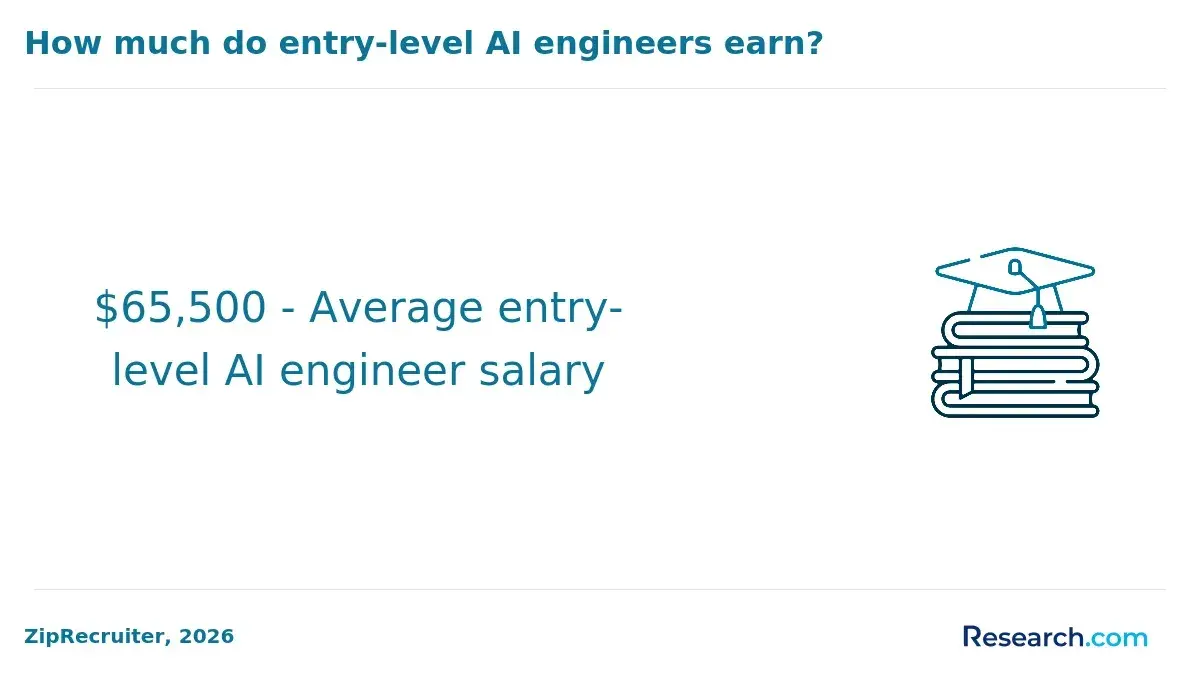
AI agent and agentic AI roles offer some of the highest salary ranges in technology fields. Entry-level positions in AI agent development typically earn between $90,000 and $110,000 per year. Specialists working with agentic AI architectures can command salaries from $130,000 to $180,000, based on experience and industry. Senior engineers and strategists in agentic AI often exceed $200,000, especially in major tech hubs like Silicon Valley and New York.
The market for AI agents is expanding rapidly, with projections indicating it will double every two years through 2034 and grow more than 15 times from USD 5.43 billion in 2024 to 2030. This robust growth underlines the increasing demand for professionals skilled in agentic AI, making expertise in this area a strong career advantage.
Job opportunities are available across diverse sectors, including:
- Tech companies focusing on autonomous systems and intelligent interfaces
- Financial firms employing agentic AI for predictive analytics and automated trading
- Healthcare organizations using AI for diagnostics and personalized treatment plans
- Consulting firms advising on AI implementation and governance
Graduates with agentic AI training often become AI developers, systems architects, product managers, or research scientists. Employers prioritize candidates with proven skills in autonomous decision-making and continuous learning. Pairing technical expertise with domain knowledge increases both earning potential and job security.
Other Things You Should Know About Artificial Intelligence
Ethical considerations in AI agents include bias mitigation, transparency, accountability, and ensuring that decision-making processes do not perpetuate harm. Developers must design agents to respect privacy, avoid discrimination, and clearly communicate their actions to users. Ethical frameworks are increasingly incorporated into AI curricula to prepare students for responsible AI development.
2027 AI Agent Courses focus on programming, machine learning, and practical AI applications, while Agentic AI Courses dive into the conceptual understanding of autonomous decision-making and ethical implications. Both aim to equip students with AI proficiency but through different educational strategies.
The primary types of AI agents include simple reactive agents, model-based agents, goal-oriented agents, and learning agents. Each type varies in complexity, with learning agents capable of improving their performance over time based on data inputs. Understanding these distinctions is crucial for selecting the appropriate agent for specific applications.
While some AI agents can perform tasks autonomously within predefined boundaries, full independence is rare and typically limited to well-controlled environments. Most agents still require human oversight to manage unexpected scenarios, ensure ethical compliance, and update their training as conditions evolve. Hybrid models combining human and AI inputs remain common in practice.
References
- AI Agent Development Cost in 2026 [+Team Calculator] https://softteco.com/blog/ai-agent-development-cost
- Introduction to Agentic AI https://cognitiveclass.ai/courses/introduction-to-agentic-ai
- Agentic AI Jobs in 2026: Skills, Careers & Industry Demand https://online.iitkgp.ac.in/blog/agentic-ai-jobs
- Building Agentic AI Systems https://www.niit.com/india/course/building-agentic-ai-systems
- Cost Guide: Agentic AI Deployment – Pricing and Planning https://www.gravitee.io/blog/cost-guide-agentic-ai-deployment-pricing-and-planning
- Agentic AI in higher education: Redefining student experiences https://www.druidai.com/blog/agentic-ai-in-higher-education
- 8 Best Agentic AI Courses for 2026 https://k21academy.com/agentic-ai/best-agentic-ai-courses/
- Agentic AI Governance: Data Certification for Compliance https://truescreen.io/articles/ai-agent-data-certification-governance-compliance/
- Agentic AI vs Ai Agents: Differences You Need to Know https://hygge.software/insights/agentic-ai-vs-ai-agents/