2027 Best AI Courses for Program Managers

Co-Founder and Chief Data Scientist
Program managers seeking to transition into AI face challenges understanding technical concepts while maintaining leadership responsibilities. The fast evolution of AI tools and applications demands a learning path that balances depth with practical management skills. Without tailored education, bridging the gap between project oversight and technical fluency becomes difficult.
This article reviews the best AI courses designed specifically for program managers, highlighting flexible, accredited options that suit professionals from unrelated fields. It aims to guide readers toward programs that enhance both technical understanding and strategic implementation, enabling a successful pivot into the AI industry.
Key Things You Should Know
- Top AI courses for program managers in 2026 emphasize practical skills in AI integration with business strategy, reflecting a 42% growth in AI adoption across U.S. enterprises since 2024.
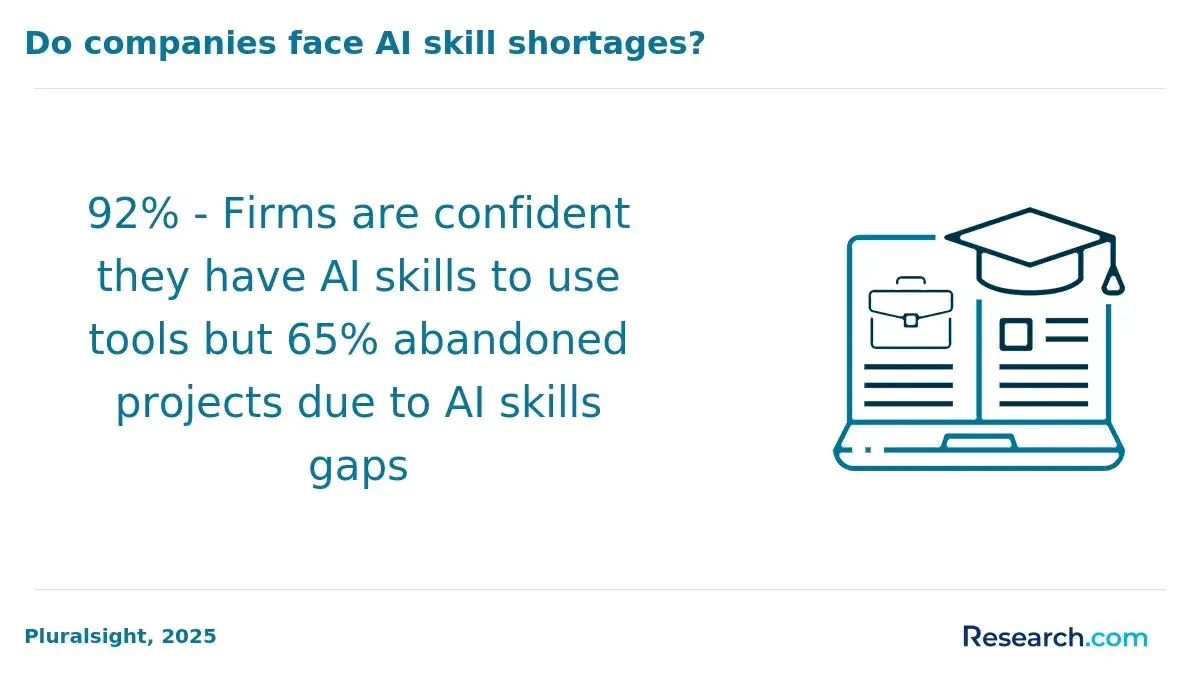
- Programs now blend technical understanding with leadership training to prepare managers for overseeing AI projects, addressing a reported 67% skills gap in AI project management.
- Courses frequently update curricula to include the latest AI ethics, regulatory compliance, and emerging technologies, aligning with 2025 industry standards and market demands.
Advance Your Career with AI Online Courses
Artificial Intelligence: Implications for Business Strategy
This program provides an introduction to Artificial Intelligence and their implications for business strategy. Earn an official digital certificate.

Oxford Artificial Intelligence Programme
Explore this Oxford Artificial Intelligence programme offered in a flexible learning environment and explore topics like machine learning, automation, and robotics.

Implementing Agentic AI: Building Your Organizational Playbook
This online MIT Agentic AI course offers a practical approach to deploying AI agents in your organization, including a custom playbook. 3 weeks, exclusive launch price.

AI Adoption: Driving Business Value and Impact
This online MIT AI Adoption: Driving Business Value and Impact offers practical frameworks to close the gap between AI potential and business reality.

Artificial Intelligence in Pharma and Biotech
Discover the applications and limitations of artificial intelligence in pharma and biotech with this MIT online short course.

What are the best AI courses for program managers?
Program managers aiming to excel in AI integration benefit from courses focusing on practical use of AI tools in project settings. Top artificial intelligence training programs for project managers often cover AI fundamentals, data-driven decision-making, and deploying AI for risk management. Prestigious programs like Stanford Online's "AI for Project Managers" and MIT's "Artificial Intelligence: Implications for Business Strategy" provide essential skills to leverage AI technologies efficiently.
These best AI courses for program managers emphasize:
- Understanding AI algorithms relevant to project workflows
- AI-powered project scheduling and resource allocation
- Ethical considerations and governance of AI tools in management
- Integration of AI with existing project management software
Blending AI with Agile and Scrum methodologies offers strategic advantages by enabling adaptation to AI-generated insights. Certification options such as PMI's AI Project Management Certification add credibility and reflect growing industry standards. According to a 2024 Project Management Institute survey, 49% of high-performing organizations use AI tools in project and program management, making them 27% more likely to meet original goals and business intent compared to their lower-performing peers.
Students should prioritize courses featuring hands-on labs, case studies from diverse industries, and training on AI platforms like TensorFlow or Microsoft Azure AI. These elements prepare graduates for real-world challenges and applied artificial intelligence jobs in various sectors.
Advance Your Career with AI Online Courses
Artificial Intelligence: Implications for Business Strategy
This program provides an introduction to Artificial Intelligence and their implications for business strategy. Earn an official digital certificate.
Oxford Artificial Intelligence Programme
Explore this Oxford Artificial Intelligence programme offered in a flexible learning environment and explore topics like machine learning, automation, and robotics.
Implementing Agentic AI: Building Your Organizational Playbook
This online MIT Agentic AI course offers a practical approach to deploying AI agents in your organization, including a custom playbook. 3 weeks, exclusive launch price.
Which AI course formats suit working program managers?
Flexible, modular course formats work best for busy program managers seeking the best AI course formats for busy program managers aiming to upskill in artificial intelligence. Self-paced online courses allow learners to balance challenging work schedules by studying during off-hours or weekends. Hybrid programs combining live virtual sessions with asynchronous materials also support engagement without requiring fixed attendance. Cohort-based formats may boost accountability and networking but tend to be less adaptable to unpredictable workloads.
Employer recognition of credentials remains a key factor; 58% of global learners prioritized this when enrolling. Programs affiliated with universities or industry partners offer validated certificates and boast completion rates 3 to 5 times higher than standalone MOOCs, underscoring the value of credential credibility. Flexible artificial intelligence training options for working professionals should emphasize modular lesson plans and clear milestones to track progress.
Practical, case-based content aligned with project management contexts improves retention and workplace impact. Short courses or nanodegrees focusing on AI fundamentals, ethics, and integration strategies are generally preferable to lengthy academic programs requiring long uninterrupted study periods. Multi-week professional certificates from established online providers collaborating with top universities or tech firms commonly require 3 to 6 hours weekly over 6 to 12 weeks, fitting well into busy schedules.
Course platforms often provide downloadable resources and mobile access, facilitating learning on the go. For those also interested in engineering paths, consider exploring the cheapest online industrial engineering degree options to complement AI knowledge.
What should AI courses for program managers cover?
AI courses for program managers focus on core skills for AI project management that blend technical knowledge with leadership abilities. Essential AI concepts for program managers, such as machine learning, natural language processing, and data ethics, provide the foundational understanding needed to interact effectively with technical teams and stakeholders. These skills help program managers comprehend AI model functionalities and limitations.
Programs typically emphasize the AI project lifecycle, including defining project scopes with AI elements, managing data pipelines, and overseeing deployment and monitoring phases. Risk management-covering biases, security, and compliance-is critical to ensure projects meet ethical and legal standards.
Integrating AI strategy with broader business goals is another key area of focus. This involves identifying measurable KPIs driven by AI initiatives, budgeting for AI efforts, and managing organizational change to foster adoption. Practical case studies and industry-specific scenarios, such as those in healthcare and finance, enrich learning by applying theory to real-world contexts.
Instruction in AI governance frameworks and cross-functional collaboration prepares program managers to lead diverse teams while navigating evolving regulations. According to the edX Impact Report 2024, individuals completing university-issued AI certificates for program management saw an average 14% salary increase and a 39% promotion or role change within 12 months.
For those interested in further education related to data science and AI, exploring the cheapest online data science masters programs can be a practical next step.
Which credentials matter for AI program management careers?
Credentials essential for AI program management certifications in North America combine traditional project management qualifications with specialized AI knowledge. Industry-recognized certificates, such as the Project Management Professional (PMP), paired with AI-specific credentials, greatly enhance employability. According to the Global Knowledge/Skillsoft IT Skills and Salary Report 2024, 71% of employers prefer hiring program managers who hold AI-related certifications alongside their PMP or equivalent licenses.
Top credentials for AI program managers in the US include AI-focused certifications from organizations like PMI and APMG. For instance, PMI's Agile Certified Practitioner (PMI-ACP) combined with an AI fundamentals certificate reflects adaptability to AI project frameworks. APMG certifications target AI governance and project delivery, addressing compliance and risk management unique to AI deployments.
Technical AI certificates that emphasize machine learning or data analytics are invaluable for program managers leading AI teams. These certifications ensure effective communication with technical staff and a solid grasp of AI concepts.
Employers seek candidates who can bridge management skills with AI expertise. Interview questions often focus on managing AI lifecycle stages, ethical challenges, and vendor selection. Holding tailored AI certificates equips professionals with frameworks to manage these issues confidently.
Prospective students and professionals can explore a range of cyber security online courses that also offer relevant AI and project management training to support career growth within this evolving field.
What admission requirements do AI management programs use?
Admission to AI management programs typically requires a bachelor's degree in fields such as computer science, engineering, business, or data analytics. Many programs expect coursework in statistics, programming, or machine learning fundamentals. Professional experience, especially in technology or project management, is often required, generally at least two to three years.
Shorter formats like workshops and bootcamps tend to have fewer formal prerequisites, requiring only basic math skills or familiarity with programming concepts. These practical, skills-focused courses attract professionals aiming for immediate career impact. According to the Course Report Coding Bootcamp Alumni Outcomes & Demographics Report 2024, graduates from intensive tech bootcamps saw a median salary increase of 51% within a year, with AI and data-related programs leading the growth. This highlights the strong career value of hands-on training in AI management roles.
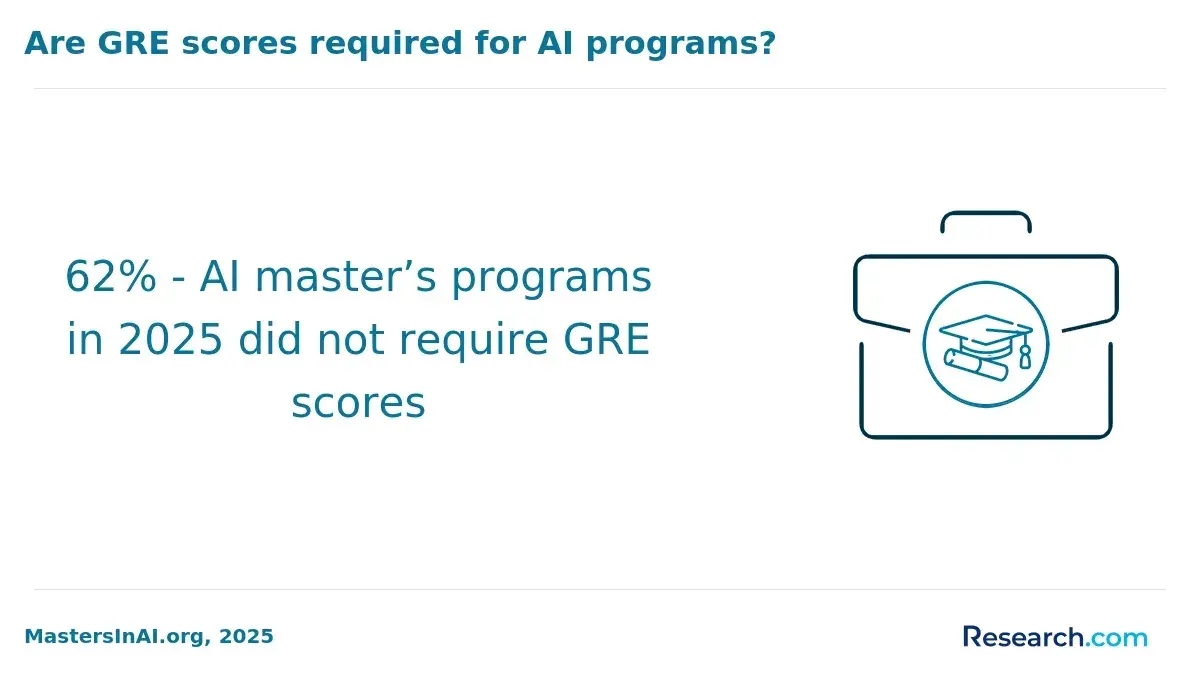
Competitive academic programs may also request GRE or GMAT scores. Letters of recommendation and personal statements help assess candidates' motivation and fit. International applicants typically submit TOEFL or IELTS scores for English proficiency. Admissions committees prioritize candidates who combine technical AI knowledge with strategic management, considering leadership and communication skills crucial.
How long do AI courses for program managers usually take?
AI courses for program managers generally last between 4 and 12 weeks, depending on the course depth and format. Short introductory courses covering foundational AI concepts and practical use cases typically run 4 to 6 weeks with a 3 to 5 hour weekly commitment. These options suit busy professionals looking for a concise overview without heavy technical detail.
More comprehensive programs, which focus on project management within AI or data-driven decision-making, usually span 8 to 12 weeks. They blend theory, case studies, and hands-on exercises, with total time commitments around 30 to 40 hours. These courses equip program managers with skills to integrate AI tools effectively into existing workflows.
Self-paced options offer flexibility, allowing learners to complete courses in as little as 3 weeks or spread them over several months based on prior knowledge and availability. When choosing a course, prioritize clear time commitments and practical relevance for steady progress and real-world application.
Enrollment in free and low-cost AI courses has surged over 60% year-on-year, according to Class Central. Fastest-growing tracks include "AI for business professionals" and "AI for project managers," highlighting demand for affordable, flexible learning paths.
Practical, project-based learning strengthens understanding of AI's impact on program delivery and risk management, making it a valuable focus for program managers pursuing AI education.
How much do AI courses for program managers cost?
Courses in AI for program managers vary significantly in cost depending on the level and provider. Entry-level courses offered by platforms such as Coursera or edX are frequently free or priced up to $300, making them accessible for foundational knowledge. More comprehensive professional certification courses typically range from $500 to $1,500 and concentrate on applying AI principles within program management contexts.
Higher-tier executive programs or specialized bootcamps, which combine AI with strategic portfolio and resource management, can cost between $2,000 and $3,000. These advanced offerings often feature interactive case studies and tools designed to enhance decision-making and operational efficiency. According to Gartner's 2024 report, organizations leveraging AI-enabled portfolio management achieve 33% higher portfolio throughput and 36% more effective resource utilization, underlining the practical benefits of such training.
Financial aid, payment plans, and employer sponsorships are common, helping to alleviate the personal financial burden of pursuing these programs. Prospective students should weigh factors like curriculum relevance, certification credibility, and support services alongside cost.
Pricing breakdown:
Which accredited schools offer AI courses for program managers?
Several accredited U.S. universities offer AI-focused programs designed for program managers, emphasizing the integration of AI into project management workflows. For example, Stanford University provides a Professional Certificate in AI Strategy that explores the influence of AI on decision-making and risk management within complex programs. Similarly, Massachusetts Institute of Technology (MIT) offers a course titled AI: Implications for Business Strategy through its Sloan School of Management, focusing on forecasting and automation tools relevant to program managers.
Carnegie Mellon University includes AI applications for risk assessment and resource allocation in its Master of Science in Program and Project Management, equipping professionals with both technical and strategic skills. The University of California, Berkeley offers a Data Science and Artificial Intelligence Certificate that covers predictive analytics applied to project timelines and budget forecasting.
These academic options highlight practical applications that enhance project efficiency significantly. According to McKinsey & Company's 2024 report, businesses using AI for risk analysis, forecasting, and decision support reduce schedule overruns by up to 20% and cost overruns by up to 15% compared to firms relying on manual estimation.
Prospective students should seek programs combining AI fundamentals with project management tools, often including machine learning, predictive modeling, and decision-support systems. Many schools provide flexible online or hybrid formats to accommodate working professionals intent on advancing their AI capabilities without career breaks.
What jobs can AI course graduates pursue in management?
Graduates of AI courses in management are prepared for roles that bridge technology and business strategy. Positions such as AI project managers and AI product managers focus on integrating AI tools and developing AI-driven products. Other key roles include data-driven strategy managers who use AI insights to guide decisions and AI adoption specialists facilitating technology implementation across organizations.
Teams leveraging generative-AI assistants for stakeholder communications reduce routine documentation time by 40%, while maintaining or improving satisfaction, as reported by MIT Sloan Management Review and BCG. This efficiency benefits roles like stakeholder communication managers and change management consultants who rely on clear, timely reporting.
Additional career paths include AI compliance and ethics managers who oversee responsible AI use, AI training coordinators educating teams, and AI operations analysts optimizing solution performance.
Success in these roles requires balancing AI's technical outputs with business needs. For example, product managers align AI model results with market demands, while change managers use AI insights to smooth digital transformations.
- AI project and product management
- Data-driven strategy and stakeholder communication
- AI adoption, compliance, and ethics
- Training coordination and operations analysis
These diverse opportunities attract graduates ready to lead AI integration, strategy, and innovation within organizations.
What salary and job outlook do AI program managers have?
AI program managers earn competitive salaries in the U.S., typically ranging from $110,000 to $160,000 annually. Senior roles or those based in tech hubs can exceed $180,000. Salary variations depend on factors such as location, industry, and experience. The demand for skilled program managers in AI is fueled by rapidly growing corporate investments and a rising need for expertise to lead AI initiatives across sectors.
Global spending on AI skills training is expected to reach $8.4 billion annually by 2026, almost tripling 2023 levels, according to IDC's "Worldwide Artificial Intelligence and Automation Training Forecast, 2024-2028." This trend underscores the urgent need for leaders capable of aligning technical teams with business objectives.
Key opportunities for AI program managers include:
- Faster career growth in industries like healthcare and finance that prioritize AI adoption
- Enhanced salary prospects through specialized certifications and AI coursework
- Expanded roles involving ethical oversight, interdisciplinary team management, and regulatory compliance
Adaptability and continuous learning are essential as responsibilities evolve. Program managers who combine technical understanding with leadership skills will find strong career potential driven by industry demand and corporate investments in AI.
Other Things You Should Know About Artificial Intelligence
In 2027, the best AI courses for program managers include "AI for Business Leaders" by Coursera, "AI Strategy and Roadmap" by LinkedIn Learning, and edX's "AI for Everyone" series. These courses focus on practical AI applications and strategic insights for effective program management.
Artificial intelligence enhances decision-making by providing data-driven insights and predictive analytics that help managers make more informed choices. It automates routine analysis but requires human oversight to interpret results and align AI outputs with organizational goals. Program managers should understand how to leverage AI while maintaining strategic control.
Effective AI project management demands both technical understanding and strong leadership skills. Program managers should be proficient in AI concepts like machine learning and data science, as well as project management methodologies. Communication skills are essential to bridge gaps between technical teams and business stakeholders.
AI regulations vary by jurisdiction but increasingly require compliance with data protection, transparency, and safety standards. Program managers must track relevant laws and ensure AI initiatives adhere to these rules to avoid legal risks. Understanding regulatory frameworks helps maintain ethical AI deployment and corporate responsibility.
References
- AI for Managers https://esmt.berlin/executive-education/analytics-ai-programs/ai-managers
- AI-Driven Project Manager (AIPM) https://apmg-international.com/product/ai-driven-project-manager-aipm
- How to Get into a BSc in AI Program | Admission Guide 2025 https://futurense.com/blog/bsc-ai-program
- Learn job-ready skills with Google Career Certificates https://grow.google/certificates/project-management/
- AI for Project Management Course Online https://www.graduateschool.edu/courses/using-ai-for-project-management
- MMAI - Admissions https://smith.queensu.ca/grad_studies/mmai/program/admissions-requirements.php
- Ultimate Guide: How to Choose the Right AI Training Course to Boost Your Career - ONLC https://www.onlc.com/blog/how-to-choose-ai-training-courses/
- Bachelor in Management and Artificial Intelligence https://www.kozminski.edu.pl/en/programs/undergraduate-programs-bachelor/bachelor-management-and-artificial-intelligence
- Certifications in AI that would allow you standout in job hunting https://community.deeplearning.ai/t/certifications-in-ai-that-would-allow-you-standout-in-job-hunting/871654
- AI for Project Managers: A Practical Masterclass https://humentum.org/courses/ai-for-project-managers-a-practical-masterclass/