2027 Best edX AI Courses for Corporate Teams

Co-Founder and Chief Data Scientist
Corporate teams often face challenges in upskilling quickly to keep pace with the fast-evolving artificial intelligence landscape. Traditional training methods can be time-consuming and lack practical relevance for immediate application. This skills gap may lead to missed innovations and reduced competitive advantage.
Selecting the right online courses that offer flexibility, accredited credentials, and industry-relevant content is crucial for organizations aiming to integrate AI into their operations effectively. This article reviews top edX AI courses tailored for corporate environments, guiding decision-makers on the best options to equip their teams with essential knowledge and skills efficiently.
Key Things You Should Know
- edX's 2026 AI courses prioritize practical skills, with over 60% of content focused on real-world applications and industry-relevant projects tailored for corporate teams.
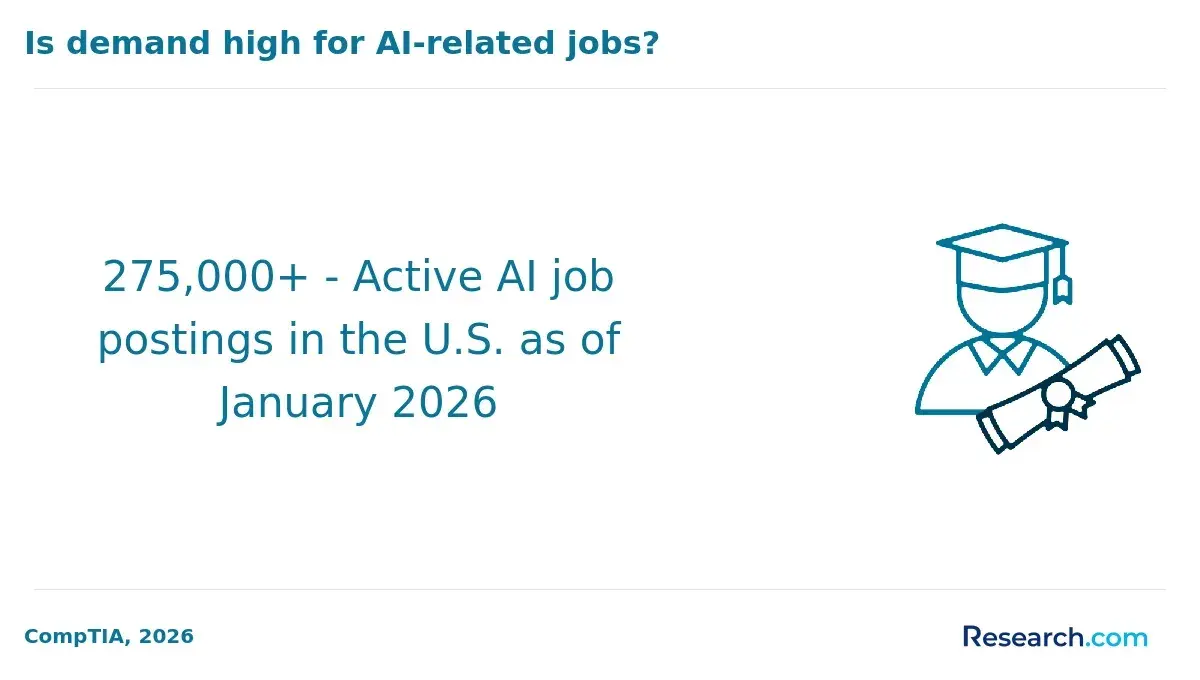
- Corporate learners benefit from flexibility in pacing and a blend of beginner to advanced courses, addressing upskilling with an 18% projected growth in AI job demand by 2030.
- Partnerships with leading universities and companies ensure content reflects cutting-edge developments, including interpretability, ethics, and deployment strategies in Artificial Intelligence.
Advance Your Career with AI Online Courses
Artificial Intelligence: Implications for Business Strategy
This program provides an introduction to Artificial Intelligence and their implications for business strategy. Earn an official digital certificate.

Oxford Artificial Intelligence Programme
Explore this Oxford Artificial Intelligence programme offered in a flexible learning environment and explore topics like machine learning, automation, and robotics.

Implementing Agentic AI: Building Your Organizational Playbook
This online MIT Agentic AI course offers a practical approach to deploying AI agents in your organization, including a custom playbook. 3 weeks, exclusive launch price.

AI Adoption: Driving Business Value and Impact
This online MIT AI Adoption: Driving Business Value and Impact offers practical frameworks to close the gap between AI potential and business reality.

Artificial Intelligence in Pharma and Biotech
Discover the applications and limitations of artificial intelligence in pharma and biotech with this MIT online short course.

What makes edX AI courses effective for upskilling corporate teams in the workplace?
Upskilling corporate teams with edX AI courses offers a structured and scalable approach tailored to workplace needs. These programs provide clear skill progression from foundational principles to advanced applications, enabling employees with diverse experience levels to build competency efficiently. The modular format supports just-in-time learning, allowing teams to focus on specific challenges such as machine learning implementation or data ethics without unnecessary content.
The IBM Global AI Adoption Index 2024 reveals that 37% of organizations identify lack of AI skills as a primary barrier, even as 51% have accelerated AI rollout recently. EdX addresses this gap by incorporating real-world projects and case studies that reflect corporate AI challenges, ensuring learners develop practical, job-ready skills instead of purely theoretical knowledge. This approach aligns well with effective AI training programs for workplace skills.
Additional features enhancing course effectiveness include:
- Access to content developed in collaboration with leading universities and companies, ensuring alignment with current AI industry standards and innovations
- Flexible online formats that accommodate busy professional schedules through asynchronous or blended learning models
- Certification options to validate expertise and integrate with corporate credentialing systems
- Specialized tracks in areas like natural language processing, computer vision, and AI ethics, allowing tailored training for specific team needs
EdX's collaborative tools foster peer engagement and support knowledge retention, critical for applying new AI skills in complex projects. For professionals seeking foundational knowledge combined with accelerated pathways, programs such as a 2-year computer science degree online offer complementary educational opportunities alongside corporate AI upskilling efforts.
Advance Your Career with AI Online Courses
Artificial Intelligence: Implications for Business Strategy
This program provides an introduction to Artificial Intelligence and their implications for business strategy. Earn an official digital certificate.
Oxford Artificial Intelligence Programme
Explore this Oxford Artificial Intelligence programme offered in a flexible learning environment and explore topics like machine learning, automation, and robotics.
Implementing Agentic AI: Building Your Organizational Playbook
This online MIT Agentic AI course offers a practical approach to deploying AI agents in your organization, including a custom playbook. 3 weeks, exclusive launch price.
How do edX AI programs compare to university degrees and other corporate training options?
edX AI certification versus university degrees offers a practical alternative by combining flexibility, specialization, and real-world relevance. Unlike traditional multi-year degrees, edX provides modular courses designed for busy professionals and corporate teams focused on fast skill acquisition. These programs often collaborate with top global universities and tech firms to deliver content aligned with current AI industry demands.
Corporate AI training programs comparison shows edX's advantage in scalability and accessibility. Companies can deploy AI courses like machine learning or natural language processing across locations, ensuring uniform expertise without geographic limits. According to 2U's FY 2024 Impact Report, enterprise enrollments grew 14% year-over-year, with 82% of corporate partners prioritizing AI and data skills in edX-powered programs.
While university degrees emphasize theoretical foundations, edX courses focus on applied AI skills such as model development and ethical practices, enabling quicker workforce readiness. Many provide verified certificates or micro-credentials widely recognized by employers, supporting talent development without requiring full degrees.
For those balancing cost, time, and immediate applicability, edX courses are ideal for upskilling teams, onboarding new talent, or ongoing skill refreshment-areas where traditional degrees or in-house training can be slower or less practical. Professionals exploring educational options might also consider online mechanical engineering degrees as alternative pathways to advance their technical careers.
Which edX AI courses and professional certificates are best for different corporate roles?
edX offers targeted AI courses and professional certificates tailored to diverse corporate roles, addressing specific skill sets and responsibilities. Executives benefit from strategic programs like MIT Sloan's "Artificial Intelligence: Implications for Business Strategy," which equips leaders to identify actionable AI projects; notably, 84% of past participants detected at least one AI initiative with positive ROI within six months, according to MIT Sloan Executive Education Outcomes Snapshot 2024.
Technical teams such as data scientists and AI engineers can choose from the "Professional Certificate in Data Science" from Harvard or IBM's "AI for Everyone" series, both emphasizing practical coding, core analytics, machine learning, and model deployment skills critical for building AI-driven products. These offerings represent some of the top professional certificates in artificial intelligence for businesses seeking technical excellence.
Product managers and business analysts will find value in courses that blend AI fundamentals with project management and ethics. The "AI Product Management" Professional Certificate on edX introduces frameworks for integrating AI into product lifecycles, addressing common challenges like data bias and scalability.
Marketing and sales professionals benefit from "AI in Marketing," which covers customer segmentation, predictive analytics, and automated content generation. Such targeted education bridges technical concepts with market-driven applications, improving effectiveness in customer-facing roles.
Corporate teams aiming to optimize AI adoption should select from the best edX artificial intelligence courses for corporate roles that fit their functional responsibilities. For those exploring broader options, consult best online AI degree programs to align education with career goals.
How can companies map edX AI courses to specific job functions and career paths?
Companies can effectively map edX AI courses to job roles in corporate teams by analyzing course content in relation to the specific skills required for those roles. For example, data engineers should focus on courses emphasizing data pipelines, database management, and scalable machine learning systems, while machine learning engineers benefit from MicroMasters that cover model development, algorithmic design, and deployment techniques.
Business analysts or project managers are better served by professional certificates addressing AI strategy, data-driven decision-making, and ethics. Aligning edX AI training with career development paths becomes more streamlined when human resources departments create skills matrices connecting edX offerings to job competencies.
This approach supports targeted employee development, allowing software developers transitioning into AI roles to follow structured pathways from foundational machine learning to deep learning and natural language processing specializations. Data from a 2024 survey of 1,200 edX learners shows that 72% applied new ML skills to work projects within three months, demonstrating the practical benefits of course-to-role alignment.
Career paths such as AI research scientists, product managers, or ethics officers require blending technical knowledge with leadership or compliance courses. Using certificates to mark skill milestones also encourages employee motivation and talent retention. Those interested in how to become an AI trainer can leverage these mapped learning paths and career insights to better prepare for evolving job demands.
What curriculum topics do top edX AI courses cover for business and technical learners?
EdX AI courses tailored for corporate teams present a well-rounded curriculum for both technical and business professionals. Technical tracks cover machine learning algorithms, data analysis, neural networks, natural language processing, computer vision, and AI deployment, often incorporating programming skills in Python and frameworks like TensorFlow or PyTorch. These modules prepare developers and engineers to build practical, scalable AI solutions.
Business-focused courses provide insights into AI's strategic benefits, including market influence, customer personalization, operational efficiency, and risk management through case studies. They also explore AI's role in decision-making, process automation, and ethical considerations. Change management training helps organizations integrate AI technologies smoothly.
Key emerging topics include responsible AI use, data privacy, and measuring AI return on investment. With the rising significance of generative AI in workplaces, there is a growing emphasis on accessible training to bridge knowledge gaps quickly. Studies reveal a gap between productivity gains from these tools and formal AI training among employees, highlighting the value of structured education.
- Core skills: supervised and unsupervised learning, Python programming
- Business applications: forecasting, risk management, strategic value
- Ethical frameworks and data privacy considerations
- Cloud-based AI services and AI ROI measurement
How do edX AI courses handle accreditation, certificates, and recognition by employers?
edX AI courses provide structured accreditation pathways developed with top universities and institutions, offering official credentials recognized both academically and professionally. Upon completion, learners receive verified or professional certificates that display the issuing body and can be shared on platforms like LinkedIn.
These certificates demonstrate practical skills in areas such as machine learning, natural language processing, and data analysis. For instance, Microsoft's Professional Program in AI on edX includes a series of courses ending with a certificate valued by industry leaders, ensuring learners gain both theoretical knowledge and applied expertise.
Employers increasingly regard these credentials as proof of continuous learning and relevant skills. Research indicates organizations investing in upskilling, including data literacy, report approximately 20% higher returns on data and analytics investments compared to peers who do not prioritize such training. This underlines the benefits of accredited learning and verified AI competencies.
When selecting courses, corporate teams should confirm whether the certificates offered are verified, which include identity checks and carry greater credibility. Some programs also provide micro-credentials or digital badges that help showcase expertise across multiple AI topics.
The combination of university partnerships, verified certificates, and industry relevance makes edX AI courses widely accepted by employers focused on validating workforce skills and enhancing data-driven performance.
What are the costs, group pricing options, and ROI considerations for edX AI training?
edX offers AI training programs with prices ranging from $500 to $2,500 per individual, depending on the course depth and group size. Companies enrolling 10 or more employees can benefit from volume discounts and often negotiate customized packages that may include additional resources or extended access. These options help organizations efficiently deliver consistent AI education across teams while managing budgets.
Investing in AI training through edX is critical to bridging the technical and ethical gaps in the workforce. According to PwC's 2024 Global AI Jobs Barometer, while 63% of companies recognize the importance of ethical risks and regulatory compliance, fewer than 30% provide structured AI ethics training. Incorporating ethics-focused content helps reduce legal and reputational risks, protecting business assets.
Companies should evaluate training ROI by considering:
- Reduced compliance violations through knowledgeable employees
- Improved innovation driven by upskilled AI practitioners
- Lower recruitment costs via talent retention with ongoing learning opportunities
Cost-effective approaches blend instructor-led sessions with self-paced modules, balancing engagement with budgetary constraints. Many edX courses also integrate with Learning Management Systems (LMS), enabling progress tracking and outcome analysis. Selecting courses that align technical skills with ethical and regulatory considerations maximizes long-term benefits for organizations navigating AI adoption challenges.
How do edX AI courses support hands-on projects, capstones, and portfolio development?
edX AI courses prioritize practical learning through hands-on projects, capstones, and portfolio-building activities that connect theory with real-world challenges. Using industry-relevant datasets and problem statements, students develop working models and implement algorithms with tools such as Python, TensorFlow, and natural language processing libraries. Typical capstone projects might include creating predictive analytics systems or image recognition models.
These projects progress from guided exercises to independent tasks, enhancing critical thinking and technical ability. This structure suits learners at various experience levels and supports corporate goals by allowing customization for automating workflows or improving customer insights.
Portfolio development is stressed, encouraging learners to document code, methods, and results on platforms like GitHub or LinkedIn. Portfolios serve as tangible proof of skill mastery, aiding career advancement and promotions. Organizations investing significantly more in AI-focused training report benefits such as 2.1 times higher employee retention, according to LinkedIn's Workplace Learning Report.
What are the typical time commitments and pacing options for employees taking edX AI courses?
Employees enrolled in edX AI courses typically commit between 4 and 10 hours per week for a duration ranging from 4 to 12 weeks. Shorter professional certificate programs generally require 4 to 6 hours weekly, making them suitable for those with limited daily availability. In contrast, more extensive MicroMasters programs can demand up to 10 hours per week, tailored for teams with dedicated learning time.
edX provides two main pacing structures: self-paced and cohort-based. Self-paced courses allow learners to progress according to their own schedule, which works well for fluctuating workloads and international teams needing flexibility. However, completion rates tend to be lower with this format. Cohort-based or instructor-led courses follow fixed timelines with regular checkpoints. A 2024 Global Workplace Analytics meta-analysis found cohort-based online training yields 23% higher completion rates in multinational companies compared to fully self-paced models.
Employers should balance their team's schedule flexibility with training effectiveness. Hybrid models that combine self-paced learning with periodic live sessions can boost engagement and address diverse employee needs. For example, teams may study foundational modules independently, then participate in weekly live case studies. Typical edX AI course commitments range from 4 to 10 hours weekly over 1 to 3 months.
How can L&D leaders evaluate and implement edX AI learning paths across global teams?
L&D leaders adopting edX AI learning paths across global teams benefit from a structured, data-driven approach. Begin by assessing team skills with pre-assessment tools targeting foundational knowledge, coding, and domain expertise. This approach ensures tailored learning plans that close skill gaps without redundant training.
Align course choices with business goals like enhancing predictive analytics, automating workflows, or improving customer insights. edX provides modular learning paths from leading institutions, customizable by role or department, supporting targeted skill growth. Implementation is optimized using edX's flexible online formats that accommodate different time zones and work schedules. Progress tracking dashboards offer insight into learner advancement.
For global scaling, establishing local AI champions provides vital contextual mentorship and overcomes cultural and language barriers. For example, a data science lead in Europe can guide compliance with regional regulations, while U.S. teams focus on ethical AI marketing practices.
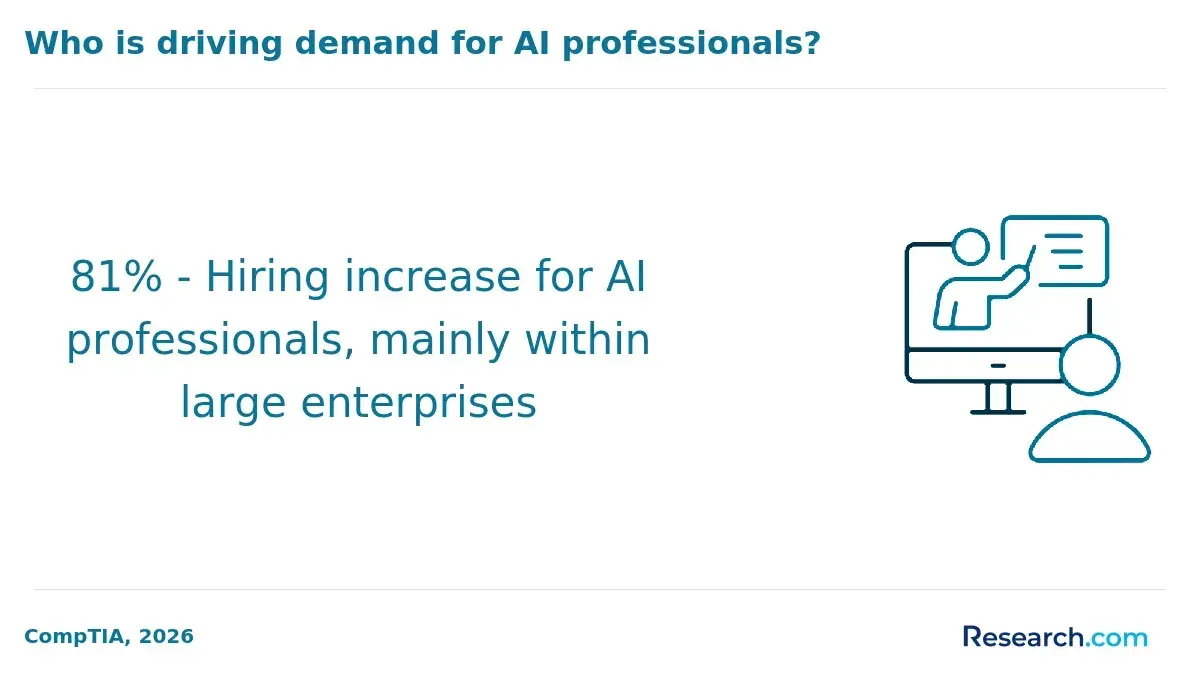
The World Economic Forum's Future of Jobs Report 2025 projects a 39% increase in jobs requiring AI and machine learning skills between 2025 and 2030, adding over 10 million positions worldwide. This trend underscores the importance of proactive training to stay competitive and innovative. Continual evaluation using metrics like skill acquisition, project impact, and AI competency retention supports ongoing refinement of learning strategies.
Other Things You Should Know About Artificial Intelligence
Companies often struggle with integrating artificial intelligence into existing systems due to data quality issues and the complexity of AI models. There is also a scarcity of skilled professionals who can develop, deploy, and maintain AI solutions effectively. Additionally, concerns about data privacy, ethical considerations, and the cost of AI infrastructure can pose significant barriers to adoption.
Data quality is critical for artificial intelligence performance because AI models rely heavily on accurate, relevant, and well-labeled data to learn and make predictions. Poor-quality data can lead to biased or incorrect results, undermining trust and effectiveness. Organizations must invest in proper data collection, cleaning, and management to ensure AI systems perform reliably and ethically.
Explainability refers to the ability to understand and interpret how an artificial intelligence model makes its decisions. It is essential, especially in corporate settings, to ensure transparency, build user trust, and meet regulatory requirements. Explainable AI helps stakeholders verify that algorithms operate fairly and identify potential biases or errors in AI outputs.
In 2027, top edX AI courses for corporate teams include “AI for Business Leaders” by UC Berkeley, “Practical Deep Learning for Coders” by the University of Adelaide, and “Artificial Intelligence Nanodegree” by the Georgia Institute of Technology. These courses focus on leadership skills, practical application, and foundational understanding to maximize AI benefits in a corporate setting.
References
- AI for business courses online | edX https://www.edx.org/courses
- Course Pacing https://docs.openedx.org/en/open-release-sumac.master/educators/references/setting_course_pacing.html
- Free Course: Generative AI for Business Leaders from edX | Class Central https://www.classcentral.com/course/computer-programming-edx-generative-ai-for-busine-202106
- Top AI Courses for L&D Professionals in 2025 - Innovito https://innovito.com/services/top-ai-courses-for-ld-professionals-in-2025/
- Building and Running an Open edX Course documentation https://edx.readthedocs.io/projects/open-edx-building-and-running-a-course/en/open-release-sumac.master/set_up_course/planning_course_run_information/scheduling.html
- List https://www.datacamp.com/blog/best-ai-courses
- AI Certification Programs: Which Ones Matter for Your Career https://www.businessplusai.com/blog/ai-certification-programs-which-ones-matter-for-your-career
- AI - Artificial Intelligence | London Business School https://www.london.edu/executive-education/ai
- edX vs Coursera - Which Platform Actually Advances Your Career https://mentorcruise.com/blog/edx-vs-coursera-which-platform-actually-advances-your-career-0d647/
- Thank You - Webinar - AI Upskilling & Global Policy: Innovation in the Context of Regulation - Business edX https://business.edx.org/thank-you-webinar-ai-upskilling-global-policy-innovation-in-the-context-of-regulation/