2027 Best AI Courses for LLM Security Teams

Co-Founder and Chief Data Scientist
Security teams managing large language models (LLMs) face escalating challenges as these systems grow more complex and pervasive. Risks such as data breaches, adversarial inputs, and model misuse demand specialized knowledge in secure AI development and deployment. Professionals from unrelated fields seeking to pivot into this arena often struggle to find credible, flexible training that balances technical depth with practical security applications.
This article highlights the best AI courses tailored for LLM security teams, focusing on accredited programs designed to equip learners with the skills necessary to protect and optimize these powerful technologies.
Key Things You Should Know
- AI security courses in 2026 emphasize practical skills in safeguarding large language models (LLMs), addressing vulnerabilities found in 65% of deployed AI systems during 2024 audits.
- Many top programs integrate up-to-date threat mitigation strategies and compliance frameworks aligned with evolving U.S. regulations, supporting increased demands in AI risk management jobs by 40% since 2024.
- Hands-on training with real-world case studies and toolkits enhances graduates' readiness for roles in cybersecurity teams focused on LLM architecture and data privacy protection.
Advance Your Career with AI Online Courses
Artificial Intelligence: Implications for Business Strategy
This program provides an introduction to Artificial Intelligence and their implications for business strategy. Earn an official digital certificate.

Oxford Artificial Intelligence Programme
Explore this Oxford Artificial Intelligence programme offered in a flexible learning environment and explore topics like machine learning, automation, and robotics.

Implementing Agentic AI: Building Your Organizational Playbook
This online MIT Agentic AI course offers a practical approach to deploying AI agents in your organization, including a custom playbook. 3 weeks, exclusive launch price.

AI Adoption: Driving Business Value and Impact
This online MIT AI Adoption: Driving Business Value and Impact offers practical frameworks to close the gap between AI potential and business reality.

Artificial Intelligence in Pharma and Biotech
Discover the applications and limitations of artificial intelligence in pharma and biotech with this MIT online short course.

What is an LLM security team, and why take specialized AI security courses?
An LLM security team is tasked with managing risks specific to large language model systems, such as data leakage, adversarial attacks, model tampering, and unauthorized access to sensitive outputs. These teams play a crucial role in ensuring compliance with privacy laws and preventing misuse of AI-generated content in enterprise environments. The roles and responsibilities of an LLM security team include proactive risk mitigation and incident response tailored to AI technologies.
Specialized AI security training benefits for teams by equipping members with knowledge of current threat landscapes, including prompt injection attacks, model poisoning, and data theft through AI endpoints-threats that traditional cybersecurity often overlooks. For example, a banking LLM security team might focus on stopping fraudulent transactions manipulated through AI instructions, while healthcare teams prioritize protecting patient data integrated within LLMs.
Recent reports indicate 61% of security leaders experienced at least one AI- or LLM-related security incident within a year, highlighting the need for dedicated training. Courses typically cover secure data handling, adversarial testing, compliance frameworks, and AI-specific incident responses, enabling professionals to prevent and respond to breaches effectively.
Those interested in careers involving these skills can explore what can you do with an applied artificial intelligence degree to understand diverse pathways in this evolving field.
Advance Your Career with AI Online Courses
Artificial Intelligence: Implications for Business Strategy
This program provides an introduction to Artificial Intelligence and their implications for business strategy. Earn an official digital certificate.
Oxford Artificial Intelligence Programme
Explore this Oxford Artificial Intelligence programme offered in a flexible learning environment and explore topics like machine learning, automation, and robotics.
Implementing Agentic AI: Building Your Organizational Playbook
This online MIT Agentic AI course offers a practical approach to deploying AI agents in your organization, including a custom playbook. 3 weeks, exclusive launch price.
What types of AI and LLM security courses are available for current professionals?
AI and LLM security certification programs for LLM teams cover essential skills to defend against emerging threats. Training includes adversarial machine learning, prompt injection mitigation, and red-teaming large language models. Specialized modules address vulnerability scanning in AI pipelines and securing data inputs to prevent model poisoning. Professionals also learn to analyze model behavior under attack and implement robust monitoring systems.
Courses cater to roles such as AI security analysts, AI engineers, and cybersecurity red-team operators. Some focus on advanced AI and LLM threat detection courses, including threat modeling specific to LLM architectures to anticipate attacker techniques. Hands-on labs simulate LLM adversarial attacks, giving students real-world experience. Ethical risk management and compliance training help professionals navigate regulatory challenges in AI security.
The demand for AI security and red-teaming roles grew by 296% globally between Q1 2023 and Q1 2025, with LLM-focused openings rising 6.2 times according to Indeed Hiring Lab. This surge has led providers to emphasize secure AI development lifecycle skills along with defensive techniques.
Formats include short certificates on prompt engineering security, bootcamps in AI threat hunting, and university-led professional programs blending AI fundamentals with cybersecurity practices. Professionals seeking to advance their expertise might consider pursuing an online engineering degree to combine foundational knowledge with specialized security training.
How do I choose the best AI course for my LLM security role and goals?
Choosing the best AI courses for LLM security professionals involves prioritizing programs that focus on vulnerabilities specific to large language models, such as prompt injection, data poisoning, and securing model APIs. Hands-on experience with real-world LLM frameworks and security tools is essential for developing practical skills needed in the field.
When choosing AI training for LLM security roles, it is important to find curricula that also address compliance standards, privacy issues, and ethical considerations in deploying models like GPT or BERT. Look for courses that include case studies or projects to align learning with current industry demands.
Beginners benefit from foundational AI security courses emphasizing LLM basics, while experienced professionals should seek advanced modules focused on threat detection and incident response tailored to LLM systems. Course duration, instructor expertise, and the value of certification are additional factors to assess.
Format and cost play significant roles; online courses with flexible schedules suit working professionals best, whereas immersive bootcamps can accelerate learning for those switching careers. Access to labs or simulated environments for practice is a critical part of retention and skill mastery.
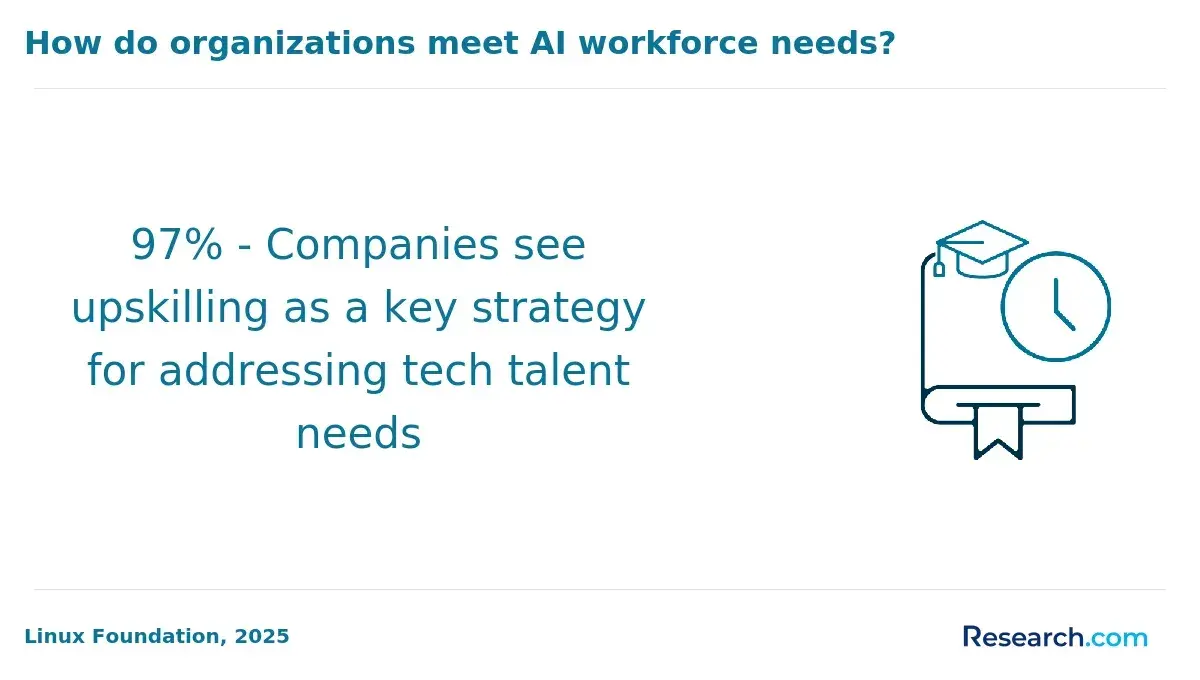
Data from the ISC2 "State of Cybersecurity Workforce 2025" report highlights that North American roles specializing in AI/LLM security earn a salary premium of 18-22% over comparable cybersecurity positions. Such statistics justify investing in specialized education that boosts your career relevance and earning potential.
For those comparing educational options, exploring cyber security schools online may provide flexible pathways to gaining essential skills.
What core topics and skills do top LLM security courses typically cover?
Top LLM security courses focus on equipping students with AI security fundamentals for LLM teams. A major emphasis is placed on countering prompt injection attacks and preventing data exfiltration, risks that 74% of organizations highlight as critical, according to Microsoft & LinkedIn's "Work Trend Index: AI Security and Safety 2025." These programs teach how to detect and mitigate malicious prompt manipulations that could lead to unauthorized commands or leaks.
Curricula cover the architecture and vulnerabilities of large language models, alongside secure prompt engineering and input sanitization techniques. Students gain practical skills for securing large language models, including deploying access controls, encryption protocols, and audit logs to ensure data privacy compliance.
Hands-on labs simulate real-world scenarios like detecting unauthorized data extraction and mitigating injection exploits. Key technical competencies involve proficiency in Python, security frameworks, API security for LLM integrations, and adversarial machine learning concepts. Ethical and regulatory considerations prepare students to balance innovation with risk management effectively.
Incident response strategies tailored to generative AI environments are covered to help teams rapidly identify and contain breaches. Staying current with emerging threats and defense mechanisms is essential. Those interested in careers related to LLM security can explore more about AI training jobs to understand pathways within this evolving field.
Are there accredited degrees or certificates focused on AI and LLM security?
Accredited degrees and certificates focused on AI and LLM security are increasingly available as organizations seek experts to navigate this complex field. Universities and professional platforms offer programs that blend foundational AI knowledge with specialized security practices designed for large language models (LLMs). These curricula address crucial areas like data privacy, adversarial threats, model robustness, and compliance with evolving regulatory frameworks.
Examples include master's degrees in AI security or cybersecurity with AI emphases, alongside certificates in AI risk management and LLM security governance. Leading institutions such as Georgia Tech, Stanford, and Carnegie Mellon provide courses covering ethical AI deployment and technical defenses. Emerging certificates concentrate on secure fine-tuning, defensive programming for language models, and countering prompt injection attacks.
For working professionals, shorter certificate programs offer flexible, industry-relevant skills developed with input from top AI security researchers. According to Forrester, by 2026, 55% of enterprises will deploy production-grade LLM applications, yet only 21% will have dedicated governance-highlighting the need for trained experts.
Key curriculum features to seek include threat modeling, vulnerability assessments, cryptographic protections in machine learning, and standards like the NIST AI Risk Management Framework. This training equips candidates to design, audit, and manage secure LLM deployments in enterprise environments.
How do online AI security programs compare with campus-based options for LLM teams?
Online AI security programs tailored for large language model (LLM) teams offer unmatched flexibility and the ability to quickly update content, unlike many campus-based options. These programs support asynchronous learning and modular courses, benefiting professionals who need to upscale skills rapidly or focus on emerging areas like prompt engineering or adversarial AI defenses.
Campus-based programs, meanwhile, provide structured environments with direct faculty access, hands-on labs, and valuable networking opportunities. These elements deepen understanding of complex security protocols through collaborative projects and real-time feedback.
Employers have shown a growing demand for AI- and LLM-focused security certifications, which saw a 340% increase in job postings from January 2024 to March 2025, far outpacing the 12% growth for generic security credentials (Lightcast, "Emerging Cyber Skills for the AI Era 2025"). This emphasizes the importance of training that addresses cutting-edge AI threats rather than traditional security alone.
Hybrid programs blending online lectures with occasional on-campus sessions are emerging to offer the best of both worlds. Such models help teams gain practical experience while maintaining schedule flexibility.
Career-stage matters: early-career learners often benefit more from campus programs with stronger internship and placement support. Experienced professionals might prefer online options to acquire niche skills without interrupting their work. Teams should weigh priorities of hands-on training versus scalability and immediacy to choose the best educational path.
What are the typical admission requirements for AI and LLM security programs?
Admission to AI and LLM security programs typically requires a bachelor's degree in computer science, cybersecurity, data science, or a related STEM field. Some advanced programs may ask for a master's degree or equivalent experience. Candidates must provide academic transcripts and demonstrate programming skills in languages like Python, along with familiarity with machine learning frameworks such as TensorFlow or PyTorch.
Prerequisites often include courses in cryptography, network security, and natural language processing. Strong problem-solving abilities are essential, usually assessed through coding tests or technical interviews. Relevant experience in cybersecurity or AI-related roles, especially those involving threat modeling or ethical hacking, is highly valued.
Applicants should be ready to submit letters of recommendation reflecting technical skills and teamwork, and some institutions require a statement of purpose outlining career goals in AI security. Hands-on experience with incident response or participation in formal red teaming exercises is frequently sought.
Research from MIT CSAIL and MLCommons ("LLM Red Teaming in the Wild: Early Findings 2025") shows that structured LLM red-team exercises before deployment can reduce prompt-abuse and data leakage incidents by 42%. This highlights the importance of admissions processes that emphasize practical adversarial testing experience, aligning candidates closely with the demands of contemporary AI security roles.
How long do AI courses for LLM security teams take, and what do they cost?
AI courses designed for LLM security teams generally span 20 to 60 hours, tailored to various expertise levels and specializations. Bootcamp-style formats typically last 2 to 3 weeks, focusing on foundational security principles and practical tool usage. More extensive courses may run 8 weeks or longer, covering advanced topics such as policy testing, threat modeling, and compliance frameworks.
Pricing varies significantly depending on the provider and course depth. Entry-level offerings from reputable platforms often start near $500, suitable for beginners or those needing targeted training. Intermediate and advanced programs, especially from universities or industry groups, generally cost between $1,500 and $4,000. Corporate training customized for teams can exceed $10,000, reflecting specialized content and ongoing support.
Since 79% of enterprises using generative AI deploy at least three specialized security tools or frameworks (Deloitte, "AI Governance and Security in Practice 2025"), quality courses emphasize practical, hands-on experience with multiple tools. These include the OWASP Top 10 tailored for LLMs, policy testing environments, and monitoring dashboards, promoting integration over reliance on a single vendor solution.
Prospective students should prioritize programs offering simulations of real-world LLM security incidents and opportunities to develop custom rule sets, which improve readiness compared to lecture-heavy formats. Modular courses with flexible pacing benefit professionals managing tight schedules.
Training generally requires a few weeks to two months, with budgets ranging from several hundred to thousands of dollars based on course complexity and format.
What career paths, roles, and salaries can AI and LLM security training lead to?
AI and large language model (LLM) security training prepares professionals for roles such as AI security engineer, machine learning security analyst, and AI risk assessor. These experts focus on identifying vulnerabilities in AI systems, designing secure AI development pipelines, and ensuring compliance with data privacy regulations. Practical skills in adversarial machine learning, secure prompt engineering, and incident response frameworks are essential across these career paths.
Salaries for security engineers with AI and LLM expertise typically range from $110,000 to over $160,000 annually in the U.S., depending on experience and industry. Senior positions or those in regulated fields such as finance or healthcare may earn above $180,000. Earning specialized certifications and pursuing continuous education boosts career growth and salary potential.
Investment in AI security skills is rising rapidly. According to the SANS Institute's "Cybersecurity Training Survey 2025," annual spending on AI and LLM security training per employee increased by 67% from 2023 to 2025, reaching $1,480 for security engineers. This reflects strong demand for professionals who can protect AI-driven systems and meet evolving compliance standards.
Beyond engineering, expertise in LLM security opens opportunities in policy advising and consultancy, where professionals help shape AI governance frameworks and guide businesses on secure AI integration and risk mitigation.
Which industry certifications and standards matter most for LLM security professionals?
By 2027, nearly half of application security assessments will integrate LLM and generative AI threat modeling, a significant increase from under 5% today according to Gartner. This shift requires security professionals to possess expertise spanning traditional cybersecurity and emerging AI risks.
Key certifications for LLM security include:
- Certified Information Systems Security Professional (CISSP): Covers core cybersecurity principles essential for evaluating LLM infrastructure and data protection.
- Certified Cloud Security Professional (CCSP): Crucial for securing cloud platforms where large language models are deployed.
- Certified Ethical Hacker (CEH): Focuses on identifying AI-specific vulnerabilities and adversarial model attacks.
- AI-specific credentials, such as the Certificate in Artificial Intelligence Security, address unique LLM vulnerabilities and mitigation strategies.
Adherence to standards like NIST's AI Risk Management Framework supports trustworthy AI development, risk assessment, and the establishment of a structured AI career path for professionals working in governance, compliance, and risk management. ISO/IEC 27001 remains vital for managing security risks across AI ecosystems.
Practical knowledge of threat modeling frameworks tailored for LLMs-such as STRIDE or PASTA adapted to AI contexts-enhances defensive capabilities. Familiarity with governance approaches targeting data poisoning, model inversion, and prompt injection strengthens protection measures.
Combining classical security certifications with AI-focused training equips professionals to navigate the evolving landscape of generative AI threats effectively.
Other Things You Should Know About Artificial Intelligence
In 2027, key AI courses for LLM security teams include "AI and Cybersecurity: Protecting Networks," focusing on LLM integration, "Advanced Threat Detection with AI," teaching proactive security measures, and "Ethical AI Implementation," addressing responsible deployment of AI technologies in security.
Ethical considerations in artificial intelligence deployment include fairness, transparency, and data privacy. Security teams must ensure AI systems do not perpetuate biases or violate user rights. Additionally, responsible AI usage requires clear accountability mechanisms and regular audits to prevent misuse or harmful outcomes.
Artificial intelligence enhances but does not fully replace human expertise in security roles. AI can automate routine tasks and identify patterns faster than humans, but complex decision-making and contextual judgment remain essential. Skilled professionals are necessary to interpret AI outputs and manage unexpected scenarios effectively.
Common challenges in implementing artificial intelligence for security include data quality issues, algorithmic bias, and integration with existing systems. Security teams often struggle with limited labeled data for training AI models, which can affect accuracy. Additionally, ensuring AI tools seamlessly work alongside traditional cybersecurity measures requires ongoing technical expertise.
References
- Best AI Security Certification in 2026 - Practical DevSecOps https://www.practical-devsecops.com/best-ai-security-certifications-2026/
- AAISM Certification | ISACA AI Security Management https://www.isaca.org/credentialing/aaism
- What is a Penetration Test for an AI and LLM Application? | Cobalt https://www.cobalt.io/learning-center/what-is-penetration-test-for-ai-llm-application
- LLM Security https://www.tigera.io/learn/guides/llm-security/
- Best AI Cybersecurity Training for Security Teams: How to Pick https://dev.to/cgivre/best-ai-cybersecurity-training-for-security-teams-how-to-pick-5325
- LLM Red Teaming: AI Security Testing | OffSec https://www.offsec.com/learning/paths/llm-red-teaming/
- LLM Security in 2025: Risks, Examples, and Best Practices https://www.oligo.security/academy/llm-security-in-2025-risks-examples-and-best-practices
- Top 10 Cybersecurity Certification Courses For Professionals In 2025 https://sisa.ai/resource/blog/top-10-cybersecurity-certification-courses-for-professionals-in-2025
- SEC411: AI Security Principles and Practices: GenAI and LLM Defense https://www.sans.org/cyber-security-courses/ai-security-principles-practices
- LLM Security: Protecting Models, RAG & Data Pipelines | Wiz https://www.wiz.io/academy/ai-security/llm-security