2027 Best FutureLearn AI Courses for Agentic AI

Co-Founder and Chief Data Scientist
Many professionals find it difficult to transition into the agentic AI field without a structured, reputable learning path. Traditional degree programs often lack flexibility or focus on emerging AI capabilities that impact real-world applications. This gap leaves prospective learners uncertain about which courses reliably build relevant skills and credentials.
This article highlights the best FutureLearn AI courses designed for adult learners aiming to enter the agentic AI landscape. It evaluates course quality, flexibility, and accreditation to guide readers toward effective, career-oriented education options in Artificial Intelligence.
Key Things You Should Know
- FutureLearn's 2026 AI courses emphasize agentic AI, focusing on autonomous decision-making and adaptive learning models, vital for next-gen AI applications in industries.
- Enrollment in AI courses has grown by 35% since 2024, reflecting rising demand for skills in ethical AI design, human-AI collaboration, and real-world problem solving.
- Top courses integrate practical projects and latest research from 2025, preparing students for careers in AI development, data science, and AI policy-making roles.
Advance Your Career with AI Online Courses
Artificial Intelligence: Implications for Business Strategy
This program provides an introduction to Artificial Intelligence and their implications for business strategy. Earn an official digital certificate.

Oxford Artificial Intelligence Programme
Explore this Oxford Artificial Intelligence programme offered in a flexible learning environment and explore topics like machine learning, automation, and robotics.

Implementing Agentic AI: Building Your Organizational Playbook
This online MIT Agentic AI course offers a practical approach to deploying AI agents in your organization, including a custom playbook. 3 weeks, exclusive launch price.

AI Adoption: Driving Business Value and Impact
This online MIT AI Adoption: Driving Business Value and Impact offers practical frameworks to close the gap between AI potential and business reality.

Artificial Intelligence in Pharma and Biotech
Discover the applications and limitations of artificial intelligence in pharma and biotech with this MIT online short course.

What is agentic AI and how do FutureLearn courses teach these skills effectively?
Agentic AI systems operate autonomously by setting goals, making decisions, and adapting to new environments without requiring constant human input. These intelligent agents exhibit purposeful, dynamic behaviors beyond simple rule-following, crucial in sectors like robotics navigation and automated trading.
FutureLearn courses focus on developing agentic AI skills by blending theory with practice, covering algorithms, machine learning models, and decision-making frameworks.
The curriculum emphasizes reinforcement learning, autonomous system design, and ethical concerns surrounding agentic behavior. Through interactive simulations and project-based learning, students gain hands-on experience modeling real-world scenarios. This practical approach nurtures critical problem-solving abilities essential for designing AI agents capable of real-time adaptation.
FutureLearn also promotes an interdisciplinary perspective, integrating insights from psychology, behavioral economics, and systems design. This prepares learners to create AI agents that perform reliably in complex social and economic contexts, addressing challenges like autonomy, goal prioritization, and ethical deployment.
The platform's rapid growth in AI education, with a 47% enrollment increase in AI and data science courses, demonstrates its relevance and effectiveness. Prospective students seeking a comprehensive foundation in agentic AI should explore computer science accelerated degree options and FutureLearn's offerings, which align well with industry demands and research opportunities.
Advance Your Career with AI Online Courses
Artificial Intelligence: Implications for Business Strategy
This program provides an introduction to Artificial Intelligence and their implications for business strategy. Earn an official digital certificate.
Oxford Artificial Intelligence Programme
Explore this Oxford Artificial Intelligence programme offered in a flexible learning environment and explore topics like machine learning, automation, and robotics.
Implementing Agentic AI: Building Your Organizational Playbook
This online MIT Agentic AI course offers a practical approach to deploying AI agents in your organization, including a custom playbook. 3 weeks, exclusive launch price.
Which FutureLearn AI courses are best for learning agent-based and autonomous systems?
FutureLearn offers some of the best courses for learning agent-based and autonomous systems, blending foundational AI principles with practical multi-agent applications. The "Introduction to Multi-Agent Systems" course is particularly effective, focusing on the design, communication, coordination, and negotiation among autonomous agents in complex environments. This hands-on approach develops skills essential for independent, intelligent system behavior.
Courses like "Autonomous Systems and Robotics" extend this knowledge into robotics, showing how AI enables autonomous decision-making in real-time physical systems such as autonomous vehicles and industrial automation. For those interested in ethical and societal impacts, the course "Artificial Intelligence: Ethics and Societal Challenges" offers valuable insight into governance frameworks affecting multi-agent deployments.
This is crucial as the market grows at a 43% compound annual growth rate to $73.8 billion by 2028, according to IDC.
Students targeting software development roles in agentic AI often choose "AI for Robotics", which emphasizes algorithmic foundations and practical Python coding exercises. Mastery here boosts readiness for advanced careers in adaptive system design, intelligent automation, and autonomous agent deployment.
Professionals seeking top autonomous systems classes on FutureLearn can greatly benefit from these courses' integration of theory and real-world application. Prospective students should explore pathways including an affordable online engineering degree to strengthen their technical foundation.
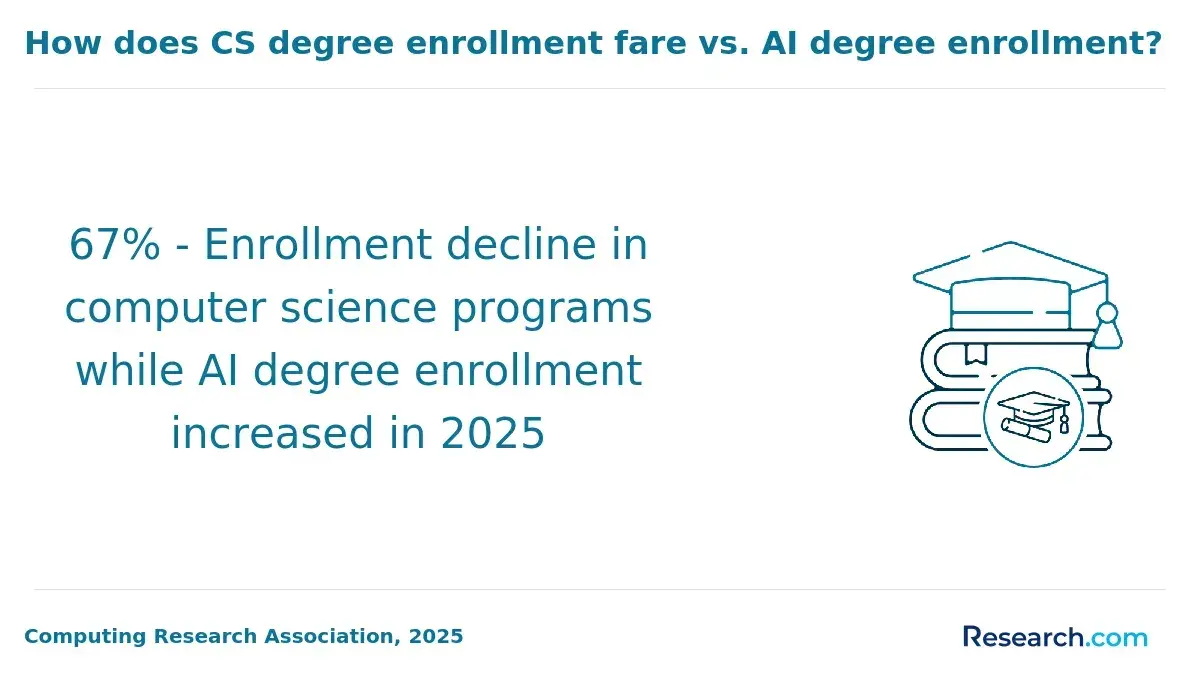
How do FutureLearn AI courses compare to U.S. university programs in rigor and depth?
FutureLearn AI courses differ significantly in rigor and depth from U.S. university programs. While U.S. university programs emphasize comprehensive, research-intensive curricula focusing on theory, mathematics, and technical foundations, FutureLearn prioritizes accessible, career-oriented learning. Many FutureLearn courses are designed for learners without formal STEM backgrounds.
Notably, 62% of those starting AI courses on FutureLearn had no prior education in computer science or data science, reflecting FutureLearn's strength in introductory and practical AI education rather than deep theoretical expertise.
U.S. university AI programs offer in-depth training essential for agentic AI development, requiring advanced prerequisites like calculus, linear algebra, and programming. These programs involve rigorous lab work and research projects, preparing students for academic careers and research roles. In contrast, FutureLearn's modular platform offers flexibility and faster upskilling.
Students interested in switching careers or gaining applied AI skills may find FutureLearn's approach suitable. Meanwhile, those aiming for deep algorithmic understanding and research positions will benefit more from U.S. university pathways. For learners exploring options, it is also worth considering a cyber security degree, which complements AI expertise in many tech fields.
- FutureLearn excels for career-focused learners without heavy prerequisites.
- U.S. universities provide rigorous agentic AI education and research opportunities.
- FutureLearn offers faster, flexible course formats versus multi-year university programs.
What prerequisites and technical background do you need for FutureLearn agentic AI courses?
FutureLearn agentic AI course technical requirements emphasize a strong foundation in programming, data structures, and basic machine learning concepts. Most courses demand proficiency in Python, the primary language for developing AI agents using frameworks such as LangGraph and LangChain. Practical skills with APIs, JSON data formats, and the software development lifecycle enhance learners' ability to complete hands-on exercises and build agentic workflows effectively.
Mathematical knowledge in linear algebra, probability, and statistics is vital since these areas support many retrieval-augmented generation (RAG) approaches used in advanced AI agents. Given that many agentic AI implementations focus on language models and prompt engineering, prior exposure to natural language processing (NLP) fundamentals is also commonly expected. These prerequisites ensure learners are better prepared to grasp complex concepts.
Beginners should be comfortable with command-line tools and version control systems like Git before tackling more advanced content such as deploying AI agents in cloud environments. Working professionals or graduates exploring prerequisites for learning agentic AI on FutureLearn benefit from understanding how agentic AI differs from traditional AI, especially in autonomous decision-making and tool integration.
By late 2024, Gartner reported that over 38% of generative-AI production deployments incorporated RAG or tool-calling agents, underlining the critical need for these technical skills in the AI job market. Prospective students should carefully evaluate their background to choose courses aligning with their career goals, ensuring a smooth and productive learning path.
Those interested in advancing their expertise might consider pursuing a data science PhD online to deepen their understanding of these core concepts and technologies.
How do FutureLearn AI certificates fit into U.S. education pathways and stack with degrees?
FutureLearn AI certificates function as valuable additions to U.S. education pathways, complementing traditional degrees with focused skill development tailored to industry demands. While not substitutes for accredited degrees, these certificates serve as effective microcredentials and professional certifications that enhance resumes and demonstrate expertise in agentic AI.
Employers and universities increasingly value these credentials for their practical application to evolving job roles. For example, a professional holding a bachelor's degree in computer science can use FutureLearn microcredentials to deepen skills in autonomous decision-making systems, boosting employability without pursuing another full degree. This modular approach enables learners to target specific career objectives efficiently.
These certificates align well with stackable credential models, allowing combination with associate or bachelor's degrees to specialize in areas such as human-agent collaboration or ethical AI development. Some institutions might offer course credit or accelerated admission for certificate holders, though policies vary and require individual verification.
Data from the Coursera & Burning Glass Institute Skills-First Employment Outcomes Report 2024 underscores their value: professionals completing AI microcredentials reported an 8-13% salary increase within a year, significantly higher than the 3-5% increase reported by those taking short MOOCs.
Prospective students should consider FutureLearn AI certificates as strategic supplements to degrees, especially for rapid upskilling in agentic AI roles demanding current, targeted expertise.
What topics and tools are typically covered in FutureLearn agentic AI course curricula?
FutureLearn's agentic AI courses cover foundational and advanced topics vital for designing autonomous AI systems. Key subjects include agent architectures, reinforcement learning, and decision-making algorithms that allow AI to act independently in dynamic settings. Students also study environment modeling, multi-agent systems, and goal-oriented behavior frameworks to understand how AI agents perceive and interact within complex environments.
The curriculum integrates practical tools like Python, TensorFlow, PyTorch, and simulation platforms such as OpenAI Gym. This hands-on approach enables learners to apply reinforcement learning and explore natural language processing and computer vision, preparing AI agents to handle diverse data inputs effectively.
Ethical and safety considerations are integral to the coursework, addressing risks in autonomous decision-making and emphasizing transparency. Real-world applications include robotics, intelligent assistants, and adaptive user interfaces, equipping students to meet industry challenges.
Compared to competitors such as Coursera, Udacity, and edX, FutureLearn has a 4.6/5 course relevance rating versus an average of 4.2, according to the HolonIQ Global EdTech Learner Survey 2024. This highlights the platform's dedication to aligning education with current industry demands and emerging trends.
Students can expect a balanced curriculum combining theory and experiential learning, providing skills applicable in sectors like autonomous vehicles, intelligent automation, and conversational AI development.
How do online FutureLearn AI courses compare with campus-based options for flexibility and support?
FutureLearn AI courses offer unmatched flexibility compared to campus-based programs, ideal for working professionals balancing education with career or personal commitments. Accessible globally and available anytime, learners can progress at their own pace without fixed schedules. This flexibility is crucial for those seeking to upskill without interrupting their employment.
While traditional campuses provide direct, face-to-face interaction and immediate feedback, FutureLearn addresses these needs through structured discussion forums, weekly tutorial videos, and live Q&A sessions that are recorded for later viewing. Many courses also include mentor support via messaging and comprehensive assessments.
Maintaining high content standards, FutureLearn partners with leading universities and industry experts, often delivering theoretical instruction comparable to or exceeding campus programs, especially in advanced topics like agentic AI and autonomous workflows.
Practical experience varies: campuses may offer labs and in-person projects, whereas FutureLearn emphasizes simulations, coding exercises, and peer-reviewed assignments that stay current with industry changes. Job postings in "AI agents" and "autonomous AI workflows" rose 187% worldwide between Q1 2024 and Q1 2025, with median salaries 22% above general software engineering, according to Lightcast.
Choosing between FutureLearn and campus education depends on your preference for schedule flexibility, direct interaction, and learning style. FutureLearn excels in adaptability and delivering industry-relevant skills.
What are typical costs of FutureLearn AI courses and how do they compare to U.S. tuition?
FutureLearn AI courses generally cost between $39 and $79 per month for access to individual programs, varying by course length and certification options. Some specialized certificates may cost up to $200 for full access with verified credentials. This flexible pricing lets learners start, pause, or finish courses at their own pace-different from the fixed semester tuition common in U.S. universities.
By comparison, median annual tuition at U.S. public universities is about $10,000 for in-state and $27,000 for out-of-state students, while private colleges often exceed $35,000 yearly. FutureLearn's monthly fees, even over several months, remain a fraction of these traditional costs, making it an affordable choice for targeted skill development in Artificial Intelligence.
Combining these courses with hands-on projects enhances cost-effectiveness. LinkedIn's "Global Future of Work: AI Skills Edition 2024" reveals learners who build portfolio projects alongside online courses are 2.3 times more likely to get interview callbacks for AI roles than those listing only course completions. This practical approach can significantly improve job prospects without incurring heavy debt from degree programs.
Consider FutureLearn as an investment in both skills and portfolio development, delivering better cost-to-career readiness than conventional tuition plans.
What careers use agentic AI skills and how do FutureLearn courses support job readiness?
Agentic AI skills open doors across technology-driven careers such as software engineering, data science, robotics, and AI product management. These roles require expertise in autonomous decision-making, reinforcement learning, and adaptive algorithms. Industries beyond tech - including finance, healthcare, marketing, and supply chain management - increasingly rely on agentic AI to enhance processes and predictive capabilities.
FutureLearn offers structured learning paths focused on practical skills with projects and case studies reflecting real-world challenges. This hands-on training prepares students for tasks like developing autonomous agents, designing intelligent systems, and implementing AI automation. For example, courses on multi-agent systems cover coordination strategies applicable in robotics, while AI ethics modules focus on managing accountability in deployment.
The platform's affordability addresses financial barriers; data from Class Central's "State of Online Learning Pricing 2024" shows FutureLearn's average paid AI course fee was under $120, significantly lower than the roughly $430 average on major US platforms. This improves return on investment for individuals seeking to upskill in agentic AI.
FutureLearn also provides flexible course schedules and credential options suited to working professionals and recent graduates. Its partnerships with universities and industry leaders keep content aligned with evolving job market needs, helping learners secure roles requiring agentic AI expertise soon after completion.
How should U.S. learners evaluate FutureLearn AI courses for quality, credibility, and recognition?
U.S. learners assessing FutureLearn AI courses should focus on the credentials of course providers and instructors. Established universities or respected research institutions often ensure rigorous, reliable content. Look for instructor bios detailing expertise in agentic AI, including relevant publications or industry experience. Clear syllabi that define learning goals, practical applications, and cover the latest agentic AI advancements add to course quality.
Accreditation or external validation from recognized organizations boosts credibility. Partnerships with notable technology companies or endorsements by expert AI bodies provide additional assurance. Certificates that employers or professional bodies recognize make course completion more valuable for career advancement.
Courses featuring practical projects and assessments simulating real-world agentic AI, such as autonomous agent design, multi-agent systems, or ethical AI decision-making, offer significant benefits. According to Gartner, by 2026, 40% of enterprise-scale generative AI will involve autonomous or semi-autonomous agents, highlighting the importance of mastering these skills.
Reviews from past participants, especially U.S. professionals, reveal course relevance and difficulty. Flexible pacing and access to supplemental materials also affect learning outcomes for working students. Comparing course costs with content depth and recognition helps determine a worthwhile educational investment in agentic AI.
Other Things You Should Know About Artificial Intelligence
In 2027, FutureLearn offers courses like "AI for Social Good" and "Responsible AI" that address ethical considerations in AI development. These courses cover topics such as bias prevention, transparency, and the societal impact of AI technologies, ensuring learners understand the critical ethical challenges in AI.
Artificial intelligence is transforming job markets by automating repetitive tasks and augmenting human roles with intelligent tools. While some routine jobs may decline, AI also creates opportunities in developing, managing, and maintaining AI systems. Reskilling and upskilling workers to work alongside AI technologies are critical for adapting to these changes.
Practical AI applications commonly employ narrow AI, which specializes in specific tasks like image recognition, natural language processing, and recommendation engines. Examples include virtual assistants, fraud detection systems, and autonomous vehicles. General AI, with human-like cognitive abilities, remains largely theoretical and experimental at this stage.
Staying current in artificial intelligence requires continuous education through courses, workshops, and conferences, as well as following reputable research publications and industry news. Engaging in AI communities and hands-on projects helps deepen understanding of emerging trends and technologies. Lifelong learning is essential in this rapidly evolving field.
References
- FutureLearn Review 2026: Pricing, Courses & Certificates https://www.myengineeringbuddy.com/blog/futurelearn-reviews-alternatives-pricing-offerings/
- 30+ Agent-Based Systems Online Courses for 2026 | Explore Free Courses & Certifications | Class Central https://www.classcentral.com/subject/agent-based-systems
- Agentic AI Course with Advanced Training and Certification https://www.edureka.co/agentic-ai-training-course
- What Does Agentic AI Mean for Learning and Development? - GP Strategies https://www.gpstrategies.com/blog/what-does-agentic-ai-mean-for-learning-and-development/
- The Future of Tech Jobs : Skills You Need Before 2027 to Work with Agentic AI - Asquare Technologies https://asquaretechnologiesweb.com/future-tech-jobs-agentic-ai-skills-2027/
- Evaluating Online Education: Key Criteria for Genuine E-Learning Platforms https://elqn.org/evaluating-the-quality-of-online-education-key-criteria/
- Medical Assistant Training https://cambridgeopenacademy.com/how-ai-agents-will-impact-work-learning-and-everyday-life-by-2030/
- Comparative Analysis Vision of Worldwide AI Courses https://arxiv.org/html/2407.16881v1
- FutureLearn Review 2026: Is It Worth It? Pricing & Verdict https://e-student.org/futurelearn-review/
- AI Drives Demand for Credential Programs in Higher Ed https://www.govtech.com/education/higher-ed/ai-drives-demand-for-credential-programs-in-higher-ed