2027 Best AI Strategy Courses for Demand Planning Teams

Co-Founder and Chief Data Scientist
Demand planning teams often struggle to leverage AI effectively due to rapidly changing market conditions and massive data influx. Predictive accuracy can suffer when traditional methods fall short, leading to costly inventory imbalances and missed opportunities. Upskilling in AI strategies tailored for demand planning is critical to overcome these challenges and optimize forecasts.
This article reviews top courses designed to equip professionals with practical skills in AI-driven demand planning, focusing on flexibility, accreditation, and relevance to industry needs. It aims to guide readers toward educational paths that enhance their ability to implement AI solutions in dynamic demand environments.
Key Things You Should Know
- Demand planning teams increasingly rely on artificial intelligence courses to enhance forecasting accuracy, with 70% of top firms adopting AI-driven tools by 2025 for improved inventory management.
- Courses focus on machine learning applications in supply chain optimization, blending statistical methods with AI to reduce demand variability by up to 30%.
- Practical training in AI strategy equips professionals to implement advanced analytics, aligning with a 40% projected growth in AI-related demand planning roles through 2030.
Advance Your Career with AI Online Courses
Artificial Intelligence: Implications for Business Strategy
This program provides an introduction to Artificial Intelligence and their implications for business strategy. Earn an official digital certificate.

Oxford Artificial Intelligence Programme
Explore this Oxford Artificial Intelligence programme offered in a flexible learning environment and explore topics like machine learning, automation, and robotics.

Implementing Agentic AI: Building Your Organizational Playbook
This online MIT Agentic AI course offers a practical approach to deploying AI agents in your organization, including a custom playbook. 3 weeks, exclusive launch price.

AI Adoption: Driving Business Value and Impact
This online MIT AI Adoption: Driving Business Value and Impact offers practical frameworks to close the gap between AI potential and business reality.

Artificial Intelligence in Pharma and Biotech
Discover the applications and limitations of artificial intelligence in pharma and biotech with this MIT online short course.

What are the best AI strategy courses for demand planning teams?
Top AI strategy courses for demand planning teams focus on building practical skills in machine learning integration, data analytics, and supply chain optimization. Notable programs, such as MIT Professional Education's "Artificial Intelligence: Implications for Business Strategy," offer specialized modules on AI-driven forecasting enhancements that help reduce inventory and increase operational efficiency.
Many leading platforms like Coursera and edX provide accessible options, including courses such as "AI for Everyone" by Andrew Ng and "Artificial Intelligence in Supply Chains" from prestigious universities. These courses combine foundational knowledge with case studies addressing demand variability and lead-time reduction, making them some of the best AI strategy courses for demand planning teams.
For more advanced learners, nano-degree programs from Udacity and LinkedIn Learning incorporate hands-on projects in predictive analytics and reinforcement learning, tailored for supply chain professionals aiming to automate decision-making amidst uncertainty. Emphasizing in-demand software like Python, R, and ERP systems is key in these top artificial intelligence training programs for supply chain demand planning.
According to McKinsey, companies leveraging AI extensively in supply chain planning can boost forecasting accuracy by 10-20%, reduce inventory by 5%, and increase EBIT by up to 3%. Demand planners exploring 'What can you do with an applied artificial intelligence degree?' will find these programs valuable for measurable supply chain improvements.
Advance Your Career with AI Online Courses
Artificial Intelligence: Implications for Business Strategy
This program provides an introduction to Artificial Intelligence and their implications for business strategy. Earn an official digital certificate.
Oxford Artificial Intelligence Programme
Explore this Oxford Artificial Intelligence programme offered in a flexible learning environment and explore topics like machine learning, automation, and robotics.
Implementing Agentic AI: Building Your Organizational Playbook
This online MIT Agentic AI course offers a practical approach to deploying AI agents in your organization, including a custom playbook. 3 weeks, exclusive launch price.
How do you choose an accredited AI strategy program?
Selecting the best accredited AI strategy programs for supply chain professionals involves verifying accreditation from recognized bodies like ABET or AACSB to ensure academic rigor. These programs often focus on AI models, data analytics, and supply chain integration, which are essential for demand planning teams adapting to emerging technologies.
Faculty expertise is another critical factor. Programs led by instructors with real-world AI deployment experience in supply chain contexts provide students with valuable insights and stronger industry connections. Partnerships with enterprises also enhance learning through internships and project-based experiences. Flexible delivery formats such as part-time, online, or hybrid options accommodate working professionals balancing other commitments.
Graduation rates, student support, and career placement statistics offer transparency about program quality. Alumni outcomes specifically in roles involving AI strategy and demand planning indicate a program's effectiveness. As Gartner projects that over half of large global enterprises will adopt AI-enabled demand forecasting by 2027, training aligned with current tools and platforms is especially valuable.
For North American students seeking AI strategy courses for demand planning teams, finding affordable and accredited options is key. Exploring resources like the cheapest online mechanical engineering degree options can provide insights into cost-effective pathways within related technical fields.
What skills do demand planning teams need from AI training?
Demand planning teams benefit greatly from mastering essential AI skills for demand planning teams, including data analysis and interpretation. Proficiency in processing large datasets and extracting actionable insights from AI-driven forecasts allows for more accurate predictions of market demand and customer behavior.
Advanced knowledge of AI algorithms such as machine learning models, neural networks, and time series analysis is critical. These competencies enable teams to evaluate and optimize model outputs, ensuring AI tools integrate effectively within supply chain forecasting.
Scenario planning and simulation skills are also vital. AI-powered demand planning leverages multiple scenarios to manage risks like supply chain disruptions and rapid market changes, helping teams make swift, informed decisions. Such skills form part of a broader set of ai training competencies for supply chain forecasting.
Strong communication and collaboration abilities are essential to translate AI findings into actionable business strategies. Demand planners must coordinate with sales, operations, and finance departments to align forecasts with operational goals and budgets.
Awareness of operational impacts, including change management, data governance, and ethical AI considerations, supports smooth technology adoption and regulatory compliance. A QAD case analysis highlights that AI-driven demand planning can reduce stockouts by up to 65% and excess inventory by up to 40%, improving working capital and service levels significantly.
For those exploring educational options in related fields, an online game design degree offers valuable insights into AI applications and development methodologies that may complement a career in AI-driven planning roles.
Are online AI strategy courses better than campus programs?
Online AI strategy courses often surpass campus programs for demand planning teams focused on acquiring immediate, practical skills. These courses provide flexible, updated content on evolving AI tools, essential since over 70% of companies are piloting or using AI in demand planning, yet fewer than 25% have staff with sufficient data science skills to fully leverage these technologies, according to B EYE.
In contrast, campus programs tend to follow fixed, lengthy curricula that can fall behind the latest AI developments relevant to demand planners. Advantages of online AI strategy training for demand planners include:
- Access to specialized modules on AI-driven forecasting, machine learning applications, and demand signal processing directly applicable to supply chain scenarios.
- Asynchronous learning options allowing professionals to balance work while upgrading critical data science competencies.
- Practical, case-based training and simulation environments often unavailable in traditional campus settings.
- Collaboration with global peers and instructors familiar with market trends through virtual forums and direct feedback.
Campus programs still offer benefits such as structured mentoring, physical labs, and recognized academic credentials, appealing to those seeking comprehensive theory or career shifts into AI research. However, for demand planning teams emphasizing actionable skills, online courses deliver superior speed and relevancy, with hands-on training using Python libraries completed within weeks instead of a full semester.
Students should assess their skill gaps, timelines, and preferred learning modes. For those considering advanced paths, PhD data science online programs provide rigorous research opportunities. Ultimately, online AI strategy courses provide the most direct way to bridge critical skill shortages for demand planners today.
What topics should an AI strategy course cover for demand planning?
Effective AI strategy training for demand planning teams focuses on practical skills that improve forecasting accuracy and operational decision-making. This includes machine learning techniques to analyze customer demand patterns and address challenges posed by noisy and incomplete supply chain data. Data preparation and feature engineering are foundational skills, enabling teams to build reliable predictive models.
Key predictive analytics methods include time series analysis, regression, and deep learning, all tailored to inventory and supply chain management challenges. These approaches help identify demand trends, seasonality, and underlying causal factors. Integrating AI models with enterprise resource planning (ERP) systems or demand planning tools supports automation and real-time insights, empowering planners with faster, data-driven decisions.
- Ethics and compliance in AI use within supply chains, ensuring transparency and fairness
- Visualization and communication of AI-generated insights to align stakeholders
- Real-world use cases demonstrating AI's impact on reducing forecasting errors and optimizing costs
According to Anaplan, 74% of supply chain leaders intend to boost investments in AI and advanced analytics for demand planning within the next 2 years. This trend highlights the growing need for AI education that offers scalable, actionable strategies aligned with dynamic business environments. Practical training in current tools and frameworks enhances readiness to manage volatility and build resilience throughout the supply chain.
What admission requirements do AI strategy programs usually ask for?
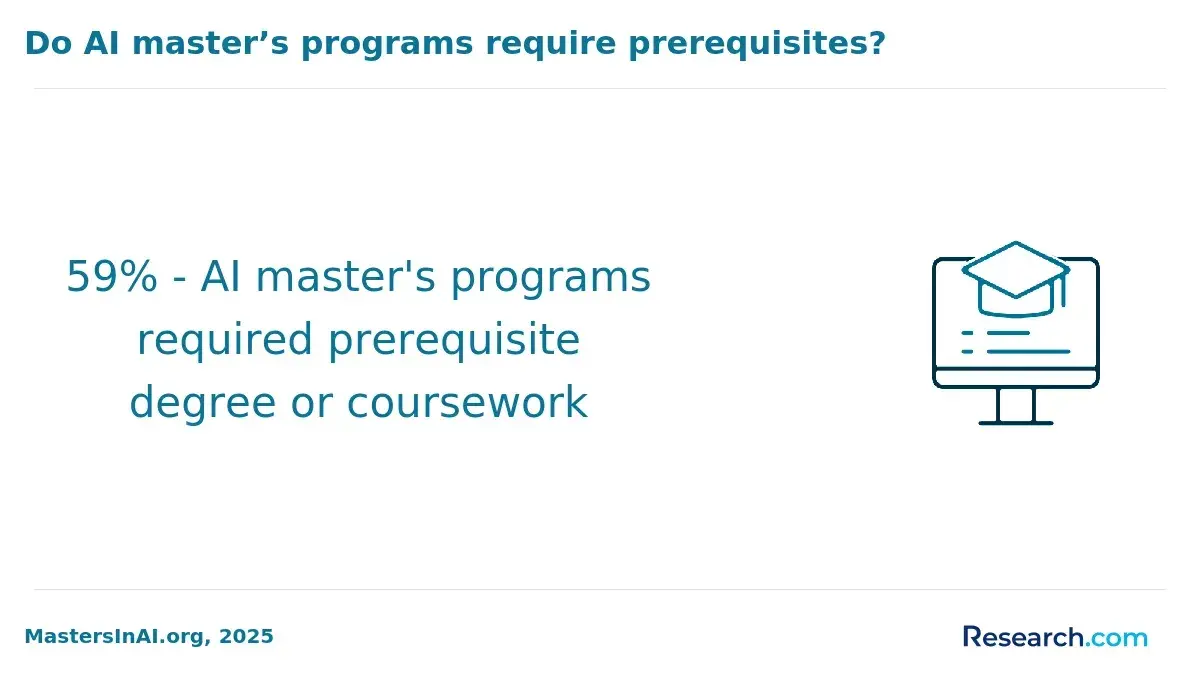
AI strategy programs for demand planning professionals generally require a bachelor's degree in fields like business, supply chain management, computer science, or engineering. Strong foundations in data analytics, quantitative methods, or operational management are often expected to support practical applications in supply chain roles. Many programs also value 1-3 years of related work experience to link theory with real-world challenges.
Applicants usually need to provide transcripts demonstrating proficiency in quantitative subjects such as statistics, mathematics, or programming. Some institutions may still require standardized test scores like the GRE, although this is increasingly waived for candidates with relevant experience or strong academic records. Letters of recommendation highlighting analytical thinking, problem-solving, and project management skills enhance applications.
Certificate and online programs tend to have fewer entry barriers, allowing professionals without advanced degrees to participate. These programs often require a statement of purpose outlining career goals in AI-driven supply chains. Familiarity with demand forecasting software, machine learning basics, and coding skills in Python or R offers a strong advantage.
- Applicants should demonstrate skills in analyzing large datasets and applying AI tools for inventory and demand management.
- Proficiency in statistical modeling and adaptive planning techniques reflects current industry needs.
- Courses like LinkedIn Learning's "AI-Driven Supply Chain Manager" showcase AI's role in reducing manual planning by 30-50%.
How long do AI strategy courses usually take to complete?
AI strategy courses designed for demand planning teams typically take between four and twelve weeks to finish. Many programs accommodate working professionals with part-time schedules lasting 8 to 10 weeks, requiring about 5 to 8 hours weekly. Accelerated bootcamps offer intensive training in just 2 to 4 weeks but need full-time focus. Courses extending over 12 weeks often provide in-depth coverage of AI integration, data analytics, and forecasting optimization within supply chains.
Course duration depends on depth and delivery mode. Shorter options cover foundational AI concepts and practical demand planning applications. Longer programs explore AI model development and strategic deployment within Integrated Business Planning (IBP). Significantly, Oliver Wight reports that organizations embedding AI in formal IBP are twice as likely to achieve sustained forecast accuracy improvements above 15% versus those applying AI in isolation.
Prospective learners should prioritize curricula featuring hands-on exercises and cross-functional collaboration, as practical experience accelerates skill mastery. Many courses blend live instruction with self-paced content, balancing flexibility and interaction. Employers often prefer 6 to 10-week courses to align with corporate upskilling timelines while minimizing workplace disruption.
The choice of AI strategy courses for demand planning should reflect professional availability, desired depth, and focus on embedding AI within IBP frameworks to enhance learning relevance and outcomes.
What do AI strategy courses cost for professionals and teams?
Costs for AI strategy courses aimed at demand planning professionals vary widely based on course length, depth, and provider. Individual learners can expect to pay between $300 and $2,500 for specialized online programs focusing on AI applications in supply chain and forecasting. Shorter workshops or certificate programs typically range from $300 to $800, offering foundational skills without requiring significant time commitments.
Corporate or team training often demands higher investments, starting near $5,000 and exceeding $20,000 for customized in-house programs or vendor-led workshops. These packages generally include multi-day sessions, hands-on projects, and ongoing consulting, designed for demand planning teams integrating AI tools to enhance forecasting accuracy across business units.
Organizations transitioning from traditional statistical methods to AI-enhanced forecasting have reported forecast error reductions of 20-30% on key product portfolios, highlighting the value of targeted AI education for operational improvement.
Pricing models commonly include:
- Subscription-based access at $50-$150/month for ongoing learning paths.
- Pay-per-course fees ranging from $500 to $1,500 for specific modules.
- Enterprise licenses allowing multiple team members access to comprehensive curricula.
Professionals should evaluate their objectives-whether upgrading skills swiftly or building extensive team capabilities-and consider course transparency in outcomes and case applications. The return on investment comes from improved accuracy and operational efficiency, justifying premium courses tailored to demand planning teams.
What jobs can AI strategy training support in demand planning?
AI strategy training empowers various roles within demand planning teams by providing advanced tools to improve forecasting accuracy and operational efficiency. Demand planners benefit by using AI-enabled forecasting platforms that analyze millions of data points in minutes, offering real-time updates and outperforming traditional batch planning cycles by over five times in speed, as noted in AI Platforms and Technologies for Demand Planning: Procurement Tactics.
Other professionals such as inventory managers leverage this knowledge to optimize stock levels and minimize excess inventory with dynamic demand sensing. Supply chain analysts apply AI insights to enhance procurement and production scheduling while mitigating risks from market changes. Sales operations managers align forecasts with demand patterns to strengthen collaboration between sales and supply teams.
Data scientists and business analysts develop custom machine learning models to extract actionable insights, supporting rapid scenario planning and responsiveness in volatile markets. Product managers use AI forecasts to prioritize product launches and adapt strategies based on predicted consumer behavior.
Effective AI education addresses challenges like data quality, integrating diverse sources, and ensuring model interpretability. Mastering these areas enhances cross-functional decisions, enabling demand planning teams to deliver measurable agility and value in evolving supply chains.
What certifications help validate AI strategy expertise in demand planning?
Certifications that validate expertise in AI strategy for demand planning combine data science, machine learning, and supply chain fundamentals. Leading credentials include the Certified AI Practitioner (CAIP) from the AI Institute, which focuses on practical AI applications in business processes like demand forecasting. It covers essential skills such as model selection, interpretability, and scenario analysis for effective AI-driven demand planning.
The APICS Certified Supply Chain Professional (CSCP) with specialized AI strategy modules equips professionals with knowledge on integrating AI into supply chain and demand planning operations. This certification emphasizes AI-driven demand sensing and predictive analytics, which are critical as generative AI is forecasted by Anaplan's webinar to assist over 60% of planners by 2028, up from less than 5% in 2024.
Additional valuable credentials include the Microsoft Certified: Azure AI Engineer Associate and the IBM AI Enterprise Workflow Practitioner. They focus on deploying AI solutions at scale, automating workflows, and interpreting AI insights-skills crucial for managing AI-enhanced demand planning environments. They also teach validation of AI outputs to ensure alignment with business goals.
Practical experience with platforms like Anaplan or SAP Integrated Business Planning, combined with these certifications, gives demand planners the operational expertise necessary to handle scenario creation and forecast explanation in rapidly evolving AI landscapes.
Other Things You Should Know About Artificial Intelligence
Artificial intelligence enhances demand planning by enabling more accurate forecasting through machine learning models that analyze large datasets. It automates routine tasks such as data collection and trend analysis, freeing up time for strategic decision-making. This leads to improved inventory management, reduced waste, and better responsiveness to market changes.
Key challenges in adopting artificial intelligence for demand planning include data quality and integration issues, as accurate AI models depend on reliable and comprehensive datasets. Organizations may also face resistance from staff due to changes in workflows. Additionally, deploying AI solutions requires initial investment in technology and training.
Yes, artificial intelligence models can be tailored to meet the unique needs of various industries involved in demand planning. Customization involves selecting relevant input variables, adapting algorithms to industry-specific patterns, and incorporating domain knowledge to improve forecast accuracy and relevance.
In 2027, leading AI strategy courses for demand planning teams include offerings from Coursera, edX, and LinkedIn Learning. These courses focus on integrating AI tools into demand planning, enhancing forecasting accuracy, and optimizing inventory management through real-time data analytics.
References
- Artificial Intelligence Degree Admission Requirements: What You Need https://hakia.com/degrees/artificial-intelligence/admission-requirements/
- AI Training Cost Per Employee 2026 https://www.pertamapartners.com/insights/cost-per-employee-ai-training-budgeting
- Certifications > Other Certifications https://www.ipscmi.org/Other_Certifications/CAIPSCM/
- Professional AI Training: How to Choose the Right Program https://www.strategicaileader.com/professional-ai-training-how-to-choose-the-right-program/
- Demand Planning Software Solutions: Best AI-Powered Tools For 2026 https://monday.com/blog/crm-and-sales/demand-planning-software/
- Certified Predictive Analytics and AI in Inventory Optimization, Demand Planning and Forecasting https://charteredcertifications.com/learning/courses/predictive-analytics-ai
- AI in Demand Planning for Accuracy & Efficiency | StockIQ https://stockiqtech.com/blog/ai-in-demand-planning/
- Membership | Master AI Skills That Matter https://www.sectionai.com/membership
- How long are AI ML courses - IABAC https://iabac.org/blog/how-long-are-ai-ml-courses
- AI - Artificial Intelligence | London Business School https://www.london.edu/executive-education/ai