2027 Best AI Strategy Courses for Logistics Optimization Teams

Co-Founder and Chief Data Scientist
Logistics optimization teams often face challenges in managing complex supply chains, fluctuating demand, and cost efficiency. Without strategic insights into artificial intelligence applications, companies can struggle to implement effective solutions that enhance route planning, inventory management, and predictive maintenance. This gap hampers operational agility and competitive advantage in a fast-evolving market.
Addressing these issues requires specialized knowledge that bridges logistics expertise with AI strategy. This article highlights the best AI strategy courses designed to equip logistics professionals with practical skills, enabling them to leverage AI-driven tools and methodologies to optimize their operations effectively.
Key Things You Should Know
- Top AI strategy courses for logistics focus on practical skills like predictive analytics and supply chain automation to enhance operational efficiency and reduce costs by up to 30%.
- Programs increasingly incorporate hands-on projects using machine learning models tailored for logistics challenges, aligning with industry demands reported to grow 25% annually through 2025.
- Many courses offer flexible formats and certifications recognized by Fortune 500 logistics firms, supporting career advancement in a sector employing over 500,000 U.S. professionals.
Advance Your Career with AI Online Courses
Artificial Intelligence: Implications for Business Strategy
This program provides an introduction to Artificial Intelligence and their implications for business strategy. Earn an official digital certificate.

Oxford Artificial Intelligence Programme
Explore this Oxford Artificial Intelligence programme offered in a flexible learning environment and explore topics like machine learning, automation, and robotics.

Implementing Agentic AI: Building Your Organizational Playbook
This online MIT Agentic AI course offers a practical approach to deploying AI agents in your organization, including a custom playbook. 3 weeks, exclusive launch price.

AI Adoption: Driving Business Value and Impact
This online MIT AI Adoption: Driving Business Value and Impact offers practical frameworks to close the gap between AI potential and business reality.

Artificial Intelligence in Pharma and Biotech
Discover the applications and limitations of artificial intelligence in pharma and biotech with this MIT online short course.

What is an AI strategy course for logistics optimization teams and who should take it?
AI strategy courses for logistics optimization teams focus on integrating artificial intelligence technologies into supply chain and logistics operations to improve efficiency and reduce costs. These courses cover critical topics such as demand forecasting, route optimization, inventory management, and real-time decision-making using AI tools. Participants are trained to evaluate business needs, choose suitable AI models, and deploy scalable solutions tailored for logistics challenges.
This type of ai applications in logistics management training is valuable for logistics managers, supply chain analysts, operations directors, and IT professionals who manage or support logistics systems. For instance, logistics managers can leverage machine learning models for predicting delivery delays and dynamically rerouting shipments. Data scientists working in this sector also gain specialized skills in AI algorithms designed to address distribution complexities.
With market complexities and digital transformation accelerating, organizations benefit by upskilling teams through these courses. McKinsey's Generative AI in Operations survey highlights that supply-chain and logistics use cases could generate $1.2-$2.0 trillion in annual global economic value, emphasizing why understanding AI application is essential for professionals to stay competitive.
These courses blend technical AI knowledge with business strategy, enabling learners to bridge gaps between IT and operations. Examples include AI-driven risk assessment to optimize supply chain resilience and smart robotics for enhanced warehouse automation. For those exploring career opportunities in this growing field, exploring an AI career path can provide valuable insights and guidance.
Advance Your Career with AI Online Courses
Artificial Intelligence: Implications for Business Strategy
This program provides an introduction to Artificial Intelligence and their implications for business strategy. Earn an official digital certificate.
Oxford Artificial Intelligence Programme
Explore this Oxford Artificial Intelligence programme offered in a flexible learning environment and explore topics like machine learning, automation, and robotics.
Implementing Agentic AI: Building Your Organizational Playbook
This online MIT Agentic AI course offers a practical approach to deploying AI agents in your organization, including a custom playbook. 3 weeks, exclusive launch price.
How can AI strategy training improve supply chain and logistics optimization performance?
AI strategy training significantly enhances logistics performance improvement through artificial intelligence training by equipping teams with skills to analyze complex data, automate decision-making, and predict demand fluctuations. Trained professionals apply machine learning models to optimize routing, reduce inventory costs, and increase supply responsiveness. Predictive analytics, for example, forecast shipment delays so companies can proactively minimize disruptions.
With growing demand for AI-educated professionals, 68% of large supply chain organizations plan to increase hiring for AI and advanced analytics roles in the next few years, while 27% already struggle to fill these positions. This talent shortage underlines the importance of specialized training in AI-driven supply chain optimization strategies as a key competitive advantage.
Practical courses cover essential techniques like demand forecasting, warehouse automation, and real-time data integration. These skills enable teams to streamline operations, reduce waste, and enhance service levels. They also learn to customize AI for challenges such as last-mile delivery optimization or cold chain management.
AI training supports advanced scenario planning and risk management, allowing organizations to simulate disruptions and develop agile contingency plans. For those interested in expanding their expertise, pursuing an online engineering degree can be a strategic step towards mastering these competencies.
What types of AI strategy programs exist for logistics teams, and which credentials matter most?
AI strategy programs for logistics teams include foundational courses, specialized certifications, and executive training. Foundational courses introduce core AI concepts and data analytics tailored for logistics professionals new to AI-driven supply chains. Specialized certifications focus on areas like predictive analytics, machine learning integration, and AI-powered demand forecasting, helping teams acquire targeted skills for precise operational improvements. Executive training emphasizes strategic decision-making using AI insights, designed for logistics leaders managing AI adoption and transformation.
Credentials with the most value highlight practical application and are issued by recognized academic or industry bodies. Accredited programs from organizations such as APICS (now part of ASCM) or MIT's AI in Supply Chain courses demonstrate relevant expertise. Employers seek proof of hands-on experience, favoring certifications that include case studies, projects, or simulations based on real logistics scenarios. For professionals searching for the best accredited AI programs for supply chain optimization, emphasizing recognized credentials and applied learning is essential.
ROI data supports investing in such education. A Capgemini Research Institute study finds companies scaling AI in logistics realize an average 18% reduction in operating costs and a 15% improvement in on-time, in-full deliveries. This highlights the importance of developing skills to strategically implement AI for measurable benefits.
Evaluation criteria for AI strategy courses for logistics teams with certification include:
- Relevance of curriculum to current supply chain challenges.
- Hands-on training with tools like Python, R, or logistics-specific platforms.
- Opportunities for real-world data projects.
- Recognition by industry and employers.
Those seeking to broaden their technical and strategic expertise may also consider an online game development degree as a supplementary pathway to master programming and data analytics skills applicable across fields.
How do online AI strategy courses for logistics compare with campus and hybrid options?
Online AI strategy courses for logistics optimization provide flexible, modular formats that allow professionals to upskill without disrupting work schedules. Compared to campus options, these online programs update curricula more frequently to keep pace with fast-evolving AI applications such as predictive analytics and autonomous supply chain management. This agility is crucial, as delays in adoption risk a significant EBITDA margin decline, according to Accenture's 2024 Supply Chain Disruption study.
Campus vs online AI strategy training for logistics teams often highlights the benefits of face-to-face collaboration and hands-on labs in campus programs. However, campus courses tend to have fixed schedules and limited enrollment, which may not suit time-sensitive professionals. Hybrid models attempt to blend both methods but can still face scheduling challenges and resource limits.
Online platforms also expand access to global expert instructors and peer networks, which enhances learning beyond regional boundaries. Employers upskilling entire logistics teams appreciate scalable enrollment and cost savings from travel and relocation. For instance, logistics managers can complete focused modules on demand forecasting in weeks rather than months.
Professionals interested in advancing their education in related fields may also explore options like online PhD data science, which complements AI strategy expertise with advanced analytics and research skills.
What core topics and tools are covered in leading AI strategy logistics curricula?
Leading AI strategy courses for logistics optimization cover essential topics that improve supply chain efficiency by applying machine learning techniques. Core areas include demand forecasting, inventory management, and route planning, with a focus on supervised and unsupervised learning tailored to logistics data. Students train in predictive analytics to minimize stockouts and excess inventory risks.
Data integration and quality management are critical modules, enabling students to harmonize various data sources for accurate modeling. Courses also address AI governance and ethical issues, helping fill the 31% gap in formal training on model risk and compliance highlighted in Deloitte's 2024 Global Supply Chain Digital and AI Survey.
Hands-on experience with popular AI tools like Python libraries (TensorFlow, PyTorch), optimization software (Gurobi, CPLEX), and cloud platforms (AWS SageMaker, Google AI Platform) is commonly included. Learners explore automated decision-making systems for improving last-mile delivery and warehouse operations.
Additional focus areas include:
- Real-time demand sensing and adaptive inventory control techniques.
- Scenario analysis using reinforcement learning.
- Risk assessment frameworks with uncertainty quantification.
- Integration of Internet of Things (IoT) data streams for enhanced visibility..
- Collaborative AI frameworks for supplier and distributor coordination.
These topics align with the reality that 82% of high-performing supply chains leverage AI for forecasting and optimization, while also emphasizing governance skills crucial for sustainable AI deployment.
What are the typical admission requirements and prerequisites for these AI logistics programs?
Admission requirements for AI logistics programs generally include a bachelor's degree in fields like supply chain management, industrial engineering, computer science, or business analytics. Many programs also look for foundational knowledge in statistics, programming (commonly Python or R), and data analysis. Some universities require completion of courses in linear algebra or probability to ensure students can handle AI modeling techniques effectively.
Professional experience in logistics or operations is often needed, especially for executive or advanced certificate programs. Typically, 2 to 5 years of experience in roles such as supply chain planning, warehouse management, or transportation optimization is preferred. This background enables students to apply AI concepts to practical challenges.
Short-term AI logistics courses lasting under eight weeks tend to have more accessible entry requirements. According to the 2024 LinkedIn Workplace Learning Report, 76% of operations and supply chain professionals prefer these fast upskilling options, which usually require only basic computer literacy and introductory AI or machine learning knowledge.
Some programs may require technical assessments or interviews to evaluate candidate readiness. Familiarity with tools like SQL, Tableau, or cloud services is often recommended but not mandatory. In summary, strong quantitative skills, relevant work experience, and basic programming literacy remain the main admission criteria. Prospective students should review each program's specific requirements to ensure alignment with their background and the course's technical demands.
How long do AI strategy courses for logistics take, and what do they cost?
AI strategy courses tailored for logistics optimization teams vary widely in length and format. Short workshops or bootcamps typically span 2 to 5 days, focusing on specific AI tools and frameworks for rapid skill development. More comprehensive certificate programs for professionals usually last 8 to 16 weeks, combining theory, case studies, and hands-on projects. Self-paced online courses can extend up to 6 months, offering flexibility but requiring strong self-discipline.
Costs depend on the format and provider: short workshops cost between $500 and $2,000, while professional certificate programs range from $2,000 to $8,000. Graduate-level or specialized industry certifications often exceed $10,000, targeting those seeking in-depth strategic expertise. Companies have increased per-employee training spending by 38% year-over-year, emphasizing the growing importance of customized AI education for operational efficiency in logistics.
For logistics teams, courses integrating practical modules in predictive analytics, demand forecasting, and supply chain decision support offer the most value. Professionals should match course duration and cost with their specific challenges-shorter courses for immediate adoption of AI tools and longer programs for building strategic leadership in AI-driven logistics transformation.
How can professionals evaluate accreditation and industry recognition of AI logistics programs?
Verifying accreditation from recognized authorities like U.S. Department of Education-approved bodies or the Council for Higher Education Accreditation (CHEA) is essential when evaluating AI logistics programs. Such accreditations guarantee curriculum quality and ensure credentials hold professional value. Additionally, programs partnered with top industry players, such as IBM or Amazon Logistics, often provide relevant, up-to-date content and stronger networking opportunities.
Alumni success offers insight into a program's impact. Graduates advancing in supply chain careers or driving logistics innovation highlight practical learning outcomes. Look also for integrated, industry-recognized credentials like the Certified Supply Chain Professional (CSCP) or data analytics certifications for validation of applied skills.
Program transparency regarding outcomes is crucial. Published employment rates, salary growth, or productivity improvements can indicate real-world benefits. PwC's 2024 Global AI Jobs Barometer reports operational employees with structured AI training see a 40% median productivity gain in data-intensive tasks and a 59% higher likelihood of workflow redesign, underscoring the value of proven program results.
Faculty expertise and advisory boards with recognized AI and supply chain professionals further strengthen program credibility. Independent accreditations from industry bodies such as the Institute for Operations Research and the Management Sciences (INFORMS) and the Association for Supply Chain Management (ASCM) should be considered when choosing a program.
What logistics and supply chain roles, salaries, and career paths follow this AI training?
AI strategy courses in logistics and supply chain prepare professionals for leadership and specialized roles such as supply chain analysts, logistics managers, AI implementation consultants, and supply chain directors. These positions focus on designing AI-driven processes to enhance forecasting, inventory management, and transportation efficiency.
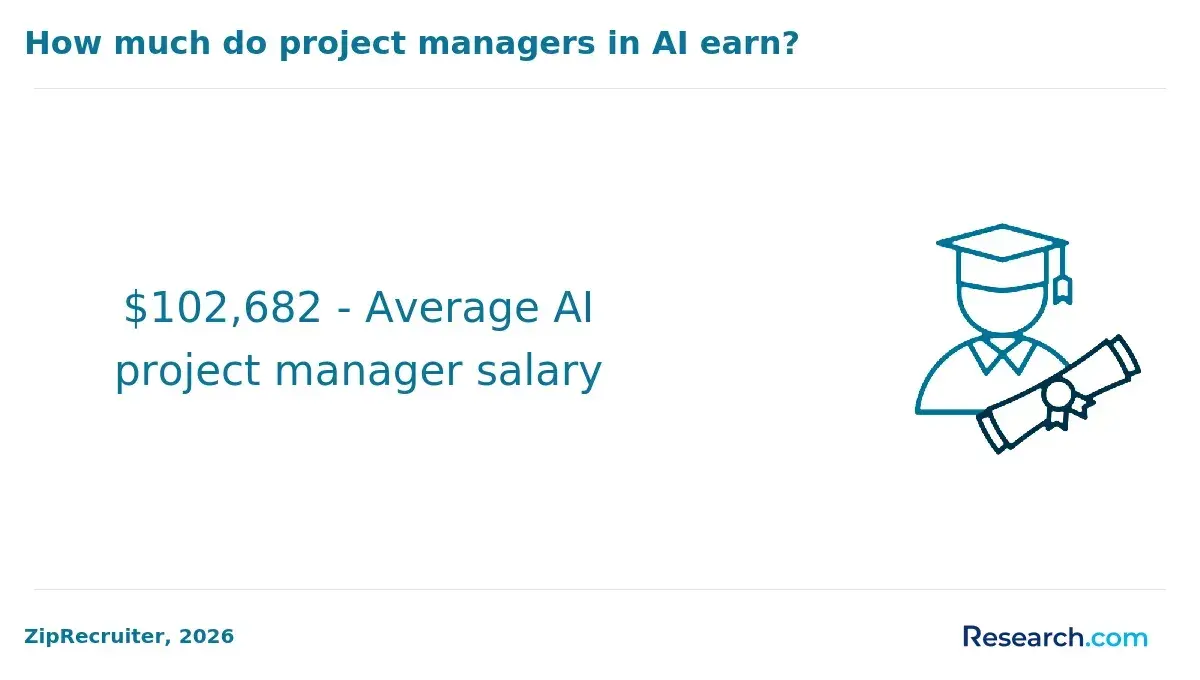
Salaries vary by role and experience: entry-level supply chain analysts earn $65,000-$85,000 annually, mid-level logistics managers and AI project leads range from $90,000 to $130,000, and senior supply chain directors or AI strategy consultants often surpass $150,000 per year. Career progression typically moves from data analyst roles to management positions that combine domain expertise with AI proficiency.
Specializing in AI technologies for demand forecasting or warehouse automation can accelerate career advancement. Many professionals transition into hybrid roles like AI strategy advisors or supply chain innovation leads, bridging business and technology. Challenges include integrating AI with legacy systems and aligning initiatives with business goals, highlighting the need for strong communication and ongoing education.
A 2024 KPMG survey on AI readiness found that only 29% of supply-chain leaders felt confident setting AI strategy; however, leaders with formal AI education were 2.3 times more likely to achieve above-average supply chain performance. This underscores the significant impact of AI strategy courses on both individual careers and organizational success.
How should teams choose the best AI strategy course for their logistics optimization goals?
Teams aiming to excel in AI strategy for logistics optimization should focus on courses that directly address their specific challenges, such as inventory management, route planning, or demand forecasting. Prioritizing courses that emphasize real-time data analytics and predictive modeling can be crucial for reducing delivery times and improving efficiency.
Effective programs typically cover machine learning algorithms, data integration from logistics platforms, and supply chain optimization techniques. Look for courses offering hands-on projects or case studies simulating real logistics environments, which enhance practical skills. It's also important to ensure the curriculum includes current tools and frameworks relevant to today's industry demands.
Instructor expertise is vital-programs led by professionals experienced in both logistics and AI provide valuable insights and networking opportunities. Consider whether course format and scheduling fit your team's needs, including online or in-person options.
Certification recognized by industry bodies adds credibility and supports internal adoption of new capabilities. Access to specialized software or datasets can further strengthen practical competence. According to Boston Consulting Group's 2024 logistics automation outlook, AI-driven planning and optimization could cut end-to-end logistics costs by up to 25% and reduce order-to-delivery times by 30-50% by 2030. This underscores the urgency of building advanced ai strategy skills applicable across logistics functions for sustained competitive advantage.
Other Things You Should Know About Artificial Intelligence
Implementing artificial intelligence in logistics faces challenges such as data quality and integration from diverse sources, the need for skilled personnel to design and maintain AI systems, and high initial costs. Additionally, resistance to change within organizations and concerns around data privacy can slow down AI adoption in logistics operations.
Top AI strategy courses in 2027 for logistics optimization teams include "AI in Logistics and Supply Chain Management" by MIT, Coursera's "AI for Supply Chain" from Stanford, and Udemy's "Logistics Analytics and AI" course. These programs equip teams with advanced AI techniques for enhancing efficiency across logistics operations.
Artificial intelligence optimizes routing by evaluating multiple variables such as traffic, delivery windows, vehicle capacity, and road conditions to generate efficient delivery schedules. AI algorithms can dynamically adjust routes in real time, minimizing fuel consumption, reducing delivery times, and improving overall fleet productivity.
Yes, ethical considerations include ensuring transparency in AI decision-making, protecting customer data privacy, and avoiding biases in algorithms that could affect labor practices or service quality. Organizations must adopt responsible AI frameworks to maintain fairness, accountability, and compliance with regulations.
References
- Supply Chain Career in 2025 https://parakeetrisk.com/blog/supply-chain-careers-in-2025
- Supply Chain Skills for AI: What Actually Matters in 2026 https://www.scoperecruiting.com/blog/supply-chain-skills-ai
- 5 AI Readiness Pillars Every Logistics Team Must Master https://www.traxtech.com/ai-in-supply-chain/ai-readiness-pillars-logistics-teams-must-master
- Ultimate Guide: How to Choose the Right AI Training Course to Boost Your Career - ONLC https://www.onlc.com/blog/how-to-choose-ai-training-courses/
- Certifications > Other Certifications https://www.ipscmi.org/Other_Certifications/CAIPSCM/
- AI Strategy for Business: A Template & Step-by-Step Guide | Cohere https://cohere.com/blog/ai-strategy
- AI in Supply Chain Management Course | Supply Chain Artificial Intelligence Training | ELVTR https://elvtr.com/course/ai-in-supply-chain-management
- AI-Driven Supply Chain Management (M.Sc.) https://www.hof-university.com/studying-at-hof-university/our-degree-programs/ai-driven-supply-chain-management-msc.html
- AI Certification Programs: Which Ones Matter for Your Career https://www.businessplusai.com/blog/ai-certification-programs-which-ones-matter-for-your-career
- Choosing the Right AI Course for Business Leaders https://www.tsa-bildung.de/en/blog/choosing-the-right-ai-course-for-business-leaders