2027 Best AI Courses for Recommender Systems

Co-Founder and Chief Data Scientist
Professionals from unrelated fields often struggle to break into the complex world of recommender systems, a crucial component powering many digital platforms. The challenge lies in obtaining practical skills and knowledge without extensive prior experience in artificial intelligence or computer science. Many face difficulty finding courses that offer flexibility, accreditation, and relevant content to pivot effectively.
This article examines the best AI courses designed to bridge that gap, focusing on accessible learning paths that equip students with advanced recommender systems expertise. It aims to guide readers toward programs that enable a successful transition into the artificial intelligence industry.
Key Things You Should Know
- Leading AI courses in 2026 focus on practical recommender system design, utilizing neural networks and collaborative filtering, reflecting a 40% increase in industry demand since 2024.
- Top programs offer hands-on projects using real datasets from e-commerce and streaming platforms to equip students with essential skills for AI-driven personalization.
- Emerging courses emphasize ethical AI and bias mitigation, critical as 67% of AI professionals recognize fairness challenges in recommender systems deployment.
Advance Your Career with AI Online Courses
Artificial Intelligence: Implications for Business Strategy
This program provides an introduction to Artificial Intelligence and their implications for business strategy. Earn an official digital certificate.

Oxford Artificial Intelligence Programme
Explore this Oxford Artificial Intelligence programme offered in a flexible learning environment and explore topics like machine learning, automation, and robotics.

Implementing Agentic AI: Building Your Organizational Playbook
This online MIT Agentic AI course offers a practical approach to deploying AI agents in your organization, including a custom playbook. 3 weeks, exclusive launch price.

AI Adoption: Driving Business Value and Impact
This online MIT AI Adoption: Driving Business Value and Impact offers practical frameworks to close the gap between AI potential and business reality.

Artificial Intelligence in Pharma and Biotech
Discover the applications and limitations of artificial intelligence in pharma and biotech with this MIT online short course.

What are the best AI courses for learning recommender systems and how do they differ?
Top online AI classes focused on recommender systems development emphasize key concepts such as collaborative filtering, matrix factorization, and reinforcement learning. Stanford's "CS 246: Mining Massive Data Sets" is a standout course that highlights scalable algorithms and real-world datasets, making it ideal for graduate students familiar with advanced mathematics.
Another notable option is the University of Michigan's "Recommender Systems Specialization" on Coursera, which offers practical projects involving hybrid recommender architectures and various evaluation metrics.
These best AI courses for learning recommender systems technology vary in depth and audience. Michigan's specialization is designed for a broader range of learners, including developers transitioning into AI roles, integrating Python programming and applied case studies. In contrast, Stanford's offering is more theoretical and focused on big data challenges.
Enthusiasts seeking a deep neural approach can explore the "Deep Learning Specialization" from deeplearning.AI, which covers sequence models and embeddings essential for modern recommender systems.
For experienced professionals, specialized courses like the University of Alberta's "Reinforcement Learning for Recommender Systems" tackle adaptive recommendation challenges and advanced techniques.
The strategic value of recommendation technology is underscored by McKinsey's estimate that personalization could unlock $1.7 to $3 trillion in annual value across industries.
Many who pursue such education often hold or seek an artificial intelligence degree, positioning themselves to contribute to this rapidly evolving field.
Advance Your Career with AI Online Courses
Artificial Intelligence: Implications for Business Strategy
This program provides an introduction to Artificial Intelligence and their implications for business strategy. Earn an official digital certificate.
Oxford Artificial Intelligence Programme
Explore this Oxford Artificial Intelligence programme offered in a flexible learning environment and explore topics like machine learning, automation, and robotics.
Implementing Agentic AI: Building Your Organizational Playbook
This online MIT Agentic AI course offers a practical approach to deploying AI agents in your organization, including a custom playbook. 3 weeks, exclusive launch price.
How do online recommender systems courses compare to campus-based programs for AI learners?
Online recommender systems courses offer significant flexibility and accessibility, making them ideal for working professionals or students facing geographical or scheduling challenges. These courses frequently include up-to-date curricula with real-world datasets and advanced algorithms, often led by industry experts. Platforms like Coursera and edX feature programs from top universities, emphasizing interactive projects and peer-reviewed assignments.
Such practical learning accelerates skill acquisition in supervised and unsupervised learning techniques essential for recommender systems. This makes online options appealing for those seeking timely, cost-effective training.
Campus-based programs provide deeper theoretical foundations through immersive, face-to-face interactions, lab work, and collaboration opportunities. They deliver structured mentorship and networking within academic and local professional communities, a key benefit highlighted in discussions on the benefits of campus-based recommender systems training for AI students.
Moreover, formal degrees from these programs often carry accreditation that employers continue to value for advanced roles. However, campus programs are generally less flexible and come with higher costs and commuting demands.
The projected 35% job growth for data scientists and mathematical science fields underscores robust demand for recommender systems expertise. When comparing online recommender systems courses vs campus programs, consider career ambitions, learning style, and credentials required. Hybrid models combining online theory with in-person labs can offer a balanced approach.
- Choose online courses for updated skills and scheduling flexibility.
- Opt for campus programs for rigorous theory and credential recognition.
- Try hybrid programs that mix online and in-person learning.
Carefully assess if your goals call for formal degrees or specific skill certificates. Consistent practice in programming, statistical modeling, and algorithm design is vital regardless of delivery method. For those interested in an affordable pathway in engineering fields related to recommender systems, exploring an online engineering degree can be a strategic choice.
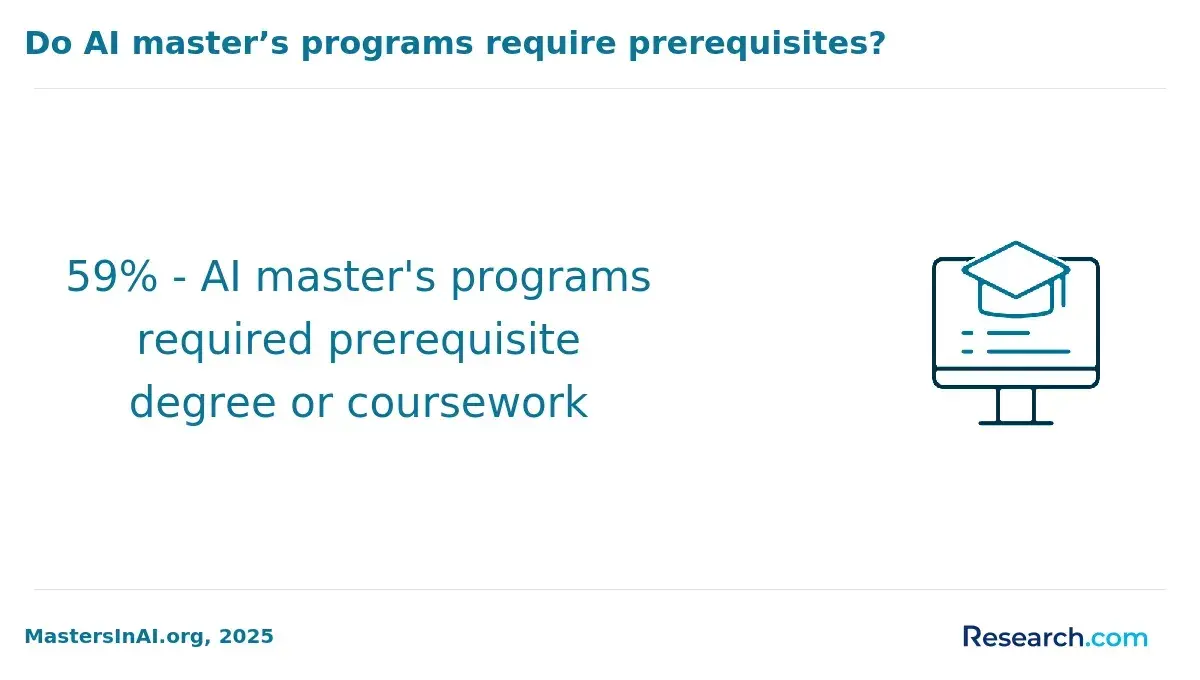
What prerequisites and technical skills are needed to start AI recommender systems training?
Proficiency in essential programming languages for AI recommender systems, such as Python or R, forms the foundation for developing and implementing machine learning algorithms and data processing pipelines. Experience with libraries like TensorFlow, PyTorch, or Scikit-learn greatly speeds up practical learning and model creation.
A solid background in mathematics is equally important, involving understanding linear algebra, calculus, probability, and statistics. These areas underpin key machine learning methods like matrix factorization and Bayesian inference, which are crucial in effective recommender systems.
Core concepts of machine learning, including supervised and unsupervised learning, model evaluation, and addressing overfitting, are fundamental prerequisites. Candidates should familiarize themselves with collaborative filtering, content-based filtering, and deep learning architectures tailored for recommendation tasks.
Strong data-handling skills are also necessary, encompassing data cleaning, feature engineering, and managing large, often sparse datasets. Practical knowledge of SQL or NoSQL databases and data visualization tools enhances the ability to explore user-item interaction data effectively.
Software engineering principles, like version control with Git and basic cloud computing understanding, support the transition of models from development to production. For those seeking advanced education paths, exploring an online PhD AI program can deepen expertise in these areas.
ReportLinker estimates the global deep learning market will grow from $29.2 billion to $129.2 billion by 2029 (26.6% CAGR), highlighting the growing importance of deep learning skills foundational to recommender systems.
Which degrees and certificates focus on recommender systems within artificial intelligence programs?
Degrees in artificial intelligence with recommender systems specialization often appear as focused tracks within machine learning, data science, or AI engineering programs. Master's degrees in artificial intelligence or data science frequently include electives on recommender systems, personalization algorithms, and user modeling, covering topics like collaborative filtering, content-based filtering, and hybrid recommenders. These programs emphasize hands-on experience working with real-world datasets.
Certificates focusing on recommender systems in AI programs provide a more targeted approach. These graduate certificates or online courses typically last 3 to 6 months and concentrate on practical skills using tools such as Python, TensorFlow, or Spark, often within professional AI or machine learning departments.
Top universities such as Stanford, MIT, and the University of Washington integrate recommender systems modules into their AI curricula, sometimes offered through MOOCs. Professional learning platforms report rapid growth in recommender systems enrollment, highlighting the increasing demand for expertise in this specialty.
Career-focused programs that combine recommender systems with user experience or business analytics can offer a competitive advantage. Emphasizing coding, algorithm development, and scalability aligns well with industry needs. Reviewing syllabi for content on deep learning recommenders and ethical AI also helps ensure relevance.
Prospective students should consider:
- Balancing theory with practical application in the curriculum
- Access to capstone projects or internships focused on recommendation engines
- Faculty expertise in personalized AI systems
For those exploring educational options, exploring data analytics masters programs can also provide complementary skills beneficial to recommender systems specialists.
What core topics and projects are included in a typical recommender systems course curriculum?
A recommender systems course typically focuses on collaborative filtering, content-based filtering, and hybrid recommendation methods. Key algorithms include matrix factorization techniques such as singular value decomposition, k-nearest neighbors, and neural collaborative filtering using deep learning. Evaluation metrics like precision, recall, mean average error, and A/B testing are covered to assess model performance in practical settings.
Hands-on projects form a crucial part of the curriculum. Students build end-to-end recommendation engines using real datasets from e-commerce, movies, or music streaming. These projects involve data preprocessing, feature engineering, model creation, hyperparameter tuning, and deployment workflows.
Courses often address challenges like cold-start issues and scalability, providing solutions such as user profiling and real-time recommendation updates.
Ethical considerations, including bias mitigation and privacy, are integrated alongside advanced topics like reinforcement learning for long-term user engagement optimization and explainable AI to interpret model outputs.
Practical experience matters: LinkedIn's 2024 Global AI Talent Report highlights that candidates with completed machine learning projects, including recommendation engines, receive about 40% more recruiter outreach on their profiles, emphasizing the value of project mastery in the job market.
Overall, this blend of theory, algorithm strategy, applied development, evaluation, and ethics prepares graduates for the technical and professional demands of roles working with recommender systems.
How can students verify accreditation and program quality for AI recommender systems study?
Students seeking quality education in AI recommender systems should start by confirming that the institution holds recognized accreditation from agencies approved by the U.S. Department of Education or the Council for Higher Education Accreditation (CHEA). Regional accreditations such as those from the Middle States Commission or Western Association of Schools and Colleges reflect rigorous academic standards, while ABET accreditation signals solid technical program credibility.
Evaluate curriculum relevance by ensuring courses cover crucial topics like collaborative filtering, matrix factorization, deep learning applications, and user behavior analytics. Industry insights, including Salesforce's State of the Connected Customer report, highlight that 62% of consumers expect personalized recommendations, yet only 43% of brands deliver such experiences-underscoring the demand for skilled practitioners in this area.
Consider faculty expertise by reviewing qualifications and research contributions, prioritizing instructors active in AI and recommender systems journals or industry collaborations. Internship opportunities and partnerships with technology companies further indicate strong program connections.
Assess program outcomes through alumni career success and student feedback found on forums or third-party review sites. Also verify if the program provides hands-on experience with real-world datasets and popular AI tools. Transparency in admission requirements, graduation criteria, and available support services helps confirm overall program credibility.
What are the typical program length and tuition costs for AI recommender systems education?
Program lengths for AI recommender systems education vary based on format and depth. Certificate and online courses typically last 6 to 12 weeks part-time, ideal for professionals seeking targeted skills. In contrast, master's degrees or specialized graduate programs in machine learning or data science with recommender systems focus take 1 to 2 years full-time. Doctoral programs emphasizing original research in recommendation algorithms usually span 3 to 5 years.
Tuition costs align with program types:
- Short-term online certificates range from $500 to $3,000
- Graduate degrees in AI or data science cost between $20,000 and $70,000
- Doctoral programs often provide stipends or assistantships that offset tuition
These factors influence career readiness and specialization depth. Data professionals targeting roles in personalization or recommendation often start with certificates before advancing to degrees. A 2024 IDC forecast projects global spending on generative AI for personalization and recommendation will exceed $19 billion by 2027, highlighting strong industry demand.
Prospective students should assess career goals and time availability to select programs that align with budget and expertise needs. For more details on AI and related career education, visit research.com.
What careers can AI recommender systems training lead to and what do these roles involve?
Training in AI recommender systems prepares professionals for dynamic roles in technology and data science. Key positions include recommender systems engineer, machine learning engineer, data scientist, and research scientist. These experts create and optimize algorithms that personalize content and services across platforms such as e-commerce, streaming, and social media.
Recommender systems engineers focus on building scalable engines and handling tasks like data preprocessing, feature engineering, model training, and deployment. Machine learning engineers often broaden their scope but continue enhancing recommendation model accuracy and efficiency.
Data scientists apply techniques such as collaborative filtering and matrix factorization to analyze user behavior and extract insights. Mastery of tools like TensorFlow Recommenders, which has rapidly gained popularity and surpassed 9,000 stars on GitHub, reflects the growing importance of open-source libraries in this field.
Research scientists explore advanced algorithms to improve recommendation quality, fairness, and interpretability often using deep learning and graph neural networks. These roles typically require advanced degrees and contribute to cutting-edge academic and industry advancements.
Strong programming skills (Python, SQL), a solid understanding of statistics, and experience with distributed computing frameworks are crucial. Professionals frequently solve optimization challenges and evaluate models with metrics such as precision, recall, and NDCG (Normalized Discounted Cumulative Gain).
What salary ranges and job outlook can AI professionals with recommender systems skills expect?
AI professionals specialized in recommender systems can anticipate competitive salaries and a robust job market. Entry-level roles usually offer between $85,000 and $110,000 annually, with variations based on location and company size. Mid-career experts earn roughly $120,000 to $160,000, while senior positions or those in leading tech centers may exceed $180,000 per year. Industries like e-commerce, streaming, and social media heavily invest in recommender systems talent, increasing demand.
The outlook for these roles is growing rapidly. As businesses prioritize personalized user experiences, demand rises for AI engineers with recommender systems expertise. Positions such as machine learning engineer, data scientist, and research scientist often require this specialized knowledge. The U.S. Bureau of Labor Statistics projects a 15% growth rate in AI-related fields through 2030.
Graduates from AI and machine learning bootcamps focused on recommender systems see significant salary improvements. A 2024 CIRR and Course Report analysis found median salary increases of about 49% within six months of bootcamp completion, highlighting impressive returns compared to traditional education.
To enhance career and salary prospects, professionals should build skills in deep learning, natural language processing, and data engineering, coupled with business KPI understanding. Combining technical abilities with domain knowledge in retail, media, or advertising further strengthens opportunities for advancement and negotiation.
Are there industry-recognized certifications or microcredentials for recommender systems specialists?
Certifications and microcredentials in recommender systems are emerging but not yet standardized within the AI industry. Professionals can enhance their skills and employability by pursuing credentials in machine learning, data science, or artificial intelligence that incorporate key recommender system topics.
Platforms like Coursera and edX offer specialized courses from respected institutions such as Stanford, MIT, and the University of Washington, covering collaborative filtering, content-based filtering, and deep learning techniques essential for recommender systems.
Specific certifications titled "Recommender Systems Specialist" remain uncommon. However, widely recognized credentials such as Google's Professional Machine Learning Engineer certification and IBM's AI Engineering Professional Certificate provide valuable knowledge on algorithms, evaluation metrics, and deployment strategies vital to building recommenders. Online platforms like LinkedIn Learning and Udacity also offer nanodegrees and skill badges tailored to recommendation technologies within their AI curriculum.
Deloitte's 2024 Tech Trends report reveals that over 70% of large consumer-facing enterprises currently deploy or pilot AI-driven recommendation engines, with adoption expected to exceed 90% by 2027. This growth underscores the demand for qualified professionals with verified skills in recommender systems. Candidates should prioritize certifications featuring practical projects using real-world datasets from sectors like e-commerce, media streaming, or social networking.
Focus on programs that emphasize algorithm selection, scalable system design, and ethical personalization to address complex industry challenges. Staying updated on evolving microcredential offerings is critical, as this niche continues to expand in availability and recognition for career advancement.
Other Things You Should Know About Artificial Intelligence
In 2027, AI courses focus on integrating natural language processing (NLP) to enhance recommender systems. NLP facilitates understanding and processing user-generated text data, improving the personalization and accuracy of recommendations by enabling systems to better grasp user intent and context.
Artificial intelligence enhances recommender systems by using advanced machine learning algorithms that analyze user behavior and preferences. AI models like deep learning can capture complex patterns and relationships in data, leading to more personalized and relevant suggestions. This results in higher user engagement and satisfaction.
Natural language processing (NLP) allows recommender systems to understand and interpret user-generated content such as reviews, comments, and queries. By processing text data, NLP helps AI models extract sentiment, preferences, and context, improving the quality and relevance of recommendations in applications like e-commerce and media streaming.
Yes, artificial intelligence recommender systems can adapt through techniques like online learning and continuous model updating. By incorporating new user data and feedback, these systems refine their recommendations to reflect evolving tastes and behaviors. This adaptability ensures recommendations remain accurate and useful over time.
References
- Micro-Credentials: The Future of Professional Education. https://certiprof.com/blogs/news/micro-credentials-a-smart-decision-for-your-future
- Freelance AI Training Jobs Guide: Roles & How to Start | Mercor https://www.mercor.com/resources/experts/freelance-ai-training-jobs-guide/
- Recommender Systems in E-learning https://www.oaepublish.com/articles/jsegc.2020.06
- Texas Credentials for the Future https://www.utsystem.edu/sites/texas-microcredentials
- Certified Industry 4.0 Specialist Certifications https://tech-labs.com/products/certified-industry-40-specialist-certifications
- What Career Opportunities Are Available After Completing an AI Certification? https://www.h2kinfosys.com/blog/what-career-opportunities-are-available-after-completing-an-ai-certification/
- Best AI Certifications to Boost Your Career in 2026 – Dataquest https://www.dataquest.io/blog/best-ai-certifications/
- The Impact of AI on Job Roles, Workforce, and Employment: What You Need to Know | Innopharma Education https://www.innopharmaeducation.com/blog/the-impact-of-ai-on-job-roles-workforce-and-employment-what-you-need-to-know
- Top 26 Careers in AI and Machine Learning: Roles, Salaries, Skills, and 2026 Outlook - AscendurePro https://ascendurepro.com/careers-in-ai-and-machine-learning/
- Jobs in artificial intelligence (AI) - Intuit Blog https://www.intuit.com/blog/innovative-thinking/jobs-in-artificial-intelligence-ai/