2027 Best Agentic AI Courses for CTOs

Co-Founder and Chief Data Scientist
CTOs often face the challenge of understanding agentic AI well enough to confidently lead development without deep specialized training. Rapid advancements in this field demand expertise that traditional engineering or management paths rarely cover. Without targeted learning, CTOs risk misalignment of strategy, inefficient resource allocation, or missed innovation opportunities. This gap becomes critical as companies integrate agentic AI to automate complex decisions and scale smarter solutions. This article explores leading agentic AI courses designed specifically for CTOs, highlighting flexible, accredited options that bridge knowledge gaps and support career pivots into AI-driven leadership roles.
Key Things You Should Know
- Agentic AI courses for CTOs in 2026 emphasize strategic leadership in autonomous system development, addressing challenges in scalability and ethical deployment.
- Recent data shows over 60% of CTOs prioritize agentic AI skills to enhance decision-making efficiency, reflecting industry demand for advanced AI governance expertise.
- Top programs integrate hands-on projects with emerging technologies like reinforcement learning, ensuring CTOs stay competitive in rapidly evolving AI landscapes.
Advance Your Career with AI Online Courses
Artificial Intelligence: Implications for Business Strategy
This program provides an introduction to Artificial Intelligence and their implications for business strategy. Earn an official digital certificate.

Oxford Artificial Intelligence Programme
Explore this Oxford Artificial Intelligence programme offered in a flexible learning environment and explore topics like machine learning, automation, and robotics.

Implementing Agentic AI: Building Your Organizational Playbook
This online MIT Agentic AI course offers a practical approach to deploying AI agents in your organization, including a custom playbook. 3 weeks, exclusive launch price.

AI Adoption: Driving Business Value and Impact
This online MIT AI Adoption: Driving Business Value and Impact offers practical frameworks to close the gap between AI potential and business reality.

Artificial Intelligence in Pharma and Biotech
Discover the applications and limitations of artificial intelligence in pharma and biotech with this MIT online short course.

What is agentic AI and why does it matter for today's CTOs?
Agentic AI refers to systems capable of autonomously setting goals, making decisions, and executing complex tasks without ongoing human supervision. Unlike traditional AI that follows predefined rules, agentic AI adapts dynamically to its environment, enabling applications such as real-time strategic planning, automated resource allocation, and proactive problem-solving. These capabilities are vital for modern technology leadership as they enhance operational scalability and accelerate innovation, areas where understanding agentic AI applications for CTO decision making is increasingly crucial.
Businesses leveraging these advanced AI systems can reduce latency in decision-making, optimize workflows, and unlock new revenue streams by automating processes that once required human oversight. For example, in supply chain management, agentic AI predicts disruptions and reroutes logistics proactively, ensuring resilience and cost efficiency. CTOs must navigate challenges like selecting appropriate frameworks, ethical AI deployment, and system transparency while prioritizing agentic AI to stay competitive. Global spending on AI-centric systems is projected to reach $297.9 billion by 2027, growing annually by 28.9%, underscoring the urgency of these choices.
Practical CTO considerations include developing talent pipelines specialized in agentic AI and investing in scalable infrastructure that aligns with business goals. Ignoring these trends risks falling behind. For working professionals and students eager to enter this dynamic field, pursuing credentials such as a one year computer science degree can be a strategic step toward mastering agentic AI applications and impacts of agentic AI on modern technology leadership.
Advance Your Career with AI Online Courses
Artificial Intelligence: Implications for Business Strategy
This program provides an introduction to Artificial Intelligence and their implications for business strategy. Earn an official digital certificate.
Oxford Artificial Intelligence Programme
Explore this Oxford Artificial Intelligence programme offered in a flexible learning environment and explore topics like machine learning, automation, and robotics.
Implementing Agentic AI: Building Your Organizational Playbook
This online MIT Agentic AI course offers a practical approach to deploying AI agents in your organization, including a custom playbook. 3 weeks, exclusive launch price.
What should CTOs look for in the best agentic AI courses and programs?
CTOs looking for agentic AI courses for CTOs with practical leadership skills should prioritize programs that blend advanced technical training with leadership and strategic decision-making. Effective courses cover machine learning algorithms, autonomous system design, and human-AI interaction models, ensuring a deep understanding of agentic AI capabilities. Integrating real-world applications through projects or case studies enables CTOs to apply theory into operational strategies.
Advanced agentic AI training programs for technology executives must include ethical frameworks and governance policies specific to autonomous AI. This is essential for navigating regulatory compliance and managing societal impact. Cross-disciplinary modules on cybersecurity, data privacy, and risk assessment provide the holistic risk management skills vital to deploying agentic AI responsibly.
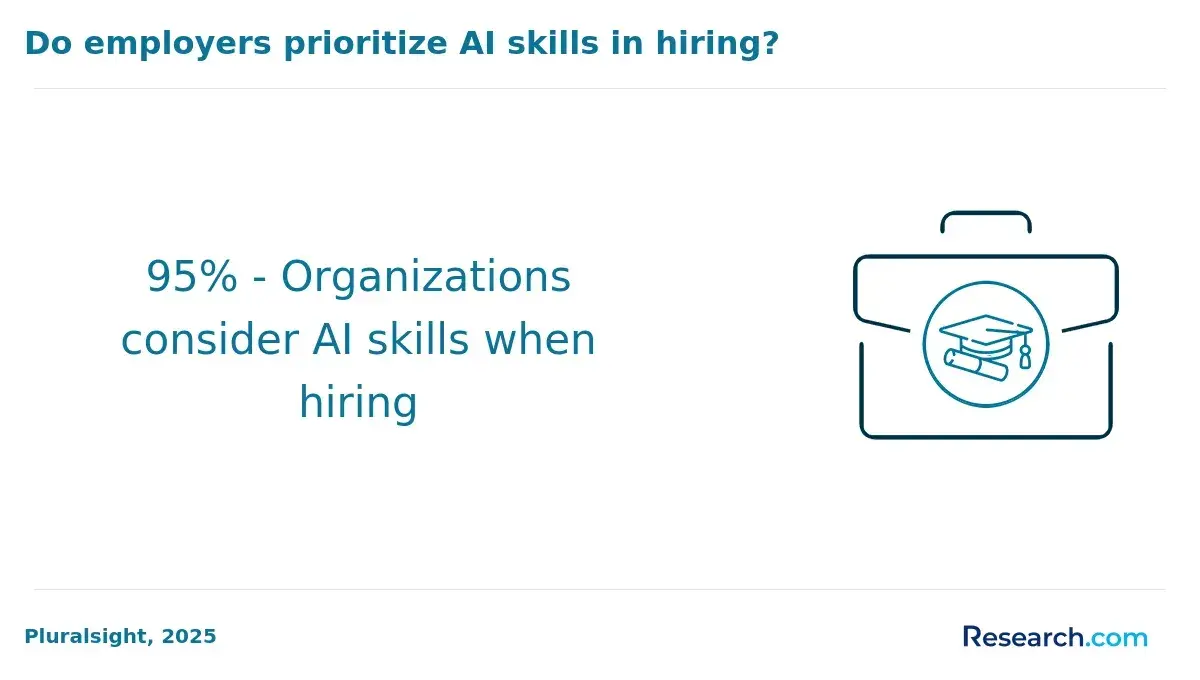
Programs offering continuous content updates alongside peer interaction foster up-to-date knowledge and professional networking, both critical in a rapidly evolving AI landscape. Flexible course formats-hybrid or asynchronous-are ideal for working CTOs balancing demanding schedules. Data from LinkedIn's Global AI Talent Report 2024 shows employer demand for AI skills among leaders rose to 73%, while job seekers listing AI skills surged 142×, underscoring the market's demand for specialized and recognized credentials.
Key factors for evaluating such programs include:
- Advanced technical content on agentic AI design and implementation
- Ethical and regulatory compliance training
- Leadership and strategic decision-making modules
- Practical projects demonstrating real-world challenges
- Continuous content refresh and peer networking opportunities
For those exploring degree options, an online mechanical engineer degree can complement AI expertise with strong technical fundamentals.
Which types of agentic AI training paths are most effective for CTOs?
Agentic AI training programs tailored for CTO leadership combine technical expertise with strategic management to equip technology executives for overseeing AI adoption across enterprises. Effective learning pathways in agentic AI for technology executives often blend hands-on development of autonomous systems, reinforcement learning, and decision-making algorithms with essential skills like ethical governance and innovation strategies driven by AI.
Executive courses emphasize use case-driven education, enabling CTOs to evaluate AI maturity and align projects with business objectives. Common challenges such as scaling AI initiatives and mitigating risks are addressed through scenario planning, risk management, and AI talent development. Specialized bootcamps focusing on agentic AI models enhance understanding of the balance between system autonomy and control while teaching performance measurement to ensure value without operational risks.
McKinsey's 2024 State of AI survey indicates 72% of companies investing in AI at scale experience positive financial returns, with mature AI adopters being 1.5× more likely to achieve revenue growth of at least 5%. This data highlights how acquiring advanced agentic AI skills can increase organizational AI maturity and ROI.
Integrating AI ethics, compliance frameworks, and continuous learning loops enriches CTO education. Blended learning-combining theory, case studies, and peer collaboration-improves retention and practical application for senior technology leaders. For those expanding their digital expertise, a video game development degree can offer complementary skills applicable to AI-driven innovation.
How do online agentic AI courses for CTOs compare with in-person or hybrid formats?
Online agentic AI courses offer chief technology officers (CTOs) significant flexibility and time efficiency compared to in-person or hybrid training. Many CTOs face scheduling conflicts and heavy workloads, making it challenging to attend traditional sessions. These online formats allow asynchronous access to materials, enabling CTOs to fit learning around unpredictable demands and immediately apply concepts to current projects. This is essential given that 59% of executives identify lack of time as a barrier to upskilling, despite 71% planning increased investment in AI skills development.
The benefits of hybrid agentic AI learning formats for chief technology officers include balancing networking and hands-on experiences with online convenience. However, hybrid courses may suffer from inconsistent engagement and scheduling challenges. In-person training provides richer social contexts but often requires significant time commitments and travel, which can be disruptive for busy CTOs.
Practical advantages of online courses include adaptive learning technologies that personalize pace and focus, plus cost savings from eliminating travel and accommodation expenses. To mitigate isolation, CTOs should prioritize programs with interactive components like live Q&A and peer collaboration. Providers offering modular structures are ideal for quick skill boosts in agentic AI topics critical for leadership roles.
CTOs interested in fast-track credentials might explore options such as an accelerated cyber security degree online, which similarly emphasizes flexibility and speed without compromising depth. Balancing accessibility and rigorous learning, online courses are well suited for CTOs aiming to upskill amid tight schedules.
What core skills and topics do leading agentic AI courses for CTOs typically cover?
Agentic AI courses designed for CTOs combine technical skills and strategic leadership to prepare them for managing autonomous AI systems. Core subjects include model selection, training methods, and real-time decision making. These courses emphasize building AI-driven workflows that automate repetitive tasks-McKinsey's 2024 generative AI update notes this could free 60-70% of employees' working time in many roles.
CTOs learn to optimize AI infrastructure such as cloud platforms and edge computing for scalable, efficient deployment. They also focus on data management and governance to handle bias, security, and regulatory compliance when deploying autonomous systems. Integrating AI into existing enterprise systems is crucial, with potential productivity gains estimated by McKinsey at $2.6-4.4 trillion annually worldwide.
Strategic leadership training covers transforming operating models for continuous AI innovation, workforce reskilling, and agile project management. Many courses use case studies highlighting coordination among data scientists, engineers, and business leaders to maintain ethical standards and accountability in AI projects. Human-AI collaboration techniques for decision augmentation are also key topics.
Technical skills taught include designing reinforcement learning agents, leveraging API-based AI services for rapid prototyping, and evaluating AI impact through measurable KPIs. These competencies enable CTOs to lead AI initiatives responsibly, balancing automation benefits with organizational and societal considerations.
What backgrounds, prerequisites, or technical skills do CTOs need for agentic AI courses?
CTOs aiming to excel in agentic AI courses must have solid expertise in software engineering, with proficiency in languages like Python, Java, or C++. These skills support designing autonomous systems and understanding machine learning frameworks, especially supervised and reinforcement learning. Knowledge of distributed systems and cloud computing is crucial for managing scalable, multi-agent workflows efficiently.
Data science capabilities such as data preprocessing, analysis, and interpretation are vital since effective agentic AI depends on quality datasets. Familiarity with AI platforms like TensorFlow, PyTorch, and Microsoft Azure AI enables better orchestration of AI workflows and tool management. The AI software/platform market is rapidly expanding, projected to grow from $64 billion to $279 billion, underscoring the need for leaders well-versed in these areas according to Grand View Research's 2024 outlook.
Leadership and project management skills remain essential to align AI projects with business objectives while ensuring compliance with ethics, security, and data privacy regulations. Professionals without prior AI experience should pursue applied machine learning and systems architecture courses to build foundational competence. A mix of programming, machine learning theory, platform knowledge, and strategic management equips CTOs to lead successful AI-driven digital transformations.
How long do agentic AI courses for CTOs take, and what do they typically cost?
Agentic AI courses for CTOs generally span 4 to 12 weeks, varying with curriculum complexity. Short programs lasting 4 to 6 weeks concentrate on core elements like autonomous decision-making frameworks, risk management, and governance essentials designed for senior technology leaders. Longer courses of 8 to 12 weeks often feature hands-on case studies, compliance protocols, and strategic implementation tactics to tackle operational challenges effectively.
Course costs range broadly from $1,500 to $6,000. More affordable options usually provide self-paced modules with limited interaction, while premium programs offer live sessions, expert mentorship, and thorough coverage of regulatory compliance and ethical frameworks. Specialized courses with strong emphasis on risk, governance, and compliance address critical gaps; only 21% of companies report enterprise-wide AI governance policies, and 56% of organizations working with generative or agentic AI lack formal risk management frameworks, as highlighted by Deloitte's 2024 State of Generative AI in the Enterprise survey.
CTOs should carefully weigh course length, price, and up-to-date regulatory content. Programs that include scenario analyses of compliance failures deliver practical insights to avert costly mistakes. Flexible course formats supporting self-pacing while covering advanced technical and ethical topics allow busy technology leaders to stay current with rapid AI integration within enterprises.
How can CTOs assess accreditation, academic quality, and vendor credibility for agentic AI training?
CTOs evaluating agentic AI training programs should verify that the institution or program holds accreditation from recognized bodies like ABET or regional accreditors. This ensures alignment with academic quality standards and appropriate governance. Faculty expertise matters as well; instructors should possess advanced degrees in AI, computer science, or related fields, coupled with professional or research experience in agentic AI development.
Assessing the curriculum's scope and relevance is crucial. Strong programs blend theoretical concepts with hands-on learning, covering topics such as autonomous systems, ethics in agentic AI, and integration methods. Reviewing detailed course syllabi confirms rigorous content and practical skill building.
Vendor credibility can be gauged through user testimonials, industry alliances, and documented client successes. Transparent providers frequently present case studies demonstrating measurable business outcomes. For instance, PwC's 2024 AI Business Outlook survey highlights that organizations monitoring AI's value-with metrics like cost savings and revenue increase-are 2.6× more likely to achieve at least a 5% rise in operating income. This underscores the importance of training emphasizing measurable ROI.
Consider certification validity and industry recognition; programs endorsed by established AI institutes or backed by major technology companies often offer greater credibility. Post-training support and opportunities for continuous learning also enhance long-term benefits.
Comparing multiple vendors with a structured evaluation matrix based on these criteria helps CTOs align training investments with organizational goals and compliance requirements.
What executive and technical career outcomes can CTOs expect after agentic AI training?
CTOs completing agentic AI training significantly enhance both leadership and technical expertise. They gain the ability to design AI strategies that align business objectives with technology, enabling clearer prioritization of initiatives that yield tangible results. On the technical side, CTOs develop skills to manage autonomous AI systems that self-direct tasks, optimize workflows, and adapt to new data, improving operational efficiency.
In their careers, CTOs are better equipped to lead cross-functional teams comprising data scientists, engineers, and business stakeholders. According to Boston Consulting Group's 2024 AI & Organization report, companies that blend technical AI talent with cross-functional business teams are 3.4× more likely to transition AI projects from pilot phases to full production. This underscores the essential role CTOs play in connecting AI development with market-ready applications.
Trained CTOs improve in:
- Aligning AI technology selection with organizational goals.
- Structuring teams to enhance interdepartmental collaboration.
- Driving agile adoption of agentic AI models to reduce manual oversight.
- Evaluating AI initiative success through business metrics and risk management.
These skills prepare CTOs for senior roles in digital transformation and innovation leadership. They also strengthen negotiation capabilities with vendors and stakeholders, amplifying strategic impact.
What is the salary impact and future job outlook for CTOs who specialize in agentic AI?
Chief technology officers (CTOs) with expertise in agentic AI enjoy notable salary boosts and enhanced job stability as organizations prioritize AI leadership. A Gartner survey reveals that 80% of technology leaders see AI/ML capabilities as essential for CIOs and CTOs, directly influencing career growth and compensation. Salaries for CTOs skilled in agentic AI can exceed industry averages by 15-25%, underscoring their value in driving AI innovation.
The outlook for these professionals is strong, with nearly half of surveyed executives noting a rise in board-level expectations for AI strategy within a year. This trend pushes CTOs to lead initiatives that automate complex decisions, improve efficiency, and secure competitive advantages. Their expanding responsibilities often come with better compensation and retention perks.
Agentic AI specialization opens pathways into AI governance, ethics, and enterprise-wide integration, broadening career opportunities beyond traditional tech roles. Proficiency in managing cross-functional teams deploying autonomous AI is increasingly vital for scaling AI solutions effectively.
In competitive settings, mastering agentic AI enables CTOs to negotiate favorable terms like equity and performance bonuses tied to AI project success. For career resilience and salary growth, prospective CTOs should pursue focused education on agentic AI strategy and leadership.
- Increased salary by 15-25% for AI-proficient CTOs
- 47% reported growth in AI oversight expectations
- Expanded roles in AI governance and ethics
- Opportunities for equity and bonuses based on AI outcomes
Other Things You Should Know About Artificial Intelligence
In 2027, notable Agentic AI courses for CTOs include offerings from MIT, Stanford, and Coursera focusing on advanced AI integrations, ethical implications, and strategic management. These courses are designed to enhance both technical knowledge and leadership skills critical for AI-driven organizational transformation.
Agentic AI operates autonomously with self-directed decision-making, unlike traditional AI, which usually requires human input for task execution. This independence allows agentic AI to handle complex workflows and adapt in real time, offering greater efficiency and innovation in business processes.
Integrating agentic AI can pose challenges such as system compatibility, data integration, and scalability concerns. CTOs need to ensure that new AI systems work seamlessly with existing platforms while maintaining security and performance. Additionally, managing change within the organization to accommodate autonomous AI is essential for smooth adoption.
Given the rapid evolution of agentic AI technologies, CTOs should engage in continuous learning, ideally updating their knowledge every six to twelve months. Staying current is necessary to leverage new capabilities, address emerging risks, and maintain competitive advantage in their organizations.
References
- Agentic AI and the future of work: navigating technological promise and the risk of increased automation https://www.equaltimes.org/agentic-ai-and-the-future-of-work
- How to Pick the Right Generative AI or Agentic AI Program Without Overpaying or Wasting Money https://dev.to/rahul_saxena_09/how-to-pick-the-right-generative-ai-or-agentic-ai-program-without-overpaying-or-wasting-money-20g1
- Harvard Data Science Review Agentic AI Intensive https://live.hdsrcourses.org/agentic-ai-intensive
- What is an agentic AI learning system? https://www.absorblms.com/blog/agentic-ai-learning-system
- Agentic AI for Small and Medium-sized Enterprises - CFTE https://courses.cfte.education/agentic-ai-for-small-and-medium-sized-enterprises/
- How to Measure the Economic Impact of Agentic AI: A Framework for CFOs and CTOs https://vector-labs.ai/insights/how-to-measure-the-economic-impact-of-agentic-ai-a-framework-for-cfos-and-ctos
- Best AI Agent Courses for C-Level Leaders (2026 Guide) https://aiagentsacademy.ai/blog/best-ai-agent-courses-c-level-leaders-2026
- AI Agents vs. Agentic AI: A quick CTO guide https://www.kellton.com/kellton-tech-blog/ai-agents-vs-agentic-ai
- Agentic AI in the Enterprise: What CTOs Need to Control https://deployflow.co/blog/agentic-ai-big-enterprise-challenge/
- Agentic AI Governance: What CTOs Need To Know https://hoolahoop.io/articles/cto-coaching/agentic-ai-governance/