2027 Best AI Courses for Account Executives With Certificates

Co-Founder and Chief Data Scientist
Account executives often struggle to keep pace with the fast-evolving landscape of artificial intelligence, especially when their backgrounds lie outside technical fields. This gap can hinder career growth and limit opportunities in industries increasingly driven by AI solutions. Acquiring relevant skills through flexible and accredited courses is essential to remain competitive and effectively leverage AI in client strategies and sales.
This article explores top AI courses offering certification tailored for account executives, highlighting programs designed to bridge knowledge gaps and provide practical expertise for this critical professional pivot.
Key Things You Should Know
- Account executives benefit from AI courses offering certificates that validate skills in data analysis, automation, and customer insights crucial for enhancing sales strategies in 2026.
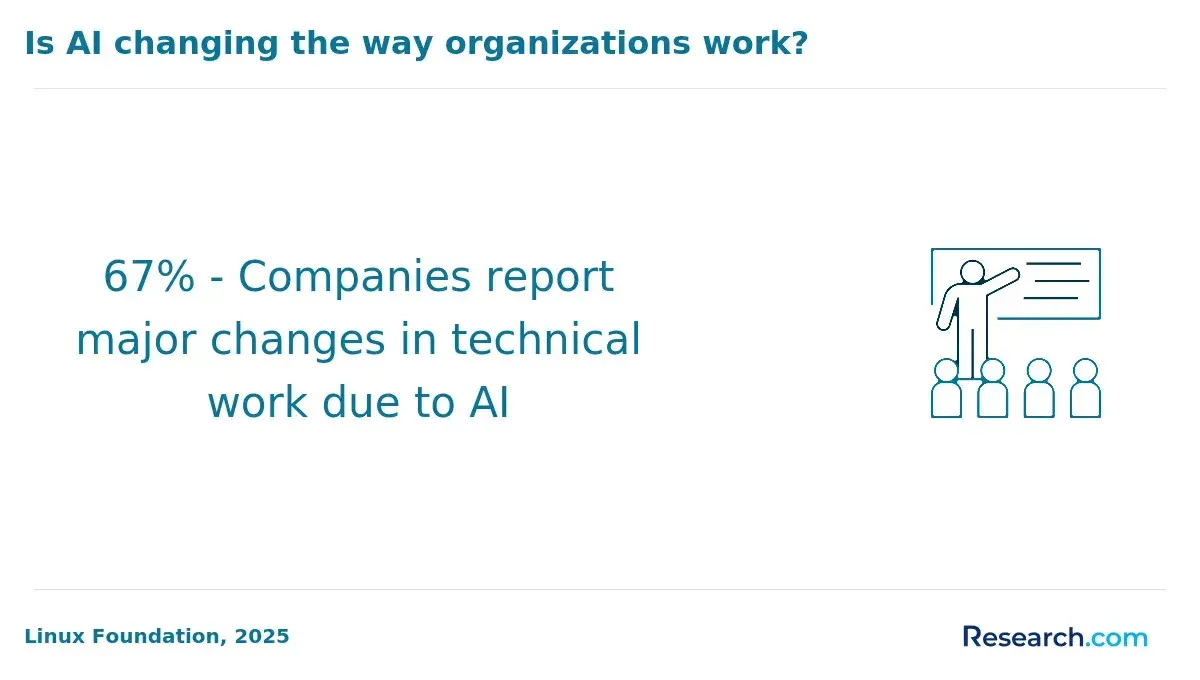
- Completion of certified AI programs increases job market competitiveness, with 67% of employers preferring candidates with demonstrated AI proficiency by 2025.
- Top AI courses emphasize practical applications in CRM systems and predictive analytics, aligning with industry demands for tech-savvy sales professionals in the U.S. market.
Advance Your Career with AI Online Courses
Artificial Intelligence: Implications for Business Strategy
This program provides an introduction to Artificial Intelligence and their implications for business strategy. Earn an official digital certificate.

Oxford Artificial Intelligence Programme
Explore this Oxford Artificial Intelligence programme offered in a flexible learning environment and explore topics like machine learning, automation, and robotics.

Implementing Agentic AI: Building Your Organizational Playbook
This online MIT Agentic AI course offers a practical approach to deploying AI agents in your organization, including a custom playbook. 3 weeks, exclusive launch price.

AI Adoption: Driving Business Value and Impact
This online MIT AI Adoption: Driving Business Value and Impact offers practical frameworks to close the gap between AI potential and business reality.

Artificial Intelligence in Pharma and Biotech
Discover the applications and limitations of artificial intelligence in pharma and biotech with this MIT online short course.

What are the best AI courses for account executives that include a recognized certificate?
AI courses that offer a recognized certificate emphasize practical applications in sales and customer relationship management, making them ideal for account executives. Leading platforms like Coursera, LinkedIn Learning, and edX provide certified programs from institutions such as Stanford University and IBM. Notable offerings like Stanford's "AI in Business Strategy" and IBM's "Applied AI for Sales Professionals" focus on skills like AI-driven sales forecasting, automation tools, natural language processing, and ethics in AI.
Top certified AI training programs for account executives deliver hands-on projects and real-world case studies, helping learners understand AI's role in optimizing sales cycles and customer engagement. Certified AI training improves the ability to leverage AI tools effectively, supported by the Salesforce State of Sales 2025 report, which reveals 78% of leading sales teams rate AI as critical to hitting revenue goals, compared to only 42% of lower-performing teams.
Account executives seeking the best AI courses for account executives with certificate should look for comprehensive curricula, certification recognized by major tech companies or academic institutions, flexible learning formats, and a focus on AI ethics and data privacy. Developing these skills provides measurable advantages in sales effectiveness and professional credibility. For those curious about outcomes, the applied artificial intelligence salary continues to reflect strong market demand and rewarding career paths.
- Comprehensive curriculum on AI sales tools and analytics
- Certification recognized by major tech companies or academic institutions
- Accessible formats like part-time or self-paced learning
- Focus on AI ethics and data privacy relevant to client interactions
Advance Your Career with AI Online Courses
Artificial Intelligence: Implications for Business Strategy
This program provides an introduction to Artificial Intelligence and their implications for business strategy. Earn an official digital certificate.
Oxford Artificial Intelligence Programme
Explore this Oxford Artificial Intelligence programme offered in a flexible learning environment and explore topics like machine learning, automation, and robotics.
Implementing Agentic AI: Building Your Organizational Playbook
This online MIT Agentic AI course offers a practical approach to deploying AI agents in your organization, including a custom playbook. 3 weeks, exclusive launch price.
How can AI skills help account executives improve sales performance and client outcomes?
AI skills enable account executives to boost sales effectiveness by delivering precise, data-driven insights that enhance decision-making. AI-powered tools analyze large datasets to uncover customer behaviors, preferences, and buying signals, allowing for personalized outreach and finely tuned proposals. This targeted approach increases engagement and conversion rates. For instance, using AI to segment clients based on purchase history and predicted needs helps create campaigns with higher returns.
Using ai-driven tools to improve client relationship management also automates routine tasks such as lead qualification, follow-ups, and performance tracking. This saves time for account executives to concentrate on strategic relationship building. AI-enhanced forecasting models improve pipeline accuracy, helping reps prioritize high-value opportunities and allocate resources more efficiently. AI-powered chatbots and virtual assistants improve real-time client communication, ensuring prompt responses and consistent service quality.
Adopting AI in sales workflows addresses challenges like data overload and inconsistent client engagement. By reducing manual errors and streamlining communication, AI enhances customer satisfaction and retention. According to Gartner's Future of Sales report, sellers using AI-driven insights are 1.8 times more likely to surpass sales quotas than those relying mainly on manual methods.
Account executives also leverage AI-driven analytics to identify upsell and cross-sell opportunities early while monitoring market trends for quick strategy adjustments.
For professionals interested in how artificial intelligence enhances sales strategies for account executives, gaining relevant AI expertise is crucial. This complements educational pursuits such as pursuing online mechanical engineering degrees or other technical disciplines that build analytical and technical skills important for the evolving sales landscape.
Which AI certificates for sales and account management are most respected by employers?
Employers highly value AI certification programs for sales professionals that demonstrate practical skills in sales automation, data-driven account management, and generative AI applications. Recognized AI credentials for account management careers often come from industry leaders such as Salesforce's AI certification, Google Cloud's Professional Machine Learning Engineer program, and IBM's AI Foundations for Business specialization.
These certificates prove expertise in harnessing AI tools to enhance customer targeting, automate workflows, and predict client needs effectively.
LinkedIn's 2024 Workplace Learning Report highlights that AI-related skills rank among the fastest-growing for sales professionals globally. Certificates that include generative AI, sales automation, and AI-driven analytics are thus increasingly relevant for career advancement.
Programs featuring hands-on projects with CRM integrations and AI-powered sales technologies carry greater weight. For instance, training that applies AI to forecast sales trends or personalize client communications prepares account executives to meet employer expectations. Certificates addressing AI ethics and data privacy in sales contexts also improve credibility amid growing regulatory concerns.
Prospective students should assess certificates on curriculum depth, alignment with current sales technology, and provider reputation. Certifications from well-established technology vendors or accredited institutions tend to offer the most career benefits. Additionally, professionals exploring related fields may consider pursuing a cyber security degree to complement AI skills in sales environments.
What types of AI programs are available for account executives: bootcamps, certificates, or degrees?
Account executives looking to boost their skills in AI certification programs for account executives can consider three main options: bootcamps, certificate programs, and degree programs. Bootcamp courses in AI for account managers provide fast, practical training lasting a few weeks to months, emphasizing AI tools like CRM systems and predictive analytics relevant to sales and marketing.
Certificate programs typically last several months and offer formal recognition upon completion. They cover foundational AI concepts, data literacy, and business use cases to help account executives leverage AI for workflow optimization and enhanced customer engagement. Studies like Coursera's Learner Outcomes survey show that 65% of business learners improve job performance after an introductory AI course.
Degree programs in AI or data science deliver deep technical and theoretical knowledge, better suited for those aiming for strategic business roles combined with advanced AI expertise. These programs demand significant time and financial investment but offer long-term career benefits.
Choosing the right path depends on a professional's current skills, time availability, and career goals. Bootcamps suit rapid skill acquisition, certificates provide formal acknowledgment and improved job performance, and degrees offer comprehensive AI mastery. For those exploring related fields, considering options like cyber security courses online can also complement AI knowledge.
How do online AI courses for account executives compare with on-campus or hybrid options?
Online AI courses offer account executives unmatched flexibility, allowing them to balance study with professional duties. Self-paced modules focused on generative AI applications in prospecting enable learners to apply skills directly to live sales campaigns, boosting knowledge retention and ROI. This format supports continuous upskilling without interrupting career momentum.
In contrast, on-campus courses provide structured learning environments with direct access to instructors and peers, enhancing networking and immediate feedback opportunities. However, fixed schedules and commuting may pose challenges for working professionals. Hybrid programs combine online theory with occasional in-person sessions, attempting a balance, but may still face scheduling or geographic limitations.
Practical outcomes from online learning have improved significantly. According to HubSpot's 2024 State of AI in Marketing & Sales, sales teams using generative AI achieve a 3.5x faster A/B testing velocity and a 52% higher reply rate on AI-assisted outreach. Many online certifications incorporate these proven strategies, helping account executives leverage data-backed tactics.
When selecting a delivery mode, consider:
- Preferred learning style and networking needs
- Scheduling flexibility and time management
- Career goals and desired instructor interaction
Online programs suit those seeking rapid, applied skills and certification, while on-campus options benefit learners valuing mentorship and campus resources. Hybrid formats offer compromise but may dilute the advantages of each mode. Balancing these factors ensures alignment with personal and professional priorities.
What curriculum topics should AI courses for account executives cover to be industry-relevant?
AI courses tailored for account executives should emphasize practical applications that enhance sales outcomes using technology. Central to this curriculum is AI-driven pipeline management, which can boost revenue growth by 10-20% compared to traditional sales methods, according to McKinsey's Global Sales Survey 2024. Training includes using predictive analytics to identify high-potential leads and refine sales funnel strategies.
Learning AI-powered forecasting techniques is critical. These allow account executives to interpret machine learning-generated forecasts, improving quota setting, resource allocation, and risk management. This training covers understanding algorithms analyzing customer data, buying patterns, and market trends.
Integrating CRM systems with AI tools teaches the use of real-time insights to personalize client interactions. Automation through natural language processing helps streamline routine tasks like follow-ups and data entry, boosting efficiency.
Ethics and data privacy are essential topics due to growing regulatory focus. Responsible AI use builds client trust and reduces legal risk for companies.
- Sentiment analysis for customized communication
- AI-assisted negotiation support tools
- Chatbots for lead qualification
- Data literacy to interpret AI reports and dashboards
- Scenario planning with AI-driven simulations
This comprehensive approach equips account executives to adopt AI confidently, increasing productivity and maintaining a competitive edge in a tech-driven sales environment.
How can prospective students verify accreditation and certificate credibility for AI programs?
Students seeking credible AI programs should first ensure the institution holds accreditation from recognized U.S. agencies like the Higher Learning Commission or other regional accreditors. This accreditation guarantees academic rigor and enhances certificate value in employment markets. It's equally important to confirm that the certificate issuer, reputable universities, leading AI research centers, or acknowledged industry leaders provide more reliable credentials.
Examine the curriculum and faculty expertise closely. Quality AI courses include instructors with solid academic backgrounds or professional experience, and transparent outlines aligned with industry demands indicate a trusted program.
Third-party endorsements increase program credibility. Look for affiliations with known professional organizations, government bodies, or major tech companies. Certificates linked to entities such as IEEE or collaborations with top AI vendors typically carry greater trustworthiness.
Assess alumni outcomes and job placement records to evaluate real-world impact. Verified testimonials and data showing graduate success provide insight. Notably, Accenture's 2024 Technology Vision reveals that B2B firms scaling AI in sales experienced a 12% increase in strategic account deal size, underscoring the value of practical AI training for professionals.
Additionally, verify the legitimacy of certificates through digital badges or blockchain-based credentials, which help prevent fraud and allow easy employer validation.
What are the typical admission requirements and time commitments for AI courses for AEs?
Admission requirements for AI courses aimed at account executives typically include a high school diploma or equivalent. Many courses prefer candidates with experience in sales, customer success, or business roles. Foundational skills in data analysis, CRM software, or basic coding are often recommended, especially for intermediate-level programs.
Advanced courses might require a bachelor's degree in business, marketing, or a STEM field, along with familiarity with AI concepts relevant to sales and customer management. Admission processes may include a resume review and, sometimes, an assessment or interview to verify readiness for technical material.
Study time for these courses varies by format. Short certificate programs generally require 20 to 40 hours over 4 to 8 weeks, fitting busy professionals' schedules. More intensive bootcamps or university classes often demand 100 to 150 hours across 3 to 6 months. Self-paced online options provide flexibility but recommend 5 to 10 hours weekly to maintain progress. Programs focusing on AI applications in customer success typically mix theory with practical projects, adding extra time for hands-on practice.
According to Gainsight's Customer Success Index 2024, companies using AI-driven health scores and churn prediction tools achieve a 19% higher net revenue retention, highlighting the business value of mastering these skills. Prospective students should consider these factors when choosing courses to enhance their careers.
How much do AI courses with certificates for account executives cost, and are there funding options?
The cost of AI courses with certificates tailored for account executives ranges widely, typically between $200 and $2,000. Short introductory courses often fall within $200 to $500, while comprehensive programs featuring advanced modules, personalized coaching, and recognized certification usually exceed $1,000. Premium offerings from universities or leading platforms can reach $2,000 or more.
Various funding options help reduce these upfront costs:
- Many platforms, such as Coursera and edX, offer financial aid covering 50% to 100% of the fees.
- Employer sponsorship is common in sales-driven organizations valuing AI skills to increase revenue.
- Local and state workforce programs may provide grants or vouchers to support upskilling in AI.
- Payment plans allow spreading costs over monthly installments for better affordability.
- Veterans and active military personnel may access discounts or federal funding programs.
- Some companies partner with training providers to offer free or low-cost AI upskilling to account executives.
These financial aids recognize the potential 25% income premium for workers with AI skills, as highlighted by the World Economic Forum's Future of Jobs Report 2025. Prospective learners should carefully assess total costs, available financial assistance, and employer benefits to maximize the return on investment effectively.
What career outcomes, salary impact, and job outlook can AI-trained account executives expect?
Account executives with training in artificial intelligence experience notable career benefits, including higher salaries and increased job stability. Data from PwC's 2024 Global Workforce Hopes and Fears Survey reveals that 44% of employees who completed structured AI upskilling received promotions or expanded responsibilities within a year, compared to just 18% of those without such expertise.
This highlights a clear link between AI competence and career progression in sales and client management roles.
Salary growth for AI-skilled account executives often surpasses average trends. Entry-level professionals who gain AI knowledge typically advance to mid-level or senior roles faster, with compensation increases ranging from 15% to 30%, depending on industry and company size. For instance, account executives in technology sectors using AI-driven sales tools may reach six-figure earnings within three to five years.
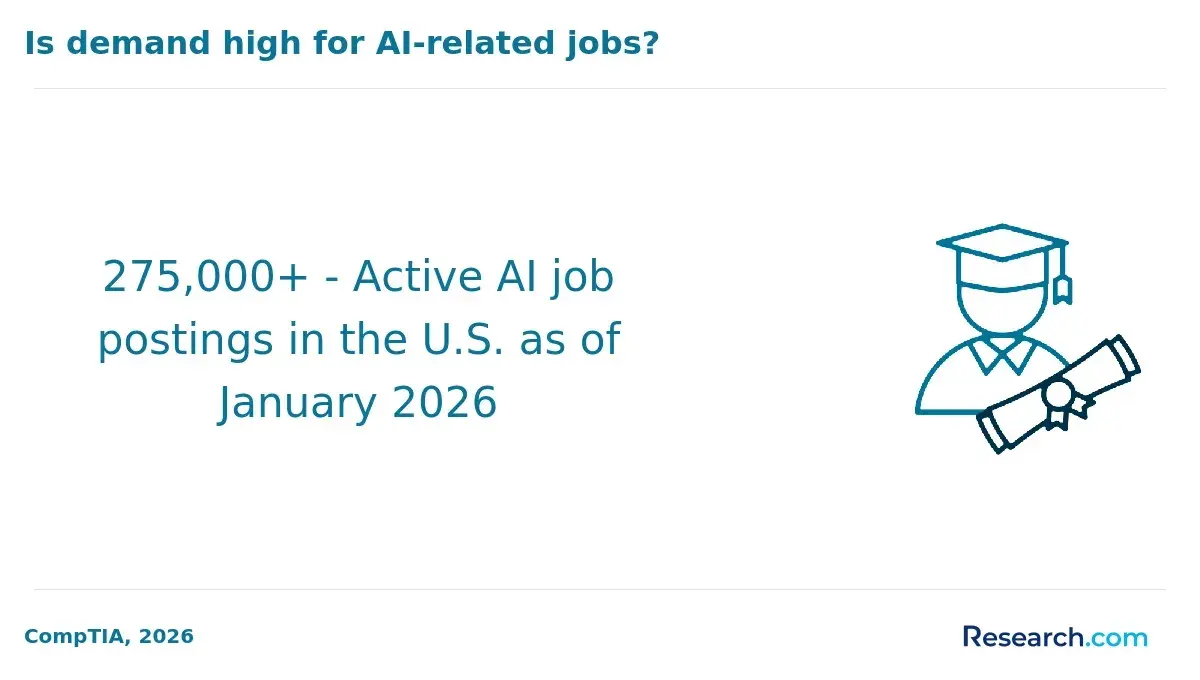
The job outlook is strong as businesses increasingly adopt AI for predictive analytics, personalization, and customer engagement. Demand is rising for AEs who can integrate AI into their sales strategies, minimizing risks associated with automation.
- Promotion and expanded roles: 44% with AI training vs. 18% without
- Salary growth: up to 30% faster advancement potential
- Demand: Increasing for AI-savvy AEs in sectors embracing AI solutions
Learners should focus on AI courses emphasizing practical skills like data interpretation, AI-driven CRM platforms, and sales forecasting. Aligning education with employer needs maximizes earning potential and job security in a competitive market.
Other Things You Should Know About Artificial Intelligence
Some of the best AI courses for account executives in 2027 include "AI for Everyone: Business Applications" on Coursera, and "AI Essentials for Sales Professionals" at LinkedIn Learning. These programs provide valuable insights into AI tools and issue certificates upon completion, enhancing professional credentials.
AI systems often process large amounts of customer data, creating potential risks for data privacy. Organizations must ensure compliance with data protection regulations such as GDPR and CCPA by implementing secure data handling practices. Transparency about data usage and obtaining informed consent are critical to maintaining customer trust when using AI technologies.
One major challenge is integrating AI with existing customer relationship management systems and workflows without disrupting daily operations. Additionally, account executives may need training to interpret AI-generated insights effectively. Resistance to adopting AI due to unfamiliarity or misconceptions can also slow down implementation efforts.
While AI can automate many repetitive tasks and provide valuable insights, it is unlikely to completely replace account executives. Human skills such as emotional intelligence, negotiation, and relationship-building remain essential for successful sales management. AI is best viewed as a tool that enhances human capabilities rather than a full replacement.
References
- How Long is an Average AI Course? A Complete Guide for Learners https://emeritus.org/in/learn/how-long-is-an-average-ai-course/
- What’s the Best Hands-on AI Training for Non-Technical Leaders (No Coding) in Financial Services? https://neurons-lab.com/articles/whats-the-best-hands-on-ai-training-for-non-technical-leaders-no-coding-in-financial-services/
- How to Use AI in Sales the Right Way to Drive Better Results https://salesroads.com/leadership/ai-in-sales/
- How Artificial Intelligence Can Help Boost Sales Performance https://xcelpros.com/how-artificial-intelligence-helps-in-boosting-sales-performance/
- AI Manager | Course for Digital Leadership https://executiveacademy.at/en/management-training/ai-manager
- Bachelor in Management and Artificial Intelligence https://www.kozminski.edu.pl/en/programs/undergraduate-programs-bachelor/bachelor-management-and-artificial-intelligence
- AI and Analytics Programs https://esmt.berlin/executive-education/analytics-ai-programs
- Choosing the Right AI Course for Business Leaders https://www.tsa-bildung.de/en/blog/choosing-the-right-ai-course-for-business-leaders
- How leading companies leverage artificial intelligence in sales https://www.highspot.com/ai-for-sales/artificial-intelligence-in-sales/
- Best AI Courses for Finance & Business Professionals (2026) https://www.wallstreetprep.com/knowledge/best-ai-courses-for-finance-business-professionals/