2027 Best AI Strategy Courses for Quality Control Teams

Co-Founder and Chief Data Scientist
Quality control teams often struggle to implement effective strategies that leverage artificial intelligence for improving accuracy and efficiency. Without the right training, they may face challenges identifying relevant AI tools and applying advanced techniques to real-world scenarios. This gap can hinder organizational performance and slow digital transformation efforts.
Addressing these hurdles requires targeted education that bridges technical knowledge and practical application.
This article explores the best AI strategy courses tailored for quality control professionals, offering guidance to select flexible, accredited programs that support career pivots into the AI industry.
Key Things You Should Know
- AI strategy courses for quality control teams in 2026 emphasize practical integration of AI tools, enhancing defect detection accuracy by over 40% compared to traditional methods.
- Curricula increasingly focus on cross-disciplinary skills, combining AI knowledge with quality management standards like Six Sigma and ISO 9001 for comprehensive training.
- Over 65% of US quality control professionals pursuing AI courses report career advancement within one year, reflecting strong industry demand and evolving roles.
Advance Your Career with AI Online Courses
Artificial Intelligence: Implications for Business Strategy
This program provides an introduction to Artificial Intelligence and their implications for business strategy. Earn an official digital certificate.

Oxford Artificial Intelligence Programme
Explore this Oxford Artificial Intelligence programme offered in a flexible learning environment and explore topics like machine learning, automation, and robotics.

Implementing Agentic AI: Building Your Organizational Playbook
This online MIT Agentic AI course offers a practical approach to deploying AI agents in your organization, including a custom playbook. 3 weeks, exclusive launch price.

AI Adoption: Driving Business Value and Impact
This online MIT AI Adoption: Driving Business Value and Impact offers practical frameworks to close the gap between AI potential and business reality.

Artificial Intelligence in Pharma and Biotech
Discover the applications and limitations of artificial intelligence in pharma and biotech with this MIT online short course.

What is an AI strategy course for quality control teams?
AI strategy training for quality control professionals equips teams with the skills to seamlessly integrate artificial intelligence technologies into quality assurance workflows. These courses emphasize practical applications such as predictive analytics, automated defect detection, and process optimization, enhancing product reliability and decision-making while reducing human error.
Quality control team courses focused on AI implementation typically cover machine learning fundamentals, data collection and preprocessing, model training for quality metrics, and deploying AI solutions in manufacturing or service environments. For instance, computer vision algorithms help identify defects in real-time, while predictive models anticipate equipment failures to prevent downtime.
Industry-specific programs address challenges in sectors like automotive, electronics, and pharmaceuticals, incorporating regulatory requirements. Data from McKinsey highlights that organizations adopting AI in quality inspection have reduced inspection costs by up to 90% and experienced 90% fewer defects, demonstrating the value of such expertise.
When selecting courses, professionals should focus on curricula featuring hands-on projects and case studies to facilitate real-world application. For individuals seeking broader technical knowledge, pursuing an accelerated bachelor's degree computer science can complement AI strategy skills and expand career opportunities.
Advance Your Career with AI Online Courses
Artificial Intelligence: Implications for Business Strategy
This program provides an introduction to Artificial Intelligence and their implications for business strategy. Earn an official digital certificate.
Oxford Artificial Intelligence Programme
Explore this Oxford Artificial Intelligence programme offered in a flexible learning environment and explore topics like machine learning, automation, and robotics.
Implementing Agentic AI: Building Your Organizational Playbook
This online MIT Agentic AI course offers a practical approach to deploying AI agents in your organization, including a custom playbook. 3 weeks, exclusive launch price.
Which skills do quality control teams need for AI strategy roles?
Quality control teams developing ai strategy skills must master a diverse set of competencies that combine domain knowledge with data-driven technologies. Proficiency in data analysis techniques is crucial for interpreting large datasets generated by ai-powered inspection tools. Additionally, understanding statistical quality control and machine learning fundamentals enables these teams to design and evaluate algorithms that detect defects and optimize manufacturing processes effectively.
Technical expertise in programming languages like Python or R enhances collaboration with data scientists and supports the customization of ai applications tailored to specific manufacturing scenarios. Familiarity with computer vision methods is important since many quality control tasks depend heavily on visual inspection systems.
Quality control team competencies in AI strategy also include a strategic grasp of ai deployment cycles to ensure alignment with organizational goals and compliance standards. This involves knowledge of data governance, ethical frameworks, and continuous improvement to maintain reliable and unbiased ai performance. Strong problem-solving skills help identify gaps in existing quality assurance processes and enable the implementation of effective AI-driven solutions.
Communication is key for translating technical insights into actionable decisions and supporting cross-departmental training. The global AI in manufacturing market, especially in quality inspection and process optimization, is projected to grow from $5.2 billion in 2023 to $68.3 billion by 2032 (34.7% CAGR), emphasizing the need for professionals to acquire these competencies.
For those seeking to expand their skill set, pursuing degrees in AI online offers flexible pathways to gain essential knowledge and stay competitive.
What certifications help quality control professionals use AI effectively?
Certifications for quality control professionals that focus on AI integration include credentials in data analytics, machine learning, and AI implementation within quality management. Among the most recognized are the Certified Quality Engineer (CQE) with AI specialization and AI for Quality Professionals programs offered by bodies such as the American Society for Quality (ASQ). These programs emphasize using AI tools like predictive analytics and anomaly detection in quality assurance processes.
Additional highly regarded credentials include the Google Professional Machine Learning Engineer and Microsoft Certified: Azure AI Engineer Associate, which provide practical skills in deploying AI models and automating inspections via cloud platforms. These certifications are key for quality control AI training and certification courses that aim for hands-on expertise.
The IBM AI Enterprise Workflow Certification highlights ethical AI use and data governance, focusing on regulatory compliance-a critical factor in industries with strict quality standards.
Employing AI in quality control can enhance business outcomes significantly. Companies building AI capabilities systematically often achieve 3-15% higher profit margins and 6-10% higher revenues than competitors, according to McKinsey.
Professionals pursuing AI certification programs for quality control professionals benefit from courses combining AI with Six Sigma or Lean methods, driving data-based quality improvements. For those looking to expand their skill set, exploring options like game design courses online can offer complementary analytical and programming expertise.
Are online AI strategy courses better than campus programs?
Online AI strategy courses for quality control teams offer significant advantages compared to traditional campus programs by providing greater flexibility, accessibility, and faster access to updated content. These courses enable professionals to learn without disrupting their full-time work schedules, which is crucial for applying AI methods quickly in dynamic industries. Many online platforms update their curricula in near real-time, reflecting innovations like AI-powered visual inspection systems that can boost defect detection accuracy by up to 90%, according to Deloitte's analysis. This responsiveness contrasts with more rigid campus programs that often follow fixed schedules and extended timelines.
While campus learning benefits those requiring hands-on laboratory experience, specialized online modules focus directly on quality control challenges, such as data analysis and machine learning models for inspection automation. High-quality online courses also use real-world datasets, interactive simulations, and virtual labs to bridge theory and practice without needing physical campus facilities. Access to global expert instructors via online forums enriches the learning experience by exposing students to diverse industrial perspectives.
Benefits of online AI strategy training versus campus learning for quality control professionals include consideration of:
- Time constraints and self-directed learning capabilities
- The need for hands-on lab work versus simulated environments
- Cost differences, with online options generally more affordable
- Career support services and networking possibilities
For those planning a career in AI education, understanding how much do AI trainers make can guide expectations and professional goals.
What should an AI strategy course teach quality control teams?
An AI strategy course for quality control teams in manufacturing should focus on hands-on applications tailored to defect detection, anomaly identification, and process optimization. Practical training using real-world sensor data and image recognition techniques is vital to build proficiency.
Courses must cover how to integrate AI systems with enterprise resource planning (ERP) and manufacturing execution systems (MES). This equips teams to interpret AI-generated insights and make decisions that reduce errors and downtime. Participants also learn the full AI lifecycle, from data collection to model validation, ensuring adaptability in dynamic production environments.
With 72% of manufacturing executives using or piloting AI for quality inspection and process monitoring, strategic deployment is crucial for maximizing ROI and meeting industry standards. Key topics include data governance, ethical considerations, and cybersecurity for AI-driven quality control.
Quality control professionals should develop skills in troubleshooting AI systems, identifying data bias that leads to inaccurate results, and continuous performance monitoring. Collaborative work with data scientists and process engineers enhances successful AI adoption within organizations.
The curriculum often includes predictive maintenance powered by AI to forecast equipment failures and reduce costs, plus training on scaling AI models for varying production volumes or new product introductions. Such knowledge supports long-term competitiveness and sustainability in manufacturing quality assurance.
What are the admission requirements for AI strategy programs?
Admission requirements for ai strategy programs typically include a bachelor's degree in business, engineering, computer science, or related fields. Foundational knowledge in data analytics, programming, or statistics is often necessary to engage effectively with ai concepts in quality control. Many programs expect applicants to submit transcripts, letters of recommendation, and a statement of purpose outlining their interest in ai applications for quality assurance.
Professional experience-usually two to five years-is commonly required for executive education or specialized certificates aimed at working professionals. Proficiency in programming languages such as Python or R is frequently preferred or mandatory. Some courses also use aptitude tests or interviews to assess technical readiness and problem-solving skills.
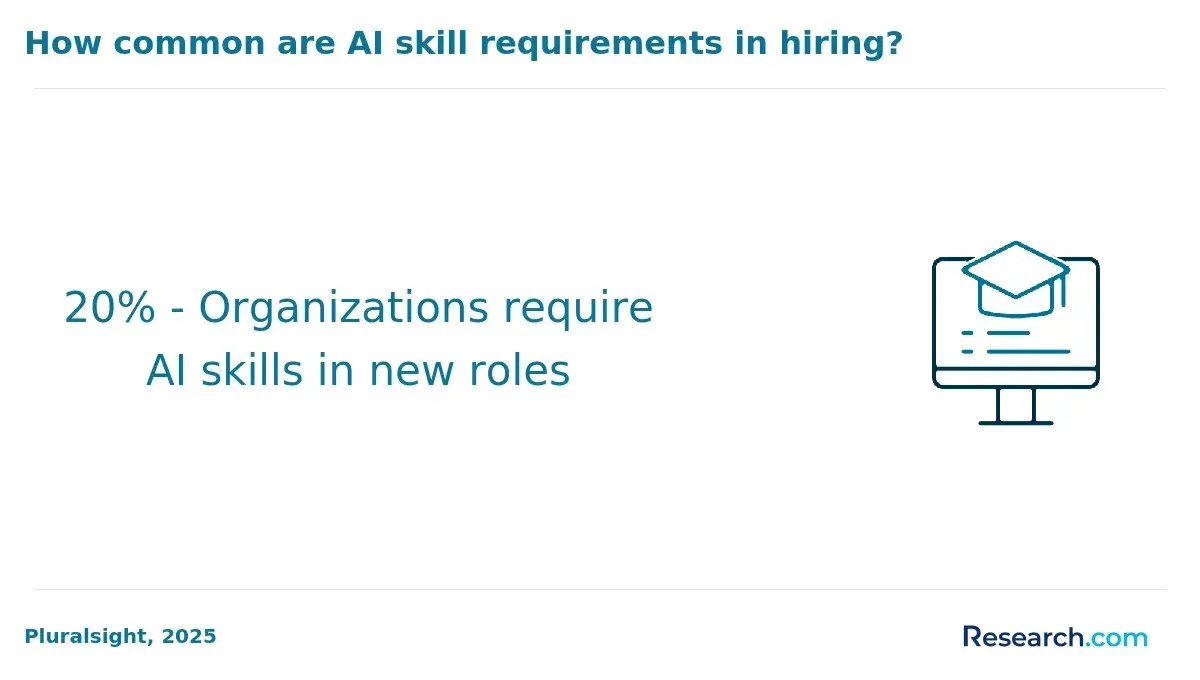
Admission pathways vary: some master's programs accept non-technical degrees if applicants complete prerequisite math or machine learning coursework, while short-term boot camps may waive formal education in favor of demonstrated skills. Given that only 13% of manufacturing and operations employees feel "highly prepared" for ai tools and 58% report a moderate-to-severe ai skills gap, evidence of motivation like prior training or relevant projects may increasingly influence acceptance decisions.
These factors highlight the growing importance of strong foundational knowledge and relevant experience for those pursuing ai education in quality control and manufacturing environments.
How long do AI strategy courses take, and what do they cost?
AI strategy courses for quality control teams typically last between 4 and 12 weeks, depending on the program's depth and format. Shorter courses, around 4 to 6 weeks, cover foundational concepts and strategic uses of AI in quality management. More advanced certificate programs and boot camps extend to 8-12 weeks, addressing topics like machine learning integration, predictive analytics, and AI-driven process optimization.
Course pricing varies widely by provider, length, and credential type:
- Basic online courses cost between $300 and $700, ideal for introductory skills.
- Comprehensive certificate programs from reputable institutions range from $1,200 to $4,000.
- Executive-style offerings for managers and team leaders can exceed $5,000, often including mentoring.
- Some platforms provide modular or subscription pricing for flexible access.
Organizations are increasing investments in AI skill development; IDC's Future of Work forecast predicts a 54% rise in spending on AI training by 2025 compared to 2023. Many programs incorporate hands-on projects, industry case studies, and post-course support to maximize return on investment. Part-time and asynchronous learning options help working professionals balance upskilling with job demands.
Which accredited schools offer AI strategy training for quality control?
Several leading U.S. universities offer specialized ai strategy training designed for quality control professionals seeking to enhance operational excellence. Institutions like Massachusetts Institute of Technology (MIT) provide courses through the Sloan School of Management focused on integrating ai into industrial quality systems. Stanford University's professional certificates emphasize data-driven quality optimization and supply chain management relevant to quality control teams.
Carnegie Mellon University delivers a comprehensive curriculum blending ai strategy with manufacturing analytics, covering predictive maintenance, automated inspection, and compliance monitoring. These components are crucial to reducing defects and improving production outcomes.
Working professionals benefit from flexible programs such as the Georgia Institute of Technology's online executive education, which addresses regulatory compliance and quality assurance using machine learning models. The University of California, Berkeley's Haas School of Business offers workshops tackling real-world manufacturing challenges including defect detection and control system automation.
Manufacturer research highlights tangible benefits: the 2024 Capgemini Research Institute reports up to 30% fewer compliance deviations and non-conformances in firms applying AI-driven quality analytics. This underlines the practical value of ai strategy education for quality professionals.
Prospective students are advised to prioritize programs with strong content in data analytics, machine learning for production, and regulatory frameworks. Industry partnerships deliver vital hands-on experience, preparing graduates to lead AI-powered quality control initiatives.
What jobs can quality control professionals get after AI strategy training?
Quality control professionals trained in AI strategy gain access to various roles in manufacturing, healthcare, automotive, and technology sectors. Common positions include AI quality analyst, AI implementation specialist, data-driven process engineer, and quality systems manager with AI expertise. These roles emphasize integrating AI tools to improve inspection, predictive maintenance, and defect detection, resulting in higher product standards and fewer errors.
Advancement opportunities include AI integration consultant roles, where professionals advise companies on adopting AI-driven quality control frameworks. This work often involves designing AI workflows that reduce manual inspections and automate anomaly detection, boosting operational efficiency.
Such training enables professionals to lead digital transformation projects that bridge traditional quality methods with AI-supported decision-making, yielding measurable gains. A 2024 BCG analysis shows that top-quartile AI leaders in manufacturing achieve 1.5× higher overall equipment effectiveness (OEE) and up to 50% fewer quality losses compared to companies with AI lagging teams.
Examples of AI strategy-trained QC engineers' work include managing real-time quality dashboards powered by machine learning, offering early deviation warnings to reduce downtime and rework costs. Career paths may also expand to compliance automation and AI-driven root cause analysis.
These roles significantly broaden career prospects by enabling technology-centric quality assurance methodologies that improve efficiency and reduce defects.
What salary and job outlook exist for AI strategy roles in quality control?
AI strategy roles in quality control in the United States offer salaries typically ranging from $85,000 to $140,000 annually. Entry-level positions start near $85,000, while senior roles that involve comprehensive AI deployment and team leadership can reach or exceed $140,000. The demand for professionals integrating AI into quality control is expected to grow by more than 15% through 2030, fueled by advances in manufacturing digitization and automation.
Organizations that combine AI deployment with structured workforce training report significant benefits, including up to 40% productivity gains and 23% higher employee engagement. This data from a 2024 PwC global workforce and AI survey highlights how AI strategy experts improve both operational efficiency and workforce satisfaction, driving increased investments in these roles.
Specialists in AI-powered visual inspection, predictive maintenance, and process optimization often command higher salaries and job security. For example, professionals skilled in AI-based defect detection help reduce product flaws, leading to cost savings highly valued by employers. Holding certification in AI frameworks tailored for manufacturing quality control strengthens competitiveness in the job market.
Key skills for AI strategists in quality control include data analytics, machine learning integration, and effective cross-functional collaboration. Combining technical know-how with problem-solving and communication abilities is critical for translating AI insights into measurable quality improvements and sustaining career advancement.
Other Things You Should Know About Artificial Intelligence
Artificial Intelligence enhances quality control by automating the detection of defects and anomalies in products with higher accuracy than manual inspection. Machine learning algorithms can analyze vast amounts of data in real time, enabling quicker decision-making and reducing human error. This leads to more consistent product quality and increased efficiency in manufacturing and service industries.
Key challenges include data quality and availability, as AI systems require large, accurate datasets to function effectively. Integration with existing quality control systems can be complex, often requiring specialized skills and infrastructure upgrades. Additionally, workforce adaptation and ethical considerations around automation need to be addressed to ensure successful AI adoption.
Yes, artificial intelligence can identify subtle patterns and correlations in data that may be imperceptible to human inspectors. For example, AI-powered image recognition can detect microscopic defects or inconsistencies in materials. These capabilities often result in earlier problem detection and reduced defect rates compared to traditional quality control methods.
In 2027, courses like "AI-Driven Quality Enhancement" by MIT and Coursera's "AI Strategies for Quality Control Excellence" guide teams on leveraging AI tools for ongoing quality advancements, emphasizing real-time data analysis and adaptive algorithm deployment to refine processes continually.
References
- How to upskill your QA team for the AI era – without burning them out - OwlityAI https://owlity.ai/articles/how-to-upskill-your-qa-team-for-the-ai-era-without-burning-them-out
- AI and Analytics Programs https://esmt.berlin/executive-education/analytics-ai-programs
- The Business of AI: Strategies for Leaders- Online | London Business School https://www.london.edu/lbs-online/the-business-of-ai-strategies-for-leaders
- Best AI Training for Manufacturing Teams (2026) https://iternal.ai/ai-training-for-manufacturing
- How to Incorporate AI Tools Into Your Quality Management System - simpleQuE https://www.simpleque.com/how-to-incorporate-ai-tools-into-your-quality-management-system/
- Online vs Campus Artificial Intelligence Degree Programs: Complete Comparison https://hakia.com/compare/artificial-intelligence-online-vs-campus/
- Artificial Intelligence (AI) for Quality Control & Manuf... https://oxford-management.com/course/artificial-intelligence-ai-for-quality-control-manufacturing-analytics
- How Much Does AI Training for Businesses Cost? - Bizzuka https://www.bizzuka.com/how-much-does-ai-training-for-businesses-cost/
- Welcoming the Inevitable: How QA Professionals Can Prepare for an AI-Dominant Future https://www.functionize.com/blog/how-qa-professionals-can-prepare-for-an-ai-dominant-future
- AI Governance Careers: 20 Roles, Salary & Path (2026) https://techjacksolutions.com/careers/ai-governance-careers/